
Top No Wager Casino Bonuses in Australia
A bonus advertised as “no wager” lands in an Australian inbox or search result promising exactly what it says on the label — keep what you win, no playthrough. The legal ground it sits on is something else again. No state or territory issues a licence for an online casino game or online pokie. The Interactive Gambling Act 2001, as tightened by the 2017 amendments, makes the supply of those services to a person physically in Australia an offence. An offer of a wager-free bonus from an offshore brand therefore arrives outside the Australian regulatory frame from the first click.

This page covers what those bonuses mean in 2026, why the Australian regulator keeps acting against the brands that market them, and what the practical consequences are when an Australian opens an account with one. Eleven brands the ACMA has issued formal warnings over are named in the ranking below, each on its own published regulatory record.
Data current as of 29 October 2026 and checked against the ACMA’s register of formal warnings and blocking-request notices.
Table of Contents
- Finding the Best No Wager Casino Bonuses
- The enforcement record: ACMA formal warnings and blocking requests
- What a blocking request means in practice
- Inducements and the 2026 reform bill
- Crypto deposits do not change the legal position
- The payment context in Australia: what the legitimate frame looks like
- Why an offshore “no wager” offer sits outside this frame
- Responsible gambling: the Australian services that actually apply
- What “no wager” actually means — and what it usually comes with
- How a “wager beat casino” label relates to a no-wager search
- Bonuses, free spins and the marketing layer
- The eleven brands the ACMA has acted against
- The arithmetic: how the enforcement record translates into blocked access
- A reader’s frame for evaluating any “no wager” offer
- Where this leaves an Australian player
- What the ACMA’s blocking record actually costs the reader
- The cost of “no wager” against the cost of licensed wagering
- Frequently asked questions
Finding the Best No Wager Casino Bonuses
The prohibition is statutory and long-standing. The Interactive Gambling Act 2001, in its current form after the 2017 amendments, makes it an offence to provide a “prohibited interactive gambling service” to a person in Australia. A prohibited service is one that offers online casino games, online pokies, or in-play betting on a sporting event after it has started. What remains licensable is wagering on racing and sport before the event, lotteries and keno. In practice, wagering is licensed through the Northern Territory Racing and Wagering Commission, which regulates 52 of Australia’s online bookmakers including Sportsbet, Bet365 and Ladbrokes — a commission that runs without full-time staff and meets once a month in Darwin.

The individual player is not the target of the law. The IGA aims at the provider. That distinction matters because it explains why an offshore brand can keep operating for years and accept Australian sign-ups without the player facing prosecution. It also explains why nothing on the consumer-protection side exists for anyone who plays there: no Australian complaints body, no local dispute resolution, no recourse if a withdrawal is refused. The offshore operator runs on its own house rules, and those rules can change without notice.
The enforcement record: ACMA formal warnings and blocking requests
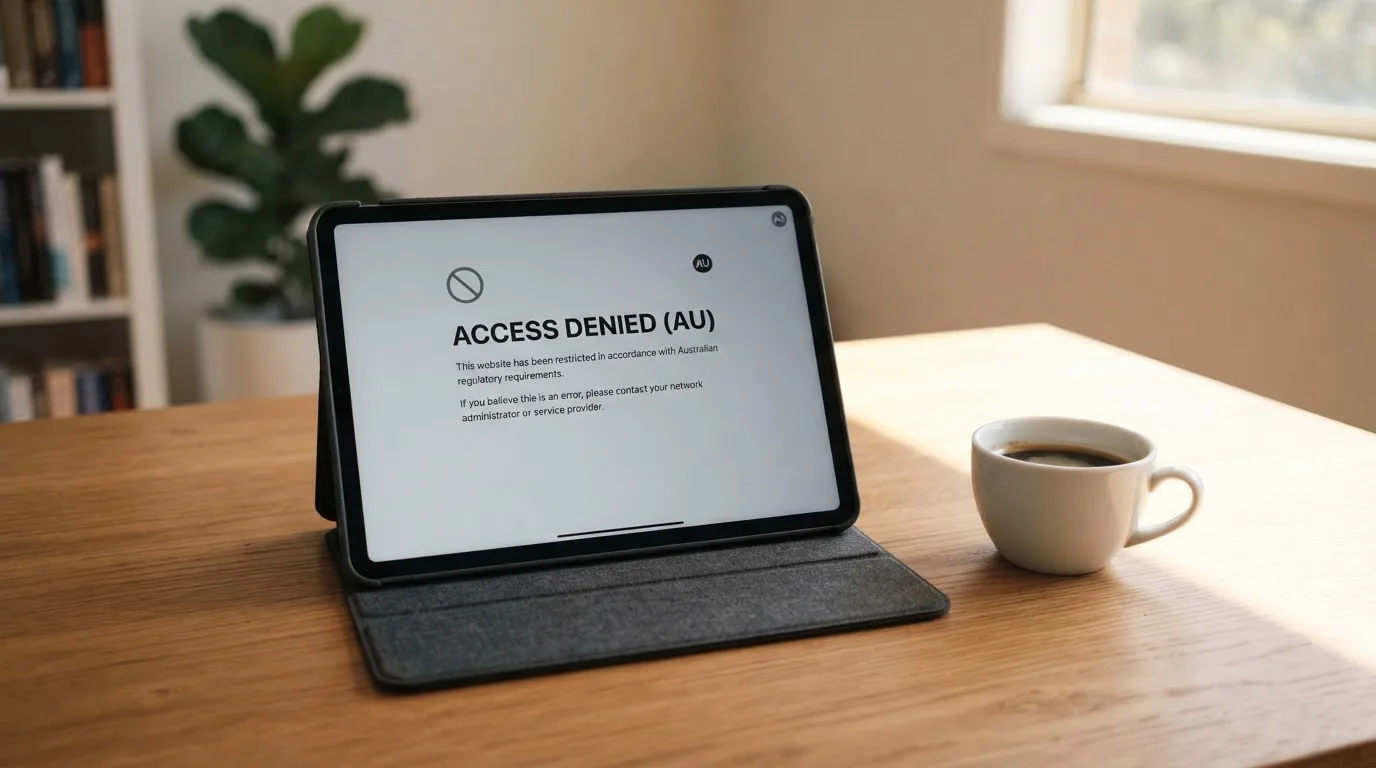
The ACMA investigates complaints, issues formal warnings to providers, and directs Australian internet service providers to block illegal sites. As reported in June 2026, a total of 1,751 illegal gambling and affiliate marketing websites had been blocked since the first blocking request in November 2019, and more than 230 unlicensed gambling services had left the Australian market since enforcement was strengthened in 2017. The most recent blocking round reported on 26 June 2026 added twelve more sites to the list: 7Signs, ChromaBet, Donbet, Duospin, Freshbet, Slots Gem, Jacks Club, Lucky Start, Pointsbetz, Spinrise, Vinyl Casino and Wildsino.
Alongside the blocking requests, the ACMA issues formal warnings to the companies behind individual brands. These are published, dated documents naming the operator and the URL. The named-warnings list over recent years is long enough to give a clear picture of the segment the no-wager pitch targets:
- March 2026 — Pulsup Ltd over Rocketplay (a separate warning from the earlier Dama N.V. action over the same brand in May 2022).
- April 2026 — Ryker B.V. over Jackbit and CasinOK.
- July 2025 — Bamboo Media over Ignition Casino; Consolutetish S.R.L. over National Casino and Bizzo Casino (Bizzo had already been the subject of a 2022 formal warning to TechSolutions Group).
- May 2025 — Dama N.V. over Spirit Casino.
- March 2025 — Dama N.V. over Woo Casino.
- February 2025 — EOD Code SRL over Instant Casino.
- April 2025 — Sterplay Holding Ltd over Casino Intense.
- September 2022 — Hollycorn N.V. over Sky Crown and Blue Leo.
- May 2022 — Dama N.V. over six brands at once: Bambet, Dazard, Level Up, Rocketplay, Wild Tornado and Cobra Casinos.
The same operator companies appear repeatedly. Dama N.V. alone accounts for three warning rounds across 2022 and 2025, covering nine distinct brand names. A formal warning is not a prosecution, and these companies continue to operate outside Australia. What the warnings do is document, on the regulator’s own page, that the supply is unlawful and that the regulator has put the company on notice.
What a blocking request means in practice
When the ACMA asks ISPs to block a site, Australian customers find the URL stops resolving at the network level. A balance on the account stays where it is — the block does not withdraw funds on the customer’s behalf, does not return deposits, and does not trigger any payout. A player who opened an account, deposited, won a balance and then watched the URL disappear has lost access to both the account and the money. That is the practical cost of playing on a site that sits one regulator’s notice away from disconnection.
The blocking total since November 2019 — 1,751 websites — is what gives the warnings their weight. Each warning sits in a sequence of enforcement actions that has demonstrably driven more than 230 services out of the Australian market since 2017. A warning is not the end of the matter; it is a step toward a block, and the block is what ends the customer relationship.
Inducements and the 2026 reform bill
The Interactive Gambling Amendment (Gambling Reform) Bill 2026 passed Parliament on 19 August 2026. Its advertising and inducement measures commence 1 January 2027 — law with a start date, not yet in force as of this page. When the inducement provisions commence, the prohibition on offering bonuses and other inducements to open or use an Australian-facing account will sit in the statute rather than in the regulator’s case-by-case practice. That changes the legal weight of a “no wager” headline. In 2026 the offer is already unlawful as a prohibited interactive gambling service; from 1 January 2027 the inducement itself becomes a separate statutory prohibition.
Crypto deposits do not change the legal position
Paying for a no-wager bonus with Bitcoin or another cryptocurrency does not place the transaction outside the Australian rules. The Interactive Gambling Act’s prohibition is on the supply of the service, not on the payment method used to fund it. The credit-card ban that took effect for Australian-licensed online wagering on 11 June 2024 explicitly catches digital wallets linked to credit products. Crypto sits one step further outside that framework: it is not a credit product, but it is also not a payment route that brings the operator within the Australian regulatory perimeter. An Australian depositing Bitcoin into an offshore casino account is funding an unlawful supply of a prohibited service, and the crypto rail does not change the status of the operator.
The crypto angle on a no-wager pitch is largely a marketing convenience — faster deposits, no card block to navigate, no merchant-category-code filter. Westpac’s gambling block refuses authorisation of transactions registered under the merchant category code “Betting/Casino Gambling” on eligible personal credit and debit cards. ANZ’s gambling block extends to digital-wallet transactions on an eligible card. A crypto deposit routes around those bank-side guards. That is the pitch, and the cost of taking it is that the player has stepped off every Australian rail designed to help them pause.
The payment context in Australia: what the legitimate frame looks like
A reader comparing a no-wager pitch against the Australian frame benefits from knowing what the legal deposit routes actually are. The licensed online wagering services — sports and racing before the event — accept debit cards, bank transfers, PayID and Osko, and BPAY. They do not accept credit cards or credit-related products, and they do not accept crypto. The credit-card prohibition sits in the Interactive Gambling Act itself, with penalties up to A$247,500 for an operator that breaches it.
The instant-payment infrastructure is genuinely fast. Osko by Australian Payments Plus sends a bank-to-bank transfer in under a minute, 24/7, whether addressed to a BSB and account number or to a PayID. PayID displays the name of the account holder before the transfer is sent; AP+ warns that being asked to transfer money to a PayID on an illegal gambling site almost certainly means a scam site. More than 25 million PayID identifiers were registered on the New Payments Platform by April 2025, across over 100 Australian financial institutions. The platform became accessible to the public on 13 February 2018, and is owned by New Payments Platform Australia Ltd, a non-profit company whose 13 shareholders include the Reserve Bank of Australia and the major banks.
BPAY runs alongside Osko and PayID as the bill-payment rail, available in the online banking of over 140 banks and financial institutions and used by over 95,000 businesses. It launched on 18 November 1997 and has been under the same ownership umbrella as PayID and Osko since the 2021 ACCC merger that brought BPAY Group, eftpos and NPP Australia under Australian Payments Plus.
Digital wallets are a major share of card payments but not a separate legal category. By the end of 2025, Apple Pay, Google Pay and Samsung Pay transactions collectively accounted for around 45% of all card payments in Australia by number. Apple Pay itself does not charge consumers a fee; any surcharge is the merchant’s card-processing cost, not Apple’s. Transaction limits and PIN requirements are set by the card issuer or merchant. For gambling specifically, a wallet transaction on an eligible credit card runs into the same Interactive Gambling Act prohibition as the card itself.
AUSTRAC’s threshold-transaction-report rule, which requires reporting of transfers of A$10,000 or more, applies only to physical cash. Ordinary electronic bank transfers are not subject to that per-transaction reporting requirement regardless of amount — a fact that has no bearing on the legality of the underlying transaction but is sometimes misunderstood.
Why an offshore “no wager” offer sits outside this frame
The contrast matters. The legal wagering frame in Australia is a debit-and-bank-transfer frame, with explicit statutory prohibitions on credit, on inducements (from 1 January 2027), and on the supply of casino games and pokies altogether. A “no wager” bonus pitched by an offshore brand is, by definition, an inducement to open an account with a provider of prohibited services, funded through payment rails the operator chose (credit cards in some cases, crypto in others) precisely because the Australian rails are closed to it. Every part of the legitimate Australian frame is inverted.
That is why the ACMA keeps acting against these brands and why the warnings keep clustering around the same handful of operator companies. The regulatory pattern is not a coincidence; it is what a steady supply of unlawful offers looks like over time.
Responsible gambling: the Australian services that actually apply
BetStop — the National Self-Exclusion Register — has been live since August 2023 and binds Australian-licensed online and phone wagering services. An offshore casino is not connected to BetStop. Registering with BetStop does not stop an offshore brand from accepting deposits or showing promotional material. The protections that come with a BetStop registration — exclusion from licensed wagering, the closure of marketing channels — do not extend to the brands covered by ACMA warnings.
The National Gambling Helpline is 1800 858 858 — free, 24/7, with chat available at Gambling Help Online. For anyone whose play has moved beyond what they intended, those are the Australian services that can act on their behalf. They sit alongside the bank-side gambling blocks at Westpac, ANZ and Commonwealth Bank, all of which can be activated in the respective banking apps. ANZ’s block, once turned on, requires a 48-hour waiting period to remove — a deliberate friction designed to slow impulsive reversals. The bank warns, honestly, that not all gambling transactions will be blocked and that some non-gambling transactions might be blocked in error.
The offshore “no wager” offer exists precisely in the gap those services cannot reach. A reader comparing options needs to know what the Australian safety net covers and what it does not.
What “no wager” actually means — and what it usually comes with
A bonus labelled “no wager” or “wager-free” means the player does not have to play through the bonus amount a set number of times before withdrawing. In theory, the winnings are withdrawable as cash from the first spin. In practice, every operator in this segment attaches other conditions. The common ones, drawn from the way these offers are structured across the market, are:
- Maximum cash-out caps. A genuine no-wager bonus usually carries a ceiling on how much of the bonus-derived winnings can be withdrawn — A$100, A$200, sometimes less. The “wager-free” promise applies to the playthrough, not to the payout.
- Game restrictions. The bonus often applies only to a narrow set of titles, frequently one slot chosen by the operator, sometimes with a maximum bet per spin lower than the standard table minimum.
- Deposit-gated eligibility. Many require a deposit before the “free” spins or “free” bonus credit is even credited — a “no deposit” label is rarer than the marketing implies.
- Country and payment restrictions. A reader in Australia typically cannot claim these offers at all once the operator performs any geo-check, and several payment methods (including credit cards) are blocked on the Australian side.
This is the structural difference between a “no wager” headline and a standard playthrough requirement. A standard bonus with a 35x playthrough and no cash-out cap often pays out more in real money than a “no wager” bonus with a 30-dollar cap. The label is what changes; the dollar result depends on the terms.
How a “wager beat casino” label relates to a no-wager search
Searches in this segment turn up brand names styled to suggest no-wager or low-wager terms — “wager beat”, “wager bet”, “no wager casino”. These are affiliate-site labels attached to offshore operators and do not correspond to an Australian licence or to an Australian regulatory category. A site calling itself a “wager beat casino” is naming itself after the search term, not after any Australian licence condition. The ACMA’s register of formal warnings is the only public record that distinguishes one of these brands from another in Australia, and it operates on the supply side, not on the bonus terms.
Bonuses, free spins and the marketing layer
The shelf of offers advertised as “no wager” or “wager-free” is large and largely opaque. No Australian regulator audits these terms; no Australian consumer-protection body enforces them. The promotional material is what the operator chooses to publish, and the fine print is what governs. A reader who compares these offers on the label alone is comparing advertising; a reader who reads the attached terms is comparing contracts. The two comparisons produce different rankings.
The cluster of brands that pitch wager-free bonuses is, almost in its entirety, the same cluster the ACMA has issued formal warnings over. The marketing vocabulary — “wager-free”, “keep what you win”, “no playthrough” — is the vocabulary of inducements the Australian regulator has been warning against for years and will statutorily prohibit from 1 January 2027.
The eleven brands the ACMA has acted against
The brands below are the ones the ACMA has issued formal warnings over for offering prohibited interactive gambling services to Australians. The list is not a ranking and not a recommendation. Each entry carries the ACMA’s own record of the warning: the operator company named in the warning, the date of the warning, and the relevant source. No bonus terms are stated — the only sources for those terms were affiliate marketing pages, and a marketing page is not the basis on which an Australian should evaluate an unlawful offer.
The licence caveat applies to every brand on this list: online casino games cannot be licensed anywhere in Australia, whatever licence the site displays.
| Brand | ACMA action and date | Operator named by the ACMA | Subject support |
|---|---|---|---|
| RocketPlay | Formal warning March 2026 (Pulsup Ltd over Rocketplay); earlier May 2022 (Dama N.V.) | Pulsup Ltd; earlier Dama N.V. | listings-only — affiliate marketing pages |
| Level Up Casino | Formal warning May 2022 | Dama N.V. | listings-only — affiliate marketing pages |
| Woo Casino | Formal warning March 2025 | Dama N.V. | — |
| Spirit Casino | Formal warning May 2025 | Dama N.V. | — |
| National Casino | Formal warning July 2025 | Consolutetish S.R.L. | listings-only — public listings reference Australian compliance frameworks |
| Bizzo Casino | Formal warning July 2025 (Consolutetish S.R.L.); earlier 2022 (TechSolutions) | Consolutetish S.R.L.; earlier TechSolutions | listings-only — affiliate marketing pages |
| Ignition Casino | Formal warning July 2025 | Bamboo Media | — |
| Instant Casino | Formal warning February 2025 | EOD Code SRL | listings-only — payment-method listings |
| Jackbit | Formal warning April 2026 | Ryker B.V. | — |
| Casino Intense | Formal warning April 2025 | Sterplay Holding Ltd | listings-only — public compliance and self-exclusion listings |
| Sky Crown | Formal warning September 2022 | Hollycorn N.V. | — |
How to read this list
Three points are worth holding onto when reading the table. First, the same operator companies appear repeatedly. Dama N.V. alone accounts for three separate warning rounds covering nine distinct brand names — a pattern that suggests rebrand rather than exit. Second, the warnings cluster in 2025 and 2026, which tracks the period of intensified ACMA action reported in the June 2026 blocking round. Third, where subject support is recorded as “listings-only” rather than confirmed, that means affiliate marketing pages or public compliance listings reference the brand’s coverage of Australian-facing payment methods or self-exclusion tools — it does not mean those tools actually function for an Australian account, and it certainly does not mean the brand is licensed in Australia.
Each brand on its own terms
RocketPlay — Two separate warnings, four years apart, under two different operator companies. Pulsup Ltd was warned in March 2026 over Rocketplay; Dama N.V. was warned in May 2022 over six brands including Rocketplay. The operator-company change between those warnings is itself a fact worth holding onto. A rebrand under a new corporate entity does not change the service offered; it changes the name on the warning.
Level Up Casino — One of the six brands named in the May 2022 Dama N.V. warning round. The warning sits more than four years in the past, which is consistent with the brand continuing to operate while the Australian regulator’s formal action sits on the public record. A reader comparing this brand’s age against its warning date should treat both as current.
Woo Casino — Named in the March 2025 round of Dama N.V. warnings, alongside Spirit Casino in the same month two months later. Two Dama N.V. brands in quick succession is what the regulator’s record looks like when one operator company is running a portfolio.
Spirit Casino — The May 2025 companion warning to Woo Casino, again under Dama N.V. The pairing is the regulator’s own documentation of an operator-company portfolio, not an editorial grouping.
National Casino — Named in the July 2025 round under Consolutetish S.R.L., alongside Bizzo Casino. Both brands are documented as carrying public compliance listings that reference Australian-facing self-exclusion and transaction-monitoring tools — listings that exist on paper and may or may not function for an Australian account. The ACMA warning is what is on the regulator’s record.
Bizzo Casino — The brand carries the most layered warning history on the table. Consolutetish S.R.L. was warned in July 2025; TechSolutions Group was warned in 2022 over the same brand. A brand that has cycled through two operator companies while remaining under formal ACMA notice is, on the regulator’s record, a continuing supply of a prohibited service under changing corporate names.
Ignition Casino — Warned in July 2025 under Bamboo Media. The brand name has been associated with offshore-facing affiliate marketing for several years; the ACMA action is what places it on the Australian record.
Instant Casino — Warned in February 2025 under EOD Code SRL. The listings that reference Instant Casino’s payment-method coverage do so in the language of Australian-facing deposit options — a marketing description, not a regulatory finding.
Jackbit — Warned in April 2026 under Ryker B.V., alongside CasinOK. The recency of the warning places it in the most recent cluster of ACMA actions covered on this page.
Casino Intense — Warned in April 2025 under Sterplay Holding Ltd. The brand carries the broadest listings footprint of any brand on the table — Australian compliance listings, self-exclusion references, and affiliate marketing pages — none of which is a substitute for an Australian licence, which the brand does not hold and cannot hold for casino games.
Sky Crown — Warned in September 2022 under Hollycorn N.V., alongside Blue Leo. The Hollycorn warning sits earlier than most on the table; the underlying operator continues to appear in the ACMA’s enforcement record.
The verdict on the segment
Read across the eleven brands, three structural facts emerge. The operator companies recur — Dama N.V. three times, Consolutetish S.R.L. twice across two brands. The brands themselves cycle through corporate entities without exiting the market. The marketing vocabulary across the segment is uniform: “wager-free”, “no playthrough”, “keep what you win”. An Australian reader comparing these eleven offers is comparing eleven variations on the same unlawful supply, each on its own terms, each outside the Australian regulatory perimeter, each one ACMA warning away from a blocking request. The marketing word that defines the segment — “wager-free” — is also the marketing word the new statute will prohibit from 1 January 2027.
The arithmetic: how the enforcement record translates into blocked access
The ACMA’s blocking record is the closest thing to a measurable consequence of these warnings. As reported in June 2026, 1,751 illegal gambling and affiliate marketing websites had been blocked since the first blocking request in November 2019. That works out, over the roughly six-and-a-half years from November 2019 to June 2026, to an average blocking rate somewhere between two hundred and three hundred sites per year — a band that captures the steady enforcement cadence rather than the year-to-year variation, and that is the right way to read a running total that has accelerated since 2017.
The running total is the more honest figure. Each block is a discrete event with its own regulatory process behind it; the cumulative count is what an Australian player faces when they try to reach a previously accessible URL. A reader holding an account balance on a site that gets added to a future blocking round will lose access on the day the ISPs apply the direction, not on the day the ACMA publishes the request.
A reader’s frame for evaluating any “no wager” offer
Three questions sit behind any comparison in this segment, and they are worth asking before any bonus terms.
- Is the operator licensed in Australia for the service it is offering? For casino games and online pokies the answer is no, by statute, for every brand on the market — including the eleven named above. A licence displayed on the site (Curaçao, Anjouan, Kahnawake) is a licence to operate in that jurisdiction, not a licence to supply a prohibited interactive gambling service to a person in Australia.
- What consumer protection applies if a withdrawal is refused? On a licensed Australian wagering service, dispute resolution and complaints mechanisms exist. On an offshore casino, the answer is whatever the operator’s terms say — and the operator’s terms can change without notice, with no Australian body to complain to.
- What does the ACMA record show? The register of formal warnings is public and searchable by brand name. A reader who checks the brand before depositing has the regulator’s own record in front of them; a reader who deposits first and checks later has learned something they could have learned in advance.
The “no wager” label is a marketing term. The regulatory status is a statutory fact. They are different categories of information and they answer different questions.
Where this leaves an Australian player
The honest frame is this. A wager-free bonus from an offshore brand is an inducement to use a prohibited service, funded through payment rails that the operator chose because the Australian rails are closed to it, on terms drafted by the operator alone. The bonus is real; the law is also real; they are in conflict and the law is on the side of prohibition. An Australian who plays on these sites is doing so outside the Australian regulatory perimeter and outside the Australian consumer-protection net. The ACMA keeps warning the same handful of operator companies because they keep supplying the same prohibited service. BetStop and the bank-side gambling blocks apply to Australian-licensed wagering only and do not reach these brands. The 2026 reform bill brings inducement prohibitions into the statute from 1 January 2027, which closes off the marketing layer rather than the underlying supply.
A reader who wants to play within the Australian frame plays on the licensed wagering services — racing and sport before the event — and accepts that casino games and online pokies are not on that list. A reader who chooses the offshore route accepts, by that choice, that no Australian protection applies and that the ACMA’s blocking record is what the supply-side risk looks like in practice.
What the ACMA’s blocking record actually costs the reader
The blocking record is more than a number. Each entry on the list is a URL that an Australian customer cannot reach on the day the ISPs apply the direction. A player holding a balance on a blocked site loses access to the account on that day. The regulator does not return funds; the operator does not have an Australian obligation to do so. The site may move to a new URL, but the ACMA’s blocking-request process can follow it, and the cycle repeats. The published total of 1,751 blocked sites since November 2019 is the visible footprint of that cycle.
The companion figure — more than 230 unlicensed services having left the Australian market since enforcement was strengthened in 2017 — is what the cumulative effect looks like over a longer window. Some of those exits were voluntary; others followed blocking requests. Either way, the supply side has thinned, and the brands that remain are the ones that keep accepting Australian sign-ups despite the warnings. An Australian reader choosing among those brands is choosing among the supply the regulator has not yet blocked.
The cost of “no wager” against the cost of licensed wagering
The licensed Australian wagering frame — sports and racing before the event — is a frame of debit cards, bank transfers, PayID, Osko and BPAY, with no credit, no casino games, no in-play, and a prohibition on inducements from 1 January 2027. It is the frame with consumer protection, complaints bodies, BetStop coverage and bank-side gambling blocks that actually apply. The offshore “no wager” frame is a frame of crypto deposits and credit cards (where the operator accepts them), casino games, 24/7 access and bonus terms drafted by the operator. The cost comparison is not between two bonus amounts. It is between two regulatory environments, and the environments are not equivalent.
H2 Gambling Capital’s 2025 report estimates that Australians lose about A$3.9 billion a year to illegal gambling sites, and that the share of gambling going through legal channels fell from 74% in 2021 to 64%. The headline figure is the size of the illegal market. The trend figure — a ten-point drop in the legal channel share over four years — is what the illegal supply has done to the legitimate frame.
Frequently asked questions
What does “no wager” actually mean compared with a standard playthrough requirement on a bonus?
A standard bonus carries a playthrough multiplier — typically 30x to 50x the bonus amount — that must be wagered before any winnings become withdrawable. A “no wager” bonus removes that multiplier, so bonus-derived winnings are in theory withdrawable from the first spin. The trade-off is almost always elsewhere: a maximum cash-out cap, game restrictions, deposit-gated eligibility, or a geo-check that excludes Australian accounts outright.
Why does a site calling itself a “wager beat casino” come up under a no-wager bonus search?
The label is an affiliate marketing term attached to offshore brands, not an Australian licence category. These brands name themselves after the search terms they target. The ACMA’s register of formal warnings is the only public Australian record that distinguishes one of these brands from another, and it operates on the supply side, not on the bonus terms.
Does a crypto casino’s no-wager bonus avoid Australian wagering law in any way?
No. The Interactive Gambling Act prohibits the supply of the service, not the payment method. A crypto deposit funds an unlawful supply of a prohibited service. The credit-card ban that took effect on 11 June 2024 applies to credit products and linked digital wallets; crypto sits outside that ban but also outside any regulatory perimeter that would place the operator under Australian rules. The crypto rail routes around bank-side gambling blocks; it does not route around the IGA.
How would a genuinely wager-free bonus differ from one with a hidden maximum cash-out cap?
A genuinely wager-free bonus has no playthrough AND no cash-out cap AND no game restriction that materially limits where the bonus credit can be used. Most offers labelled “no wager” carry at least one of those restrictions. The distinction matters because the dollar result of a wager-free bonus with a A$100 cap is usually smaller than the dollar result of a 35x playthrough bonus with no cap, even though the labels suggest the opposite.
Is a low-wager casino bonus meaningfully different from a true no-wager one?
The structural difference is the playthrough multiplier. A 10x or 15x multiplier is much cheaper to clear than a 35x one, but it still costs the player something in expected loss over the clearing volume. The arithmetic works the same way for any multiplier above zero: the player is paying for the bonus through the house edge on the clearing turnover. The “true no-wager” label promises zero of that cost; the low-wager label promises less of it. The fine print decides which one the player actually receives.
What sign-up steps do sites styled as a “wager beat casino” usually require before any bonus applies?
Standard sign-up across the segment: email address, username and password, then a deposit via the operator’s accepted payment methods. A “no deposit” bonus is credited on email verification; a deposit-gated bonus requires the deposit to clear before the bonus or free spins appear. Account verification (ID, address, payment method) is requested at withdrawal rather than at sign-up on most offshore brands, which means a balance can sit unverified for weeks and be subject to additional document requests when the player tries to cash out.