
Choosing a Pokie Machine in Australia in 2026: What the Marketing Leaves Out
A punter in Australia searching for the “best pokie machine” usually wants the same thing underneath three different wordings: a machine that pays back fairly, behaves predictably for the budget set, and doesn’t put the player on the wrong side of the law. The honest answer doesn’t sit on a single title. It sits on three choices that have to be made before the reels even spin — what kind of machine, in what kind of venue, and whether the “online” route is even a route at all.
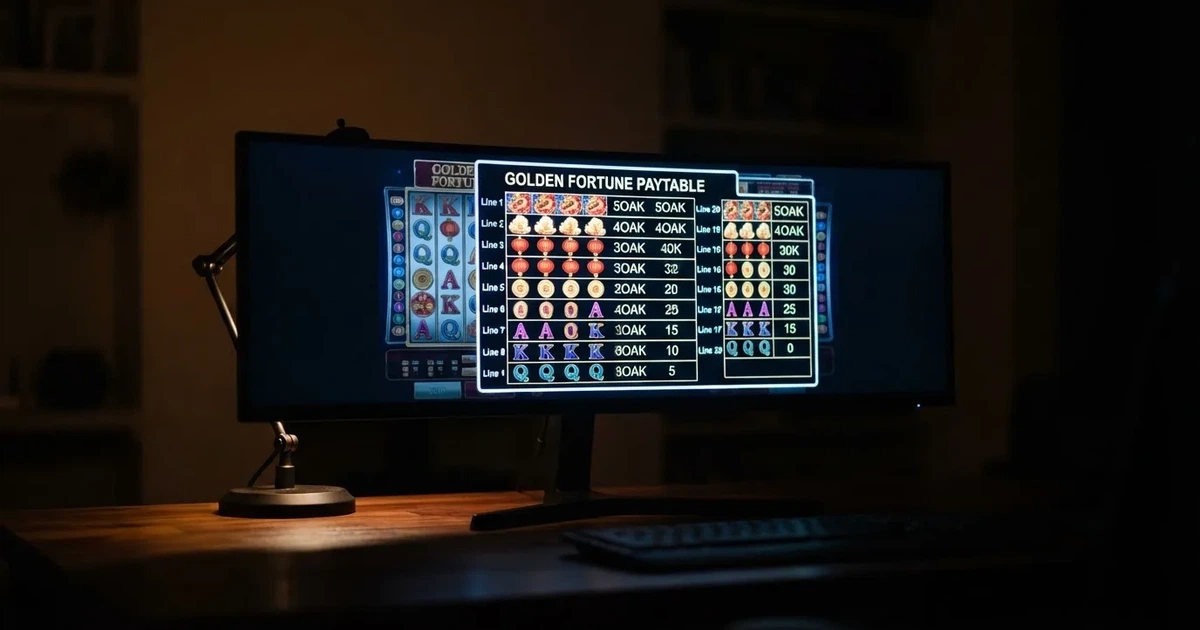
This guide works through those choices in that order. It explains why the legal channel for a real-money pokie in Australia is the pub, club or casino floor — not an offshore website advertising a Curacao licence. It runs through volatility, return-to-player and bet sizing, the three knobs that actually decide whether a session feels fair. It sets out what responsible-gambling support is available to an Australian player and which support an offshore site bypasses entirely. And it lists, in plain text, the offshore casino brands the ACMA itself has named in formal warnings for offering prohibited services to people here — because the published list of those names is, in effect, the closest thing Australia has to a “do not play” register.
Data current as of 29 October 2026, verified against the ACMA’s published formal-warning register and the Interactive Gambling Act 2001 as it stands today.
Table of Contents
- The Law First: Why “Best Online Pokie” Is Not a Question Australia Answers
- Responsible Gambling: What an Offshore Site Does Not Connect To
- Payments and Payout Speed: Two Channels, Two Different Realities
- Mobile and Apps: What “Real Pokie Machine App” Actually Means in Australia
- Games, Providers and the Mechanics That Actually Decide a Session
- The State of the Floor: Where the Machines Actually Are
- The Offshore Brands Named by the ACMA: Australia’s De Facto “Do Not Play” List
- What “Best Pokie Machine” Looks Like, Stated Honestly
- The Blocking Rate: A Back-of-Envelope Reading of the ACMA’s Pipeline
- Practical Wrap-Up for the Reader
- Frequently Asked Questions
The Law First: Why “Best Online Pokie” Is Not a Question Australia Answers
The legal frame is the load-bearing wall of the whole subject, and it has to be set down before any machine gets named.

The Interactive Gambling Act 2001, tightened by the Interactive Gambling Amendment Act 2017, makes it an offence to provide online casino games, online pokies or in-play betting to a person physically in Australia. No state or territory issues a licence for it. What is licensable — wagering on races and sport placed before the event, lotteries, keno — is licensed, for tax reasons, overwhelmingly by the Northern Territory, and the body that does that licensing, the NTRWC, runs without full-time staff and meets once a month in Darwin while covering fifty-two of the country’s online bookmakers, including the biggest names in the Australian market. The asymmetry is the point: a sports-and-racing bookmaker is one legal product; an online casino product aimed at Australians is another, and the second one is closed.
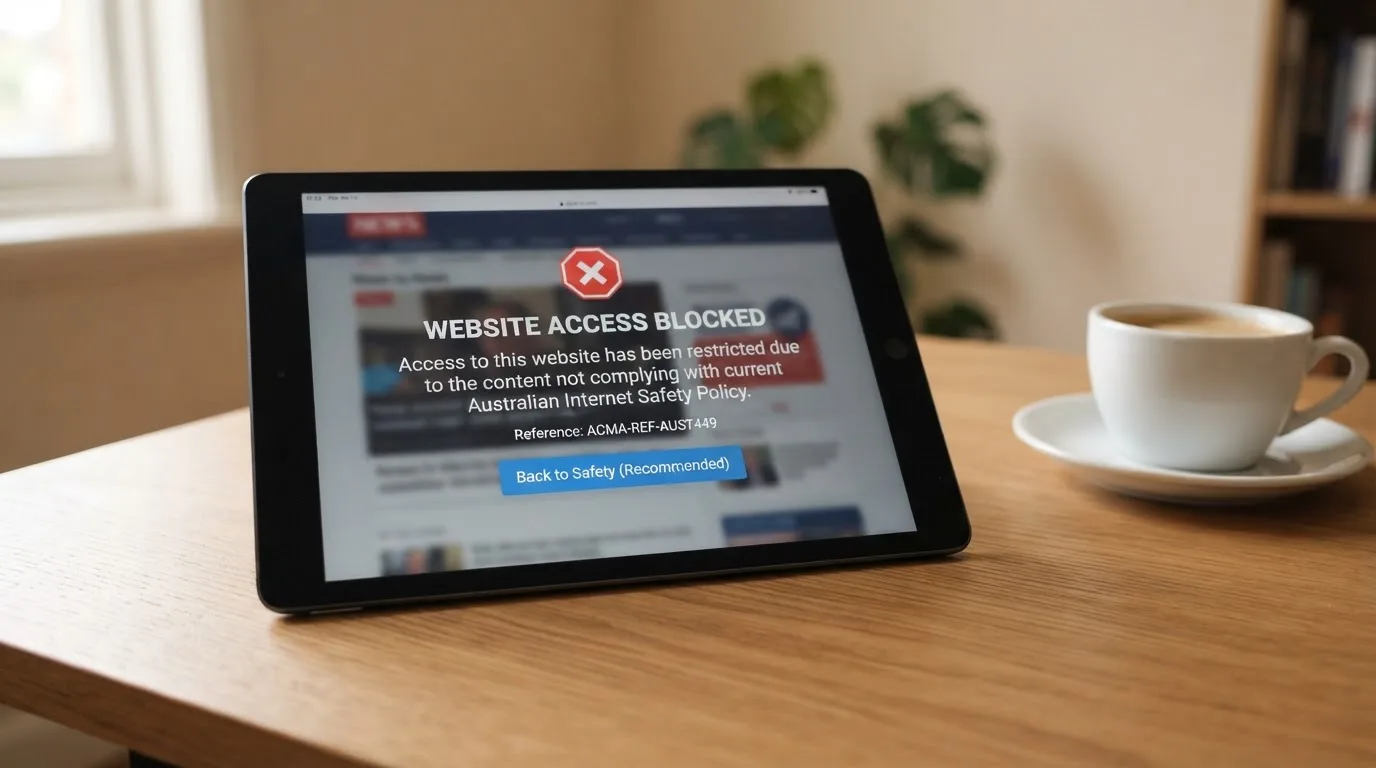
The provider is the party the Act targets. An individual player in Australia is not prosecuted for opening an offshore site. The site, however, gives no Australian consumer protection, sits outside any Australian complaints body and has no obligation to pay out a disputed withdrawal. It can also be blocked mid-session, with a balance still on it, at the regulator’s request to Australian internet service providers.
The Shape of Enforcement
The ACMA investigates, issues formal warnings and, when warnings are not heeded, asks ISPs to block. The agency’s own published figures, as reported in mid-2026, count 1,751 illegal gambling and affiliate-marketing websites blocked since the first blocking request in November 2019, with more than 230 unlicensed services having left the Australian market since enforcement was strengthened in 2017. A single round reported on 26 June 2026 added another twelve to the blocked list: 7Signs, ChromaBet, Donbet, Duospin, Freshbet, Slots Gem, Jacks Club, Lucky Start, Pointsbetz, Spinrise, Vinyl Casino and Wildsino.
Independent modelling puts the cost. H2 Gambling Capital’s 2025 report estimates that Australians lose about A$3.9 billion a year to illegal offshore sites, and that the share of gambling going through legal channels has fallen from 74% in 2021 to 64%. The legal share is still larger than the illegal share — that is the work of the licensed TABs, the pubs and clubs, the casinos and the lotteries — but the illegal share is the larger of the two growth rates, and the direction of travel matters.
The 2026 Reform, Stalled at the Gate
The Interactive Gambling Amendment (Gambling Reform) Bill 2026 passed Parliament on 19 August 2026. Its advertising and inducement measures commence on 1 January 2026. On a page dated today, that is law passed but not yet in force, and the conduct the new measures cover is still, for the moment, governed by the older regime.
Responsible Gambling: What an Offshore Site Does Not Connect To
An Australian player using a licensed wagering service — a sports book, a TAB, a licensed lottery — is plugged into the country’s responsible-gambling infrastructure. An offshore online casino is not. Two specific things a player needs to know about are BetStop and the helpline.
BetStop, the National Self-Exclusion Register, has been live since August 2023. It binds Australian-licensed online and phone wagering services. A person who registers is excluded from those services for the period they nominate. An offshore casino is not a member, has no obligation to honour the exclusion, and runs no integration with it. The exclusion is a real wall against the legal bookmakers; against an offshore site it is a piece of paper the operator has never agreed to read.
The National Gambling Helpline is 1800 858 858. It is free, runs around the clock and connects to Gambling Help Online, which provides web chat. Both are funded for Australian residents. Neither depends on the venue: a punter in a Sydney pub, a player at Crown Perth and a person at a kitchen table using an offshore site on a laptop can all ring the same number. The infrastructure exists; the offshore venue simply does not interface with it.
State-level self-exclusion schemes exist alongside BetStop for the land-based venues. Each state and territory separately regulates its gaming machines, and the self-exclusion regime tracks that. The same is broadly true of venue-level exclusion, which a pub or club can apply at the door. None of this extends, by default, to an offshore site.
Why the Land-Based Channel Is the Default for Real Money
Putting those two together yields a clean summary. Real-money pokie play in Australia that is legal, that connects to consumer protection, that connects to self-exclusion and that offers a helpline in the same jurisdiction is the land-based machine in a pub, club or casino. Online, the licensed product is wagering before the event, lotteries and keno. Casino games and pokies are not part of the licensed online channel at all.
A punter who wants to play pokies legally in Australia plays them in a venue.
Payments and Payout Speed: Two Channels, Two Different Realities
Payments for the legal wagering channel and payments at an offshore casino look superficially similar and operate differently underneath.
Since 11 June 2024, credit cards, credit-related products and digital currency have been banned as payment for any licensed Australian online wagering service. The penalty for an operator that breaches this runs up to A$247,500. What is left is the regulated cash rail: debit card, bank transfer, PayID and Osko, and BPAY. PayID in particular has cut settlement times for deposits to the licensed bookmakers from hours to seconds, which is one reason the licensed channel feels quicker than it used to for routine top-ups.
An offshore casino asking an Australian for a credit-card deposit or a crypto transfer is, by definition, operating outside that frame. It may still take the deposit — most do — but the player has moved from the regulated channel into an unregulated one. The transaction itself is rarely the issue; what disappears is the recourse if the operator declines to pay out.
What “Fast Withdrawal” Means at an Offshore Site
The marketing pages of offshore casinos regularly advertise “instant” or “same-day” payouts, and many do process withdrawals quickly when the verification is done. The variable the marketing tends to leave out is what happens when the verification is not done — when a bonus term is read a different way by the player and by the operator, when a withdrawal exceeds an undisclosed cap, when a country restriction surfaces for the first time at the cash-out stage. On an Australian-licensed wagering service, those disputes go through an Australian complaints body. On an offshore casino, they go through the operator’s own support and, if that fails, the regulator named in the licence footer — Curaçao, Anjouan, the Isle of Man — none of which has an Australian desk.
The practical advice is the same advice the regulator gives. For real-money play in Australia, use a licensed channel; the payment infrastructure there is faster than it has ever been, and the dispute infrastructure exists. For the offshore site, the deposit is easy and the payout is, by design, conditional.
Mobile and Apps: What “Real Pokie Machine App” Actually Means in Australia
Searches for “pokie machine app” and “real pokie machine apps” bring up, overwhelmingly, offshore casino apps. Those apps are the prohibited interactive gambling service that the IGA makes it an offence to provide to a person in Australia. Their presence in an Australian app store does not put them on the right side of the Act. App-store distribution and Australian law are two different gates, and only one of them is the Australian one.
What an Australian player actually has for mobile pokies play is, again, the land-based channel. The machines in pubs and clubs are touchscreen, and they run the same games on a smaller screen as they do on the floor, with the same return-to-player and the same volatility profile. The “app” the licensed venue gives the player is, where the venue offers one, a loyalty card or a responsible-gambling tool — not a way to spin from the bus.
Browser-based play from an offshore site on a phone is, from the regulator’s standpoint, the same product as the desktop version. It carries the same prohibition and the same absence of recourse.
The Real Test for a “Mobile Pokie” Reader
A reader landing on this section from a search for “best pokie machine app” can resolve the question in two sentences. If the app is offered by a venue you can walk into, the games inside it are the games on the venue’s floor and they pay back at the venue’s regulated rate. If the app is offered by an operator you cannot walk into, it is offering a prohibited service to Australians and it pays back only when it chooses.
Games, Providers and the Mechanics That Actually Decide a Session
The mechanics that decide whether a session feels fair — and whether the math backs that feeling up — sit on three variables. Return-to-player. Volatility. Bet size relative to bankroll. Everything else the marketing copy reaches for is decoration.
Return-to-Player, Set by Jurisdiction
Return-to-player is the percentage of money taken in that a machine is required, by law in its jurisdiction, to return to players over the life of the machine. It is not a guarantee for any individual session. It is a long-run average set by the regulator.
Australian jurisdictions set their own minima. The figures: 85% in New South Wales, the Northern Territory, Queensland and generally in Victoria, with Crown Melbourne’s floor at 87%; 87% in the Australian Capital Territory and Tasmania; 87.5% in South Australia; and 90% in Western Australia, where poker machines in pubs and clubs have been banned since Crown Perth opened in 1985. Western Australia’s tighter minimum reflects a different policy posture: the state let one casino in, under tight machine rules, and kept the pubs and clubs out.
Crown Perth has since grown its machine count from about 200 in 1985 to roughly 2,500, all approved by the state’s Gaming and Wagering Commission. The growth of one venue is, in part, the price of the policy.
Volatility, the Variable the Marketing Hides
Volatility is how a machine’s payouts are spaced. A low-volatility machine pays smaller amounts more often; a high-volatility machine pays larger amounts less often. The return-to-player figure is the same on paper; what changes is the path to it.
The practical consequence, for a player, is bankroll shape. A A$100 session on a low-volatility title is unlikely to produce a memorable payout but is also unlikely to evaporate in ten spins. The same A$100 on a high-volatility title is more likely to end at zero and more likely, in a small fraction of sessions, to produce a payout the player will remember for years. The two experiences are not comparable in any single session; they only become comparable over thousands. This is why volatility is the variable the marketing copy avoids: there is no version of “high volatility” that sells a deposit to someone who has just lost a session.
Bet Size and the Misread About Odds
The odds on any individual spin do not change with the bet size. They do not get “better” at the maximum bet. A higher denomination unlocks the higher-paying combinations and, on a machine with a jackpot that requires max credit, is necessary to win the top prize. The odds on any given line, however, are independent of what is wagered on it. The misread that drives many a budget loss is the belief that the machine “knows” what is being bet and adjusts.
A useful rule of thumb: set the bet at a level where the cost per spin is one two-hundredth to one five-hundredth of the session bankroll, and the bankroll will absorb normal variance for at least an hour. A bankroll of A$100 supports a per-spin cost of A$0.20 to A$0.50. That is one bet-size decision that has nothing to do with the machine and everything to do with the player.
Multi-Line vs Single-Line
Multi-line machines — the modern default — pay on more combinations per spin than the classic three-reel, single-line format. Each line pays independently at the same per-line odds, and the cost per spin is the per-line cost times the number of lines played. A multi-line machine is not “more likely” to pay out than a single-line machine in any useful statistical sense; it is paying more often, on more lines, on smaller per-line returns. The all-in cost per spin is higher, and the session bankroll is consumed faster. A punter who wants the single-line experience is choosing, deliberately, a slower spend rate.
What a Paytable Actually Tells the Reader
A paytable lists the payout per combination for each credit level. It is the single document that lets a punter compare two machines on the same denomination without trusting the marketing. Two pokies on the same floor with different paytables and different RTPs are different products, and the venue is required to make the paytable available — typically on the machine itself or via the help screen. A punter who reads paytables before sitting down is doing the only comparison the venue cannot do for them.
The State of the Floor: Where the Machines Actually Are
The scale of the legal channel is not trivial. New South Wales alone had 87,298 gaming machines outside casinos across 2,195 venues as of June 2023, with player losses of A$8.18 billion in 2022-23. Queensland had 21,122 machines across 351 venues in October 2023. Victoria had 26,380 machines outside Crown Casino across 488 venues in 2021-22, operating under a statewide cap of 30,000. Across Australia, gaming machines took almost A$150 billion in bets and produced A$12.18 billion in losses in 2020-21. Australia has roughly 3% of the world’s pub-and-club poker machines with about 0.3% of the global population.
That ratio — ten times the global share per capita — is the reason the regulator and the state governments keep returning to the subject. Tasmania legislated nation-leading mandatory pre-commitment cards, then delayed their implementation to late 2025. The reform is on the books; the rollout is the slow part.
The first legal poker machines in Australia were registered clubs in New South Wales in 1956. Tasmania’s machines were operated under a single monopoly licence held by the Federal Group from 1968; legislation in November 2021 ended that monopoly and moved oversight to the Tasmanian Liquor and Gaming Commission.
Each jurisdiction writes its own rules. The machine the punter plays in a Sydney pub, the machine in a Brisbane club and the machine in a Perth casino are similar products under different regulators, and the differences show up in the return-to-player floor and in the operating controls, not in the cabinet artwork.
The Offshore Brands Named by the ACMA: Australia’s De Facto “Do Not Play” List
This is the unusual feature of this subject. The list of offshore operators most pages run is a comparison of bonus size or payout speed. Here, the meaningful list is the list of offshore operators the Australian regulator itself has named, and the comparison is the date and the operator entity behind each warning. There is no bonus offer to compare, no payout time to benchmark, no game library to rank. The criteria that matter are the legal ones, and the legal ones are public.
The eleven brands below all carry the same fundamental status: the ACMA has issued a formal warning about them for offering prohibited interactive gambling services to people in Australia, and online casino games cannot be licensed anywhere in Australia, whatever licence the operator displays in its footer. None of these is a recommended casino. Each appears in this ranking because the regulator itself has placed it on a public list, and a reader searching for offshore “pokie” sites deserves to see that list in plain text.
| Brand | ACMA action and date | Operator named by the ACMA | Subject support |
|---|---|---|---|
| RocketPlay | Formal warning under the Interactive Gambling Act 2001, March 2026; earlier warning to the same brand via Dama N.V., May 2022 | Pulsup Ltd (Rocketplay); Dama N.V. (earlier) | — |
| Level Up Casino | Formal warning under the Interactive Gambling Act 2001, May 2022 | Dama N.V. | Listings only (per Bgaming) |
| Woo Casino | Formal warning under the Interactive Gambling Act 2001, March 2025 | Dama N.V. | — |
| Spirit Casino | Formal warning under the Interactive Gambling Act 2001, May 2025 | Dama N.V. | — |
| National Casino | Formal warning under the Interactive Gambling Act 2001, July 2025 | Consolutetish S.R.L. | Listings only (per en.wikipedia.org) |
| Bizzo Casino | Formal warning under the Interactive Gambling Act 2001, July 2025; earlier warning to TechSolutions Group, 2022 | Consolutetish S.R.L.; TechSolutions (CY) Group Limited and TechSolutions Group N.V. (earlier) | — |
| Ignition Casino | Formal warning under the Interactive Gambling Act 2001, July 2025 | Bamboo Media | — |
| Instant Casino | Formal warning under the Interactive Gambling Act 2001, February 2025 | EOD Code SRL | — |
| Jackbit | Formal warning under the Interactive Gambling Act 2001, April 2026 | Ryker B.V. | — |
| Casino Intense | Formal warning under the Interactive Gambling Act 2001, April 2025 | Sterplay Holding Ltd | Listings only (per Abc.net.au, acma.gov.au, Crownmelbourne.com.au) |
| Sky Crown | Formal warning under the Interactive Gambling Act 2001 | Hollycorn N.V. | — |
The table tells the reader something the marketing pages cannot: the same operator entity, Dama N.V., accounts for four of the eleven names on the list, in warnings spanning May 2022 through May 2025. A site that reorganises under a new brand is not, on the regulator’s record, a new operator. The warning list is the place the rebranding shows up.
The “subject support” column is intentionally thin. Where research carries a mention of a brand on an industry listing page, that fact is stated as what those listings report and nothing more. Where research carries no such listing, the cell is blank, which means the ACMA’s formal warning is the only document on the public record placing this brand in front of an Australian reader, and the rest is marketing.
What a Reader Does With This Table
Three practical conclusions fall out. First, none of these brands is a legal venue for real-money play in Australia; the ACMA has said so in writing for each one. Second, the operator-entity pattern matters more than the brand name, because the same Dama N.V. umbrella sits behind four of the eleven and the operator is the legal address, not the brand on the logo. Third, the ACMA’s enforcement moves in rounds; a brand not on this list today can be on it after the next round, and the published register is the place to check.
A reader who wants to play real-money pokies in Australia plays them at the pub, club or casino. The list above is the regulator’s record of who is offering the prohibited alternative, and the list grows on the ACMA’s schedule, not on the operator’s.
What “Best Pokie Machine” Looks Like, Stated Honestly
The honest answer to the search query is not a title. It is a method.
The first decision is the venue. A licensed pub, club or casino in Australia is the only place a punter can play a real-money pokie with recourse, with responsible-gambling tools that connect to the player, and with a return-to-player floor set by an Australian state regulator. Western Australia offers the highest regulated minimum at 90%, available only at Crown Perth; New South Wales offers the most machines and the most venues; Victoria operates under a statewide cap and a tighter limit on Crown Melbourne; Tasmania is mid-transition on pre-commitment cards.
The second decision is the machine. Two machines on the same venue floor can return at different rates, and the paytable screen tells the punter which. A higher denomination, where the budget supports it, unlocks the higher-paying combinations; the odds on any given spin are not affected by the bet size. The volatility rating, where the venue displays it, is the variable that decides whether the session is paid out in many small hits or held for one or two large ones, and the punter’s bankroll shape is the variable that decides which of those is the right call.
The third decision is the discipline. A session bankroll set in advance, a per-spin cost set at one two-hundredth to one five-hundredth of that bankroll, and a stop-loss the punter writes down before sitting down are the three controls that take the marketing out of the decision. None of them depend on the machine; all of them depend on the player.
A reader who walks into a Crown Melbourne baccarat pit, a Sydney RSL on a Friday night or a Perth casino floor and applies the same three-step method is doing what the search query actually asks for. A reader who follows the marketing pages of the eleven brands above is doing something else, and the regulator has published who.
The Blocking Rate: A Back-of-Envelope Reading of the ACMA’s Pipeline
The ACMA’s published figure, as reported in mid-2026, is 1,751 illegal gambling and affiliate-marketing websites blocked since the first blocking request in November 2019. Working from that total and from the first-request date, the pipeline that produces those blocks has run for roughly six and a half years.
Working it through: 1,751 blocked sites across approximately 78 months, from November 2019 to the mid-2026 figure, gives an average of around 22 blocked sites a month across the whole program. That figure is an average and a band, not a single rate; the agency’s enforcement rounds bunch sites into batches, and a single round can move the monthly figure by a dozen or more. What it tells the reader is the cadence: the ACMA is not blocking one site at a time. It runs rounds, and a brand that appears on the next round has, on the historical cadence, less than a month to find a new mirror before it joins the list.
The cadence is the part the offshore operator does not advertise and the part that matters to the punter who has funds sitting in an account. A site can be blocked mid-session, with a balance still on it.
Practical Wrap-Up for the Reader
The Australian market for real-money pokies is structurally land-based. The regulator has closed the online casino channel, enforces that closure in published rounds and publishes, in plain text, the names of the operators it has warned. The responsible-gambling infrastructure is built around the legal channel and does not extend, by default, to the offshore alternative. The math that decides whether a session feels fair — RTP, volatility, bet size relative to bankroll — is the same math the player would use on any venue floor, and it is the math the marketing pages prefer the punter not to run.
For a punter who wants the legal machine: pick the venue, read the paytable, set the session bankroll in advance, set the per-spin cost as a fraction of that bankroll and stop on the stop-loss that was written down before the first spin. The ring-back number, 1800 858 858, is free and runs around the clock; BetStop is the place to register a self-exclusion that the legal bookmakers will actually honour.
For a punter who has already deposited at one of the eleven brands named above: the ACMA’s published register is the public record of why that brand is not a legal option. The balance is recoverable only through the operator’s own support, and the dispute path runs through the regulator in the operator’s licence footer, not through an Australian body.
The honest “best pokie machine” is the legal one, played at the size the bankroll supports, on the venue the regulator has approved.
Frequently Asked Questions
What is the difference between a low-volatility and a high-volatility pokie machine?
Volatility describes how a machine spaces its payouts, not how much it pays back in total. A low-volatility title returns smaller amounts more often; a high-volatility title returns larger amounts less often, with longer gaps between wins. The return-to-player figure on the paytable is the same on paper; the path to that figure looks different. The choice between them is a bankroll question: a short session favours low volatility, a session sized for a single big hit favours high volatility. Neither is “better” in any absolute sense; both are honest descriptions of how the math plays out over thousands of spins.
Does bet size change the odds on a pokie machine?
No. The odds on any individual spin are independent of what is wagered on it, and they do not improve because the player has bet more. A higher denomination does unlock the higher-paying combinations on the paytable, and a machine with a top jackpot that requires max credit is only eligible for that jackpot at max credit. The misread that “max bet improves the odds” is a marketing artefact, not a property of the math. The right sizing rule is per-spin cost as a small fraction of the session bankroll, set before the first spin.
Are mobile pokie-machine apps the same as the licensed machines in a pub or club?
In a word, no — not in Australia. The apps most readers find when searching “best pokie machine app” are offshore casino apps offering prohibited services to people in Australia under the Interactive Gambling Act 2001. The licensed machines in pubs and clubs are real products that can be played on the venue floor; they are not, as a general rule, available as a standalone mobile app for play from home. A venue’s own app, where one exists, is usually a loyalty or responsible-gambling tool, not a way to spin from a phone.
How can someone find the payout percentage of a specific pokie machine before playing?
The paytable and the help screen on the machine itself carry the per-combination payouts for each credit level, and the venue’s regulator sets the minimum return-to-player for the jurisdiction. The state floor is the published number: 85% in NSW, the NT, Queensland and most of Victoria (87% at Crown Melbourne), 87% in the ACT and Tasmania, 87.5% in South Australia and 90% in Western Australia. A venue operating under one of those floors is required, by the regulator’s rules, to keep the machines above it; the venue or its state gaming commission can confirm the per-machine figure on request.
Are multi-line pokie machines more likely to pay out than single-line ones?
Multi-line machines pay on more combinations per spin, so they register more “wins” in a session. The all-in cost per spin is also higher, because the per-line cost is multiplied by the number of lines played. The odds on any individual line are unchanged. A multi-line session spends faster and pays back more often on smaller amounts; a single-line session spends slower and pays back less often on larger amounts per hit. The two are different shapes of session, not different probabilities of any single spin.
Who audits pokie machines in licensed Australian venues?
Each state and territory has its own regulator with responsibility for the machines on its floor: the NSW Liquor and Gaming authority, the Victorian Gambling and Casino Control Commission (which replaced the VCGLR on 1 July 2022), the Tasmanian Liquor and Gaming Commission, the South Australian Consumer and Business Services, the Western Australian Gaming and Wagering Commission, and so on. The Northern Territory Racing and Wagering Commission, separately, regulates the licensed online wagering operators that are based there. The auditing chain runs through these bodies, and the published return-to-player floors in each jurisdiction are the public anchor of that chain.