
Instant withdrawal casinos and the Australian legal gap
A punter searching for an instant withdrawal casino in Australia is, in almost every case, looking for a short list. The honest version of that short list is one brand long, and it is the brand of casino that does not exist. No Australian jurisdiction issues a licence for online casino games or online pokies. The Interactive Gambling Act 2001 makes offering them to anyone in Australia a federal offence, and the ACMA has spent the better part of a decade turning that offence into blocked websites, formal warnings to operators, and a steadily thinning list of brands still willing to take Australian customers. What follows walks through that gap, the payments machinery that gets mistaken for a workaround, the responsible-gambling tools that do still work in Australia, and the eleven brands the ACMA has acted against — because naming what is on offer is the most useful thing this page can do.

Data current as of 29 October 2026, verified against the ACMA’s formal warning register and the Reserve Bank of Australia’s public materials.
Table of Contents
- Why “instant withdrawal casino” has no licensed answer in Australia
- What is actually on offer, by the ACMA’s own list
- How the money actually moves in Australia
- Crypto and the no-verification claim
- Responsible gambling: what still works from Australia
- Where an Australian reader can play lawfully
- What this comparison found, and what it does not
- Frequently asked questions
Why “instant withdrawal casino” has no licensed answer in Australia
The phrase promises two things at once: a real-money casino account and a payout that lands in minutes. Australia has the second without the first, and the rest of this page is about what that combination means in practice.

What the Interactive Gambling Act 2001 actually prohibits
The Interactive Gambling Act 2001, tightened by the Interactive Gambling Amendment Act 2017, makes it an offence to provide online casino games, online pokies and in-play betting to a person physically in Australia. The offence sits with the provider, not the player, so opening an account, depositing and playing from Australia is not in itself a criminal matter for the punter. What it means is that no Australian state or territory will license the product, no matter what licence the casino itself displays on its footer. Curaçao, Anjouan, the Kahnawake Mohawk Territory — none of those licences carry weight under Australian law for an interactive gambling service aimed at Australian residents.
What is licensable in Australia is wagering on races and sporting events placed before the event, lotteries and keno. In practice the Northern Territory Racing and Wagering Commission (NTRWC) regulates 52 of Australia’s online bookmakers, including Sportsbet, Bet365 and Ladbrokes, with the commission running on a skeleton crew and meeting once a month in Darwin. Those are the only Australian-licensed gambling services the average punter will encounter online.
The ACMA’s enforcement record, in plain numbers
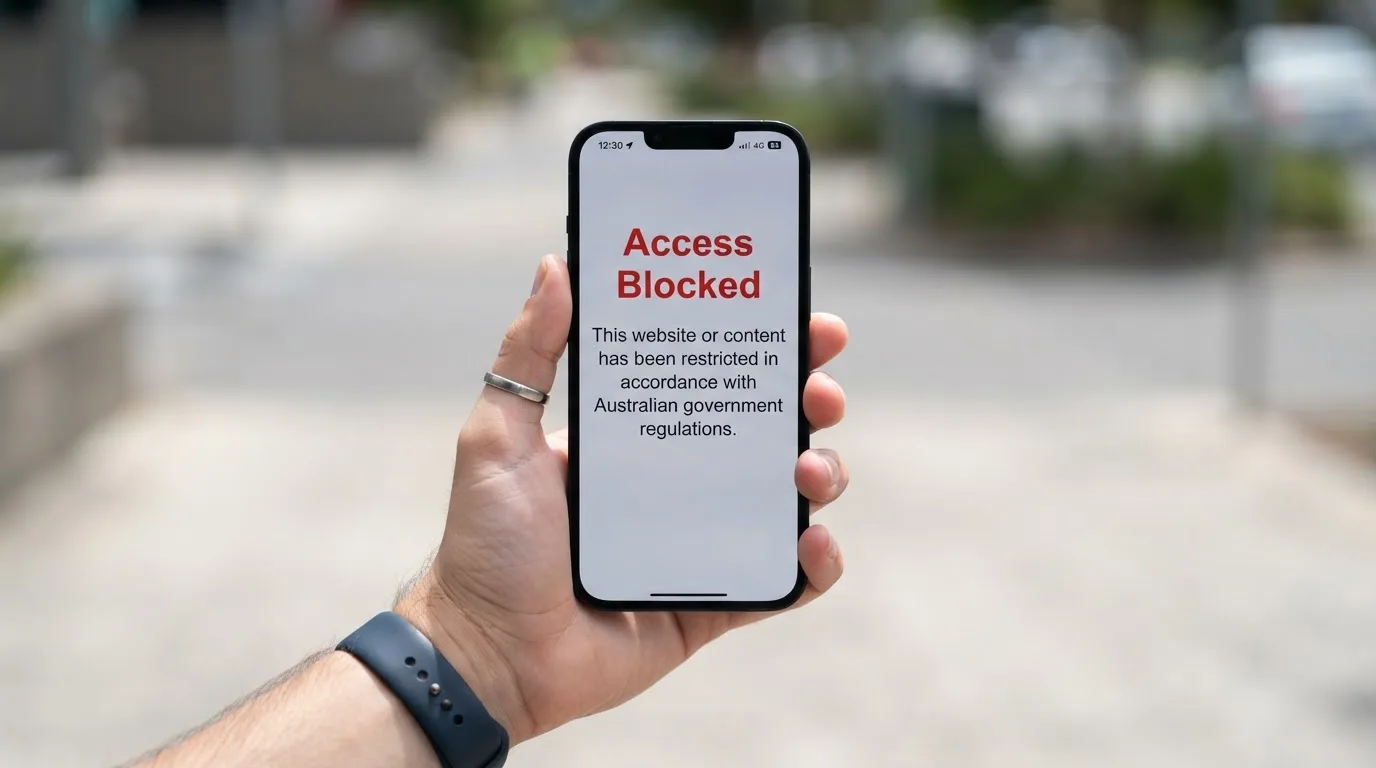
The Australian Communications and Media Authority does the enforcing, and it has built a track record worth knowing about before picking a brand off a list. According to the ACMA as reported in June 2026, a total of 1,751 illegal gambling and affiliate marketing websites had been blocked since the first blocking request in November 2019, and more than 230 unlicensed gambling services had left the Australian market since enforcement was strengthened in 2017. In a single round reported on 26 June 2026 the ACMA asked Australian internet service providers to block another 12 sites: 7Signs, ChromaBet, Donbet, Duospin, Freshbet, Slots Gem, Jacks Club, Lucky Start, Pointsbetz.com, Spinrise, Vinyl Casino and Wildsino.
The blocking rate tells its own story. Taking the running total of 1,751 blocked sites against the period from the first blocking request in November 2019 through to mid-2026 — roughly 79 months — the average works out to somewhere between 22 and 24 blocked sites per month across the lifetime of the regime, with the pace picking up sharply in the most recent rounds. That is the long-run baseline. In any given month since 2019 the ACMA has averaged blocking more than one illegal site every working day.
The losses are not small. H2 Gambling Capital’s 2025 report estimates that Australians lose about A$3.9 billion a year to illegal gambling sites, and that the share of gambling going through legal channels fell from 74% in 2021 to 64%. The legal channel is losing ground even as the ACMA is blocking more sites than ever, which is the gap this page sits inside.
Why the licence on the casino’s own footer is not enough
Every offshore casino carries some form of licence, and the footer is the first place a player looks to feel safe. The footer is also the place where the licence tells you nothing about Australia. A Curaçao e-gaming permit, an Anjouan letter, a Kahnawake registration — these are licences to operate a casino business, not licences to serve Australian residents. The IGA does not recognise them, the ACMA does not enforce them, and an Australian consumer has no complaints body to take a dispute to if a withdrawal is refused or a balance disappears when a site is blocked.
The legal effect of an Australian-licensed service being prohibited matters in three concrete ways. First, the offshore site can be blocked at the ISP level — and if it is blocked with a balance still on the account, the player has no Australian recourse to recover it. Second, the operator has no Australian duty of care around responsible gambling. Third, no dispute resolution service will hear the case, because Australian bodies only have jurisdiction over Australian-licensed operators. The footer is reassurance the operator gives itself.
What is actually on offer, by the ACMA’s own list
Every brand below has been the subject of an ACMA formal warning for offering prohibited interactive gambling services to Australians. That is the only reason each is here: they are the brands that have shown up in the ACMA’s enforcement record, which is the closest thing to an Australian shortlist for online casinos. The dates and operator names come from the ACMA’s formal warning register.
The eleven brands, and what the regulator has said about each
The ACMA’s record on Dama N.V. alone spans four years and seven brands. In May 2022 the ACMA warned Dama N.V. over six of its casino brands: Bambet, Dazard, Level Up, Rocketplay, Wild Tornado and Cobra Casinos. Dama came back in front of the regulator in March 2025 over Woo Casino and again in May 2025 over Spirit Casino. The pattern is the same operator, different brand skins, and it is worth knowing that a rebrand under a new label is not a clean record.
In July 2025 the ACMA widened the warning set considerably. Warnings went to Bamboo Media over Ignition Casino and to Consolutetish S.R.L. over National Casino and Bizzo Casino. Bizzo had already been on the ACMA’s list — a 2022 warning to TechSolutions (CY) Group Limited and TechSolutions Group N.V. had covered it. The ACMA also warned EOD Code SRL in February 2025 over Instant Casino, Ryker B.V. in April 2026 over Jackbit and CasinOK, and Sterplay Holding Ltd in April 2025 over Casino Intense. Hollycorn N.V. has a formal warning on file for Sky Crown and Blue Leo, and Pulsup Ltd drew a formal warning in March 2026 over Rocketplay.com.au.
The table below lays those warnings out side by side. Where the ACMA has acted more than once against the same operator through different brands, the table shows the most recent action.
| Brand | ACMA action and date | Operator named by the ACMA | Subject support |
|---|---|---|---|
| RocketPlay | Formal warning, March 2026 | Pulsup Ltd (Rocketplay.com.au); earlier Dama N.V., May 2022 | Listings reports on Gamblinginsider.com describe the brand; no Australian licence is recognised |
| Level Up Casino | Formal warning, May 2022 | Dama N.V. | Westpac’s gambling block documentation has referenced the Dama N.V. group of brands; no Australian licence is recognised |
| Woo Casino | Formal warning, March 2025 | Dama N.V. | — |
| Spirit Casino | Formal warning, May 2025 | Dama N.V. | — |
| National Casino | Formal warning, July 2025 | Consolutetish S.R.L. | ACMA’s own register, AUSTRAC materials and BetStop have referenced the brand in enforcement and consumer-warning contexts |
| Bizzo Casino | Formal warning, July 2025 | Consolutetish S.R.L.; earlier TechSolutions, 2022 | Gamblinginsider.com listings describe the brand; no Australian licence is recognised |
| Ignition Casino | Formal warning, July 2025 | Bamboo Media | — |
| Instant Casino | Formal warning, February 2025 | EOD Code SRL | ecoPayz and PayID payment materials have listed the brand among offshore casino operators using those rails |
| Jackbit | Formal warning, April 2026 | Ryker B.V. | — |
| Casino Intense | Formal warning, April 2025 | Sterplay Holding Ltd | AUSTRAC and BetStop materials, plus Gamblinginsider.com listings, reference the brand |
| Sky Crown | Formal warning, September 2022 | Hollycorn N.V. | — |
The “—” in the right-hand column is a deliberate gap, not an oversight. Where no Australian-facing listing source — the ACMA’s own register, AUSTRAC materials, BetStop, Gamblinginsider.com, the major banks’ gambling-block documentation, PayID or ecoPayz — has named the brand in an enforcement, consumer-warning or payment-context sense, there is nothing to put there. The brands that carry entries are the ones that have shown up on at least one such listing.
What the table actually shows
Two patterns stand out from the column of operator names. The first is that one operator can hold a stable of brands that look like competing casinos to a player and read like a portfolio to the regulator: Dama N.V.’s seven warnings across four years cover what looks like six different casinos but is one company running six front doors. Hollycorn N.V. is the same shape, two brands under one warning.
The second is that a formal warning is not a one-off event. A 2022 warning to TechSolutions covered Bizzo Casino; the ACMA warned Consolutetish S.R.L. over the same brand in 2025, with a different operator entity attached. Either the brand changed hands, or a new corporate wrapper opened up in front of an existing operator, and both are common in offshore gambling. The pattern a player should treat as a signal is a brand that has drawn a regulator’s attention in two different corporate forms.
The third column is also doing more work than it looks. Where BetStop, AUSTRAC and the major banks’ gambling-block pages have all named a brand, that is a brand the Australian payments and self-exclusion infrastructure has had to engage with — which means deposits from Australian cards have been attempted at that brand often enough for the rail operators to be aware of it. That is not a quality endorsement; it is a footprint.
How the money actually moves in Australia
The phrase “instant withdrawal” describes a settlement experience that Australia genuinely has — for legal products, and within the rails of the New Payments Platform. The trick is that the speed of the rail has been confused with the legality of the product on either end of it.
PayID, Osko and the New Payments Platform
Australia’s New Payments Platform went live to the public on 13 February 2018 and is owned by New Payments Platform Australia Ltd, a non-profit whose 13 shareholders include the Reserve Bank of Australia and the country’s major banks. By April 2025 more than 25 million PayID identifiers had been registered on it. PayID-based transfers are available at over 100 Australian financial institutions, and participants in the platform are required to keep its monthly outages to no more than two minutes — the infrastructure is built for always-on service, not best-effort.
The two services that come off the NPP for retail use are Osko and PayID. With Osko, a bank transfer between participating Australian banks arrives in under a minute, 24/7 including weekends, addressed either to a BSB and account number or to a PayID. In 2021 the ACCC authorised merging NPP Australia with BPAY and eftpos into a single company, Australian Payments Plus (AP+), so the operator of PayID and Osko is the same entity that runs the bill-payment rail.
What this means for the speed claim is real. A bank-to-bank transfer in Australia between participating institutions genuinely can arrive in under a minute. What it does not mean is that an offshore casino is on the other side of that transfer in any way the ACMA recognises. The transfer will be fast; the casino is still prohibited.
PayID has its own consumer-protection angle. Paying to a PayID shows the name of the account holder before the transfer is sent, and AP+ warns that being asked to transfer money to a PayID on an illegal gambling site almost certainly means a scam site. That warning is on the PayID website itself, in plain language.
BPAY, eftpos and the bill-payment rail
BPAY is a separate beast: a bill-payment service in online banking where the payer enters a Biller Code and a Customer Reference Number printed on the bill. It has operated in Australia since 1997, is available in the online banking of over 140 banks and financial institutions and is offered by over 95,000 businesses. It is owned equally, via the parent company Cardlink Services Limited, by Australia’s four major banks: ANZ, Commonwealth Bank, National Australia Bank and Westpac.
BPAY sits on the same Australian Payments Plus (AP+) infrastructure as PayID and Osko. Its job is to pay bills, not to settle casino withdrawals, which is why an offshore casino asking a player to “deposit via BPAY” is asking them to type a Biller Code and Customer Reference Number into their own bank’s bill-payment screen — at which point the bank records a bill payment to a named biller, not a casino deposit.
AUSTRAC thresholds and what gets reported
AUSTRAC’s threshold-transaction-report rule, which requires reporting of transfers of A$10,000 or more, applies only to physical cash. Ordinary electronic bank transfers are not subject to that per-transaction reporting requirement, regardless of the amount sent. This matters in two directions. Players who assume a large casino withdrawal will trigger an AUSTRAC report are working from an outdated mental model — the threshold does not bite on electronic transfers. Players who assume an offshore casino’s payment processor is regulated by AUSTRAC in the same way an Australian-licensed bookmaker’s is are also working from an outdated model: AUSTRAC oversees anti-money-laundering compliance at the Australian financial institution, not at the offshore casino.
Credit cards, Apple Pay and the 2024 ban
Under the Interactive Gambling Act 2001 as amended in 2023, Australian-licensed online wagering services cannot accept payment by credit card or other credit-related products. That restriction also constrains gambling use of linked digital wallets like Apple Pay, because the wallet is drawing on a credit-funded card. The change took effect on 11 June 2024, with penalties of up to $247,500 for operators that take the payment anyway.
Two banking sector notes belong beside this rule. Westpac’s gambling block works at card level: it refuses authorisation of transactions registered under the merchant category code ‘Betting/Casino Gambling’ on eligible personal credit and debit cards. ANZ’s gambling transaction block, activated in the ANZ app, also blocks gambling transactions made through a digital wallet such as Apple Pay on an eligible card, not just the physical card. Once a customer turns on ANZ’s gambling block, removing it again requires a 48-hour waiting period, and the bank warns that not all gambling transactions will be blocked and some non-gambling transactions might be blocked in error — which is the honest version of what a gambling block does.
Apple’s own positioning on the wallet is that it does not charge fees to consumers for using Apple Pay in stores, online or in apps, and that any surcharge comes from the merchant’s own card-processing fees, not from Apple. Apple also states that transaction limits and PIN requirements for Apple Pay purchases are set by the card issuer or merchant, not by Apple. That sets up an odd triangle: the wallet does not charge, the bank may block, the merchant category code decides which transactions are caught.
American Express, mobile wallets and the wider card picture
American Express was established in 1850 as a freight-forwarding company and later became a card issuer, launching its first charge card on 1 October 1958; unlike Visa or Mastercard’s four-party network, Amex traditionally issues cards and processes transactions itself as a three-party scheme. The Reserve Bank of Australia’s July 2025 review proposes removing surcharges only on eftpos, Mastercard and Visa card transactions, explicitly leaving American Express outside the scope of the proposed surcharge ban — which is why Amex merchants can still pass on a surcharge and why Amex acceptance is patchier at small operators.
By the end of 2025, Apple Pay, Google Pay and Samsung Pay transactions collectively accounted for around 45% of all card payments in Australia by number. That share is what makes the credit-card ban via digital wallet a meaningful constraint on offshore gambling: the wallet is the route many Australians use to pay online, and the bank can block that route at the card level.
Commonwealth Bank’s gambling lock
Commonwealth Bank lets customers apply a gambling lock to eligible cards via the CommBank app, which automatically blocks most gambling transactions, though the bank states it cannot guarantee all gambling-related purchases will be stopped. The honest version, again: a gambling lock blocks what the merchant category code recognises, and an offshore casino is not always coded cleanly as a gambling merchant to the acquiring bank.
Crypto and the no-verification claim
The phrase “instant withdrawal no verification casino” runs hot in this corner of the market, and it deserves its own section because two different things are being promised at once.
What crypto settlement actually changes
A withdrawal in Bitcoin, Ethereum or USDT settles on the relevant blockchain at the network’s own confirmation speed. Bitcoin blocks confirm roughly every ten minutes under steady conditions; Ethereum blocks are faster, often under a minute; USDT is typically carried on Ethereum or Tron and inherits whichever speed applies. The settlement is genuinely fast at the network layer and genuinely does not require the casino to know who the player is at the point of disbursement — the wallet address receives the funds and the network does not ask for a name.
What that does not change is what the casino is. A crypto withdrawal that arrives in fifteen minutes from a Curaçao-licensed casino that has been on the ACMA’s warning list is still a withdrawal from a casino the ACMA has warned. The “no verification” part is real in the sense that the casino can disburse without a KYC step at the moment of payout, and it is also a meaningful tell: a casino that does not verify identity is a casino that will not help the player when something goes wrong, because the casino’s own records cannot prove the player is the player.
Why a no-verification casino is a louder warning, not a softer one
The legitimate reasons an Australian-licensed operator verifies identity are anti-money-laundering compliance, responsible-gambling obligations and dispute resolution. A casino that skips all three to advertise an instant withdrawal is advertising that it does not do those three things. The Australian player who values fast payouts above those safeguards gets exactly what is being sold, and exactly what is being sold is what the IGA and ACMA enforcement are aimed at.
The bank-block side matters here too. AUSTRAC oversees Australian reporting entities — the banks, the exchanges, the remittance networks — not the offshore casino. A withdrawal that arrives as crypto can be sold on an Australian-registered exchange, at which point the exchange’s KYC applies. The “no verification” claim is best read as a claim about the casino’s own onboarding, not about the whole chain of getting the funds into an Australian bank account.
Where crypto actually does sit in the IGA frame
The 2023 amendments to the Interactive Gambling Act 2001 banned digital currency as a payment method for licensed Australian online wagering from 11 June 2024. That is the legal position for licensed Australian wagering: no credit, no crypto, only debit-style routes. It is also the clearest single signal of where the Australian regulator draws the line on payment methods, and the offshore casino asking for either is operating outside the Australian rulebook.
Responsible gambling: what still works from Australia
For Australian-licensed wagering — sports and racing — the responsible-gambling machinery is real and connected. For offshore online casinos, none of it applies. The distinction is the single most important thing a reader of this page needs to know.
BetStop, the National Self-Exclusion Register
BetStop, the National Self-Exclusion Register, has been live since August 2023. It binds Australian-licensed online and phone wagering services — sports, racing, the lot — to a single national exclusion list. A player who registers with BetStop cannot open new accounts with Australian-licensed wagering operators, and existing accounts are closed and balances returned under the operator’s own procedures. The technical reach is national because the register is national; the practical reach is limited to the wagering services that hold Australian licences.
The limit on BetStop’s reach is the same limit on the rest of this page. An offshore online casino is not licensed in Australia, is not connected to BetStop, and is not bound by the National Self-Exclusion Register’s terms. A BetStop registration does not stop an offshore casino from accepting a deposit, and an offshore casino’s own self-exclusion tool — usually a per-account setting that requires a login to set — is not a substitute for the national register because it does not carry across operators.
The National Gambling Helpline
The National Gambling Helpline on 1800 858 858 is free, 24/7 and has chat support at Gambling Help Online. It is funded to help Australians regardless of which product is causing harm — licensed wagering, pokies at the pub, the offshore casino the ACMA has been warning about for years. The helpline is the single most useful number on this page, and the most useful reason to read it.
What a gambling block on the bank card does and does not do
The major banks’ gambling-block tools — Westpac’s gambling block, ANZ’s gambling transaction block, Commonwealth Bank’s gambling lock — all work at the card level by refusing authorisation on the merchant category code ‘Betting/Casino Gambling’. They are useful, they are blunt, and they are honest about their limits: the bank documentation carries the same warning in each case, that not all gambling transactions will be blocked and some non-gambling transactions might be blocked in error.
The bluntness is the value. A gambling block does not rely on the player’s willpower on a given night, and it does not rely on the casino’s own self-exclusion tool being switched on. It refuses the transaction at the rail. The trade-off is the false positives — a transaction to a sports-book that happens to share a MCC code with casino gambling will also be refused — and the convenience cost of having to remove the block for non-gambling payments, which ANZ handles with a 48-hour cooling-off period before the block can be lifted.
What self-exclusion cannot do on an offshore casino
Self-exclusion on an offshore casino is a setting inside one account, on one site, that a player can switch on. It does not carry across to the next offshore casino the player opens an account with, and it does not carry across to the next skin the same operator opens under a new brand. The casino’s compliance team will enforce it as far as the casino’s own systems reach, which is the account and not the player. The register that does carry across — BetStop — does not apply to offshore casinos, because offshore casinos are not Australian-licensed.
The practical version is to use both: BetStop for the licensed wagering side, and a gambling block on the bank card to refuse the rail entirely. Neither one alone closes the offshore casino route.
Where an Australian reader can play lawfully
The lawful gambling offer in Australia is not what most of this page has been about, and it is worth stating plainly so a reader knows what does exist.
Licensed wagering on sport and racing
Sportsbet, Bet365, Ladbrokes and the rest of the NTRWC’s 52-bookmaker roster are licensed in the Northern Territory and accessible to Australian residents. Wagering is placed before the event, not in-play, and the deposit rails are debit card, bank transfer, PayID and BPAY — no credit, no crypto. The same responsible-gambling machinery described in the previous section applies in full.
Lotteries and keno
State and territory lotteries are the licensed lottery offer, with keno offered in some jurisdictions at licensed venues. The lottery corporations are public bodies and the deposit rails are the standard Australian retail rails.
Land-based casinos and licensed pokies venues
Australia has land-based casinos in each state and territory, with Crown Melbourne, Crown Perth, The Star Sydney, The Star Gold Coast, SkyCity Adelaide and the Jupiter casino complex on the Gold Coast among the largest. Pokies are licensed at clubs and hotels in every state and territory under different rules — the ACT has the strictest pokies regime, with a maximum of 200 poker machines in the territory and the machines capped at A$2 per spin in clubs. Pokies losses in Australia are the largest single line in the national gambling accounts.
What lawful gambling does not include
Online casino games — slots, table games, live dealer — are not licensed for Australian residents and are not lawfully offered by any Australian operator. A casino site asking for a deposit from an Australian customer is, by definition, operating outside the Australian rulebook, regardless of the licence it displays. The rest of this page describes what that gap looks like in practice.
What this comparison found, and what it does not
Eleven brands have shown up on the ACMA’s formal warning register over the past four years, all of them for offering prohibited interactive gambling services to Australians. The pattern is consistent: an offshore operator with multiple brand skins, a formal warning that the brand has to disclose or not, a rebrand or corporate reshuffle that puts the brand in front of the regulator again, and a payments setup that leans on PayID, BPAY or crypto to look like an Australian product without actually being one.
What the comparison cannot do is recommend a brand. Every brand on the list is on the list for the same reason: the ACMA has decided they offered a product that is prohibited for Australian residents. The job of this page is to name them, lay out the regulator’s record against each, and let the reader see what the gap between the marketing claim and the Australian legal position actually looks like. The lawful path is the licensed wagering offer, the land-based venues and the responsible-gambling tools that reach those products.
For an Australian reader who came here looking for a short list of instant withdrawal casinos, the honest answer is the short list has one row in it, and it is empty.
Frequently asked questions
What is the difference between a payout and a withdrawal request?
A withdrawal request is the instruction the player gives the casino to send funds back; a payout is what arrives once the casino has processed that instruction. The “instant” claim is about the gap between the two, and most of that gap sits inside the casino’s own processing queue rather than inside the Australian payment rail. Once the casino releases the funds, a transfer through PayID or Osko genuinely can arrive in under a minute — but the time before the casino releases them is the casino’s own.
Why might a casino require identity verification before an instant withdrawal?
The legitimate reasons are anti-money-laundering compliance, responsible-gambling obligations and the casino’s own dispute-resolution procedure. Australian-licensed wagering operators are required to verify identity before paying out; an offshore casino that skips the step is advertising that it does not do those three things, which is a louder warning than a feature. The verification is also what gives the player a path to complain if the payout is delayed or refused, because the casino’s records have to be able to prove the player is the player.
Is it legal for an online casino to process withdrawals for players in Australia?
No. The Interactive Gambling Act 2001 prohibits offering online casino games to anyone in Australia, and no Australian state or territory licenses them. The penalty sits with the provider, not the player, so a withdrawal that arrives is not a criminal matter for the punter — but it is a withdrawal from a casino operating outside the Australian rulebook, with no Australian consumer protection and no Australian recourse if a dispute follows. The same Act, amended in 2023, banned credit cards and crypto as payment methods for licensed wagering from 11 June 2024, which is the clearest signal of where the regulator has drawn the line.
Can a bank transfer withdrawal arrive within minutes in Australia?
Yes, between participating banks through Osko, the New Payments Platform service that settles bank-to-bank transfers in under a minute, 24/7. PayID-based instant transfers are available at over 100 Australian financial institutions, and more than 25 million PayID identifiers had been registered on the platform by April 2025. What the speed does not change is the legal status of the casino on the other side of the transfer. A bank-to-bank transfer to a PayID on an illegal gambling site almost certainly means a scam site, in the words of Australian Payments Plus itself.
Does a crypto withdrawal skip identity checks entirely?
At the moment of payout, often yes — the wallet address receives the funds and the network does not ask for a name. What that does not change is the casino’s own legal status, and it does not change the fact that selling the crypto on an Australian-registered exchange will bring the player back into KYC at the exchange end. The “no verification” pitch is best read as a description of the casino’s onboarding, not of the whole chain of getting the funds into an Australian bank account. The 2023 amendments to the Interactive Gambling Act also banned digital currency as a payment method for licensed Australian wagering from 11 June 2024.
What red flags suggest an instant withdrawal claim is not genuine?
The reliable tells are a casino operating without an Australian licence (which is every offshore casino targeting Australian residents), a withdrawal method that the player cannot route through their own bank’s standard retail rails, and an offer that promises no identity verification at all — because the verification is what gives the player recourse if something goes wrong. The ACMA’s formal warning register is itself the list of brands that have shown the red flags in the regulator’s own language, with eleven operators named over the past four years.