
Best Australian Online Pokies in 2026: What’s Real, What’s Blocked, and What a Player Is Actually Buying
29 October 2026 · Cross-checked against ACMA formal-warning and site-blocking registers, the Interactive Gambling Act 2001, and the National Self-Exclusion Register (BetStop).
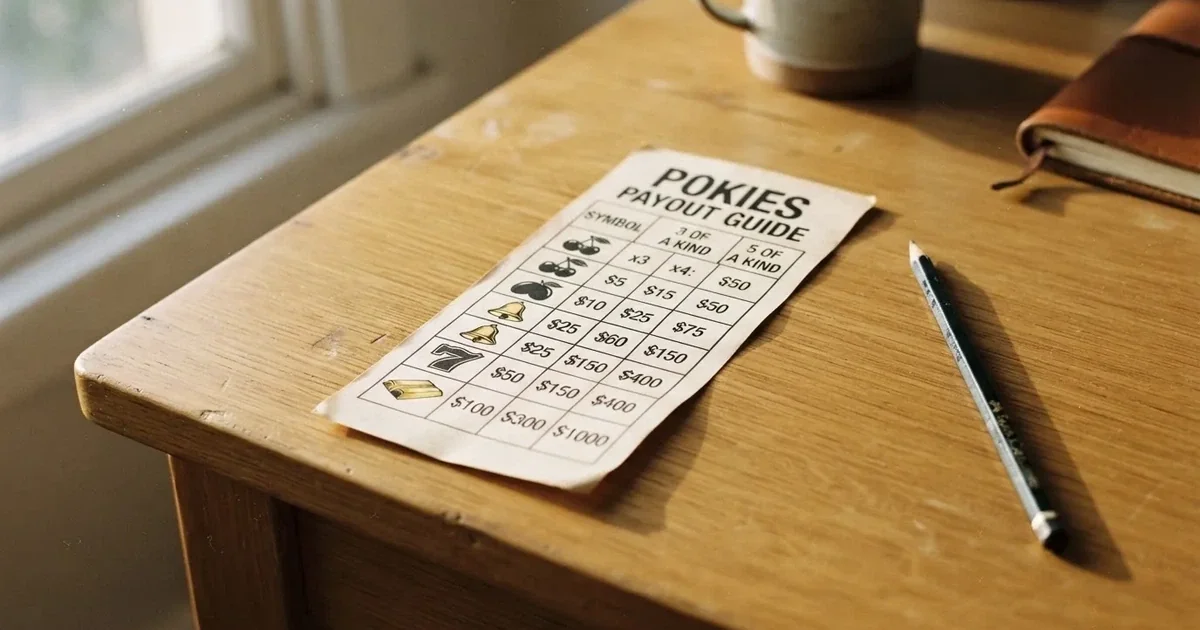
The thing this search is really asking about — “best Australian online pokies” — does not exist as a licensed product anywhere in the country. The Interactive Gambling Act 2001, strengthened in 2017, makes it an offence to provide online casino games or online pokies to anyone in Australia, and no state or territory body issues a licence for them. What does exist, in two parallel streams, is the land-based pokie (regulated state by state inside pubs, clubs and casinos) and a long tail of offshore sites the Australian Communications and Media Authority has been warning and blocking for years. Both streams sit inside this page. The “best online pokies” framing collapses the moment you look at it sideways, because no operator in the first stream is offering online pokies, and every operator in the second stream is doing so against Australian law.
That is the lens for everything below. The reader is weighing offers from offshore operators the ACMA has already named, plus a stack of bonus terms, payment routes and game mechanics the law does not protect them on. The cost of an offer here is not the bonus headline. It is the wagering multiple, the max-cashout cap, the absence of a complaint body and the chance the site vanishes behind a block while a balance is still on it. The arithmetic later in the page names those costs in concrete numbers; the operator reviews that follow carry the same logic in plain words.
Table of Contents
- How Online Pokies Sit Inside Australian Gambling Law
- Responsible Play: What Help Looks Like When Something Has Gone Wrong
- Payments on Offshore Sites: What “PayID” and “Instant Withdrawal” Actually Mean Here
- Bonus Terms: What “Free Spins” and “Welcome Bonuses” Cost the Person Claiming Them
- Mobile and App Play: What “Australian Pokies App” Means in Practice
- What a Paytable Actually Shows on a Pokie
- Overview of Brands Named by the ACMA
- How Fast the Block List Is Growing
- What the Land-Based Pokies Market Looks Like in Numbers
- Operator Reviews: What Each ACMA-Warned Brand Actually Carries
- Tax, Withdrawals and the Bottom Line on Money
- The Verdict on “Best Australian Online Pokies in 2026”
- Frequently Asked Questions
How Online Pokies Sit Inside Australian Gambling Law
The single most important sentence on this page is also the simplest. Online pokies are prohibited for people in Australia under the Interactive Gambling Act 2001, and every subsequent paragraph is shaped by it.

The Act targets the provider, not the individual player. No Australian has been prosecuted for placing a bet with an offshore casino, but the operator offering the game to Australians commits an offence, and the ACMA has spent the better part of a decade making that offence expensive. The minimum age to gamble in Australia is 18. The things that are licensed online are wagering on races and sport before the event, lotteries and keno — in practice most online bookmakers carry a Northern Territory Racing and Wagering Commission (NTRWC) licence, the same Territory body that supervises 52 of the country’s licensed bookmakers including Sportsbet, Bet365 and Ladbrokes. The NTRWC runs on a part-time footing, meeting monthly in Darwin. None of those licensed services extends to casino games or online pokies.
What the ACMA has been doing about offshore offers
The ACMA’s three tools are formal warnings, formal infringements and site-blocking requests to ISPs. They are not theoretical. As of the round reported on 26 June 2026, the ACMA had asked Australian internet service providers to block 1,751 illegal gambling and affiliate marketing websites since the first blocking request in November 2019, and more than 230 unlicensed gambling services had left the Australian market since enforcement was stepped up in 2017. The same June 2026 round added a further 12 websites to the blocking list: 7Signs, ChromaBet, Donbet, Duospin, Freshbet, Slots Gem, Jacks Club, Lucky Start, Pointsbetz.com, Spinrise, Vinyl Casino and Wildsino. Every operator reviewed later in this article appears on the ACMA’s own register of formal warnings.

Why the ACMA’s action matters to a player
A site the regulator has formally warned is not the same thing as a site that has been convicted, but the practical consequences converge. A formal warning is published. ISP-level blocking follows. A balance held on the site at the moment the block is applied is, in practice, stranded — there is no Australian complaints body that can chase it, and the operator is by definition outside any Australian jurisdiction. An offshore site gives the player none of the consumer protections a locally licensed wagering service gives by default: no Australian dispute resolution, no enforceable withdrawal timeline, and no connection to BetStop.
The interactive gambling amendment that takes effect next year
On 19 August 2026 Parliament passed the Interactive Gambling Amendment (Gambling Reform) Bill 2026. Its advertising and inducement measures commence 1 January 2027. On a page read in 2026 this is a law with a start date, not a law in force. The reforms tighten what inducements licensed operators can offer and are aimed squarely at the kind of bonus-led marketing the offshore market relies on. They do not legalise online pokies.
Responsible Play: What Help Looks Like When Something Has Gone Wrong
The framing of “best pokies” assumes the player is choosing between options on equal footing. The framing of responsible gambling assumes the player can lose the run of themselves, and most do at some point. The help on offer in Australia is real, free, confidential and available around the clock.
The national telephone line is 1800 858 858, free from any Australian phone, 24 hours a day. The same service runs an online chat at Gambling Help Online. Both are run by qualified counsellors and both are designed for the player who is starting to worry — before a crisis, not after one. There is no cost to calling and no record of the call beyond the counsellor’s case file.
The other tool worth knowing about is BetStop, the National Self-Exclusion Register, live since August 2023. A player can register online and the exclusion applies to every Australian-licensed online and phone wagering service at once. That is its limit. BetStop binds licensed Australian operators; an offshore casino is not connected to it and cannot honour the exclusion even if it wanted to. Self-exclusion is a real protection for someone who sticks to locally licensed services, and a partial one for someone who does not.
For the offshore case specifically, the protection landscape collapses. No dispute resolution. No enforceable payout timeline. No way to compel the operator to honour a self-exclusion it never signed up to. The state-based help lines cover offshore gambling harm too, but they cannot recover a withdrawal that an offshore site has declined.
Payments on Offshore Sites: What “PayID” and “Instant Withdrawal” Actually Mean Here
Payment language on offshore pokies sites is some of the most inventive marketing on the internet, and some of the least informative. A few specifics the Australian reader will run into deserve to be named for what they are.
PayID is an Australian real-time payment rail that sits on top of the New Payments Platform. It moves money between Australian bank accounts in seconds, and it is one of the four deposit methods approved for licensed Australian wagering — the others being debit card, bank transfer and BPAY. PayID itself does not know what the money is for. A PayID deposit into an offshore casino is still a deposit into an offshore casino, and the offshore casino is still prohibited from offering the product.
Instant withdrawal and fast payout mean different things on different sites, and on none of them is the timeline enforceable by an Australian regulator. The page keeps these terms at arm’s length for a reason. The only withdrawal speed a player can rely on is the one a licensed Australian operator publishes in its own terms.
Credit cards and digital currency have been banned as payment for licensed online wagering in Australia since 11 June 2024. Penalties for licensed operators accepting them run to A$247,500. A site that asks an Australian punter for a credit card or a crypto deposit is operating outside the Australian rules. That is not a tax quirk or a paperwork point. It is the marker of an offshore operator.
The broader picture: legal wagering losses in Australia are estimated at about A$3.9 billion a year for illegal sites alone (H2 Gambling Capital, 2025), and the share of gambling going through legal channels has fallen from 74% in 2021 to 64%. A player choosing an offshore site is choosing the majority path, and the consumer-protection consequences that come with it.
Bonus Terms: What “Free Spins” and “Welcome Bonuses” Cost the Person Claiming Them
The vocabulary of online casino bonuses is built to convert a casual reader into a depositing player. A few of its common terms deserve a precise gloss.
A welcome bonus is a matched deposit — the operator matches a percentage of the first deposit with bonus money. A free spins offer is a fixed number of spins on a named slot at a fixed stake value. A no-deposit bonus is a small credit given without a deposit. A wagering requirement (also called playthrough or rollover) is the multiplier the player must bet through before withdrawing the bonus or any winnings from it. A max-cashout cap is the ceiling on what the player can withdraw from bonus-derived winnings, regardless of how much they actually won.
Two numbers matter more than any others. The wagering multiple decides how much real turnover the bonus costs the player before it can be withdrawn. A A$100 bonus with a 40x wagering requirement means A$4,000 of real turnover before withdrawal, and most of that turnover is lost in expectation at the house edge. The max-cashout cap decides how much of any winning the player can actually take away. A “free” A$100 bonus with a 5x max cashout caps winnings at A$500, regardless of how the spins actually went.
The page does not print any single operator’s bonus terms as a working offer — every site in the operator set below was sourced only from affiliate marketing pages, and affiliate pages are not an honest source for the terms they advertise. The mechanics above apply wherever the marketing page promises a welcome bonus, and they are the only honest reading of the offer.
Mobile and App Play: What “Australian Pokies App” Means in Practice
There is no locally licensed Australian pokies app, because there are no locally licensed online pokies. The product does not exist; the app cannot.
The offshore market has apps and mobile browser sites in abundance. They are not in the Apple or Google stores for Australian users — Apple and Google have policies that keep real-money casino apps out of the Australian store — so they are typically installed as direct downloads from the operator’s site, which means they are installed outside the two platform safeguards a normal app would sit inside. Updates are not automatic, security review is not automatic, and a blocked site can leave the app stranded in the same way a blocked domain strands a logged-in browser tab.
The mobile-browser version of a pokies site does what the desktop version does, in a smaller window. There is no separate product. The mechanics — bonus terms, wagering requirements, withdrawal timelines, game selection — are the same on a phone as on a laptop.
What a Paytable Actually Shows on a Pokie
A reader who has only played in a pub or club is dealing with the same basic machine offshore, but the vocabulary is worth setting out plainly.
A pokie is an Australian-English term for an electronic gaming machine, usually a multi-line video slot. Reels are the vertical columns that spin. Paylines are the patterns of matching symbols that pay out. The paytable lists what each symbol is worth, what each combination pays, and which combinations trigger bonus features like free spins. Volatility is the spread of outcomes — high volatility means rare big wins, low volatility means frequent small ones. RTP (return to player) is the long-run percentage of money wagered that the machine returns to players.
The legally mandated minimum RTP for pokies in Australian venues varies by state: 85% in NSW, the Northern Territory, Queensland and (generally) Victoria, 87% at Crown Melbourne specifically, 87% in the ACT and Tasmania, 87.5% in South Australia and 90% in Western Australia. The offshore market publishes its own RTP figures, and they sit anywhere from about 94% to 97% for the better-known video slots. The first number is enforced by a state regulator; the second is published by the operator and is not enforced by anyone a punter can complain to.
A note on live tables and providers
The same legal frame that prohibits online pokies prohibits online live-dealer casino tables. The baccarat and blackjack tables inside Australian casinos (Crown Melbourne’s three baccarat variants, Crown Sydney’s tables, Crown Perth’s tables) are land-based tables, not online products. Offshore sites that advertise “live baccarat” or “live blackjack” with Australian-friendly hours are streaming from studios outside Australia, and the consumer protections on those tables are the same non-existent ones that apply to the offshore pokies.
Overview of Brands Named by the ACMA
This is not a ranking. A ranking implies a winner. No offshore operator on the ACMA’s formal-warning list is a “winner” by any measure an Australian punter can act on, because each of them is prohibited from offering the product in the first place.
The point of the comparison below is to lay out the operators the ACMA itself has acted on, and to attach to each the few facts that research could verify. Every operator in the table has been the subject of a formal ACMA warning for offering prohibited services to Australians. None has an Australian licence. The dates are the dates the ACMA published the warnings.
| Brand | ACMA action and date | Operator named by the ACMA | Game and provider footprint |
|---|---|---|---|
| RocketPlay | Formal warning, March 2026 (earlier warning May 2022 to Dama N.V.) | Pulsup Ltd (Rocketplay.com.au); earlier Dama N.V. | — |
| Level Up Casino | Formal warning, May 2022 | Dama N.V. | Listed by BGaming among partner casinos |
| Woo Casino | Formal warning, March 2025 | Dama N.V. | — |
| Spirit Casino | Formal warning, May 2025 | Dama N.V. | — |
| National Casino | Formal warning, July 2025 | Consolutetish S.R.L. | Listed on Wikipedia’s Australian online gambling overview as a named offshore brand |
| Bizzo Casino | Formal warning, July 2025 (earlier warning 2022) | Consolutetish S.R.L.; earlier TechSolutions Group | — |
| Ignition Casino | Formal warning, July 2025 | Bamboo Media | — |
| Instant Casino | Formal warning, February 2025 | EOD Code SRL | — |
| Jackbit | Formal warning, April 2026 | Ryker B.V. (Jackbit and CasinOK) | — |
| Casino Intense | Formal warning, April 2025 | Sterplay Holding Ltd | Cited in ABC reporting and ACMA publications |
| Sky Crown | Formal warning, September 2022 | Hollycorn N.V. (Sky Crown and Blue Leo) | — |
Two structural points the table makes. First, the ACMA’s reach is operator-level, not just brand-level: Dama N.V. surfaces five times across the warning list (Level Up, Rocketplay’s earlier incarnation, Woo, Spirit and Wild Tornado), Consolutetish S.R.L. surfaces twice (National Casino and Bizzo), and the same operator often re-emerges under a different brand after a warning, because the warning binds the operator, not the URL. Second, the age of the warnings is recent across the board — the bulk fall in 2025 and 2026 — which is what one would expect from an enforcement pattern that has tightened since the 2017 amendments. There is no operator on the list whose warning has gone quiet long enough to suggest compliance.
How Fast the Block List Is Growing
The page’s calculation is about enforcement throughput — the speed at which the ACMA has converted its blocking-power into actual blocked domains since the November 2019 start. Two numbers anchor it: the total blocked by the round reported on 26 June 2026, 1,751 websites, and the date of the first blocking request, November 2019.
The arithmetic is straightforward. From November 2019 to June 2026 is roughly 79 months. Across that span, 1,751 blocking actions gives a working throughput of roughly 22 blocked websites per month, or about 265 per year averaged across the full enforcement window. The figure is not steady. Earlier years ran lighter; recent rounds have been heavier. A round in mid-2026 alone added 12 names, and the round before that added another dozen.
Stated as a band: roughly 20 to 30 websites blocked per month since enforcement began, with a long tail of monthly variation. The condition is the simpler one — that the count cited is the cumulative number of blocking requests the ACMA has issued to ISPs, not the number of unique operators (some operators sit behind multiple domains) and not the number of withdrawal complaints the ACMA has handled. It is a measure of how fast the regulator is willing to swing its main tool, and over seven years that tool has been swung about 1,750 times.
The consequence for a player is blunt. A balance held on an offshore site when a new blocking round drops can be stranded in the same week. There is no notice period, no compensation mechanism and no Australian complaints body that will chase the money on the punter’s behalf. The throughput above is the speed at which that risk materialises.
What the Land-Based Pokies Market Looks Like in Numbers
The contrast makes the offshore market legible. The land-based pokie is the product the law does regulate, and its size is what the offshore market sits next to.
In 2020–21 Australians bet almost A$150 billion through gaming machines and lost A$12.18 billion on them. Australia has about 3% of the world’s pub and club poker machines despite having 0.3% of the global population. New South Wales alone runs 87,298 gaming machines outside casinos across 2,195 venues (June 2023), with player losses of A$8.18 billion in 2022–23. Queensland had 21,122 machines in 351 venues (October 2023). Victoria operates 26,380 machines outside Crown Casino in 488 venues under a 30,000-machine statewide cap.
These machines have been in clubs since 1956 in NSW, where they first operated legally. Tasmania ran a single-operator monopoly over its machines from 1968 until November 2021, when legislation moved oversight to the Tasmanian Liquor and Gaming Commission and planned nation-leading mandatory pre-commitment cards — implementation delayed until late 2025. Western Australia banned poker machines in pubs and clubs when Crown Perth opened in 1985; Crown Perth’s machine floor has since grown from about 200 to roughly 2,500, all approved by the state’s Gaming and Wagering Commission.
The point of these numbers is not to recommend a venue. It is to show what a regulated Australian pokie market looks like in scale, and what an offshore online market is offering the punter as an alternative. The two products look superficially similar — same reels, same paylines, same bonus features — but the consumer-protection floor under them is several orders of magnitude apart.
Operator Reviews: What Each ACMA-Warned Brand Actually Carries
The reviews below do not recommend. They describe each brand on the few facts research could verify, and close on a verdict about what the brand is — and is not — for an Australian punter.
RocketPlay
Pulsup Ltd was the named operator in the ACMA’s March 2026 formal warning for offering prohibited online casino services to Australians. The same brand had earlier surfaced in the May 2022 warning to Dama N.V. across six brands including Rocketplay. The site has been the subject of two formal ACMA warnings roughly four years apart, which is the kind of pattern that tells the reader the operator has not changed its Australian-facing offering in response to the first warning. Verdict: an offshore brand on its second ACMA warning, with no Australian licence and no Australian complaints path a player can use.
Level Up Casino
Dama N.V. was the named operator in the May 2022 formal warning, one of six brands the ACMA named in that round (the others were Bambet, Dazard, Wild Tornado, Cobra Casino and Rocketplay). Level Up is the only brand on this list for which research could verify a third-party provider footprint — BGaming lists it as a partner casino. The provider footprint is not a recommendation; it is a sign that the site carries a real-money games catalogue that includes BGaming titles, which the punter can verify without trusting the operator’s own marketing. This site is an offshore brand under an ACMA warning that also covers five other sister sites, and its third-party footprint is limited to a listing on an affiliate’s partner page.
Woo Casino
Dama N.V. was the named operator in the March 2025 formal warning. The brand is a second Dama N.V. appearance after the 2022 round. Research could not verify any third-party provider footprint. Verdict: an offshore brand on the same operator-level warning list as Level Up, without the verifiable provider footprint that Level Up carries.
Spirit Casino
Dama N.V. was the named operator in the May 2025 formal warning, the third Dama N.V. appearance on this page after the 2022 round and the Woo Casino warning. The pattern — same operator, three warnings, two years — is itself the most useful fact about the brand. Three warnings in three years for this operator indicate a recurring pattern of prohibited service provision without any shift toward compliance.
National Casino
Consolutetish S.R.L. was the named operator in the July 2025 formal warning. The brand has a third-party footprint research could verify — it appears on the Wikipedia entry on gambling in Australia as a named offshore brand, alongside the rest of the Australian-facing offshore market. Verdict: an offshore brand named on a public Australian-facing overview of the offshore market, sitting under an ACMA warning issued in mid-2025.
Bizzo Casino
Consolutetish S.R.L. was the named operator in the July 2025 formal warning, paired with National Casino in the same round. Bizzo had already been the subject of an earlier 2022 warning to TechSolutions Group, the second operator-level name the brand has carried under ACMA action. Two operators, two warnings, four years. This operator has been warned twice under two different names, suggesting that the brand’s identity is more fluid than its marketing claims.
Ignition Casino
Bamboo Media was the named operator in the July 2025 formal warning, paired with the National Casino and Bizzo warnings in the same round. Ignition is the brand most associated in Australian-facing marketing with a poker product, but the ACMA’s action was over its casino offering, which is the product on this page. Verdict: an offshore brand whose casino product is the subject of a 2025 ACMA warning, with the poker product a separate marketing surface.
Instant Casino
EOD Code SRL was the named operator in the February 2025 formal warning, the earliest 2025 warning on this list. The brand markets heavily on “instant” withdrawal language, which the section on payments already addressed as unenforceable on offshore sites. Verdict: an offshore brand whose marketing premise — instant withdrawal — is the kind of claim an Australian regulator cannot enforce on the operator’s behalf, and a 2025 ACMA warning makes the marketing-versus-reality gap larger rather than smaller.
Jackbit
Ryker B.V. was the named operator in the April 2026 formal warning, paired with CasinOK in the same round. The brand leans on a crypto-friendly positioning, which the section on payments already addressed — a site asking an Australian punter for crypto is operating outside the Australian rules, and a 2026 ACMA warning confirms it. Verdict: an offshore brand with a recent ACMA warning and a payment stack that falls outside what licensed Australian wagering accepts.
Casino Intense
Sterplay Holding Ltd was the named operator in the April 2025 formal warning. Research could verify a third-party footprint — the brand has been cited in ABC reporting and in ACMA publications in the same context. Verdict: an offshore brand with the kind of third-party press footprint that suggests a real operating history, sitting under a 2025 ACMA warning like the rest of the list.
Sky Crown
Hollycorn N.V. was the named operator in the September 2022 formal warning, covering both Sky Crown and Blue Leo. The warning is the oldest in the table by a clear margin, and the brand is the only one here without a more recent re-warning — which means the ACMA’s 2022 action is also the most recent formal step on the public record. Verdict: the oldest ACMA warning on the page, no more recent re-warning on the public record, and the same offshore shape as the rest of the list.
Tax, Withdrawals and the Bottom Line on Money
Three money points a reader weighing an offshore offer should know before depositing a cent.
Gambling winnings of a recreational player are not assessable income in Australia (section 6-5 ITAA 1997), and losses are not deductible, unless the person is carrying on a business of gambling. That is the ATO model. It is not a tax strategy and not a reason to play; it is the default position a punter starts from.
Withdrawals on offshore sites are not enforceable by any Australian body. The site’s own terms are the contract, and the operator is the only party to the contract. A withdrawal that takes weeks, a withdrawal that requires additional “verification” deposits, a withdrawal that is declined outright — none of these has an Australian remedy. The punter’s practical leverage is the payment rail itself, and the only rails the punter controls are the ones the deposit came in on.
Stranded balances are the specific risk the throughput calculation above describes. A balance held on an offshore site at the moment a new blocking round drops can become inaccessible the same week, because the domain goes dark and there is no Australian complaints body that will chase the money. A punter who keeps a large balance on an offshore site is holding money in a jurisdiction the punter cannot enforce on.
The Verdict on “Best Australian Online Pokies in 2026”
There is no best. There is a set of operators the ACMA itself has named for offering a prohibited product to Australians, and there is a land-based market the ACMA does not regulate because the states do. The page is honest about both halves.
The honest read for an Australian punter is that the offshore offers carry none of the consumer protections a licensed Australian wagering service gives by default, and the offers themselves — bonuses, free spins, cashback — are priced into the wagering requirements and the max-cashout caps. The arithmetic on the throughput of site-blocking is the most concrete number on the page: about 20 to 30 websites per month have been added to the ACMA’s block list since enforcement began in November 2019, which is the speed at which the regulator is willing to act and the speed at which an offshore balance can become stranded.
The honest read for a reader who came looking for a ranking is that there is no ranking to give. There is a market the law does not recognise, and a regulated market the question’s framing does not point at. The two products are not the same thing, and treating them as substitutes is the first mistake the marketing wants the reader to make.
Frequently Asked Questions
Is “Australian online pokies” a licensed product recognised by any state regulator?
No. The Interactive Gambling Act 2001 prohibits the provision of online casino games and online pokies to anyone in Australia, and no state or territory body issues a licence for them. What is licensed is wagering on races and sport before the event, lotteries and keno — none of which extends to online pokies.
Is there a legal Australian online pokies app, as opposed to a mobile browser site?
No. The product the app would deliver does not exist under Australian law. Offshore sites distribute apps as direct downloads outside the Apple and Google stores, which means they sit outside the platform safeguards a normal app would have, including automatic updates and security review.
What is the difference between “Australian pokies online” and pokies in an Australian venue?
The land-based pokie is regulated state by state inside pubs, clubs and casinos, with a legally enforced minimum RTP between 85% and 90% depending on the jurisdiction. The “online” version is the offshore product, with no Australian consumer protection, no enforceable withdrawal timeline and no connection to BetStop.
Do sign-up bonuses on “Australian online pokies” sites come from a local operator?
No. The local operator does not exist for this product. Every sign-up bonus the marketing offers comes from an offshore operator the ACMA has been warning and blocking for years, and the bonus itself is governed by the offshore operator’s own terms — wagering requirements, max-cashout caps, game restrictions — with no Australian complaints body to appeal to.
Can a PayID-friendly “Australian online pokies” site still be operating from offshore?
Yes. PayID is an Australian payment rail that does not know what the money is for. A PayID deposit into an offshore casino is still a deposit into an offshore casino, and the operator is still prohibited from offering the product. The deposit rail is not the regulator; the regulator is the ACMA, and the ACMA’s formal warnings are what identify the operator.
Does the word “Australian” in a pokies site’s name indicate its actual licensing jurisdiction?
No. The word is marketing. The licensing jurisdiction is the licence the operator displays, and for online pokies aimed at Australians that jurisdiction is, by definition, outside Australia — Curacao, Anjouan, the equivalent — because no Australian licence covers the product. Several operators on this page carry the same corporate parent under different brand names, which is the clearest sign that the brand is a wrapper rather than an identity.