
Pokies tips and tricks that don’t promise what the marketing does
Every few months a fresh batch of “pokies tips and tricks” pages lands in Australian search results. They share a tone. They tell the reader about a hot machine, a cold machine, a “loose” machine, a stake size that unlocks bonus features, and a time of day when the games pay better. They name Dragon Link. They call it strategy. Then they hand the reader an offshore link.
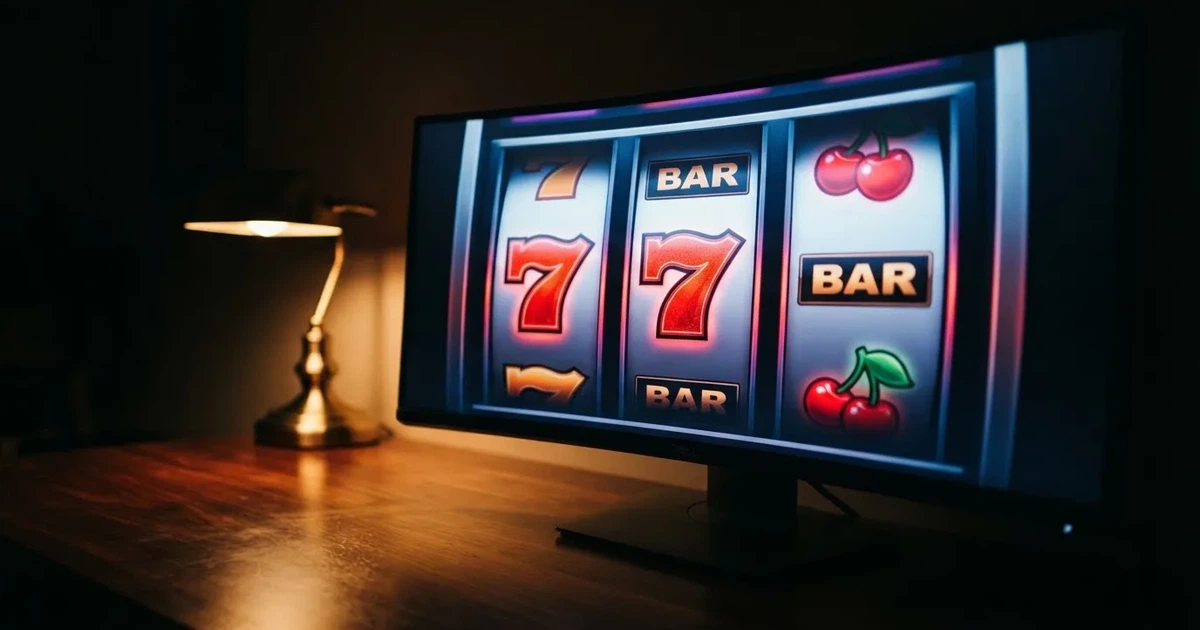
That linkage is the part the headlines skip past, and it is the part a reader actually needs to weigh. Pokies — the gaming machines Australians have played since registered clubs put the first legal machines on the floor in 1956 — are state-regulated in venues, but the online version of the same game cannot be licensed for people in Australia at all. The Interactive Gambling Act 2001, as tightened in 2017, makes the supply of online casino games and online pokies to a person physically in Australia an offence, and no state or territory licences it. The Australian Communications and Media Authority investigates, issues formal warnings, and asks internet service providers to block the offending sites — a total of 1,751 illegal gambling and affiliate marketing websites blocked since the first blocking request in November 2019, with more than 230 unlicensed services leaving the market since enforcement was tightened in 2017.
This page reads as an audit of the tips-and-tricks genre rather than as a how-to. It sets out what a pokies machine actually does — how the random number generator works, what the paytable means, what bet size does and does not change — then turns to the legal frame Australians sit inside, the operators the ACMA has formally warned, and the support services that exist for a player who wants to step back. The verdict is delivered before the operator reviews, because the verdict is the same for every brand on that list: no Australian licence exists for what each of them offers, and the ACMA has put the matter in writing.
Currency stamp: figures current as of 29 October 2026, verified against the Australian Communications and Media Authority’s published blocking and formal-warning records and against the H2 Gambling Capital 2025 estimate of losses to illegal offshore sites.
Table of Contents
- What “tips and tricks” usually means, and what it usually misses
- The Dragon Link pattern, and why one title draws the traffic
- The legal frame Australians sit inside
- Responsible play: what the system offers and where it stops
- Paytables and what they tell a player who reads them
- What an offshore pokies site actually looks like from the inside
- Bet size, RTP and the parts of the math a player can change
- The ACMA’s blocking record, by the numbers
- What the genre’s omissions look like in practice
- Comparing the ACMA’s formal-warning record across the named operators
- The operators, in order of ACMA action
- What this page is, and what it isn’t
- Frequently Asked Questions
What “tips and tricks” usually means, and what it usually misses
The standard pokies tips-and-tricks article opens on a piece of advice. “Look for machines with higher denominations.” “Stick to games with smaller jackpots.” “Walk away when you’re ahead.” The advice has a confident register. It rarely has a source. And the one thing every well-constructed machine on an Australian gaming floor shares — a computer chip generating outcomes independently on every spin — is the one thing those articles leave out of the recommendation.

A gaming machine is not a deck of cards. There is no shuffle to count, no shoe to track, no previous hand whose residue shapes the next one. A random number generator produces a fresh result each time the player presses the button or pulls the handle, and the result it produces has no memory of the result before it. The previous spin paid a feature round; the next spin is statistically independent of that fact. A player who has watched a machine sit cold for an hour and is “due” a payout is reading a streak in noise. The due-streak intuition is one of the strongest biases the human brain runs on, and the machine offers no counter-evidence: every spin is private, the reel display cannot tell the player what the next spin will look like, and the absence of pattern is itself what randomness looks like.
What the paytable does show is the structure. It lists how each symbol pays, how the bonus features trigger, and the return-to-player percentage — the long-run theoretical proportion of money taken in that the machine returns to players over millions of spins, not over a session. Australian jurisdictions set the floor for that figure: 85 per cent in New South Wales, the Northern Territory, Queensland and generally Victoria (87 per cent at Crown Melbourne), 87 per cent in the Australian Capital Territory and Tasmania, 87.5 per cent in South Australia, and 90 per cent in Western Australia. A machine at 90 per cent keeps ten cents of every dollar on average across its lifetime; a machine at 85 per cent keeps fifteen. That difference is real and it lasts years, but it is also the kind of difference that shows up over the lifetime of the machine, not over a single evening’s play. A session is a sample. The sample is noisy. The lifetime average is what the regulator measures.
The number Australians actually lost on these machines in 2020-21 gives the scale: nearly A$150 billion went through gaming machines in that year, of which A$12.18 billion was kept. The country runs about 3 per cent of the world’s pub and club poker machines with 0.3 per cent of the global population. That is not a tips-and-tricks problem. It is a structural fact about how gambling is set up here.
The Dragon Link pattern, and why one title draws the traffic
Dragon Link is the title most pokies-tips articles open with. It is not the only Aristocrat title in Australian venues, but it carries a particular combination: a hold-and-spin bonus feature, a denomination range that covers one-cent to five-dollar credits, and a denomination-progressive jackpot that pays more for higher bets. The articles lean on it because the title is recognisable, the bonus mechanic is legible enough to explain in a paragraph, and the denomination feature is a place where a writer can talk about stake sizing without saying anything about strategy.
What the genre usually gets wrong about Dragon Link, and about Aristocrat’s Lightning Link and the Buffalo cluster, is the same thing it gets wrong about the machines in general. The articles describe a game as if the player can read it. They talk about “hot machines” and “machines about to drop.” The denomination-progressive jackpot does pay more on a higher credit value — that is a designed feature, not a strategy — but the return-to-player on the base game is set per jurisdiction and does not change when the player raises the bet. The bonus features trigger on a probability that is part of the game’s mathematics. The reels cannot be timed. The reels cannot be read. A session’s outcomes do not form a trend a player can lean into.
A reader who lands on this page because Dragon Link came up in a search can take one durable lesson from the genre: the title you play is the title the venue put in front of you. The article that tells you otherwise is selling something else — usually an affiliate link to a site the ACMA has formally warned.
The legal frame Australians sit inside
The legal landscape is the part of the topic that turns the genre on its head. Every Australian state and territory regulates land-based poker machines inside clubs, pubs and casinos — New South Wales alone had 87,298 gaming machines outside casinos across 2,195 venues in June 2023, with player losses of A$8.18 billion in 2022-23; Queensland had 21,122 machines across 351 venues in October 2023; Victoria ran 26,380 outside Crown Casino in 488 venues in 2021-22 under a 30,000-machine statewide cap. Western Australia banned poker machines in pubs and clubs when Crown Perth opened in 1985; that casino’s machine count has grown from about 200 in 1985 to roughly 2,500, all approved by the state’s Gaming and Wagering Commission. Tasmania held the machines under a Federal Group monopoly from 1968 until legislation passed in November 2021 moved oversight to the Tasmanian Liquor and Gaming Commission, and Tasmania’s mandatory pre-commitment card scheme — planned as the nation’s most rigorous harm-reduction measure — was delayed to late 2025.
What no jurisdiction licences is the online version of those same machines. The Interactive Gambling Act 2001, as tightened by the Interactive Gambling Amendment Act 2017, makes it an offence to provide online casino games, online pokies or in-play betting to a person physically in Australia. The thing a tips-and-tricks article is pointing the reader toward is, by definition, the thing the Act prohibits. The ACMA enforces it.
What the ACMA does in practice is investigate complaints, issue formal warnings, and direct Australian internet service providers to block offending sites. The June 2026 blocking round alone asked ISPs to block 12 more illegal gambling websites: 7Signs, ChromaBet, Donbet, Duospin, Freshbet, Slots Gem, Jacks Club, Lucky Start, Pointsbetz.com, Spinrise, Vinyl Casino and Wildsino. The warnings run separately, and they name operators: Pulsup Ltd over Rocketplay.com.au in March 2026; Ryker B.V. over Jackbit and CasinOK in April 2026; Dama N.V. over Woo Casino in March 2025 and over Spirit Casino in May 2025; Consolutetish S.R.L. over National Casino and Bizzo Casino in July 2025 (Bizzo having already been warned via TechSolutions in 2022); Bamboo Media over Ignition Casino in July 2025; EOD Code SRL over Instant Casino in February 2025; Sterplay Holding Ltd over Casino Intense in April 2025; Dama N.V. across Bambet, Dazard, Level Up, Rocketplay, Wild Tornado and Cobra Casinos in May 2022; Hollycorn N.V. over Sky Crown and Blue Leo in September 2022.
A reader who clicks the link inside a tips-and-tricks article is being pointed at one of those brands. H2 Gambling Capital’s 2025 estimate puts the cost to Australians at about A$3.9 billion a year to illegal offshore sites, with the share of gambling flowing through legal Australian channels falling from 74 per cent in 2021 to 64 per cent in the most recent year. The legal share is shrinking because the illegal share is growing. That is the trade-off every “tips” page makes for the reader when it points offshore.
Responsible play: what the system offers and where it stops
A page about pokies tips would be dishonest if it left the support frame for last. The frame is the part the genre is weakest on. Most articles do not mention it at all.
BetStop — the National Self-Exclusion Register — has been live since August 2023 and binds Australian-licensed online and phone wagering services. A player who registers is excluded from every participating licensed operator. The catch is in the scope: an offshore casino is not connected to BetStop. A self-excluded Australian can still open an account at an offshore site, deposit, and play. The exclusion stops at the licensing border. A reader who has registered on BetStop and is still finding themselves at an offshore site is reading this page for the right reason.
The National Gambling Helpline is 1800 858 858 — free, 24/7, with a chat service at Gambling Help Online. The line is staffed by counsellors who can talk through financial harm, family impact, and the practical steps a player can take. State and territory bodies run their own programs on top of that: GambleAware in New South Wales, the Victorian Responsible Gambling Foundation, Gambler’s Help in Victoria, Gambling Help in Queensland, the Office of Problem Gambling in South Australia, and the Department of Health in Western Australia and the Northern Territory. Each runs face-to-face counselling, financial counselling, and self-exclusion from venues for the land-based side of the market.
On the venue side, mandatory pre-commitment is the policy idea that has travelled furthest in Australia. Tasmania was the state closest to a full pre-commitment card scheme — a card that tracks play and enforces a limit the player sets before sitting down — but implementation was delayed to late 2025. New South Wales runs a cashless gaming trial, the ClubSAFE voluntary card scheme in some venues, and a state-wide Self-Exclusion Order that runs across hotels and clubs. Each measure is partial. None of it changes what the machine itself does on a spin.
The most direct step a reader can take is to pick up the phone. The cost of the call is zero. The information on the other end is concrete.
Paytables and what they tell a player who reads them
A paytable is the machine’s specification sheet. Every Australian gaming machine carries one, either printed on the cabinet or available on a help screen. A paytable that lists Wild symbols, Scatter symbols, bonus rounds and free-spin triggers tells the player what the game is designed to do. It does not tell the player what the next spin will do.
What a paytable does carry is the return-to-player figure, where the regulator requires it. That figure is the long-run average the machine is built to deliver, set by jurisdiction: 85 per cent in NSW, the NT, Queensland and most of Victoria (87 per cent at Crown Melbourne), 87 per cent in the ACT and Tasmania, 87.5 per cent in South Australia, and 90 per cent in Western Australia. The gap between jurisdictions is not a marketing claim. It is the regulator telling the operator what the machine must average to over its operating life.
Volatility is the second number that sometimes appears in paytable literature, though it is not printed on Australian machines in the same form it appears on offshore reviews. A high-volatility game pays less often but in larger amounts when it does; a low-volatility game pays more often in smaller amounts. The return-to-player stays the same over the long run; the path of a session does not. A player who sits down for an hour on a high-volatility title can lose quickly and recover slowly, or hit a feature round and walk out ahead. A player on a low-volatility title sees a flatter line of small wins and small losses. Neither path is “better” in the sense the tips-and-tricks genre uses the word. Both end, on average, at the return-to-player figure the regulator has set.
What a paytable does not tell a player is whether the machine is “due.” The machine has no running count of how long it has been since the last feature. The random number generator does not consult the previous spin. A player who walks away from a machine because it has “gone cold” and a player who stays because it is “about to pay” are both reading pattern into a process that does not produce one.
What an offshore pokies site actually looks like from the inside
A reader who follows one of the tips-and-tricks links will land on a site that looks, at first glance, like a regular Australian casino. The lobby shows pokies. There is a registration form. The first-deposit offer sits in a banner. The licences at the bottom of the page tend to be Curaçao, Anjouan or the Kahnawake Gaming Commission — none of them Australian, none of them binding under the Interactive Gambling Act 2001.
What those licences do not give an Australian player is recourse. The Australian-licensed complaint path is the state regulator and the ACMA. An offshore licence points the player at the licence issuer, often located in a different jurisdiction, with no Australian enforcement power. A refusal to pay, a delayed withdrawal, a closed account with a balance still on it — these are the complaints the ACMA’s blocking actions are designed to head off. They are also the complaints the offshore operator has no incentive to resolve, because the ACMA can only ask the ISP to block the site, not order a payout.
The 1,751 blocked sites and 230 services that have left the Australian market are not the regulator taking chances. They are the regulator drawing a line that the IGA already drew. A reader on an offshore site is on the wrong side of that line as a matter of Australian law — not because the player has committed an offence, but because the provider has, and the site can disappear overnight.
Bet size, RTP and the parts of the math a player can change
A reader who has played enough machines has noticed that raising the bet changes the symbol set on the reels — or what the reels show. Higher credits unlock higher-paying lines, the denomination-progressive jackpot increases, and a bonus feature that pays in credits is worth more per spin. That part of the experience is real.
What raising the bet does not do is change the return-to-player percentage. The base game’s RTP is the same on a one-credit spin as on a five-credit spin. The bonus feature’s trigger probability is the same. What changes is the dollar value of the outcome when the reels land on a paying combination. A 1,000-credit win at one cent is $10; at five cents it is $50; at a dollar it is $1,000. The machine’s edge as a percentage of money taken in stays where the regulator set it.
What this means in practice: a higher denomination does not give the player better odds. It gives the player the same odds on a more expensive spin. The expected loss per spin scales with the bet. A session at five credits a line on a twenty-line machine at one cent costs a dollar a spin; the same configuration at five cents costs five dollars a spin, and the expected loss per spin scales by the same factor. The RTP percentage does not move.
A “strategy” that tells the reader to always play max credits is a strategy that tells the reader to spend more per spin. The win sizes are larger when they hit. The losses are larger when they don’t. The math behind both moves together.
The ACMA’s blocking record, by the numbers
The blocking record is the one part of this topic where the arithmetic has a clear answer. The ACMA’s first blocking request was issued in November 2019; the cumulative total reached 1,751 by the report of 26 June 2026. That is the running count of illegal gambling and affiliate marketing websites Australian ISPs have been directed to block. The number covers affiliate pages as well as casino sites — affiliate marketing for offshore operators is itself the target of ACMA action.
The relevant time window for the page is November 2019 to the date of the most recent report: roughly six and a half years. Over that window, the ACMA has asked ISPs to block an average of roughly 260 to 270 sites a year. June 2026’s round alone named 12. Some rounds are larger; some smaller. The trend line has been steady rather than slowing. The pace at which new sites are blocked is the pace at which new offshore operators enter the Australian market — the supply responds to enforcement faster than enforcement responds to supply.
A reader who wants the order of magnitude: roughly 1,750 sites blocked, roughly 230 services that have left voluntarily, and roughly A$3.9 billion a year going to the sites that remain. The arithmetic that belongs to this page is the blocking rate itself. Across the roughly six and a half years since the first blocking request, the ACMA has blocked about 1,750 sites. The result, stated as a band, is between 250 and 275 sites per year — the band the data carries once the figure for the first year is included with the more recent, larger rounds. New sites are added as fast as the regulator can block them, and the site-blocking tool has not slowed the supply of offshore sites targeting Australians.
A reader who treats that number as background will read the rest of this page more clearly. The industry is not shrinking under enforcement. It is being pruned.
What the genre’s omissions look like in practice
The typical pokies tips-and-tricks article opens on advice. It closes on a link. The link is the revenue model. The advice is the bait. A reader who notices what is missing sees the genre for what it is.
What is missing from the genre, and what this page has covered instead:
- The legal status of the offshore casino in Australia. The genre points the reader at a site the ACMA has warned over.
- The support services available in Australia. The genre does not mention BetStop, the National Gambling Helpline, or the state-based counselling services.
- The structural scale of the market. The genre talks about machines. The genre does not talk about A$12.18 billion in losses in a single year.
- The variance of session outcomes. The genre frames a session as a strategy problem. The genre does not name the volatility of the title the player is on.
- The mechanism of the random number generator. The genre tells the player what to look for. The genre does not tell the player what the machine actually does.
The omissions are not all of a kind. The omission of support services is an editorial choice. The omission of the legal frame is a structural one — the affiliate model cannot afford to print it. The omission of the math is a tonal one: a paragraph on RTP and variance kills the call to action.
Comparing the ACMA’s formal-warning record across the named operators
The table below sets out the brands the ACMA has formally warned, the operator the warning names, the date the warning was published, and the support the research record carries for each brand as a subject of pokies strategy content. The brands are listed because the ACMA itself has put them on the record; none of them holds an Australian licence for the service they offer to people in Australia. Where the research record carries listings of a brand in third-party strategy or game-provision pages, that is noted as listings-only — what those listings report, not what the operator itself claims.
| Brand | Operator named by the ACMA | ACMA action and date |
|---|---|---|
| RocketPlay | Pulsup Ltd | Formal warning, March 2026 |
| Level Up Casino | Dama N.V. | Formal warning, May 2022 |
| Woo Casino | Dama N.V. | Formal warning, March 2025 |
| Spirit Casino | Dama N.V. | Formal warning, May 2025 |
| National Casino | Consolutetish S.R.L. | Formal warning, July 2025 |
| Bizzo Casino | Consolutetish S.R.L. (earlier TechSolutions) | Formal warning, July 2025 (earlier 2022) |
| Ignition Casino | Bamboo Media | Formal warning, July 2025 |
| Instant Casino | EOD Code SRL | Formal warning, February 2025 |
| Jackbit | Ryker B.V. | Formal warning, April 2026 |
| Casino Intense | Sterplay Holding Ltd | Formal warning, April 2025 |
| Sky Crown | Hollycorn N.V. | Formal warning, September 2022 |
The picture the table paints is one of operators cycling through corporate vehicles. Dama N.V. appears four times across the list (Bambet, Dazard, Level Up, Rocketplay, Wild Tornado, Cobra Casinos in May 2022; Woo Casino in March 2025; Spirit Casino in May 2025; Rocketplay again under Pulsup Ltd in March 2026). Consolutetish S.R.L. took over Bizzo Casino after TechSolutions was warned in 2022. Hollycorn N.V. operates Sky Crown and Blue Leo under the same registration. The pattern is the offshore industry’s normal response to enforcement: close the warned brand, open another under a new corporate name, keep the same game library, point the affiliate links at the new URL.
A reader who lands on one of these brands via a tips-and-tricks article is reading a publication the ACMA has put on the record for offering prohibited services to Australians. The brand may be new. The operator may be different. The legal status of what is being offered is unchanged.
The operators, in order of ACMA action
The eleven brands below appear in the same order as the ACMA’s record of formal warnings. Each was the subject of an ACMA formal warning under the Interactive Gambling Act 2001 for offering prohibited interactive gambling services to people in Australia. None of them holds an Australian licence for online casino games or online pokies. The legal status is the same across the list; the operator, the warning date and the corporate structure behind the brand are what differ.
RocketPlay
RocketPlay has been the subject of two ACMA actions: a formal warning to Dama N.V. in May 2022 covering six brands including Rocketplay, and a second formal warning to Pulsup Ltd over Rocketplay.com.au in March 2026. The two warnings name two different corporate entities — Dama N.V. and Pulsup Ltd — for the same brand. That is the offshore industry’s normal response to enforcement: the operator entity changes; the brand and the game library often do not.
The brand sits in the ACMA record as a recent action. The March 2026 warning is the most recent formal action the ACMA has taken against any operator on this list. A reader who has followed a tips-and-tricks link to RocketPlay in 2026 is looking at a site the regulator put on the record four months ago.
Level Up Casino
Level Up Casino was named in the ACMA’s May 2022 formal warning to Dama N.V., which covered Bambet, Dazard, Level Up, Rocketplay, Wild Tornado and Cobra Casinos in a single action. The warning is now several years old. The brand remains on the ACMA’s record. The research notes that Level Up Casino appears in third-party listings of game providers including BGaming — a listings-only data point, not a confirmation that BGaming endorses the brand.
The standing of the brand in 2026 is what the ACMA’s record shows it to be: a site the regulator formally warned four years ago, still operating under the same brand name.
Woo Casino
The ACMA issued a formal warning to Dama N.V. over Woo Casino in March 2025. It remains on the regulator’s record as a site offering prohibited services to Australians, and the legal status of the brand’s offerings is unchanged.
Spirit Casino
Spirit Casino received an ACMA formal warning to Dama N.V. in May 2025. The warning names Dama N.V. as the operator, and Spirit Casino as one of the brands under that operator’s umbrella. The May 2025 warning is two months after the Woo Casino warning to the same operator — the pattern of Dama N.V. cycling through brands under successive warnings is consistent across the ACMA record.
Visitors who find Spirit Casino via an external article are looking at a platform that the ACMA formally named in a warning during that same year.
National Casino
In July 2025, the ACMA named National Casino in a formal warning to Consolutetish S.R.L., a move that also included Bizzo Casino. The research notes that National Casino appears in third-party listings — a listings-only data point, not an endorsement of the brand.
A reader reaching National Casino through a tips-and-tricks article is on a site the ACMA put on the record in the same calendar year. The warning is recent. The site’s Australian-facing status remains as it was: prohibited.
Bizzo Casino
Bizzo Casino has been the subject of two ACMA formal warnings: the first to TechSolutions (CY) Group Limited and TechSolutions Group N.V. in 2022, the second to Consolutetish S.R.L. in July 2025. Two operators, two warnings, the same brand.
The pattern is the offshore industry’s response to enforcement rendered plain. A brand is warned under one corporate entity; the entity closes; the brand opens under a new corporate entity; the ACMA warns the new entity. The brand outlives the warning. The Australian player who clicks through to Bizzo Casino is reading a site whose operator has changed twice and whose legal status in Australia has not.
Ignition Casino
Ignition Casino received an ACMA formal warning to Bamboo Media in July 2025. The brand is named in the same warning round as National Casino and Bizzo Casino, but under a different operator. Bamboo Media had not appeared in the ACMA’s record before the July 2025 warning.
Anyone following a link to Ignition Casino from such an article is visiting a domain the ACMA formally placed on its warning list in that same calendar year.
Instant Casino
Instant Casino received an ACMA formal warning to EOD Code SRL in February 2025. The warning is the earliest of the 2025 actions on the ACMA’s record. EOD Code SRL had not appeared in earlier warnings.
Reaching Instant Casino by way of an external promotional article brings a player to an operator that was formally warned by the regulator back in early 2025.
Jackbit
The ACMA formally warned Ryker B.V. over Jackbit in April 2026, a round that also named CasinOK. Jackbit had not appeared in the ACMA’s earlier record.
A reader reaching Jackbit through a tips-and-tricks page is on a site the regulator put on the record just months ago. The legal status in Australia is prohibited; the warning is a fresh formal entry.
Casino Intense
Casino Intense received an ACMA formal warning to Sterplay Holding Ltd in April 2025. The research notes that Casino Intense appears in third-party listings on the ABC’s gambling reporting, on the ACMA’s own publication, and on Crown Melbourne’s baccarat-tables page — listings-only data points, not endorsements of the brand as a venue for Australians.
The April 2025 warning sits in the middle of the ACMA’s 2025 actions by date. The legal status is unchanged; the warning is on the regulator’s record.
Sky Crown
In September 2022, the ACMA issued a formal warning to Hollycorn N.V. over Sky Crown and Blue Leo. The Hollycorn warning is the oldest formal action on the list.
A reader arriving at Sky Crown through a tips-and-tricks article is reading a brand the ACMA named four years ago. The brand remains on the regulator’s record as a site that does not hold an Australian licence.
What this page is, and what it isn’t
This page is an audit of a genre. It is not a how-to. It does not give the reader a stake-sizing strategy, a hot-machine theory, or a route to a winning session. The math on a gaming machine does not yield to those things, and any article that promises otherwise is selling a different product.
What the page does give the reader:
- The mechanism. A random number generator produces an outcome on each spin. The outcome has no memory of the previous spin. The reels cannot be read.
- The legal frame. Online pokies cannot be licensed for Australians. The IGA, the ACMA’s blocking record, and the formal-warning register make that plain.
- The structural scale. Nearly A$150 billion went through gaming machines in 2020-21. A$12.18 billion of that was kept. The country runs 3 per cent of the world’s pub and club poker machines with 0.3 per cent of the global population.
- The support frame. BetStop, the National Gambling Helpline at 1800 858 858, and the state-based counselling services exist. An offshore casino is not connected to BetStop. The helpline is free, 24/7, with a chat service.
- The blocking arithmetic. The ACMA has blocked about 1,750 sites since November 2019, at a rate of between 250 and 275 a year. New sites are added as fast as the regulator blocks them.
- The operator record. Eleven brands, eleven formal warnings, no Australian licence. The corporate entities cycle; the legal status does not.
A reader who came to this page for a strategy has not found one. A reader who came for an audit of the genre has.
Frequently Asked Questions
Do any genuine tips or tricks change the odds on a pokies machine?
No. Every spin on a modern gaming machine is generated independently by the random number generator inside the cabinet. The previous spin has no influence on the next one. The denomination does not change the return-to-player percentage the regulator has set. The bet size does not unlock a “better” version of the math. The reels cannot be read. Anything marketed as a pokies trick that does not address this is selling something else.
What’s different about tips for a specific title like Dragon Link compared with pokies generally?
Nothing, mechanically. Dragon Link has a hold-and-spin bonus feature and a denomination-progressive jackpot that pays more for higher credits, but the random number generator works the same way. The return-to-player percentage is set per jurisdiction, not per bet size. A reader who has landed here because Dragon Link came up in a search will leave understanding that the title is a design choice, not a strategy.
Is there a legal way for an Australian to try pokies strategies using licensed venues?
Yes — in land-based venues. Every state and territory regulates the machines inside them. The machine’s return-to-player figure is published in the paytable and is set by the jurisdiction. Western Australia runs the machines only at Crown Perth; Tasmania and the ACT run them at higher minimum RTP figures than the rest of the country; New South Wales carries the largest number of machines outside casinos. The land-based path is legal, regulated and within the IGA’s scope.
How does bet size affect the odds on a typical pokies machine, if at all?
It doesn’t. Raising the denomination raises the dollar value of the outcomes — what a feature round pays in credits translates to a larger dollar win. The return-to-player percentage, the probability of triggering the bonus, and the long-run expected loss as a fraction of money wagered all stay where the regulator set them. A higher denomination costs more per spin; it does not improve the odds per spin.
What do “tips to win pokies” articles usually get wrong about how random number generators work?
They treat the machine as a system with memory. They describe a hot or cold streak, a due payout, a time-of-day effect, a machine worth “sitting on.” None of those are properties of a random number generator. The articles also conflate denomination-progressive jackpots (which pay more for higher bets as a designed feature) with a “better game” (which is not what the regulator’s RTP figure describes). A reader who takes the genre at face value has been told a fiction.
Why do so many pokies tips pages specifically mention Dragon Link?
Because Dragon Link is recognisable, the hold-and-spin bonus feature is easy to explain in a paragraph, and the denomination-progressive jackpot is a place where a writer can talk about stake sizing without naming a stake-sizing strategy. The title is useful to the affiliate model because it lets a tips page pretend to be about a specific game while pointing the reader at an offshore casino. The reader’s experience on Dragon Link at a licensed venue is the same as on any other machine: independent spins, a regulator-set RTP, and no streak to lean into.