
Real money casino table games in Australia — the licensed path and what sits outside it
29 October 2026 · verified against the Australian Communications and Media Authority (ACMA) register of formal warnings and blocking requests.
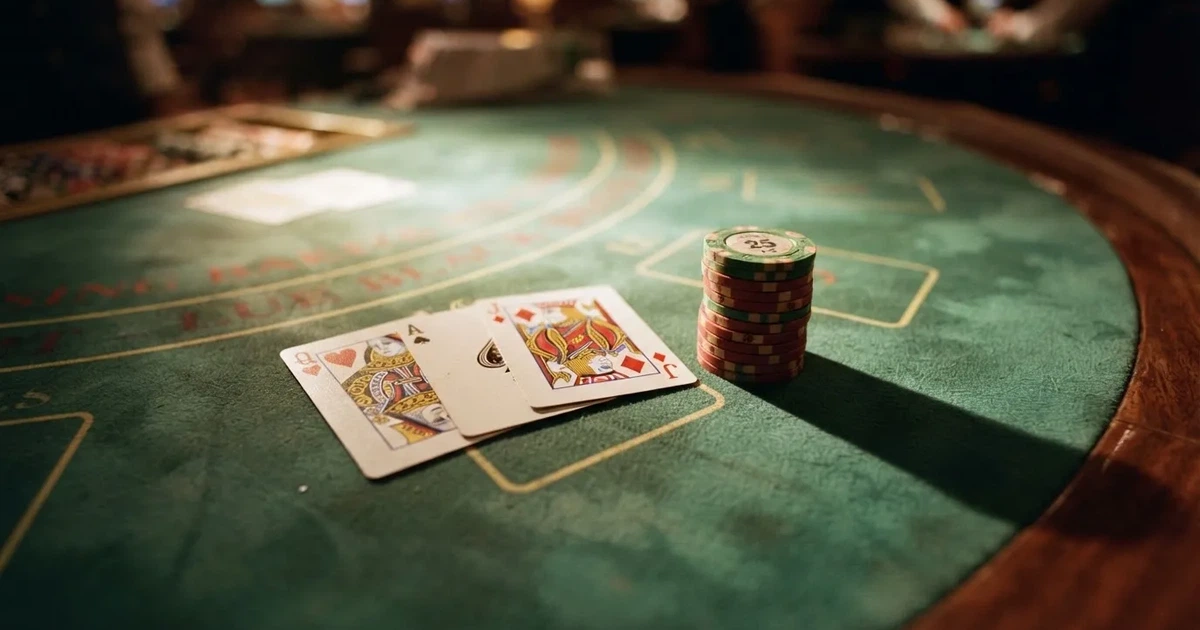
There is no online casino in Australia. No state or territory issues a licence for one. The Interactive Gambling Act 2001, tightened by amendments in 2017, makes it an offence to supply online casino games — blackjack, roulette, baccarat, craps — to a person physically in Australia, and the ACMA enforces that prohibition by warning the operators and asking ISPs to block the sites. The games themselves are lawful to play; they are just not lawful to be offered online to Australians. Anyone reading this page because a search result promised a list of offshore casinos that “accept Australian players” is reading the wrong page for what they want, and worth knowing that before going further.
The place where real-money table games are licensed and run is the felt. Crown Melbourne and Crown Sydney, The Star Sydney and The Star Gold Coast, SkyCity Adelaide, the casino floor of every licensed club that holds a Victorian or WA gaming venue permit. Each state regulator approves the rules before the games go on the floor. The house edge is fixed, the payout is paid on the premises, and the regulator has a complaints body if the payout is refused. The rest of this page walks the reader through what those games cost the player, what offshore sites claim about them, and what the ACMA has actually done to those offshore sites in the last four years.
Table of Contents
- The legal frame: what the Interactive Gambling Act prohibits and what it does not
- Player protection: BetStop, the helpline, and the limits of self-exclusion offshore
- Licensed land-based venues: the lawful place to play table games for real money
- Crypto and anonymity: why a Bitcoin deposit does not change who is offering the game
- The games themselves: paytable detail and house edge across blackjack, roulette, baccarat and craps
- Eleven offshore brands the ACMA has acted against: what the warnings actually say
- How fast the ACMA has actually moved: the blocking rate since November 2019
- Frequently asked questions
The legal frame: what the Interactive Gambling Act prohibits and what it does not
The Interactive Gambling Act 2001 (IGA) carves Australian gambling into two clean halves. The licensable half is wagering on races and sporting events placed before the event, lotteries, and keno — in practice licensed by the Northern Territory Racing and Wagering Commission, which regulates 52 online bookmakers including Sportsbet, Bet365 and Ladbrokes for tax reasons, and runs with one part-time chair and one monthly meeting in Darwin. The prohibited half is online casino games, online pokies, and in-play betting on sport. The provider is the one who commits the offence. The individual player is not prosecuted, but the offshore site offers no Australian consumer protection, no complaints body, and no recourse if a withdrawal stalls — and the site can be blocked by ISPs while a balance is still on it.

The 2017 amendments gave the ACMA three enforcement tools that have done the work since. First, formal warnings published on the regulator’s own register, naming the operator and the brand. Second, directions to Australian internet service providers to block the offending domain. Third, the power to issue infringement notices. By the figures published in June 2026, 1,751 illegal gambling and affiliate marketing websites had been blocked since the first blocking request in November 2019, and more than 230 unlicensed services had left the Australian market since enforcement was strengthened in 2017.
The single round reported on 26 June 2026 alone asked ISPs to block 12 more: 7Signs, ChromaBet, Donbet, Duospin, Freshbet, Slots Gem, Jacks Club, Lucky Start, PointsBetz, Spinrise, Vinyl Casino and Wildsino. None of those names was a household brand three years ago; the regulator is moving through a long tail, not a short list. The market share lost is meaningful too — H2 Gambling Capital’s 2025 estimate is that Australians lose about A$3.9 billion a year to illegal sites, and the share of gambling going through legal channels fell from 74% in 2021 to 64%.
A separate 2026 reform sits beside the IGA. The Interactive Gambling Amendment (Gambling Reform) Bill 2026 passed Parliament on 19 August 2026; its advertising and inducement measures commence on 1 January 2027. It is law with a start date, not law in force today, so this page does not treat it as if the prohibitions were already binding. Where a reader is reading this in 2026 itself, the start date is weeks away. Where a reader is reading it next year, the new advertising rules apply and the picture changes again.
What the law does not change: the minimum age of 18, which has not moved, and the credit-card ban on licensed online wagering that took effect on 11 June 2024, with penalties of up to A$247,500 for operators who breach it. Credit cards, credit-related products and digital currency cannot be used to fund a licensed wagering account. Legal deposit routes are debit card, bank transfer, PayID/Osko and BPAY. An offshore site that asks an Australian for a credit card or a Bitcoin deposit is operating outside the Australian rules, and the deposit route is itself a tell.
Player protection: BetStop, the helpline, and the limits of self-exclusion offshore
The National Self-Exclusion Register — BetStop — has been live since August 2023. A player who signs up is matched against every Australian-licensed online and phone wagering account, and the exclusion follows them across operators. That mechanism is real, and it works, but it is bounded. BetStop binds Australian-licensed services only. An offshore casino is not connected to it, which means a player who excludes themselves can still sit down at an offshore site on the same afternoon. The exclusion register is a tool, not a perimeter.
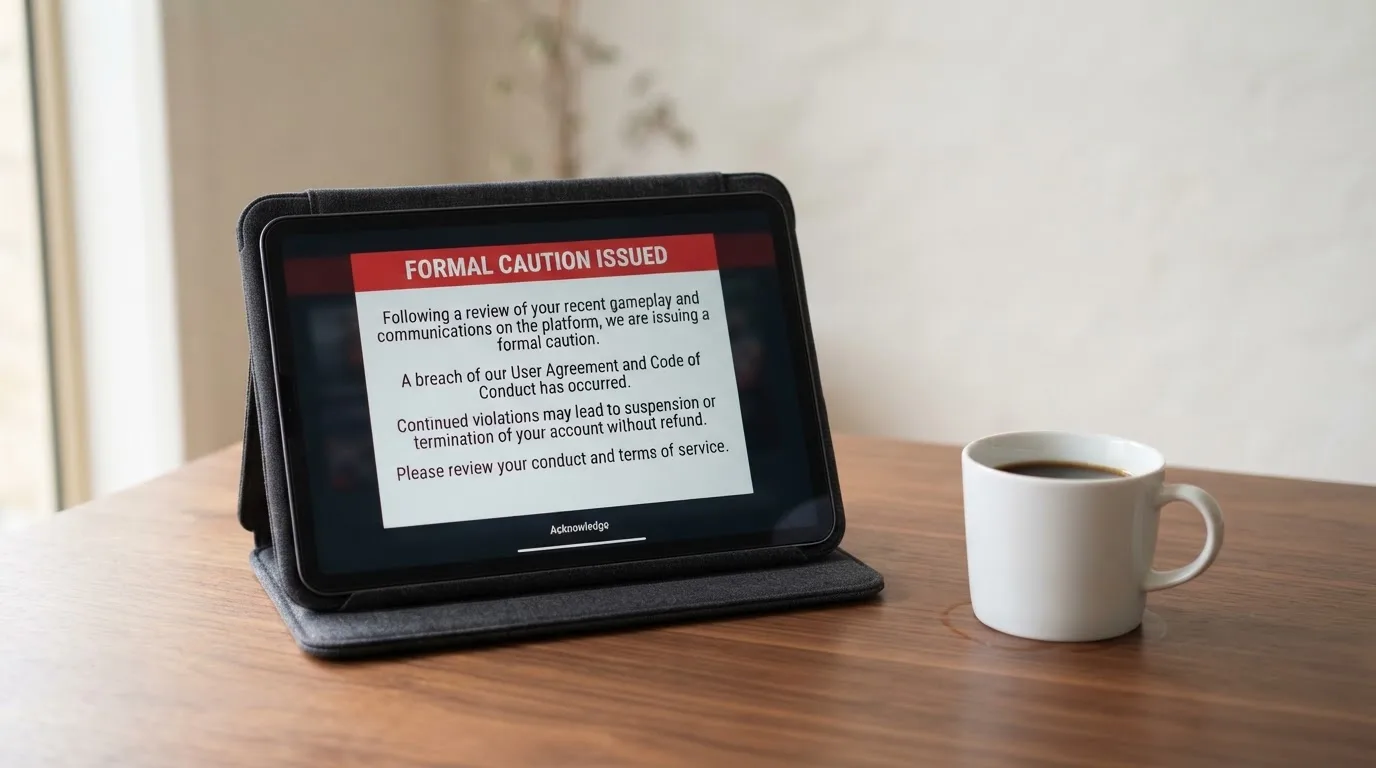
The 24/7 support line is the National Gambling Helpline on 1800 858 858, free from any Australian phone, with chat available through Gambling Help Online. Each state runs its own face-to-face counselling service funded by hypothecated gambling revenue — in Victoria through the VGCCC’s responsible-gambling arm, in NSW through GambleAware, in Queensland through Gambling Help Queensland. Those services are designed to work whether the gambling that caused the harm was legal or not, and they do not require the caller to be a citizen, a resident or a paying client of any operator.
What protection looks like at the licensed felt itself is more procedural. In Victoria, the VGCCC must approve any casino table-game rules or changes before they are introduced, under the Casino Control Act 1991, and it has ruled on amendments to baccarat, blackjack and roulette including new side bets. In NSW, Liquor & Gaming NSW — acting under delegation from the NSW Independent Casino Commission since 5 September 2022 — approves the games and rules played at the state’s two casinos. Under section 66 of the NSW Casino Control Act 1992, a casino operator must not permit a game such as baccarat to be played unless the game and its rules are approved by the regulator, and the operator must make a copy of the approved rules available to patrons on request. A punter who wants to know the exact drawing rule on a Crown Melbourne baccarat variant can ask for it; a punter who wants to know the rule on an offshore site cannot, because the offshore site does not publish its own rules the way a regulator does.
The harm picture for offshore play, in plain language, is that the player carries every risk the operator does not. Account closure with a balance still on it. Withdrawal pending for months. Bonus terms rewritten after a deposit. None of those risks ends with a regulator on the player’s side. BetStop, the helpline and the state counselling services all remain available to the player; the offshore operator does not.
Licensed land-based venues: the lawful place to play table games for real money
A reader asking “where can I actually play real-money table games near me” needs the answer this shelf exists to give. The answer is a premises with a casino licence, which in Australia means one of two kinds of place.
The first is a casino, and there are not many. Crown Melbourne is the largest, with three baccarat variants on the floor — Traditional Baccarat, Crown Baccarat and 2 to 1 Baccarat — all approved by the Victorian Gambling and Casino Control Commission, which replaced the VCGLR as Victoria’s casino regulator on 1 July 2022. Crown Sydney operates on the harbour side of Barangaroo under the NSW Independent Casino Commission. The Star Sydney is the second NSW casino under the same regime; The Star Gold Coast is the Queensland licence-holder in that state. SkyCity Adelaide holds the South Australian licence. The Treasury Casino in Brisbane, the Lasseters in Alice Springs and the Casino Darwin in the Northern Territory round out the country. Each has table games — blackjack, roulette, baccarat, sometimes craps or pontoon — and each runs under a state regulator that approves the rules before they go live.
The second is a gaming venue — pub, club or hotel — that holds a state-issued gaming permit. The games on offer are typically electronic gaming machines, the local term being pokies. A gaming venue does not run felt table games in the same way a casino does. A few states — Victoria and Western Australia, principally — allow some table-game activity in licensed clubs that meet additional criteria, but the felt-game floor is overwhelmingly the casino. The reader who searches for “casino near me with table games” is searching for the casino, not the local RSL.
What the reader can expect at a casino is broadly predictable. Blackjack tables, usually with six or eight decks. Roulette wheels — single-zero in most Australian casinos, double-zero is the exception. Baccarat, the Punto Banco variant most often, dealt from a six- or eight-deck shoe. Craps in some states, not all. Side bets on blackjack and baccarat are common, and each side bet has been approved by the relevant state regulator before it appears on the layout. The reader’s recourse, if a dispute arises, runs through the regulator’s complaints process, not through an offshore email address.
Crypto and anonymity: why a Bitcoin deposit does not change who is offering the game
Crypto casino table games are an offshore-market category that is louder than its substance. The game’s rules are the same — blackjack still pays 3:2 on a natural, roulette still loses on zero, baccarat still banks the Punto Banco way. What is different is the payment rail: deposits and withdrawals move on a blockchain, often Bitcoin, sometimes Ethereum or USDT. The transfer is fast, sometimes minutes rather than days. The casino behind it is the same offshore casino that takes a Visa card, and the same offshore casino that the ACMA warns.
The legal position is unchanged. The Interactive Gambling Act prohibits the supply, not the payment method. The 11 June 2024 credit-card ban on licensed wagering explicitly includes digital currency, so a crypto-funded deposit to a licensed Australian wagering account is also prohibited; a crypto-funded deposit to an offshore casino sits outside both regimes. A reader who deposits Bitcoin to an offshore casino is making an anonymous deposit to a named operator that the ACMA has, in most of the cases on this page, already named in a formal warning.
The substantive pitch for crypto table games usually runs two lines. The first is speed: withdrawals that settle in minutes, not days. The second is privacy: no card statement, no bank record. Both are real, both are minor, and neither makes the casino licensed to take Australian play. The ACMA’s enforcement works on the domain, not on the payment rail. A blocked site can change its deposit address; it cannot change its domain name without re-entering the blocking queue.
What the reader is paying for, in practice, is the offshore site’s house edge with none of the consumer protection. A licensed Australian casino pays out on the premises, in cash, and the state regulator can hear a complaint. A crypto-funded offshore casino pays out when it pays out, and there is no one to complain to.
The games themselves: paytable detail and house edge across blackjack, roulette, baccarat and craps
This shelf walks the paytable detail commonly advertised for real-money casino table games and surveys the wider game catalogue it usually sits alongside, purely as background. The arithmetic is the same on a Crown Melbourne felt and on an offshore RNG: the house edge is the house edge.
Blackjack — the lowest edge on the floor, conditional on the rules
Blackjack carries the lowest house edge of any table game in regular circulation, and that edge sits below 1% when the player uses basic strategy. Under liberal Las Vegas Strip rules — dealer stands on soft 17, double on any two cards, double after split, resplit aces, late surrender — the house edge is about 0.28%. Under Atlantic City rules it is about 0.43%. The edge moves with the rules: a dealer who hits soft 17, no doubling after split, no surrender, and a 6:5 natural instead of 3:2, can push the edge above 1.5% on the same basic strategy. The reader’s job, before sitting down, is to read the felt rules and not the marketing line.
The game’s pedigree runs back further than the felt. Its first written reference appears in a book by Spanish author Miguel de Cervantes, with the game documented in Castile from the early 17th century; its modern name emerged around 1899 when the English game vingt-un evolved into an American variant, with prospectors during the Klondike Gold Rush of 1896-99 credited with giving it its modern name. Twenty-one, then blackjack. The card values are familiar: number cards at face value, jack/queen/king at 10, ace at 1 or 11. A starting two-card total of 21 is a “blackjack” or “natural”, the strongest hand.
The variants on offer at most Australian casinos and on most offshore sites multiply the rules, not the edge. Spanish 21 plays without 10s but with liberal player-favourable rules; Double Exposure Blackjack deals both of the dealer’s cards face-up; Blackjack Switch lets the player swap cards between two hands; Super Fun 21 allows up to four splits. Each variant has its own paytable and its own house edge; the reader who wants the lowest edge plays the standard rules with basic strategy, not the variant with the most permissive-sounding name.
Roulette — single zero versus double zero is the whole question
Roulette originated in 18th-century France and has been played in close to its present form since about 1796 in Paris; the wheel is often traced to a gaming wheel invented in 1720 combined with the Italian game Biribi. Two wheels sit on most casino floors, and the difference between them is the entire paytable question.
The single-zero wheel — the European wheel — carries a house edge of 2.70% on every bet except the even-money line, where the rule is the same: zero wins, half the even-money stake returns. The double-zero wheel — the American wheel — adds a second zero and pushes the house edge to 5.26% on every bet. The reader who plays roulette is choosing a wheel. There is no strategy that closes the gap. Single-zero is half the cost of double-zero across the long run, and the reader who does not check which wheel is in front of them is paying double for the same game.
A side bet does not fix this. Most Australian casinos run single-zero wheels on the main floor, but some still maintain a double-zero wheel for high-limit play. The reader should ask, or read the felt, before the first chip is placed.
Baccarat — the Banker bet, and what the player actually wins
Baccarat’s origins are disputed: some accounts place it in 19th-century France, others say it was introduced from Italy at the end of the 15th century during the reign of King Charles VIII, with the game Macao considered its immediate precursor by some historians. The variant played almost everywhere today is Punto Banco, where the casino banks the game permanently under fixed drawing rules — developed in Havana in the 1940s and now the most popular form worldwide. Cards 2-9 count at face value, 10/J/Q/K count as zero, aces count as one, and hand totals are taken modulo 10.
The paytable, in 8-deck-shoe Punto Banco: the Banker bet carries a 1.06% house edge, the Player bet 1.24%. The Tie bet runs 14.36% at the standard 8-to-1 payout, or 4.85% at a 9-to-1 payout. The reader who bets Tie is paying a premium for a payout that hits about once in nine hands; the reader who bets Banker every hand is paying the lowest house edge on the baccarat table. Chemin de fer — French for “railway” — is a two-player variant that emerged from baccarat banque in the late 19th century and is faster to play, but it is rarely offered on an Australian casino floor.
A beginner’s question, in plain words: the Banker bet is the cheapest bet on the table, and the Tie bet is the most expensive. Everything else is between them, but most of what a casino offers on the baccarat layout is closer to the Banker end than the Tie end.
Craps — the Pass line, and what the side bets cost
Craps developed in the United States as a simplification of the European game Hazard, which Bernard de Marigny brought from London to New Orleans around 1805; the simplified American version had spread throughout the country by the 1910s. Australian casino floors run craps less often than blackjack, roulette or baccarat, but the paytable question is the same on both sides of the Pacific.
The Pass line carries a 1.41% house edge — the second-lowest on the craps table, behind the Don’t Pass at 1.36%. The side bets are where the edge runs hot. The Field bet carries a 5.56% house edge. Any 7 carries 16.67%. Hard 4 or Hard 10 carries 11.11%. The reader who sits at a craps table is choosing, and the choice is whether to play the line bets with a steady edge or to play the props with an edge several times higher.
The aggregate house edge across the table games the reader is most likely to meet, in the same order as the paragraphs above: 0.28% on blackjack under liberal rules, 1.06% on baccarat Banker, 1.41% on craps Pass, 2.70% on single-zero roulette, 5.26% on double-zero roulette, and 25%–29% on keno. The lowest edge on the floor is blackjack with basic strategy; the highest edge on the felt is keno, and keno is rarely offered in a casino form that the punter can find on the felt rather than at the keno lounge.
Eleven offshore brands the ACMA has acted against: what the warnings actually say
This is not a ranking and not a recommendation. Each brand below appears because the ACMA itself issued a formal warning over it for offering prohibited services to Australians. The reader who scans this list looking for a brand to play on is reading it for the wrong reason. The reader who scans it to see what the regulator has actually been doing in the last four years is reading it for the right one. The wording of each warning is on the ACMA’s own register; the table below summarises what each register entry names.
| Brand | ACMA action and date | Operator named by the ACMA | Subject support |
|---|---|---|---|
| RocketPlay | Formal warning, March 2026 (Pulsup Ltd); earlier May 2022 (Dama N.V.) | Pulsup Ltd / Dama N.V. | — |
| Level Up Casino | Formal warning, May 2022 | Dama N.V. | Listings reference (BGaming) |
| Woo Casino | Formal warning, March 2025 | Dama N.V. | — |
| Spirit Casino | Formal warning, May 2025 | Dama N.V. | — |
| National Casino | Formal warning, July 2025 | Consolutetish S.R.L. | Listings reference (en.wikipedia.org) |
| Bizzo Casino | Formal warning, July 2025 (Consolutetish S.R.L.); earlier 2022 (TechSolutions) | Consolutetish S.R.L. / TechSolutions | — |
| Ignition Casino | Formal warning, July 2025 | Bamboo Media | — |
| Instant Casino | Formal warning, February 2025 | EOD Code SRL | — |
| Jackbit | Formal warning, April 2026 | Ryker B.V. | — |
| Casino Intense | Formal warning, April 2025 | Sterplay Holding Ltd | Listings reference (ABC, ACMA, Crown Melbourne) |
| Sky Crown | Formal warning, September 2022 | Hollycorn N.V. | — |
A few patterns are visible in the register without much reading between the lines. Dama N.V. is the operator group behind four of the eleven: RocketPlay, Level Up Casino, Woo Casino and Spirit Casino. The 2022 warning over six brands under Dama N.V. — Bambet, Dazard, Level Up, Rocketplay, Wild Tornado and Cobra Casinos — was the largest single-operator action in the register; the 2025 warnings over Woo Casino and Spirit Casino ran on the same legal basis. The point is not that Dama N.V. is a worse operator than any other on the list; the point is that an operator group can rebrand across multiple casino skins and the ACMA follows the corporate parent, not the casino front.
The TechSolutions / Consolutetish pair is the second cluster. Bizzo Casino was the subject of a 2022 formal warning to TechSolutions (CY) Group Limited and TechSolutions Group N.V.; the July 2025 warning over Bizzo Casino and National Casino was issued to Consolutetish S.R.L., a related corporate entity. The two operator names and the same casino brand, three years apart, is the ACMA’s record of an operator moving through corporate restructures without changing the player-facing surface.
The dates sit where they sit. The reader who treats the most recent date as a freshness signal — “the warning is older so the brand must be safer now” — is reading the register backwards. A formal warning is not an expiry. It is the ACMA’s record of what it has already told the operator. The blocking round reported in June 2026 covered a different set of twelve brands — 7Signs, ChromaBet, Donbet, Duospin, Freshbet, Slots Gem, Jacks Club, Lucky Start, PointsBetz, Spinrise, Vinyl Casino and Wildsino — none of which appears in the table above because the ACMA has not yet issued a published formal warning to those brands; the ISPs are blocking the domains instead.
The “Subject support” column is where the research register shows what each brand’s own page or its listings actually say. Most of the eleven brands carry no data here at all; the cells are empty because no source the research consulted carried a confirmation or denial of any specific table-game offer for that brand. Where a cell names a source, it is a listings reference — what a listings page says, not what the operator confirms.
The single judgement that applies to every brand in the table is the same: online casino games cannot be licensed anywhere in Australia, whatever licence the site displays offshore. The Curaçao, Malta, Anjouan or Kahnawake licence that an offshore casino carries is a licence to operate in that jurisdiction, not a licence to offer online casino games to Australians. The brand’s own footer is not the law; the Interactive Gambling Act is.
How fast the ACMA has actually moved: the blocking rate since November 2019
The ACMA’s register shows that 1,751 illegal gambling and affiliate marketing websites have been blocked since the first blocking request in November 2019, with the most recent published round covering 12 sites on 26 June 2026. This span of about 79 months reflects an accelerating enforcement pace. The total number of blocked sites, averaged over this period, suggests a long-run rate of roughly 20 to 25 sites per month. This figure fluctuates, with some months showing higher volumes—such as the 12 sites blocked in June 2026 alone—and others showing lower. While individual monthly figures vary, the long-term trend highlights the ACMA’s consistent effort to disrupt unlicensed services rather than targeting any single entity.
A reader who hears “more than 230 unlicensed services have left the Australian market since 2017” can place that figure beside the blocking total: 230 voluntary exits, 1,751 enforced blocks, plus the formal warnings that sometimes precede a block and sometimes do not. The ACMA’s three tools are not alternatives to one another; they stack. A formal warning is published. A blocking request follows, or does not. A voluntary exit follows, or does not. The register records all three. The arithmetic is the long-run pace; the policy reality is that the regulator is moving through a long tail, and the long tail is what the offshore market is.
Frequently asked questions
How does the house edge on blackjack compare with roulette or craps at a typical casino?
Blackjack with basic strategy under liberal rules carries a house edge of about 0.28%, the lowest on a typical casino floor. Single-zero roulette carries 2.70%, roughly ten times the blackjack edge. Craps on the Pass line carries 1.41%, between the two. The reader who wants the cheapest table game on the floor plays blackjack with basic strategy, not roulette or craps.
Are live-dealer table games treated any differently under Australian law compared with RNG-based ones?
No. The Interactive Gambling Act prohibits the supply of online casino games to Australians, and the prohibition makes no distinction between a live dealer streamed from a studio and a random number generator running on a server. A live-dealer table game offered by an offshore casino to a person in Australia is the same offence as an RNG-based one. The medium is irrelevant; the offer to an Australian is the offence.
What’s the difference between American and European roulette in terms of odds for the player?
The European wheel has a single zero and carries a house edge of 2.70% on every bet. The American wheel adds a second zero and pushes the house edge to 5.26% on every bet. There is no strategy that closes the gap; the reader who plays roulette is choosing a wheel, and single-zero is roughly half the cost of double-zero across the long run.
Do crypto casino table games use the same rules as a standard online table game, just with a different currency?
The game’s rules are the same: blackjack still pays 3:2 on a natural, roulette still loses on zero, baccarat still banks the Punto Banco way. What is different is the payment rail — deposits and withdrawals move on a blockchain, often Bitcoin, sometimes Ethereum or USDT, and the transfer is faster than a card payment. The casino behind the crypto deposit is the same offshore casino that takes a Visa card, and the same offshore casino that the ACMA warns. The 11 June 2024 credit-card ban on licensed wagering explicitly includes digital currency.
Where can someone actually play real-money table games legally near them in Australia?
The lawful place is a licensed casino. Crown Melbourne and Crown Sydney, The Star Sydney and The Star Gold Coast, SkyCity Adelaide, the Treasury Casino in Brisbane, Lasseters in Alice Springs and the Casino Darwin in the Northern Territory all run real-money table games under state regulators. The regulator approves the rules before the games go live, and a patron who disputes a payout has a complaints route through the regulator. The reader who searches for “casino near me with table games” is searching for a casino, not a licensed gaming venue.
What should a beginner know about baccarat’s banker bet before sitting down at a table?
The Banker bet is the cheapest bet on the table. In 8-deck-shoe Punto Banco, the Banker bet carries a 1.06% house edge, the Player bet 1.24%, and the Tie bet 14.36% at the standard 8-to-1 payout. The Tie bet pays the most when it wins — eight to one — and loses most of the time; the Banker bet wins most of the time and pays even money minus a 5% commission in some rule sets. The reader who bets Banker every hand is paying the lowest house edge on the baccarat table.