
Best RTP slots Australia: the percentage, the product, and what’s actually licensed
Return-to-player is the cleanest number a slot carries. It’s the share of every dollar wagered that the game, in theory, pays back across millions of spins. The percentage is published, audited and quoted by every software studio from Pragmatic Play to NetEnt to the lesser-known providers that fill the back catalogues at offshore casinos. Players searching for the best RTP slots in Australia are reaching for that number, hoping a higher one means a better chance. What this page does is unpack what the percentage actually reflects, why every site offering high-RTP slots to Australians is doing so from outside Australia, and which operators the regulator has already moved against.
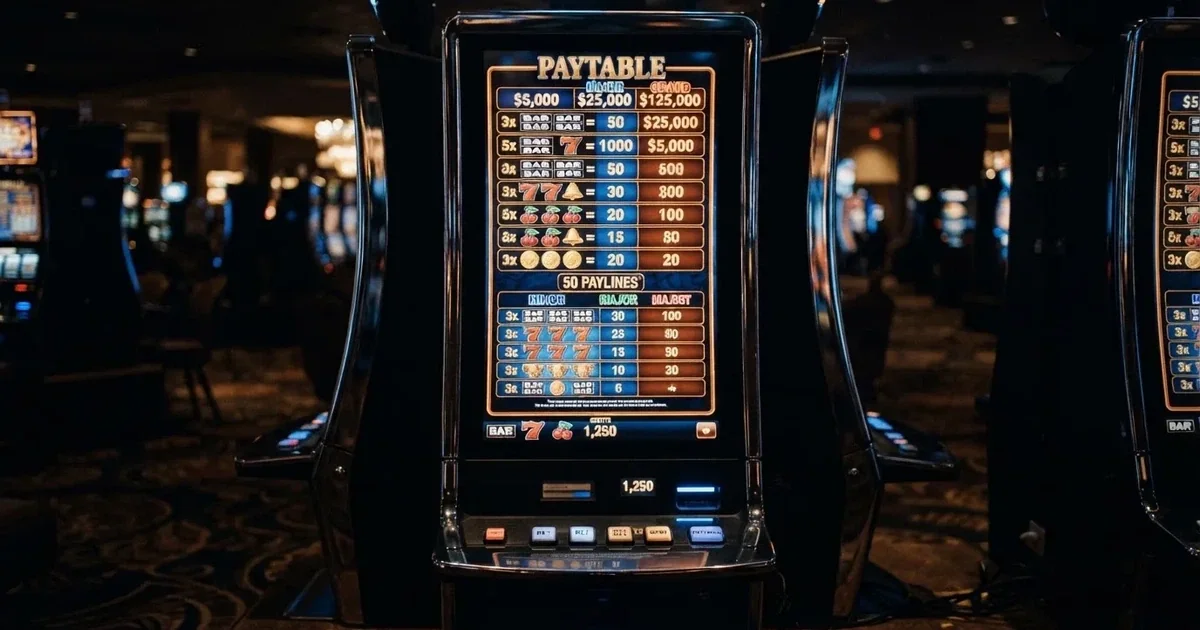
Data current as of 29 October 2026 and cross-checked against the Australian Communications and Media Authority’s register of formal warnings and blocking actions.
Table of Contents
- The legal ground beneath every offshore slot site
- How an RTP figure is set, tested and disclosed
- What the ACMA has actually done — the blocking record
- The ACMA’s enforcement timeline against the brands in this comparison
- Where a high-RTP slot actually plays in Australia
- The operators the regulator has acted against — what each one means for a player
- How a high-RTP slot is actually presented on an offshore site
- What the offshore RTP offer is actually worth
- The other products on the same offshore sites
- What an Australian player actually has on offer inside the law
- What the ACMA enforcement record looks like over time
- What the offshore slot offer costs the player who takes it
- Frequently asked questions about RTP and slots in Australia
The legal ground beneath every offshore slot site
Australia is unusual in one respect: the law treats online casino games and online pokies as prohibited products. The Interactive Gambling Act 2001, tightened by the Interactive Gambling Amendment Act 2017, makes it an offence to provide those products to a person physically in Australia. No state or territory regulator issues a licence for them. What gets licensed is wagering on racing and sport placed before the event, plus lotteries and keno, and in practice most of the wagering licences sit with the Northern Territory Racing and Wagering Commission, which oversees 52 online bookmakers including the household names and runs without a full-time staff.

The enforcement body is the ACMA. It investigates complaints, issues formal warnings to operators, and asks Australian internet service providers to block illegal sites. The provider faces the penalty; the individual player is not prosecuted. That distinction matters because it also defines what an Australian gets when they sign up at an offshore casino: nothing in the way of consumer protection. No local complaints body, no local recourse if a withdrawal is refused, and the site can be blocked with a balance still sitting in the account. This is the frame every offshore RTP figure is being sold inside.
Why the offshore market still exists
The reason those sites keep operating is simple: there is demand, and offshore licences in Curaçao or Anjouan are cheap to obtain. The penalty for the provider is real but slow — a formal warning, then a blocking request, then potentially a referral to the police. From the player’s seat, the consequences look more like a frozen balance than a fine. H2 Gambling Capital’s 2025 estimate puts Australian losses to illegal gambling sites at about A$3.9 billion a year, and the share of gambling going through legal channels has fallen from 74% in 2021 to 64% — a structural shift that the IGA’s enforcement record has so far failed to reverse.

What “licensed” means on an offshore slot site
A Curaçao seal in a footer, a number issued by an Anjouan authority, a Malta Gaming Authority badge — none of these change the Australian position. The site is still prohibited from offering its product to a person in Australia. The licence the site displays tells the player nothing about whether they can complain to an Australian body, whether their winnings are protected in any Australian sense, or whether the site will still be reachable on Friday morning. The only thing it tells the player is that a foreign regulator has licensed the operator for the foreign market, on terms the foreign regulator set.
How an RTP figure is set, tested and disclosed
The RTP number on a slot’s paytable is not a marketing claim. It’s the result of a simulation run across millions of simulated spins, set so that the theoretical return equals the listed percentage. Every reputable studio uses a random number generator that is independently tested before release — typically by labs such as eCOGRA, iTech Labs, GLI or BMM Testlabs — and the certificate sits behind a paytable link on the slot’s info screen.
The math behind the percentage
The formula is straightforward in principle. Take the sum of every prize the slot pays across a very long run of spins, divide it by the sum of every spin’s wager, and the result is the theoretical return. If the slot pays 96 cents for every dollar wagered across that run, the RTP is 96%. The house edge is the other side of the same coin: a 96% RTP is a 4% house edge over the long run. Neither figure says anything about what happens in the next hundred spins, or the next thousand.
What the number does and does not promise
Two implications matter. First, RTP is a statistical estimate over a long run, not a guarantee for any individual player. A 97% slot can pay nothing across two hundred spins, or it can pay a five-thousand-times stake hit on the third one — the long-run average still settles near 97% across millions. Second, the figure is fixed by the slot’s paytable and reel configuration. Operators cannot adjust it at will. Studios publish multiple RTP variants of the same slot — 96%, 94%, 92% — and the casino picks which version to host. A player who searches for a slot’s “real” RTP is sometimes looking at the wrong version.
Volatility, hit frequency and what they don’t change
RTP is not volatility. A high-RTP slot can still pay rarely and in large lumps; a low-RTP slot can drip-feed small wins every few spins. The variance of the payout distribution is a separate design choice and shows up in the slot’s information page as volatility rating (low, medium, high) or hit frequency (the share of spins that produce any return at all). RTP describes the long-run mean; volatility describes the shape of the distribution around that mean.
What the ACMA has actually done — the blocking record
The ACMA publishes each blocking round and each formal warning on its website. The cumulative figures make the scale of the enforcement effort concrete.
The blocking count, round by round
The first blocking request went out in November 2019. By June 2026, a total of 1,751 illegal gambling and affiliate marketing websites had been blocked. More than 230 unlicensed gambling services had left the Australian market since enforcement was strengthened in 2017. In a single round reported on 26 June 2026, twelve more sites were added to the block list: 7Signs, ChromaBet, Donbet, Duospin, Freshbet, Slots Gem, Jacks Club, Lucky Start, Pointsbetz.com, Spinrise, Vinyl Casino and Wildsino.
Working the rate of that accumulation: from November 2019 to June 2026 is roughly 79 months. A site-blocking pace works out at somewhere between 22 and 28 blocks per month on average across that period, give or take the round-to-round variation — the 12 in that June 2026 round sits well inside the band, and earlier single rounds have carried both higher and lower numbers.
What a formal warning actually does
A formal warning under the IGA is the ACMA’s first public step. It identifies the operator and the brand, attaches it to a date, and sits on the regulator’s website. A site that ignores a warning will see its domain added to a blocking request in a later round; an operator that ignores the block can face civil penalty proceedings. From the player’s seat, the practical consequence of a warning is mostly reputational — a brand with a current ACMA warning is telling its customers, in writing, that it has been told to stop offering its product to Australians and has not.
The ACMA’s enforcement timeline against the brands in this comparison
The eleven operators below are not a ranking of which casino is best. They are a list the ACMA itself has acted against, in the order the plan routes them. The page describes each one because the regulator has already described it.
| Brand | ACMA action and date | Operator named by the ACMA |
|---|---|---|
| RocketPlay | Formal warning, March 2026 | Pulsup Ltd (Rocketplay.com.au) |
| Level Up Casino | Formal warning, May 2022 | Dama N.V. |
| Woo Casino | Formal warning, March 2025 | Dama N.V. |
| Spirit Casino | Formal warning, May 2025 | Dama N.V. |
| National Casino | Formal warning, July 2025 | Consolutetish S.R.L. |
| Bizzo Casino | Formal warning, July 2025 | Consolutetish S.R.L. (earlier TechSolutions, 2022) |
| Ignition Casino | Formal warning, July 2025 | Bamboo Media |
| Instant Casino | Formal warning, February 2025 | EOD Code SRL |
| Jackbit | Formal warning, April 2026 | Ryker B.V. (Jackbit and CasinOK) |
| Casino Intense | Formal warning, April 2025 | Sterplay Holding Ltd |
| Sky Crown | Formal warning, September 2022 | Hollycorn N.V. (Sky Crown and Blue Leo) |
The pattern in the operator column tells its own story. Dama N.V. surfaces three times — Woo Casino, Spirit Casino, and Level Up Casino — across three different warning dates, which means three separate IGA notices to the same parent company without a change in behaviour. Consolutetish S.R.L. gets two of the same group, National and Bizzo, in a single July 2025 round. A parent company receiving multiple warnings is a parent company treating them as the cost of doing business.
RocketPlay
RocketPlay has been on the ACMA’s radar twice. The first warning went to Dama N.V. in May 2022; the most recent, in March 2026, was issued to Pulsup Ltd over Rocketplay.com.au specifically. Two operators, two warnings, one brand — and the brand is still live and still accessible to Australian accounts at the time of the regulator’s action. The site’s display of an offshore licence changes nothing about its Australian status.
Level Up Casino
The May 2022 warning to Dama N.V. was a six-brand action that took in Bambet, Dazard, Level Up, Rocketplay, Wild Tornado and Cobra Casinos at the same time. A single formal warning covering six brands tells the operator the regulator is treating the whole portfolio as one operation; from the player’s seat, the practical reading is that every one of those brands has the same IGA exposure.
Woo Casino
Dama N.V. picked up its second warning in March 2025 over Woo Casino. By that point the May 2022 warning had been a public document for nearly three years. A repeat warning to the same parent is what an enforcement record looks like when the operator decides a fine risk is cheaper than the revenue.
Spirit Casino
Dama N.V.’s third warning, May 2025, named Spirit Casino. Three warnings to one parent across roughly three years is the regulator’s clearest signal that the parent has read the warnings and chosen not to act on them.
National Casino
Consolutetish S.R.L. took its July 2025 warning over National Casino. By that round the company had no prior public warning on the ACMA’s register — National Casino’s first formal notice came from Consolutetish, not from a previous operator.
Bizzo Casino
Consolutetish S.R.L.’s July 2025 warning covered both National Casino and Bizzo Casino in the same action. Bizzo had been warned before — a 2022 warning to TechSolutions (CY) Group Limited and TechSolutions Group N.V. — which makes Bizzo the brand with the longest visible enforcement history in this comparison.
Ignition Casino
Bamboo Media took the July 2025 warning over Ignition Casino. The brand targets the Australian and New Zealand markets under its display name; it is the operator’s initial public IGA notice listed on the ACMA website.
Instant Casino
EOD Code SRL received the February 2025 warning over Instant Casino. The site markets itself on speed — fast sign-up, fast withdrawals — and the formal warning serves as the regulator’s stance: fast onboarding does not equate to the legal right to offer products in Australia.
Jackbit
Ryker B.V. was warned in April 2026 over both Jackbit and CasinOK. Two brands on one warning, both named in the same notice, which is the ACMA’s way of telling the operator the regulator is aware the same licence is being used to run more than one site.
Casino Intense
Sterplay Holding Ltd received the April 2025 warning over Casino Intense. The brand is a smaller name in the offshore set, and it is the first such warning the regulator has published for this brand.
Sky Crown
Hollycorn N.V. was the operator named on the September 2022 warning covering Sky Crown and Blue Leo. Hollycorn runs a portfolio of brands under the same corporate umbrella, and the warning is one of the regulator’s earlier public notices against that group.
Where a high-RTP slot actually plays in Australia
The licensed equivalent of a slot machine in Australia is the electronic gaming machine in pubs, clubs and casinos — what Australians call a pokies machine. The figures the states publish on their machine counts set the size of the onshore product.
The machine count by state
Pokies-style slot machines outside casinos numbered 87,298 in New South Wales as of June 2023, 26,380 in Victoria in 2021–22, 21,122 in Queensland in October 2023, 11,672 in South Australia in September 2023 and 3,587 in the ACT in November 2023. New South Wales operates roughly four times as many machines as Victoria and is the dominant venue for onshore slots. Australia as a whole runs about five times the per-capita rate of the United States.
The number of licensed machines is a rough proxy for where a punter physically has access to a slot product without leaving the IGA’s perimeter. New South Wales pubs and clubs hold more than half the country’s non-casino machines; Queensland’s machines sit in clubs and hotels across the state; Victoria’s 26,380 reflects the cap the state imposed in the 1990s.
The rules that govern onshore RTP
Every Australian state sets its own return-to-player regime for the machines it licences. The mechanical slot machine itself dates to Charles Fey’s three-reel Liberty Bell design in late-19th-century San Francisco — three bells in a row paid the top prize of ten nickels. Bally’s Money Honey in 1963 introduced a bottomless hopper and automatic payout of up to 500 coins without an attendant. The first video slot machine was developed in 1976 by Fortune Coin Co. in Kearny Mesa, California. Modern video slots can use five or more reels with 50 or more symbols per reel, producing odds as high as 300 million to one against a top combination, against roughly 1,000 possible combinations on a classic three-reel machine.
Onshore, the comparison data lives with the state regulators. New South Wales legalised slot machines in 1956; Victoria and the other states followed with their own regimes. The RTP and volatility of a specific pub or club machine in Australia is not published the way an offshore slot’s paytable is — the venue provides it on request, and the punter can ask the staff for the information sheet on the machine they are playing.
Why offshore RTP disclosure is wider than onshore
An offshore slot typically publishes its paytable directly on the game’s information page. The percentage is one of the first things a player sees when they open the paytable, alongside the rules for the bonus round and the list of paylines. The onshore equivalent — a pokies machine in an Australian venue — does not display the figure on screen; it sits in the venue’s records and the state regulator’s records. A player who wants to know the RTP of the machine they’re sitting at in Sydney or Melbourne has to ask the venue, and the answer can take a moment to come back. Offshore product wins the disclosure comparison by a wide margin, and pays for that disclosure by being illegal to offer to Australians.
The operators the regulator has acted against — what each one means for a player
What follows is a description of each of the eleven operators the ACMA has formally warned. None of them is recommended to a reader as a place to play. The point of writing each one up is so that an Australian reader who has already heard the name — from an advertisement, an affiliate page, a streamer — can see what the regulator has done and decide for themselves what to do with that.
RocketPlay — The operators the regulator has acted against
Rocketplay.com.au was the subject of a March 2026 formal warning to Pulsup Ltd; the brand had earlier been named in a May 2022 warning to Dama N.V. The site is operated out of an offshore licence and accepts Australian players in a market where online casino games are a prohibited product. The RTPs published on its slot paytables are real figures for the games themselves — the issue is not that the percentage is wrong, it is that the site offering it is on the wrong side of the IGA.
Level Up Casino — The operators the regulator has acted against
Level Up sits in the May 2022 Dama N.V. group warning that also covered Bambet, Dazard, Rocketplay, Wild Tornado and Cobra Casinos. The brand’s slot catalogue lists games from providers including BGaming, and BGaming’s own catalogue publishes the RTP on each game’s information page — a 96% figure on a popular title is genuinely 96% for that version of the game.
Woo Casino — The operators the regulator has acted against
Woo Casino’s warning is the March 2025 Dama N.V. action. The brand is one of three in this comparison under that parent; the slot catalogue is broader than most and lists several studios whose high-RTP titles — 96% and above — are common in the offshore market. The provider data sits behind the paytable; the offshore-licence disclosure sits at the bottom of the page.
Spirit Casino — The operators the regulator has acted against
Spirit Casino is the May 2025 Dama N.V. warning, the third in the Dama group. The brand runs a similar catalogue to the rest of the Dama portfolio and the same licensing display that says nothing about an Australian player’s rights.
National Casino — The operators the regulator has acted against
National Casino took the July 2025 warning to Consolutetish S.R.L. along with Bizzo. The brand’s slot catalogue leans heavily on Pragmatic Play, Microgaming and the larger studios whose RTPs are publicly verifiable on the providers’ own pages.
Bizzo Casino — The operators the regulator has acted against
Bizzo is the only brand in this set with two separate operator-level warnings on the regulator’s record — the 2022 TechSolutions action and the July 2025 Consolutetish action. Two operators, two warnings, one brand still live. That is the regulator’s clearest example of a brand moving from operator to operator when one parent gets warned, and the record is exactly the kind of detail that tells a reader how the offshore market reacts to IGA pressure.
Ignition Casino — The operators the regulator has acted against
Ignition Casino is the July 2025 Bamboo Media warning. The brand targets Australia and New Zealand specifically; the ACMA warning clearly outlines that such targeting is not permitted.
Instant Casino — The operators the regulator has acted against
EOD Code SRL took the February 2025 warning over Instant Casino. The brand positions itself as a fast-withdrawal site and the marketing leans into speed rather than slot RTP; the warning serves as the regulator’s public stance on the site’s market approach.
Jackbit — The operators the regulator has acted against
Ryker B.V. was warned in April 2026 over Jackbit and CasinOK. Jackbit is a crypto-friendly site and the offshore disclosure on the payment page is the most visible part of its offer — the IGA’s payment rules ban credit and crypto for licensed Australian wagering, and an offshore site that takes both is operating outside that perimeter.
Casino Intense — The operators the regulator has acted against
Sterplay Holding Ltd was warned in April 2025 over Casino Intense. The brand is one of the smaller names in this set and the warning serves as its inaugural public IGA notice.
Sky Crown — The operators the regulator has acted against
Hollycorn N.V. is the operator named on the September 2022 warning covering Sky Crown and Blue Leo. Hollycorn operates a portfolio of brands under the same corporate umbrella; the warning is one of the earlier public notices against that group.
How a high-RTP slot is actually presented on an offshore site
The player’s path through an offshore slot site is roughly the same regardless of brand. The home page lists a few “popular” titles with a thumbnail and a percentage. The slot opens in a window with the reels front and centre; the paytable sits behind an information icon. The paytable lists the RTP — 96.30%, 96.50%, 96.71%, whatever the studio published for that version — the volatility rating, the hit frequency and the bonus-round rules.
Where the percentage hides
Some studios publish two or three RTP variants for the same game and let the operator pick. Pragmatic Play’s portfolio is the best-known example, with 96%, 94% and 92% variants of several popular titles in circulation. The 96% version is the one the affiliate pages quote; the 94% version is the one some sites actually host. The honest answer is that the player has to open the paytable on the specific site they are playing at to see which version is in front of them.
What the volatility rating does
The volatility rating is the slot’s promise about how the payout distribution behaves. A low-volatility slot pays small amounts often; a high-volatility slot pays rarely and in larger lumps. Both can have a 96% RTP. The choice between them is a bankroll question, not an RTP question. A player with a small bankroll who wants a long session should pick low volatility at any RTP; a player chasing a big hit should pick high volatility and accept that they will have dry runs.
What the hit frequency adds
Hit frequency is the share of spins that produce any return at all — a small pay, a scatter trigger, anything. A 30% hit frequency slot pays something on roughly one spin in three; a 12% slot pays on roughly one in eight. Combined with the volatility rating, hit frequency tells the player what kind of session they are signing up for. Neither figure changes the RTP.
What the offshore RTP offer is actually worth
Reading the marketing, a 97% slot sounds like a small edge. In practice the difference between a 96% slot and a 94% slot is the casino’s cut, and the casino’s cut is a fixed 2% of every dollar wagered, regardless of the player’s session length. Across a session of 1,000 spins at A$1 per spin, that 2% is A$20 in expected house edge on the 96% slot and A$30 on the 94% slot.
The math of a single session
For a 96% RTP slot at A$1 per spin across 1,000 spins, the expected loss is A$40 — 4% of A$1,000 wagered. For the same session on a 94% slot, the expected loss is A$60. That is a real difference, and it is the difference the operator picks when it chooses the 94% RTP variant over the 96% one. The 96% figure on the affiliate page is not the figure the player is actually playing against.
The math over a longer run
Over 100,000 spins at A$1, the expected loss on a 96% RTP slot is A$4,000; on a 94% RTP, A$6,000. The 96% slot still loses the player money — the house edge does not flip sign over a long run, it just shrinks. The honest framing is that a higher RTP means a smaller expected loss per dollar wagered, not a profit.
What the math does not promise
The expected loss is an average across many players and many sessions. Any individual session can deviate widely from the average. A player can win a large amount in one session and still come out ahead, and a player can lose across a long run despite a 97% RTP. The expected loss is the long-run average and not a forecast.
The other products on the same offshore sites
An offshore casino that offers a high-RTP slot is offering other games as well — table games, live dealer tables, sometimes sports. The regulator’s interest is not in any single product; it is in the offering of any prohibited product to Australians.
Baccarat on the same offshore sites
Most offshore sites offering slots also offer baccarat. The house edge on baccarat is 1.06% on the Banker bet, 1.24% on the Player bet and 14.36% on the Tie — much narrower than a typical slot’s edge. Baccarat’s history runs from 19th-century France to the Italian precursor game at the end of the 15th century under King Charles VIII, with punto banco — the version most played today — developed in Havana during the 1940s. Chemin de fer, the two-player variant named for being quicker to play than the original, emerged from baccarat banque in the late 19th century. Cards 2-9 count at face value, 10/J/Q/K count as zero, aces count as one and hand totals are taken modulo 10; punto banco is dealt from a shoe of six or eight decks.
Crown Melbourne offers three baccarat variants — Traditional Baccarat, Crown Baccarat and 2 to 1 Baccarat — as approved table games regulated by the Victorian Gambling and Casino Control Commission, which replaced the VCGLR as Victoria’s casino regulator on 1 July 2022. Under section 66 of the NSW Casino Control Act 1992, a casino operator must not permit a game such as baccarat to be played unless the game and its rules are approved by the regulator, and the operator must make a copy of the approved rules available to patrons on request.
Blackjack on the same offshore sites
Blackjack sits alongside slots on most offshore casino lobbies. With optimal strategy, the house edge is about 0.28% under liberal Las Vegas Strip rules (dealer stands on soft 17, double on any two cards, double after split, resplit aces, late surrender) and about 0.43% under Atlantic City rules. The game’s immediate predecessor was the English vingt-un, with a related veintiuno described in Miguel de Cervantes’ Rinconete y Cortadillo around 1601-1602 and formal rules published in Britain in 1800. The name “blackjack” dates to around 1899, with Klondike Gold Rush prospectors of 1896-99 credited with the modern name.
Number cards count as their number, jack/queen/king count as 10, and an ace counts as 1 or 11; a starting two-card total of 21 is the strongest hand and the dealer must keep drawing cards until reaching a total of 17 or higher. Variants include Spanish 21 (played without 10s but with liberal player-favourable rules), Double Exposure Blackjack (both dealer cards dealt face-up), Blackjack Switch (players can swap cards between two hands) and Super Fun 21 (up to four splits).
In Victoria, the Casino Control Act 1991 requires the VGCCC to approve any rules for table games, including blackjack, and any change to those rules, before they are introduced at the Melbourne casino. The VGCCC’s public log of approved changes to Crown Melbourne’s blackjack variants includes renaming the “Perfect Pairs” side bet to “Crown Pairs” on 23 December 2024 and introducing a “Free Bet” option with a new “Pot of Gold” side bet on 25 March 2024.
Craps on the same offshore sites
Craps shows up less often on offshore lobbies aimed at Australian players, but where it does, the math is similar to the onshore equivalent. The Pass/Come bet carries a house edge of 1.41%, Don’t Pass/Don’t Come 1.36%, and Any Craps 11.11%. None of those edges disappear with a promotional offer; the house always has an edge, and that is what this article never forgets.
US state minimums as comparison
State regulation sets minimum slot machine payout percentages that vary by jurisdiction — Nevada requires at least 75%, Mississippi at least 80%, and New Jersey at least 83%. Those figures are the floor, not the typical slot, and an offshore 96% slot is offering well above any of those minimums. The comparison is informational: it tells a player what a regulated floor looks like and what an unregulated ceiling looks like, and the offshore 96% is sitting between the two with no regulator enforcing it.
What an Australian player actually has on offer inside the law
The legal Australian equivalent of a high-RTP slot is the electronic gaming machine in a pub, club or casino. The RTP and volatility of those machines is set by the state regulator and disclosed on request. New South Wales, with 87,298 non-casino machines as of June 2023, is by far the largest venue; Queensland runs 21,122 and Victoria 26,380.
The onshore player-protection frame
BetStop — the National Self-Exclusion Register — went live in August 2023 and binds only Australian-licensed online and phone wagering services. An offshore casino is not connected to it. The National Gambling Helpline 1800 858 858 is free, 24/7, with chat available at Gambling Help Online.
The credit-card and crypto ban for licensed online wagering took effect on 11 June 2024. Penalties for operators accepting those methods can reach A$247,500. The legal deposit routes for licensed wagering are debit card, bank transfer, PayID/Osko and BPAY. A site asking an Australian for a credit card or a crypto deposit is operating outside the Australian rules, regardless of what licence it displays.
The 2026 reform sitting on the calendar
The Interactive Gambling Amendment (Gambling Reform) Bill 2026 passed Parliament on 19 August 2026. Its advertising and inducement measures commence 1 January 2027. The law is on the books with a future start date — not in force on a page read in 2026, but visible to anyone watching the regulatory calendar.
The tax position
Gambling winnings of a recreational player are not assessable income (section 6-5 ITAA 1997) and losses are not deductible, unless the person is carrying on a business of gambling. The model is the ATO’s view, and the practical advice is the standard “check with the ATO” for any specific situation.
What the ACMA enforcement record looks like over time
Reading the eleven formal warnings in date order gives a different picture than reading them by brand. The earliest is September 2022 (Hollycorn N.V., Sky Crown and Blue Leo); the latest is April 2026 (Ryker B.V., Jackbit and CasinOK). Between those two dates, the regulator named five separate operators in five separate months for actions that were, in every case, the offering of prohibited products to Australians.
The Dama N.V. pattern
Dama N.V. appears three times — May 2022, March 2025, May 2025 — under three separate warning dates for three separate brands (Level Up, Woo, Spirit). The earliest 2022 warning was a six-brand action. Two more warnings to the same parent over the next three years means the regulator decided that warnings alone were not changing the behaviour. The product line at those brands kept operating through the warnings; the regulator’s enforcement choice in the absence of compliance was to keep issuing warnings and to keep the public record current.
The 2022 TechSolutions to 2025 Consolutetish handover
Bizzo Casino was the subject of a 2022 warning to TechSolutions (CY) Group Limited and TechSolutions Group N.V., and then a July 2025 warning to Consolutetish S.R.L. The brand moved from one operator to another between warnings, which is the offshore market’s standard response to a regulatory action. The brand is still offering the same product to Australians; the operator behind it has changed.
The 2025 cluster
July 2025 was a busy round — three separate warnings in one month to three different operators (Bamboo Media for Ignition Casino, Consolutetish for National and Bizzo). That is a single month’s enforcement action covering three of the eleven operators in this comparison. The 2025 calendar is the densest year on the regulator’s record, with three of the eleven warnings carrying a 2025 date.
What the record does not show
The ACMA’s published warnings are the regulator’s formal public record. They are not the full count of prohibited activity; many more offshore sites accept Australian players without ever being named in a public warning. A player who treats the absence of a warning as evidence of legality is reading the wrong document.
What the offshore slot offer costs the player who takes it
The cost has three components, and only one of them is the RTP.
The expected loss from the house edge
The mathematical loss from the slot’s RTP is the easiest cost to calculate. On a 96% slot at A$1 per spin, the expected loss per spin is A$0.04 — 4% of the wager. Across a session of 500 spins, that is A$20 in expected loss. The player does not pay that A$20 as a fee; it is the difference between what they wagered and what the slot paid back across the long run. The expected loss is the average; the actual session result can be anywhere.
The risk of a frozen balance
An offshore site can refuse a withdrawal, change its terms mid-session, or be blocked by an ISP while the player’s balance is still on it. The IGA gives the regulator a lever; the player gets no equivalent lever. The most the player can do is complain to the offshore licence issuer — typically a Curaçao or Anjouan body — and the practical outcome of those complaints is uneven. This is the cost the marketing does not advertise.
The lost onshore protection
A player who plays at an Australian-licensed venue — a pub, club or casino — has access to the responsible-gambling infrastructure: BetStop self-exclusion, the state complaints body, the National Gambling Helpline, venue-side intervention when a punter shows distress. None of those apply at an offshore site. The cost of being offshore is the cost of being outside that frame.
Frequently asked questions about RTP and slots in Australia
How is a slot’s RTP percentage calculated over the long run?
The RTP is the sum of every prize a slot pays across a very large simulated run of spins, divided by the sum of every spin’s wager. If the result is 96 cents paid for every dollar wagered, the RTP is 96%. Studios run this simulation during development and publish the resulting figure on the slot’s paytable; independent test labs verify the result before release.
Does a slot’s RTP figure guarantee any result over a single session?
No. The RTP is a statistical average over a long run — millions of spins — and any single session of a few hundred or a few thousand spins can sit well above or well below it. A 96% slot can pay nothing across a short session, and a 92% slot can pay a large win. The figure describes the long-run mean and nothing else.
Are RTP figures independently tested before a slot is released?
Yes, by accredited test labs such as eCOGRA, iTech Labs, GLI and BMM Testlabs. The lab certifies that the published RTP matches the game’s actual mathematical behaviour, and the certificate sits behind the paytable. Studios sometimes publish two or three RTP variants for the same game and let the operator pick, which means the version the player sees on one site can differ from the version on another.
How many licensed gaming machines operate outside casinos in Queensland compared with New South Wales?
New South Wales operated 87,298 non-casino machines as of June 2023, against Queensland’s 21,122 as of October 2023. New South Wales runs roughly four times as many as Queensland and is the dominant venue for onshore slots in Australia. The state totals are published by the respective state regulators.
Why do two slots with the same theme sometimes carry different RTP figures?
Studios publish multiple RTP variants for popular titles — typically 96%, 94% and 92% — and the operator picks which version to host. Pragmatic Play is the best-known studio for this practice, with several titles available in three variants across the offshore market. The paytable on the specific site a player is using is the only place the variant is identified.
Can a player request the RTP figure for a specific licensed pokies machine in Australia?
Yes. The venue is required to provide the information sheet on the machine’s RTP and volatility on request. The figure is not displayed on the screen the way an offshore slot’s paytable displays it; it sits in the venue’s records and the state regulator’s records. Asking the staff is the practical path; the answer can take a moment to come back.