
Live roulette with English-speaking dealers and the Australian market it does not legally reach
Data current as of 29 October 2026 and checked against the Australian Communications and Media Authority’s public register of formal warnings and blocking requests.
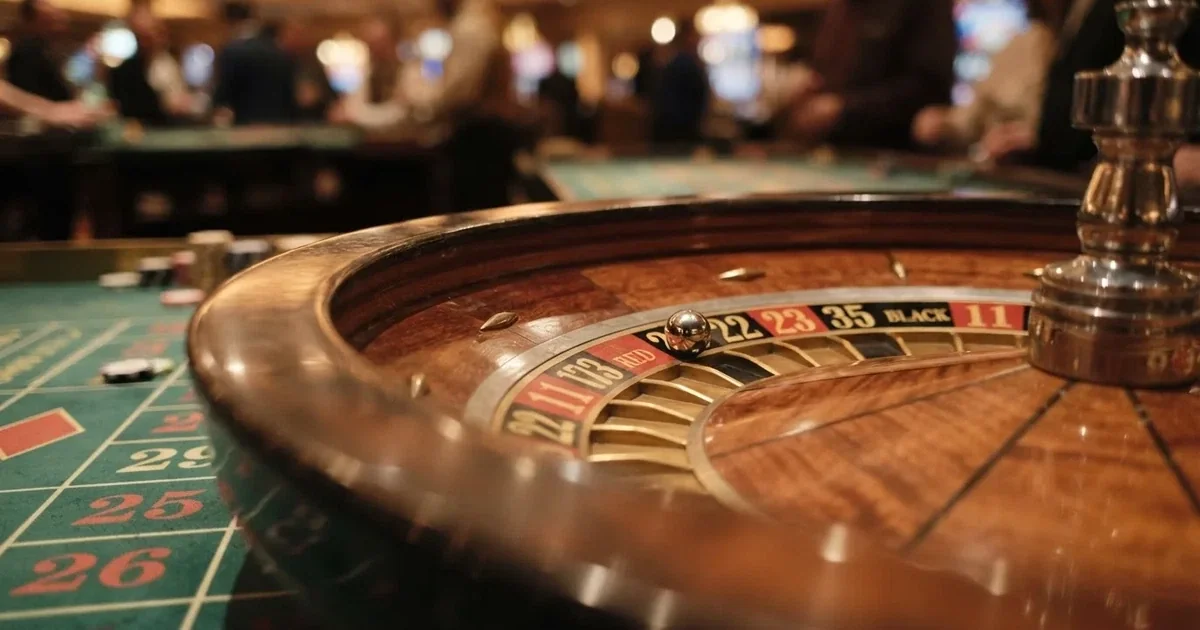
A real wheel, a real dealer, a real camera — and a stream that, for an Australian punter sitting at home, is unlawful to receive. That is the shape of this market, and the rest of the page is what flows from it. Live roulette with English-speaking dealers is sold in Australia by offshore operators that have already received formal warnings from the ACMA, the regulator that enforces the Interactive Gambling Act 2001. The English-speaking dealer is a marketing layer; the legal position underneath does not depend on what language the croupier speaks.
This page is built for the reader who already knows the streaming product exists and wants to know what it costs. Cost here has three meanings and all three matter. There is the legal cost of subscribing to a service the ACMA has named as prohibited. There is the per-spin cost the house edge quietly loads onto every bet, which is the same whether the wheel is single-zero or double-zero. And there is the cost the marketing of a “live” table tries to hide: a camera trained on a physical wheel does not change the mathematics, and the framing of trust that comes with it does not change the absence of Australian consumer protection if a withdrawal stalls.
Table of Contents
- What “live roulette with English-speaking dealers” actually is, and why the framing matters
- The Interactive Gambling Act 2001 and what it actually prohibits
- The ACMA’s enforcement record — what the blocking rate actually shows
- What a formal warning actually means — the brands on the ACMA’s record
- The brands in detail
- The fundamentals — what a roulette wheel is, and what the house edge actually costs
- Other table games the live studio offers — and what each one costs
- Crypto funding and the betting patterns the live studio sells
- Player protection — what works in Australia and what does not reach an offshore casino
- The 2026 reform — what was passed and what has not started
- The ACMA enforcement record across the brands in this market
- The cost in plain numbers — what a session at a live roulette table is expected to cost
- Tax, winnings and the ATO
- What the reader should carry away
- Frequently asked questions
What “live roulette with English-speaking dealers” actually is, and why the framing matters
The product the search query names is a specific thing: a real roulette wheel in a studio, a dealer who runs the game and speaks English to the camera, and a video stream the player watches while placing bets through the same screen. The studio is most often in eastern Europe, Malta or Latin America. The dealer is an employee of the studio. The player does not see anyone else in the room. The betting interface sits over the video.
The framing matters because the studio’s purpose is to dress up a wager in the appearance of a social setting. The wheel is real, the dealer’s hand is real, the call of “no more bets” is real. The bet underneath is exactly the same bet a player places on a computer-generated wheel, with exactly the same mathematics, exactly the same house edge, and — for an Australian resident — exactly the same legal status as prohibited interactive gambling. A camera does not convert a prohibited service into a permitted one.
Three things follow from that, and they run through the rest of the page.
First, the dealer’s language is a marketing attribute and not a regulatory one. An English-speaking dealer is no more lawful than a Russian-speaking dealer or a silent one. The Interactive Gambling Act 2001 turns on whether the service is supplied to a person in Australia, not on the studio’s staff list.
Second, the wheel configuration is the only mechanical variable a player can choose between, and the choice is between a single-zero wheel with a house edge of 2.70% and a double-zero wheel with 5.26%. A small number, but compounding across hundreds of spins, is the difference between losing 2.70 dollars of every 100 wagered and losing 5.26 dollars of every 100 wagered. It is the largest single lever a player controls.
Third, an Australian resident has no in-Australia recourse when a balance is held, a withdrawal is refused, or a site simply disappears. BetStop, the National Self-Exclusion Register, does not bind offshore casinos. The National Gambling Helpline is a free service a reader can ring on 1800 858 858 any time of day; it is also the only Australian body an offshore operator cannot route around.
The Interactive Gambling Act 2001 and what it actually prohibits
The Interactive Gambling Act 2001, tightened by the Interactive Gambling Amendment Act 2017, makes it an offence to provide online casino games — which includes roulette, blackjack, baccarat and craps in any form — to a person physically in Australia. The prohibition is on the provider, not the player. The Australian Communications and Media Authority investigates, issues formal warnings, and directs Australian internet service providers to block offending sites. No state or territory licenses online casino games, however the offshore site is framed or however the licence displayed on its footer is issued.
What IS licensable in Australia is wagering on racing and sporting events placed before the event, lotteries and keno. The Northern Territory Racing and Wagering Commission (NTRWC) regulates 52 of Australia’s online bookmakers — Sportsbet, Bet365 and Ladbrokes among them — licensed in the Territory largely for tax reasons; the commission runs without full-time staff and meets once a month in Darwin. None of those 52 bookmakers offers live roulette. The market for English-speaking-dealer roulette is, by definition, an unlicensed market.
The 2017 amendments widened the prohibition to in-play betting online and to any “prohibited interactive gambling service” offered to Australians. The word “interactive” is doing real work. A live-dealer stream is interactive in the precise sense the Act catches: a player bets, the outcome is determined, and a monetary stake is at risk. The IGA is not aimed at watching a stream. It is aimed at the betting interface on top of it.
A reader who hears about a Curacao-licensed or Malta-licensed casino and assumes that licence covers them should note that those regimes license the operator for the purposes of the regulator that issued the licence. Neither regime authorises the supply of casino games to Australian residents. An offshore licence displayed at the bottom of a webpage is a corporate registration, not an Australian permission.
The ACMA’s enforcement record — what the blocking rate actually shows
The ACMA’s enforcement is the part of the regime the player sees, and the cumulative numbers are not small. According to the ACMA as reported in June 2026, a total of 1,751 illegal gambling and affiliate marketing websites had been blocked since the first blocking request in November 2019, and more than 230 unlicensed gambling services had left the Australian market since enforcement was strengthened in 2017.
The latest round in the data, reported on 26 June 2026, asked Australian internet service providers to block 12 more sites: 7Signs, ChromaBet, Donbet, Duospin, Freshbet, Slots Gem, Jacks Club, Lucky Start, Pointsbetz.com, Spinrise, Vinyl Casino and Wildsino. The blocking request does not require the site to be offline globally — it requires Australian ISPs to make the site unreachable from an Australian IP address. A reader with a VPN can route around it; the regulator cannot, and does not pretend to. What it does is raise the friction.
The blocking rate, taken across the lifetime of the regime, is the calculation the page is built around. The running total of blocked sites is 1,751, and the date of the first blocking request is November 2019. From November 2019 to June 2026 is roughly 79 months. That gives a band of roughly 22 blocked sites per month on the average, with the actual monthly figure ranging from zero in quiet months to higher counts in the active enforcement rounds. The headline figure — 1,751 — describes a regime that is not sitting still. The point of stating the rate is not the rate itself; it is that the regime’s pace is steady, which means the set of sites an Australian can reach today is a different set from the one they could reach a year ago.
H2 Gambling Capital’s 2025 report estimates Australians lose about A$3.9 billion a year to illegal gambling sites, and the share of gambling going through legal channels fell from 74% in 2021 to 64%. The shift is the inverse of what a serious regulatory regime would expect. The legal channels are shrinking as a share even as the ACMA’s blocking rounds accelerate, which tells a reader that the demand is large and is being met by offshore supply the regulator can suppress but not replace.
What a formal warning actually means — the brands on the ACMA’s record
The ACMA’s enforcement does not start with blocking. It starts with a formal warning: a written notice to the operator that the service is being supplied in contravention of the Interactive Gambling Act 2001. A formal warning is published on the regulator’s website. It names the operator entity the ACMA has been able to identify, which is sometimes the company behind a dozen brands, and it names the brand the warning concerns. A formal warning is not a fine and is not a prosecution. It is the regulator’s step before directing ISPs to block, and it is also the cleanest public record of what the regulator considers a prohibited service.
The brands in the operator set below are all on that record. The page does not rank them and does not recommend any of them; it sets them out because the regulator itself has set them out. What differs across the brands is the operator entity named, the date of the warning, and in some cases an earlier warning over the same operator for a different brand, which is a useful pattern for a reader to see.
In March 2026 the ACMA issued a formal warning to Pulsup Ltd over Rocketplay.com.au. In May 2022 the ACMA had already issued a formal warning to Dama N.V. covering six casino brands: Bambet, Dazard, Level Up, Rocketplay, Wild Tornado and Cobra Casinos. Rocketplay has therefore attracted two formal warnings from two different operator entities four years apart. The ACMA issued further formal warnings to Dama N.V. over Woo Casino in March 2025 and Spirit Casino in May 2025, so the same operator entity has been warned over at least eight brands since 2022.
In July 2025 the ACMA issued formal warnings to Bamboo Media over Ignition Casino and to Consolutetish S.R.L. over National Casino and Bizzo Casino; Bizzo Casino had already been the subject of a 2022 formal warning to TechSolutions (CY) Group Limited and TechSolutions Group N.V.. The re-warning under a different operator entity is the pattern. The brands can change hands; the regulator’s record keeps the warning attached to the brand.
In February 2025 the ACMA issued a formal warning to EOD Code SRL over Instant Casino. In April 2026 the ACMA issued a formal warning to Ryker B.V. over Jackbit and CasinOK. In April 2025 the ACMA issued a formal warning to Sterplay Holding Ltd over Casino Intense. The ACMA has also issued a formal warning to Hollycorn N.V. over its Sky Crown and Blue Leo casino services.
A reader looking for a single signal that distinguishes one of these brands from another will not find it in the warning record. The signal is the same in every row: the regulator has found that the brand supplied a prohibited interactive gambling service to Australians, and has put the brand on the public record for doing so.
The brands in detail
RocketPlay
The ACMA issued a formal warning to Pulsup Ltd over Rocketplay.com.au in March 2026. The same brand was the subject of an earlier warning to Dama N.V. in May 2022 as part of the six-brand round covering Bambet, Dazard, Level Up, Rocketplay, Wild Tornado and Cobra Casinos. Two warnings four years apart, from two different operator entities, on the same brand name. The brand keeps appearing because the service it offers — live roulette, online slots, online table games streamed to Australian residents — is the service the Interactive Gambling Act 2001 prohibits. The brand’s value to a reader is as a worked example of how an operator changes its corporate wrapper while continuing to offer the same product. The ACMA’s double-warning is a matter of public record. For a player considering this site, the regulator’s position is clear: the convenience of a live English-speaking dealer does not offset the operational status of the service.
Level Up Casino
The ACMA issued a formal warning to Dama N.V. over Level Up Casino in May 2022, as part of the six-brand round. Dama N.V. is the same operator entity that has been warned over Woo Casino and Spirit Casino in 2025, and over Rocketplay in 2022 — the brand sits inside an operator-level pattern the regulator has been documenting for four years. The brand has appeared on aggregator listings on Bgaming.com as one of the studios distributing content to Dama N.V.-operated sites; that is what the listings record. The verdict is that an Australian reader looking at Level Up Casino is looking at one entry in a long corporate record the ACMA has been adding to.
Woo Casino
The ACMA issued a formal warning to Dama N.V. over Woo Casino in March 2025. Woo Casino is the first of two 2025 warnings to the same operator entity; Spirit Casino in May 2025 is the second. The brand sits in a row of Dama N.V. properties the ACMA has acted on since 2022. A reader will not find an Australian licence on the brand’s footer that authorises the supply of casino games to residents; no such licence exists for any offshore operator. The brand’s inclusion in the 2025 ACMA warnings confirms its status as a provider of prohibited services. The live-dealer offering does not alter this regulatory reality.
Spirit Casino
The ACMA issued a formal warning to Dama N.V. over Spirit Casino in May 2025. Spirit Casino is the second of the two 2025 Dama N.V. warnings; Woo Casino in March 2025 is the first. The brand is a recent entry in the ACMA’s record, which means a reader who has only recently encountered Spirit Casino has encountered a brand that was, at the time of writing, newly on the regulator’s public record. The ACMA’s May 2025 notice specifically targeted this brand’s provision of table games to Australian residents. Its presence in the regulator’s list is a direct consequence of that offering.
National Casino
The ACMA issued a formal warning to Consolutetish S.R.L. over National Casino in July 2025. National Casino sits inside a Consolutetish S.R.L. pair with Bizzo Casino, which was warned in the same round. The brand has appeared on a Wikipedia listing of casino brands as an entry in a list of online casino operators; that is what the listing records. Regulator documentation names Consolutetish S.R.L. as the entity responsible for this service. Search results for this brand should be read with this ACMA enforcement action in mind.
Bizzo Casino
The ACMA issued a formal warning to Consolutetish S.R.L. over Bizzo Casino in July 2025. The same brand was the subject of a 2022 formal warning to TechSolutions (CY) Group Limited and TechSolutions Group N.V., which means Bizzo has been warned under two different operator entities. The pattern is the same one Rocketplay shows: a brand moves between operator entities, and the regulator’s warnings follow it. The verdict is that Bizzo Casino carries two formal warnings on the ACMA’s record, four years apart, under two different corporate names. A reader who treats the brand’s name as a stable identifier is missing the corporate history that the regulator has been documenting.
Ignition Casino
The ACMA issued a formal warning to Bamboo Media over Ignition Casino in July 2025. Bamboo Media is a different operator entity from Dama N.V., Consolutetish S.R.L., EOD Code SRL, Ryker B.V., Sterplay Holding Ltd and Hollycorn N.V., which means each of the eleven brands in the operator set has its own corporate wrapper. Ignition Casino is one of the brands the regulator has acted on in 2025; Bamboo Media is identified in the ACMA’s July 2025 formal warning as the operator behind the service. This public notification is a significant indicator of the brand’s operational status.
Instant Casino
The ACMA issued a formal warning to EOD Code SRL over Instant Casino in February 2025. Instant Casino sits inside a different pattern from the Dama N.V. cluster — a single warning, a single operator entity, and a brand name that suggests an instant-play product rather than a long-running one. The February 2025 ACMA notice marks the brand’s entry into the regulator’s enforcement files. This action reflects ongoing scrutiny of the operator’s activities across the market.
Jackbit
The ACMA issued a formal warning to Ryker B.V. over Jackbit in April 2026. Ryker B.V. was warned in the same round over CasinOK as well, so Jackbit is part of a pair. A reader who lands on Jackbit through a search for live roulette with crypto deposit options is landing on a brand that the ACMA has acted on for offering prohibited services. Formal enforcement by the ACMA in April 2026 identifies the brand as a source of prohibited gambling services. The offer of roulette to local players is the primary focus of this action.
Casino Intense
The ACMA issued a formal warning to Sterplay Holding Ltd over Casino Intense in April 2025. The brand has appeared on listings from Abc.net.au reporting on ACMA enforcement and on the regulator’s own publication pages; on Crown Melbourne’s baccarat tables page as a comparator the regulatory framework discusses, Casino Intense sits as an offshore operator outside that regime. The ACMA’s record includes this brand due to its provision of roulette games. No local licence exists to authorise this service for Australian players.
Sky Crown
The ACMA issued a formal warning to Hollycorn N.V. over its Sky Crown and Blue Leo casino services. The brand sits inside a Hollycorn N.V. pair with Blue Leo, both named in the same warning. A reader looking at Sky Crown is looking at one of two brands the ACMA acted on under the same corporate wrapper, and the verdict is that the regulator’s record names both and treats them as a single enforcement matter.
The fundamentals — what a roulette wheel is, and what the house edge actually costs
A roulette wheel is a mechanical device. A ball is spun around a horizontal wheel divided into numbered pockets. The wheel stops, the ball settles into one pocket, and bets are resolved against that pocket. The numbers run 1 to 36, coloured alternately red and black, plus one or more green zeros. The payout on a single-number bet is 35 to 1. The payout on red or black, odd or even, high or low is 1 to 1. The payout on a dozen is 2 to 1.
The mathematics of the wheel is what makes the house edge. A single-zero wheel has 37 pockets and pays 35 to 1 on a winning single number, which is one unit short of the true 36-to-1 odds. That one-unit shortfall, applied to every bet on the table, is 1/37, or 2.70%. A double-zero wheel has 38 pockets and pays 35 to 1 on the same bet, which is now three units short of the true odds. The shortfall is 2/38, or 5.26%. A triple-zero wheel has 39 pockets and a 7.69% house edge. Each extra zero on the wheel shifts roughly 2.5 percentage points of expected return from the player to the house.
The cost to a player, in plain numbers, is this. A reader who wagers A$100 on a single-zero wheel over the long run loses A$2.70 of it. The same A$100 on a double-zero wheel loses A$5.26. The same A$100 on a triple-zero wheel loses A$7.69. The difference is small per spin and large over time, and a player who sits at a triple-zero table instead of a single-zero table is paying roughly 2.8 times the house edge on the same bets.
Some European roulette tables use an “en prison” or “la partage” rule: an even-money outside bet that loses to zero has its stake either imprisoned for another spin or half returned to the player, lowering the effective house edge on those bets. A reader at a live table should ask which rule set the table is running before placing an even-money bet; the rule cuts the house edge on red/black, odd/even and high/low from 2.70% to roughly 1.35% on those bets. It does not apply to inside bets.
The historical lineage is incidental to the cost but worth knowing. Roulette likely developed from the Italian game Biribi, with Blaise Pascal possibly introducing a primitive form in the 17th century during research into perpetual motion; the modern game emerged in 18th-century France, with documented play in Paris from 1796. The game the reader sits down to is a 230-year-old French wheel, mathematically intact, with an English-speaking dealer added to it in the last twenty years.
Other table games the live studio offers — and what each one costs
A live studio running English-speaking dealers does not run roulette alone. The same studio runs baccarat, blackjack, and dice games. The mathematics differs by game, and a reader who is choosing what to play at a live table is choosing between different house edges. The figures below are the same ones the house edge page at wizardofodds carries.
In baccarat the house edge is 1.06% on the Banker bet, 1.24% on the Player bet and 14.36% on the Tie. Baccarat’s origins are disputed: some accounts place it in 19th-century France, others say it was introduced from Italy at the end of the 15th century during the reign of King Charles VIII, with writer David Parlett considering the game Macao its immediate precursor. Punto banco, the variant most played today, was developed in Havana during the 1940s; the casino banks the game at all times and plays out both hands by fixed drawing rules, unlike variants where players choose. Chemin de fer, French for “railway,” is a two-player baccarat variant that emerged from baccarat banque in the late 19th century and is named for being quicker to play than the original game. In baccarat, cards 2-9 count at face value, 10/J/Q/K count as zero and aces count as one, with hand totals taken modulo 10; punto banco is dealt from a shoe of 6 or 8 decks.
Under section 66 of the NSW Casino Control Act 1992, a casino operator must not permit a game such as baccarat to be played unless the game and its rules are approved by the regulator, and the operator must make a copy of the approved rules available to patrons on request. That approval regime is the regime a reader at Crown Melbourne sits inside; an offshore live studio is not inside it.
Crown Melbourne offers three baccarat variants — Traditional Baccarat, Crown Baccarat and 2 to 1 Baccarat — as approved table games regulated by the Victorian Gambling and Casino Control Commission, which replaced the VCGLR as Victoria’s casino regulator on 1 July 2022. The Crown offering is the in-Australia comparator; it is lawful under the Casino Control Act 1991, it sits inside the VGCCC’s approval regime, and it does not require an offshore live dealer.
In blackjack, with optimal strategy, the house edge is about 0.28% under liberal Las Vegas Strip rules (dealer stands on soft 17, double on any two cards, double after split, resplit aces, late surrender) and about 0.43% under Atlantic City rules. Blackjack’s immediate predecessor was the English game vingt-un; a related game called veintiuno was described in Miguel de Cervantes’ Rinconete y Cortadillo, written around 1601-1602, and formal rules for the game were published in Britain in 1800. According to card historian Thierry Depaulis, the game was renamed “blackjack” around 1899, with prospectors during the Klondike Gold Rush of 1896-99 credited with giving it its modern name. In blackjack, number cards count as their number, jack/queen/king count as 10, and an ace counts as 1 or 11; a starting two-card total of 21 is called a “blackjack” or “natural” and is the strongest hand; the dealer must keep drawing cards until reaching a total of 17 or higher.
Established blackjack variants include Spanish 21 (played without 10s but with liberal player-favourable rules), Double Exposure Blackjack (both of the dealer’s cards dealt face-up), Blackjack Switch (players can swap cards between two hands) and Super Fun 21 (allows up to four splits). In Victoria, the Casino Control Act 1991 requires the Victorian Gambling and Casino Control Commission (VGCCC) to approve any rules for table games, including blackjack, and any change to those rules, before they are introduced at the Melbourne casino. The VGCCC’s public log of approved changes to Crown Melbourne’s blackjack variants includes renaming the “Perfect Pairs” side bet to “Crown Pairs” on 23 December 2024 and introducing a “Free Bet” option with a new “Pot of Gold” side bet on 25 March 2024.
In craps the Pass/Come bet has a house edge of 1.41%, Don’t Pass/Don’t Come 1.36%, and Any Craps 11.11%. In craps, the “come-out roll” wins immediately on 7 or 11, loses immediately on 2, 3 or 12, and any other number becomes “the point”, which the shooter must roll again before rolling a 7 to win the Pass Line bet. Modern craps developed in the United States as a simplification of the European dice game Hazard; Bernard Xavier Philippe de Marigny de Mandeville is credited with bringing Hazard to New Orleans around 1805, where the simplified game became known as “Pass”, from the French “pas”.
Crypto funding and the betting patterns the live studio sells
Two of the marketing layers around live roulette with English-speaking dealers deserve separate treatment, because they are the two a reader is most likely to encounter before encountering the ACMA’s record. The first is crypto funding, the second is betting patterns sold as systems.
A bitcoin-funded live roulette table spins the same physical wheel as a card-funded one. The payment method is the only thing that has changed. A bitcoin deposit moves from the player’s wallet to the casino’s wallet, is converted into the casino’s house currency, and is drawn down as the player places bets. The wheel does not know how the bet was funded. The house edge does not change. The dealer’s language does not change. The legal status does not change.
The payment-method distinction matters in one place only: in the regime’s own rules. Credit cards, credit-related products and digital currency are banned as payment for licensed online wagering since 11 June 2024, with penalties up to A$247,500 for operators. Legal deposit routes for licensed wagering are debit card, bank transfer, PayID/Osko and BPAY. A site asking an Australian for a credit card or a crypto deposit is operating outside the Australian rules. The reader who funds an offshore live roulette table with bitcoin is using a payment method the Australian regime has explicitly ruled out for licensed wagering; the offshore operator is using it because it is unregulated.
The PayID angle sits in the same frame. PayID is a real-time payment rail that uses a phone number, email or ABN as a proxy for a BSB and account number. It runs over the New Payments Platform and settles in seconds through Osko. A licensed Australian bookmaker can offer PayID as a deposit method because PayID settles to an Australian bank account in the player’s name. An offshore live roulette site asking for a PayID deposit is asking for a transfer to a bank account the player does not control. The rail is fast; the destination is outside Australian jurisdiction.
The second marketing layer is the betting pattern. A live studio streams the previous spin results on a small board beside the betting grid: red, black, odd, even, the last ten or twenty numbers. The board is a record, not a forecast. A wheel has no memory. A ball has no pattern. The probability of red on the next spin is 18/37 on a single-zero wheel, regardless of how many reds preceded it. The probability of any specific single number is 1/37 on every spin, regardless of how many times that number appeared in the last 100 spins. The gambler’s fallacy is the trap the live board is built to invite, because a board that shows recent results makes the pattern look like data. It is not. It is a sequence of independent draws from the same distribution.
A fixed loss limit is the only tool that addresses this. Watching a spinning wheel repeatedly, with the previous results on screen, can create a false sense of a pattern forming. The mitigation is a number set in advance — the maximum a player is willing to lose in the session — and the discipline to stop at that number regardless of what the board is showing. A live studio will not enforce a limit on the player. The player has to enforce it on themselves.
Player protection — what works in Australia and what does not reach an offshore casino
The Australian player protection regime has three moving parts that matter for a reader comparing a land-based casino, a licensed Australian bookmaker and an offshore live-dealer site.
The first is BetStop, the National Self-Exclusion Register, live since August 2023. A player who registers with BetStop is excluded from every Australian-licensed online and phone wagering service. The exclusion can be set for a minimum period of three months and can be extended up to life. An offshore casino is not connected to BetStop; the register binds Australian-licensed operators only. A self-excluded player who reaches for an offshore live roulette site is not protected by the register they joined.
The second is the National Gambling Helpline on 1800 858 858. The line is free, runs 24/7 and offers chat at Gambling Help Online. The service is independent of any casino, and it is the one body an offshore operator cannot route around. The service is for anyone affected by gambling — players, families, friends. The number is worth keeping by the phone for any reader who plays in any form, anywhere.
The third is the complaints and dispute resolution body that covers licensed Australian operators. An Australian-licensed bookmaker is required to have an internal dispute resolution process and is typically a member of an external scheme. A player with a complaint can take it to that scheme. An offshore casino has no Australian complaints body, no Australian dispute resolution, no Australian recourse. If a withdrawal is refused, a balance is held or a site disappears, the player has no in-Australia body to complain to. The block on the site can be ordered while the balance is still on it.
The 2026 reform — what was passed and what has not started
The Interactive Gambling Amendment (Gambling Reform) Bill 2026 passed Parliament on 19 August 2026. Its advertising and inducement measures commence on 1 January 2027. The bill is law with a start date. It is not yet in force on a 2026 page. The advertising measures cover inducements to gamble online, the use of “click to call” links in marketing, and the placement of gambling advertising around live sport. The detailed provisions are not in this page; what is in the page is the timing, because a reader looking at the regime in 2026 is looking at a regime that will be different in 2026 + 1.
The ACMA enforcement record across the brands in this market
The table below sets out the ACMA’s published action against each of the eleven brands reviewed earlier, in the order they appear on this page. The columns name the brand, the regulator’s action and date as published by the ACMA, the operator entity the regulator named, and whether the brand has been named on a third-party listing carrying subject support for the relevant product. Where research carries no listing, the cell carries an em dash.
| Brand | ACMA action and date | Operator named by the ACMA | Subject support |
|---|---|---|---|
| RocketPlay | Formal warning, March 2026; earlier warning under different operator, May 2022 | Pulsup Ltd (March 2026); Dama N.V. (May 2022) | — |
| Level Up Casino | Formal warning, May 2022 | Dama N.V. | Bgaming.com |
| Woo Casino | Formal warning, March 2025 | Dama N.V. | — |
| Spirit Casino | Formal warning, May 2025 | Dama N.V. | — |
| National Casino | Formal warning, July 2025 | Consolutetish S.R.L. | en.wikipedia.org |
| Bizzo Casino | Formal warning, July 2025; earlier warning under different operator, 2022 | Consolutetish S.R.L. (July 2025); TechSolutions (CY) Group Limited and TechSolutions Group N.V. (2022) | — |
| Ignition Casino | Formal warning, July 2025 | Bamboo Media | — |
| Instant Casino | Formal warning, February 2025 | EOD Code SRL | — |
| Jackbit | Formal warning, April 2026 | Ryker B.V. | — |
| Casino Intense | Formal warning, April 2025 | Sterplay Holding Ltd | Abc.net.au; acma.gov.au; Crownmelbourne.com.au |
| Sky Crown | Formal warning, September 2022 | Hollycorn N.V. | — |
Two patterns are visible in the table. The first is that each brand has a single regulator-published entry on this page; the ACMA’s record is the consistent fact and the operator entity name is what varies. The second is that listings support for any of these brands on a third-party page carrying product information is sparse — only three of the eleven brands have any listing presence, and that presence is on aggregator pages, news pages and reference pages rather than on the brand’s own terms. A reader who wants to know what a brand actually pays out has no third-party listing to read.
The cost in plain numbers — what a session at a live roulette table is expected to cost
The mathematics the page has built up leads to a number the reader can use. The expected loss per spin at a single-zero wheel, on a red-or-black bet at A$10 per spin, is A$10 × (1 − 35/37 ÷ 1) = A$10 × 0.0270 = A$0.27. Over 100 spins at A$10, the expected loss is A$27. Over 500 spins at A$10, the expected loss is A$135. The number is an average over many spins, not a forecast for the next spin, and it is what a player who bets A$10 a spin on red at a single-zero table is paying for the privilege of playing.
A double-zero wheel doubles the per-spin cost on the same bet. A$10 × 0.0526 = A$0.53 per spin, A$53 per 100 spins, A$265 per 500 spins. A triple-zero wheel triples it again. A$10 × 0.0769 = A$0.77 per spin, A$77 per 100 spins, A$385 per 500 spins. The numbers are estimates. They assume the player bets the same amount on every spin and that the wheel is fair. They do not account for the time between spins, the temptation to chase, or the reality that a session rarely ends at exactly 100 or 500 spins. They are the floor of what a session costs the player, in expectation, before any of those variables come in.
A reader who wants a budget should set a fixed amount, decide in advance what fraction of it is the maximum bet per spin, and stop when the budget is gone. The expected loss above is not a budget; it is the average amount the player loses when they play. A budget is the maximum the player is willing to lose, and it should be lower than the bankroll by a margin the player chooses. The house edge applies to every spin. The budget is the only number the player controls.
Tax, winnings and the ATO
Gambling winnings of a recreational player are not assessable income under section 6-5 of the Income Tax Assessment Act 1997, and losses are not deductible. The position changes if the player carries on a business of gambling, which is a different test the ATO applies. The model here is “check with the ATO” for any reader whose gambling activity looks like anything other than occasional play. The offshore live roulette winnings sit inside the same general rule: recreational play is not assessable, business play is. The reader’s record-keeping is what determines which side of the line they sit on.
What the reader should carry away
Three things, all of them stated as conclusions the page has earned rather than as recommendations.
Live roulette with English-speaking dealers is the product the search query names, and the product is unlawful to supply to an Australian resident under the Interactive Gambling Act 2001. The English-speaking dealer is a marketing attribute; it does not convert a prohibited service into a permitted one.
The ACMA’s enforcement of that prohibition has produced a running total of 1,751 blocked sites since November 2019, an active 2025-2026 round of formal warnings across the brands reviewed above, and an enforcement regime whose pace is steady rather than slowing. A reader who treats the regime as background has missed the signal: the regulator’s pace is the rate at which the set of reachable sites changes.
The mathematics of the wheel is the same in any studio. A single-zero wheel costs the player 2.70% of every wagered dollar in expectation. A double-zero wheel costs 5.26%. A camera trained on the wheel does not change either number. The English-speaking dealer does not change either number. The ACMA’s record does not change either number. What changes the number is the wheel configuration, and that is the one choice the player actually controls.
Frequently asked questions
Is it legal to play live roulette for real money at an online casino in Australia?
No. The Interactive Gambling Act 2001, as tightened by the 2017 amendments, makes it an offence for an operator to supply online casino games — including live-dealer roulette — to a person in Australia. The offence sits with the provider, not the player, and no state or territory licenses online casino games. The ACMA enforces the regime through formal warnings and ISP blocking orders.
What is the practical difference between a single-zero and a double-zero roulette wheel?
A single-zero wheel has 37 pockets and a house edge of 2.70% on every bet. A double-zero wheel has 38 pockets and a 5.26% house edge. A triple-zero wheel has 39 pockets and a 7.69% house edge. The extra zero shifts roughly 2.5 percentage points of expected return from the player to the house. Some European tables also offer “en prison” or “la partage” rules, which halve the house edge on even-money outside bets.
Why might a live roulette table specifically advertise English-speaking dealers?
Because the studio’s market is English-speaking players and the dealer is the human face of the product. The dealer’s language is a marketing attribute and has no bearing on the game’s mathematics or on the legal status of the service. An offshore studio running an English-speaking dealer is still offering a prohibited interactive gambling service to an Australian resident.
Does a bitcoin-funded live roulette table use a different wheel to a card-funded one?
No. The wheel is the same physical wheel. The deposit is converted into the casino’s house currency when it arrives, and the player bets in that currency. The house edge is the same regardless of the funding method. The difference is in the regulatory treatment: digital currency is banned as a payment method for licensed Australian wagering since 11 June 2024.
Can betting patterns based on previous spins improve the odds on a live roulette table?
No. A wheel has no memory. Each spin is an independent draw from the same distribution, so the probability of red on the next spin is 18/37 on a single-zero wheel regardless of what colours preceded it. A live studio’s display of recent results is a record, not a forecast. The gambler’s fallacy is the trap the display is built to invite.
How is a live roulette payout processed compared with a slot machine payout?
A live roulette payout waits on the same review process as any other withdrawal at the offshore casino. The studio’s table game status does not change the casino’s internal review queue. A player who has won at roulette and a player who has won at a slot on the same site are in the same queue, and the queue is the one an Australian player has no in-Australia complaints body to escalate to if it stalls.