
Uptown Pokies in Australia: The Offshore Gap Between Marketing and Law
A site calling itself Uptown Pokies turns up in the same search results as every other offshore casino pitched at Australians. What sets it apart from the licensed bookmakers down the page is the regulatory standing — there is none. The Interactive Gambling Act 2001 makes it an offence to supply online casino games or online pokies to a person physically in Australia, and no state or territory issues the licence that would change that. Anyone comparing offers on the strength of a welcome bonus, free spins or a birthday top-up should read those terms against the law underneath them first, because the legal status is what decides whether the rest of the offer even reaches the player.
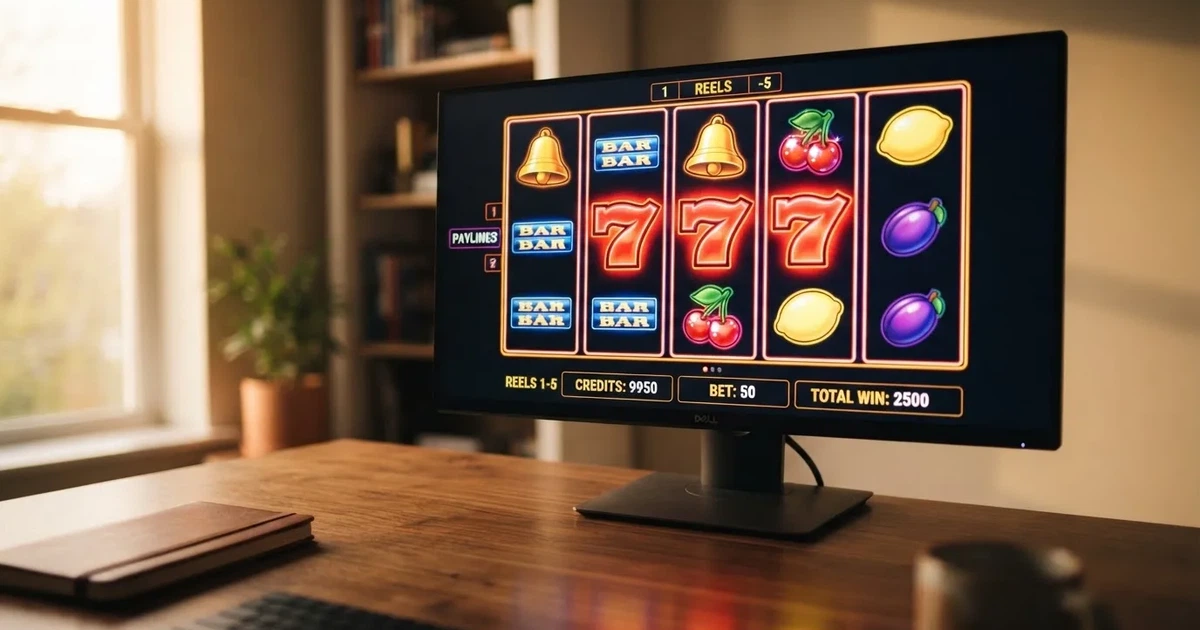
Verified against the ACMA register and Australian Payments Plus documentation as of 29 October 2026.
Table of Contents
- What the Law Actually Says About Online Pokies in Australia
- Why an ACMA Formal Warning Is the Closest Thing to a Verdict
- Blocking Rate: How Quickly the Offshore Roster Has Closed
- Responsible Play and Where the Protection Actually Lives
- Payment Methods, Surcharges, and the Limits That Bite Quietly
- Bonuses, Free Spins, and What the Marketing Does Not Say
- Mobile, App, and Where the Same Site Looks Different
- The Landscape of ACMA-Listed Sites
- The Brands the Regulator Has Named
- Reading the Comparison
- Picking a Licensed Alternative Is the Point
- Tax and the Bottom Line of the P&L
- What the Offshore Pitch Cannot Deliver
- Where This Leaves the Reader
- Frequently Asked Questions
What the Law Actually Says About Online Pokies in Australia
The single fact that organises everything on this page is a prohibition. Under the Interactive Gambling Act 2001 as tightened by the 2017 amendments, an operator cannot lawfully provide online casino games, online pokies or in-play betting to a person in Australia. Wagering on races and sport placed before the event is licensable, and so are lotteries and keno — in practice the Northern Territory Racing and Wagering Commission handles most of the online bookmaker licences, fifty-two of them according to an ABC report in April 2026, including Sportsbet, Bet365 and Ladbrokes. Online pokies are not on that list. The site styled as Uptown Pokies, whatever licence a footer claims from Curaçao or elsewhere, sits outside Australian law for anyone playing from inside the country.

The law targets the provider, not the player. A punter depositing from Sydney or Perth does not face prosecution. What the punter gives up is the entire Australian consumer-protection frame: no Australian complaints body, no recourse if a withdrawal is refused, no connection to BetStop, and the very real possibility that the site can be blocked mid-session with a balance still in the account. H2 Gambling Capital’s 2025 estimate puts Australian losses to illegal gambling sites at roughly A$3.9 billion a year, with the share of gambling flowing through legal channels falling from 74% in 2021 to 64%. The offshore segment is no fringe — it has captured a third of the market’s spend, and it has captured it precisely because it is not licensed here.
The 2026 reform bill adds another layer. The Interactive Gambling Amendment (Gambling Reform) Bill 2026 passed Parliament on 19 August 2026, with its advertising and inducement measures commencing on 1 January 2027. The law exists on the page with a start date; the advertising crackdown does not yet bind in the year the bonus is being claimed. That timing matters because the inducement side of the offshore pitch — the welcome package, the free spin drip, the loyalty reload — is the part that will come under pressure once 2027 arrives.
Why an ACMA Formal Warning Is the Closest Thing to a Verdict
The Australian Communications and Media Authority does not need to win a court case for a brand to be functionally shut out of the Australian market. Its two tools are the formal warning and the blocking request, and the formal warning is the one that names operators. As reported in June 2026, the ACMA has directed Australian ISPs to block 1,751 illegal gambling and affiliate marketing websites since the first blocking request in November 2019, and more than 230 unlicensed services have left the Australian market since enforcement was strengthened in 2017. The June 2026 round alone added twelve: 7Signs, ChromaBet, Donbet, Duospin, Freshbet, Slots Gem, Jacks Club, Lucky Start, Pointsbetz, Spinrise, Vinyl Casino and Wildsino.

The formal warning is what readers usually meet first, and it carries a specific legal meaning under section 254J of the Telecommunications Act 1997 as incorporated through the IGA. The site styled as Uptown Pokies itself appears in an August 2022 ACMA warning to Proxous Advanced Solutions Limited, which was found to have supplied Realtime Gaming-branded software to illegal online casinos serving Australians, with Uptown Pokies named among the contravening services. The brand is therefore not some hypothetical offshore operator; it has been the subject of an ACMA finding about the very product it is selling to Australians.
A formal warning is not a fine and not a prosecution. What it does is give the ACMA a record on which to act later if the operator keeps the Australian-facing service live. It also gives an Australian player the cleanest publicly available signal that the regulator considers the site prohibited. Operators rotate. The same shell company reappears under a new domain, the same software is re-skinned, and the warning register becomes a list of names rather than a list of businesses. A punter looking at the brand today should treat any ACMA finding as a current fact about the underlying operator, not as a closed chapter.
Blocking Rate: How Quickly the Offshore Roster Has Closed
The arithmetic this page has to do is small but informative. The ACMA’s first blocking request was in November 2019. The cumulative count of blocked gambling and affiliate websites reached 1,751 by June 2026, roughly eighty months later. That works out at an average blocking rate of about 22 sites per month across the full enforcement window, but the cadence is uneven. Early enforcement moved slowly; later rounds have run into double digits per month, with the June 2026 round alone blocking twelve. As a band, the long-run average sits around twenty to twenty-five per month, and the recent monthly run is comfortably inside that band.
Two qualifiers matter. The first is that the 1,751 figure includes affiliate marketing pages, not just operator domains, so the rate counts the marketing infrastructure around the gambling site as well as the site itself. The second is that the count is a cumulative running total, not a snapshot — the same operator can be blocked, briefly return under a new domain, and be blocked again. The headline number is best read as a measure of how much surface area the ACMA has had to keep clearing, not as a fixed population. What the reader can take from it is direct: at this rate, the prohibition is enforced monthly, not occasionally, and any new domain the search engine surfaces has roughly a month’s life in front of it before a blocking request is likely to follow.
Responsible Play and Where the Protection Actually Lives
A site not connected to BetStop cannot offer the protection that BetStop represents. BetStop, the National Self-Exclusion Register, has been live since August 2023 and binds Australian-licensed online and phone wagering services. An offshore casino is not connected to it, which means a self-exclusion set up through the register does not cover a deposit made to a Curaçao-licensed operator running on Realtime Gaming software. Anyone who has registered for self-exclusion and is now searching for an offshore route around it should know that the register does not extend to that route.
Australian Payments Plus, the banks and the card networks carry a different but related protection. Westpac’s gambling block works at card level and refuses authorisation of transactions registered under the merchant category code ‘Betting/Casino Gambling’ on eligible personal credit and debit cards. ANZ’s block, activated in the ANZ app, blocks gambling transactions made through a digital wallet such as Apple Pay on an eligible card as well as on the physical card. ANZ also imposes a 48-hour waiting period once a customer turns the block on, and warns that not all gambling transactions will be blocked and that some non-gambling transactions might be blocked in error. These are blunt instruments and they do not catch every offshore route, but they are the levers an Australian player has.
The non-regulatory route is the National Gambling Helpline on 1800 858 858, free and 24/7, with online chat at Gambling Help Online. For a player who is reading this page because they are trying to decide whether to deposit, that is the right phone to call before depositing, not after. The arithmetic of any bonus on the offshore side does not change once the player is in. A welcome package that takes a hundred thousand dollars of required turnover to clear still takes that turnover regardless of how the player feels about it three weeks later.
Payment Methods, Surcharges, and the Limits That Bite Quietly
The payment methods discussed around the site styled as Uptown Pokies — Neosurf vouchers, crypto, debit cards, bank transfer, Apple Pay — sit across two very different rails. One is the Australian retail banking system, which the offshore site can address only as an external recipient. The other is the offshore card-processing environment, where the surcharge rules the Reserve Bank sets for domestic cards do not apply. The distinction matters because the player bears the cost whichever rail is used.
Osko transfers between participating Australian banks arrive in under a minute, 24/7 including weekends, whether addressed to a BSB and account number or to a PayID. Paying to a PayID shows the name of the account holder before the transfer is sent; Australian Payments Plus warns that being asked to transfer money to a PayID on an illegal gambling site almost certainly means a scam site. PayID-based instant transfers are available at over 100 Australian financial institutions, and more than 25 million PayID identifiers were registered on the New Payments Platform as of April 2025. The platform went live on 13 February 2018 and is owned by New Payments Platform Australia Ltd, whose thirteen shareholders include the Reserve Bank of Australia and the major banks. Participants must keep monthly outages to no more than two minutes.
BPAY is the older bill-payment service and has operated in Australia since 1997. It is available through the online banking of over 140 banks and financial institutions, is offered by over 95,000 businesses, and is run by Australian Payments Plus — the same operator that runs PayID and Osko. BPAY was launched on 18 November 1997 and is owned equally, through parent company Cardlink Services Limited, by ANZ, Commonwealth Bank, National Australia Bank and Westpac. The ACCC authorised the merger of BPAY Group, eftpos and NPP Australia under Australian Payments Plus in September 2021.
AUSTRAC’s threshold-transaction-report rule applies only to physical cash; ordinary electronic bank transfers are not subject to that per-transaction reporting requirement, regardless of the amount sent. That detail is worth knowing because a large transfer to an offshore operator will not by itself trigger an AUSTRAC report, which removes one possible audit trail the player might otherwise have relied on.
The credit-card ban has been in force against Australian-licensed online wagering since 11 June 2024, with penalties of up to A$247,500 for operators who breach it. The ban covers credit-related products and also constrains gambling use of linked digital wallets such as Apple Pay. An offshore site asking for a credit card deposit is therefore not just outside the licensing frame — it is also asking the player to use a payment method the licensed side is barred from accepting. The Reserve Bank of Australia’s July 2025 review proposes removing surcharges only on eftpos, Mastercard and Visa card transactions, explicitly leaving American Express outside the scope of the proposed surcharge ban. Amex, founded in 1850 as a freight-forwarding company and a card issuer since 1 October 1958, operates as a three-party scheme rather than Visa or Mastercard’s four-party network. Apple Pay does not add consumer fees; any surcharge comes from the merchant’s own card-processing fees. Transaction limits and PIN requirements for Apple Pay purchases are set by the card issuer or merchant, not by Apple. By the end of 2025, Apple Pay, Google Pay and Samsung Pay transactions collectively accounted for around 45% of all card payments in Australia by number.
Bonuses, Free Spins, and What the Marketing Does Not Say
The promotional claims around the site styled as Uptown Pokies — a sign-up package, free spins, a birthday bonus, reloads, loyalty tiers — sit in exactly the marketing category the 2026 reform bill will start restricting on 1 January 2027. They are not licensed offers in any Australian sense, because the site is not a licensed Australian wagering service. What research catalogues is what affiliate marketing pages list about the welcome package, the free spin count, the wagering multiple and the maximum cashout. The arithmetic of those terms is the subject of this section, not the offer itself.
A typical offshore welcome package takes the shape of a deposit match plus free spins, with a wagering requirement of around forty to fifty times the bonus amount applied to the bonus and often to the deposit as well. A max-cashout cap on free-spin winnings is standard, and it cuts the headline value of the spin count sharply. A birthday bonus and a loyalty reload usually carry a similar structure at a smaller scale. None of this is news; it is the shape of the offshore market. What is news, for a punter weighing one of these offers, is the time-cost of clearing the requirement.
The reader-relevant question is not whether the bonus is generous in absolute terms. It is whether the wagering turnover the bonus forces is plausible at the stake the punter usually plays. A welcome package that pairs a 100% match up to a four-figure dollar cap with forty-five times wagering on bonus plus deposit generates turnover that runs into the tens of thousands of dollars, and that turnover has to happen before any withdrawal is clean. The expected cost of clearing that turnover at a typical online pokies RTP — call it 96% — is the wagering multiple times the bonus, multiplied by the house edge of 4% on each dollar turned. A punter who treats the bonus as a free play will be disappointed; a punter who reads the figure as the price of admission will at least be reading the right number.
The free-spin drip is the more visible lever. A hundred free spins at a ten-cent stake is ten dollars of nominal turnover, but the winnings are usually capped and the cap is what decides whether the spins are worth playing. A fifty-dollar cap on a hundred free spins at ten cents is the headline that matters, because it tells the player the maximum extractable value before the cap kicks in.
Australian-Licensed Payment Methods
| Method | Deposit Availability | Surcharge Rules |
|---|---|---|
| Debit Card | Available | RBA-regulated |
| Bank Transfer | Available | None |
| PayID / Osko | Available | None |
| BPAY | Available | None |
Mobile, App, and Where the Same Site Looks Different
The mobile experience of an offshore casino is typically the same product viewed through a different viewport. There is no separate Australian-licensed app on the Apple or Google store for a prohibited service; what the player downloads, if anything, is a browser-side web app or a direct APK outside the official channels. The licence status of the underlying site does not change with the screen size. A player who would not have deposited through the desktop site has not changed the regulatory facts by picking up a phone.
What does change is the friction. Mobile browser sessions are shorter, deposit confirmations sit a tap closer than they do on a desktop, and push notifications — if the web app asks for them — are an inducement channel the desktop version does not use. The 2026 reform bill’s inducement provisions, when they come into force in 2027, will reach at least some of that surface area; in the current year they do not.
The user experience, however, is not the same as the user protection. A site that has been the subject of an ACMA formal warning does not acquire a clean bill of health because the page renders well on a phone. The two are unrelated categories. The first is a regulator’s published view of the operator’s compliance with Australian law; the second is a question about load time and button size.
The Landscape of ACMA-Listed Sites
The table below maps the brands the ACMA has formally warned over the past several years for offering prohibited interactive gambling services to Australians. Each row is drawn from a public ACMA publication; the operator named in the warning is the entity the regulator addressed. Subject support reflects what other listings say about payment methods or product support for the brand, and is reproduced as those listings report it — not as the operator’s own claim.
| Brand | ACMA action and date | Operator named by the ACMA | Subject support |
|---|---|---|---|
| RocketPlay | Formal warning, March 2026 | Pulsup Ltd (Rocketplay); earlier Dama N.V., May 2022 | Listings note it as covered by gambling industry trackers |
| Level Up Casino | Formal warning, May 2022 | Dama N.V. | Listings reference Westpac card-block coverage |
| Woo Casino | Formal warning, March 2025 | Dama N.V. | No listings data |
| Spirit Casino | Formal warning, May 2025 | Dama N.V. | No listings data |
| National Casino | Formal warning, July 2025 | Consolutetish S.R.L. | ACMA, AUSTRAC and BetStop listings note coverage |
| Bizzo Casino | Formal warning, July 2025; earlier 2022 | Consolutetish S.R.L.; earlier TechSolutions (CY) Group and TechSolutions Group N.V. | Gambling industry trackers list the brand |
| Ignition Casino | Formal warning, July 2025 | Bamboo Media | No listings data |
| Instant Casino | Formal warning, February 2025 | EOD Code SRL | Listings reference ecoPayz and PayID rails |
| Jackbit | Formal warning, April 2026 | Ryker B.V. (over Jackbit and CasinOK) | No listings data |
| Casino Intense | Formal warning, April 2025 | Sterplay Holding Ltd | ACMA, AUSTRAC and BetStop listings note coverage |
| Sky Crown | Formal warning, September 2022 | Hollycorn N.V. (over Sky Crown and Blue Leo) | No listings data |
Two patterns sit in the table. The first is that the same operator name turns up under multiple brands — Dama N.V. alone accounts for four of the eleven warnings, with Hollycorn N.V. and Consolutetish S.R.L. each adding two. The regulatory exposure travels with the company, not with the brand. The second is that several warnings sit close together in time. The March and May 2025 warnings to Dama N.V. and the July 2025 warnings to Consolutetish S.R.L. and Bamboo Media are a single enforcement cluster, suggesting a coordinated push rather than isolated actions. The Rocketplay warning to Pulsup Ltd in March 2026 and the Jackbit warning to Ryker B.V. in April 2026 are the next beat of that cadence.
The Brands the Regulator Has Named
Each of the eleven brands below is on the page because the ACMA itself issued a formal warning over it for offering prohibited interactive gambling services to Australians. The descriptions rest on the published warning and on what public listings say about the brand; no bonus terms are quoted because the only sources for them are affiliate pages marketing the very product the regulator has warned against.
RocketPlay
The ACMA addressed a March 2026 formal warning to Pulsup Ltd over Rocketplay, with an earlier warning to Dama N.V. in May 2022 sitting on the same brand. The operator structure shows the pattern that recurs across the table: the same brand reissued under a new corporate name once an earlier warning was already on the regulator’s file. Listings note RocketPlay as a tracked property in gambling-industry directories. The verdict on RocketPlay is therefore not a clean distinction between two companies but a continuity of conduct under different letterheads, and any punter considering it should read the corporate history as one case rather than two.
Level Up Casino
A May 2022 warning to Dama N.V. named Level Up Casino alongside five other Dama brands — Bambet, Dazard, Rocketplay, Wild Tornado and Cobra Casinos. The 2022 warning is the start of a chain of Dama N.V. warnings that runs through Woo Casino in March 2025 and Spirit Casino in May 2025, all from the same operator. The verdict on Level Up Casino is that it sits inside a corporate group that has accumulated four ACMA findings in four years, and the brand-level assessment cannot be separated from that group record.
Woo Casino
Dama N.V. picked up a March 2025 formal warning specifically over Woo Casino. The 2022 warning to Dama N.V. did not name Woo Casino among its six brands, so the March 2025 finding is the first time Woo Casino has appeared by name on the ACMA’s published record. The verdict on Woo Casino is that the regulator considered the earlier Dama N.V. action insufficient to bring the brand into compliance, and the follow-up warning is what that judgement looked like in practice.
Spirit Casino
Dama N.V. received a May 2025 formal warning over Spirit Casino, three months after the Woo Casino warning to the same operator. The short interval between the two is the cadence of the ACMA’s recent enforcement. The verdict on Spirit Casino is that it sits at the end of a Dama N.V. enforcement run that began in 2022 and has not stopped, and a player who arrived at the brand via a 2026 search result has not seen a different operator than the 2022 player did — they have seen the latest in a continuing sequence.
National Casino
A July 2025 warning named Consolutetish S.R.L. over National Casino, with Bizzo Casino the same warning. BetStop, AUSTRAC and ACMA listings all surface National Casino as a tracked property. The verdict on National Casino is that it sits inside a 2025 enforcement cluster alongside Bizzo and Ignition Casino, and the regulator’s recent activity against the operator is what the listings reflect.
Bizzo Casino
The July 2025 warning to Consolutetish S.R.L. covered Bizzo Casino alongside National Casino, but Bizzo Casino had already been the subject of a 2022 formal warning to TechSolutions (CY) Group Limited and TechSolutions Group N.V. The brand has therefore been named across two different operators and two different years. The verdict on Bizzo Casino is that the ACMA has had to address it twice under two different corporate vehicles, and that repetition is itself the regulatory record.
Ignition Casino
Bamboo Media received a July 2025 formal warning over Ignition Casino. Ignition is the third brand in the July 2025 cluster alongside National Casino and Bizzo Casino, but unlike those two it is the first ACMA action tied to Bamboo Media as the named operator. The verdict on Ignition Casino is that it enters the warning register as part of a single enforcement round in mid-2025, and the brand has not yet had a chance to acquire a multi-operator history the way Dama N.V. brands have.
Instant Casino
EOD Code SRL received a February 2025 formal warning over Instant Casino. Public listings reference ecoPayz and PayID as rails the brand has been marketed against, which connects the warning to the payment-method landscape above rather than to the games library. The verdict on Instant Casino is that the ACMA moved on it earlier than the 2025 cluster around Consolutetish S.R.L. and Dama N.V., and that the payment-side listings are the public footprint the brand leaves behind once the warning is published.
Jackbit
Ryker B.V. received an April 2026 formal warning over Jackbit and CasinOK. The April 2026 warning is recent enough that the brand has had no opportunity to be re-marketed or transferred. The verdict on Jackbit is that it appears in the latest enforcement cohort, and a 2026 search hit on the brand finds a fresh entry on the ACMA register rather than a stale one.
Casino Intense
Sterplay Holding Ltd received an April 2025 formal warning over Casino Intense. The ACMA, AUSTRAC and BetStop listings surface Casino Intense as a tracked property, which gives the brand the same regulatory and consumer-protection footprint as National Casino. The verdict on Casino Intense is that the warning came in the same enforcement window as Instant Casino and before the July 2025 cluster, and the brand sits inside the regulator’s mid-2025 enforcement cadence.
Sky Crown
Hollycorn N.V. received a formal warning in September 2022 over Sky Crown and Blue Leo. The 2022 date puts the warning at the older end of the table, ahead of the Dama N.V. cluster that began the same year. The verdict on Sky Crown is that the brand’s warning has been on the register longest, and the regulatory exposure has had more time to mature into a corporate-level pattern than for any of the 2025 or 2026 entries.
Reading the Comparison
Three things sit above the comparison and are worth saying once rather than re-saying under every brand. The first is that the ACMA formal warning register is a public document; any player can read the same record this page summarises. The second is that the operator name in a warning is the entity the regulator addressed; the brand on the website may sit under a different parent, and the parent may sit under yet another parent, and that corporate chain is what carries the regulatory history. The third is that the subject-support column reflects what other listings say about payment methods or product coverage — those listings are not endorsements, and they do not change the underlying licence status.
The comparison itself reads as a corporate-cluster map. Dama N.V. owns four of the eleven entries. Hollycorn N.V. owns one, paired with Blue Leo. Consolutetish S.R.L. owns two. The remaining five are split across Pulsup Ltd, Bamboo Media, EOD Code SRL, Ryker B.V. and Sterplay Holding Ltd. The decision an Australian punter faces when looking at any one of these brands is therefore a decision about a corporate cluster, not a decision about a single website. The same enforcement environment that produced the Dama N.V. warnings produces the warnings for the rest.
Picking a Licensed Alternative Is the Point
The argument this page has been building is not that any of the eleven brands above is uniquely bad — they are all in the same legal position. It is that the licensed alternative, where one exists, is the route with the Australian consumer-protection frame attached. Sportsbet, Bet365 and Ladbrokes sit under NTRWC licences for the wagering side of the market, and the Australian-licensed wagering operators accept debit card, bank transfer, PayID/Osko and BPAY as deposit routes. The credit-card ban has been in force since 11 June 2024. The credit ban also reaches credit-related products and digital wallets linked to credit. The licensed side does not offer online pokies, and that absence is the substance of the prohibition rather than a marketing gap.
For a punter who wants to play pokies, the licensed alternative inside Australia does not exist. The only Australian-licensed game products are lotteries and keno. Online pokies are the segment the IGA closes. That closure is what the ACMA enforces, and what the formal warnings and the blocking requests support. Any search engine result that suggests an Australian player can deposit at an offshore site and play pokies within Australian law is wrong about the law; it may be accurate about the deposit succeeding, but the deposit succeeding does not make the activity lawful.
Tax and the Bottom Line of the P&L
Gambling winnings of a recreational player are not assessable income in Australia, and losses are not deductible. The position sits in section 6-5 of the ITAA 1997 and applies to the recreational player, not to a business of gambling. A punter who treats online pokies as a hobby does not need to declare winnings or claim losses on a return. A punter who treats online pokies as a business is in a different regime and should be talking to the ATO, not to a comparison page. The offshore status of the operator does not change the Australian tax treatment of the punter, because the tax treatment is set by the ATO rather than by the operator’s jurisdiction.
That gives an oddly clean bottom line. If the punter wins at an offshore site, the win is tax-free; if the punter loses, the loss is not recoverable. Either way, the activity’s regulatory frame is Australian on the consumer’s side and offshore on the provider’s side, and that asymmetry is what the rest of the page is about.
What the Offshore Pitch Cannot Deliver
The marketing language around an offshore casino — the welcome package, the free spin drip, the loyalty reload — is built on the same template across the industry. The terms are mostly the same shape: a deposit match with a wagering multiple, free spins with a max-cashout cap, a loyalty tier that returns a small percentage as a reload bonus. What changes between brands is the marketing copy. The underlying product is largely undifferentiated, and the regulatory frame is identical for every brand on the ACMA’s published warning list.
What the offshore pitch cannot deliver is the Australian consumer-protection frame. There is no Australian complaints body, no BetStop connection, no credit-card-ban compliance, no AUSTRAC-style audit trail for non-cash transfers, and no tax-deductible loss treatment. The licensed wagering operators can offer that frame on the racing and sport side, where the IGA permits them to operate. The online pokies side has no equivalent, because the IGA closes it. The punter looking at an offshore offer is therefore looking at a product whose regulatory environment is exactly the environment the regulator is trying to shut down.
Where This Leaves the Reader
The site’s marketing is what affiliate pages describe. Its legal status is what the ACMA’s published warnings describe. Those two descriptions are not in tension because they describe different things; they are in tension because the marketing implies a product the law does not allow. A punter who reads both is in a position to make an informed choice, and an informed choice is what the rest of this page has been about. The licensed alternative is licensed, and the offshore alternative is offshore, and the choice between them is the reader’s.
Frequently Asked Questions
Is the site styled as Uptown Pokies actually licensed to accept Australian players?
No. The Interactive Gambling Act 2001 makes it an offence to supply online casino games or online pokies to a person in Australia, and no state or territory issues a licence for that product. The site styled as Uptown Pokies has been the subject of an August 2022 ACMA formal warning to Proxous Advanced Solutions Limited, which named it among services found to be supplying prohibited content. Any footer-licence claim is from another jurisdiction, not Australia.
What sign-up bonus does a site styled as Uptown Pokies typically advertise?
Affiliate marketing pages describe a deposit-match welcome package with a wagering requirement, often around forty to fifty times the bonus amount applied to the bonus and deposit, plus free spins with a maximum cashout cap. No specific figure is reproduced here because the source of those figures is the affiliate pages marketing the product. The relevant reader-side number is the turnover the wagering multiple forces, not the headline bonus.
Does a site like this behave differently through its app compared with its regular website?
The regulatory status is the same on either surface, because the licence that matters is Australian and Australia has no licence for this product. The mobile experience is typically shorter sessions with deposit confirmations closer to a tap, and push notifications, if accepted, become an inducement channel the desktop version does not use. The inducement side will start to come under pressure once the Interactive Gambling Amendment (Gambling Reform) Bill 2026 takes effect on 1 January 2027.
What do reviews say about how a site styled this way handles a birthday or loyalty bonus claim?
Birthday and loyalty bonuses in this segment are usually structured as a small reload with a wagering multiple and a maximum cashout cap. Reviews are not the right source for the reader’s decision, because reviews of prohibited offshore sites are not Australian consumer protection; they are marketing commentary. The relevant fact is that the underlying operator is the subject of an ACMA warning, and the birthday bonus does not change that.
How can someone check whether a site calling itself Uptown Pokies is legitimate before depositing anything?
The ACMA publishes its formal warnings on its website, and the register of blocked sites is updated each time the regulator issues a new blocking request to Australian ISPs. As of June 2026 the cumulative count of blocked sites was 1,751 since November 2019. A punter should check the ACMA register directly rather than rely on a search-engine result, and should be alert to the same brand reappearing under a different domain after a blocking round.
What withdrawal method, such as Neosurf, does a site like this typically mention, and does it matter?
The payment methods discussed around this style of site include Neosurf vouchers, debit cards, crypto, bank transfer and Apple Pay. The reader-side distinction is between Australian retail rails, which the licensed side uses and which carry surcharge rules and gambling blocks set by Australian banks, and offshore card-processing rails, which do not. Paying to a PayID on an illegal gambling site is, according to Australian Payments Plus, almost certainly a scam indicator. The method does matter because the rails decide whether a bank block or a surcharge rule applies.