
New online casino sites in Australia: the legal shape of the search in 2026
A search for a new online casino site in Australia runs straight into a piece of legislation most players do not know by name. The Interactive Gambling Act 2001 makes it an offence to supply online casino games, online pokies or in-play betting to anyone physically in Australia. No state or territory issues a licence for it, and the page a reader reaches after typing the words is, almost without exception, an offshore site with an Australian-facing URL and no Australian consumer protection behind it. The choices that follow on this page are built around that reality rather than around it.

Last updated: 29 October 2026 · Verified against the ACMA register of formal warnings and blocking requests.
Table of Contents
- The Australian law behind every new casino site link
- Responsible gambling: what the safeguards actually cover
- Cryptocurrency and the new bitcoin casino search
- Payments and how fast withdrawals actually land
- Bonuses and what the welcome offer actually costs
- Mobile and the app-store reality
- Games, providers and the catalogue behind the lobby
- Tracking the debut: how to read the new casino section
- The eleven operators the ACMA has acted against
- The 2026 reform on the horizon
- The blocking-rate calculation
- Reading the new casino offer as cost, not as gift
- What an Australian reader can actually do
- Frequently asked questions
The Australian law behind every new casino site link
What the Interactive Gambling Act 2001 actually prohibits
The Act, as amended by the Interactive Gambling Amendment Act 2017, targets the provider, not the punter. Offering an online casino game, an online pokie or an in-play wager to a person who is physically in Australia is the offence. What stays licensable is wagering on sporting events and races placed before the event, lotteries and keno. Of the online bookmakers Australians actually use, 52 of them are regulated by the Northern Territory Racing and Wagering Commission. The commission itself runs on a skeleton crew and meets once a month in Darwin, which is a fact about how the country governs wagering, not a comment on the size of the industry.

What the ACMA has been doing about it
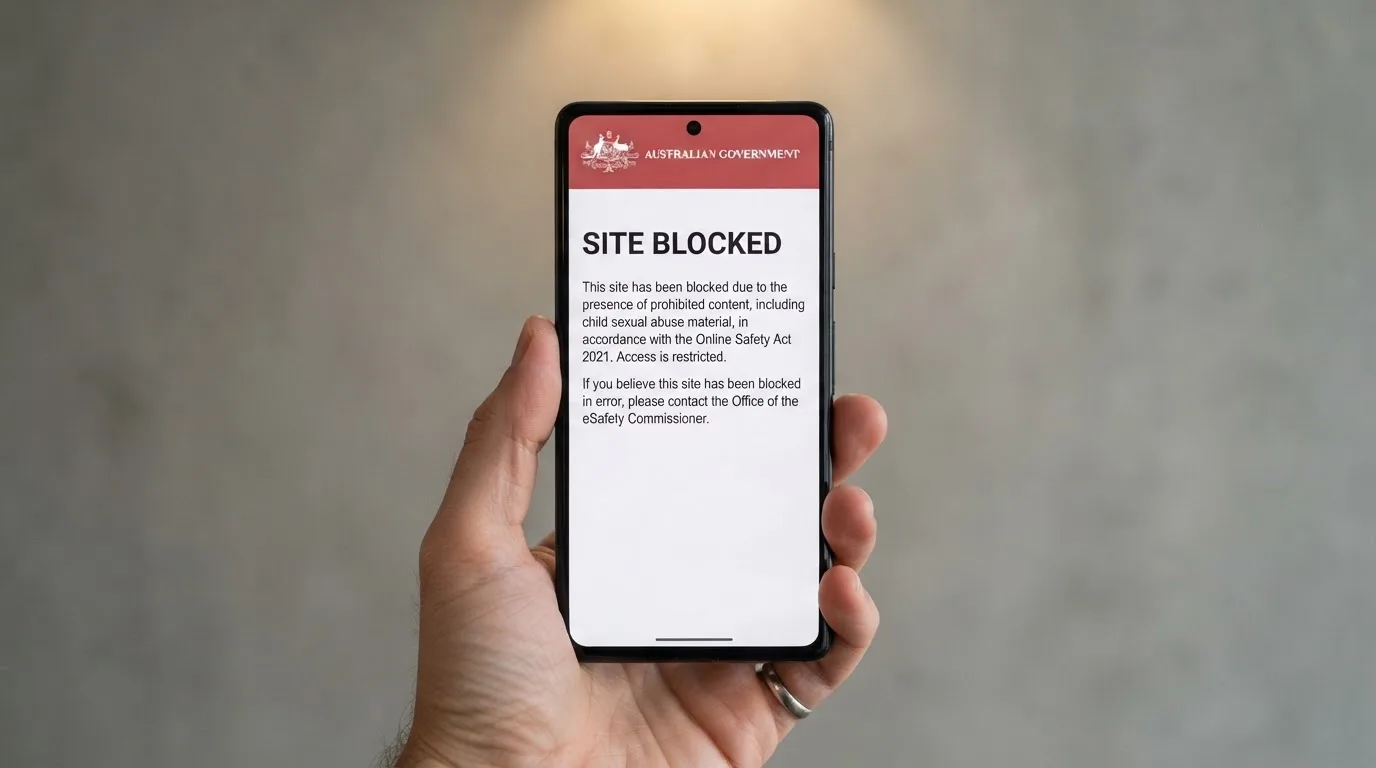
The Australian Communications and Media Authority is the body that investigates and acts. It issues formal warnings, and it can ask Australian internet service providers to block offending sites. By the end of June 2026 the running total the ACMA had given out reached 1,751 blocked illegal gambling and affiliate marketing sites since the first blocking request in November 2019, and more than 230 unlicensed services had left the Australian market since 2017.
In the round reported on 26 June 2026 the ACMA asked ISPs to block 12 more sites in one pass: 7Signs, ChromaBet, Donbet, Duospin, Freshbet, Slots Gem, Jacks Club, Lucky Start, Pointsbetz, Spinrise, Vinyl Casino and Wildsino. The pace of the register is the point. The ACMA does not need to prosecute a punter; it changes what the punter can reach.
The H2 Gambling Capital estimate of what this market costs Australians
H2 Gambling Capital’s 2025 report puts the figure at roughly A$3.9 billion a year flowing out to illegal gambling sites, and shows the share of gambling that goes through legal channels falling from 74% in 2021 to 64% in the most recent reading. The trend line is the part worth keeping. More money, not less, is moving offshore; the prohibition is intact and the leakage is growing.
Responsible gambling: what the safeguards actually cover
BetStop and the limit of its reach
BetStop, the National Self-Exclusion Register, has been live since August 2023. Registration bars the account holder from every Australian-licensed online and phone wagering service that is connected to the register. What BetStop does not touch is any offshore casino, because no offshore casino is connected to it. A punter on BetStop who then opens an account with an offshore site covered by the warnings later in this piece is not protected by BetStop on that account, and the offshore operator has no obligation to honour the exclusion.
The 1800 number and the chat line
The National Gambling Helpline is 1800 858 858, free and staffed around the clock, with chat through Gambling Help Online. Both are run for Australian residents regardless of which site they have been using, and both are the right first call whether the issue is offshore play or licensed wagering.
Self-imposed card blocks at the major banks
The big four Australian banks let customers block gambling transactions at card level. Westpac’s block refuses authorisation on transactions carrying the merchant category code for betting and casino gambling on eligible cards. ANZ’s block, activated in the app, extends to Apple Pay and Google Pay transactions made through a digital wallet on an eligible card, not just to the plastic. Commonwealth Bank offers a similar lock from inside the CommBank app.
Removing the ANZ block requires a 48-hour cooling-off period, and the bank warns that no block catches every gambling transaction and some non-gambling ones may be caught by mistake. None of these blocks make offshore play impossible — a card the bank cannot recognise or a payment route the block does not catch will still go through — but they raise the friction for the account holder they were turned on for.
Cryptocurrency and the new bitcoin casino search
What an Australian-facing crypto casino actually is
A search for a new bitcoin casino or a new crypto casino returns, in practice, the same kind of offshore site covered elsewhere on this page: a casino registered in Curaçao or another permissive jurisdiction, accepting bitcoin, ethereum and a handful of stablecoins, and offering them to anyone with an email address. The 2024 ban on using credit-related products to fund online wagering in Australia does not extend to cryptocurrency, and that is the only structural difference between a crypto deposit and a bank transfer at an Australian-licensed bookmaker.
The matching payment reality at the cashier
The interface changes — the cashier shows a wallet address and a QR code, not a BSB and account number — and the on-chain settlement is what it is. The legal reality does not change. The site is still an offshore interactive gambling service supplied to a person in Australia, and it is still in breach of the Interactive Gambling Act 2001. AUSTRAC’s threshold-transaction-report rule, which requires reporting of transfers of A$10,000 or more, applies to physical cash and not to ordinary electronic bank transfers regardless of amount, but AUSTRAC’s reporting regime is not consumer protection. It is anti-money-laundering surveillance, and it does not resolve disputes about a refused withdrawal.
The practical difference crypto makes
Crypto moves faster than a bank transfer at the cashier, and that is the honest reason Australian readers look for it. It also leaves a thinner paper trail, which can matter to a person who has put themselves on BetStop and is trying to keep their own block in place. The reasons a person comes to crypto do not change the legal exposure of the site they land on.
Payments and how fast withdrawals actually land
The Australian rails a licensed bookmaker uses
For licensed Australian wagering, deposits and withdrawals move through debit card, bank transfer, PayID and Osko, and BPAY. Osko is the layer that turns a bank transfer between participating Australian banks into a sub-minute settlement, 24/7 including weekends, addressed to either a BSB and account number or a PayID. The name shown on a PayID before the transfer is sent is the same name on the destination account, and AP+ warns that being asked to use a PayID to fund an illegal gambling site is itself a near-certain sign of a scam.
The digital-wallet picture
By the end of 2025, Apple Pay, Google Pay and Samsung Pay together accounted for around 45% of all card payments in Australia by number. Apple does not charge consumers a fee for using Apple Pay anywhere, online or in app, and transaction limits and PIN requirements are set by the card issuer or merchant, not by Apple. That detail matters because the same digital wallet can sit on top of a debit card the IGA allows and on top of a credit card the IGA bans; the wallet is agnostic about which one it is.
American Express and the surcharge question
American Express has run its own three-party network since launching its first charge card on 1 October 1958. The Reserve Bank of Australia’s July 2025 review proposes removing surcharges only on eftpos, Mastercard and Visa transactions, and explicitly leaves American Express outside the scope of the proposed surcharge ban. An Amex surcharge at a merchant is therefore the merchant’s decision rather than a regulator-imposed cap.
What an offshore cashier looks like instead
At an offshore casino the cashier typically offers a debit card, one or two e-wallets, and a handful of cryptocurrencies. The card route is the one most likely to be declined — Australian banks’ gambling blocks catch a meaningful share of card authorisation attempts at offshore merchants — which is why the same operators push hard on crypto and on e-wallets. The bank block works on a category code, not on a brand name, which is why it catches Mastercards and Visas aimed at casino merchants while leaving supermarket payments alone.
Bonuses and what the welcome offer actually costs
The shape of a new casino bonus
A new online casino bonus is almost always a deposit match plus a bundle of free spins, sometimes split across the first three deposits rather than the first. The headline number is the gross amount added to a deposit; the real number is the wagering requirement attached. A 100% match up to A$500 with a 40x wagering requirement on the bonus means the punter has to turn over A$20,000 in bets before the bonus balance is withdrawable, and a max-cashout cap further limits how much of any winnings actually clears.
What wagering does to a free-spin bundle
Free spins sound like free money, and they are the part of a welcome offer most likely to be advertised prominently. The attached wagering is the part least likely to be advertised at all. A bundle of 200 free spins at A$0.20 per spin on a slot paying 96% returns A$3.84 in expected value before wagering; after a 40x playthrough on spin winnings, the same bundle requires around A$2,400 in additional slot turnover to clear. The expected loss on that turnover, at the same 96% payout, is roughly A$96. The headline gift is not the headline cost.
What an offshore bonus does not carry
An offshore bonus carries no Australian consumer protection if the operator refuses to pay. There is no AU-listed complaints body, no AU regulator to escalate to, and no AU court with an easy path over an offshore company. The bonus is a marketing contract written under Curaçao or Anjouan law, and the practical recourse when a withdrawal stalls is the punter’s bank and the bank’s chargeback window, which closes on a clock most players do not know is running.
Mobile and the app-store reality
What a new mobile casino actually is in 2026
A new mobile casino is, in nearly every case, a mobile browser experience rather than a native iOS or Android app. Apple’s App Store and Google Play both prohibit real-money gambling apps in Australia outside narrowly licensed cases, so a brand new online casino surfaces as a web app that can be added to a phone’s home screen. The page that loads is the same page a desktop browser would load, with a smaller layout and touch-friendly buttons.
Verifying the site before the first tap
Before installing any shortcut, the right sequence is to look up the brand on the ACMA register of formal warnings and on BetStop’s exclusion coverage list. A clean hit on the ACMA register does not prove the site is licensed in Australia — no online casino is — but an unclean hit tells the reader the regulator has already acted against the operator behind the brand. The home-screen icon is irrelevant; the operator behind it is what matters.
Where the fingerprinting is
A mobile casino that asks for a credit card at the cashier is asking the punter to do something the Interactive Gambling Act bans at a licensed Australian bookmaker. The same site will accept a debit card, will accept crypto, and may accept an e-wallet. The choice among those three is the legal choice; the choice between the mobile site and the desktop site is the cosmetic one.
Games, providers and the catalogue behind the lobby
Slots and the RTP that actually matters
A new casino slots page is built on a small number of studios — Pragmatic Play, Play’n GO, NetEnt, Evolution for live tables — and the RTP attached to a given slot is set by the studio and shown in the game’s information panel. Two slots that look identical can carry different RTPs at different casinos; the lower one is the regulatory minimum for the jurisdiction that issued the operator’s licence, and it costs the punter a known per-spin amount.
Live dealer and the studio behind the table
A new live casino tab pulls tables from Evolution, Pragmatic Play Live or a smaller studio, and the games are the same games the studio runs everywhere. What changes between casinos is the studio’s deal speed, the table limits and the side-bet layout. None of those differences is unique to a “new” casino; they are differences between studios and between operators, regardless of how recently the brand was launched.
The novelty that is genuinely new
A genuinely new casino is, on the games side, a small marketing re-skin of a catalogue most readers have already seen. The novelty is the brand, the welcome offer and the cashier — not the games. A punter who already has an account at an established casino in the same operator network has effectively already seen the new casino’s games.
Tracking the debut: how to read the new casino section
What “new” actually means in this market
There is no Australian regulator that confirms an offshore casino has just launched. The proxy indicators a reader has are the date the URL was registered, the date the ACMA register first names the operator, and the freshness of the welcome offer — operators raise match percentages and free-spin bundles during their first weeks online to buy sign-ups. None of these is a guarantee that the operator is solvent, and all of them are clues rather than certifications.
Why a launch date is rarely knowable
A registered domain may have been sitting unused for years before being activated; a formal warning from the ACMA attaches to the date the regulator acted, not the date the site launched; an operator may simply close one brand and open another under a new name on a Tuesday afternoon. The honest answer to “how new is this site” is the same answer the ACMA gives: as new as the operator’s last formal warning says it is.
The eleven operators the ACMA has acted against
The brands below are not a ranking and not a recommendation. Each appears because the ACMA itself has issued a formal warning over it for supplying prohibited interactive gambling services to Australians. Where the ACMA has named an operator more than once, the earlier action is shown. Online casino games cannot be licensed anywhere in Australia, whatever licence any of these sites display in its footer. No bonus terms appear below because the only sources for them are affiliate marketing pages; describing the offer qualitatively would simply repeat the marketing.
1. RocketPlay — Pulsup Ltd, March 2026
The ACMA’s most recent action on this brand is a formal warning to Pulsup Ltd over RocketPlay, dated March 2026. An earlier action against the Rocketplay brand addressed Dama N.V. in May 2022. RocketPlay is the brand with the longest ACMA file in this set, and the back-to-back actions on two different operating companies are themselves the clearest signal of how the same brand keeps appearing under fresh corporate registrations.
2. Level Up Casino — Dama N.V., May 2022
Level Up Casino was named in the same May 2022 formal warning that covered five other Dama N.V. brands. The ACMA has not added a fresh action against this specific brand in the rounds reported here, which says nothing about whether the brand still operates or whether new warnings are being processed.
3. Woo Casino — Dama N.V., March 2025
Woo Casino was the subject of a further formal warning to Dama N.V. in March 2025, three years after the May 2022 action that first named the operator. The brand has remained accessible to Australian residents through the period between those actions, and the second warning is itself the regulator telling the operator the first one did not stick.
4. Spirit Casino — Dama N.V., May 2025
Spirit Casino was named in a Dama N.V. formal warning issued in May 2025. The same operator group has been warned multiple times across the period covered here, and Spirit Casino is the brand name carried on the most recent of those warnings.
5. National Casino — Consolutetish S.R.L., July 2025
National Casino was the subject of a formal warning to Consolutetish S.R.L. in July 2025, in the same round that named Bizzo Casino. The two brands share an operator under that warning, and a separate earlier action attached the brand to a different corporate group.
6. Bizzo Casino — Consolutetish S.R.L., July 2025; earlier TechSolutions, 2022
Bizzo Casino has two ACMA entries. The earlier one, a 2022 formal warning to TechSolutions (CY) Group Limited and TechSolutions Group N.V., was the first action against this brand. The second, the July 2025 warning to Consolutetish S.R.L., shows the brand changed operating company in the period between.
7. Ignition Casino — Bamboo Media, July 2025
Ignition Casino was named in the same July 2025 round as National Casino and Bizzo Casino, with the operator given as Bamboo Media. It is one of the smaller ACMA file entries in this set by way of corporate identifier.
8. Instant Casino — EOD Code SRL, February 2025
Instant Casino was the subject of a formal warning to EOD Code SRL in February 2025. The action was reported as one of the more recent single-brand warnings in the period covered here.
9. Jackbit — Ryker B.V., April 2026
Jackbit was named in an April 2026 formal warning to Ryker B.V., in the same round that also named CasinOK. Jackbit is the more established of the two brands and the one readers searching for a crypto casino are more likely to hit.
10. Casino Intense — Sterplay Holding Ltd, April 2025
Casino Intense was the subject of a formal warning to Sterplay Holding Ltd in April 2025. The action was a single-brand warning rather than part of a multi-brand round.
11. Sky Crown — Hollycorn N.V., September 2022
Sky Crown was named in a formal warning to Hollycorn N.V. alongside Blue Leo casino, in a warning published by the ACMA in September 2022. It is the oldest of the entries on this list and the brand with the longest gap between ACMA action and the current 2026 reading.
| Brand | ACMA action and date | Operator named by the ACMA | Subject support |
|---|---|---|---|
| RocketPlay | March 2026; earlier May 2022 | Pulsup Ltd; earlier Dama N.V. | listings-only — Gambling Insider |
| Level Up Casino | May 2022 | Dama N.V. | listings-only — Westpac |
| Woo Casino | March 2025 | Dama N.V. | no data |
| Spirit Casino | May 2025 | Dama N.V. | no data |
| National Casino | July 2025 | Consolutetish S.R.L. | listings-only — ACMA, AUSTRAC, BetStop |
| Bizzo Casino | July 2025; earlier 2022 | Consolutetish S.R.L.; earlier TechSolutions | listings-only — Gambling Insider |
| Ignition Casino | July 2025 | Bamboo Media | no data |
| Instant Casino | February 2025 | EOD Code SRL | listings-only — EcoPayz, PayID |
| Jackbit | April 2026 | Ryker B.V. | no data |
| Casino Intense | April 2025 | Sterplay Holding Ltd | listings-only — AUSTRAC, BetStop, Gambling Insider |
| Sky Crown | September 2022 | Hollycorn N.V. | no data |
The 2026 reform on the horizon
The Interactive Gambling Amendment (Gambling Reform) Bill 2026 passed Parliament on 19 August 2026. Its advertising and inducement measures commence on 1 January 2026 — law with a start date, not yet in force on a page read in 2026. The bill targets the inducements offshore operators use to pull Australian sign-ups, and the practical effect once it is in force will be on Australian-facing advertising rather than on the offshore cashier. The blockings, the formal warnings and the Interactive Gambling Act itself continue in the meantime.
The blocking-rate calculation
The ACMA reported, as of the round on 26 June 2026, a running total of 1,751 blocked illegal gambling and affiliate marketing sites since the first blocking request in November 2019. That is roughly 79 months of blocking. The implied blocking rate is on the order of 22 blocked sites per month on average across the period, with a real distribution that bunches up around the rounds the ACMA announces and is essentially zero between them. A reader who wants a single number should keep it as a band: somewhere between a handful of blocks in a quiet month and a double-digit round when the ACMA announces one, averaging out at a little over twenty per month since November 2019. The trend in the H2 estimate of leakage — A$3.9 billion a year, and a falling legal share — sits awkwardly beside a regulator that blocks at this pace. The arithmetic is clean; the picture it draws is not.
Reading the new casino offer as cost, not as gift
What the welcome package really asks
The “100% up to” figure is what an affiliate page leads with, and the wagering multiple is what the punter signs. A 40x playthrough on a bonus is roughly twice the playthrough a European-licensed casino would put on the same bonus, and the gap is the margin the offshore operator builds into its offer. Where the offer is deposit-gated across the first three deposits, the playthrough compounds and the math gets worse, not better.
Where the bonus stops being a bonus
The point at which the bonus stops being worth taking is the point at which the expected loss on the playthrough exceeds the bonus value, after accounting for the game’s RTP and the max-cashout cap. For most slot-flavoured welcome offers at 40x with a low max cashout, that point arrives before the player finishes the second deposit. The offer is then a marketing tool, not a financial one.
The maximum cashout cap and why it matters
A max cashout of 5x the bonus amount on a deposit-match welcome package is the structural reason a bonus can be worth less than its headline. Even on a high-RTP slot, the variance of hitting the cap before the cap kicks in is non-trivial, and the punter is paying for the bonus in expected loss along the way. The cap is the rule that turns a “free” gift into a paid privilege.
What an Australian reader can actually do
The licensed wagering that is genuinely available
Sports betting and racing, placed before the event, with a Northern Territory-licensed bookmaker. Lotteries and keno through state-licensed operators. A land-based casino in Sydney, Melbourne, the Gold Coast, Perth, Cairns, Adelaide, Hobart, Darwin or Canberra for the table games and pokies that the IGA keeps offshore.
The protections that actually bite
BetStop, bank-level gambling blocks, the National Gambling Helpline, and Gambling Help Online. These are the four tools that do something for a person in Australia regardless of where they have been playing, and they are the only ones with a regulator or a statutory framework behind them.
The honest close
A reader who arrived at this page looking for a shortlist of new online casinos for Australia is not going to find one, because no such shortlist exists inside Australian law. What exists is the list above: eleven offshore brands the ACMA has already acted against. The next move for an Australian reader is one of the four routes that do work — licensed wagering, land-based play, BetStop, the 1800 number — and not another search for a brand that the regulator has not yet had time to warn against.
Frequently asked questions
How new is a brand-new online casino actually?
There is no Australian record of when an offshore casino launches. The proxy signals a reader has are the domain registration date, the date of the first ACMA formal warning naming the operator, and the freshness of the welcome offer. None of these is a launch certificate, and all of them are clues. The honest answer is “as new as the operator’s last formal warning says it is” — which is the same answer the ACMA gives when it acts.
Are brand-new casino sites riskier than established ones?
A new site has not yet been through an ACMA formal warning round, has not yet had a chance to refuse a withdrawal to an Australian punter, and has not yet built a reputation a reader could check. None of that makes a new site riskier in any absolute sense, and an established site with a string of warnings behind it is not safer. The honest answer is that newness does not change the legal exposure in Australia and adds operational uncertainty on top.
Is it legal for a newly launched online casino to accept Australian players?
No. The Interactive Gambling Act 2001 prohibits supplying online casino games, online pokies and in-play betting to a person in Australia, and the prohibition is on the operator. The site may display an offshore licence in its footer; that licence does not change the prohibition. Enforcement targets the provider rather than the punter, and an offshore casino gives no Australian consumer protection, no complaints body and no recourse if a withdrawal is refused.
What should a player check before trusting a brand-new casino?
The right sequence is to look the brand up on the ACMA register of formal warnings, on BetStop’s exclusion coverage list and on AUSTRAC’s enrolment records, and to read the bank’s gambling-block documentation for the card they would use. A clean hit on the ACMA register does not prove the site is licensed in Australia — no online casino is — but an unclean hit tells the reader the regulator has already acted. Beyond that, the punter’s own deposit ceiling and time limit are the most reliable controls.
Do new casino sites typically offer a welcome bonus?
Yes — and the headline gift and the headline cost are not the same number. A 100% deposit match with a 40x playthrough on the bonus, with a low max-cashout cap on winnings, can cost more in expected loss than the bonus is worth before the playthrough is finished. The bonus is best read as a marketing contract written under the operator’s home-jurisdiction law rather than as a financial offer, and the only Australian consumer protection available when the operator does not pay is the punter’s own bank and its chargeback window.