
Best Real Money iPad Casinos for Australian Players
29 October 2026 — reviewed against the Australian Communications and Media Authority (ACMA) register of formal warnings and blocking actions.

A tablet makes almost no legal difference. A site that cannot lawfully take an Australian’s real-money bet on a desktop cannot lawfully take it on an iPad either, and the Interactive Gambling Act 2001 (IGA) says nothing about screen size. What the tablet does change is the surface — a touchscreen keypad, a smaller browser window, a session that drifts while someone pretends to read on the couch. This page takes that seriously, on the device’s own terms, against the ACMA’s own record.
Australia has no licensed online casino market. Online casino games, online pokies and in-play betting cannot be provided to a person physically in Australia, and no state or territory issues that kind of licence. What is licensable is wagering on racing and sport placed before the event, lotteries and keno — in practice overseen by the Northern Territory Racing and Wagering Commission, a body with no full-time staff that meets once a month in Darwin. The offshore sites that Australian players reach from an iPad’s browser are therefore operating outside Australian rules from the moment the page loads. Some of them have been formally warned by the ACMA; some have been blocked; several of the operators behind them run dozens of similarly named brands that all do the same thing.
So this is not a ranking of the best places to play. It is a close read of what an iPad casino site is in Australia, who runs the ones the regulator has named, and what an offer on one of them typically costs the punter who takes it up. The angle is the reader’s outlay — money, time, and the protection they cannot recover from an offshore operator — and the data the page leans on is the ACMA’s record of enforcement and a small set of Australian-payments facts that govern how money moves into and out of these sites.
Table of Contents
- Top iPad Casinos in Australia for Tablet Gambling
- Responsible play on a tablet — what the device changes
- Payments — what an Australian iPad punter is actually using
- What runs on an iPad — apps, browsers and what the store will not carry
- The featured set — eleven brands the ACMA has acted against
- The reader-side calculus — what an iPad casino site costs the punter
- What to check before putting a payment detail into an iPad casino site
- Australian gambling support
- Frequently asked questions
Top iPad Casinos in Australia for Tablet Gambling
Online casino gambling is prohibited outright under the Interactive Gambling Act 2001, strengthened by the Interactive Gambling Amendment Act 2017. It is an offence to provide online casino games, online pokies or in-play betting to a person in Australia, and no state or territory licences any of those products. The 2017 amendments gave the ACMA its modern enforcement toolkit: formal warnings, infringement notices, civil penalty proceedings, and the power to direct Australian internet service providers to block illegal sites at the network level.

The IGA targets the provider, not the individual player. Australian residents are not prosecuted for placing a bet on an offshore site, but the cost of doing so lands entirely on them. An offshore operator gives no Australian consumer protection, no complaints body, no recourse if a withdrawal is refused, and the site can be blocked by an ISP with a balance still sitting on it. The page describes these sites; it is not a route to one.
The minimum age is 18. The 2026 reform package — the Interactive Gambling Amendment (Gambling Reform) Bill 2026 — passed Parliament on 19 August 2026, with its advertising and inducement measures commencing 1 January 2027. Law on the books, start date ahead. A page read in 2026 cannot lean on a rule that has not yet taken effect.
What the ACMA’s blocking record shows
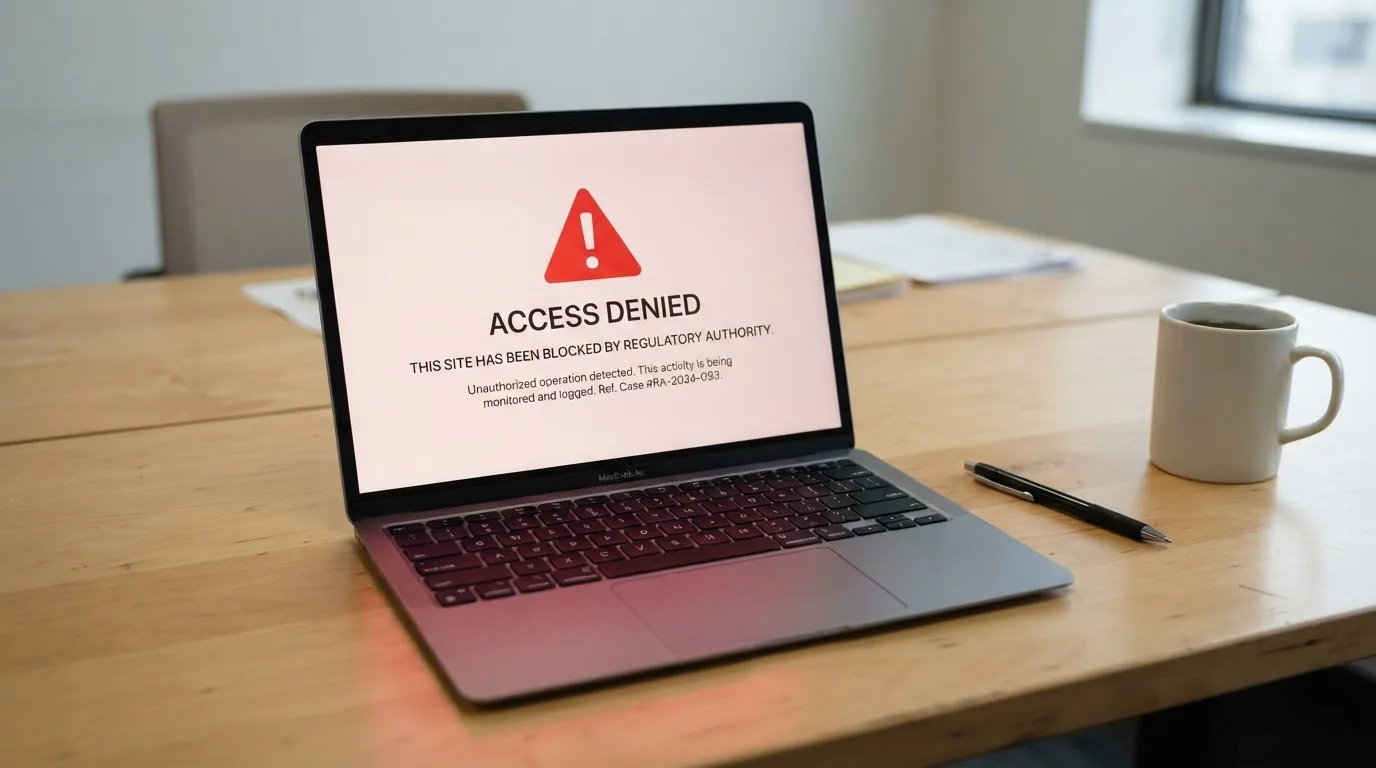
According to the ACMA as reported in June 2026, a total of 1,751 illegal gambling and affiliate marketing websites had been blocked since the first blocking request in November 2019, and more than 230 unlicensed gambling services had left the Australian market since enforcement was strengthened in 2017. In the round reported on 26 June 2026, twelve more sites were named for blocking: 7Signs, ChromaBet, Donbet, Duospin, Freshbet, Slots Gem, Jacks Club, Lucky Start, Pointsbetz.com, Spinrise, Vinyl Casino and Wildsino. The list changes each round; the underlying picture does not.
H2 Gambling Capital’s 2025 report estimates that Australians lose about A$3.9 billion a year to illegal gambling sites, and that the share of gambling going through legal channels fell from 74% in 2021 to 64%. Most of the offshore casino market for Australian residents is being routed through sites the regulator cannot reach directly, which is part of why blocking and warnings are the practical levers rather than criminal prosecution of the operator.
The blocking numbers illustrate the enforcement landscape. The first ACMA blocking request went out in November 2019. By the count reported in June 2026, 1,751 illegal sites and affiliate pages had been blocked across roughly six and a half years of enforcement. Worked as a running monthly rate against that window — eighty months from November 2019 to June 2026 inclusive — the figure lands somewhere in the band of twenty to twenty-five sites blocked per month on average across the whole period. The figure that matters more is the trend, not the average: each round published in 2026 has named ten to fifteen sites at a time, and the total keeps rising. So the rate a reader sees today is much higher than the long-run average suggests. The point of the calculation is to highlight the gap between the long-run average and the rate of the current rounds, which is the shape of enforcement in practice.
What a formal warning actually does
A formal warning under the IGA is a written record. It does not by itself block a site, but it is the ACMA’s preferred next step before an infringement notice or a civil penalty proceeding, and it goes on the public register. Several of the operators in the featured set have more than one warning against them, sometimes across different brand names and sometimes for the same brand at different points in time — Dama N.V., for instance, was warned in May 2022 over six brands, then again in March 2025 over Woo Casino and in May 2025 over Spirit Casino. The pattern is what an offshore casino’s footprint looks like in the ACMA’s view: a parent operator running a small stable of similarly structured brands, several of which surface in the warning register within a few years of each other.
Responsible play on a tablet — what the device changes
The IGA says nothing about screens, but the device does change something the law does not address. On a desktop, a session usually means sitting at a desk with a wallet or a banking app open in another tab. On an iPad, the same site runs in Safari in a single hand while the device sits on the couch armrest, the touchscreen keypad tucked beside it. That setup blurs the line between a deliberate session and idle scrolling, and it is the one thing about iPad play the regulator cannot see.
A fixed time limit set in advance is the cheap answer, and it is the right one. The National Gambling Helpline (1800 858 858) is free and runs 24/7, with chat at Gambling Help Online. BetStop — the National Self-Exclusion Register — has been live since August 2023 and binds Australian-licensed online and phone wagering services, but an offshore casino is not connected to it. Self-excluding through BetStop does not stop an offshore site from taking bets from a registered person; it stops licensed Australian wagering operators from doing so. That gap is the second thing the device changes, in the sense that a player who treats an offshore site as a way around a BetStop registration is acting against the spirit of the rule they signed up to.
The practical advice is the same as for any other gambling: set a budget, set a clock, stop at either, and keep records of deposits so a complaint to the bank or to AUSTRAC can be substantiated if it becomes necessary. None of that is unique to a tablet, but the device makes it easier to drift past any of it without noticing.
Payments — what an Australian iPad punter is actually using
The payments layer is where the page’s worth to a reader sits, because it is the part the ACMA’s warnings rarely mention and the part that decides what an offshore site can take from an Australian. Under the Interactive Gambling Act 2001 as amended in 2023, Australian-licensed online wagering services cannot accept payment by credit card or other credit-related products — a restriction that also constrains gambling use of linked digital wallets like Apple Pay, since the wallet is funded by the underlying card. The ban took effect on 11 June 2024, with penalties up to A$247,500 for operators who breach it.
For an offshore casino the IGA’s payment rules do not apply directly, but Australian banks apply their own blocks on top. Westpac’s gambling block works at card level: it refuses authorisation of transactions registered under the merchant category code “Betting/Casino Gambling” on eligible personal credit and debit cards. ANZ’s gambling block, activated in the ANZ app, also blocks gambling transactions made through a digital wallet such as Apple Pay on an eligible card, not just the physical card. Once a customer turns on ANZ’s gambling block, removing it again requires a 48-hour waiting period, and the bank warns that not all gambling transactions will be blocked and that some non-gambling transactions might be blocked in error. Commonwealth Bank offers the same lock via the CommBank app on eligible cards, with the same caveat that it cannot guarantee every gambling-related purchase will be stopped.
Apple Pay itself does not charge consumers a fee for in-store, online or in-app use, and any surcharge on a transaction comes from the merchant’s own card-processing costs rather than from Apple. Transaction limits and PIN requirements for Apple Pay are set by the card issuer or by the merchant, not by Apple. By the end of 2025, Apple Pay, Google Pay and Samsung Pay transactions collectively accounted for around 45% of all card payments in Australia by number. That is the volume of card-based money that has to flow around an issuer-level gambling block in 2026, and it is part of why the blocks are imperfect: a wallet transaction on a card that has not been locked, or a transaction on a merchant that has not registered the right MCC, will sail through.
Bank-side rails: PayID, Osko and BPAY
For an Australian iPad punter, the bank-side rails that are not cards matter separately because they are the rails a licensed operator uses and the rails an offshore operator asks for when it does not want a card transaction.
PayID is the account-name look-up layer on the New Payments Platform. Paying to a PayID shows the name of the account holder before the transfer is sent; Australian Payments Plus warns that being asked to transfer money to a PayID on an illegal gambling site almost certainly means a scam site. PayID is available at more than 100 Australian financial institutions. With Osko, a bank transfer between participating banks arrives in under a minute, 24/7 including weekends, whether it is addressed to a BSB and account number or to a PayID. The platform went live on 13 February 2018 and is run by Australian Payments Plus, a non-profit whose shareholders include the Reserve Bank of Australia and the country’s major banks. Participants are required to keep monthly platform outages to no more than two minutes. By April 2025, more than 25 million PayID identifiers had been registered.
BPAY is a separate bill-payment service in online banking — the payer enters the Biller Code and the Customer Reference Number printed on the bill. It has operated in Australia since 1997, sits in the online banking of over 140 banks and financial institutions and is offered by over 95,000 businesses. It is owned equally, via parent company Cardlink Services Limited, by ANZ, Commonwealth Bank, National Australia Bank and Westpac. In September 2021 the ACCC authorised the merger of BPAY Group, eftpos and NPP Australia into Australian Payments Plus, the same body that runs PayID and Osko. For an Australian punter, the practical point is that an offshore casino asking for payment by BPAY is asking for a bill-payment reference, and the bank-side audit trail of that reference is one of the cleanest records an AUSTRAC enquiry or a dispute can lean on.
Credit, debit and the surcharge question
American Express is the outlier in the card network. Unlike Visa or Mastercard’s four-party model, Amex has traditionally issued its own cards and processed its own transactions as a three-party scheme, and the Reserve Bank of Australia’s July 2025 review of card payment costs proposes removing surcharges only on eftpos, Mastercard and Visa transactions, explicitly leaving American Express outside the proposed surcharge ban. Amex was established in 1850 as a freight-forwarding company and launched its first charge card on 1 October 1958; that history is the reason it sits outside the same regulatory frame as the four-party schemes.
For a punter, the practical consequence is that an offshore site which accepts Amex is not subject to the same interchange caps as a Visa or Mastercard transaction, and that an Amex-funded deposit may carry a surcharge or a higher minimum that a Visa-funded one does not. The same logic runs the other way for eftpos, which the RBA proposes to bring inside the no-surcharge regime. A reader who wants the lowest-cost deposit rail into a licensed Australian wagering account is increasingly steered toward eftpos or Visa Debit; an offshore site accepting Amex is signalling that it is happy to pay a higher processing cost to take the deposit.
What AUSTRAC sees
AUSTRAC’s threshold-transaction-report rule, which requires reporting of transfers of A$10,000 or more, applies only to physical cash. Ordinary electronic bank transfers are not subject to that per-transaction reporting requirement, regardless of the amount sent. That is a regulator-side fact, not a consumer-side one — it is what the bank has to report, not what the punter has to declare — and it is the reason a stream of small PayID transfers into an offshore merchant can run below AUSTRAC’s reporting radar in a way that a stack of cash deposits cannot. The audit trail, where it exists, is in the bank’s own records of every PayID and BPAY transfer.
What runs on an iPad — apps, browsers and what the store will not carry
An iPad casino site usually runs through Safari rather than a dedicated app. Apple restricts real-money casino apps from its App Store, so the typical path is a browser bookmark to a mobile-optimised site. That has consequences for what the player sees: a touchscreen-friendly layout, a hamburger menu where a desktop would have a sidebar, slots that fill the screen in portrait orientation and reduce to a windowed layout in landscape. The games themselves are the same titles — the same studio, the same RNG, the same return-to-player numbers — because the underlying content is the same server-side product rendered through a different skin.
There is one practical difference. A downloaded app can keep a session logged in, store payment credentials in a sandboxed wallet, and handle background updates. A browser-based session is restarted at the browser’s discretion: cookies clear, tabs get pruned, and a session that was live at midnight can be killed by a Safari refresh at 8 am. For a punter who treats the tablet as a deliberate session tool, that fragility is useful — a closed tab is a closed session. For a punter who treats the tablet as ambient entertainment, the same fragility means the session can disappear mid-spin, and the bonus terms around interrupted play do not always make that easy to recover.
What a no-deposit bonus looks like on a tablet
The “no-deposit bonus” is the offer the marketing pages around these sites lean on hardest. A no-deposit offer credits a small bonus balance — typically a few tens of dollars — without the punter putting their own money in first, and asks the punter to play through a wagering requirement before any of it can be withdrawn. On an iPad, the mechanics are identical to a desktop: spin the slots, the bonus balance ticks down as it is converted into withdrawable cash at the rate set by the wagering factor, and the clock runs while it does.
What changes on the tablet is the temptation. A no-deposit bonus does not need a deposit, which means it does not trigger the same bank-side block a real-money deposit would. The punter can register an account, accept the bonus, and run a session without ever moving money in their direction — which is the surface the device is built for, and which is exactly why a no-deposit bonus is the marketing hook for offshore sites targeting mobile users. The IGA says nothing about whether a bonus is funded by a deposit; it says nothing about whether a wager on a free-spin win is a wager for the purposes of the Act. The legal position is unchanged; the marketing position is unusually well suited to the device.
What a bitcoin-funded iPad casino actually changes
A bitcoin-funded offshore casino does not bypass the IGA — the prohibition is on providing the service, not on the payment instrument. What bitcoin changes is the bank-side audit trail: a bitcoin transaction does not pass through an Australian bank, so the issuer-level gambling blocks at Westpac, ANZ and Commonwealth Bank have nothing to refuse authorisation on. The trade-off is that the punter has no Australian consumer protection on the deposit side and no chargeback route if the operator refuses to pay out. A bitcoin withdrawal from an offshore casino that turns into an unsent transaction is the punter’s problem in a way that a refused Visa chargeback is the bank’s problem.
A bitcoin-funded iPad casino also tends to be a no-questions-asked onboarding path: an email address and a wallet address rather than the KYC paperwork a licensed operator runs. The IGA does not require KYC; the offshore operator does not, because it does not have to. The reader who treats that convenience as a feature is also accepting that the same operator has no incentive to pay out — and that the lack of KYC is the structural reason an ACMA formal warning is the most that regulator can do.
The featured set — eleven brands the ACMA has acted against
The eleven brands below are not a top eleven. They are not a recommendation, and there is no implied ranking. They are the brands the ACMA itself has named in a formal warning under the Interactive Gambling Act 2001 for providing prohibited services to Australians. The point of listing them together is to show what an offshore casino’s footprint looks like in the ACMA’s own record: parent operators, brand names, the gap between warnings, and the few operators that have been warned more than once.
The table below carries four columns: the brand name as it appears in the ACMA’s register, the date the ACMA took action against it, the operator entity the ACMA named, and whether the brand appears in mainstream industry or payments listings in 2026. The last column is a narrow signal: a brand with listings in mainstream outlets has more visible footprint than one without, and the reader should not read either direction of that signal as endorsement.
| Brand | ACMA action and date | Operator named by the ACMA | Subject support |
|---|---|---|---|
| RocketPlay | Formal warning, March 2026 | Pulsup Ltd (Rocketplay.com.au) | listings-only |
| Level Up Casino | Formal warning, May 2022 | Dama N.V. | listings-only |
| Woo Casino | Formal warning, March 2025 | Dama N.V. | — |
| Spirit Casino | Formal warning, May 2025 | Dama N.V. | — |
| National Casino | Formal warning, July 2025 | Consolutetish S.R.L. | listings-only |
| Bizzo Casino | Formal warning, July 2025; earlier 2022 | Consolutetish S.R.L.; TechSolutions (CY) Group Limited / TechSolutions Group N.V. (2022) | listings-only |
| Ignition Casino | Formal warning, July 2025 | Bamboo Media | — |
| Instant Casino | Formal warning, February 2025 | EOD Code SRL | listings-only |
| Jackbit | Formal warning, April 2026 | Ryker B.V. | — |
| Casino Intense | Formal warning, April 2025 | Sterplay Holding Ltd | listings-only |
| Sky Crown | Formal warning (date as published) | Hollycorn N.V. | — |
Three patterns sit in that table. First, Dama N.V. has been named in three separate formal warnings across 2022 and 2025, covering at least eight brands across its stable; that is the shape of an offshore casino group running multiple brands in parallel, several of which surface in the ACMA’s register within a few years of each other. Second, Bizzo Casino has been the subject of two formal warnings — 2022 against TechSolutions, 2025 against Consolutetish S.R.L. — through two different operator entities, which is the clearest single-brand example on the page of a brand name that has moved between corporate parents in the period the ACMA has been watching. Third, the ACMA has continued to issue formal warnings throughout 2025 and into 2026, with the April 2026 warning over Jackbit and CasinOK against Ryker B.V. and the March 2026 warning over Rocketplay.com.au against Pulsup Ltd the most recent entries on the register.
RocketPlay
RocketPlay was the subject of a formal warning issued by the ACMA in March 2026, naming Pulsup Ltd as the operator behind Rocketplay.com.au. The same brand name had appeared in an earlier ACMA formal warning against Dama N.V. in May 2022, alongside five other brands. RocketPlay surfaces in industry listings in 2026 as a brand with a visible footprint offshore; on the ACMA’s register, its presence across two warnings under two different operator entities is the kind of pattern that follows an offshore brand as it moves between corporate parents. For a reader, the value of the warning is that it tells them the brand has been named in the regulator’s own publications — twice — which is a different signal from a brand that has not been named at all.
Level Up Casino
Level Up Casino was named in the ACMA’s formal warning against Dama N.V. in May 2022, alongside Bambet, Dazard, Rocketplay, Wild Tornado and Cobra Casinos — six brands in a single warning, all attributed to the same operator entity. Dama N.V. was warned again in 2025, this time over Woo Casino and Spirit Casino. The cumulative picture is a parent operator running a small stable of similarly structured brands, several of which the regulator has reached in successive enforcement rounds. Level Up’s industry footprint in 2026 is visible enough to appear in mainstream listings, which is itself the kind of visibility that puts a brand on the ACMA’s radar.
Woo Casino
Woo Casino drew an ACMA formal warning against Dama N.V. in March 2025 — the first of the two 2025 warnings involving that operator. The warning is one of four ACMA actions against Dama N.V. brands across 2022 and 2025. This brand does not appear in any 2026 industry listings, meaning the ACMA’s formal warning stands as the definitive public record of its regulatory status.
Spirit Casino
Spirit Casino received an ACMA formal warning against Dama N.V. in May 2025, the second of the 2025 warnings naming that operator. Like the preceding brand, Spirit Casino remains absent from the consulted listings set for 2026, leaving the ACMA’s warning as the only official regulatory reference for the operator’s conduct.
National Casino
National Casino was flagged by an ACMA formal warning against Consolutetish S.R.L. in July 2025. This warning coincided with the enforcement action against the same operator regarding Bizzo Casino, demonstrating the ACMA’s approach of tackling multiple brands in a single round. National Casino retains a presence in mainstream listings in 2026 alongside other regulatory and payments references, a visibility that often coincides with regulatory scrutiny.
Bizzo Casino
Bizzo Casino has been named in two ACMA formal warnings: the July 2025 warning against Consolutetish S.R.L. and an earlier 2022 warning against TechSolutions (CY) Group Limited and TechSolutions Group N.V. Two warnings, two different operator entities, the same brand name. The 2025 warning is the second formal warning tied to Bizzo Casino since 2022, and the fact that the ACMA has reached the same brand under a different corporate parent within three years is the cleanest pattern on the page. Bizzo Casino has listings presence in 2026.
Ignition Casino
Ignition Casino faced an ACMA formal warning against Bamboo Media in July 2025, which arrived in the same enforcement round as warnings for National Casino and Bizzo Casino. Ignition Casino lacks visibility in any 2026 industry listings; the warning against Bamboo Media stands as the sole regulatory signal regarding this brand.
Instant Casino
Instant Casino drew an ACMA formal warning against EOD Code SRL in February 2025. This brand surfaces in mainstream listings in 2026 alongside payments references; the warning serves as an early 2025 entry in the ACMA register as noted on this page.
Jackbit
Jackbit was named in an ACMA formal warning against Ryker B.V. in April 2026, alongside a concurrent warning over CasinOK. Jackbit is missing from the consulted listings set for 2026, but its grouping with CasinOK in the ACMA’s most recent entry reflects the operator’s strategy of running a small, parallel stable of brands.
Casino Intense
Casino Intense was targeted by an ACMA formal warning against Sterplay Holding Ltd in April 2025. Casino Intense maintains visible listings presence in 2026, including regulatory and self-exclusion references; the warning was issued midway through the 2025 enforcement year, positioned between actions against Instant Casino and the July group involving National Casino, Bizzo Casino, and Ignition Casino.
Sky Crown
Sky Crown was included in an ACMA formal warning against Hollycorn N.V., published in September 2022 and covering both Sky Crown and Blue Leo casino services. Sky Crown is absent from the consulted listings set for 2026; the warning remains the primary available signal from the regulator regarding this brand. The 2022 date places this warning at the earlier end of the ACMA’s current enforcement timeline.
The reader-side calculus — what an iPad casino site costs the punter
Offshore casino sites are not illegal for the Australian player, but they are not regulated for them either. The arithmetic a player runs on these sites is the same one a player runs anywhere: a wagering requirement converts bonus money into withdrawable cash at a fixed rate, and the expected loss on the play-through is the casino’s edge over that volume of play. The difference is that the casino has no Australian licence on the line, no BetStop registration to honour, no complaints body the punter can write to, and the option of being blocked by the punter’s own bank or by the ACMA with money still on the platform.
What that means for the reader is straightforward. A no-deposit bonus on an offshore iPad casino is a marketing hook that lets a session begin without the punter putting money in. The wagering requirement attached to it converts the bonus into withdrawable cash at a rate set by the operator, and the volume of play required can run into thousands of spins on a single slot. The expected loss to the player over that volume is the casino’s edge — typically a few percent of turnover on a slots-heavy requirement — and the practical question is whether the cashed-out bonus, if it clears at all, is worth more than the cost of the session. On a licensed Australian wagering platform, a player can rely on the complaints body; on an offshore casino, the punter can rely on nothing except the operator’s own terms page, which is the same document that defined the wagering requirement in the first place.
The bank-side risk sits at the other end. A punter who deposits by Visa or Mastercard through a card that has a gambling block enabled will see the transaction refused at authorisation; a punter who uses Apple Pay on an unlocked card will see the wallet transaction sail through. ANZ’s gambling block, once enabled, also catches Apple Pay transactions on the eligible card; Westpac’s block works at the card level on the merchant category code; Commonwealth Bank’s lock runs through the CommBank app on eligible cards. Each block has the same caveat: not every gambling transaction will be caught, and some non-gambling transactions might be caught in error. The bank is not the punter’s compliance officer — the bank is offering a tool the punter can choose to switch on, and the punter’s bank statement is the only audit trail the punter keeps if a withdrawal goes wrong.
For a punter considering an offshore iPad casino, the responsible position is that the IGA does not prohibit play but the protection is zero, the marketing is the same marketing that runs in every other market, and the device makes it easier to drift through a session than a desktop does. The blocking rate the ACMA has run since 2019 is the regulator’s answer to that drift at the network level; the bank-side block is the punter’s answer at the card level. Neither is a substitute for a session the punter has chosen to stop.
What to check before putting a payment detail into an iPad casino site
A short practical list for the reader who has decided to engage with an offshore casino site anyway, drawn from the page above rather than from any operator’s terms page:
- Whether the site is on the ACMA’s published list of formal warnings. The ACMA publishes its warning register; if the brand is there, that is what the regulator has said.
- Whether the card being used has a gambling block enabled through the issuer’s app. Westpac, ANZ and Commonwealth Bank each offer one; ANZ’s block also covers Apple Pay on the eligible card.
- Whether the payment route is one the bank will audit. PayID and BPAY leave a clean bank-side trail; a bitcoin transfer leaves none.
- Whether the session has a fixed clock and a fixed budget. The tablet makes it easier to drift past either.
- Whether the punter has registered with BetStop. BetStop does not bind offshore casinos, but it binds the licensed Australian wagering services the punter could move to, and the registration is the same regardless of where the punter plays next.
Australian gambling support
The National Gambling Helpline is 1800 858 858 — free, 24/7, with chat at Gambling Help Online. BetStop, the National Self-Exclusion Register, has been live since August 2023 and binds Australian-licensed online and phone wagering services. An offshore casino is not connected to BetStop, and self-excluding through BetStop does not stop an offshore site from accepting bets. A punter who has self-excluded and is still being approached by an offshore casino should treat the approach as a complaint to the ACMA, not as a service to be ignored quietly.
Frequently asked questions
Is it legal to play at an online casino on an iPad in Australia?
No. The Interactive Gambling Act 2001 prohibits providing online casino games, online pokies or in-play betting to a person in Australia, and the screen the player uses is not part of the test. The Act targets the operator, not the player, but an offshore site gives no Australian consumer protection and can be blocked with a balance still on it.
Why do most iPad casino sites run through a browser instead of a dedicated app?
Apple restricts real-money casino apps from its App Store, so most operators run their sites through Safari instead. The game library is the same server-side product rendered through a mobile skin; the touchscreen-friendly layout is the main visual difference from a desktop session.
Does a bitcoin-funded iPad casino work any differently from a card-funded one?
The IGA does not change because the payment instrument changes; the prohibition is on the service. What bitcoin changes is the bank-side audit trail, since the transaction does not pass through an Australian bank and so does not pass through an issuer-level gambling block. The trade-off is that the punter has no chargeback route and no Australian consumer protection on the deposit.
What conditions usually apply before an iPad casino no-deposit bonus can be withdrawn?
A wagering requirement, set by the operator, that converts the bonus balance into withdrawable cash at a fixed rate; a maximum cashout cap on the bonus-derived winnings; a list of slots that contribute at different rates to the requirement. On an offshore site, the operator’s terms page is the only document that defines these, and there is no complaints body to appeal to if the terms are not honoured.
Are the games on an iPad casino site identical to the desktop version?
Yes, on the server side. The same studio, the same RNG, the same return-to-player numbers. The skin is mobile-optimised — hamburger menus, portrait-friendly slot layouts, a touchscreen keypad — but the underlying content is the same product. What changes is the session’s drift: a tablet session is easier to leave open in the background than a desktop one.