
offshore casinos for australian players: the gap between the marketing and the law
Someone looking for an “offshore casino” from inside Australia is searching for a product the country does not license. Online casino games and online pokies are prohibited interactive gambling services under the Interactive Gambling Act 2001; no state or territory issues a licence for them, and the Australian Communications and Media Authority treats any site offering them to a person in Australia as illegal. This page lays out that gap plainly, walks through the ACMA’s enforcement record so the reader can see how the prohibition is applied, and points to what is actually lawful for anyone sitting in Australia who wants to gamble — licensed wagering on sport and racing, land-based casinos and licensed pokies venues, and the BetStop self-exclusion register for the moments when none of those feel like enough.
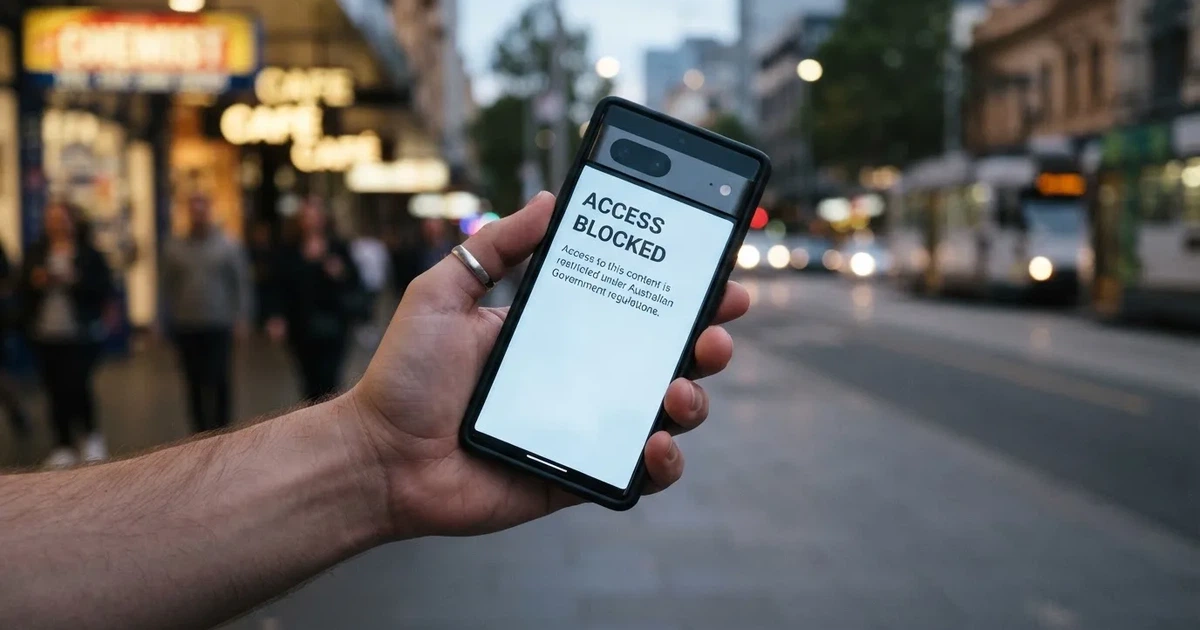
A line on what the data is current as of sits underneath the introduction so the reader can weigh every figure on the page: data current as of 29 October 2026, verified against the Australian Communications and Media Authority’s published register of formal warnings and blocking requests.
Table of Contents
- The legal frame: what “offshore” means in Australia
- How much money actually flows to illegal offshore sites
- Payments: what the law actually lets you use
- Wellbeing: BetStop, the helpline, and what they actually cover
- The ACMA’s enforcement record against named operators
- What the named operators look like, in detail
- What the page cannot honestly give
- What to do instead
- The reform that is on the books but not yet in force
- The bottom line on offshore casinos for Australian players
- frequently asked questions
The legal frame: what “offshore” means in Australia
An offshore casino is, in plain terms, an online casino that runs from outside Australia and accepts Australian customers. That definition matters because the Australian regime is built around where the provider is, not where the player sits: it is the provider that commits the offence, not the person who logs in. So the legal question is not “is it legal for me to play” but “is the site I am on allowed to offer what it offers to someone in Australia?” — and for online casino games, the answer is consistently no.

The Interactive Gambling Act 2001, strengthened by the Interactive Gambling Amendment Act 2017, prohibits the supply of online casino games, online pokies and in-play betting to a person physically in Australia. What is licensed is wagering on sport and racing placed before the event, lotteries, and keno — in practice the racing and sports betting side is regulated by the Northern Territory Racing and Wagering Commission, which oversees 52 of the country’s online bookmakers including Sportsbet, Bet365 and Ladbrokes. The NTRWC has no full-time staff and meets once a month in Darwin, a peculiarity worth knowing because it is the de facto gambling regulator for the largest licensed online wagering operators in the country. The minimum age across all licensed Australian gambling is 18.
The IGA does not chase the individual player. An Australian who opens an account with an offshore site is not prosecuted. The site is. And the consequences for the player sit elsewhere: an offshore operator gives no Australian consumer protection, no recognised complaints body, and no working recourse if a withdrawal is refused. The site can also be blocked by Australian ISPs while a real-money balance is still sitting on it.
What the ACMA can and cannot do
The Australian Communications and Media Authority is the body that investigates complaints, issues formal warnings, and asks Australian internet service providers to block illegal services. Blocking is a real action with real numbers behind it: by June 2026 the ACMA had asked ISPs to block 1,751 illegal gambling and affiliate marketing websites since the first blocking request in November 2019, and more than 230 unlicensed gambling services had left the Australian market since enforcement was strengthened in 2017. The most recent round reported on 26 June 2026 added twelve more names — 7Signs, ChromaBet, Donbet, Duospin, Freshbet, Slots Gem, Jacks Club, Lucky Start, Pointsbetz, Spinrise, Vinyl Casino and Wildsino — to the blocking list.
That pace gives a reader a sense of the rate. Between November 2019 and June 2026 is roughly 80 months. A blocking request against 1,751 sites across that period works out to an average of about 22 sites blocked per month across all eight years, though the early years were lighter and recent years heavier — the June 2026 round alone took out 12. Treat that as a band, not a precise monthly figure: the ACMA publishes blocking requests in rounds, and a single round can move the total by dozens in one announcement.
The product split: wagering versus casino
A reader who has only ever used a betting app may not realise that the legal line falls inside the gambling industry itself. Licensed Australian wagering operators take bets on horse racing, harness racing, greyhound racing and sporting events before they start. They do not — and cannot — take bets on casino games or pokies over the internet. The product that the marketing of an “offshore casino” sells is the product that no Australian licence covers. That is why the brand on the splash page cannot save a player: a Curaçao or Anjouan number on the footer of an offshore casino is not an Australian licence, because no such licence exists.
How much money actually flows to illegal offshore sites
The arithmetic around offshore gambling in Australia is its own reason to take the prohibition seriously. H2 Gambling Capital’s 2025 report estimates that Australians lose about A$3.9 billion a year to illegal gambling sites, and that the share of gambling going through legal channels fell from 74% in 2021 to 64%. The same report puts offshore wagering and casino among the largest single movements of money outside the licensed Australian system.
A$3.9 billion across a population of roughly 26 million is a per-adult figure in the low hundreds of dollars a year on average — an average that hides very heavy use at the tail. The licensed-channel share dropping ten percentage points in four years suggests the gap is widening, not closing, and explains why the ACMA’s blocking tempo has been stepped up rather than wound down. The dollar figure is an estimate and not an audited total, but the direction of travel is consistent across the regulator’s own statements and the industry’s figures.
Payments: what the law actually lets you use
The Interactive Gambling Act, as amended in 2023, prohibits Australian-licensed online wagering services from accepting payment by credit card or any other credit-related product. That ban took effect on 11 June 2024 for licensed operators, with penalties up to A$247,500 for an operator that breaks it. Digital wallets linked to a credit card are caught by the same rule. The legal deposit routes for licensed Australian wagering are debit card, bank transfer, PayID/Osko and BPAY.
That matters for the offshore question because it sets a tell. A site that asks an Australian customer for a credit card or a crypto deposit is not running on Australian rules. It cannot run on Australian rules, because no Australian licence covers the product it is selling. So the payment method on the cashier page is, on its own, a flag that the reader is on an offshore site.
Card blocks at Australian banks
Several Australian banks now let customers apply a gambling block at the card level. Westpac’s block refuses authorisation of transactions registered under the merchant category code ‘Betting/Casino Gambling’ on eligible personal credit and debit cards. ANZ’s gambling transaction block, activated inside the ANZ app, also blocks gambling transactions made through a digital wallet such as Apple Pay on an eligible card, not just the physical card. Commonwealth Bank’s gambling lock works similarly through the CommBank app, automatically blocking most gambling transactions, though the bank states it cannot guarantee every gambling-related purchase will be stopped.
There are practical limits. ANZ warns that once the block is on, removing it again requires a 48-hour waiting period, and that not all gambling transactions will be blocked while some non-gambling transactions might be blocked in error. The banks are blunt that these are best-effort filters, not airtight walls: a transaction can be coded in a way the bank does not recognise, or sit on a merchant category code that does not trigger the block. Treating them as a backstop rather than a shield is the honest framing.
PayID, Osko and BPAY
PayID and Osko are the everyday payment rails most Australian readers will recognise. Osko lets a bank transfer between participating Australian banks arrive in under a minute, 24/7 including weekends, whether it is addressed to a BSB and account number or to a PayID. Paying to a PayID shows the name of the account holder before the transfer is sent, and Australian Payments Plus warns that being asked to transfer money to a PayID on an illegal gambling site almost certainly means a scam site. PayID-based instant transfers are available at over 100 Australian financial institutions. By April 2025 more than 25 million PayID identifiers had been registered on Australia’s New Payments Platform.
BPAY is the older rail — a bill-payment service in online banking where the payer enters a Biller Code and a Customer Reference Number printed on the bill. BPAY has operated in Australia since 1997, is available in the online banking of over 140 banks and financial institutions, and is offered by over 95,000 businesses. It is run by Australian Payments Plus, the same operator as PayID and Osko. Australia Payments Plus came together in September 2021 when the ACCC authorised the merger of BPAY Group, eftpos and NPP Australia.
The relevance for the offshore question is not that these rails are unsafe in themselves — they are safe, instant, and Australian — but that licensed Australian wagering is what uses them. An offshore casino that asks for a PayID transfer to a personal account is operating outside the formal bill-payment and merchant-rails system that Australian-licensed wagering sits inside.
AUSTRAC and large transfers
AUSTRAC’s threshold-transaction-report rule applies only to physical cash transfers of A$10,000 or more. Ordinary electronic bank transfers are not subject to that per-transaction reporting requirement, regardless of the amount sent. That is reassuring on its own terms, but it does not change the underlying point: a large bank transfer to an offshore casino is a transfer outside the consumer protection that licensed wagering sits inside, and the bank that processed it has no Australian obligation to recover funds on the player’s behalf.
Wellbeing: BetStop, the helpline, and what they actually cover
BetStop, the National Self-Exclusion Register, has been live since August 2023. It binds Australian-licensed online and phone wagering services — which, in plain terms, means licensed sports and racing bookmakers, not offshore casinos. A person registered on BetStop is excluded from opening new accounts, depositing and wagering with every Australian-licensed online and phone wagering operator for the period they nominate, with minimum exclusion periods of three months and options that run longer.

The limit of what BetStop covers is the second thing a reader needs to know. An offshore casino is not connected to BetStop. Registering with BetStop does not exclude a person from an offshore site, because the offshore site is not licensed in Australia and therefore has no obligation to consult the register. A reader who has registered with BetStop and then moved to an offshore site has not moved outside the exclusion — they have moved outside the system that respects it.
The National Gambling Helpline on 1800 858 858 is free and runs 24/7, with chat available through Gambling Help Online. For a reader who is reading this page because a recent session with an offshore casino has gone badly, the helpline is the next call. It is independent of any operator, Australian-licensed or otherwise, and it is the route that does not require picking another site.
What the offshore site is not required to do
A licensed Australian wagering operator has to identify customers, keep records, follow responsible-gambling codes, pay dispute resolution through recognised Australian channels, and exclude registered BetStop users. An offshore operator has none of those obligations in Australia. The site may choose to do some of them — many do, because they have to keep their own licences in Curaçao, Anjouan or Kahnawake — but they are choosing to, not compelled to. The reader is on the wrong side of the law for help if the site decides not to.
The ACMA’s enforcement record against named operators
The ACMA publishes the formal warnings it issues. What follows is the published record against the brands that the ACMA itself has named — each row carries the operator named by the ACMA, the date the warning was issued, and what the ACMA’s own register says about subject support. None of these are recommendations; each is listed because the regulator put it on the public record.
| Brand | ACMA action and date | Operator named by the ACMA | Subject support |
|---|---|---|---|
| RocketPlay | Formal warning — March 2026 | Pulsup Ltd | Listings only |
| Level Up Casino | Formal warning — May 2022 | Dama N.V. | Listings only |
| Woo Casino | Formal warning — March 2025 | Dama N.V. | — |
| Spirit Casino | Formal warning — May 2025 | Dama N.V. | — |
| National Casino | Formal warning — July 2025 | Consolutetish S.R.L. | Listings only |
| Bizzo Casino | Formal warning — July 2025; earlier 2022 | Consolutetish S.R.L. (2025); TechSolutions (2022) | Listings only |
| Ignition Casino | Formal warning — July 2025 | Bamboo Media | — |
| Instant Casino | Formal warning — February 2025 | EOD Code SRL | Listings only |
| Jackbit | Formal warning — April 2026 | Ryker B.V. | — |
| Casino Intense | Formal warning — April 2025 | Sterplay Holding Ltd | Listings only |
| Sky Crown | Formal warning — September 2022 | Hollycorn N.V. | — |
“Subject support” in the last column reflects what the ACMA’s own register and adjacent public sources report — listings mean the operator appears in third-party listing pages, an em dash means the research set did not find supporting sources. What every row has in common is the line at the bottom of the ACMA’s register: online casino games cannot be licensed anywhere in Australia, whatever licence the site displays. A Curaçao number on the splash page does not change that, because the question the IGA asks is whether the product is offered to a person in Australia, not what badge is on the footer.
What the table actually shows
A reader can draw three things from the table without being told. First, the warnings are not against brands but against operators — Dama N.V. appears four times (Bambet, Dazard, Level Up, Rocketplay, Wild Tornado, Cobra Casinos in 2022; Woo Casino in March 2025; Spirit Casino in May 2025; Rocketplay again in March 2026 under Pulsup Ltd) — which means a brand moving its corporate wrapper does not move it outside the ACMA’s record. Second, the operators named are concentrated in three jurisdictions: Curaçao, Cyprus-registered entities and a handful of Seychelles and Costa Rica holdings. Third, the warning dates run continuously from 2022 through 2026; there has been no quiet period in which the ACMA has stepped back.
A reader who wants to see the full warning text can find each of these on the ACMA’s website. The regulator publishes the operator name, the URL where applicable, the date, and the statutory basis. A site that is on this table today can be on a blocking request tomorrow, and a balance left on it at that point is hard to recover.
What the named operators look like, in detail
The eleven brands in the table are not equally prominent in Australia, and they are not equally current. The detail below is published-record detail only, not a review and not a recommendation. The job of these paragraphs is to put the ACMA’s warning next to what the site offers, so a reader who has already seen the brand can weigh it against what the regulator has said.
RocketPlay
RocketPlay has been on the ACMA’s record twice. The first warning, in May 2022, named Dama N.V. as the operator. The second, in March 2026, named Pulsup Ltd over Rocketplay. A reader can infer that the brand changed corporate hands in the years between, and that the change did not move it onto a footing the ACMA accepts. The site sells online casino games and online pokies to Australian customers under a Curaçao-issued licence; no Australian jurisdiction licences either product. Listings pages for the brand appear in third-party affiliate sources, but no independent financial data on the operator is available for verification.
Level Up Casino
Level Up Casino was named in the May 2022 warning to Dama N.V. alongside five sister brands: Bambet, Dazard, Rocketplay, Wild Tornado and Cobra Casinos. The fact that the ACMA grouped six brands into one warning suggests the regulator treated them as a single operation under a single corporate roof at that point. The site offers the standard offshore product mix: pokies, table games, live dealer rooms. Westpac’s gambling block page lists merchant category codes the bank treats as gambling transactions, and that category is what the block fires on — regardless of which Dama N.V. brand the player is on.
Woo Casino
The ACMA’s March 2025 warning to Dama N.V. covered Woo Casino. The brand has operated since the late 2010s under the same Dama N.V. umbrella that was warned in 2022, so the 2025 warning is, in effect, a re-warning after a quiet period. No Australian-specific subject-support sources for the brand are available, making the ACMA’s own register the primary public record of its Australian status.
Spirit Casino
Spirit Casino was named in the ACMA’s May 2025 warning to Dama N.V. Like Woo Casino, it sits under the same parent that was warned in 2022 and re-warned across 2025. The pattern is the same: the corporate name changes, the ACMA’s record does not. A reader weighing the brand in isolation is missing the larger pattern, which is that the same operator has been told repeatedly and has continued.
National Casino
National Casino was named in the ACMA’s July 2025 warning to Consolutetish S.R.L. The ACMA’s own register and the Australian Transaction Reports and Analysis Centre carry entries on the brand, as does the BetStop register, which lists Australian-licensed services only — so an appearance there means the brand was at some point in scope of Australian monitoring even if not licensed in Australia. The site’s product is the standard offshore mix.
Bizzo Casino
Bizzo Casino sits on the ACMA’s record twice. The first warning, in 2022, was to TechSolutions (CY) Group Limited and TechSolutions Group N.V. The second, in July 2025, was to Consolutetish S.R.L. The brand has therefore moved between corporate wrappers under two different regulator actions, and neither move removed it from the ACMA’s enforcement record. Affiliate listings carry the brand; the ACMA’s register carries the enforcement action; the two documents together tell a reader where the brand sits in the Australian system.
Ignition Casino
Ignition Casino was named in the ACMA’s July 2025 warning to Bamboo Media. The brand has a longer history in some markets than in Australia; in Australia it sits on the regulator’s published warning list as of mid-2025. No specific Australian-support documentation exists for this brand, leaving the ACMA’s own warning as the definitive public record.
Instant Casino
Instant Casino was named in the ACMA’s February 2025 warning to EOD Code SRL. The brand’s payment options have been reported in third-party sources as including PayID and e-wallet services, which means a reader who encounters a PayID transfer prompt on a casino cashier page is, on the regulator’s record, in the territory the ACMA has warned about.
Jackbit
Jackbit was named in the ACMA’s April 2026 warning to Ryker B.V. The brand is one of the more recent additions to the ACMA’s list, and the research set carries no independent Australian subject-support sources for it. The warning is the only public document of note.
Casino Intense
Casino Intense was named in the ACMA’s April 2025 warning to Sterplay Holding Ltd. Australian-facing listings for the brand appear on affiliate pages, and the brand has been the subject of AUSTRAC and BetStop mentions on the regulator side — meaning the brand has come up across multiple Australian monitoring contexts even though it is not Australian-licensed.
Sky Crown
Sky Crown was named in the ACMA’s formal warning to Hollycorn N.V. published in September 2022, alongside Blue Leo as a sister service. Hollycorn is one of the more frequently named operators in the ACMA’s recent record. The research set carries no Australian-specific subject-support sources for Sky Crown, so the published warning is again the principal public document.
What the page cannot honestly give
A reader landing on a page titled “best offshore casinos for Australian players” is, in most cases, looking for one of three things: a list of sites that will accept them today, a comparison of bonuses, or a sense of which site is safest to use. The honest answer to all three is that the product on offer is illegal to supply to a person in Australia. The list the page can offer is a list of brands the ACMA has warned, not a list of brands the ACMA has cleared — there is no cleared list, because there is no licence.
That is the gap. It is not a small one. The legal status, the consumer-protection gap, the payments block, the bank’s card-level gambling filter, the offshore site not being on BetStop — every part of the picture points in the same direction. A reader who is weighing an offshore site is not weighing two roughly equal options. They are weighing an illegal supply against no legal supply at all, and the alternative on the legal side is not “another offshore casino” but a different product: a licensed bookmaker for sport and racing, a land-based casino, a licensed pokies venue, or — if gambling has stopped being fun — a BetStop registration and a call to 1800 858 858.
What to do instead
For a reader who wants to keep gambling within the Australian system, the practical routes are:
- A licensed Australian wagering operator for betting on horse racing, harness racing, greyhound racing and sporting events before they start. The NTRWC’s 52-licensee list includes the major brand names.
- A land-based casino in one of the states that licenses them, or a licensed pokies venue (club or hotel) in any state or territory.
- Lottery and keno products through the licensed state-based operators.
For a reader who wants to step back from gambling altogether:
- BetStop registration, free, online, with exclusions starting at three months and running longer.
- The National Gambling Helpline on 1800 858 858, free and 24/7, with chat at Gambling Help Online.
For a reader who has been chasing a new offshore casino after a bad experience at the last one, the answer is the same helpline and the same register. The reason it feels necessary to keep moving is the reason the helpline exists.
The reform that is on the books but not yet in force
The Interactive Gambling Amendment (Gambling Reform) Bill 2026 passed Parliament on 19 August 2026. Its advertising and inducement measures commence 1 January 2026 — that is law with a start date, not yet in force on a 2026 page. The bill tightens what licensed Australian wagering operators can advertise and what inducements they can offer; it does not legalise online casino games or open a path to licensing them. The product that the offshore sites sell remains prohibited.
The tax position has not changed for the recreational player. Gambling winnings are not assessable income under section 6-5 of the Income Tax Assessment Act 1997, and losses are not deductible, unless the person carries on a business of gambling. For the model taxpayer, the rule is simple: winnings are not income, losses are not deductions, and the ATO is the place to confirm any edge case.
The bottom line on offshore casinos for Australian players
The “best offshore casino for Australian players” question, taken seriously, has the same answer for every brand on the regulator’s list and every brand not yet on it: the product is prohibited in Australia, the operator is the one the IGA targets, the player gets no Australian consumer protection if the withdrawal stalls, and the site can be blocked while a balance is still on it. The licensed Australian system does not sell casino games or pokies online. A reader who wants to stay within Australian law is looking at a different product from a different kind of operator.
A reader who has been on the offshore sites already and wants out has two clear next steps. The first is BetStop, which binds every Australian-licensed online and phone wagering service for the period of exclusion. The second is 1800 858 858, the National Gambling Helpline, which is free, confidential and 24/7. Neither costs anything. Both are real. And both sit inside the Australian system that the offshore sites sit outside.
frequently asked questions
What makes a casino offshore rather than Australian-licensed?
An offshore casino is run from outside Australia and is not licensed by any Australian state or territory. No Australian jurisdiction issues a licence for online casino games or online pokies, so there is no Australian-licensed version of the product to compare it to. A site claiming to be licensed in Curaçao, Anjouan or Kahnawake is licensed there; it is not licensed in Australia, because Australia does not license this product.
Does the ACMA block offshore casino websites for Australian users?
Yes. The ACMA asks Australian internet service providers to block illegal gambling websites, and by June 2026 had directed the blocking of 1,751 illegal gambling and affiliate marketing sites since the first blocking request in November 2019. The blocks happen in published rounds — the round reported on 26 June 2026 alone added 12 more sites to the block list.
Is it legal for an offshore online casino to accept Australian players?
It is an offence under the Interactive Gambling Act 2001 for a provider to offer online casino games or online pokies to a person in Australia, and that applies whether the provider is in Australia or offshore. The individual player is not prosecuted, but the site is, and an offshore site gives no Australian consumer protection or recognised complaints path if a withdrawal is refused.
What enforcement action has the ACMA taken against offshore casino operators?
The ACMA has issued formal warnings against operators including Dama N.V., Consolutetish S.R.L., Bamboo Media, EOD Code SRL, Ryker B.V., Sterplay Holding Ltd and Hollycorn N.V., covering brands such as RocketPlay, Level Up Casino, Woo Casino, Spirit Casino, National Casino, Bizzo Casino, Ignition Casino, Instant Casino, Jackbit, Casino Intense and Sky Crown. It has also asked ISPs to block 1,751 illegal gambling and affiliate marketing websites since November 2019.
Why doesn’t BetStop cover offshore online casino sites?
BetStop is the National Self-Exclusion Register and binds Australian-licensed online and phone wagering services. An offshore casino is not licensed in Australia and is not connected to the register, so registering with BetStop does not exclude a person from offshore sites. BetStop covers licensed Australian wagering operators, not the illegal offshore supply.
What should someone do instead of chasing a new offshore casino after a bad experience?
The two next steps are BetStop, the National Self-Exclusion Register, and the National Gambling Helpline on 1800 858 858, which is free, confidential and available 24/7 with chat at Gambling Help Online. BetStop excludes a person from every Australian-licensed online and phone wagering service for the period they nominate; the helpline is the route for the moments when stopping does not feel possible alone.