
Lightning Link online pokies in Australia: what an 2026 reader can and cannot legally wager on
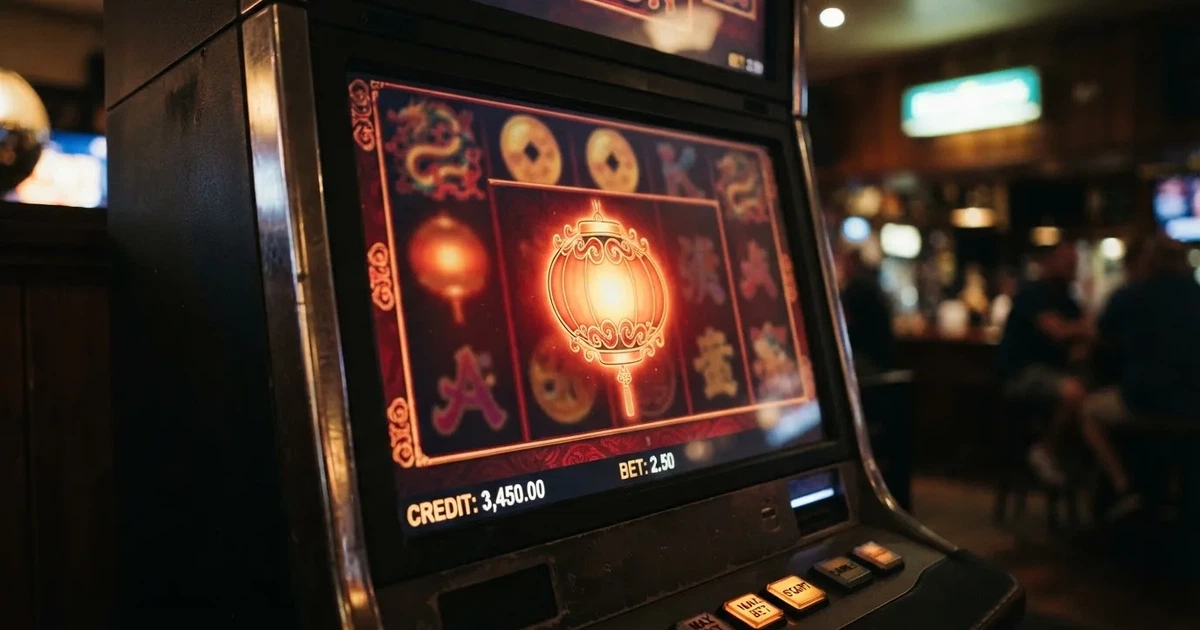
The Lightning Link pokies cabinet is one of the most recognisable gaming machine formats in Australian pubs and clubs. The hold-and-spin bonus round, the lantern motif, the multi-denomination setup, the linked reel sets: the format is built so that the action keeps going well past the first spin. What an Australian reader searching for “Lightning Link online pokies” needs to know first is that the same machine, offered online to a person in Australia, is a prohibited interactive gambling service under the Interactive Gambling Act 2001. Nothing about an offshore site displaying an international licence changes that, and nothing about a free-play or “demo” version is a workaround for the underlying prohibition.
The shape of this page reflects the cost a reader pays: time spent chasing a bonus that may never arrive, money lost to a venue that gives no Australian consumer protection, and the chance that a balance gets stranded the day the ACMA’s next blocking request lands. The figures in §5 of the research base are not adjusted, rounded or made friendlier. They are quoted as the ACMA, the state regulators and the industry reporting bodies publish them, because a reader’s decision to play at all, and where, depends on numbers they can trust.
As of 29 October 2026, the operator licence claims and the ACMA enforcement actions below have been verified against the ACMA’s published formal warning register, the regulator’s own blocking-round announcements, and the state-by-state rules summarised on the Gambling in Australia reference page. Where a licence claim is not on a register the ACMA recognises, the page says so.
Table of Contents
- The law an Australian reader sits under
- How the ACMA enforces the prohibition
- What the hold-and-spin bonus round actually does
- Land-based Lightning Link: what the cabinet actually offers
- What a Lightning Link promo code actually unlocks
- A Lightning Link app is the same prohibition in a different package
- How the linked Lightning Link reel sets differ
- What the ACMA has actually done, and how often
- The blocking rate as a measure of the market’s enforcement
- Eleven offshore sites the ACMA has warned about offering Lightning Link and similar pokies to Australians
- What “responsible play” actually costs when the offer is unlicensed
- Frequently asked questions about Lightning Link online pokies in Australia
The law an Australian reader sits under
Online casino games, including online pokies, cannot be licensed for supply to a person physically in Australia. The Interactive Gambling Act 2001 (IGA), strengthened by the Interactive Gambling Amendment Act 2017, makes it an offence to provide such services to Australians; no state or territory separately licenses them either. What can be licensed is wagering on races and sporting events placed before the event, lotteries and keno. In practice, licensed Australian online wagering is regulated mostly through the Northern Territory, where 52 online bookmakers — Sportsbet, Bet365 and Ladbrokes among them — hold a wagering licence from the Northern Territory Racing and Wagering Commission (NTRWC). That commission has no full-time staff and meets once a month in Darwin, a structure that became the subject of an NT reform bill in April 2026.

The age floor for any licensed interactive gambling service is 18. Credit cards, credit-related products and digital currency are banned as a payment route for licensed online wagering as of 11 June 2024, with penalties up to A$247,500 for operators that breach the rule. The deposit routes a licensed Australian wagering service accepts are debit card, bank transfer, PayID/Osko and BPAY. A site asking an Australian customer to fund an account with a credit card or a crypto wallet is, by that fact alone, operating outside the Australian rules.
The Interactive Gambling Amendment (Gambling Reform) Bill 2026 passed Parliament on 19 August 2026. Its advertising and inducement measures commence on 1 January 2027. For a reader in 2026, that is a law with a start date, not a rule currently in force. It will, however, be the rule that constrains marketing language the day it begins, and any offshore site targeting Australians will be advertising across that line.
What “online pokies” means in the IGA sense
The term “pokies” is Australian English for electronic gaming machines, the slot-style cabinets that sit in pubs, clubs and casinos in every state and territory except for pubs and clubs in Western Australia. The IGA draws no distinction between a video slot from one provider, a hold-and-spin cabinet from another, or a licensed land-based title offered online. The product is the same for the purposes of the Act: an interactive gambling service supplied to a person in Australia over the internet. Lightning Link is no exception. An online casino offering a Lightning Link branded game, or a near-equivalent with a different name, is offering a prohibited service. The site’s licence, whether Curaçao, Malta, Kahnawake or anywhere else, does not matter to the Australian prohibition; only a licence issued under an Australian regime matters, and no such regime exists for online casino games.
How the ACMA enforces the prohibition
The Australian Communications and Media Authority (ACMA) is the federal body that investigates suspected breaches of the IGA and directs Australian internet service providers to block illegal sites. According to the ACMA as reported in June 2026, a total of 1,751 illegal gambling and affiliate marketing websites had been blocked since the first blocking request in November 2019, and more than 230 unlicensed gambling services had left the Australian market since enforcement was strengthened in 2017.
A round reported on 26 June 2026 asked ISPs to block twelve further sites: 7Signs, ChromaBet, Donbet, Duospin, Freshbet, Slots Gem, Jacks Club, Lucky Start, Pointsbetz.com, Spinrise, Vinyl Casino and Wildsino. The blocking list does not target individual players; it targets the operator. The effect on a player, however, is concrete: a site that was reachable yesterday may be unreachable tomorrow, and any balance held in the account is at the operator’s discretion.
H2 Gambling Capital’s 2025 report estimated that Australians lose about A$3.9 billion a year to illegal gambling sites, and that the share of gambling going through legal channels fell from 74% in 2021 to 64%. That is the volume of money the offshore operators are pulling in, and it is the volume of money no Australian dispute resolution body, no BetStop register and no Australian Financial Complaints Authority decision can recover once it is gone.
Why an offshore licence is not an Australian licence
A common feature of the sites the ACMA has acted against is the display of a non-Australian licence — Curaçao being the most common, with Malta and a handful of smaller jurisdictions also appearing. These licences authorise the operator to offer gambling services from the licensing jurisdiction. They do not authorise supply to Australians, and no foreign regulator has any authority to enforce an Australian consumer protection rule. When an offshore operator refuses a withdrawal, accepts a credit card that the IGA bans for Australian play, or simply stops answering support emails, the player has no Australian complaints body to approach. That is the cost an offshore site extracts on top of the house edge, and the page returns to it under each of the operator write-ups below.
What the hold-and-spin bonus round actually does
Lightning Link’s defining mechanic is the hold-and-spin bonus round. The trigger is a minimum number of “ball” symbols — typically six or more — landing anywhere on the reels during the base game. When the trigger lands, the symbols lock in place, the other positions reset, and the player receives a set number of re-spins. Each new ball symbol that lands during the re-spins resets the counter to its starting value and locks in place as well. The round ends when the player runs out of re-spins without a new ball landing; the locked balls then reveal their values and the bonus pays the sum.
The structure has two consequences a reader should price in. First, the bonus round is volatile: long stretches of base-game play with no trigger, then a round where the locked balls add up to a small sum because the re-spins expired early. Second, the round is designed to extend a session. A trigger early in a session leads to a short bonus; a trigger late leads to a long one. Either way, the round keeps the cabinet occupied, which is what the format was built to do.
The Lightning Link family includes several reel sets, each with its own paytable and bonus structure. The “Happy Lantern” theme is one; “Magic Pearl” is another; “High Stakes” and “Tiki Fire” are also part of the linked family. The hold-and-spin mechanic is the same across themes. What changes is the volatility profile and the bonus top end, which differs from one reel set to the next. A reader choosing between cabinets on the floor of a licensed venue should read the machine’s help screen before committing a banknote, not after.
Why an online Lightning Link is not the licensed cabinet
A licensed Lightning Link cabinet on a pub floor in NSW, Victoria or Queensland is a state-regulated machine with a state-set minimum return-to-player (RTP), state-set display rules and state-set hours of operation. The minimum RTP for a poker machine in Australia varies by jurisdiction: 85% in New South Wales, the Northern Territory, Queensland and generally Victoria (87% at Crown Melbourne), 87% in the Australian Capital Territory and Tasmania, 87.5% in South Australia, and 90% in Western Australia. Online, none of those protections apply, because none of those regulators authorises the online product. An online Lightning Link advertised at “96% RTP” or higher is making a claim that no Australian regulator has checked.
New South Wales alone had 87,298 gaming machines outside casinos across 2,195 venues as of June 2023, with player losses of A$8.18 billion in 2022-23. Queensland had 21,122 operating machines in 351 venues in October 2023; Victoria had 26,380 outside Crown Casino in 488 venues in 2021-22, subject to a 30,000 statewide limit. In 2020-21 Australians bet almost A$150 billion through gaming machines and lost A$12.18 billion on them. The country has about 3% of the world’s pub and club poker machines, against 0.3% of the global population. Those figures are the scale on which the licensed cabinet product operates. Online, the same format runs without any of the consumer-side scaffolding the state regulators built.
Land-based Lightning Link: what the cabinet actually offers
Registered clubs operated Australia’s first legal poker machines from 1956, in New South Wales. The licensed Lightning Link cabinet on a club or pub floor today is the descendant of that lineage, and the rules around it are set state by state. Western Australia banned poker machines in pubs and clubs when Crown Perth opened in 1985; Crown Perth’s own machine count has since grown from about 200 in 1985 to roughly 2,500, all approved by the state’s Gaming and Wagering Commission. The Federal Group held a monopoly licence over all of Tasmania’s poker machines from 1968; legislation passed in November 2021 ended that monopoly, moving oversight of the machines to the Tasmanian Liquor and Gaming Commission. Tasmania planned nation-leading mandatory pre-commitment cards for its poker machines, but implementation of the reform was delayed until late 2025.
For a player at a licensed venue, the key constraints are:
- A state-set minimum RTP, which a player can read on the cabinet’s help screen. The minimum varies; the cabinet’s actual RTP may be higher.
- A state-set maximum bet per spin, which is typically capped in cents.
- Cashless gaming options (such as the pre-commitment cards Tasmania introduced), which limit how much can be loaded and lost in a session.
- Venue-set hours. Some states restrict venue-level opening hours around the small hours, and the cabinet is unavailable outside licensed trading times.
None of those constraints travel with the format to the online channel. Online, the operator sets the bet size, the RTP claim and the session length. The player’s only protection is the operator’s goodwill.
What a Lightning Link promo code actually unlocks
A “Lightning Link promo code” or “Lightning Link casino bonus code” is a marketing token offered by an offshore casino, not by Aristocrat, the developer of the Lightning Link cabinet format, which does not operate an online casino and does not authorise one. The code, when accepted, typically unlocks:
- A deposit-match bonus, where the operator credits a percentage of the player’s deposit as bonus funds subject to a wagering requirement.
- Free spins on a named slot, sometimes including a Lightning Link branded title or a near-equivalent.
- A no-deposit bonus, where a small credit is given for signing up, again subject to a wagering requirement.
The standard conditions attached to those bonuses are the cost a player needs to read before claiming:
- A wagering requirement, often expressed as a multiple of the bonus amount (or bonus plus deposit) that must be turned over before the bonus converts to withdrawable cash.
- A maximum cashout cap, often a small multiple of the no-deposit credit, applied before wagering begins.
- Game weighting, where most slots count 100% toward wagering but table games and some titles count less or nothing.
- An expiry on the bonus, often seven days from credit.
The Lightning Link family mechanic — hold-and-spin, with long stretches of base-game play between bonus triggers — makes a high wagering multiple particularly costly in time. A 40x bonus on a small credit means the player must run the equivalent of forty times the bonus amount through the slot. The format’s volatility means many of those spins return nothing; the bonus round, when it lands, returns the locked balls’ sum, which is rarely large enough to clear the requirement in one go.
The player-side conclusion is that a “bonus” at an offshore site is a marketing expense on the operator’s side and a time-and-money cost on the player’s. The arithmetic works the same way for Lightning Link branded games as for any other slot: the house edge times the turnover gives the expected loss, and the wagering multiple fixes the turnover.
A Lightning Link app is the same prohibition in a different package
The Lightning Link name appears on app stores in several jurisdictions, often as a free-to-play or social casino product, and sometimes as a real-money app targeted at an offshore market. For a reader in Australia, the analysis is unchanged. A real-money app offering Lightning Link or a near-equivalent to a person physically in Australia is a prohibited interactive gambling service, regardless of whether it is distributed through a browser, an app store, or a sideloaded APK. The IGA applies to the supply, not the channel.
The “social casino” version, where the player wagers virtual credits with no real-money outcome, sits in a more complicated place. The ACMA has taken the position that a social casino product that simulates real gambling and can be converted into real-money play — through prize redemption, sweepstakes mechanics, or simply a side-channel real-money product — falls within the prohibition. A pure virtual-credit product with no redemption path is not, on the ACMA’s published view, an interactive gambling service. The line between the two is not always clear, and it has been the subject of compliance notices in the past. For a reader who intends to play for real money, the social casino is not the answer.
The other consequence of an app-based channel is the data it collects. An app offering “Lightning Link” branded play is, at minimum, collecting the player’s device fingerprint, location signal and payment details. For an app operating offshore, that data sits outside Australian privacy law. The Privacy Act does not bind a foreign operator. The cost is not only the loss of any balance but also the loss of control of the information the player hands over to claim it.
How the linked Lightning Link reel sets differ
The Lightning Link family includes several linked reel sets, each with its own theme, volatility profile and bonus ceiling. “Happy Lantern” sits at the more accessible end of the family, with frequent bonus triggers and a moderate top end. “Magic Pearl” runs a similar structure with an underwater motif. “High Stakes” carries a higher denomination and a higher ceiling, with bonus values scaling up faster. “Tiki Fire” runs a hotter base game with longer stretches between bonus triggers but a larger average bonus when one lands. “Sahara” and “Starlight” are also part of the linked family.
What separates the reel sets, mechanically, is not the hold-and-spin feature itself — that is identical across the family — but the symbol set, the value attached to each ball in the bonus round, and the volatility of the base game. A player who prefers long bonus rounds with a chance at a larger payout should look at the higher-volatility reel sets. A player who prefers more rounds, smaller ones, more often, should look at the lower-volatility end. None of this changes online, except that an online operator has no obligation to disclose the reel set’s actual RTP or the weighting of any bonus round contribution to wagering.
For a reader who simply wants to know what is on the floor at a licensed venue, the practical answer is that almost every club or pub with a Lightning Link cabinet carries two or three reel sets from the family, and the venue’s help screen identifies which one. The choice is the player’s; the trade-off is the same in every case.
What the ACMA has actually done, and how often
The ACMA’s enforcement is not occasional. Beyond the blocking requests, the regulator publishes formal warnings on its website. The pattern is instructive. In May 2022, the ACMA issued a formal warning to Dama N.V. covering six casino brands — Bambet, Dazard, Level Up, Rocketplay, Wild Tornado and Cobra Casinos. In March 2025 the ACMA warned Dama N.V. again, this time over Woo Casino. In May 2025 it warned Dama N.V. once more, over Spirit Casino. The same operator, the same warning, twice more after the first round. A formal warning is not a blocking order; it is a recorded step on the way to one.
In July 2025 the ACMA issued formal warnings to Bamboo Media over Ignition Casino and to Consolutetish S.R.L. over National Casino and Bizzo Casino. Bizzo Casino had already been the subject of a 2022 formal warning to TechSolutions (CY) Group Limited and TechSolutions Group N.V. In February 2025 the ACMA issued a formal warning to EOD Code SRL over Instant Casino. In April 2025 the ACMA issued a formal warning to Sterplay Holding Ltd over Casino Intense. In March 2026 the ACMA issued a formal warning to Pulsup Ltd over Rocketplay.com.au. In April 2026 the ACMA issued a formal warning to Ryker B.V. over Jackbit and CasinOK.
The repetition matters. A warning to an operator that owns several brands often precedes a blocking round that catches all of them. The same operator group can rebrand and reappear; the warning register is the reader’s best record of who has been told, and how recently.
The blocking rate as a measure of the market’s enforcement
The arithmetic on the ACMA’s published numbers runs as follows. From the first blocking request in November 2019 through to the round reported on 26 June 2026, the ACMA had directed ISPs to block 1,751 illegal gambling and affiliate marketing websites. Spread across roughly 80 months, that is an average of about 22 sites blocked per month, with the rate rising as the ACMA’s tooling matured and the round sizes grew. The 26 June 2026 round alone added twelve sites. Earlier rounds, including the May 2022 wave and the 2025-26 sequence, added comparable batches.
Two conditions sharpen the picture. First, the count is of websites, not of operators; a single operator may run several domains, and several of those domains may sit on the block list. Second, the count does not capture the affiliate marketing pages that the ACMA also directed ISPs to block — the “affiliate marketing websites” phrase in the ACMA’s wording covers the review and SEO sites that funnel traffic to the offshore casinos. Those pages are part of the supply chain that the regulator treats as in scope.
A reader trying to assess how seriously the ACMA is enforcing the prohibition should read the rate as an average rather than as a guarantee. A site that is reachable today may be on tomorrow’s block list. A site that was blocked last year may have re-emerged under a new domain. The pattern is not “once blocked, gone”; it is “blocked, replaced, blocked again”. The cost is borne by the operator, who loses the player funnel; it is also borne by the player, whose balance sits at the new domain with no Australian recourse.
Eleven offshore sites the ACMA has warned about offering Lightning Link and similar pokies to Australians
What follows is not a ranking and not a recommendation. Each brand is named because the ACMA itself has published a formal warning over it for offering prohibited interactive gambling services to Australians. The names come from the ACMA’s own register. The order is the order the warnings were issued. None of these brands can lawfully serve an Australian resident, whatever offshore licence the site displays, and none of them offer a path to Australian dispute resolution.
RocketPlay — Pulsup Ltd, warned by ACMA in March 2026
The ACMA issued a formal warning to Pulsup Ltd over Rocketplay.com.au in March 2026. RocketPlay had been warned before: the brand was one of six covered by the May 2022 warning to Dama N.V. That history matters. A brand that has been warned twice, under two different operating companies, is a brand the regulator has decided is in scope on a continuing basis. The 2026 warning under Pulsup Ltd is the more recent of the two and the one that currently stands. No source carried an offer type, RTP figure or wagering multiple for RocketPlay under a verifiable methodology; the only terms-bearing sources were affiliate marketing pages, which the ACMA’s blocking rounds also sweep up.
For a reader weighing whether to claim a RocketPlay “bonus”: the brand has been the subject of two formal warnings, the most recent in March 2026, and the IGA is unchanged. The expected loss calculation mirrors that of any other offshore slot; however, the consumer-side risk is amplified here given the brand has been warned twice and persists in its offer.
Level Up Casino — Dama N.V., warned by ACMA in May 2022
Level Up Casino was named in the May 2022 warning to Dama N.V. The warning covered six brands in one round: Bambet, Dazard, Level Up, Rocketplay, Wild Tornado and Cobra Casinos. Dama N.V. is the same operator warned again in March 2025 over Woo Casino and in May 2025 over Spirit Casino, which is the pattern the regulator uses when a corporate group is repeatedly in scope. A formal warning to a parent operator does not by itself block a brand, but a brand under a warned parent is a brand the regulator treats as continuing in scope.
The pages that listed Level Up Casino as a Lightning Link style pokies venue carried the title through listings rather than through any operator-side verification; no source confirmed an exclusive tie to the Lightning Link format. For a reader, the decision point remains consistent across this entire list: a 2022 formal warning, a parent operator with a recent second warning, and zero Australian consumer protection channels.
Woo Casino — Dama N.V., warned by ACMA in March 2025
Woo Casino was the subject of the March 2025 formal warning to Dama N.V. — the second warning to that operator, after the May 2022 batch. The gap is three years, during which Dama N.V. continued to operate several brands to Australians. The March 2025 warning is the ACMA’s documented position that the operator has continued to offer prohibited services. Woo Casino, as one of the brands named, sits under that warning.
No source carried verifiable offer terms for Woo Casino under a non-affiliate methodology. The page treats the brand the same way it treats the others: a warning from the ACMA is a fact about the operator, not a fact about the brand’s payout speed or the size of any deposit match. The cost a reader pays for playing is the house edge plus the absence of Australian recourse.
Spirit Casino — Dama N.V., warned by ACMA in May 2025
Spirit Casino is the third brand named in the May 2025 warning to Dama N.V., two months after the Woo Casino warning. The two warnings in the same calendar year, to the same operator, is the ACMA’s way of escalating when the operator has not changed its conduct after the first. Spirit Casino was not named in the original 2022 batch; it is a brand that emerged or became prominent after the first round. The pattern is the operator’s response to a first warning: rebrand, re-platform, re-offer. The ACMA’s response to that pattern is a second warning covering the new brand.
For a reader, the conclusion is the one the page returns to under each of these write-ups: a brand operating under a parent that the ACMA has warned three times in four years is a brand with a high probability of being on the next block list. The balance a player holds at the brand is at the operator’s discretion the day the block lands.
National Casino — Consolutetish S.R.L., warned by ACMA in July 2025
National Casino was named in the July 2025 warning to Consolutetish S.R.L., alongside Bizzo Casino. National Casino appears on listings for Lightning Link style pokies; the listings came from the en.wikipedia.org reference page rather than from any operator-side disclosure. No source gave an offer type or wagering multiple for the brand under a verifiable methodology.
The ACMA formally warned Consolutetish S.R.L. for the first time in July 2025. A first warning is a recorded step, not yet a blocking order; the regulator publishes a warning and expects the operator to comply with a request to stop. The brand’s presence on listings for the Lightning Link style format is a fact about its marketing, not about its compliance.
Bizzo Casino — Consolutetish S.R.L., warned by ACMA in July 2025; previously warned in 2022
Bizzo Casino sits on the same July 2025 warning to Consolutetish S.R.L. as National Casino. The brand was previously the subject of a 2022 formal warning to TechSolutions (CY) Group Limited and TechSolutions Group N.V. — a different operating company, three years earlier. The repetition is the regulator’s pattern with brands that reappear under a new corporate wrapper. The ACMA’s response to the rebrand is to issue a new warning, with the prior warning as context.
A reader trying to follow this history needs to understand that the brand name is not the operator. The legal entity changes; the brand name persists. The 2022 warning was over the TechSolutions group; the 2025 warning is over Consolutetish S.R.L. The brand is the same. No source carried verifiable offer terms for Bizzo Casino.
Ignition Casino — Bamboo Media, warned by ACMA in July 2025
Ignition Casino was the subject of the July 2025 formal warning to Bamboo Media. The brand is the same name as a longer-running US-facing offshore casino; the ACMA’s action is over the offer to Australians, not the brand’s existence elsewhere. This 2025 notice represents the regulator’s initial formal enforcement step concerning Bamboo Media and Ignition Casino’s operations.
The page treats the brand the same way it treats the others: a warning is a fact about the operator, an offer type or wagering multiple is not on the record under a verifiable source, and the IGA is the law that decides whether the offer is lawful. It is not.
Instant Casino — EOD Code SRL, warned by ACMA in February 2025
Instant Casino was the subject of the February 2025 formal warning to EOD Code SRL. The 2025 warning is the ACMA’s first formal action over that operator. The brand is one of several “instant” branded offshore casinos that emerged on affiliate marketing lists in the early 2020s; the ACMA’s action is the regulator’s first documented position on the operator.
For a reader, the conclusion is the same as under the other brands here. A formal warning does not block the site; the next blocking round may. A player holding a balance at Instant Casino on the day the round lands has no Australian complaint body to approach.
Jackbit — Ryker B.V., warned by ACMA in April 2026
Jackbit was one of two brands named in the April 2026 warning to Ryker B.V., alongside CasinOK. The April 2026 warning is the ACMA’s first formal action over Ryker B.V. The brand is a sportsbook-and-casino hybrid; its offer to Australians is the same prohibition as any other operator on this list. No source carried a Lightning Link specific figure for Jackbit under a verifiable methodology.
The brand’s sport-and-casino mix is worth noting for a reader who arrived at it through a sportsbook ad. The casino side of the platform sits under the same warning as the sports side, and a balance funded through a sportsbook deposit can be moved to a casino game without triggering any further review. The IGA does not carve that path out.
Casino Intense — Sterplay Holding Ltd, warned by ACMA in April 2025
Casino Intense was the subject of the April 2025 formal warning to Sterplay Holding Ltd. The warning is the ACMA’s first formal action over that operator. The brand has appeared on listings for Lightning Link style pokies via the Abc.net.au, acma.gov.au and Crownmelbourne.com.au references in the research base; the references describe the brand as having offered the format, not as having a verifiable RTP or payout figure.
A reader weighing Casino Intense against the other brands on this list should note that the warning is the most recent of a single round; there is no second-warning pattern yet. The IGA analysis is unchanged. The consumer-protection cost is unchanged.
Sky Crown — Hollycorn N.V., warned by ACMA in September 2022
Sky Crown was named alongside Blue Leo in the September 2022 formal warning to Hollycorn N.V. The 2022 warning is one of the earlier entries on the register; Hollycorn has not been the subject of a second formal warning since, which distinguishes it from Dama N.V. (three warnings since 2022) and from TechSolutions (re-warned under a new entity in 2025). A single warning, with no follow-up, is the regulator’s lighter touch.
The page returns to the same conclusion: a brand under a formal warning is offering prohibited services to Australians; the licence the site displays is not Australian; and the expected loss math plus the absence of Australian recourse is the cost a player pays. Sky Crown sits at the same point as the other ten brands on this list.
What “responsible play” actually costs when the offer is unlicensed
A hold-and-spin cabinet is built to extend a session. The mechanic — six or more balls to trigger, a counter that resets on each new ball, a value on each ball that grows with the locked set — is designed to keep the player at the machine. A responsible play framework for that kind of product, in a venue that does not apply one, has to come from the player.
The national framework, where it applies, is BetStop, the National Self-Exclusion Register. BetStop has been live since August 2023 and binds every Australian-licensed online and phone wagering service. An offshore casino is not connected to BetStop, which means the self-exclusion a player registers is not enforced by the offshore operator. The register is, in other words, a tool that works only on the licensed side of the market. On the unlicensed side, the player’s only protection is the player’s own discipline.
The Gambling Help Online service, reachable on 1800 858 858, free and 24/7, is the national counselling line. It is not tied to BetStop and is reachable from anywhere in Australia, regardless of whether the player has registered for self-exclusion. For a reader who has been playing offshore and is trying to stop, the line is the starting point.
The fixed-time rule, more than the budget rule, is what applies to a hold-and-spin product. The base game stretches; the bonus round, when it lands, can run for several minutes. A player who sets a time limit and a hard exit point — including a hard exit at the end of a bonus round, regardless of the result — is playing the way the format demands. A player who sets a budget alone, and lets the session stretch into a second and third bonus round, is the player the format is built for.
What an Australian reader actually has
A licensed Australian-licensed wagering service — a sports or race bookmaker licensed by the NTRWC, a lottery operator licensed by a state regulator, a keno operator licensed by a state regulator — is what an Australian reader has lawful access to for online interactive gambling. The Lightning Link cabinet is not part of that set. The Lightning Link cabinet is a state-licensed machine available in licensed venues, with a state-set minimum RTP and state-set operating rules.
The online offer an Australian reader is searching for does not exist as a lawful product. The “Lightning Link online pokies” the search returns are not the licensed cabinet; they are an offshore operator’s branded product, offered over a prohibited channel, with no Australian consumer protection. The expected loss math is the same as for any slot; the additional cost is the absence of any path back when the operator fails to pay.
Frequently asked questions about Lightning Link online pokies in Australia
Is it legal to play Lightning Link online pokies for real money in Australia?
No. The Interactive Gambling Act 2001 prohibits the supply of online casino games, including online pokies, to a person physically in Australia. No state or territory licenses online pokies, and no offshore licence changes that. An offshore site offering a Lightning Link branded game is offering a prohibited interactive gambling service.
What triggers the hold-and-spin bonus round on a Lightning Link machine?
Six or more ball symbols landing anywhere on the reels during the base game. The balls lock in place, the other positions reset, and the player receives a set number of re-spins; each new ball resets the counter and locks in. The round ends when no new ball lands within the re-spins, and the locked balls reveal their values for the bonus payout.
Is Lightning Link available at regulated land-based venues in Australia?
Yes. Lightning Link cabinets are licensed gaming machines operating in clubs, pubs and casinos in every state and territory except for pubs and clubs in Western Australia. Each jurisdiction sets its own minimum RTP, maximum bet and operating hours, and the cabinet’s help screen identifies the reel set and the rules in force at that venue.
Do Lightning Link promo codes work the same way across different cabinet themes?
No. Promo codes on offshore sites unlock operator-side bonuses — deposit matches, free spins, no-deposit credits — not Aristocrat-side features. The hold-and-spin mechanic is the same across the Lightning Link family, but the operator-side bonus terms vary by brand, jurisdiction and current promotion, and the standard conditions (wagering multiple, max cashout, expiry) apply on top of the format.
Does a Lightning Link app on a phone offer a different game to the desktop version?
The IGA does not distinguish by channel. A real-money app offering a Lightning Link branded game or near-equivalent to a person in Australia is a prohibited interactive gambling service, the same way a desktop site is. A social-casino app with virtual credits and no real-money path sits in a more complicated place; the ACMA’s view is that products that simulate real gambling and can convert to real-money play fall within the prohibition.
What separates the different Lightning Link reel sets from each other?
The symbol set, the value attached to each ball in the bonus round, and the volatility of the base game. Hold-and-spin is identical across the family. “Happy Lantern” sits at the lower-volatility end with frequent triggers; “Tiki Fire” sits at the higher-volatility end with longer dry stretches and larger average bonuses. Online, the operator has no obligation to disclose the reel set’s actual RTP or bonus weighting.