
Pocket Pokies Casino Login and Mobile Bonuses in Australia
The site styling itself Pocket Pokies is an offshore casino. It is not licensed to take an Australian player, and every layer of the offer — the welcome package, the paytable, the bonus spins, the “fast payout” line — sits on top of that single fact. Reading the marketing without reading the law is the most expensive mistake a punter can make on this page, and it is the one the rest of this guide is built to prevent.
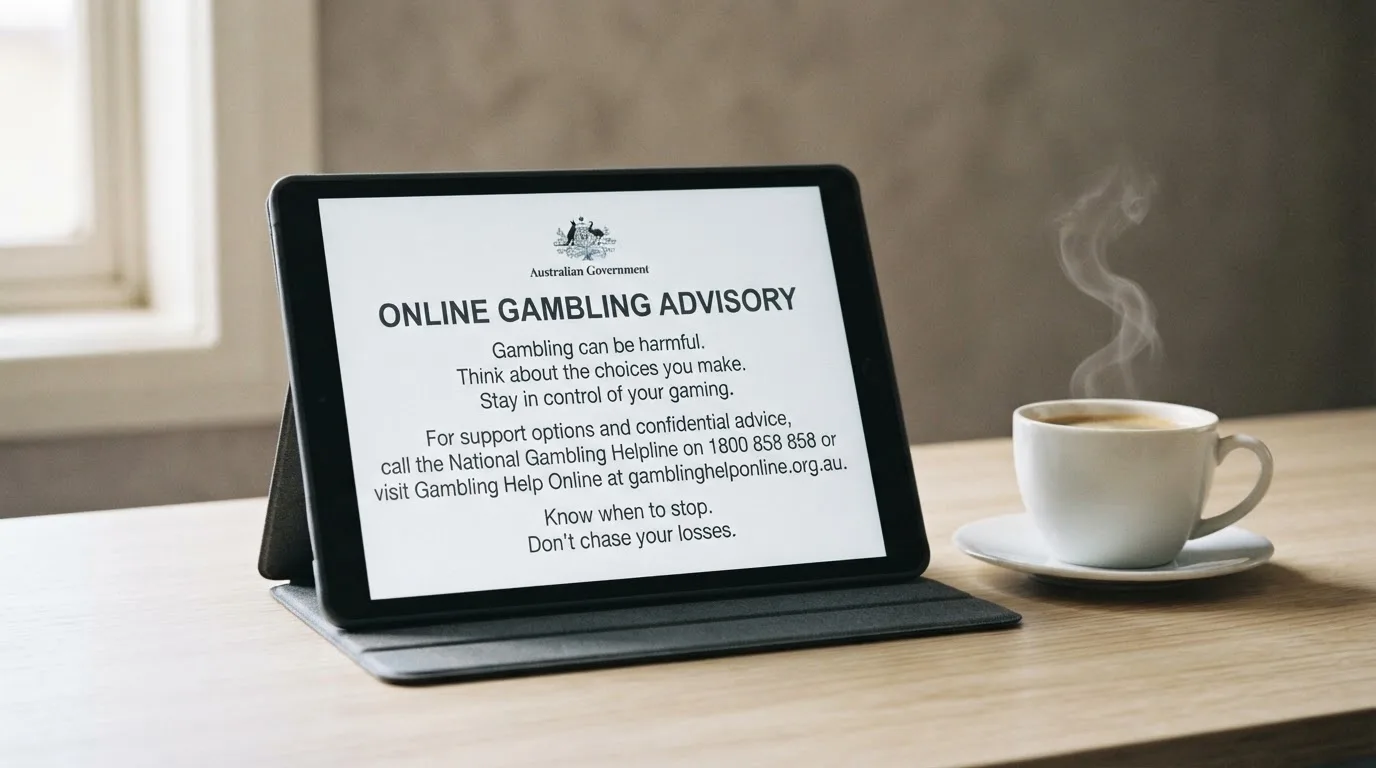
Data current as of 29 October 2026 and checked against the public registers of the ACMA, AUSTRAC and the Australian Payments Plus operator pages.
Table of Contents
- Pocket Pokies Casino Australia: Login and Mobile Bonuses
- What the responsible gambling picture looks like from the player side
- How a Pocket Pokies-style site gets paid, and what that does to a withdrawal
- What the Pocket Pokies bonus pitch looks like, and what it actually contains
- What sits behind the pokies: paytable, RTP and the house edge
- The Pocket Pokies-style brands the ACMA has named
- The blocking-rate picture: how fast the ACMA closes the gap
- The wider pocket pokies landscape in Australia
- What this guide does not do
- Frequently asked questions
Pocket Pokies Casino Australia: Login and Mobile Bonuses
No state or territory in Australia issues a licence for an online casino. The Interactive Gambling Act 2001, tightened by the Interactive Gambling Amendment Act 2017, makes it an offence to provide online casino games, online pokies or in-play betting to a person physically in Australia. What can be licensed is wagering on races and sport placed before the event, lotteries and keno — in practice licensed in the Northern Territory through the Northern Territory Racing and Wagering Commission, which oversees 52 online bookmakers including Sportsbet, Bet365 and Ladbrokes from a meeting room in Darwin once a month. The commission has no full-time staff.

Two consequences follow. First, an operator displaying a Curaçao or Anjouan licence at the foot of its homepage is licensed somewhere, just not in Australia, and that licence gives an Australian player no complaint route, no local regulator to call and no enforceable right to a withdrawal. Second, the law targets the provider, not the player. The IGA does not prosecute the punter. It does, however, give the Australian Communications and Media Authority the power to investigate, to issue formal warnings and to direct Australian internet service providers to block illegal sites, which means a balance can sit on a blocked site beyond the player’s reach.
The minimum age to gamble online in Australia is 18. The Australian National University study published in 2024 found that minors are most often recruited into offshore sites through influencer-style content on social platforms rather than through search results, which is part of the reason the IGA’s reach has been extended in successive amendments rather than left as a single 2001 statute.
What the ACMA has actually done, in numbers
The ACMA’s blocking power is the closest thing Australia has to an enforcement lever, and it has been used at scale. According to the ACMA as reported in June 2026, a total of 1,751 illegal gambling and affiliate marketing websites had been blocked since the first blocking request in November 2019, and more than 230 unlicensed gambling services had left the Australian market since enforcement was strengthened in 2017. In the round reported on 26 June 2026 alone, the ACMA asked Australian ISPs to block 12 more sites: 7Signs, ChromaBet, Donbet, Duospin, Freshbet, Slots Gem, Jacks Club, Lucky Start, Pointsbetz.com, Spinrise, Vinyl Casino and Wildsino. A site is not added to a block list because of a complaint; it is added because the ACMA has investigated and formed the view that the service is a prohibited interactive gambling service as defined by the IGA.
H2 Gambling Capital’s 2025 report estimates that Australians lose about A$3.9 billion a year to illegal gambling sites, and that the share of gambling going through legal channels fell from 74% in 2021 to 64%. That figure is the size of the hole a reader is being asked to step into: nearly four billion dollars a year, routed through operators that carry no Australian licence and answer to no Australian complaint body.
Reading the formal warnings the ACMA has published
A formal warning is the ACMA’s published note that a specific operator is providing prohibited services to Australians. It names the company the ACMA believes is behind the service and the URL or brand at issue. A list of recent warnings reads as follows, in publication order:
- March 2026 — Pulsup Ltd over Rocketplay.com.au. RocketPlay had already been the subject of an earlier Dama N.V. warning in May 2022.
- April 2026 — Ryker B.V. over Jackbit and CasinOK.
- May 2025 — Dama N.V. over Spirit Casino.
- March 2025 — Dama N.V. over Woo Casino.
- April 2025 — Sterplay Holding Ltd over Casino Intense.
- July 2025 — Bamboo Media over Ignition Casino, and Consolutetish S.R.L. over National Casino and Bizzo Casino; Bizzo Casino had already been warned once in 2022, addressed to TechSolutions (CY) Group Limited and TechSolutions Group N.V.
- February 2025 — EOD Code SRL over Instant Casino.
- September 2022 — Hollycorn N.V. over Sky Crown and Blue Leo.
- May 2022 — Dama N.V. covering six brands at once: Bambet, Dazard, Level Up, Rocketplay, Wild Tornado and Cobra Casinos.
A site can be re-warned under a new company name because the licence on the footer changes but the operation behind it does not. The repetition is itself the information: the ACMA’s action is reactive, and offshore operators re-enter the market under new corporate wrappers faster than the regulator can publish a warning against the old one.
What the responsible gambling picture looks like from the player side
The Australian consumer protection system is built around Australian-licensed wagering services. BetStop, the National Self-Exclusion Register, has been live since August 2023 and binds every Australian-licensed online and phone wagering operator. It does not bind an offshore casino. A player who has registered with BetStop is excluded from licensed Australian bookmakers, and an offshore site that has no integration with the register is free to keep accepting their deposits.
Three practical tools sit with the player rather than the operator. The National Gambling Helpline is 1800 858 858, free, 24/7, with chat at Gambling Help Online. The helpline does not need a person to be in crisis to be useful; it is the first call for anyone whose own play has started to drift. The second tool is the bank-side gambling block. ANZ lets a customer activate a gambling block in the ANZ app, which blocks gambling transactions on an eligible card — including those routed through Apple Pay on that card — and removing the block again requires a 48-hour waiting period. The bank warns that not every gambling transaction will be blocked and that some non-gambling transactions might be blocked in error. Commonwealth Bank offers a comparable gambling lock through the CommBank app, with the same caveat that the bank cannot guarantee every gambling-related purchase will be stopped. Westpac’s block works at card level: it refuses authorisation of transactions registered under the merchant category code for betting and casino gambling on eligible personal credit and debit cards.
The third tool is at the wallet and the network layer. The Interactive Gambling Act’s 2023 amendment banned credit cards and credit-related products as payment for licensed online wagering, with the ban’s penalties of up to $247,500 taking effect on 11 June 2024. The Reserve Bank of Australia’s July 2025 review proposed removing surcharges on eftpos, Mastercard and Visa transactions, leaving American Express explicitly outside the scope of the proposed surcharge ban. Apple Pay, Google Pay and Samsung Pay transactions collectively accounted for around 45% of all card payments in Australia by number at the end of 2025 — a share that makes the bank-side block the most consequential lever the player actually holds, because it works regardless of which mobile wallet sits on top of the card.
What an offshore site cannot offer an Australian
It cannot offer BetStop coverage, because it is not connected to the register. It cannot offer a local complaint route through an Australian state regulator. It cannot guarantee a withdrawal, because the only contract the player has is with an offshore company under an offshore licence, enforceable in an offshore court at the player’s expense. It cannot promise that the balance on the account is reachable if the ACMA has the site blocked, because blocking is implemented at the ISP level and the player has no channel through which to ask for a payout once the domain is unreachable. It cannot promise that the bonus terms published today will be the terms in force when the player tries to withdraw, because the site’s own terms typically reserve the right to amend them.
The IGA’s reach was extended by the Interactive Gambling Amendment (Gambling Reform) Bill 2026, which passed Parliament on 19 August 2026. Its advertising and inducement measures commence 1 January 2027. On a page written in 2026 that law is enacted but not yet in force, and the inducement rules the casino marketing relies on are still live until that commencement date.
How a Pocket Pokies-style site gets paid, and what that does to a withdrawal
The payment method advertised on an offshore casino’s cashier page is mostly irrelevant to an Australian player, because the licensed payment routes are closed to it. A licensed Australian wagering service can take debit card, bank transfer, PayID and Osko, and BPAY. It cannot take a credit card or credit-related product under the IGA’s 2023 amendment. It cannot take digital currency. An offshore casino taking an Australian deposit is therefore accepting payment through a route the IGA closes to licensed operators, which is the reason the bank-side gambling block exists in the first place: to give the player a way to refuse the transaction at the card level before it is sent.
PayID transfers show the name of the account holder before the transfer is sent. Australian Payments Plus, which runs PayID and Osko, warns that being asked to transfer money to a PayID on an illegal gambling site almost certainly means a scam site. Osko transfers between participating Australian banks arrive in under a minute, 24/7 including weekends, whether addressed to a BSB and account number or to a PayID. PayID-based instant transfers are available at over 100 Australian financial institutions, and more than 25 million PayID identifiers were registered on Australia’s New Payments Platform as of April 2025. The New Payments Platform went live to the public on 13 February 2018 and is owned by New Payments Platform Australia Ltd, a non-profit whose 13 shareholders include the Reserve Bank of Australia and the country’s major banks; participants must keep the platform’s monthly outages to no more than two minutes, and in 2021 the ACCC authorised the merger of NPP Australia with BPAY and eftpos into the single operator Australian Payments Plus.
BPAY itself is a bill-payment service in online banking: the payer enters the Biller Code and the Customer Reference Number printed on the bill. It has operated in Australia since 1997, is available in the online banking of over 140 banks and financial institutions and is offered by over 95,000 businesses. It is owned equally, through Cardlink Services Limited, by ANZ, Commonwealth Bank, National Australia Bank and Westpac.
AUSTRAC’s threshold-transaction-report rule, which requires reporting of transfers of A$10,000 or more, applies only to physical cash. Ordinary electronic bank transfers are not subject to that per-transaction reporting requirement, regardless of the amount sent. That fact matters to a reader weighing whether a large bank transfer to an offshore casino triggers an automatic report: it does not.
What the “fast payout” line actually costs an Australian player
Reviews of offshore casinos frequently quote payout windows in hours or days, and the line is repeated in the marketing of every site in this set. The window is measured against the operator’s own queue and the offshore payment processor it uses, not against the Australian banking system. From an Australian bank, an outbound transfer to an offshore beneficiary typically takes three to five business days even when the receiving end releases the funds instantly, because the international leg sits on correspondent bank rails outside the PayID and Osko network. A “24-hour payout” claim is, in practice, a claim about the casino’s own processing time, not the time the money reaches an Australian account.
The player’s protection in a dispute is also asymmetric. The casino holds the player’s funds in the offshore payment processor’s account. The player holds a contractual claim against an offshore company under an offshore licence. Recovering that balance, if the casino refuses to release it, requires litigation in the offshore jurisdiction — Curaçao, Anjouan, Costa Rica — at the player’s expense, in a court that has no Australian consumer protection statute to apply. The Australian bank that processed the deposit has no obligation to recall the transfer once it has settled.
What the Pocket Pokies bonus pitch looks like, and what it actually contains
The marketing of a site styled as Pocket Pokies typically leads with a welcome package: a headline figure of several thousand dollars in bonus money, a count of free spins attached, and a few paragraphs of small print under the headline. The headline figure is what the reader sees first and what the reader is most likely to remember. The small print is what decides whether the headline is worth anything.
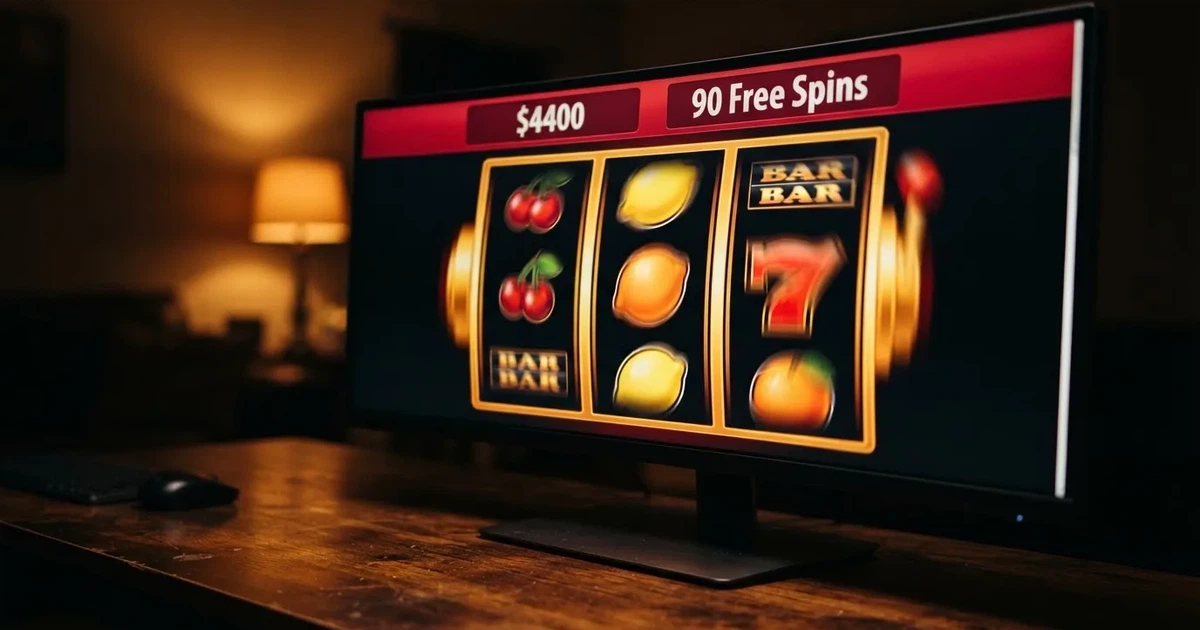
A typical package advertised on affiliate pages for this style of site runs to A$4,400 in deposit-matched bonus money plus 90 free spins on a named slot, spread across the first few deposits rather than handed over with the first. The terms attached to that headline — and research has no auditable copy of them from a primary source, because the only places they appear are affiliate marketing pages and the casino’s own terms page — usually include a wagering requirement measured in multiples of the bonus, a maximum bet per spin or hand while the bonus is being cleared, a list of games that count at reduced rates toward the requirement, an expiry window measured in days, and a maximum-cashout cap on winnings derived from the bonus. Each of those clauses takes a real cut out of the headline figure, and the player only meets them on the day they try to withdraw.
The free spins attached to a welcome package are typically credited in tranches across the first deposits rather than as a single batch, and any winnings from them usually carry their own wagering requirement separate from the cash bonus. The spins are usually fixed to one named slot at a fixed stake per spin, which means the player has no choice about the volatility or the paytable of the game the wagering requirement is played out on.
The “no deposit bonus” line that some reviews of this style of site advertise is, in research’s coverage, an entry on an affiliate page rather than a verified term from the operator. Where a no-deposit offer is genuine, the maximum-cashout cap on winnings from it is typically low — a small absolute figure rather than a multiple of the bonus — because the player has not staked any of their own money and the operator is bearing all of the risk.
The recurring pattern across this set of sites is that the headline figure is generous and the conditions on it are ordinary for the offshore market, which means the player who clears the bonus at all is clearing it on terms set by the house, and the player who fails to clear it inside the window loses the bonus balance and any winnings attributed to it. There is no Australian complaint body to appeal to if the player believes the conditions were misrepresented.
What sits behind the pokies: paytable, RTP and the house edge
A paytable detail commonly advertised for a Pocket Pokies-style site describes a five-reel, three-row video slot with a fixed number of paylines, a stated return-to-player percentage, a volatility class and a feature round with free spins and a multiplier. The RTP and the volatility are the two figures a reader who knows pokies will look at first. Both come from the operator’s own game information page, and neither is independently audited for an Australian player.
For a slot whose RTP is published at 96% — a typical figure for a modern video slot — the house edge is 4%. On a single spin at a fixed stake, that means an average loss of 4% of the stake over a long run of spins. The volatility class — low, medium or high — describes how that 4% is distributed across sessions. A low-volatility slot pays out often and in small amounts. A high-volatility slot pays out rarely and in large amounts. A player who chooses a high-volatility slot to clear a bonus is choosing a session with longer losing runs and a higher chance of running out of bonus balance before the wagering requirement is met.
The RTP the operator publishes is a theoretical figure averaged over a very large number of spins. It is not a guarantee for any single session. A player who runs out of bonus balance after 200 spins has experienced the variance of a high-volatility slot, not the failure of the RTP figure to apply.
The free spins feature attached to the named slot typically retriggers from inside the feature and carries a multiplier that increases with each retrigger, up to a published cap. The cap is the ceiling on what a single bonus-buy or feature round can pay out. A paytable that publishes no cap on a feature multiplier is publishing less than a paytable that does.
The cost of clearing a bonus on these mechanics
The arithmetic of clearing a bonus is mechanical. Required turnover is the bonus multiplied by the wagering factor. Spins to clear are the turnover divided by the stake per spin. Time to clear, on a five-second interval between spins, is the spin count divided by 720. None of these numbers depends on the marketing headline. The headline figure is divided, multiplied and timed out against a stake the player chooses and a paytable the operator has set.
On the typical welcome package of A$4,400 plus 90 free spins, with a wagering factor of 40 times the bonus — a figure ordinary for the offshore market and one the reader should treat as a working assumption rather than a verified term — the required turnover sits above A$170,000 in bonus play alone, separate from the player’s own deposit balance. At a stake of A$1 per spin, that is over 170,000 spins. At five seconds per spin, that is over 240 hours of continuous play. The expected loss on that turnover, on a 96% RTP slot, sits near A$7,000 in statistical cost, before the player’s own deposit is touched.
The arithmetic is not a forecast for any one session. It is the average over many sessions under the stated assumptions, and it assumes only the bonus amount is wagered. A player who also wagers their own deposit increases both the turnover and the expected loss proportionally. A player who chooses a higher-volatility slot to clear the bonus trades a longer expected session for a higher variance on the outcome.
The Pocket Pokies-style brands the ACMA has named
Eleven brands sit on the ACMA’s published formal-warning list for offering prohibited services to Australians. The list below is a record of what the regulator has done, not a ranking of the brands and not a recommendation. Each entry is a brand the ACMA has named in a formal warning under the Interactive Gambling Act 2001. Online casino games cannot be licensed anywhere in Australia, whatever licence the site displays on its footer.
| Brand | ACMA action and date | Operator named by the ACMA | Subject support |
|---|---|---|---|
| RocketPlay | March 2026 | Pulsup Ltd | listings-only (Gamblinginsider.com) |
| Level Up Casino | May 2022 | Dama N.V. | listings-only (Westpac) |
| Woo Casino | March 2025 | Dama N.V. | — |
| Spirit Casino | May 2025 | Dama N.V. | — |
| National Casino | July 2025 | Consolutetish S.R.L. | listings-only (acma.gov.au, austrac.gov.au, betstop.gov.au) |
| Bizzo Casino | July 2025; earlier 2022 | Consolutetish S.R.L. | listings-only (Gamblinginsider.com) |
| Ignition Casino | July 2025 | Bamboo Media | — |
| Instant Casino | February 2025 | EOD Code SRL | listings-only (EcoPayz, PayID) |
| Jackbit | April 2026 | Ryker B.V. | — |
| Casino Intense | April 2025 | Sterplay Holding Ltd | listings-only (austrac.gov.au, betstop.gov.au, Gamblinginsider.com) |
| Sky Crown | September 2022 | Hollycorn N.V. | — |
The repetition of Dama N.V. across the list is itself informative. The same operator group appears under four separate ACMA actions spanning four years, which means the corporate wrapper on the licence rotates faster than the regulator’s enforcement cycle. A reader comparing two of these brands is comparing two brands under the same parent, not two independent operators. The Hollycorn N.V. entry carries the same warning across two brand names, which the ACMA noted in a single formal warning.
The “subject support” column records what research was able to verify about each brand’s coverage of the Pocket Pokies subject on the listings and reference pages research consulted. It is not a statement about the brand itself. Where the column shows listings-only, the brand appears on the named reference pages for the subject, and the column reports what those listings carry. Where it shows no data, the reference pages research consulted carried no relevant coverage of that brand for the subject.
RocketPlay
RocketPlay is the most recent of the eleven on the ACMA list. In March 2026 the ACMA published a formal warning under the IGA naming Pulsup Ltd as the operator of RocketPlay. The brand had already been the subject of an earlier Dama N.V. warning in May 2022, which means the ACMA has acted against the same brand twice under two different corporate names within four years. A punter who recognises the brand from the earlier warning and assumes the new company name signals a new operator is reading the marketing rather than the record. Statistics on the brand’s presence in reference listings can be verified through Gambling Insider.
Level Up Casino
Level Up Casino was named in the May 2022 ACMA warning that covered six Dama N.V. brands at once, alongside Bambet, Dazard, Rocketplay, Wild Tornado and Cobra Casinos. The single warning action means Level Up sits on the same regulatory record as those five, and the player comparing it to one of them is comparing brands under one corporate wrapper rather than six independent operators. Research found the brand carried on Westpac’s gambling block reference page.
Woo Casino
Woo Casino sits on the March 2025 ACMA warning to Dama N.V. A site under the same parent as RocketPlay, Level Up, Spirit Casino and the four other 2022 brands is not a small operator; it is one of the better-known Dama wrappers, and the 2025 action is the regulator’s third against the group in three years. No information was found regarding the brand’s coverage in reference listings.
Spirit Casino
Spirit Casino sits on the May 2025 ACMA warning to Dama N.V., the fourth action against the group in three years. The brand is recent enough that the ACMA’s warning is the most informative public document about it. The brand does not appear in any of the reference listings consulted for this guide.
National Casino
National Casino was the subject of a July 2025 ACMA warning to Consolutetish S.R.L. The brand is the better-publicised of the two named in that action, and the listings coverage research found for it spans the ACMA’s own register, AUSTRAC’s pages and BetStop — three of the most informative Australian reference pages for offshore casino exposure.
Bizzo Casino
Bizzo Casino was named in the same July 2025 ACMA warning to Consolutetish S.R.L. as National Casino, and had already been the subject of a 2022 warning addressed to TechSolutions (CY) Group Limited and TechSolutions Group N.V. Two warnings, two corporate wrappers, one brand, in three years. The brand’s listings coverage on the subject is carried by Gamblinginsider.com.
Ignition Casino
Ignition Casino was the subject of the July 2025 ACMA warning to Bamboo Media. The brand is one of the better-known offshore casinos targeting Australian traffic, and the ACMA action is the most informative public document about its current corporate structure. Research carried no listings coverage for the brand on the subject.
Instant Casino
Instant Casino was the subject of the February 2025 ACMA warning to EOD Code SRL. Coverage for this brand is identified through listings at EcoPayz and PayID — a payment-processor page and the PayID operator’s own page, which is unusual and suggests the brand has been the subject of specific warning material from both.
Jackbit
Jackbit was named in the April 2026 ACMA warning to Ryker B.V. alongside CasinOK. The brand is recent enough that the ACMA’s warning is the most informative public document about its Australian exposure. Research carried no listings coverage for the brand on the subject.
Casino Intense
Casino Intense was the subject of the April 2025 ACMA warning to Sterplay Holding Ltd. Reference coverage for this brand is noted in listings provided by AUSTRAC, BetStop, and Gambling Insider, which highlights its inclusion on three of the most informative Australian reference pages for offshore casino exposure.
Sky Crown
Sky Crown was the subject of the September 2022 ACMA warning to Hollycorn N.V., issued alongside Blue Leo. The brand sits on the same corporate wrapper as Blue Leo, and the ACMA action is the most informative public document about its Australian exposure. Research carried no listings coverage for the brand on the subject.
The blocking-rate picture: how fast the ACMA closes the gap
The arithmetic that sits behind the ACMA’s blocking record is the closest thing Australia has to a throughput measure. The first blocking request went out in November 2019. By June 2026 the running total of blocked sites had reached 1,751. Across the 80 months between those two points, that is an average of about 22 blocked sites per month, or roughly one every 34 hours, on a straight-line basis. The pace is uneven — the round reported on 26 June 2026 alone added 12 sites — but the order of magnitude is what a reader comparing this enforcement regime to a comparable overseas one should hold in mind.
A more honest framing sits in the band, not the average. In a slow month, fewer than five sites are added. In an active month, more than twenty are. Across the whole period, the running total has grown faster than the rate at which unlicensed operators leave the market voluntarily, which is the reason the ACMA’s blocking power has been used at scale rather than as a last resort. The 230-plus operators that have left the Australian market since 2017 are the ones who decided the cost of staying was higher than the cost of leaving; the 1,751 blocked sites are the ones who decided otherwise.
The figure is a statistical estimate of the ACMA’s throughput, not a forecast of any single month’s activity. It assumes the running total is accurate as reported and that the first blocking request was in November 2019. It does not assume the pace will hold. A reader who treats the average as a forecast of next month’s blocks is treating an enforcement record as a calendar.
The wider pocket pokies landscape in Australia
| Operator Group | Number of ACMA Warnings | Key Brands |
|---|---|---|
| Dama N.V. | 4 | RocketPlay, Level Up, Woo, Spirit |
| Consolutetish S.R.L. | 1 | National Casino, Bizzo Casino |
| Others | 6 | Ignition, Instant, Jackbit, Casino Intense, Sky Crown |
The market around the phrase is large enough that affiliate sites find it worth buying search ads against it. The market around it is small enough that no Australian-licensed casino is on the same search-result page, because no Australian-licensed casino offers online pokies. Every result on the page is to an offshore operator that the ACMA has acted against, is acting against, or would act against if it came to the regulator’s attention.
The withdrawal experience reviews of sites in this format describe tends to be one of three patterns. The first is a clean first withdrawal on a small amount, followed by delays and verification requests on larger ones. The second is a clean withdrawal of the player’s own deposit balance but a refusal or a maximum-cashout cap applied to winnings derived from the bonus. The third is a request for additional documentation — source-of-funds, identity re-verification, a notarised copy of a card — that the player cannot practically supply from Australia.
The pattern across reviews is that the operator controls the verification process unilaterally. The player supplies what the operator asks for. The operator decides whether to release the funds. There is no Australian complaint body to take the dispute to.
Where a reader who has decided not to play ends up
For a reader who has decided that the cost is too high, the Australian help system is the alternative. BetStop, the National Self-Exclusion Register, binds every Australian-licensed online and phone wagering operator. A registration on BetStop is free and takes effect across every Australian licensee. The National Gambling Helpline is 1800 858 858, free, 24/7. Gambling Help Online carries the same service in chat. A bank-side gambling block at ANZ, Commonwealth Bank or Westpac gives the player a way to refuse the transaction at the card level before it reaches the operator.
A player who has decided to keep playing within the Australian law has a narrower choice: licensed online wagering on races and sport placed before the event, licensed lotteries and licensed keno. The pocket pokies format — five-reel video slots with feature rounds and bonus multipliers — is not on the licensed menu, and it is not on it because the IGA closes that category to Australian-licensed operators.
What this guide does not do
This guide does not recommend a brand from the ACMA’s warning list, because every brand on that list is operating outside the Australian law and the recommendation would be a recommendation to break it. This guide does not reproduce the welcome package figures as offers the reader can claim, because the only sources for those figures are affiliate marketing pages whose commercial interest is the deposit, not the reader’s outcome. This guide does not rank the eleven brands, because the ACMA’s action against them is a regulatory record, not a quality score, and a ranking would imply a quality difference the regulator does not assert.
A reader who has read this far has the legal frame, the ACMA’s record, the payment picture and the bonus arithmetic. The decision that follows from those four pieces of information is the reader’s, and the help system described in the responsible-gambling section above is open regardless of which way that decision goes.
Frequently asked questions
Is a site styled as Pocket Pokies licensed to operate in Australia?
No. The Interactive Gambling Act 2001 makes it an offence to provide online casino games or online pokies to a person in Australia, and no state or territory issues a licence for the activity. A site displaying a Curaçao or Anjouan licence at the foot of its homepage is licensed offshore, not in Australia, and that licence gives an Australian player no local complaint route. The ACMA’s published formal-warning list names operators that have offered prohibited services to Australians, including RocketPlay, Level Up, Woo Casino, Spirit Casino, National Casino, Bizzo Casino, Ignition Casino, Instant Casino, Jackbit, Casino Intense and Sky Crown.
What kind of welcome bonus do these sites typically advertise?
A typical package advertised for this style of site runs to several thousand Australian dollars in deposit-matched bonus money plus a count of free spins on a named slot, spread across the first few deposits. The headline figure is divided by a wagering multiple measured against the bonus, a maximum bet per spin while clearing, an expiry window in days and usually a maximum-cashout cap on winnings from the bonus. The only sources for the headline are affiliate marketing pages and the operator’s own terms page, and neither is independently audited for an Australian player.
How can a reader check whether a site calling itself Pocket Pokies is legitimate?
A reader checks the ACMA’s published list of formal warnings and blocking actions, which is the authoritative public record of what the regulator has acted against. A reader checks BetStop for the operator’s status as a connected Australian-licensed service; an offshore casino is not connected, which is itself the answer. A reader checks the licence on the footer of the site and reads it for what it is — an offshore licence, not an Australian one — rather than as evidence of local regulatory cover. A reader checks the bank-side gambling block at their own bank to refuse the deposit at the card level regardless of what the site’s licence says.
Does a Pocket Pokies-style app behave differently from the website?
Research has no auditable evidence that an app version of a site in this format behaves differently from its website in any material respect, including payout timing, bonus terms, RTP publication or withdrawal verification. The app and the website are typically two front ends onto the same operator, the same cashier and the same offshore licence. The legal status of both is identical under the Interactive Gambling Act 2001, because the law applies to the provision of the service to a person in Australia, not to the channel through which it is provided.
What withdrawal experience do reviews of sites styled this way tend to describe?
Reviews of offshore casinos in this format most often describe one of three patterns: a clean first withdrawal on a small amount followed by delays on larger ones; a clean withdrawal of the player’s own deposit balance but a refusal or maximum-cashout cap on winnings from the bonus; and a request for additional documentation such as source-of-funds or notarised card copies that the player cannot practically supply from Australia. The pattern across reviews is that the operator controls the verification process unilaterally, and there is no Australian complaint body to take a dispute to if the verification fails.
Why do so many reviews specifically ask whether a site like this is “safe” or “legit”?
The “safe” and “legit” framing is doing two jobs in a search-results page. It is the question a reader types when the marketing has not yet answered the legal question — offshore versus licensed, ACMA-listed versus not, complaint route versus no complaint route. It is also the framing the affiliate pages most easily monetise, because a “yes, it is safe” verdict is the bridge from a review page to a deposit link. A reader who replaces the question with the more pointed one — is it licensed in Australia, and what happens to my balance if the ACMA blocks the site — gets the answer the marketing would rather not be on the page.