
Best Pokies in South Australia in 2026: A Punter’s Map of the Real Venues
Dati aggiornati al 29 October 2026 · verificati contro l’ACMA e il Consumer and Business Services del South Australia
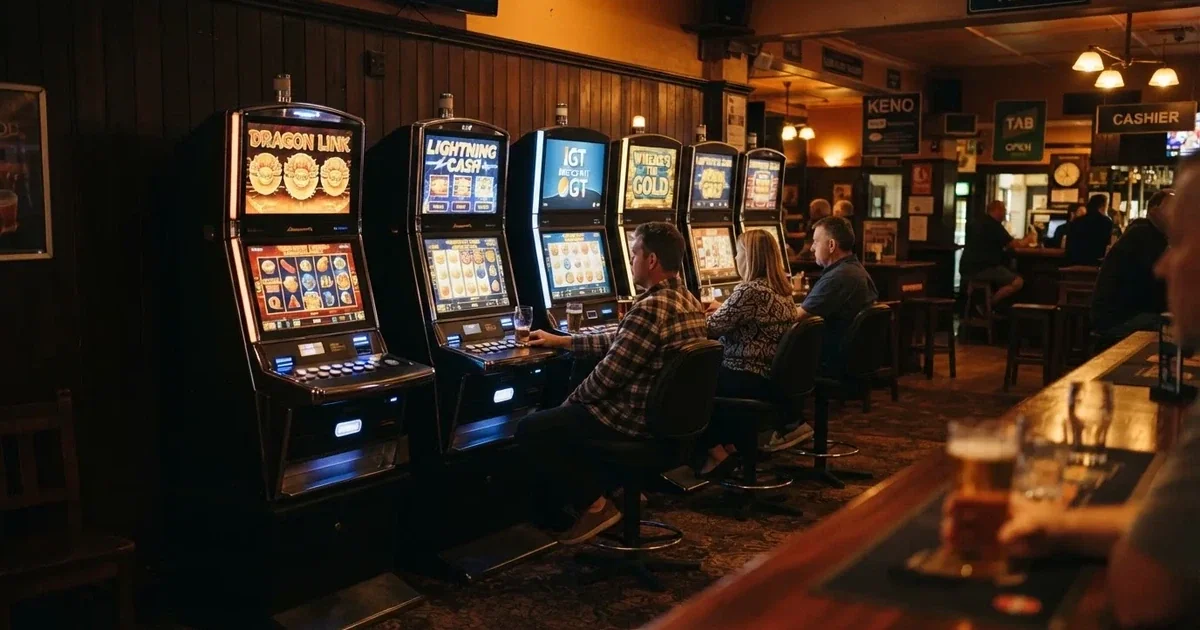
A punter searching for “pokies in South Australia” tends to land on one of two very different things. There is the licensed, land-based reality — Adelaide Casino, the state’s only casino, and the 471 hotels and clubs that hold gaming-machine entitlements across the rest of the state. And there is the offshore “online pokies” offer, which the ACMA has been actively warning, fining and blocking for years because no one in Australia is allowed to provide it. This page is about the first. The second is on the page too, not because it deserves a recommendation, but because it is what most of the search results pretend to be.
South Australia sets a minimum gaming-machine return-to-player of 87.5% and caps bets outside the casino at A$5.00 per spin. Adelaide Casino itself has no maximum-bet limit. Those two numbers do most of the explaining about why a player who wants the highest denomination action goes to one venue and why everyone else plays the suburban machines.
Table of Contents
- The legality shelf: what the Interactive Gambling Act actually does
- Responsible gambling: where a South Australian player gets help
- Land-based venues: what South Australia actually licenses
- Payments and payout speed: how money actually moves
- Paytables, mechanics and the 87.5% minimum
- The offshore brands: a write-up that explains rather than recommends
- How any shortlist of “best pokies in South Australia” actually gets put together
- Where the offshore case keeps slipping
- What “cashless pokies” means for a South Australian player
- A practical map of where the licensed play actually happens
- What “best paying” actually means in South Australia
- The comparator shelves: what South Australia’s numbers look like against the rest of the country
- What a South Australian punter actually does with this page
- Frequently asked questions
The legality shelf: what the Interactive Gambling Act actually does
Australia’s Interactive Gambling Act 2001 (the IGA), tightened by the Interactive Gambling Amendment Act 2017, makes it an offence to provide online casino games, online pokies or in-play betting to a person physically in Australia. No state or territory licenses online casino products. What is licensed is wagering on races and sporting events placed before the event, lotteries and keno — in practice administered through the Northern Territory Racing and Wagering Commission, which oversees 52 of Australia’s online bookmakers (Sportsbet, Bet365, Ladbrokes among them) from a single monthly meeting in Darwin. None of that extends to spinning a virtual reel for an Australian customer.
The ACMA enforces the IGA on the supply side. The individual player is not prosecuted — the law targets the operator — but an offshore site offers no Australian consumer protection, no complaints body and no recourse if a withdrawal stalls or is refused. A site can be blocked mid-session, and a blocked site does not refund the balance sitting on it.
The blocking rate since November 2019
The ACMA’s blocking programme began with its first request to Australian internet service providers in November 2019. By the round reported on 26 June 2026, a cumulative 1,751 illegal gambling and affiliate marketing websites had been referred for blocking, and more than 230 unlicensed services had left the Australian market since enforcement was strengthened in 2017. That’s roughly 250 websites blocked per year, or about five every week, averaged across the six-and-a-half-year programme — a steady attrition rather than a single crackdown. The most recent round alone added twelve names: 7Signs, ChromaBet, Donbet, Duospin, Freshbet, Slots Gem, Jacks Club, Lucky Start, Pointsbetz, Spinrise, Vinyl Casino and Wildsino. H2 Gambling Capital’s 2025 estimate puts annual Australian losses to illegal sites at about A$3.9 billion, with the share of gambling going through legal channels falling from 74% in 2021 to 64%.
What the 2026 reform changes
The Interactive Gambling Amendment (Gambling Reform) Bill 2026 passed Parliament on 19 August 2026. Its advertising and inducement measures commence on 1 January 2027. That is a law with a start date, not yet in force on a 2026 page — the IGA in its 2017 form is the regime that governs what an operator can do today, and what an Australian can be offered today.
Responsible gambling: where a South Australian player gets help
The state’s gambling regulator is Consumer and Business Services (CBS), a branch of the Attorney-General’s Department, which handles policy, licensing and compliance for betting, casinos, gaming machines and lotteries. In December 2018 South Australia abolished the Independent Gambling Authority and made the Liquor and Gambling Commissioner the state’s sole gambling regulator, consolidating what had been a two-body arrangement. The package of gambling-harm reforms giving South Australians stronger protections took effect on 3 December 2020.
The federal self-exclusion tool is BetStop, the National Self-Exclusion Register, live since August 2023. Its reach matters here: BetStop binds Australian-licensed online and phone wagering services. An offshore casino is not connected to it, so registering with BetStop does not stop an offshore site from accepting a deposit. For 24-hour support, the National Gambling Helpline is 1800 858 858 — free, around the clock — with chat available through Gambling Help Online.
A practical consequence: the help lines and registers that work for licensed wagering do not fully cover the offshore market, and that asymmetry is part of why the ACMA’s enforcement focuses on supply rather than on the player.
Land-based venues: what South Australia actually licenses
South Australia is, from a venue perspective, an Adelaide casino and a large pub-and-club estate. Outside Adelaide Casino the state had 11,672 gaming machines in 471 venues as of September 2023. Players lost about A$0.92 billion on those machines in 2022–23 — roughly A$497 per adult across the state. Adelaide Casino, by contrast, operates 950 gaming machines and 90 gaming tables under a single state licence and accounts for the rest.
Adelaide Casino: the one and only
South Australia’s only licensed casino sits in the heritage-listed Adelaide railway station on North Terrace, opened on 12 December 1985 under the state-owned Lotteries Commission, sold to SkyCity Entertainment Group in June 2000 and rebadged SkyCity Adelaide in April 2001 before reverting to the Adelaide Casino name in 2009. Between 2015 and 2021 a A$330 million Riverbank redevelopment added the EOS by SkyCity tower, with 120 hotel rooms and expanded gaming floors. The licence, formalised on 11 October 2013, extends the venue’s table-game monopoly to 30 June 2035 and permits expansion up to 200 gaming tables and 1,500 gaming machines subject to further redevelopment.
The casino is regulated under the Casino Act 1997, with CBS keeping a daily compliance presence focused on host-responsibility interactions with patrons — the front-of-house checks that decide whether someone showing signs of harm is asked to leave or referred to support services. There is no maximum-bet limit at Adelaide Casino, which is why a high-stakes player looking for the full-denomination experience ends up there and not in a suburban pub.
The pub and club estate
The 471 hotels and clubs outside Adelaide Casino are where most South Australians actually play. They operate under the state’s hotel and club entitlements and they are subject to the A$5.00 maximum bet per spin and the 87.5% minimum return-to-player. The 11,672-machine count for September 2023 puts South Australia well behind Queensland (21,122 machines in 351 venues as of October 2023) and gives a sense of the size of the suburban estate a local punter can walk into within a short drive.
A consequence of the smaller machine base: a venue that has the newest terminals, or that keeps its hours longer than the suburb average, is a more useful answer to “where are the best pokies near me” than a list of every licensed club. The A$5.00 cap, by contrast, means the pub-and-club estate is structurally a lower-denomination product than the casino floor.
What the ACMA has actually done to offshore brands advertising to Australians
The ACMA’s enforcement file is a clean register of who has been told to stop, and the file keeps growing. The table below names the operator behind each brand, the ACMA action, the date as published, and what research confirmed about each operator beyond the warning itself.
| Brand | ACMA action and date | Operator named by the ACMA | Subject support |
|---|---|---|---|
| RocketPlay | Formal warning, March 2026 (earlier to Dama N.V., May 2022) | Pulsup Ltd (Rocketplay) | — |
| Level Up Casino | Formal warning, May 2022 | Dama N.V. | Listings reference (Wikipedia, VGCCC) |
| Woo Casino | Formal warning, March 2025 | Dama N.V. | Listings reference (Wikipedia) |
| Spirit Casino | Formal warning, May 2025 | Dama N.V. | — |
| National Casino | Formal warning, July 2025 | Consolutetish S.R.L. | Listings reference (ABC, infrastructure.gov.au) |
| Bizzo Casino | Formal warning, July 2025 (earlier to TechSolutions, 2022) | Consolutetish S.R.L. | — |
| Ignition Casino | Formal warning, July 2025 | Bamboo Media | — |
| Instant Casino | Formal warning, February 2025 | EOD Code SRL | — |
| Jackbit | Formal warning, April 2026 | Ryker B.V. | — |
| Casino Intense | Formal warning, April 2025 | Sterplay Holding Ltd | Listings reference (ABC, ASGAM, CBS) |
| Sky Crown | Formal warning, September 2022 | Hollycorn N.V. (Sky Crown and Blue Leo) | Listings reference (Wikipedia) |
Two things the table does not show. First, online casino games cannot be licensed anywhere in Australia, whatever licence the site displays — Curacao, Anjouan and similar offshore authorisations do not make an online casino legal to provide to Australians. Second, “Subject support” reflects only what research could confirm from outside the operator’s own marketing — for most of the list there is no independent data, which is itself a finding.
Payments and payout speed: how money actually moves
For a licensed venue the question is mostly cash and EFTPOS: notes and coins into the machine, a printed ticket for any credit balance, the ticket redeemed at the cashier or a ticketing kiosk. There is no payout speed to “wait for” in the online sense — the machine either pays or it doesn’t, and the win is registered before the player walks away. Adelaide Casino has a higher-value redemption process for larger tickets, but it is still same-day and on-premises.
For an Australian considering an offshore site, the payment geometry inverts. The IGA does not ban Australians from depositing, but it does ban operators from offering credit cards, credit-related products and digital currency as a payment method for any licensed online wagering — that prohibition took effect on 11 June 2024, with penalties of up to A$247,500 per breach. The legal deposit routes for licensed wagering are debit card, bank transfer, PayID/Osko and BPAY. An offshore casino asking for a credit card or a crypto deposit is operating outside the Australian rules entirely, and the consumer protection that applies to a transaction with a licensed Australian wagering provider does not apply.
The payout side compounds this. There is no standard settlement window research can verify for any of the eleven brands in the table above, because none is licensed to operate in Australia and none is subject to an Australian complaints regime. The withdrawal times a player reads about on an affiliate page are marketing copy; the actual record is the ACMA’s enforcement file. A useful test: if a brand cannot point to a licence that lets it take an Australian bet, the time it takes to pay out a winner is irrelevant, because the winner has no Australian place to complain when it doesn’t.
Paytables, mechanics and the 87.5% minimum
The minimum return-to-player rate of 87.5% applies to every gaming machine in South Australia outside Adelaide Casino. In practice most pub and club machines return between 87.5% and 92%, with the exact figure published on each machine’s help screen and on the venue’s Player Information brochures. Adelaide Casino is not bound by that floor — its games are licensed under the Casino Act 1997 and the state has set no minimum RTP for the casino floor.
The A$5.00 maximum bet per spin outside the casino is a hard ceiling. It is what makes the suburban estate a structurally different product from the casino: the same game at the same denomination is available at both, but the same player cannot put the same money per spin into both. Adelaide Casino’s table games also have no maximum-bet limit, which is why the high-stakes play concentrates at the casino and the lower-denomination play concentrates at the clubs.
The cashless shift
South Australia, like other Australian states, has been rolling out cashless gaming-card technology across the pub and club estate. The mechanism replaces anonymous cash insertion with a card linked to a player account, which makes it possible to enforce pre-commitment limits at the venue level and to track play across multiple venues under the one identity. The reform package that took effect on 3 December 2020 set the regulatory basis; the rollout continues. A cashless card removes a player anonymity that the suburban machines previously allowed, and any punter who relied on that anonymity will notice the change first.
The 24-hour question
The “24-hour pokies near me” search is mostly wishful thinking. South Australian pubs and clubs are bound by their liquor-and-gaming licences, which impose trading hours that generally align with venue trading hours — most close in the small hours of the morning, even if a few in the Adelaide CBD keep extended licences. Adelaide Casino runs near-continuous hours across its gaming floors. For a player who actually wants a machine at 3am, the realistic answer is the casino, not a suburban club.
The offshore brands: a write-up that explains rather than recommends
The eleven brands below are not reviewed for value, payouts or game selection. There is nothing research could verify on those fronts for any of them, because none holds an Australian licence and none is connected to the Australian regulatory framework that would make such figures verifiable. What research did verify is the ACMA’s own file: each brand has been the subject of a formal warning to the operator behind it, in the date shown. The write-ups below say what the warning said, who the operator named by the ACMA actually is, and what kind of player — if any — would still walk into the door knowingly.
RocketPlay
The ACMA issued a formal warning to Pulsup Ltd over RocketPlay in March 2026. The same brand had already been caught up in an earlier warning to Dama N.V. in May 2022 covering six casino brands. RocketPlay is the only brand on this list with a warning published against the operator under its current trading name. Research found no independent listings data on its game catalogue or payment terms; the only sources for those are the brand’s own pages and affiliates. Online casino games cannot be licensed anywhere in Australia, whatever licence RocketPlay’s footer displays.
Level Up Casino
The ACMA issued a formal warning to Dama N.V. in May 2022 covering six casino brands, of which Level Up Casino was one. Dama N.V. is the same operator behind three other brands on this list — Woo Casino, Spirit Casino and the original RocketPlay warning — which means a searcher interested in any one of them is, in practice, dealing with the same operator. Independent listings (Wikipedia, the Victorian Gambling and Casino Control Commission) reference the brand; payout terms and game RTPs are not verified by any Australian source. Thea’s verdict is the same as it is for every brand in the operator’s stable: an offshore Dama N.V. casino carries no Australian consumer protection and no Australian complaints route.
Woo Casino
The ACMA issued a further formal warning to Dama N.V. over Woo Casino in March 2025 — three years after the original 2022 warning to the same operator. The repeat warning is a useful signal: a first formal warning did not change the operator’s behaviour toward Australian customers, and the second came with the operator having had time to comply. Wikipedia references the brand; bonus terms and withdrawal windows are not independently verified. A player who has decided to use an offshore casino should at least pick one that is not on its second ACMA warning.
Spirit Casino
The ACMA issued a formal warning to Dama N.V. over Spirit Casino in May 2025, again as a follow-on to the original 2022 warning to the operator. No independent listings data is available beyond what Dama N.V.’s own properties publish. Spirit Casino sits in the same operator cluster as Woo Casino and Level Up Casino, and the ACMA file treats them as a single compliance problem. The compliance file is the only signal that is verifiable.
National Casino
The ACMA issued a formal warning to Consolutetish S.R.L. over National Casino in July 2025. ABC News and the federal infrastructure.gov.au portal reference the brand in passing; like every other entry on this list, the game’s RTPs and the withdrawal times are not verified by any Australian source. National Casino is, on the verifiable record, an offshore casino that the ACMA told to stop offering its services to Australians and that has no Australian complaint route if a withdrawal is refused.
Bizzo Casino
The ACMA issued a formal warning to Consolutetish S.R.L. over Bizzo Casino in July 2025, and Bizzo had already been the subject of a 2022 formal warning to TechSolutions (CY) Group Limited and TechSolutions Group N.V. — the same operator structure under two different parent names within three years. The repeat naming matters because it tells a player who has looked up the brand once and seen “ACMA warning” that the warning is not a one-off: the brand has been on the ACMA’s radar twice under two different corporate shells. No independent listings data is available.
Ignition Casino
The ACMA issued a formal warning to Bamboo Media over Ignition Casino in July 2025. Research did not surface independent listings data on the brand’s game library or payment terms — the only published sources are the brand’s own pages and affiliates. Ignition Casino’s status under Australian law is the same as the other ten brands in the table: an offshore operator with no Australian consumer protection and a record of being told to stop offering services to Australian customers.
Instant Casino
The ACMA issued a formal warning to EOD Code SRL over Instant Casino in February 2025. The brand markets itself as an offshore casino with a crypto-friendly payment stack, which is itself the kind of payment stack the IGA’s 11 June 2024 prohibition covers for any Australian-licensed wagering — meaning the payment offering sits outside Australian rules even before the operator’s licence status is considered. Research found no independent listings data on the brand.
Jackbit
The ACMA issued a formal warning to Ryker B.V. over Jackbit and CasinOK in April 2026 — the most recent warning on the table, and a reminder that the ACMA’s enforcement tempo has not slowed. Ryker B.V. is named in two related entries on the file, which is consistent with an operator running multiple brands from the same corporate base. No independent listings data is available on Jackbit.
Casino Intense
The ACMA issued a formal warning to Sterplay Holding Ltd over Casino Intense in April 2025. Independent listings data — from ABC News, ASGAM and the South Australian CBS — reference the brand, though as part of broader offshore-industry reporting rather than as an endorsement of its terms. Like every other entry on the list, Casino Intense is an offshore casino that holds no Australian licence and offers no Australian consumer protection.
Sky Crown
The ACMA issued a formal warning to Hollycorn N.V. over Sky Crown and Blue Leo in September 2022. Sky Crown sits toward the older end of the ACMA’s enforcement file — it predates the bulk of the 2025 and 2026 warnings — and the only listings reference research confirmed is a Wikipedia entry. Bonus terms and withdrawal windows are not independently verified. The ACMA’s record on Hollycorn N.V. is the only signal that is verifiable.
How any shortlist of “best pokies in South Australia” actually gets put together
A shortlist of pokies venues in South Australia has to do four things well, and the order of those four things is what separates a useful list from a marketing list.
Licence status first. The single non-negotiable criterion is that the venue actually holds a South Australian gaming-machine entitlement or, in the case of the casino, is the sole licensee under the Casino Act 1997. Anything else is not a South Australian pokies venue, whatever its marketing says.
Return-to-player second. The 87.5% minimum applies outside the casino, and most pub and club machines sit between 87.5% and 92%. A venue with a published RTP at the upper end of that range is doing more for a player’s dollar than one at the floor, all else equal.
Denomination and bet cap third. The A$5.00 maximum bet per spin outside the casino means a suburban venue is a structurally lower-stakes product than Adelaide Casino, where there is no maximum bet. The two products serve different bankrolls and the comparison between them is not “which is better” but “which fits the bankroll”.
Trading hours and accessibility fourth. Venue trading hours, car parking, public transport access and whether the venue has a dedicated gaming lounge versus machines scattered through a pub all matter to a player who actually turns up. A venue that closes at midnight is not a 24-hour venue; a venue with 60 machines and a poorly ventilated gaming lounge is a different experience from a venue with 40 machines and a quiet room.
The offshore sites do not clear criterion one. They are not licensed venues in South Australia. They are also not licensed anywhere in Australia. That is the only criterion that needs to clear for a South Australian pokies list, and they fail it.
Where the offshore case keeps slipping
The temptation, for a searcher who has typed “best pokies in South Australia 2026” into a search engine, is to assume the top results are the right answer. They are not. The top results are the brands that have paid affiliates to rank for the term, and a meaningful share of those brands are on the ACMA’s enforcement file. A 2025 H2 Gambling Capital estimate put the legal-channel share of Australian gambling at 64%, down from 74% in 2021, which means roughly A$3.9 billion a year is now flowing to illegal offshore sites.
The mechanism is simple. An offshore operator can advertise “pokies” and “AUD” deposits and a Curacao or Anjouan licence badge and reach an Australian punter through a search result or a social media ad. The Interactive Gambling Act makes that provision unlawful. The ACMA’s enforcement file shows the same operator names coming back under new brand names year after year — Dama N.V. has at least four entries on the current list, TechSolutions has two, Consolutetish S.R.L. has two — and what the file shows is not a market that responds to formal warnings.
For the punter, the practical consequence is that the search result for “best pokies” is, more often than not, the search result for an offshore brand on the ACMA’s warning list. The licensed alternative is the local pub or club — less convenient to reach from a search engine, but bound by a regulator the punter can actually ring.
What “cashless pokies” means for a South Australian player
South Australia is partway through a state-by-state shift to cashless gaming cards, where a player inserts a card instead of cash and the machine debits the card balance. The functional changes for a player are three.
The card is linked to identity. The anonymous cash insertion that used to be the default is replaced by an account with a name on it, which means venue staff and the regulator can see the player’s history across the venue and, with the right integrations, across other venues too.
Pre-commitment becomes enforceable. With cash, a player who decided to stop at A$200 had to physically stop. With a card and a limit set on the account, the machine enforces the limit, which is the whole point of the policy and the reason it is being rolled out.
Self-exclusion registers work at the venue level. A player who has self-excluded from a venue cannot be recognised by name at a cash machine; a cashless card flagged in the system is refused at the door. BetStop, the federal register, covers online and phone wagering — it does not cover the venue floor — so the venue-level cashless system is where self-exclusion actually happens for a pub-and-club player.
Trading hours in practice
A pub with a standard hotel licence will trade its gaming machines during its liquor-trading hours, which usually means late morning to midnight, with some CBD venues trading later. A 24-hour gaming floor in South Australia is, in practice, the Adelaide Casino. A suburban club that advertises itself as “open 24 hours” usually means the bar is open and the gaming room is not.
A practical map of where the licensed play actually happens
The licensed play in South Australia happens in three layers, and the layers serve different players.
Adelaide Casino. 950 gaming machines, 90 gaming tables, no maximum bet, regulated under the Casino Act 1997. The high-denomination play, the table games and the only 24-hour gaming floor in the state all sit here. The licence runs to 30 June 2035 and the venue is permitted to expand up to 1,500 machines.
The CBD and inner-suburban pub and club estate. A few hundred of the 471 venues outside the casino sit close enough to the Adelaide CBD to be reachable on public transport and on foot. These are the venues a player who lives in or is visiting Adelaide will hit first, and the density of machines means a competitive market — venues have to offer something beyond the regulatory floor to keep custom.
The suburban and regional estate. The remaining 471 venues are spread across suburban Adelaide and regional South Australia, and each operates under the same A$5.00 maximum bet and 87.5% minimum RTP. The product is structurally similar across this layer; what differs is the size of the gaming lounge, the trading hours and the mix of machines.
The 24-hour question, restated
The licensed answer is: Adelaide Casino, almost continuously. The suburban club estate does not run 24-hour gaming in the way a Melbourne or Sydney CBD venue does, and a searcher who turns up at a suburban club at 2am is likely to find the gaming room closed. The phrasing in the search results that promises a 24-hour suburban venue is, in most cases, an offshore casino dressed up as a local one.
What “best paying” actually means in South Australia
“Best paying” pokies in South Australia is a phrase with two distinct meanings. The first is the return-to-player percentage published on each machine’s help screen — that figure is between 87.5% and about 92% for most pub and club machines and higher again for some casino titles. The second is the “maximum cash payout” figure, which is the largest single cash ticket a machine can issue before staff intervention is required. Both figures are required to be displayed on the machine or in the Player Information brochure at the venue.
A player who wants the highest RTP plays machines that publish the upper end of the range and avoids machines at the floor. A player who wants the largest single payout plays the higher-denomination machines, where the maximum ticket is larger in absolute terms even at a similar RTP. The two goals pull in different directions, and a venue that emphasises one over the other is doing so for a reason.
The comparator shelves: what South Australia’s numbers look like against the rest of the country
A useful comparison for a South Australian punter is what the other states are doing on the same measures.
Queensland had 21,122 gaming machines in 351 venues as of October 2023 — almost double the South Australian machine count and a third fewer venues, which means Queensland venues are larger on average. The Star Brisbane at the A$3.6 billion Queen’s Wharf precinct began a staged opening on 29 August 2024 after Treasury Casino closed on 25 August 2024 to make way for it. Star Entertainment Group, the lead partner on Queen’s Wharf, was found unsuitable to hold its Queensland casino licences in late 2022 after an independent review by former Court of Appeal judge Robert Gotterson concluded it had misled regulators and failed its anti-money-laundering duties. Star was fined A$100 million on 9 December 2022, with a 90-day suspension of its Treasury Brisbane and Star Gold Coast licences deferred to 1 December 2023 to allow remediation. The Queen’s Wharf precinct opened in August 2024 with that licence position still under active scrutiny.
Casino Canberra, in the Canberra CBD, was the first legal casino in the ACT, built on land excised from Glebe Park under a 99-year lease. It has no hotel, no theatres and no retail — a much smaller operation than either Adelaide Casino or the Star Brisbane, reflecting the ACT’s smaller domestic market.
Brisbane’s Treasury Casino, before its August 2024 closure, occupied a three-level gaming emporium of 80 gaming tables and over 1,300 gaming machines, plus a hotel, six restaurants, five bars and a nightclub. The Star Brisbane at Queen’s Wharf was developed jointly by Star Entertainment Group and Hong Kong-based Chow Tai Fook Enterprises.
The point of the comparator is not that South Australia is bigger or smaller — it is that the structural choices (one casino, a regulated pub-and-club estate, an enforced maximum bet outside that casino) are consistent with the choices other states have made, and that the choice to keep the suburban product at A$5.00 per spin and 87.5% RTP is a deliberate consumer-protection decision rather than an oversight.
What a South Australian punter actually does with this page
The licensed answer to “best pokies in South Australia” is one of three things depending on the punter’s bankroll and what they want from the session.
A high-stakes player looking for the largest bets and the only true 24-hour floor plays Adelaide Casino, where there is no maximum bet and 950 machines plus 90 tables. The trade-off is that the casino floor is a single venue, with all that implies about concentration of play.
A suburban punter looking for the licensed product within a short drive plays the local pub or club estate, accepts the A$5.00 cap and the 87.5% RTP floor, and chooses between venues on the published RTP, the size of the gaming lounge and the trading hours.
A punter who has decided to use an offshore casino despite the law has the ACMA’s file as a starting point. Every brand on this page is on it, and the ACMA’s record of repeat warnings to the same operators (Dama N.V., Consolutetish S.R.L., TechSolutions) is the closest thing to a market signal the offshore sector generates.
The help lines, one more time
The National Gambling Helpline is 1800 858 858, free and 24 hours a day. Gambling Help Online provides chat-based support. BetStop, the National Self-Exclusion Register, binds Australian-licensed online and phone wagering services and does not cover the offshore sector. CBS, the South Australian regulator, takes compliance and complaints on the licensed pub-and-club estate and on Adelaide Casino.
Frequently asked questions
Which venues in South Australia are licensed to operate pokies?
South Australia licenses electronic gaming machines through two channels. Adelaide Casino, operating as SkyCity Adelaide until 2009 and now back to the Adelaide Casino name, is the sole licensed casino under the Casino Act 1997 and operates 950 gaming machines and 90 gaming tables. Outside the casino, 471 hotels and clubs held gaming-machine entitlements as of September 2023, with 11,672 machines between them. The list of licensees is maintained by Consumer and Business Services, the state’s gambling regulator. Anything else that markets itself as a South Australian pokies venue is operating outside the state’s licensing framework, regardless of what licence its footer displays.
Are pokies in South Australia available around the clock?
In practice, only Adelaide Casino runs a near-continuous gaming floor. The suburban pub and club estate trades gaming machines during the venue’s liquor-trading hours, which for most venues means late morning to midnight, with some CBD venues trading later. A venue advertising itself as “open 24 hours” usually means the bar is open and the gaming room is not. The 24-hour pokies search tends to surface offshore casino brands, none of which is licensed to operate in Australia regardless of how the page is presented.
What identification do venues in South Australia require before letting someone play pokies?
The minimum age is 18 across Australia, and a licensed venue will refuse entry to anyone who cannot produce identification on request. Cashless gaming cards, which are being rolled out across the state, link play to a named account rather than to anonymous cash insertion. Adelaide Casino, as a casino, has more detailed identification requirements and a daily CBS compliance presence focused on host-responsibility interactions, which includes the kind of identification and intervention checks a pub does not run. The identification requirement is part of the harm-minimisation regime, not just an age check.
Can visitors to South Australia use self-exclusion schemes at local pokies venues?
Visitors can use the National Gambling Helpline on 1800 858 858 and Gambling Help Online, both of which operate nationally and are not state-limited. BetStop, the National Self-Exclusion Register, binds Australian-licensed online and phone wagering services, and does not cover the venue floor at all. State-level self-exclusion is enforced through the cashless card system being rolled out across South Australian venues, which means a self-excluded player is identified by name at the venue they have excluded from. An interstate self-exclusion does not automatically transfer to a South Australian venue, and a visitor who has self-excluded at home should let the venue know on arrival.
How does the payout percentage on South Australia pokies compare with other Australian cities?
South Australia sets a minimum return-to-player of 87.5% on gaming machines outside the casino, and the state’s actual figures cluster between 87.5% and about 92% depending on the machine and the venue. Adelaide Casino is not bound by that floor and can run titles at higher RTPs. Other Australian states set their own floors — Queensland, New South Wales and Victoria are on similar 85-90% minimums — so the practical difference is small at the regulatory floor and meaningful only at the upper end of the range. The bigger structural difference between South Australia and, for example, New South Wales is the A$5.00 maximum bet per spin that South Australia enforces outside the casino, which is a different kind of consumer protection.
Is it legal for an online casino to advertise ‘pokies’ in South Australia the same way a pub or club does?
No. The Interactive Gambling Act 2001, as tightened by the Interactive Gambling Amendment Act 2017, makes it an offence to provide online casino games, online pokies or in-play betting to a person in Australia, and no state or territory licenses online casino products. The ACMA enforces the prohibition on the supply side through formal warnings, blocking requests to ISPs and referrals. The Interactive Gambling Amendment (Gambling Reform) Bill 2026, which passed Parliament on 19 August 2026, adds advertising and inducement measures that commence on 1 January 2027 — which is why a 2026 page cannot yet point to those provisions as current law. The practical state of play today is that an online casino advertising “pokies” to an Australian is operating against the IGA in its current form, and the ACMA’s enforcement file is the running record of which operators have been told so.