
Best live dealer casino online Australia in 2026: a market the Interactive Gambling Act does not allow
Most pages comparing live dealer casinos are built to deliver a top ten. This one is built to deliver something less satisfying and more useful. Online casino games — live dealer blackjack, live roulette, live baccarat and the rest — cannot be lawfully offered to anyone in Australia under the Interactive Gambling Act 2001. No state or territory issues a licence for them. The Australian Communications and Media Authority has spent 2026 issuing formal warnings, blocking websites and naming the operators behind them, and the shortlist of “best” operators a reader sees on most review pages is, in practice, a shortlist of services the ACMA itself has acted against. The right comparison is therefore not between operators; it is between the thing readers are being sold and the law that prohibits selling it to them.
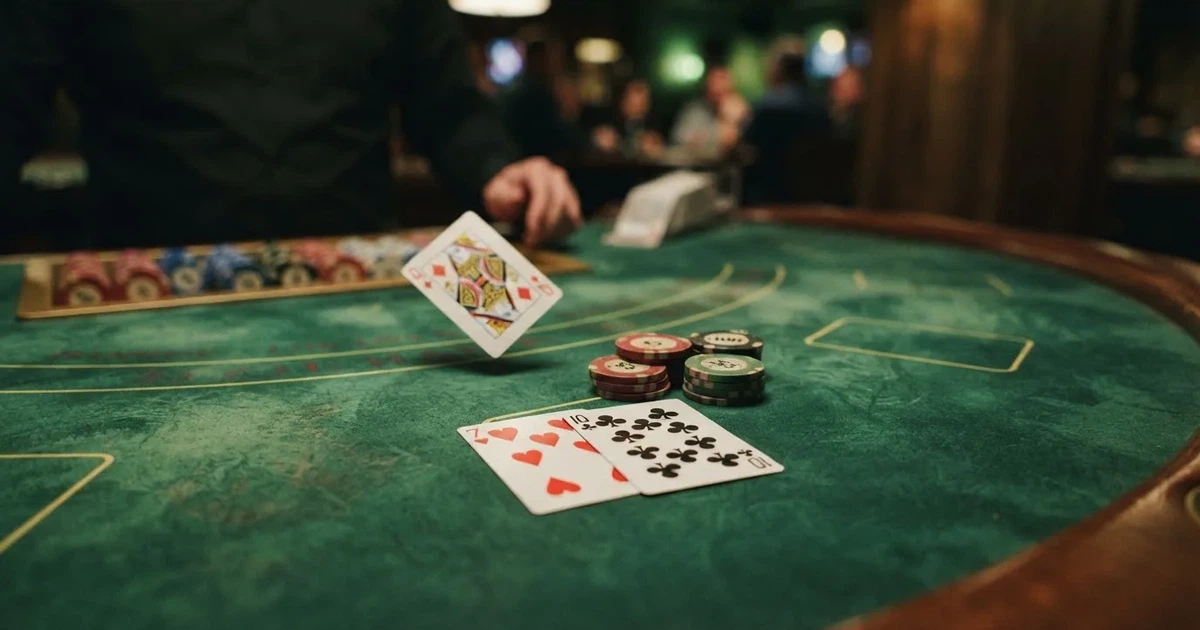
Currency and licensing data current as of 29 October 2026, cross-checked against the Australian Communications and Media Authority’s register of formal warnings and blocking actions.
Table of Contents
- Legality and regulation in Australia
- Responsible gambling in a market built offshore
- Cryptocurrency, anonymity and offshore live dealer casinos
- Bonuses and the cost of clearing them
- How live dealer tables actually work
- Comparison of brands the ACMA has acted against
- The eleven brands the ACMA has warned
- What an Australian reader can actually use
- The arithmetic the ACMA’s blocking record actually does
- Frequently asked questions
Legality and regulation in Australia
The Interactive Gambling Act 2001, tightened by the Interactive Gambling Amendment Act 2017, makes it a civil offence to provide an interactive casino-style gambling service — live dealer blackjack, live roulette, live baccarat, live game shows — to a person physically in Australia. The prohibition targets the provider, not the player. A punter clicking through to an offshore site does not face prosecution, but the operator does, and that distinction does the work the rest of this page is built on: a site offering live dealer play to an Australian is operating outside Australian law, regardless of the licence it prints in its footer.

A licence displayed by an offshore operator — Curaçao, Anjouan, Kahnawake, the Isle of Man — describes what that operator is permitted to do in the jurisdiction that issued it. It does not describe what it is permitted to do in Australia. The IGA does not recognise those licences, the ACMA does not enforce them, and a balance held with one of those operators carries no Australian consumer protection behind it. The footer is a marketing artefact, not a permission.
The ACMA’s enforcement record is the practical evidence of how the prohibition lands. According to the authority’s own reporting in June 2026, a cumulative total of 1,751 illegal gambling and affiliate marketing websites had been blocked since the first blocking request in November 2019, and more than 230 unlicensed gambling services had left the Australian market since 2017. A blocking round reported on 26 June 2026 alone asked Australian internet service providers to block twelve more domains — 7Signs, ChromaBet, Donbet, Duospin, Freshbet, Slots Gem, Jacks Club, Lucky Start, Pointsbetz.com, Spinrise, Vinyl Casino and Wildsino. The pace has not slowed.
A reader weighing one of these sites against another is, in effect, weighing two unlawful services. The question is not which one is licensed; both are not licensed in any sense an Australian court would accept. The question is which one has drawn the regulator’s attention recently, which one has a track record on withdrawals when a balance gets large, and which one will still be reachable next month.
Responsible gambling in a market built offshore
BetStop — the National Self-Exclusion Register, live since August 2023 — is the central piece of player-protection infrastructure available to Australians online. It binds every Australian-licensed wagering service: online bookmakers licensed in the Northern Territory, the lotteries, the licensed in-venue wagering operations. A person who registers with BetStop is excluded from those services for a chosen period, and the licensed operator must enforce it.

BetStop does not bind an offshore live dealer casino. A site licensed in Curaçao and offering live blackjack to an Australian customer is not connected to the National Self-Exclusion Register, has no obligation to honour an exclusion request, and has no Australian complaints body the excluded player can appeal to. Self-exclusion on such a site is whatever the site’s own account tools happen to enforce, and the account can usually be reopened by email. This is the practical shape of the gap: the tool exists, and the operators most of the comparison pages funnel readers toward are the ones the tool cannot reach.
The National Gambling Helpline, 1800 858 858, is free and operates around the clock. Gambling Help Online, run by the same network, offers web chat. Both are available to any Australian regardless of where they play, and both are the right first call for anyone who feels their gambling has moved past what they want it to be. The helpline does not require the caller to have played at a licensed venue. The reverse is the issue: a person playing exclusively at offshore sites has fewer upstream safeguards to fall back on when they decide to stop.
H2 Gambling Capital’s 2025 estimate places losses to illegal gambling sites at about A$3.9 billion a year, with the share of gambling going through legal Australian channels falling from 74 per cent in 2021 to 64 per cent. The trend is the inverse of what consumer-protection logic would predict: as offshore marketing has become more aggressive, the lawful channels have lost share. The reasons given in industry reporting are familiar — bigger bonuses, faster sign-up, no verification friction — and the cost is borne by the people who play at sites that, when a withdrawal stalls, have no Australian ombudsman to write to.
Cryptocurrency, anonymity and offshore live dealer casinos
Crypto deposits are the bridge most offshore live dealer casinos use to onboard Australian customers without a credit card, and the ban matters here. Since 11 June 2024, credit cards, credit-related products and digital currencies have been banned as payment for licensed online wagering in Australia, with penalties for operators up to A$247,500. The legal deposit routes for a licensed Australian wagering account are debit card, bank transfer, PayID/Osko and BPAY. A live dealer casino asking an Australian for a Bitcoin, Ethereum or USDT deposit is therefore operating outside the Australian rules on two counts: the service is prohibited, and the payment method that would let it move money is also prohibited for any licensed equivalent.
The anonymity argument rarely survives contact with the mechanics. Bitcoin transactions are pseudonymous, not anonymous — the address history is permanent and the exchange on-ramps used to acquire it are typically KYC-gated under Australian anti-money-laundering law. A withdrawal to a crypto wallet is not a withdrawal outside the system; it is a withdrawal into a system an Australian bank may flag on the way back in. The “anonymous play” pitch is, more often than not, “play without the consumer protections an Australian would otherwise have”.
There is also a category distinction a reader should keep in mind. Bitcoin live dealer casinos and crypto live dealer casinos in the comparison sense are still live dealer casinos. They are not a separate, lightly-regulated product. They carry the same IGA exposure, the same offshore-licence caveat, the same lack of recourse on a stuck withdrawal, and the same disconnection from BetStop. The only thing the cryptocurrency angle adds is a payment method that makes it easier for the operator to receive funds and harder for the player to dispute the charge.
Bonuses and the cost of clearing them
Live dealer casino bonuses are usually structured as a percentage match on the first deposit, with a wagering requirement — sometimes called a playthrough or turnover multiplier — attached. A 100 per cent match up to A$500 with a 40x wagering requirement on the bonus means a A$500 bonus produces A$20,000 of required turnover before the bonus and any winnings from it become withdrawable. The wagering requirement is the headline number, and almost every bonus carries one.
The arithmetic is unforgiving. A$20,000 of turnover on a live dealer blackjack table, even at a flat A$5 per round, is 4,000 hands. At Evolution’s stated dealing pace — roughly fifty to sixty hands per hour on a standard blackjack table — that is seventy to eighty hours of play, played at a house edge of around 0.28 per cent under optimal play and closer to 1.5 per cent under realistic play with the strategy mistakes every casual player makes. At a 1 per cent house edge across A$20,000 of wagering, the expected loss during the clearing phase alone is A$200, before the deposit that produced the bonus is counted. The bonus is not free money. It is a marketing instrument that recoups its headline value several times over through the wagering it requires.
Game weighting is the second mechanism that quietly shrinks a bonus. Most live dealer welcome bonuses contribute only a fraction of each wager to the playthrough — 10 per cent is a common figure for table games, where the house edge is low and bonus abuse is hard to police. A 100 per cent match at 40x with 10 per cent weighting is functionally a 400x requirement, and the bonus stops being worth claiming once the reader sees the weighting clause. A few operators exclude live dealer play from bonus clearing entirely. The fine print is the part of the offer that decides whether it is worth anything.
A maximum cashout cap closes the door from the other side. A bonus advertised as “up to A$5,000” with a max cashout of 5x the deposit will return at most A$2,500 on a A$500 deposit, regardless of how the wagering plays out. The advertised ceiling and the withdrawable ceiling are different numbers, and the latter is the one that matters. None of the brands named in the ACMA register publish their full bonus terms in a form a reviewer can audit without an account, which is itself a fact about the offers.
How live dealer tables actually work
A live dealer casino streams real-time video from a studio or a land-based casino floor to the player’s screen. The dealer is human, the cards and roulette wheel are physical, and the result is captured by optical character recognition cameras and sent as data to the player’s client. The technology is what makes the experience feel different from a standard online casino: the player sees the shoe being dealt, hears the table chat, watches the ball settle, and only then sees the result credited to their balance. The dealer cannot influence outcomes any more than a dealer in a physical casino can — the underlying probabilities are baked into the game — but the visual continuity is what the format sells.
Evolution, the dominant supplier of live dealer content, was founded in 2006 by Jens von Bahr and Fredrik Österberg. It reached 100 live tables at its Riga studios in 2013, then the largest single-site casino operation in Europe, and opened a Malta studio in 2014. Evolution completed its acquisition of NetEnt on 1 December 2020 and now operates the NetEnt, Red Tiger, Big Time Gaming, Nolimit City and Ezugi brands alongside its own. According to the company’s own published figures, more than 700 gambling platforms worldwide offer its live casino games, streamed continuously from its studios. The supplier side of the market is concentrated, and most of the comparison lists a reader sees on review pages are, underneath the brand names, offering some subset of the same Evolution catalogue.
Baccarat, blackjack and roulette are the three games every live dealer casino carries. Each has a house edge small enough to look respectable and large enough to make the casino’s money over volume. In baccarat, the edge is 1.06 per cent on the Banker bet, 1.24 per cent on the Player bet and 14.36 per cent on the Tie — a Tie bet at 14.36 per cent is one of the worst bets in any casino, live or otherwise, and the page is the place to say so. The game itself dates in disputed origins to 19th-century France or 15th-century Italy; punto banco, the version played today, was developed in Havana during the 1940s and is dealt from a shoe of six or eight decks.
Blackjack’s optimal house edge is around 0.28 per cent under liberal Las Vegas Strip rules — dealer stands on soft 17, double on any two, double after split, resplit aces, late surrender — and around 0.43 per cent under Atlantic City rules. In practice, the edge the player faces is closer to 1 to 2 per cent, because realistic play includes the strategy mistakes every casual player makes. The game itself was described in Miguel de Cervantes’ story written around 1601-1602, formal British rules followed in 1800, and the modern name is credited to prospectors during the Klondike Gold Rush of 1896-99. The variants on offer at any live dealer casino — Spanish 21, Double Exposure, Blackjack Switch, Super Fun 21 — each change the house edge in ways the table limits do not advertise.
In roulette, the house edge is set by the wheel. A European single-zero wheel gives the house 2.7 per cent; an American double-zero wheel gives it 5.26 per cent. Live dealer roulette is overwhelmingly European, but the live game-show formats that have proliferated since 2020 — Dream Catcher, Monopoly Live, Crazy Time — sit on different maths again, often closer to a slots-style house edge in the 3 to 5 per cent band but with a multiplier mechanic that can push individual outcomes much higher. The format is entertainment, and the entertainment pricing is what it is.
Craps, less common in live dealer form than baccarat or blackjack, has a Pass/Come house edge of 1.41 per cent, Don’t Pass/Don’t Come 1.36 per cent, and Any Craps 11.11 per cent. The come-out roll wins on 7 or 11, loses on 2, 3 or 12, and any other number becomes the point. Australian live dealer casinos offer craps rarely; the audience is smaller and the table real estate is better spent on blackjack variants.
In Australia, the table games a reader can play lawfully are not the ones listed above. Crown Melbourne offers three baccarat variants — Traditional Baccarat, Crown Baccarat and 2 to 1 Baccarat — under rules approved by the Victorian Gambling and Casino Control Commission, which replaced the VCGLR as Victoria’s casino regulator on 1 July 2022. Under section 66 of the NSW Casino Control Act 1992, a casino operator must not permit a game such as baccarat to be played in NSW unless the game and its rules have been approved by the regulator, and the operator must make a copy of the approved rules available to patrons on request. The legal live dealer tables in Australia are the ones at Crown Melbourne, Crown Perth, Crown Sydney, The Star Sydney and The Star Gold Coast, and the rest of this page.
Comparison of brands the ACMA has acted against
The brands in the table below are not a recommended shortlist. Each is a brand the ACMA itself has issued a formal warning to, on the record, for offering prohibited interactive gambling services to Australians. The comparison is therefore not between lawful options; it is between unlawful ones, ranked by the regulator’s own attention.
| Brand | ACMA action and date | Operator named by the ACMA | Subject support |
|---|---|---|---|
| RocketPlay | Formal warning, March 2026 (Pulsup Ltd); earlier warning, May 2022 (Dama N.V.) | Pulsup Ltd | — |
| Level Up Casino | Formal warning, May 2022 | Dama N.V. | Listings refer to BGaming content |
| Woo Casino | Formal warning, March 2025 | Dama N.V. | — |
| Spirit Casino | Formal warning, May 2025 | Dama N.V. | — |
| National Casino | Formal warning, July 2025 | Consolutetish S.R.L. | Listed in background sources |
| Bizzo Casino | Formal warning, July 2025 (Consolutetish S.R.L.); earlier warning, 2022 (TechSolutions) | Consolutetish S.R.L. | — |
| Ignition Casino | Formal warning, July 2025 | Bamboo Media | — |
| Instant Casino | Formal warning, February 2025 | EOD Code SRL | — |
| Jackbit | Formal warning, April 2026 | Ryker B.V. | — |
| Casino Intense | Formal warning, April 2025 | Sterplay Holding Ltd | Listings appear in third-party directories |
| Sky Crown | Formal warning, September 2022 | Hollycorn N.V. | — |
Every brand in the table is unlawful for an Australian reader. The table is what an honest comparison looks like when the comparison the reader thought they wanted cannot be made lawfully. A reader in Australia choosing between these is choosing between eleven prohibited services, and the only real distinction the regulator’s record gives is the date the ACMA last looked at them.
The eleven brands the ACMA has warned
RocketPlay
Pulsup Ltd was the operator named in an ACMA formal warning issued in March 2026 over Rocketplay.com.au. The brand had already been the subject of an earlier warning in May 2022, when Dama N.V. was named as the operator across six brands including RocketPlay. Two formal warnings over a brand, separated by four years, is the ACMA’s way of saying the first warning did not produce a change in conduct. The brand’s Australian exposure is not theoretical.
Level Up Casino
Dama N.V. received an ACMA formal warning in May 2022 covering six brands, of which Level Up Casino was one. The brand appears in BGaming’s published partner listings, which is a marketing-side affiliation rather than a regulatory one and carries no weight as a licence. Level Up is one of six Dama N.V. brands warned in the same notice, and the volume is itself the story: a single operator running a portfolio of prohibited services, each warning adding to the same record.
Woo Casino
Dama N.V. was named in a further ACMA formal warning in March 2025 over Woo Casino, two-and-a-half years after the May 2022 round that covered the wider Dama portfolio. The 2025 action is the ACMA returning to the same operator group because the 2022 warning did not end the conduct. Woo Casino’s pattern of warnings tracks Dama’s wider pattern.
Spirit Casino
Dama N.V. was named in an ACMA formal warning in May 2025 over Spirit Casino. Spirit is the most recent of the Dama N.V. brands to draw a fresh warning, and the timing — within two months of the Woo Casino action — suggests the ACMA is treating the Dama portfolio as a continuing target rather than a series of one-off incidents.
National Casino
The ACMA issued a formal warning to Consolutetish S.R.L. in July 2025 over National Casino, in the same notice that also named the company over Bizzo Casino. Background listings carry the brand, but listings are not licences and they are not consumer protection. National Casino’s appearance in the same notice as Bizzo tells the reader the ACMA sees the two as operated by the same commercial entity.
Bizzo Casino
Consolutetish S.R.L. was named in an ACMA formal warning in July 2025 over Bizzo Casino. The brand had already been the subject of a 2022 formal warning, when TechSolutions (CY) Group Limited and TechSolutions Group N.V. were named. Two operator names attached to the same brand across three years is the licensing footprint of an offshore casino rotating through corporate vehicles, which is a common pattern and not, on its own, evidence of wrongdoing — but the ACMA’s continued attention to the brand is.
Ignition Casino
Bamboo Media received an ACMA formal warning in July 2025 over Ignition Casino. Ignition is one of the better-known offshore brands marketed at Australian poker and casino audiences, and the warning sits alongside the Consolutetish action in the same month’s enforcement round. A reader who has played at Ignition under earlier ownership is not necessarily playing under Bamboo Media now.
Instant Casino
The ACMA issued a formal warning to EOD Code SRL in February 2025 over Instant Casino. Instant Casino is one of the more aggressively marketed crypto-friendly brands in the offshore market, and the warning predates several of the larger 2025-26 actions. The brand’s exposure to a crypto-payment reader — and therefore to the credit-card-and-digital-currency ban that applies to licensed Australian wagering — is direct.
Jackbit
Ryker B.V. was named as the operator in an ACMA formal warning issued in April 2026 over Jackbit and CasinOK in the same notice. Jackbit is a crypto-first brand, and the same payment-method exposure that applies to Instant Casino applies here. The April 2026 warning places Jackbit in the most recent cohort of ACMA actions, alongside RocketPlay and CasinOK.
Casino Intense
Sterplay Holding Ltd was named as the operator in an ACMA formal warning issued in April 2025 over Casino Intense. The brand appears in third-party directory listings, which is the same caveat that applies to most of this list: listings are not licences. Casino Intense has not been the subject of multiple warnings, but a single warning is enough to establish the regulator’s view.
Sky Crown
Hollycorn N.V. was named as the operator in an ACMA formal warning, published in September 2022, covering Sky Crown and Blue Leo. Sky Crown is the longest-standing warning in the table, predating the ACMA’s enforcement escalation in 2025-26. A reader encountering Sky Crown today is encountering a brand the regulator acted against almost four years ago and has not, on the available record, returned to.
What an Australian reader can actually use
The lawful alternatives to an offshore live dealer casino are not online at all. They are the licensed pokies venues and land-based casinos that operate under state and territory Casino Control Acts — Crown Melbourne, Crown Perth, Crown Sydney, The Star Sydney, The Star Gold Coast, and the smaller casino operations in other states. Crown Melbourne alone offers three approved baccarat variants and a regulated blackjack floor, with rule changes approved by the VGCCC and logged publicly. The Sky City Adelaide table games are licensed under the South Australian Casino Act. The Lasseters casino in Alice Springs operates under the Northern Territory’s Casino Control Act.
For online play, the lawful Australian offering is wagering — sports and racing — placed with operators licensed in the Northern Territory or another state. The Northern Territory Racing and Wagering Commission regulates 52 of Australia’s online bookmakers, including Sportsbet, Bet365 and Ladbrokes, licensed in the Territory for tax reasons; the commission is a small body with no full-time staff, meeting once a month in Darwin, and the de facto regulatory model is a long-standing piece of Australian policy that several parliamentary reviews have attempted to reform. Online wagering on horse racing, sports and pre-event outcomes is legal. Live dealer blackjack, roulette and baccarat are not.
The distinction matters because the marketing on offer blurs it. An Australian reader clicking through to a “best live dealer casinos” comparison page is being shown ten or eleven brands, each offering live dealer play, each promising bonuses and fast withdrawals and a Curaçao licence in the footer. The page does not say — because the page is, structurally, not in a position to say — that none of those brands can lawfully take the reader’s money. The state of the comparison is the gap. This page is what the comparison looks like when the gap is named.
The arithmetic the ACMA’s blocking record actually does
The regulator’s own record, run through a simple rate calculation, gives a usable figure. From the first blocking request in November 2019 to the cumulative total of 1,751 blocked sites reported in June 2026 is just over six and a half years, or roughly 79 months. The arithmetic is straightforward: 1,751 sites blocked over 79 months is an average of around 22 sites blocked per month across the life of the regime, with the rate accelerating in the more recent reporting periods. The June 2026 round alone blocked twelve, and earlier 2025-26 rounds have been at comparable pace. The early years of the regime — 2019 to 2022 — were slower. The figure is best stated as a band: somewhere between 20 and 30 sites per month on the long-run average, with the recent run closer to the upper end. The number is the ACMA’s working pace, and it is the pace the offshore industry is currently absorbing.
That figure is also the comparison a reader should hold against any review page that promises a “top ten” of live dealer casinos for Australian readers. A market in which 20 to 30 sites are blocked per month is not a market in which a stable shortlist exists. The shortlist rotates faster than the review pages do, and the brands that survive long enough to be reviewed are, structurally, the brands the regulator has not yet gotten to.
Frequently asked questions
How many live tables did Evolution operate from its Riga studios by 2013?
Evolution reached 100 live tables at its Riga studios in 2013, then the largest single-site casino operation in Europe. The company was founded in 2006 and opened a Malta studio in 2014; it completed the NetEnt acquisition on 1 December 2020.
Does a live dealer casino accept cryptocurrency deposits?
Many offshore live dealer casinos do, but for an Australian reader the relevant fact is that licensed Australian wagering services are banned from accepting digital currency as payment since 11 June 2024. A site offering crypto deposits is, by that marker alone, operating outside the Australian rules.
Is it legal for a live dealer casino to accept Australian players?
No. The Interactive Gambling Act 2001, as amended in 2017, makes it a civil offence to provide an interactive casino-style gambling service to a person in Australia. No state or territory issues a licence for it. The player is not prosecuted; the provider is.
What responsible-gambling tools should a live dealer casino site provide?
The Australian standard is BetStop — the National Self-Exclusion Register, live since August 2023 — plus deposit limits, time-out tools and access to the National Gambling Helpline on 1800 858 858. An offshore site is not connected to BetStop, and self-exclusion tools on such a site are not enforceable through any Australian body.
What is usually attached to a live dealer casino welcome bonus?
A percentage match on the first deposit, a wagering requirement expressed as a multiple of the bonus, game weighting that often reduces table-game contribution to 10 per cent of each wager, and a maximum cashout cap. The combination determines what is actually withdrawable, and the fine print is the part that decides whether the bonus is worth anything.
Can Australians find a shortlist of licensed live table games anywhere other than online?
Yes — at the licensed Australian land-based casinos: Crown Melbourne, Crown Perth, Crown Sydney, The Star Sydney and The Star Gold Coast. Crown Melbourne offers three approved baccarat variants and a regulated blackjack floor under rules approved by the Victorian Gambling and Casino Control Commission. The legal live dealer tables in Australia are the physical ones.