
Best pokies in Canberra: the licensed venues, the offshore sites the regulator has warned off, and what a spin actually costs
Data current as of 29 October 2026 and cross-checked against the Australian Communications and Media Authority (ACMA) register of formal warnings and blocking actions.
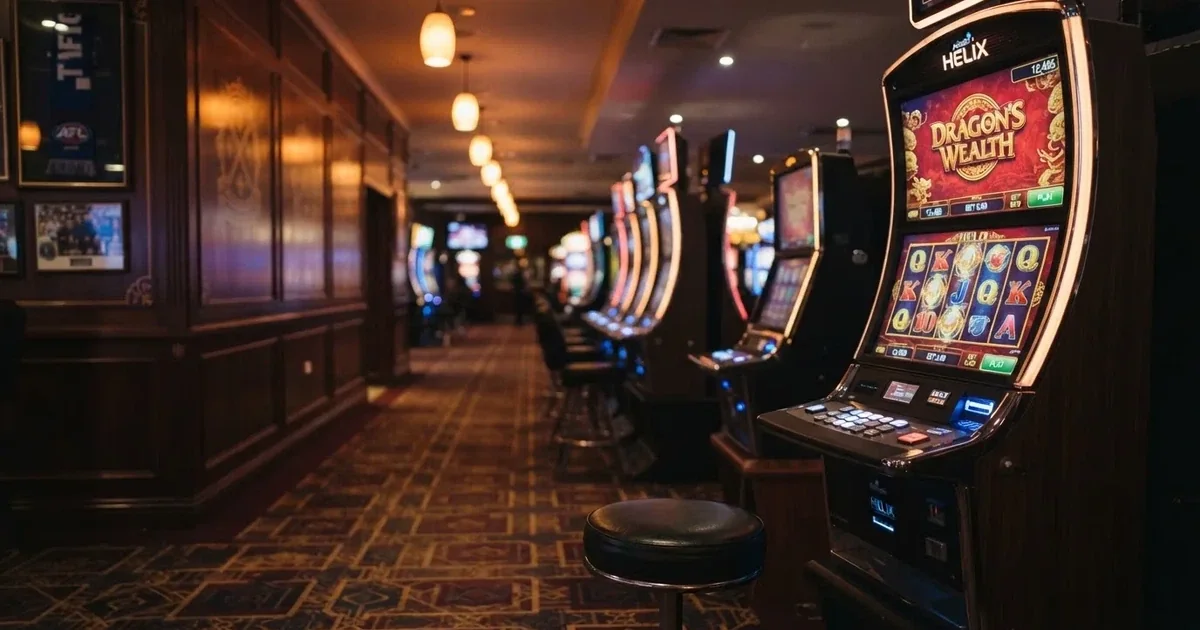
Searching for “best pokies in Canberra” usually lands a reader on a list of offshore casino sites dressed up with Australian flags. That is not what the page is about. Canberra is one of the few Australian jurisdictions where a pokies fan can walk into a venue and play, and it sits inside a legal regime that makes the offshore version an offence under the Interactive Gambling Act 2001 — the provider’s offence, not the player’s, but the practical effect for anyone with money on a blocked site is the same. The page below walks through what is lawful on the ground, what the regulator has been doing about the offshore substitutes, and what each offer on either side actually costs a punter.
Table of Contents
- Why the question reads differently in the ACT
- What the Interactive Gambling Act actually says about an “online pokies” page
- Responsible gambling: where a Canberra pokies player goes for help
- The land-based venues that actually run pokies in Canberra
- How deposits and withdrawals actually work at a Canberra club
- Specific games and paytable mechanics at Canberra venues
- How this shortlist is put together — and what the criteria actually separate
- Offshore brands the ACMA has acted against
- The cost of the “offshore substitute” — the arithmetic that ought to be on the page
- How the blocking regime has actually been running
- What this page is — and what it is not
- Frequently asked questions
Why the question reads differently in the ACT
Canberra sits in a small club-and-casino market that looks almost nothing like Sydney or Melbourne. On 1 November 2023 the ACT had 3,587 gaming machines operating across 46 venues, with a further 5,090 approved but not on a floor. Player losses across that year totalled A$0.19 billion. By comparison, Queensland ran 21,122 machines across 351 venues and South Australia ran 11,672 machines across 471 venues outside Adelaide Casino. The ACT is a single city and a single territory, so the pokies conversation here is short, identifiable, and easier to compare against its neighbours than it would be in NSW.

The ACT’s casino is Casino Canberra, in the Canberra CBD. It sits on land excised from Glebe Park under a 99-year Commonwealth lease and was the first legal casino in the territory. Critically for anyone chasing pokies, Casino Canberra does not operate poker machines: it runs 39 gaming tables covering blackjack, roulette, baccarat and similar games, a poker lounge and a sports lounge, but no electronic gaming machines. A punter looking for pokies in Canberra has to go through one of the territory’s licensed clubs instead.
The ACT Gambling and Racing Commission, working under the Casino Control Act 2006 and Casino Control Regulation 2006, regulates Casino Canberra and issues casino employee licences — short-term licences valid up to six months, full licences valid for three years. The casino licence itself was issued to Aquis Canberra Pty Ltd on 23 December 2014 under section 22 of the Casino Control Act 2006, and is now held by Casino Canberra Limited, which operates the venue at 21 Binara Street. None of that paperwork extends to pokies. The clubs that run the machines are licensed separately under the ACT’s machine-permit framework.
What the Interactive Gambling Act actually says about an “online pokies” page
Online casino games — and that category explicitly includes online pokies — cannot be licensed anywhere in Australia. The Interactive Gambling Act 2001 (IGA), tightened by the Interactive Gambling Amendment Act 2017, makes it an offence to provide online casino games, online pokies or in-play betting to a person physically in Australia. No state or territory will issue the licence, regardless of what an offshore homepage claims. What is licensable is wagering on races and sport placed before the event, lotteries and keno — in practice licensed by the Northern Territory.
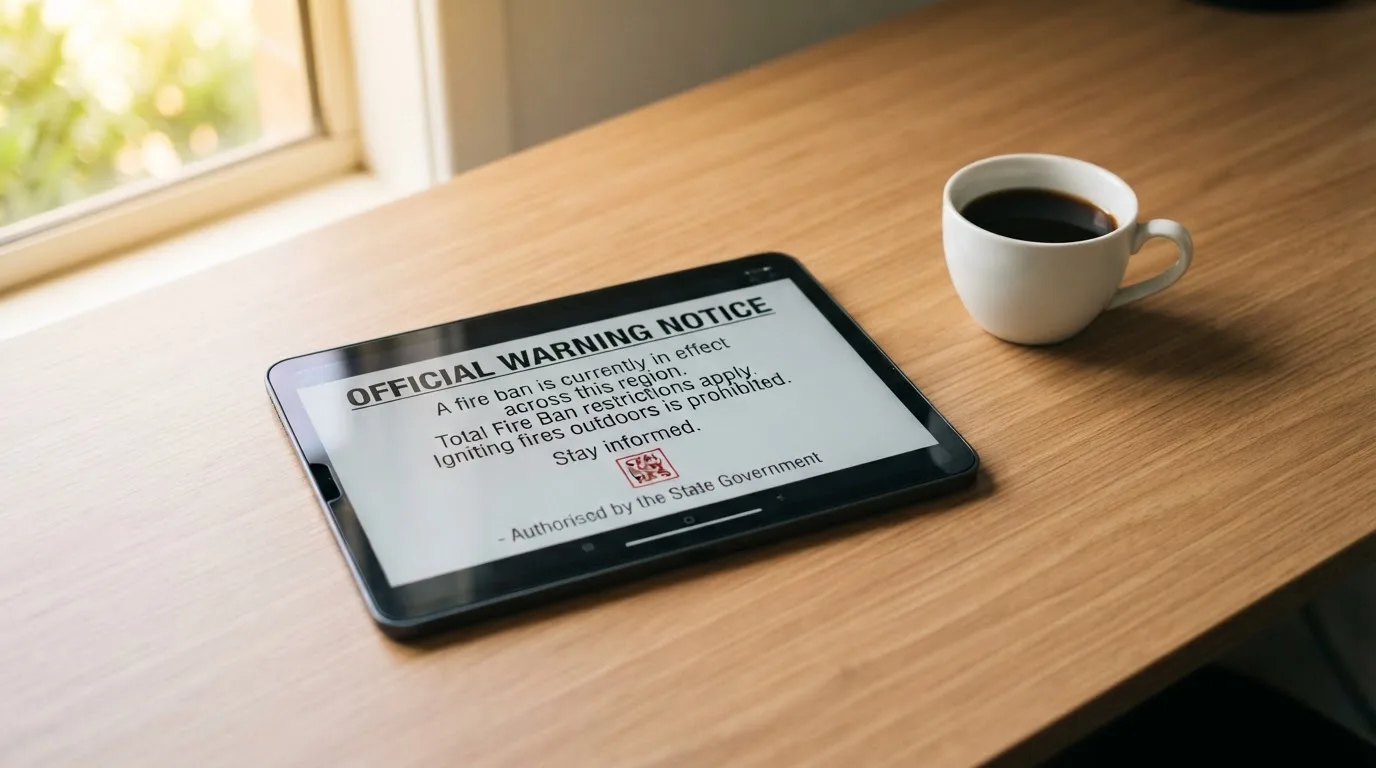
The individual player is not prosecuted under the IGA. The offence is the provider’s. But the practical consequences for a player are sharp: an offshore site gives no Australian consumer protection, no complaints body, no Australian recourse if a withdrawal is refused, and the site can be blocked by ISPs on the ACMA’s instruction while a balance is still sitting on it.
The ACMA’s enforcement reach is broader than most readers realise. In a single round reported on 26 June 2026 the regulator asked Australian ISPs to block twelve more illegal gambling websites — 7Signs, ChromaBet, Donbet, Duospin, Freshbet, Slots Gem, Jacks Club, Lucky Start, Pointsbetz.com, Spinrise, Vinyl Casino and Wildsino. That is one round in one month, and the ACMA has been running them since November 2019. By June 2026 the cumulative total of blocked gambling and affiliate marketing websites sat at 1,751, with more than 230 unlicensed gambling services having left the Australian market since the 2017 amendments strengthened enforcement.
A quieter way to read the same numbers: H2 Gambling Capital’s 2025 estimate puts Australian losses to illegal gambling sites at roughly A$3.9 billion a year, and shows the share of gambling going through legal Australian channels falling from 74 per cent in 2021 to 64 per cent by the time of that report. The legal channel is shrinking in share even as the law gets sharper.
Responsible gambling: where a Canberra pokies player goes for help
Canberra has its own harm-minimisation infrastructure, and it is worth knowing before a punter sets a budget. The ACT Gambling Support Service runs a free, 24/7 Gambling Helpline on 1800 858 858, offering telephone, online and face-to-face gambling and financial counselling. The service is funded by the ACT Gambling Harm Prevention and Mitigation Fund, and is the first port of call for anyone playing pokies in the territory who wants a self-exclusion or a counselling session.
A national register sits beside it. BetStop, the National Self-Exclusion Register, was launched by the ACMA on 21 August 2023 and binds Australian-licensed online and telephone wagering services. It does not, however, cover in-venue gambling such as a club pokies floor or Casino Canberra’s tables. ACT residents wanting to self-exclude from Casino Canberra go through the ACT Gambling Harm Prevention team’s own self-exclusion process, available for periods of six months to three years. Club self-exclusion sits under the relevant venue or club group. A punter who has registered with BetStop and then walks into a Canberra club to play the pokies has used the wrong register for the job.
A second national channel is the Gambling Help Online service, with live chat and online counselling, reachable through the same 1800 858 858 number. Both the ACT service and the national service are free, confidential, and operate around the clock.
The land-based venues that actually run pokies in Canberra
The ACT’s pokies floor sits in licensed clubs, not in Casino Canberra. Because the ACT’s machine-permit framework is run by territory rather than by individual venue names in the public reporting, the most reliable way to think about the offering is by venue type rather than by a single operator’s portfolio: the larger Canberra clubs run pokies lounges alongside bars and dining, and several run extended late-night trading. Some clubs in and around the CBD run 24-hour gaming sections, but that is the exception rather than the rule — most venues close their gaming floor in line with their liquor licence. A reader looking for 24-hour pokies should phone the specific venue rather than assume any club will be open.
Inside Casino Canberra the electronic gaming option does not exist. The 39 gaming tables run traditional casino games — blackjack, roulette, baccarat and similar — and the venue’s poker lounge is a dedicated card room. Anyone whose mental picture of a Canberra casino is rows of pokie machines has the wrong venue.
For paytable and RTP detail, the ACT publishes machine-level data that lets a researcher pull return-to-player figures for individual titles on the floor. The headline figure across Australian clubs tends to settle in the high eighties to low nineties of theoretical return, with state-by-state variation. The ACT publishes its machine standards through the Gambling and Racing Commission, and any venue-specific RTP is available from the club itself or from the ACT’s machine register.
How deposits and withdrawals actually work at a Canberra club
A Canberra club pokies session is paid for in cash, in most cases. A punter walks in, hands over notes at the cashier or the change booth, takes the equivalent in credits, and plays. There is no online deposit at all, because there is no online pokies product in Australia to deposit into. Winnings are paid out in cash at the venue’s cashier, subject to the club’s own payout procedures. A “cashless card” system is in place across many ACT clubs — a player card that holds credits and tracks play — but it is not the same as an online wallet and it never leaves the venue.
For players chasing the maximum cash payout, the limits are set by the venue and by the machine. Some machines pay out a fixed maximum jackpot, others have progressive jackpots that build across a network, and some clubs set an internal daily payout ceiling for a single player. A punter chasing the maximum should check the machine’s own help screen and ask the cashier about the venue’s daily payout policy.
A national note that matters here: the credit-card ban that came into force on 11 June 2024 covers licensed online wagering, not in-club gambling. The ban prohibits credit cards, credit-related products and digital currency as payment for licensed online wagering, with penalties up to A$247,500 for operators. A Canberra club taking cash at the cashier is outside that regime; an offshore casino asking a Canberra player for a credit card or a crypto deposit is operating outside the Australian rules altogether.
Specific games and paytable mechanics at Canberra venues
The paytable details on any individual pokies title on an ACT club floor are set by the manufacturer and the venue’s machine approval. The headline return-to-player figures, machine volatility bands, and feature-trigger rates are all available on the machine’s help screen, which the Gambling and Racing Commission requires to display the return-to-player percentage and the rules of any bonus feature. A punter who wants to know what a particular machine will pay over the long run can read that screen before the first spin.
The popular game families that show up across ACT club floors are the same Aristocrat- and IGT-style formats seen across Australian clubs more broadly. None of those titles is unique to Canberra, and none is materially harder or easier on the player than the national average. The local variation is in the club’s house rules — minimum and maximum credits per spin, machine availability by time of day, and progressive-jackpot reset policies — rather than in the underlying paytable.
For a comparison with other Australian jurisdictions, South Australia sets a minimum gaming-machine return-to-player rate of 87.5 per cent and a general maximum bet of A$5.00 outside the casino, while Adelaide Casino itself runs without a maximum-bet limit. South Australian gaming-machine losses outside Adelaide Casino totalled about A$0.92 billion in 2022-23, equivalent to about A$497 per adult — a per-adult loss figure higher than the ACT’s. The ACT’s per-adult number, derived from the territory’s 2022-23 losses of A$0.19 billion across a much smaller population, sits below the national average for a jurisdiction of its size.
How this shortlist is put together — and what the criteria actually separate
Eleven brands appear on this page. They are not a ranking of “best” offshore casinos and they are not a list the reader should treat as a comparison of offers. They are the operators the ACMA itself has issued formal warnings to for offering prohibited interactive gambling services to Australians. Each one is here because the regulator put it on the public record, not because an affiliate site ranked it on game variety or welcome bonus size.
The criteria that matter, in order:
- The ACMA’s own enforcement record against the operator and the date of that action.
- Whether the operator is the same legal entity behind other brands on the list (Dama N.V. shows up several times, for instance, and Consolutetish S.R.L. twice).
- Whether the brand has been the subject of more than one formal warning across different years.
- The specific operator named on the warning as published by the ACMA, which is the legal entity rather than the marketing brand.
A “best pokies” criterion a reader might expect — payout speed, welcome bonus size, number of games — is irrelevant here because none of these sites is licensable for the Australian reader. The only honest question is which ones the regulator has acted against and when.
The ACMA blocking record is the larger version of the same picture. By June 2026, 1,751 illegal gambling and affiliate marketing websites had been blocked since the first blocking request in November 2019. That is an average of roughly 218 blocking actions per year over the six-and-a-bit years since the regime started, or about 18 per month. The June 2026 round alone blocked twelve more. The rate has not slowed.
Offshore brands the ACMA has acted against
The table below is the brands the ACMA has publicly warned, with the date of the action and the legal entity the regulator named. Any “online pokies” section on these sites is providing a prohibited interactive gambling service to a person in Australia. None of them is a place an Australian should be playing.
| Brand | ACMA action and date | Operator named by the ACMA | Pokies subject support |
|---|---|---|---|
| RocketPlay | Formal warning, March 2026; earlier warning to Dama N.V. covering the same brand in May 2022 | Pulsup Ltd (Rocketplay.com.au) | — |
| Level Up Casino | Formal warning, May 2022 | Dama N.V. | Listings only — third-party pages reference the brand, but no Australian licence exists |
| Woo Casino | Formal warning, March 2025 | Dama N.V. | Listings only |
| Spirit Casino | Formal warning, May 2025 | Dama N.V. | — |
| National Casino | Formal warning, July 2025 | Consolutetish S.R.L. | Listings only |
| Bizzo Casino | Formal warning, July 2025; earlier warning to TechSolutions in 2022 | Consolutetish S.R.L. | — |
| Ignition Casino | Formal warning, July 2025 | Bamboo Media | — |
| Instant Casino | Formal warning, February 2025 | EOD Code SRL | — |
| Jackbit | Formal warning, April 2026 | Ryker B.V. | — |
| Casino Intense | Formal warning, April 2025 | Sterplay Holding Ltd | Listings only |
| Sky Crown | Formal warning, September 2022 | Hollycorn N.V. | Listings only |
A few patterns jump out of the table. The same legal entity can sit behind several brands: Dama N.V. appears three times across different years, with RocketPlay (May 2022, then again under Pulsup Ltd in March 2026), Level Up Casino, Woo Casino and Spirit Casino all linked to it in the ACMA’s record. Consolutetish S.R.L. is the named operator for both National Casino and Bizzo Casino in the same July 2025 warning round. A reader who treats each brand as a separate, independent business is reading the marketing and not the company registry.
A second pattern is the gap between a brand’s first appearance and the ACMA’s follow-up action. RocketPlay was warned in May 2022, then again under a different corporate vehicle in March 2026 — a four-year arc in which the brand simply re-emerged under a new operator name when the old one stopped accepting Australian traffic. The regulator’s response catches the new vehicle; the brand keeps its search-engine real estate.
A third pattern is what the table deliberately does not show. Welcome bonus percentages, wagering requirements, payout times and game counts are absent because the only sources for those numbers were the operators’ affiliate-marketing pages, and affiliate pages are not data a reader can rely on for an offer they cannot lawfully claim.
RocketPlay
RocketPlay is the most re-warned brand on the page. The ACMA issued a formal warning to Dama N.V. covering it in May 2022, then issued a separate warning to Pulsup Ltd specifically over Rocketplay.com.au in March 2026. Two warnings across four years, two different operator names on the same brand. The pattern is the clearest signal on the page that the marketing brand persists while the corporate vehicle changes. For a Canberra punter, the answer is the same as it is for the rest of the list: there is no licence under which an Australian can play RocketPlay’s pokies, and the ACMA has now put that finding on the public record twice.
Level Up Casino
Level Up Casino was named in the May 2022 Dama N.V. warning, which covered six brands in a single action: Bambet, Dazard, Level Up, Rocketplay, Wild Tornado and Cobra Casinos. Third-party listings still reference the brand, but no Australian licence has ever attached to it. A reader who arrives at Level Up through an affiliate page is being pointed at a site the ACMA has explicitly told ISPs to consider blocking.
Woo Casino
The ACMA issued a further formal warning to Dama N.V. over Woo Casino in March 2025, three years after the broader May 2022 warning. Listings pages describe a game library and bonus structure, but the regulatory position has not changed: an online casino offering pokies to a person in Australia is offering a prohibited service under the Interactive Gambling Act 2001, and the regulator’s enforcement record on this brand has been refreshed.
Spirit Casino
The May 2025 Dama N.V. warning picked up Spirit Casino as a separate brand from the original 2022 round. The implication is the same as Woo Casino’s: a brand the regulator has now warned on twice across three years, under the same parent operator.
National Casino
National Casino was named in the ACMA’s July 2025 warning to Consolutetish S.R.L. Third-party listings and news pages reference the brand, but the IGA does not allow an Australian-facing online casino licence, and the ACMA’s record on this brand is one of the most recent on the page.
Bizzo Casino
Bizzo Casino appeared twice in the ACMA’s record — a 2022 warning to TechSolutions (CY) Group Limited and TechSolutions Group N.V., and the July 2025 warning to Consolutetish S.R.L. Two separate corporate vehicles, four years apart, same brand. The pattern repeats RocketPlay’s.
Ignition Casino
Bamboo Media was the operator named on the July 2025 warning covering Ignition Casino. No Australian licence supports the brand. The warning is the freshest public statement the ACMA has made about this operator.
Instant Casino
The ACMA issued a formal warning to EOD Code SRL over Instant Casino in February 2025. The brand markets itself as a casino and pokies destination; the IGA treats that offering as a prohibited interactive gambling service for Australians regardless of branding.
Jackbit
Ryker B.V. was the operator named on the ACMA’s April 2026 warning over Jackbit. The warning covered both Jackbit and CasinOK, two brands from the same operator in a single action. The April 2026 date puts this among the most recent warnings the ACMA has published.
Casino Intense
Sterplay Holding Ltd was the operator named on the April 2025 warning covering Casino Intense. Third-party listings reference the brand across several Australian-facing directories, which is itself the problem the ACMA’s enforcement is built around: an Australian reader finds the brand, opens an account, and finds out the IGA means the operator is committing an offence.
Sky Crown
The ACMA’s formal warning to Hollycorn N.V. covered its Sky Crown and Blue Leo casino services. Listings pages continue to describe the brand, but the warning is on the ACMA’s public record and the product is a prohibited interactive gambling service for Australians.
The cost of the “offshore substitute” — the arithmetic that ought to be on the page
A reader who lands on one of these offshore pages is usually met with a welcome bonus — sometimes 100 per cent of the deposit, sometimes more, sometimes with free spins attached. The marketing word is “free”. The arithmetic is anything but.
The first calculation that matters is the wagering requirement. A “100 per cent up to A$500 bonus with 40x wagering” sounds like the casino is giving the player A$500. What it actually says is that the player must wager the bonus amount 40 times before any winnings can be withdrawn — in this example, A$500 × 40 = A$20,000 of turnover. At a stake of, say, A$1 per spin, that is 20,000 spins. At a 5-second interval between spins, 20,000 spins take 100,000 seconds, which is just under 28 hours of continuous play. The bonus is not “free”; it is a turnover target that takes more than a day of uninterrupted spinning to clear.
The second calculation is the expected loss on that turnover. If the underlying slot returns 95 per cent to the player over the long run — a reasonable figure for an offshore slot — then 5 per cent of A$20,000 is A$1,000 of expected loss, on average across many players. The bonus cost the player A$1,000 in expected losses to access A$500 of “bonus money”. The offer is upside-down on its face.
A second scenario tightens the picture. The same A$500 bonus at 50x wagering and A$2 per spin: A$25,000 of turnover, 12,500 spins, just over 17 hours of play, and an expected loss of A$1,250 against A$500 of headline bonus. The player is paying to play.
A third scenario, with a hard max-cashout cap, makes the arithmetic brutal. A “200 per cent up to A$100 bonus with 60x wagering and a 5x max cashout” looks generous. The player deposits and accepts a A$100 bonus, must wager A$6,000, and even if they hit a big win, can withdraw only 5x the bonus — A$500. The expected loss on A$6,000 of turnover at 95 per cent RTP is A$300. The bonus pays out less than the expected loss it costs.
The arithmetic has a single, blunt conclusion: every “free” offshore bonus is a turnover commitment with a negative expected value. The IGA makes the underlying service unlawful to provide, the ACMA’s enforcement makes it liable to be blocked mid-session, and the math makes it unprofitable for the player even before any of that.
How the blocking regime has actually been running
The blocking rate over the last six and a half years is the simplest summary of the ACMA’s enforcement reach. Between November 2019 and June 2026 the regulator asked Australian ISPs to block 1,751 illegal gambling and affiliate marketing websites. That works out to roughly 218 blocking actions per year, or about 18 per month, or one roughly every other working day. The June 2026 round alone blocked twelve sites in a single instruction.
The rate has not slowed as the regime has matured. The 2026 monthly pace is comparable to the 2020 monthly pace, which means the supply of new offshore casino sites is keeping up with the regulator’s blocking pipeline. A reader who tries an offshore site this month, finds it blocked, and then follows a search result to a different brand a week later is seeing the same dynamic the regulator is publishing.
The “blocked sites to date” number is itself a band rather than a single figure, because the ACMA publishes a cumulative total and individual rounds in news releases, and the gap between a blocking instruction and a news release can run to a few weeks. The reader should treat 1,751 as the floor of the current count rather than the exact figure on the day they read this page.
The 2026 reform package — the Interactive Gambling Amendment (Gambling Reform) Bill 2026, passed by Parliament on 19 August 2026 — adds advertising and inducement measures that commence on 1 January 2027. On the page’s timeframe those are law with a start date, not yet in force. The effect, once they commence, will be to restrict the affiliate marketing that currently routes Australian readers onto offshore sites. Until 1 January 2027, however, the existing rules apply.
What this page is — and what it is not
This page is a comparison of the licensed, land-based venues that run pokies in the ACT with the offshore sites the ACMA has acted against for offering the same product to Australians. It is not a ranking of offshore casinos. It does not recommend an operator to the reader as a place to play. It does not provide a working bonus code or a signup link.
A reader who lives in or is visiting Canberra and wants to play pokies legally has a short, well-defined set of options: the ACT’s licensed clubs, none of which is a casino, and Casino Canberra itself for table games only. The ACT Gambling and Racing Commission publishes venue and licence details through its website, and the Gambling Support Service runs the territory’s self-exclusion and counselling infrastructure.
A reader who is looking at an offshore site should treat the ACMA warning record above as the most current statement of the regulator’s position. The eleven brands on the page are not exhaustive; they are the brands the ACMA has chosen to publish a formal warning over. New names will appear on the regulator’s register as new blocking rounds run, and a reader who relies on a list frozen at one date will be working from out-of-date material.
A final note on the law itself. The Interactive Gambling Act 2001 and its 2017 amendments are the binding rules. The ACMA’s enforcement record — the warnings, the blocking requests, the formal publications — is the regulator’s application of those rules. The two together are the reason the offshore substitutes cannot lawfully offer a “pokies” section to a person in Australia, regardless of the licence that an offshore homepage displays.
Frequently asked questions
Which venues in Canberra are licensed to operate pokies?
Pokies in Canberra are operated by the ACT’s licensed clubs, not by Casino Canberra, which runs table games only. The ACT Gambling and Racing Commission, working under the Casino Control Act 2006, regulates Casino Canberra separately from the territory’s club gaming-machine framework. The exact list of clubs holding machine permits is published through the Commission.
Are pokies in Canberra available around the clock?
Some ACT clubs run 24-hour gaming sections, but most close their gaming floor in line with their liquor licence. There is no territory-wide rule mandating 24-hour access. A punter looking for late-night pokies should phone the specific venue to confirm its trading hours rather than assume the floor is open.
What identification do venues in Canberra require before letting someone play pokies?
ACT clubs require proof of age — the minimum age to play pokies in Australia is 18 — and may require photo ID for payouts above a certain threshold, for player-card registration, and for the venue’s own self-exclusion check. The Gambling and Racing Commission issues casino employee licences and oversees compliance at Casino Canberra; clubs operate their own entry procedures.
Can visitors to Canberra use self-exclusion schemes at local pokies venues?
BetStop, the National Self-Exclusion Register, covers Australian-licensed online and telephone wagering services but does not cover in-venue gambling such as a Canberra club pokies floor or Casino Canberra. ACT residents wanting to self-exclude from Casino Canberra use the ACT Gambling Harm Prevention team’s own self-exclusion process, available for periods of six months to three years.
How does the payout percentage on Canberra pokies compare with other Australian cities?
The ACT publishes machine-level return-to-player data through the Gambling and Racing Commission. The headline figure across Australian clubs tends to settle in the high eighties to low nineties of theoretical return. South Australia sets a minimum gaming-machine RTP of 87.5 per cent and a general maximum bet of A$5.00 outside the casino, while Adelaide Casino itself has no maximum-bet limit. The ACT’s per-adult loss figure in 2022-23 sat below the national average for a jurisdiction of its size.
Is it legal for an online casino to advertise ‘pokies’ in Canberra the same way a pub or club does?
No. Online casino games — and that category explicitly includes online pokies — cannot be licensed anywhere in Australia. The Interactive Gambling Act 2001, tightened by the 2017 amendments, makes it an offence to provide those services to a person in Australia. The ACMA enforces the regime by issuing formal warnings, asking ISPs to block sites, and publishing its actions on the public register. The 2026 reform package adds advertising and inducement measures that commence on 1 January 2027.