
Best casino in Hobart in 2026: the licensed venue, the law, and the offshore brands Australians should steer clear of
The search for the best casino in Hobart has a short answer that cuts through most of what the internet tries to sell around it. Hobart has one legal, licensed casino, and it has been sitting on the same sandstone headland in Sandy Bay since 1973. Everything else that turns up in a results page for the same query is either an offshore online casino prohibited from taking Australian customers or an affiliate page dressed up to look like a review. This page walks through what the licensed venue actually offers, why every other option on a typical “best of” list is operating outside Australian law, and what the ACMA’s recent enforcement record says about the brands it has named.

The data is current as of 29 October 2026 and was checked against the ACMA register of formal warnings and the Interactive Gambling Act 2001.
Table of Contents
- How Australian law treats online casinos
- Responsible play around Hobart’s casino
- Wrest Point: Hobart’s only legal casino
- What Australians see when they search for an online alternative
- Wrest Point in the wider Australian casino picture
- What an Australian reader actually has
- What the ACMA’s pipeline looks like going forward
- The licensed venue, plainly stated
- Frequently asked questions about casinos in Hobart
How Australian law treats online casinos
The Interactive Gambling Act 2001 (IGA), tightened by the Interactive Gambling Amendment Act 2017, makes it an offence to provide online casino games, online pokies or in-play betting to a person in Australia. No state or territory issues a licence for it. What can be licensed, and what licensed bookmakers in Australia offer, is pre-event wagering on sport and racing, lotteries and keno — services that take a wager but do not run a slot reel or a card game online.
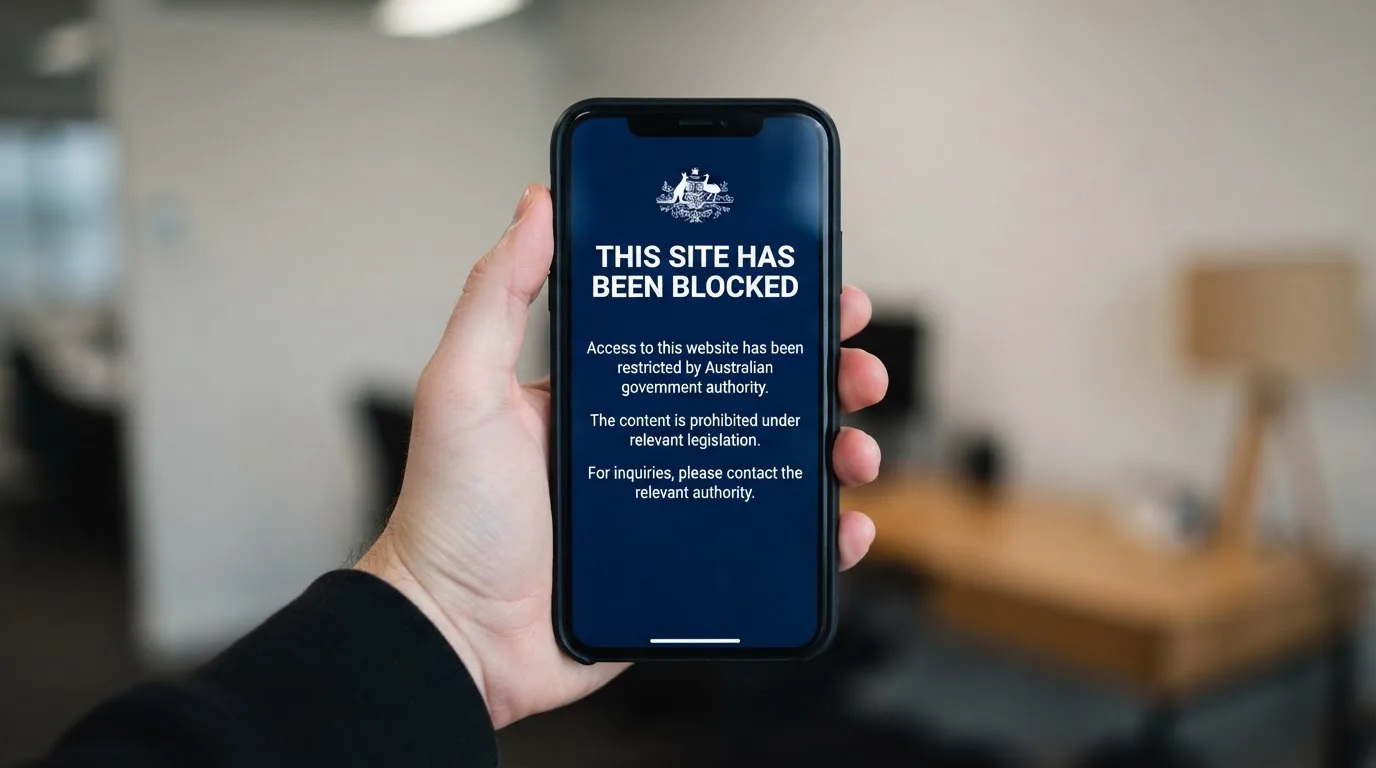
The IGA targets the provider, not the player. An Australian who clicks through to an offshore site is not personally at risk of prosecution. What that player loses, however, is the whole frame of consumer protection an Australian-licensed operator has to maintain: no complaints body, no recourse if a withdrawal is refused, no guarantee the site will still be reachable next week. The ACMA can — and regularly does — order Australian internet service providers to block these sites, and a blocked site can still hold a player’s balance. H2 Gambling Capital’s 2025 estimate puts Australian losses to illegal offshore gambling at roughly A$3.9 billion a year, and the share of gambling going through legal channels has dropped from 74% in 2021 to 64%.
The ACMA’s blocking record
As of the round reported in June 2026, the ACMA had asked Australian ISPs to block 1,751 illegal gambling and affiliate marketing websites since the first blocking request in November 2019, and more than 230 unlicensed services had left the Australian market since enforcement was strengthened in 2017. The June 2026 round alone added twelve names: 7Signs, ChromaBet, Donbet, Duospin, Freshbet, Slots Gem, Jacks Club, Lucky Start, Pointsbetz, Spinrise, Vinyl Casino and Wildsino. The pace has not slowed; the ACMA’s pipeline of formal warnings and blocking requests runs continuously, not in single sweeps.
The blocking rate as a band
The blocking-rate arithmetic is not a single figure. Between November 2019 and the June 2026 round, the ACMA’s running total climbed from zero to 1,751 blocked sites over roughly six and a half years, which works out to an average of around 22 blocked sites per month across the full period — but the early years were sparse and the recent rounds have been much heavier. The 12-site June 2026 round alone matches the rate of a busy quarter. Treat the figure as a band, not a number: somewhere between a long-run average of a few dozen per month and the heavier recent months where a single round adds a dozen at once. The condition that drives the band is that blocking only follows a formal warning that the named operator has ignored.
What an ACMA formal warning actually means
A formal warning under the IGA is published on the ACMA’s own site, names the operator company and the brand, and gives the operator a chance to comply. If it does not, the ACMA can escalate to asking ISPs to block the site at the DNS level. The warnings list below is the public record of brands the ACMA has named; it is not a recommendation list, and it is not a “best of” ranking.
The brands the ACMA has warned about all display licences from overseas regulators — Curaçao, Anjouan, occasionally the Kahnawake Gaming Commission — and most of their marketing leans on those licences as if they were equivalent to local authorisation. They are not. No offshore licence authorises a site to take Australian customers for casino games; the IGA is the controlling law on that question regardless of what the site’s footer says.
Responsible play around Hobart’s casino
Player wellbeing in Tasmania runs through the same national infrastructure the rest of the country uses, with a local helpline that knows the venue. Gambling Helpline Tasmania (1800 858 858), run by Anglicare Tasmania’s Gamblers Help Service, takes calls free of charge around the clock and can arrange venue self-exclusion. In-person counsellors are based in Hobart, Launceston, Devonport and Burnie. The helpline page also points to Gambling Help Online for chat support and to BetStop, the National Self-Exclusion Register, which has been live since August 2023.
BetStop’s reach is narrower than its name suggests. It binds Australian-licensed online and phone wagering services. An offshore casino is not connected to it, so self-excluding through BetStop will not stop an offshore site from accepting a deposit from the same person. For someone whose concern is the venue itself, the venue-level exclusion arranged through the helpline is the route that actually closes the door.
Tasmania’s cashless gaming card
Tasmania’s cashless gaming card reform brought hotel and club poker machines — a category separate from Hobart’s casino — under mandatory carded play from December 2025. Default loss limits sit at A$100 per day, A$500 per month and A$5,000 per year, and a player can only raise them after a 24-hour cooling-off period. After two continuous hours of play, the system enforces a mandatory ten-minute break. These are the rules for the pub and club machines; the casino operates under a separate licence framework.
The minimum age
The minimum age for entry to a casino in Tasmania is 18. That is also the floor the IGA sets for any licensed Australian wagering service. A site that takes an Australian customer without checking age is failing the obligation that the licence it displays in its footer is supposed to enforce; for offshore operators with no Australian-facing compliance team, the check often does not happen.
Wrest Point: Hobart’s only legal casino
Wrest Point Hotel Casino sits on the waterfront at Sandy Bay, about three kilometres south of Hobart’s CBD. It opened on 10 February 1973 — Australia’s first legal casino — and its 17-storey, 64-metre dodecagonal hotel tower, designed by Sir Roy Grounds, remains the tallest building in Tasmania. The referendum that cleared the way was held on 14 December 1968, and 56% of Tasmanian voters supported it. The tower holds 269 rooms, and the revolving restaurant near the top is the line Tasmanians use to point out the building to visitors.
The property has had two big investment cycles. A roughly A$65 million staged renovation ran from 2018 to 2023 to mark the 50th anniversary. The convention centre, built in 1984, cost more than A$20 million at the time and still anchors the meetings-and-events side of the business. Federal Group, which owns and operates Wrest Point, has been the licensed casino operator in Tasmania since the doors opened.
What is on the gaming floor
Wrest Point has more than 650 electronic gaming machines, and the floor spreads across the main gaming area plus the premium and machine-only rooms. The machines range from traditional reel-style pokies to the newer multi-line video formats. The casino also runs a full table-game suite: blackjack, roulette, baccarat and craps are all on the floor, with stakes scaled for casual play in the main room and higher limits in the premium pits. Poker is offered as a scheduled tournament and as a cash-game floor on busy nights, although the schedule varies by season.
The casino is licensed and regulated by the Tasmanian Gaming Commission. Federal Group is the operator; the licence is the licence, not a marketing badge. A 2015 incident in which the venue was fined A$17,500 for allowing a faulty poker machine that did not function as designed to be played — following a A$13,000 fine the previous year for six machines operating outside approved game rules — illustrates what that licence relationship looks like in practice. Federal Group agreed to audit all of its machines after the 2015 fine. The Tasmanian regulator’s job is to hold the venue to the rules its own licence sets.
Where it sits and how to get there
The address is 410 Sandy Bay Road, Sandy Bay TAS 7005. The casino is on the waterfront, a short taxi or bus ride from the CBD, and within walking distance of several Sandy Bay and Battery Point hotels. Wrest Point itself operates as a hotel as well as a casino, so the on-site accommodation is the closest option. The revolving restaurant on the upper floors is open to both guests and walk-ins, and the bars run on a separate late-night licence from the gaming floor.
The legal drinking age in Tasmania is 18, and the casino’s age-of-entry requirement is the same. Photo ID is checked at the entrance on busier nights. Dress codes vary by area; the main gaming floor is casual, the premium rooms are smart casual, and the revolving restaurant is the most formal of the on-site venues.
What Australians see when they search for an online alternative
A reader searching online for the best casino in Hobart will see a different list from the one this page is built around. The sites that rank on those pages are not licensed in Australia; the ACMA’s formal warning list names a number of them by operator company and date. The reason this page treats them as part of the picture, rather than as a “Top 11” of alternatives, is that describing them as alternatives — without flagging their status under the IGA — would be the kind of writing that sends readers to sites the regulator has told ISPs to block.
The eleven brands below are the operators the ACMA has named in published formal warnings, with the date of the warning and the operator company the regulator recorded. Every one of them is offshore; every one of them has been the subject of an ACMA action for offering prohibited services to Australians. The same caveat applies to every brand on the list: no offshore licence authorises a site to take Australian customers for casino games, the IGA is the controlling law, and a withdrawal or balance dispute at one of these sites has no Australian complaints route.
The ACMA’s named brands at a glance
| Brand | ACMA action and date | Operator named by the ACMA | Subject support |
|---|---|---|---|
| RocketPlay | Formal warning, March 2026 | Pulsup Ltd | — |
| Level Up Casino | Formal warning, May 2022 | Dama N.V. | listings-only (ABC, VGCCC) |
| Woo Casino | Formal warning, March 2025 | Dama N.V. | — |
| Spirit Casino | Formal warning, May 2025 | Dama N.V. | — |
| National Casino | Formal warning, July 2025 | Consolutetish S.R.L. | listings-only (ABC, Infrastructure.gov.au) |
| Bizzo Casino | Formal warning, July 2025 (also 2022) | Consolutetish S.R.L. (also TechSolutions) | — |
| Ignition Casino | Formal warning, July 2025 | Bamboo Media | — |
| Instant Casino | Formal warning, February 2025 | EOD Code SRL | — |
| Jackbit | Formal warning, April 2026 | Ryker B.V. | — |
| Casino Intense | Formal warning, April 2025 | Sterplay Holding Ltd | listings-only (ABC, ASGAM, CBS SA) |
| Sky Crown | Formal warning, September 2022 | Hollycorn N.V. | listings-only (en.wikipedia.org) |
Dama N.V. appears three times on this list because the ACMA has issued multiple warnings to the same operator company under different brand names. May 2022 covered six Dama brands at once; March 2025 and May 2025 added two more. The pattern — one operator, many skins — is typical of the offshore sector.
How to read the table
The “Subject support” column is honest about what is and is not on the public record. A dash means no independent listing was found for that brand in the consulted sources; “listings-only” means the brand shows up in third-party directories or industry pages but the operator’s own marketing is the only detailed source for its terms. None of that converts a prohibited product into a permitted one. The ACMA action column is the controlling fact for Australian readers.
Wrest Point in the wider Australian casino picture
Three of Australia’s other state-level casinos give a useful comparison for what Wrest Point does and does not offer, because each of them sits under a different licence regime and each has a different recent history.
Adelaide Casino
Adelaide Casino, marketed commercially as SkyCity Adelaide for a stretch of the 2000s before reverting to the Adelaide Casino name in 2009, sits in the heritage-listed Adelaide railway station building on North Terrace. It has 90 gaming tables and 950 gaming machines and is the sole licensed casino in South Australia under the Casino Act 1997. Its table-game monopoly was extended to 30 June 2035 under a licence formalised on 11 October 2013, with scope to grow to 200 tables and 1,500 machines subject to redevelopment. The 2015–2021 Riverbank precinct redevelopment, worth about A$330 million, added the EOS by SkyCity tower, which opened in 2021 with 120 hotel rooms and expanded gaming space. The casino is regulated by South Australia’s Independent Gambling Authority and Liquor and Gambling Commissioner.
South Australia sets a minimum gaming-machine return-to-player rate of 87.5% and a general maximum bet of A$5.00 outside the casino. Adelaide Casino itself has no maximum-bet limit. South Australian gaming-machine losses outside the casino totalled about A$0.92 billion in 2022–23, equivalent to roughly A$497 per adult.
Treasury Brisbane and The Star Brisbane
Treasury Casino, in Brisbane’s historic Treasury Building, opened refurbished as a casino in April 1995 and, before its August 2024 closure, occupied a three-level gaming emporium of 80 gaming tables and more than 1,300 gaming machines, plus a hotel, six restaurants, five bars and a nightclub. It closed on 25 August 2024 to make way for the new Star casino at Queen’s Wharf. The Star Brisbane began a staged opening at the A$3.6 billion Queen’s Wharf Brisbane precinct on 29 August 2024, with the main casino floor and premium gaming rooms opening first. The precinct was developed jointly by Star Entertainment Group and Hong Kong-based Chow Tai Fook Enterprises.
Queensland had 21,122 gaming machines operating in 351 venues in October 2023. Queen’s Wharf opened amid concerns about the licence position of its lead partner: in late 2022 the Queensland Government, acting on an independent review by former Court of Appeal judge Robert Gotterson, found Star Entertainment unsuitable to hold its Queensland casino licences after concluding it had misled regulators and failed its anti-money-laundering duties. Star was fined $100 million on 9 December 2022, with a 90-day suspension of the Treasury Brisbane and Star Gold Coast licences deferred to 1 December 2023 to allow remediation.
How Wrest Point compares
Wrest Point is the smallest of Australia’s state-level casinos by gaming-machine count (650-plus, against 950 at Adelaide and 1,300-plus at the old Treasury Brisbane). Its table-game suite sits in the middle of the comparable set, and its hotel-tower scale is unique: nothing else in Tasmania matches the 269-room, 17-storey property with its revolving restaurant. Its regulatory regime is Tasmanian rather than interstate, and its owner, Federal Group, has held the licence continuously since 1973 — a longer unbroken run than the recent upheaval around Star Entertainment in Queensland.
The comparison that matters most for a Hobart reader is not size. It is that Wrest Point is the only casino in Tasmania that can lawfully offer table games to a Tasmanian at a walk-in venue, and that the alternative route that the search results page suggests — an offshore online casino — is closed by the IGA regardless of how the offshore site markets itself.
What an Australian reader actually has
The honest picture is short. A reader in Hobart who wants to play at a legal, licensed casino has Wrest Point, with its 650-plus machines and full table-game suite on the waterfront in Sandy Bay. A reader who wants to bet on sport or racing online has the Australian-licensed wagering market, which the Northern Territory Racing and Wagering Commission (NTRWC) regulates for 52 operators including Sportsbet, Bet365 and Ladbrokes. A reader who wants to play casino games online has no legal Australian option.
The Northern Territory regulator is worth a paragraph of its own, because it is the body that licenses most of the wagering brands Australians use every day, and because its actual resourcing is thinner than the role would suggest. The NTRWC has no full-time staff and meets once a month in Darwin. The licences it issues are real; the regulatory machinery behind them is small. That is a feature of the Australian system rather than a bug — the system was built around a small number of licensed wagering operators and a prohibition on casino-style online products — but it does mean that the regulator’s day-to-day reach ends at the licensed wagering sector.
Payment rules that apply to the licensed market
Since 11 June 2024, credit cards, credit-related products and digital currency have been banned as payment for licensed online wagering in Australia, with penalties of up to A$247,500 for operators that breach the rule. The legal deposit routes for licensed wagering are debit card, bank transfer, PayID/Osko and BPAY. A site asking an Australian customer for a credit card or a crypto deposit is therefore operating outside the Australian rules. The same offshore site that the ACMA has warned about will, almost invariably, accept both — because the offshore product is built around payment methods the Australian rules have closed off.
Tax
Gambling winnings of a recreational player are not assessable income (section 6-5 ITAA 1997) and losses are not deductible, unless the person carries on a business of gambling. The model is: winnings are not taxed, losses cannot be claimed, and the ATO treats the activity as a personal expense at the recreational end. Anyone whose gambling crosses into a business-like pattern — a professional punter, a card-counter running a team — sits in a different ATO frame and should check with a tax adviser. The “check with the ATO” line is a model rather than a specific advice point.
What 2026 changed
The Interactive Gambling Amendment (Gambling Reform) Bill 2026 passed Parliament on 19 August 2026. Its advertising and inducement measures commence 1 January 2027, so this is law with a start date, not law in force on a 2026 page. The reform’s practical effect on a reader searching in 2026 is that the most aggressive affiliate-marketing language around Australian-facing casino offers will change in early 2027. The underlying prohibition on offering online casino games to Australians is unchanged.
What the ACMA’s pipeline looks like going forward
The blocking-rate band, expressed honestly, is this: somewhere between a slow early pace and a busy recent pace, with the right-hand end driven by larger formal-warning rounds and a wider pool of operators. The condition that produces a heavy month is straightforward — a round of formal warnings is issued, the named operators are given a window to comply, and the sites that do not comply are added to the next blocking request. The ACMA’s enforcement model is not a one-off sweep; it is a continuous pipeline of warnings followed by blocking. The brands listed above are the public face of that pipeline.
For an Australian reader, the practical conclusion is that an offshore site which the ACMA has named today is unlikely to remain reachable through an Australian ISP for long, and a withdrawal made after a blocking order sits on the wrong side of an unrecoverable balance. The licensed venue in Hobart does not have that risk profile.
The licensed venue, plainly stated
Wrest Point is Hobart’s only legal casino. It opened in 1973 as Australia’s first legal casino and remains the only casino operating under a Tasmanian licence. It offers more than 650 gaming machines, a full table-game suite including blackjack, roulette, baccarat and craps, and on-site hotel accommodation in the 269-room tower. It is regulated by the Tasmanian Gaming Commission, owned and operated by Federal Group, and reachable at 410 Sandy Bay Road, Sandy Bay. The minimum age for entry is 18. Player support is available through Gambling Helpline Tasmania (1800 858 858) and BetStop, with the venue-level exclusion route the one that actually closes the door for someone concerned about play at Wrest Point itself.
The alternative route — an offshore online casino — is closed by the IGA, and the ACMA’s enforcement record shows how that closure is applied in practice. The choice facing a Hobart reader is not between Wrest Point and a comparable online option; it is between Wrest Point and a prohibited product dressed up to look like one.
Frequently asked questions about casinos in Hobart
What is the name of the main casino in Hobart?
Hobart’s only legal casino is Wrest Point Hotel Casino, in Sandy Bay. It opened on 10 February 1973 as Australia’s first legal casino and is operated by Federal Group under a Tasmanian Gaming Commission licence. No other casino venue operates in Hobart or elsewhere in Tasmania.
Where is the casino in Hobart located?
Wrest Point sits at 410 Sandy Bay Road, Sandy Bay TAS 7005, on the waterfront about three kilometres south of Hobart’s CBD. The 17-storey hotel tower is the tallest building in Tasmania, which makes the venue easy to find from across the river. The casino is a short taxi, bus or walk from the CBD and from the Battery Point and Sandy Bay hotel strip.
What is the minimum age to enter the casino in Hobart?
The minimum age for entry to Wrest Point is 18, in line with Tasmania’s general licensing age. Photo ID is checked at the entrance on busier nights. The same age floor applies to any Australian-licensed wagering service under the Interactive Gambling Act 2001.
Does the casino in Hobart offer table games such as blackjack and baccarat?
Wrest Point runs a full table-game suite: blackjack, roulette, baccarat and craps, plus scheduled poker tournaments and cash games on busier nights. The main gaming floor is casual; the premium pits run higher limits. The table-game suite is part of what makes Wrest Point the only legal Australian casino venue in Tasmania, since the IGA closes the online version of the same games.
Are there hotels within walking distance of the casino in Hobart?
Wrest Point itself operates as a 269-room hotel in the same tower, so on-site accommodation is the closest option. Several Sandy Bay and Battery Point hotels sit within walking distance along the waterfront. The CBD, about three kilometres north, has the broader hotel strip and is a short taxi or bus ride from the venue.
Can Australians legally play at an online casino instead of visiting the casino in Hobart?
No. The Interactive Gambling Act 2001, tightened by the 2017 amendments, prohibits offering online casino games, online pokies or in-play betting to a person in Australia, and no state or territory issues a licence for it. The ACMA enforces the prohibition through formal warnings and ISP blocking requests; an Australian who clicks through to an offshore site is not personally prosecuted, but the site gives no Australian consumer protection, no complaints body and no recourse if a withdrawal is refused, and it can be blocked with a balance still on it.