
How PayID casino sites actually work in Australia this year
A punter who searches for casinos that accept PayID in Australia is really asking three questions at once: which offshore sites take it, what a deposit and a withdrawal feel like on the other end, and whether any of this is even legal from an Australian address. The honest answer to that third question is short and unsatisfying: under the Interactive Gambling Act 2001, no online casino may lawfully serve an Australian resident at all, and no state or territory issues a licence for one. PayID sits inside that prohibition rather than on the other side of it. Every brand that markets itself as a “PayID casino” to an Australian player is doing so from offshore, on its own terms, with no Australian consumer protection if a balance goes missing.
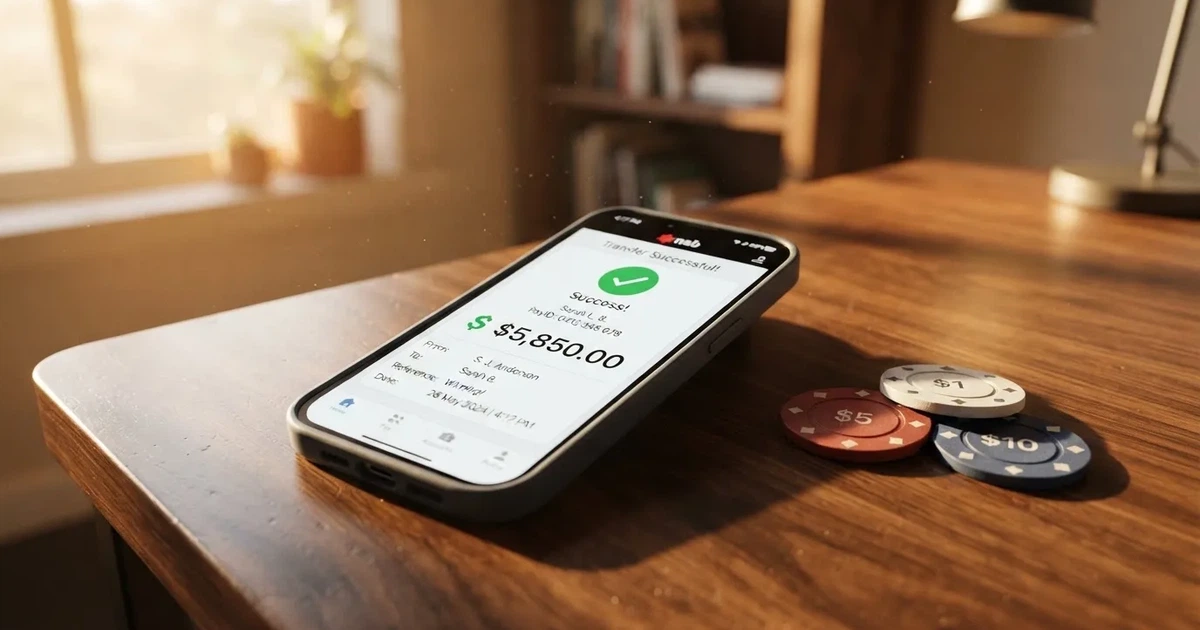
What follows is a working guide to the mechanism and the landscape — how a PayID deposit moves money in minutes through the New Payments Platform, what a withdrawal still depends on once the funds hit the casino, what the ACMA has been doing about these sites, and which operators have ended up on a public warning list. It is not a recommendation to play. With the rule stated once at the top, the rest of the page is what a reader needs to make their own call.
Current as of 29 October 2026. Licence claims and ACMA warning dates checked against the Australian Communications and Media Authority’s published register.
Table of Contents
- The legal frame around every site on this list
- Responsible gambling at sites that don’t sit inside the Australian regime
- How a PayID deposit and withdrawal actually work
- How eleven offshore PayID casino sites compare on the ACMA’s record
- The broader enforcement picture in numbers
- What licensed Australian gambling actually looks like
- The calculation a player should run before a PayID deposit
- Frequently asked questions
The legal frame around every site on this list
The Interactive Gambling Act 2001 makes it an offence to provide an Australian resident with online casino games, online pokies or in-play betting. The 2017 amendments gave the ACMA real enforcement teeth: formal warnings, civil penalty proceedings, and the power to ask Australian ISPs to block offending domains. What is not prohibited under the regime is pre-event wagering on racing and sport, lotteries and keno — services that are licensed, in practice, by the Northern Territory Racing and Wagering Commission, the regulator of more than fifty online bookmakers including Sportsbet, Bet365 and Ladbrokes.

That commission is itself worth naming. It has no full-time staff and meets roughly once a month in Darwin. The NT licence regime exists largely for tax reasons, which is why the same handful of corporate bookmakers choose it over an equivalent Victorian or New South Wales arrangement. A reader who has been told a brand is “Australian licensed” in a footer should ask what that licence actually covers — racing and sport, almost certainly; not casino.
For an Australian player, the practical consequences of the prohibition are these:
- The provider can be prosecuted. The player is not. Nobody is going to knock on a door because someone spun a slot at an offshore site, but the offshore site has no obligation under Australian law to honour a withdrawal, no complaints body to escalate to, and no recourse when a balance is held.
- The site can be blocked overnight. The ACMA’s June 2026 blocking round added another twelve domains to the list, taking the running total past 1,750 sites blocked since November 2019.
- BetStop, the National Self-Exclusion Register, does not bind offshore casinos. It works against Australian-licensed wagering services. A punter who has registered with BetStop can still open an account at an offshore PayID casino with no friction at all.
What the ACMA has actually done in the past two years
The ACMA’s formal warnings are public, dated, and named. They are the most reliable signal an Australian player has about which offshore operators the regulator has specifically called out. In the past two years alone:

- March 2025: a formal warning to Dama N.V. over Woo Casino.
- April 2025: a formal warning to Sterplay Holding Ltd over Casino Intense.
- May 2025: a second formal warning to Dama N.V., this time over Spirit Casino. The first, in May 2022, covered six brands — Bambet, Dazard, Level Up, Rocketplay, Wild Tornado and Cobra Casinos.
- February 2025: a formal warning to EOD Code SRL over Instant Casino.
- July 2025: a formal warning to Bamboo Media over Ignition Casino, and to Consolutetish S.R.L. over National Casino and Bizzo Casino. Bizzo had already been the subject of a 2022 warning to TechSolutions, so this was the second formal warning tied to the same brand.
- April 2026: a formal warning to Ryker B.V. over Jackbit and CasinOK.
- March 2026: a formal warning to Pulsup Ltd over Rocketplay.com.au.
The pattern is the same every time: a corporate entity running several casino brands receives a warning naming the Australian-facing domain, the ACMA records the warning publicly, and the site usually continues to operate offshore because the regulator’s domestic lever is the blocking request, not a fine the offshore company feels.
What that means for someone about to deposit
An offshore casino site that targets Australia is, by construction, outside the Australian consumer protection net. A PayID deposit of A$30 moves into that unregulated space the moment the funds clear — typically within sixty seconds through Osko, the near-real-time settlement layer that runs on the New Payments Platform. From the bank statement onward, the only thing standing between the player and the offshore operator is the operator’s own terms, the operator’s own KYC checks, and the operator’s own decision about when (or whether) to release a withdrawal. The ACMA’s powers end at the Australian border of the network.
Responsible gambling at sites that don’t sit inside the Australian regime
Anyone drawn in by a PayID-friendly offshore casino needs to read the ACMA’s public warnings before trusting any of a site’s own safety claims about responsible gambling. The reason is structural, not editorial. Australian-licensed wagering services operate inside a defined protection regime — credit-card bans, mandatory pre-commitment tools on some platforms, BetStop for self-exclusion, the National Gambling Helpline on 1800 858 858. An offshore PayID casino operates inside none of that.
A player who has registered with BetStop cannot use that registration to block themselves from an offshore site. The register binds Australian licensees; it has no contractual relationship with a Curaçao or Costa Rica incorporated operator. A player who asks their bank for a gambling block — Westpac blocks at the merchant category code for “Betting/Casino Gambling”, ANZ’s block extends to a digital wallet such as Apple Pay on an eligible card — is taking a sensible precaution, but the block works at the card level. PayID is a direct bank-to-bank transfer and is not caught by it. A PayID deposit to an offshore casino will sail past a Westpac card block, an ANZ gambling block in the app, and any third-party transaction-monitoring service that only watches card rails.
The Australian Payments Plus scam warning is unusually direct. AP+ runs PayID, and the organisation warns on its own page that being asked to transfer funds to a PayID on an illegal gambling site is “almost certainly a scambling website” — their own slang for illegal online gambling platforms advertised on social media and messaging apps that trick people into gambling on a scam website. Anyone who suspects they have been scambled is told to contact their financial institution.
Two practical protections sit outside the casino itself:
- The PayID name check. When a payer sends money to a PayID, the receiving account holder’s name is displayed before the transfer is confirmed. That name should match the casino’s published company name. A site that asks for a PayID transfer to “John Smith” or to a name the player cannot reconcile with the brand they signed up to is a red flag, not a payment-method quirk.
- The 48-hour cooling-off. ANZ requires a 48-hour waiting period before a gambling block can be removed once it is on. It is a small friction designed to slow a decision made in the moment. ANZ also warns that not every gambling transaction will be blocked, and that some non-gambling transactions might be blocked in error. Both caveats apply.
The National Gambling Helpline on 1800 858 858 is free, 24/7, and has chat via Gambling Help Online. It is reachable from any phone in Australia regardless of which casino the caller has been playing at, licensed or otherwise.
How a PayID deposit and withdrawal actually work
PayID is the easy-to-remember layer on top of Australia’s New Payments Platform — a mobile number, email address, ABN or Organisation Identifier that resolves to a bank account. It runs through more than 100 Australian financial institutions, is built into the online banking most Australians already use, and through Osko settles a transfer between participating banks in under a minute, twenty-four hours a day, including weekends. As of April 2025, more than 25 million PayIDs were registered in Australia, which makes it one of the more deeply embedded consumer payment instruments in the country.
For a casino site, the flow looks like this from the player’s side:
- The player signs up at the offshore casino and selects PayID (sometimes labelled “Instant Bank Transfer”, “PayID Bank Transfer” or just “Bank Transfer”) at the deposit screen.
- The casino displays a PayID — typically a mobile number, an email or an ABN — and the name registered to it. That name is what the player should be matching against the brand they signed up to. AP+ runs the system that returns it before the transfer is sent, and the check is the single most important fraud protection the player has on this rail.
- The player opens their own banking app or desktop banking, enters the casino’s PayID, confirms the name, and sends the funds. Osko settles within sixty seconds; the money arrives in the casino’s Australian receiving account immediately.
- The casino’s own internal crediting step then runs — manual or automated, depending on the operator. This is where a deposit that “didn’t arrive” most often stalls. The bank transfer has cleared; the casino’s ledger has not been updated. A player in that position needs to contact support with the bank reference number.
Why a PayID withdrawal is slower than a PayID deposit
The deposit half of the cycle is genuinely fast because the casino controls the receiving account and can credit internally within seconds of the funds arriving. The withdrawal half is structurally slower because the casino controls the sending side and has a commercial reason to slow it down.
A typical withdrawal timeline at an offshore PayID casino looks like this:
- The player requests a withdrawal, usually back to the same PayID the deposit came from.
- The casino’s payments team runs KYC checks — proof of identity, proof of address, sometimes proof of the original deposit. The first withdrawal always takes longer because this is when the documents are first reviewed.
- Bonus terms, if a bonus was claimed, are checked against the wagering requirement and the maximum cashout ceiling.
- Once approved, the casino initiates an Osko transfer from its Australian sending account back to the player’s PayID. Osko itself settles within sixty seconds.
- Net of the casino’s internal review, a withdrawal can take anywhere from a few hours to several business days. The bottleneck is almost never the rail; it is the operator.
A card withdrawal at the same site usually takes longer end-to-end, because card schemes have their own batched settlement windows. A PayID withdrawal is therefore faster in practice, but only because the bottleneck has shifted from the card scheme to the operator’s own queue.
What a PayID deposit costs
PayID itself does not charge consumers a fee. Banks do not charge consumers a fee to send or receive a PayID transfer through Osko. The merchant — in this case the casino — does not see a percentage taken off the deposit by the rail. The cost a player experiences is therefore not on the deposit side. It is on the bonus side, where a deposit gates a promotional offer with a wagering multiple, and on the withdrawal side, where a maximum cashout ceiling can cap how much of a bonus-derived balance the player is allowed to take out. The rail is free; the terms attached to it are not.
Two payment-side rules to keep in mind when a site asks for something other than PayID:
- A site asking for a credit card deposit is not just breaching Australian rules for licensed operators — credit cards are banned as payment for Australian-licensed online wagering as of 11 June 2024, with penalties up to A$247,500. Offshore sites ignore the ban, but a player using a credit card for gambling is exposed to their own card issuer’s terms as well.
- A site asking for crypto is operating outside the Australian framework entirely. Crypto is on the same banned list as credit cards for licensed wagering services.
How eleven offshore PayID casino sites compare on the ACMA’s record
The eleven brands below have all received a public formal warning from the ACMA. They are not a recommendation. They are the operators the regulator itself has named, in chronological order, because each one offered prohibited interactive gambling services to Australians. The point of putting them in one place is to make the ACMA’s pattern visible — same handful of corporate parents turning up across multiple brands, sometimes years apart.
| Brand | ACMA action and date | Operator named by the ACMA | Subject support |
|---|---|---|---|
| RocketPlay | March 2026 (Rocketplay.com.au); May 2022 (Dama N.V.) | Pulsup Ltd; Dama N.V. | — |
| Level Up Casino | May 2022 | Dama N.V. | listed (Westpac, ANZ gambling-block coverage) |
| Woo Casino | March 2025 | Dama N.V. | — |
| Spirit Casino | May 2025 | Dama N.V. | — |
| National Casino | July 2025 | Consolutetish S.R.L. | listed (AUSTRAC, Wikipedia references) |
| Bizzo Casino | July 2025; 2022 (TechSolutions) | Consolutetish S.R.L.; TechSolutions | — |
| Ignition Casino | July 2025 | Bamboo Media | — |
| Instant Casino | February 2025 | EOD Code SRL | listed (EcoPayz, PayID references) |
| Jackbit | April 2026 | Ryker B.V. | — |
| Casino Intense | April 2025 | Sterplay Holding Ltd | listed (AUSTRAC, iTnews, NAB references) |
| Sky Crown | September 2022 | Hollycorn N.V. | — |
The column most worth reading is the operator-named column. Dama N.V. shows up four times — RocketPlay, Level Up, Woo and Spirit — across four years, with the ACMA having to issue fresh warnings each time a brand moves on. Consolutetish S.R.L. shows up twice in the same July 2025 round. Hollycorn N.V. appears once for Sky Crown; it also covers Blue Leo under the same warning, though Blue Leo is not on this list. The repetition tells a reader that warnings are not a one-off event that ends the relationship between operator and regulator; they are a recurring cost of doing business offshore.
The subject-support column reflects what the research turned up about PayID itself at each brand. Three names surface as “listed” — Level Up Casino appears in Westpac and ANZ gambling-block coverage, National Casino shows up in AUSTRAC and Wikipedia references, and Casino Intense shows up in AUSTRAC, iTnews and NAB coverage. Instant Casino also surfaces in EcoPayz and PayID references. The rest of the list carries no positive signal from a public source; absence here means the research found no listing, not that the brand rejects PayID. A punter who wants confirmation should check the deposit screen directly.
RocketPlay
The most recent of the Dama N.V. cluster on this list, RocketPlay has now been warned twice — once in May 2022 as part of the six-brand Dama sweep, then again in March 2026 against the .com.au-facing entity Pulsup Ltd. The intervening four years is the kind of gap that suggests a warning is, in practice, a marketing cost rather than an operational one. A punter drawn here because of a PayID-friendly deposit page is signing up with a brand the ACMA has now named twice.
Level Up Casino
Also part of the 2022 Dama N.V. sweep. Level Up is the brand in this set with the clearest public linkage to Australian banking-block coverage, which is at least a signal that Australian customers have been transacting with it long enough to surface in bank fraud and category-code reports. The 2022 warning is now four years old. Nothing in the ACMA’s public record says Level Up has been warned again, but Dama N.V. has — twice, for two other brands — since.
Woo Casino
Woo was the brand that triggered Dama N.V.’s second warning, in March 2025. The brand appears to have come onto the ACMA’s radar as a separate entity from the original 2022 group, with the regulator treating each new brand launch as a fresh violation rather than rolling the warnings up to the parent. Woo is also the brand whose name surfaces in the ACMA’s March 2025 round and then again in the image metadata the ACMA published around that warning.
Spirit Casino
The third Dama N.V. brand to draw a 2025 warning, this one in May 2025. Spirit sits alongside Woo as evidence that the regulator’s second sweep of Dama N.V. was structurally about new launches rather than repeat offending under the same domain. A punter reading the ACMA’s record in real time would have seen the regulator’s patience running out.
National Casino
One of two brands Consolutetish S.R.L. was warned over in July 2025. The National Casino brand has public references in AUSTRAC’s reporting and Wikipedia entries on offshore gambling — not endorsements, but evidence that the brand has been transacting in and around the Australian financial system long enough to be named in formal documents. The warning is recent enough that the operator has had little time to adjust.
Bizzo Casino
The other Consolutetish S.R.L. brand from July 2025, and the only brand in this list to carry two distinct warnings tied to two distinct parent companies — Consolutetish in 2025, TechSolutions in 2022. The rebranding, if that is what it was, did not move Bizzo out of the ACMA’s sights. A punter reading the ACMA’s record is seeing the same brand named twice from two different corporate parents in three years.
Ignition Casino
Warned over in July 2025, with Bamboo Media as the operator. Ignition is the only brand on this list that has a separate and well-known international identity — it is one of the more prominent offshore poker and casino brands globally — which makes the ACMA’s action more visible internationally than most of the warnings in this set.
Instant Casino
Warned over in February 2025, with EOD Code SRL as the operator. Instant Casino is the only brand on this list whose public references include a PayID-specific source, alongside an EcoPayz reference. That is the closest thing this research found to an external confirmation of PayID support.
Jackbit
The most recent warning on this list alongside RocketPlay, with Ryker B.V. as the operator and April 2026 as the date. Jackbit’s warning is also paired with CasinOK, which means the same operator runs two brands the ACMA has now acted on together.
Casino Intense
Warned over in April 2025, with Sterplay Holding Ltd as the operator. Casino Intense is the brand in this set with the deepest banking-side paper trail — AUSTRAC, iTnews and NAB all reference it in some form — which is the kind of footprint that suggests Australian customer transactions have been substantial enough to attract compliance attention from the bank side as well as the regulator side.
Sky Crown
The oldest formal warning on this list, issued in September 2022 to Hollycorn N.V. Hollycorn runs several brands, and the Sky Crown warning also covered Blue Leo, though Blue Leo is not on this list. The four-year gap to the next Hollycorn-related action — if there has been one — is long enough that a fresh punter arriving at Sky Crown today is unlikely to read the 2022 warning as a current signal.
The broader enforcement picture in numbers
The ACMA’s June 2026 blocking round is the most useful single snapshot of how the enforcement regime is actually moving. The headline figures, drawn from the regulator’s own reporting:
- 1,751 illegal gambling and affiliate websites blocked since the first blocking request in November 2019.
- 12 sites added in the June 2026 round alone — 7Signs, ChromaBet, Donbet, Duospin, Freshbet, Slots Gem, Jacks Club, Lucky Start, Pointsbetz.com, Spinrise, Vinyl Casino and Wildsino.
- More than 230 unlicensed gambling services have left the Australian market since enforcement was strengthened in 2017.
The blocking rate is the most informative single number for a reader trying to size the pipeline. From the first blocking request in November 2019 to the June 2026 reporting date is roughly six and a half years. 1,751 sites blocked over that span is an average of around 270 sites blocked per year, or a fresh site blocked somewhere in Australia roughly every thirty-one hours over the period. The 2026 round alone is twelve sites in one batch, which suggests the regulator has settled into a cadence of larger rounds rather than a slow drip.
The ceiling the ACMA is operating under is the offshore supply itself. H2 Gambling Capital’s 2025 report estimates Australians lose about A$3.9 billion a year to illegal gambling sites, with the share of gambling going through legal channels falling from 74% in 2021 to 64%. The 2025 figure is the more useful of the two: the legal share has dropped by ten percentage points in four years, which means the illegal share has grown in absolute terms even while the ACMA has been blocking more sites than ever.
What the rate of new blocks actually tells a player
The ACMA does not publish the full list of every domain it has blocked — only the cumulative total and the most recent additions. A punter can therefore know that the regulator has been busy, but cannot easily know whether any specific site they are looking at has already been blocked, or is about to be. The advice falls out of the gap: an offshore PayID casino that looks workable today can become inaccessible tomorrow, and a balance held at the time of blocking is the operator’s problem to refund, not the ACMA’s.
What licensed Australian gambling actually looks like
The cleanest way to size what a PayID casino player in Australia is not doing is to look at what the licensed market does offer. There is no online casino licence in Australia. There are licensed wagering on racing and sport — pre-event, not in-play — and licensed lotteries and keno. Both routes take PayID, alongside debit card, bank transfer and BPAY. Credit cards and crypto are off the list.
Land-based play is the only casino product that is licensed for an Australian resident. Crown Melbourne, Crown Perth, The Star Sydney, The Star Gold Coast, and a long tail of state-regulated club and pub pokies venues are the entire universe of legal casino play. None of them is a PayID casino in the sense the offshore sites use the phrase. Their deposits, where the term applies at all, are cash at the cage or EFTPOS at the door.
For a punter who wants to gamble online and have the deposit, the wagering and the withdrawal all sit inside the Australian consumer protection net, the licensed product set is narrow: a bet on a horse, a bet on a football match before kick-off, a lottery ticket, a keno draw. A slots spin at 11pm from a Sydney address is not on that list.
What changes with the 2026 reform bill
The Interactive Gambling Amendment (Gambling Reform) Bill 2026 passed Parliament on 19 August 2026. Its advertising and inducement measures commence on 1 January 2027. The bill is law with a future start date, not yet in force on a page being read in 2026. The practical effect when it commences is to tighten what licensed wagering operators can say in marketing, particularly around inducements. For an offshore PayID casino site, the bill does not extend Australian jurisdiction; the operator remains outside the regime and continues to be enforced against through blocking and formal warnings.
The calculation a player should run before a PayID deposit
The arithmetic on this page is the rate at which the ACMA has been closing offshore sites, and what that rate implies for the longevity of any specific site a punter is considering. The inputs are the cumulative count of blocked sites from the first blocking request in November 2019 and the most recent blocking round in June 2026. The figure is the running rate of blocking across the period.
The condition under which this rate is meaningful is that it averages across the full enforcement period, including slow years at the start of the regime when the ACMA’s blocking powers were newer. A punter who tries to project the next site to be blocked from this rate alone is over-reading it; the regulator batches its blocks in rounds of varying size, and a single round does not predict the next.
What the rate does establish is a floor. Roughly 270 sites blocked per year is the average pace at which the ACMA is taking offshore operators off the Australian internet. A site that has been operating for two years has had two years’ worth of blocking rounds pass it by without naming it. A site that has been operating for five years has been passed over by five years’ worth of rounds. That is information, even if it is not a forecast. The ceiling on what can be inferred from the rate is exactly the rate itself, plus the practical caveat that a fresh round can land at any time and any offshore site can be in it.
Frequently asked questions
Is it legal for an online casino to accept PayID from a player in Australia?
No. The Interactive Gambling Act 2001 prohibits the supply of online casino games and online pokies to Australian residents, and no Australian state or territory issues a casino licence. Every site on this page is offshore and operating outside the regime, which is why each one has ended up on the ACMA’s formal-warning list. A PayID deposit does not change the legal position; the rail is domestic but the recipient is not.
What is the smallest deposit a PayID casino site usually asks for?
The research does not give a single figure that holds across the eleven brands on this page. Offshore casinos typically set a minimum deposit low enough to be reachable from a casual budget, but the published minimum varies by operator and by currency. PayID itself does not impose a minimum; the minimum is a casino setting. The figure is worth checking on the deposit screen before signing up, because it can be set higher for first deposits than for reloads.
Does a PayID withdrawal clear faster than a card withdrawal at these sites?
In practice, usually yes — but the bottleneck moves. Card schemes have batched settlement windows, which a PayID transfer through Osko does not. Once the casino has approved the withdrawal, the PayID leg typically settles within sixty seconds. The part that takes longer is the casino’s own internal review: KYC checks on the first withdrawal, bonus-term checks if a bonus was claimed, and the operator’s own payment-queue timing. End-to-end, a PayID withdrawal at an offshore site is generally faster than a card withdrawal at the same site, with the difference concentrated in the queue rather than the rail.
Can PayID be used at every offshore pokies-style site, or only some of them?
Only some of them. PayID is a domestic Australian rail run by Australian Payments Plus, and an offshore casino has to deliberately integrate it — usually through a payment processor that bridges between the casino’s ledger and the New Payments Platform. Many offshore casinos do integrate it; many do not, particularly brands that prefer to push players toward crypto or e-wallets. The research for this page found PayID references for four of the eleven ACMA-warned brands; the rest did not surface a positive public signal, which is not the same as confirmation that PayID is rejected.
Does depositing with PayID add an extra fee at these casino sites?
PayID itself does not charge consumers a fee, and Australian banks do not charge consumers a fee to send or receive a PayID transfer. The fee a player might see is on the casino side — typically a percentage of deposits on certain payment methods — and is set by the operator, not by the rail. The honest comparison is between PayID and whatever other deposit method the casino offers, not between PayID and nothing. PayID is generally among the cheaper rails on an offshore casino’s deposit page, but the casino’s own fee schedule is the place to look rather than the rail itself.
What should a player do if a PayID deposit does not appear in a casino account?
Three things, in order. First, check the bank statement to confirm the PayID transfer has actually settled through Osko — the bank side is the most reliable place to see whether the money has left. Second, copy the bank reference number from the transaction. Third, contact the casino’s support with that reference. The bottleneck is almost always on the casino’s internal crediting step, not on the rail itself. If the bank shows the transfer has cleared and the casino continues to show no balance after a reasonable interval, the dispute is with the operator — and is one an Australian player has limited formal recourse to pursue.