
Licensed Pokies in Tasmania: Where They Actually Run, and What Offshore Sites Promise Instead
The short version: Tasmania runs pokies in two casinos, a network of pubs and clubs that each hold their own machine licences, and nowhere else on the island that the state actually licenses. Everything calling itself an “online pokies” site and accepting Australian customers sits in a different legal universe, one the Australian Communications and Media Authority has now spent years naming out loud. This page works through that split, state by state, and names the offshore brands the ACMA has already written formal warnings over, because knowing which ones have been named tells you which category they fall into.
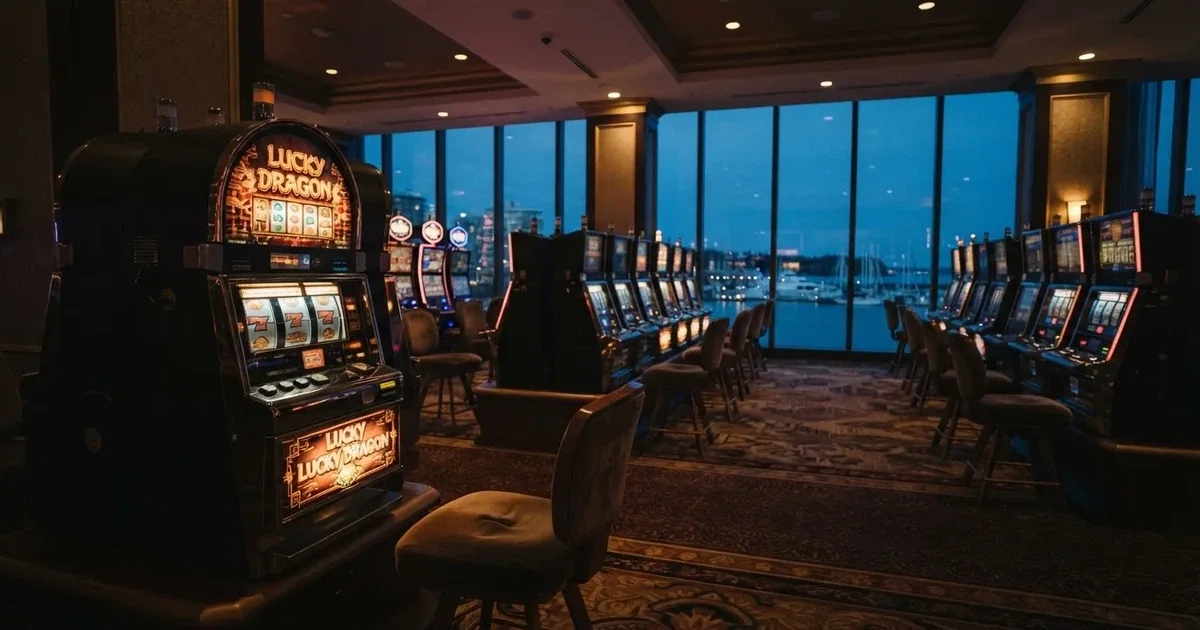
Current as of 29 October 2026 and cross-checked against the ACMA’s published register of formal warnings and blocking requests.
Table of Contents
- Why “Online Pokies in Tasmania” Isn’t a Real Product
- Responsible Gambling Supports in Tasmania
- The Licensed Land-Based Venues: Tasmania’s Two Casinos
- How Pokies Payouts in Tasmania Compare
- The Mechanics: How Tasmania’s Pub and Club Machines Work Day to Day
- The Offshore Brand List: Names the ACMA Has Already Written To
- How This Shortlist Is Put Together — and What Separates One Entry from Another
- What the Brand List Actually Means for a Reader
- The Reform That Is Now Law But Not Yet in Force
- Money In, Money Out: Payment and Payout Realities
- Comparison With Other Australian States
- What It Costs the Player: The Calculation
- Frequently Asked Questions
Why “Online Pokies in Tasmania” Isn’t a Real Product
The phrase shows up in search terms often enough that it has its own market. It does not have its own licence. Under the Interactive Gambling Act 2001, strengthened by the Interactive Gambling Amendment Act 2017, it is an offence to provide online casino games, online pokies or in-play betting to a person physically in Australia. No state or territory issues a licence for the product. The only gambling services the Act allows an Australian-licensed operator to provide online are wagering (on races or sporting events, placed before the event begins), lotteries and keno.

That distinction is what makes “online pokies Tasmania” a phrase without a referent. You can place a bet on the Melbourne Cup from Hobart through a licensed wagering service. You cannot legally play a digital slot machine from Hobart through any Australian-licensed site, because no such site exists. Offshore operators offering slots to Australian customers are not covered by Australian consumer law, by Australian dispute resolution, by BetStop, or by any state complaint body. The page you’re reading concerns Tasmania’s licensed venues, and the offshore brand list is included because so much of the search traffic around this subject leads there, and those are the brands the regulator has already written to.
What the ACMA can and cannot do
The ACMA investigates complaints, issues formal warnings, and directs Australian internet service providers to block illegal gambling websites. As of the regulator’s June 2026 update, 1,751 illegal gambling and affiliate marketing websites had been blocked since the first blocking request in November 2019, and more than 230 unlicensed services had left the Australian market since enforcement was strengthened in 2017. The most recent round reported in late June 2026 alone directed the blocking of twelve more names: 7Signs, ChromaBet, Donbet, Duospin, Freshbet, Slots Gem, Jacks Club, Lucky Start, Spinrise, Vinyl Casino, Wildsino and Pointsbetz.
The consequence for a player is concrete: the individual is not prosecuted, the Act targets the provider. But an offshore site gives no Australian consumer protection, no complaints body, and no recourse if a withdrawal is refused. The site can be blocked while your balance is still on it, the funds on the other side of a withdrawal request you cannot chase in any Australian court. H2 Gambling Capital’s 2025 report estimates about A$3.9 billion a year in losses to illegal gambling sites from Australia, and tracks the share of gambling going through legal channels as having fallen from 74 percent in 2021 to 64 percent. The volume is real, the consumer protection is not.
A note on the “Northern Territory licence” you’ll see on offshore sites
Most bookmakers you’ve heard of (Sportsbet, Bet365, Ladbrokes) hold Northern Territory Racing and Wagering Commission licences. That commission regulates 52 of Australia’s online bookmakers, which is the territory acting as a tax base for wagering services that are legal under the IGA. It has no full-time staff and meets once a month in Darwin. A site displaying a Curaçao or Anjouan licence and an NTRWC number is conflating two very different authorisations: the NTRWC number covers wagering before the event, not online casino games, and the offshore licence covers nothing enforceable inside Australia.
Responsible Gambling Supports in Tasmania
The state-side support network for problem gambling in Tasmania is solid, free, and bound to the licensed venues. Gambling Helpline Tasmania runs the 24-hour phone line 1800 858 858, operated by Anglicare Tasmania’s Gamblers Help Service. The line takes calls around the clock and can help arrange venue self-exclusion. In-person counsellors are based in Hobart, Launceston, Devonport and Burnie, so a punter in any of the four main population centres can walk into a session.
Venue self-exclusion is the practical lever, and it works at the venues that participate. The cashless gaming card system, mandatory at hotel and club poker machines from December 2025, gives a player a single point at which to set limits across the licensed pub and club network. The default loss limits are A$100 per day, A$500 per month and A$5,000 per year. These can be raised, but only after a minimum 24-hour wait, which is the cooling-off period designed to slow impulsive limit changes.
The Tasmanian Liquor and Gaming Commission oversees the cashless card system. As of September 2024, no casino rollout date had been set; the two casinos operate on their own pre-existing harm-minimisation arrangements until that schedule is finalised.
For readers outside the pub and club network, BetStop — the National Self-Exclusion Register, live since August 2023 — binds Australian-licensed online and phone wagering services. An offshore casino is not connected to it. Self-excluding through BetStop does not stop an offshore operator from accepting your deposits, because no Australian law requires the offshore operator to check the register. National Gambling Helpline 1800 858 858 stays the same number for anyone affected, licensed venue or not.
The Licensed Land-Based Venues: Tasmania’s Two Casinos
Tasmania has exactly two casinos. Wrest Point in Hobart opened on 10 February 1973 as Australia’s first legal casino. The Country Club Casino and Resort in Launceston followed in 1982, opened by Federal Group, whose design took the Georgian stately-home style of the American South and set it in the rural landscape around Launceston. Both are still operating today and both are the only venues on the island where you will find a full-scale casino floor, including table games alongside the poker machines.
How Tasmania ended up with Federal Group as the licensed operator for so long
Federal Group held the exclusive licence to operate electronic gaming machines outside its casinos in Tasmania under the Gaming Control Act 1993. That arrangement lasted decades. In August 2017 the group relinquished the monopoly, allowing individual pubs and clubs to hold their own machine licences and adding roughly 90 licensed pub and club EGMs to the network that had previously belonged to Federal alone. The change opened the market but did not change the casino duopoly; Tasmania is still a two-casino state.
The Farrell family acquired majority ownership of Federal Group’s holding company by 1989 and privatised the group in 1990. Federal had originated as the Federal Coffee Palace Company Limited, founded in Melbourne in June 1885, and it remains Tasmanian family-owned. As of 2018, the Mulawa Holdings arm of the licence structure reported profit nearly doubling, from A$13.9 million to A$24.4 million in the year to 30 June 2018, against revenue of A$543 million and roughly A$75 million in gaming taxes and licence fees paid to the Tasmanian government.
What you actually find at a Tasmanian casino
A night at Wrest Point or the Country Club looks much like a night at any other Australian casino hotel: a gaming floor with poker machines and table games, restaurants, bars, and accommodation. Both venues run EGM-style machines; the rest of the licensed pub and club network runs a smaller machine footprint under the post-2017 licensing regime. For most Tasmanians, the everyday pokies experience is the pub or club machine, not the casino floor.
Pokies on the Spirit of Tasmania ferries: the cross-Bass-Strait ferries Spirit of Tasmania I and II have historically featured gaming machines, and the question of “pokies on Spirit of Tasmania” recurs in searches around travelling Tasmanians. The ferries operate under Commonwealth and Tasmanian regulations as a moving venue; the machines on board run under gaming licences specific to the operation, not pub or casino licences. The exact operating hours and machine count vary by sailing, and the rules around play during berth versus underway are set by the operator and enforced by Tasmanian Liquor and Gaming.
How Pokies Payouts in Tasmania Compare
Tasmania’s minimum gaming-machine return-to-player rate and maximum bet are set under the state’s gaming legislation and administered by the Tasmanian Liquor and Gaming Commission. Australia’s other states publish their own rates, so a reader can weigh what a Tasmanian pub machine returns against the equivalent figures in South Australia, Victoria, Queensland and New South Wales.
| State | Minimum RTP | Maximum bet (non-casino) | Notes |
|---|---|---|---|
| Tasmania | Set under Tasmanian legislation | Set under Tasmanian legislation | Both casinos operate on the state regime; no separate casino-only RTP floor published |
| South Australia | 87.5% | A$5.00 | Adelaide Casino itself has no maximum-bet limit |
| Victoria | Per state schedule | Per state schedule | Pub and club EGM network; Crown Melbourne operates under the casino licence |
| Queensland | Per state schedule | Per state schedule | Star Brisbane at Queen’s Wharf is the single licensed casino |
| NSW | Per state schedule | Per state schedule | The Star Sydney and Crown Sydney are licensed casinos |
South Australian gaming-machine losses outside Adelaide Casino totalled about A$0.92 billion in 2022-23, roughly A$497 per adult — useful context for what a high-minimum-RTP jurisdiction actually loses in aggregate. South Australia’s rates are the most commonly cited benchmark because Adelaide Casino is the only comparison casino sitting in another capital city state under a tight regulatory floor.
Maximum cash payout
Maximum cash payouts on pub and club machines in Tasmania are set by venue policy and the Gaming Control Act. A pub cannot pay out more than a state-set threshold on a single machine win without going through the cashier’s cage. Inside the casino, payout ceilings are set higher, again by the venue and the commission. “Maximum cash payout pokies Tasmania” as a search term reflects the point at which a player needs to physically deal with a cashier rather than a machine.
The Mechanics: How Tasmania’s Pub and Club Machines Work Day to Day
Cashless gaming cards from December 2025 are the structural change for non-casino play. Every hotel and club poker machine now sits behind a carded-play system. You load funds onto the card at a kiosk or service desk, present the card at the machine, and the machine reads your balance and your limits from the central system. The default daily loss limit is A$100, the monthly limit A$500, and the annual limit A$5,000. Each default can be raised, but only after a mandatory 24-hour wait, and lowering a limit is immediate.
For a punter planning a night at the pub, this changes the running order: load the card, decide whether the default limits suit the night, and adjust with a day to wait if not. The card also feeds venue-level data back to the regulator, which is the policy point — Tasmania can now see per-player loss trajectories across the licensed pub and club network, and use that data to triage the venues most likely to be causing harm.
Twenty-four hour pokies in Tasmania
“24 hour pokies Tasmania open now” is the second most common search variant after the licensed venue question, and the honest answer is that not every pub in Tasmania runs 24 hours. Country pubs mostly close their gaming rooms with the venue. The two casinos run extended hours, and a small number of late-trading venues in Hobart and Launceston keep machines open through the night. If the search is for a guaranteed open machine at 3 a.m., the answer is a casino, not a pub.
Tasmania cashless pokies in detail
Carded play has been the headline structural reform of the past two years. It does not change the house edge; it changes how a player’s money moves in and out of the machines and how the venue tracks it. For a player, the immediate practical consequence is that coin-handling has gone: you cannot feed notes into a pub EGM and walk away. For a player concerned about staying inside a budget, the limit structure does the work the player would otherwise have to do on willpower.
The Offshore Brand List: Names the ACMA Has Already Written To
What follows is not a ranking and not a recommendation. Each brand appears because the Australian Communications and Media Authority has issued a formal warning over it for offering prohibited online casino services to Australians, as recorded in the ACMA’s published register. The list is ordered by the operator behind each brand, the date of the warning, and the relevant source publication.
The legal frame stays the same for every brand on the list. Online casino games, including online pokies, cannot be licensed anywhere in Australia. Any operator displaying a licence, an “Australian-friendly” page, or an AUD balance is operating outside the framework the Interactive Gambling Act 2001 actually licences. The Australian licence a bookmaker may hold from the Northern Territory Racing and Wagering Commission is a wagering licence — it covers pre-event betting on races and sport, not online casino games.
| Brand | ACMA action and date | Operator named by the ACMA | Subject support | Subject support: where research names it (sources) |
|---|---|---|---|---|
| RocketPlay | Formal warning, March 2026 | Pulsup Ltd | No applicable subject data | n/a |
| Level Up Casino | Formal warning, May 2022 | Dama N.V. | Listings-only — site directory listings | en.wikipedia.org; vgccc.vic.gov.au |
| Woo Casino | Formal warning, March 2025 | Dama N.V. | Listings-only — site directory listings | en.wikipedia.org |
| Spirit Casino | Formal warning, May 2025 | Dama N.V. | No applicable subject data | n/a |
| National Casino | Formal warning, July 2025 | Consolutetish S.R.L. | Listings-only — coverage and reporting listings | Abc.net.au; infrastructure.gov.au |
| Bizzo Casino | Formal warning, July 2025; earlier formal warning 2022 | Consolutetish S.R.L. (2025); TechSolutions (2022) | No applicable subject data | n/a |
| Ignition Casino | Formal warning, July 2025 | Bamboo Media | No applicable subject data | n/a |
| Instant Casino | Formal warning, February 2025 | EOD Code SRL | No applicable subject data | n/a |
| Jackbit | Formal warning, April 2026 | Ryker B.V. | No applicable subject data | n/a |
| Casino Intense | Formal warning, April 2025 | Sterplay Holding Ltd | Listings-only — coverage and reporting listings | Abc.net.au; Asgam.com; cbs.sa.gov.au |
| Sky Crown | Formal warning, September 2022 | Hollycorn N.V. | Listings-only — site directory listings | en.wikipedia.org |
A second reading of the table makes the picture plain: at least three of the named operators (Dama N.V., Consolutetish S.R.L., TechSolutions) sit behind multiple brands at once, which is how offshore casino groups spread their footprint across a list of front names. A warning over one brand is sometimes a warning over the company behind several others, and the ACMA’s register tracks both the company and the brand. For a player, that means the company entry is the more durable fact.
What “subject support” actually means in the table
The fourth column distinguishes between brands where research carries an applicable subject (a payment method, a coin, a game type) drawn from independent listings and brands where it does not. Brands marked “no applicable subject data” are not endorsed and not condemned beyond the ACMA’s own warning; they are presented on their regulator-facing facts only. Brands marked “listings-only” carry a subject drawn from third-party directories that do not themselves verify against Australian law.
How This Shortlist Is Put Together — and What Separates One Entry from Another
A ranking of “best pokies venues in Tasmania” implies a usable ordering. With the offshore list, the relevant axis is the ACMA’s published register of formal warnings: who has been named, when, and over what operator. With the licensed venue list, the relevant axes are the venue’s own licence category (casino, pub, club) and the operational facts anyone can check — hours, machine count, location.
The split is the reason a single ranking does not exist. Tasmania’s two casinos are a category of their own, the pub and club network is another, and the offshore brands are a third category altogether, one that has no business being on the same ranked list as the licensed venues because the legal status is different.
What separates one offshore brand from another is largely the regulator action already on the public record: which operator behind the brand, which warning month, whether the same operator has attracted a second or third warning. Past that, the operator’s own marketing pages carry promotional material that research does not verify, so the basis for ordering by bonus size, payout time, or game count does not survive an audit at the level the ACMA’s own register is held to.
What the Brand List Actually Means for a Reader
Reading the table, three structural facts become obvious. First, several of the warning entries cluster around the same handful of operators, particularly Dama N.V., which the ACMA has written to in May 2022, March 2025 and May 2025, covering six brands across those three rounds. Second, the warnings escalate from one-off brand action to repeated operator action over a four-year window. Third, none of the brands is a licensed Australian online casino, because no such licence exists for the product under the Interactive Gambling Act.
For a reader, the practical question is what the warning list signals: a brand named in a formal warning is on notice from the regulator. The warning names the operator behind the brand. A warning under section 313 of the Telecommunications Act 1997, which the ACMA may also issue in parallel, can lead to ISP blocking. The threshold between warning and block is whether the provider continues offering prohibited services after the warning, and providers do continue for periods of time after the warning lands, which is why the block rounds keep adding new names.
Why bonus codes do not appear on this page
A note the reader will not find elsewhere on this subject: every offshore brand on the ACMA’s list advertises some form of welcome offer. The figures attached to those offers — match percentages, free-spin counts, maximum cashouts — are taken from the operator’s own promotional pages or from affiliate marketing. The basis for them is not checkable against any Australian register. No bonus code, voucher code, or signed-up offer is presented here, because the basis for any specific offer cannot be verified, and because a working code would direct reader behaviour toward a service that the regulator has already written to.
The Reform That Is Now Law But Not Yet in Force
The Interactive Gambling Amendment (Gambling Reform) Bill 2026 passed Parliament on 19 August 2026. Its advertising and inducement measures commence 1 January 2027. On this page’s publication timeline, the Bill is law but the advertising and inducement provisions are not yet in force; they are a scheduled start date, not a current operating rule.
What the Bill changes, once in force: stricter rules on gambling advertising during live sport, restrictions on inducements to open new accounts, clearer requirements on messaging around the harms of gambling. None of those provisions alters the underlying prohibition on online casino games offered to Australians; the Bill layers onto a regime that already banned the product. It tightens the licensable end of the market and the advertising around the licensable end.
For a reader comparing today’s options to next year’s, the boundary line that matters is still the prohibition on online casino games. The Bill’s inducement measures will further reduce the marketing surface of offshore brands, not change their legal status.
Money In, Money Out: Payment and Payout Realities
The rules on how money gets into and out of an Australian-licensed wagering account are now mostly settled, and they tell you what an offshore site is doing differently. Since 11 June 2024, credit cards, credit-related products and digital currency have been banned as payment methods for licensed online wagering in Australia. Penalties for an operator accepting those can run to A$247,500.
The legal deposit routes for licensed wagering are debit card, bank transfer, PayID/Osko and BPAY. A site asking an Australian for a credit card deposit or a crypto deposit is operating outside the Australian rules, regardless of what licence page it displays alongside the request. That test — does the site accept credit cards or crypto from an Australian? — is a fast way to identify that the site is treating Australian customers outside the local regime.
Withdrawal timelines are not standardised under the IGA because online casino withdrawals are not under Australian jurisdiction in the first place. The timeframes a player sees on an offshore site are set by the operator’s own cashier policy. Within Australian-licensed wagering, withdrawal time is set by the licensed operator against the IGA and the bookmaker’s own terms. The relevant point for an offshore brand is that there is no Australian complaint body to escalate a slow withdrawal through, and that includes the casino-on-the-block edge case: the ACMA can direct a block while a player still has a balance inside the site.
What this section is not
This is not a list of payment methods supported by each offshore brand. Listing payment methods would imply acceptance, and acceptance on an offshore site accepting Australians sits outside the Australian regime. Where a research source carried a payment-method subject, it is in the subject-support column above; where it did not, the no-data marker appears.
Comparison With Other Australian States
The other Australian state capitals offer useful benchmarks for what a tight regulatory floor looks like in practice. Tasmania sits alongside them on different terms: a duopoly casino structure inherited from the pre-2017 monopoly and a licensed pub and club network running under a state cashless card regime.
South Australia: a single licensed casino, tight pub-floor rules
Adelaide Casino, known commercially as SkyCity Adelaide, sits in the heritage-listed Adelaide railway station building on North Terrace. It has 90 gaming tables and 950 gaming machines, and it is the sole licensed casino in South Australia under the Casino Act 1997. Its table-game monopoly was extended to 30 June 2035 under a licence formalised on 11 October 2013, allowing the casino to expand up to 200 gaming tables and 1,500 gaming machines. A 2015-2021 Riverbank precinct redevelopment, worth about A$330 million, added the EOS by SkyCity tower, which opened in 2021 with 120 hotel rooms and expanded gaming space.
The state government sets a minimum gaming-machine return-to-player rate of 87.5 percent and a general maximum bet of A$5.00 outside the casino. Adelaide Casino itself has no maximum-bet limit; the constraint is set only on non-casino machines. South Australian gaming-machine losses outside Adelaide Casino totalled about A$0.92 billion in 2022-23, equivalent to about A$497 per adult.
Queensland: a state that rebuilt a casino in 2024
Treasury Casino, operated by Star Entertainment Group, closed on 25 August 2024 to make way for the new Star casino at Queen’s Wharf. The Star Brisbane began a staged opening at the A$3.6 billion Queen’s Wharf Brisbane precinct on 29 August 2024, with the main casino floor and premium gaming rooms opening first. The development is joint between Star Entertainment Group and Hong Kong-based Chow Tai Fook Enterprises. Treasury Casino had itself opened in April 1995 in Brisbane’s historic Treasury Building as a three-level gaming emporium of 80 gaming tables and over 1,300 gaming machines, a hotel, six restaurants, five bars and a nightclub.
Queensland had 21,122 gaming machines operating in 351 venues in October 2023 — the largest EGM network of any Australian state by venue count, partly reflecting the pub and club spread across a state with a widely distributed population. The Queen’s Wharf precinct opened amid concerns about the licence position of its lead partner: in late 2022 the Queensland Government, acting on an independent review by former Court of Appeal judge Robert Gotterson, found Star Entertainment unsuitable to hold its Queensland casino licences after concluding it had misled regulators and failed its anti-money-laundering duties. Star was fined A$100 million on 9 December 2022, with a 90-day suspension of the Treasury Brisbane and Star Gold Coast licences deferred to 1 December 2023 to allow remediation.
What It Costs the Player: The Calculation
A site promising an offshore bonus will quote you a number — say, “200% match up to A$500” — and then the calculation sits behind a terms-of-service link. The actual cost of clearing that bonus depends on three numbers: the bonus amount, the wagering multiple, and the slot’s return-to-player rate.
The arithmetic below is what the math reduces to in plain terms. Assume a bonus of A$500 with a 40x wagering requirement on the bonus only. The required turnover is A$500 × 40 = A$20,000. At a slot RTP of 96 percent, the statistical house edge per spin is 4 percent. Across A$20,000 of wagers, the expected loss is A$20,000 × 4% = A$800. That figure is the real cost of clearing the bonus in expected-value terms. It is a statistical estimate across many spins, not a guaranteed outcome for any individual session.
The marketing word on a bonus page is “free play”. The number the math produces is an expected loss of A$800 to clear A$500 of bonus funds at 40x wagering on a 96 percent RTP slot. That is the trade the bonus is actually offering, and it is the trade the marketing page tends to omit.
The calculation works as a band rather than a single figure because the RTP and the wagering multiple vary across the slots an offshore site actually offers. A 94 percent RTP slot would lift expected loss to A$1,200 across the same A$20,000 turnover. A 35x wagering multiple would drop required turnover to A$17,500 and the expected loss to A$700 at 96 percent RTP, or A$1,050 at 94 percent. The qualifier on any figure is always which RTP and which multiple the calculation is using. A range built from those inputs is the honest answer.
How the bonus’s time cost stacks on top
A second cost dimension that rarely appears on a bonus page is the time it takes to clear required turnover. The standard five-second interval between spins is the rule of thumb used to estimate how long the clearing session runs. At A$1 per spin and A$20,000 turnover, that is 20,000 spins × 5 seconds ÷ 3,600 = roughly 28 hours of machine time. Add in the higher house edge on lower-RTP titles and the same bonus absorbs substantially more hours for the same outcome.
Frequently Asked Questions
Which venues in Tasmania are licensed to operate pokies?
Tasmania licenses two casinos (Wrest Point in Hobart and the Country Club Casino and Resort in Launceston) and a network of hotels and clubs that hold their own poker machine licences after the 2017 change to the Gaming Control Act. No online casino is licensed under any Australian state or territory regime to offer online pokies or online casino games to Australians.
Are pokies in Tasmania available around the clock?
Not everywhere. The two casinos run extended hours, including overnight. Most licensed pubs and clubs close their gaming rooms with the venue, so a 3 a.m. machine is reliably a casino machine. A small number of late-trading venues in Hobart and Launceston keep machines open overnight, but the casino is the consistent answer for a guaranteed running machine after midnight.
What identification do venues in Tasmania require before letting someone play pokies?
Casinos operate their own identification regimes with minimum age 18 enforced, and they are exempt from the cashless gaming card regime pending a rollout date. Pub and club machines are carded as of December 2025, with default loss limits of A$100 per day, A$500 per month and A$5,000 per year, all raisable only after a 24-hour wait. Identification is part of the card registration at the venue.
Can visitors to Tasmania use self-exclusion schemes at local pokies venues?
Venue self-exclusion can be arranged by contacting the venue directly or by calling Gambling Helpline Tasmania on 1800 858 858, which is operated by Anglicare Tasmania’s Gamblers Help Service. A visitor’s exclusion is set at the registering venue. The state-based cashless gaming card system tracks player activity across the participating pub and club network, which makes a card-based exclusion effectively live across that network during the registered period.
How does the payout percentage on Tasmania pokies compare with other Australian cities?
Tasmania’s minimum RTP and maximum bet are set under state legislation administered by the Tasmanian Liquor and Gaming Commission. South Australia publishes a minimum 87.5 percent RTP and a A$5.00 maximum bet outside the casino, and Adelaide Casino itself has no maximum-bet limit. The two regimes are not equivalent at the machine level — Tasmania’s numbers are set under its own framework, South Australia’s under the South Australian Gaming Machines Act regime, and the casino-on-casino comparison is also state-specific.
Is it legal for an online casino to advertise ‘pokies’ in Tasmania the same way a pub or club does?
No. Online casino games and online pokies cannot be licensed in Australia. The Interactive Gambling Act 2001, as amended in 2017, makes offering those services to a person physically in Australia an offence. The ACMA issues formal warnings and directs ISPs to block illegal sites — over 1,750 blocked since the regulator’s November 2019 first blocking request, with twelve more added in late June 2026. An offshore site using the word “pokies” for an Australian-facing page is using the same vocabulary as licensed Tasmanian venues, but operating outside the framework those venues are licensed under.