
Wazdan-branded slot titles and the offshore sites that market them to Australians in 2026
Data current as of 29 October 2026 and cross-checked against the Australian Communications and Media Authority’s published register of formal warnings and blocking requests.
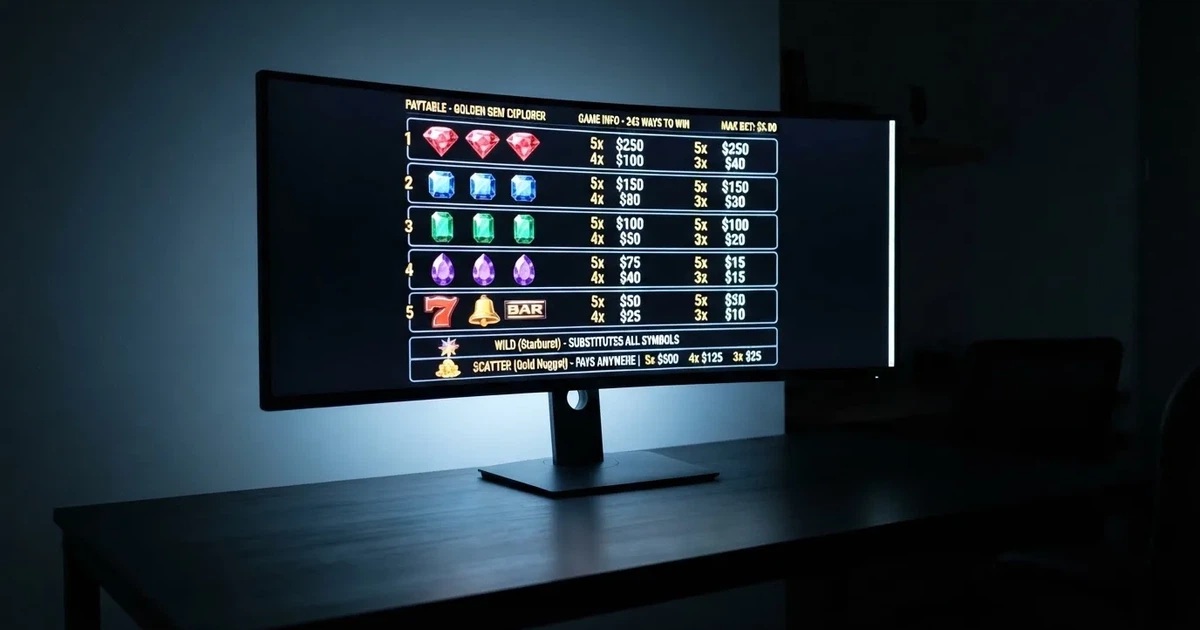
Table of Contents
- Legality, in plain terms
- Responsible gambling, and where the support actually reaches an Australian
- How deposits and withdrawals look at an offshore Wazdan casino
- Bonuses, free spins and what the small print actually does
- Mobile play and the dedicated-app question
- Specific Wazdan titles, mechanics and the paytable that matters
- What the shortlist actually shows: 2026’s ACMA record
- The cost of the choice, in 2026
- Where the rest of the picture lives
- Frequently asked questions
Legality, in plain terms
Online casino games cannot be licensed anywhere in Australia. The Interactive Gambling Act 2001, tightened by the Interactive Gambling Amendment Act 2017, makes it an offence to supply online casino games, online pokies or in-play betting to a person physically in Australia. No state or territory issues a licence for them. What is licensable — wagering on racing and sport placed before the event, lotteries and keno — is administered in practice by the Northern Territory Racing and Wagering Commission, which regulates 52 of Australia’s online bookmakers from a Darwin office that meets once a month. The Commission’s reach stops at licensed wagering; it does not extend to online casino products.
The ACMA enforces the prohibition on the supply side. It investigates complaints, issues formal warnings to operators, and asks Australian internet service providers to block illegal services. The individual player is not the target — the Act is aimed at whoever is providing the service — but an Australian who opens an account at one of these sites gets no Australian consumer protection, no complaints body and no recourse if a withdrawal stalls or is refused. The site can be blocked while a balance is still on it, and the player’s only recovery route is the operator’s own customer support, sitting in a jurisdiction the ACMA cannot reach.

The blocking campaign has been running for years. Since the first blocking request in November 2019, the ACMA has asked ISPs to block 1,751 illegal gambling and affiliate marketing websites, and more than 230 unlicensed gambling services have left the Australian market since enforcement was strengthened in 2017. The most recent round, reported on 26 June 2026, added twelve more domains: 7Signs, ChromaBet, Donbet, Duospin, Freshbet, Slots Gem, Jacks Club, Lucky Start, Pointsbetz, Spinrise, Vinyl Casino and Wildsino. Each name is a brand an Australian can find advertised through affiliates and SEO; each is one ISP request away from being unreachable.
H2 Gambling Capital’s 2025 estimate puts Australians’ annual losses to illegal gambling sites at roughly A$3.9 billion, with the share of gambling going through legal channels falling from 74% in 2021 to 64%. The legal channel itself is narrow: it is wagering, lotteries and keno, not the casino floor the offshore sites are selling.
A second statute shapes what an Australian can pay with. Since 11 June 2024, credit cards, credit-related products and digital currency are banned as payment for licensed online wagering, with penalties up to A$247,500 for operators. Legal deposit routes are debit card, bank transfer, PayID/Osko and BPAY. A Wazdan-branded casino asking an Australian for a credit card or a Bitcoin deposit is, by definition, not operating inside the Australian regime.
A 2026 reform sits beside all of this. The Interactive Gambling Amendment (Gambling Reform) Bill 2026 passed Parliament on 19 August 2026, and its advertising and inducement measures commence on 1 January 2027. As of 2026 that is a law with a start date, not yet in force; what it will restrict is the affiliate marketing and bonus advertising that pulls Australians onto offshore sites in the first place.
Responsible gambling, and where the support actually reaches an Australian
The supports that exist are pitched at the legal wagering channel. BetStop, the National Self-Exclusion Register, has been live since August 2023 and binds every Australian-licensed online and phone wagering service. A person who registers with BetStop cannot open a new wagering account with any of them, and existing accounts are closed. It does not bind offshore casino sites: those operators are not connected to the register, do not run ID checks against it, and have no obligation to honour an Australian’s exclusion request. The exclusion works as far as the Australian channel extends; outside it, the only protection is the player’s own decision not to play.
The National Gambling Helpline — 1800 858 858 — is free, 24/7 and runs alongside webchat at Gambling Help Online. It is staffed by counsellors, not by casino operators, and it is reachable whether or not the caller has been playing on a licensed site. State and territory services layer on top: each jurisdiction runs its own face-to-face counselling and its own self-exclusion arrangements for land-based venues.
The practical consequence for someone reading this list: BetStop covers the legal bookmakers; the offshore casinos marketing Wazdan titles sit outside it. The helpline covers both. Anyone who has been gambling on the offshore sites and wants to stop has the same helpline option as a sports-betting punter, and the same gap in machine-side enforcement when the offshore site ignores the request.
How deposits and withdrawals look at an offshore Wazdan casino
The payment shape on these sites is set by what the operator can actually run, not by what Australian law permits. Offshore brands that advertise to Australians typically push a mix of cryptocurrencies (Bitcoin, Ethereum, Litecoin, USDT on various chains), a handful of e-wallets, and sometimes Visa or Mastercard deposits routed through payment processors in jurisdictions where those processors still touch gambling. Bitcoin is the headline rail: the affiliate marketing material frames crypto deposits as “fast” and “anonymous” and treats the credit-card ban in licensed wagering as a feature of the offshore alternative rather than a reason not to play.
Settlement speed is where the marketing and the reality start to part. Crypto deposits usually credit within minutes; e-wallet deposits clear quickly once the processor accepts them. Withdrawals are where the friction lives. Operators publicise “instant” or “same-day” payouts for crypto, but the fine print typically reserves the right to run additional verification before the first withdrawal — KYC documents, source-of-funds checks, sometimes a request for a screenshot of the original deposit from the player’s banking app. Those checks can stretch a payout over several business days. Bank-transfer withdrawals, where they are offered at all, are usually slower than crypto and depend on the receiving bank rather than the casino.
Two structural features compound the friction. First, no offshore site offers the consumer-protection framework a licensed Australian wagering provider does: there is no external dispute resolution, no Australian regulator to escalate to, and no path to recover funds if a withdrawal is refused. Second, the ACMA’s blocking action can make the site unreachable while a balance is still on it. The player is then dealing with an operator that has, in the regulator’s formal wording, been found to be offering prohibited services to Australians, and trying to recover through that operator’s own support channels.
Credit cards and crypto are not options at any Australian-licensed bookmaker. The debit-card, PayID/Osko and BPAY rails that are legal for licensed wagering are not available at offshore casino sites because those sites are not licensed. So the payment channel itself is a tell: an Australian being asked for Bitcoin or a credit card at a Wazdan-branded casino is, by construction, outside the local rules.
Bonuses, free spins and what the small print actually does
The marketing around Wazdan-branded casinos tends to lead with welcome packages — match bonuses on the first deposit, sometimes stretching across the second and third, plus bundles of free spins on a named Wazdan title. The headline figure is the deposit match (often stated as a percentage up to a dollar cap), and the spins are usually pinned to a single slot at a fixed coin value. A standard shape in 2026 is something like a 100% match up to a four-figure cap, plus a batch of free spins on a Wazdan flagship such as 9 Coins or one of the Hold the Jackpot series.
The fine print is where the cost lives. Almost every bonus at an offshore casino carries a wagering requirement — a multiplier, typically somewhere between 35x and 50x the bonus amount, that has to be turned over in eligible games before any of the bonus balance or the winnings from it can be withdrawn. Free-spin winnings are usually credited as bonus funds and inherit the same wagering requirement. Game-weighting rules shrink the contribution of slots below 100% and often exclude table games or live casino entirely; the wagering requirement can only be cleared on the games the operator names, at the contribution rate the operator sets.
A second cost lives in the maximum cashout clause. Some bonuses cap the amount that can be withdrawn from bonus-derived winnings regardless of how much the wagering requirement is cleared by — a few hundred dollars is a common ceiling for free-spin winnings. A third cost lives in the time limit: most bonuses expire seven to thirty days after issue, and any unmet wagering at expiry forfeits both the bonus and any winnings tied to it.
The structural problem is the offshore site itself. None of these terms is enforceable through an Australian channel: there is no regulator a player can escalate to if a bonus is voided, no ADR body, and no requirement that the operator honour its own published rules. The marketing presents the bonus as an inducement; the small print and the offshore status together turn it into a contract the player has very limited ability to enforce.
Mobile play and the dedicated-app question
Wazdan’s portfolio is built in HTML5, and the games run in any modern mobile browser without a download. A touch interface gets the full reel set, the volatility-level switcher and the bonus-round buy features where the slot supports them. Load times depend on the operator’s hosting rather than on the studio’s code; a well-built offshore site loads a Wazdan slot on a mid-range phone in a few seconds, a poorly built one can hang on the splash screen. There is no Wazdan-published app for end users — the studio licenses to operators, and the operators decide whether to wrap their own site in a downloadable app or stay browser-only.
Browser play is the default, and the practical implications are straightforward. A phone browser running an offshore casino is doing what a phone browser does: it loads pages, runs JavaScript, opens WebSocket connections to the operator’s game server. None of that is illegal in itself. What sits behind it is a service the ACMA has formally warned the operator for offering to Australians. The browser is incidental; the legal status is set by the operator’s licence (or lack of one) under the IGA, not by the delivery mechanism.
App-store distribution adds a wrinkle. Apple and Google both restrict real-money gambling apps by jurisdiction, and Australian app stores do not carry real-money casino apps from operators without an Australian licence. An Australian who has downloaded an offshore casino app from outside the local store has done so via a sideload or a non-Australian account, and the app itself sits in the same legal posture as the browser version.
Specific Wazdan titles, mechanics and the paytable that matters
Wazdan is a Malta-registered slot studio — Office 602, Dragonara Road, St Julian’s — operating under Malta Gaming Authority licence MGA/B2B/206/2011 and a UK Gambling Commission account. The company describes 15-plus years in the business, a catalogue of 300-plus titles as of 2025, more than 40 new releases a year, and a footprint across 20-plus markets. It holds certifications or licences in more than 30 jurisdictions, including New Jersey, Michigan, West Virginia, Ontario, Sweden, Romania, Greece and Denmark. None of those jurisdictions is Australia; Australian online casino licensing does not exist, so Wazdan is not on an Australian register in the way it is on a Maltese or Swedish one.
The studio’s signature mechanics are recognisable across the catalogue. Volatility Levels, introduced in 2018, lets a player adjust a slot’s variance in-game across three settings — a feature no other major studio ships in the same form. Hold the Jackpot is a bonus-round series built around sticky symbols and respins that resolves into one of several jackpot tiers. Collect to Infinity and the related Cash Infinity mechanic lock cash-symbol values in place through the bonus round, accumulating until the feature ends. The combination of adjustable volatility and sticky-symbol bonuses is the through-line that ties the catalogue together.
9 Coins is the flagship and the clearest case study in how the mechanics sit together. The published figure is 96.06% RTP with medium-high volatility and a 500x-bet maximum win, played across three reels and five paylines. The base game pays nothing — every win concentrates in the Hold the Jackpot bonus round, which the player triggers by landing six or more Coin symbols in a single spin. The bonus round is a sticky-respin feature that ends when the respin counter runs out, after which the accumulated coin values are summed and paid. A player choosing to drop volatility to the low setting on 9 Coins will see more frequent but smaller bonus triggers; the high setting trades frequency for the size of the payout when the round does fire.
The wider catalogue around it includes the 9 Coins sequel family, the Power of Gods series, the Sizzling series of fruit-machine style games, and the Hold the Jackpot–branded titles. Aristocrat Leisure, by contrast, is the Australian land-based incumbent — founded in 1953, ASX-listed since 1996, with 2025 revenue of A$6.30 billion and a 7,400-strong workforce — and operates online as Aristocrat Interactive through the NeoGames acquisition completed in April 2024. Aristocrat’s online real-money arm is structured for regulated markets, not for Australia: its interactive division carries Aspire Global, BtoBet and Pariplay, none of which is positioned to take Australian casino players under the IGA.
A handful of other studios appear on the offshore casino shelves that advertise Wazdan. Betsoft, founded in 2006, runs a catalogue of more than 200 RNG games; its Good Girl Bad Girl 2 slot is published at 96.22% RTP with “Very High” volatility and a 15.59% hit rate on a 5-reel, 20-payline layout. 1spin4win, founded in 2021 and Curaçao-licensed, runs more than 190 online slots built in HTML5 for low-bandwidth connections and reports more than 1,000 operator and aggregator partnerships. Both studios surface on the same offshore casino sites that market Wazdan, and both sit under the same regulatory posture: licenced in jurisdictions that do not include Australia, marketed to Australian visitors by operators the ACMA has acted against.
What the shortlist actually shows: 2026’s ACMA record
A shortlist of Wazdan-friendly casinos for Australian players is, by construction, a list of brands the ACMA has warned or blocked. The brand field below is taken from the ACMA’s published formal-warning register; the operator field is the entity named in the warning; the date field is the publication date of that warning. Subject support reflects whether the studio’s own catalogue or a credible studio directory names the brand — listings-only entries are reported only as the directory states, never as a feature the operator offers.
| Brand | ACMA action and date | Operator named by the ACMA | Subject support |
|---|---|---|---|
| RocketPlay | Formal warning, March 2026 | Pulsup Ltd | — |
| Level Up Casino | Formal warning, May 2022 | Dama N.V. | Listings show Wazdan titles |
| Woo Casino | Formal warning, March 2025 | Dama N.V. | — |
| Spirit Casino | Formal warning, May 2025 | Dama N.V. | — |
| National Casino | Formal warning, July 2025 | Consolutetish S.R.L. | Listings show Betsoft, Pragmatic Play and Wazdan-adjacent studios |
| Bizzo Casino | Formal warning, July 2025 (earlier 2022 to TechSolutions) | Consolutetish S.R.L. | — |
| Ignition Casino | Formal warning, July 2025 | Bamboo Media | — |
| Instant Casino | Formal warning, February 2025 | EOD Code SRL | — |
| Jackbit | Formal warning, April 2026 | Ryker B.V. | — |
| Casino Intense | Formal warning, April 2025 | Sterplay Holding Ltd | Listings show 1spin4win and Wazdan-adjacent studios |
| Sky Crown | Formal warning, September 2022 | Hollycorn N.V. | — |
Dama N.V. is the operator behind multiple brands in this set: the May 2022 warning covered Bambet, Dazard, Level Up, Rocketplay, Wild Tornado and Cobra Casinos, and subsequent warnings added Woo Casino (March 2025) and Spirit Casino (May 2025). Rocketplay surfaced again under Pulsup Ltd in March 2026, indicating an operational handover that did not change the ACMA’s view of the underlying service. Consolutetish S.R.L. took over two of the brands — National Casino and Bizzo Casino — that had earlier been the subject of a 2022 formal warning to TechSolutions; the 2025 warning to Consolutetish names the same player-facing brands under a new operating entity.
The “Subject support” column carries the most information in the negative. The marketing claim is that Wazdan titles are a headline feature of every brand on this list; the verifiable record shows Wazdan explicitly named only on Level Up Casino (via Wazdan’s official site) and adjacent studios named on National Casino and Casino Intense (via studio directories). For the remaining eight brands, the Wazdan connection is what the operator’s own front page asserts, not what an independent studio or registry confirms.
RocketPlay
Rocketplay carries the most recent ACMA action in the set: a formal warning to Pulsup Ltd in March 2026, sitting on top of the earlier May 2022 warning to Dama N.V. over the same player-facing brand. The brand has cycled through two operating entities without leaving the ACMA’s enforcement register. The studio’s own catalogue and independent directories do not name Rocketplay as a Wazdan partner; the Wazdan connection is the operator’s marketing claim. The site asks for crypto and credit-card deposits that licensed Australian wagering cannot accept, with the regulator determining the underlying service is a prohibited offering under the IGA, regardless of any licence the operator displays.
Level Up Casino
Level Up Casino sits on the May 2022 Dama N.V. warning and is the only brand in the set that Wazdan’s own site names as a partner. That listing is exactly that — a catalogue entry — and it does not make the service legal for Australians. The site’s payment shape follows the rest of the offshore set: crypto and credit-card rails, no BetStop integration. Players looking for an explicit Wazdan presence on a brand the ACMA has warned will find one here; the legal posture is the same as everywhere else on the list.
Woo Casino
Woo Casino is a March 2025 Dama N.V. warning. The brand sits in the same operating-entity cluster as Level Up, Rocketplay and Spirit Casino, which is the through-line of the Dama block of this set: a single operator running several player-facing brands, each individually warned. Independent studio directories do not put Wazdan titles on Woo Casino’s lobby. The site’s own front page is the source for the Wazdan claim, and the ACMA’s position is unchanged.
Spirit Casino
Spirit Casino is the May 2025 Dama N.V. warning, the latest of the Dama actions. As with Woo Casino and Level Up, no independent studio directory places Wazdan on Spirit Casino’s lobby; the connection runs through the operator’s marketing. The site continues to operate outside the Australian rules and to advertise to Australian visitors via affiliate channels the ACMA has also been blocking.
National Casino
National Casino is a July 2025 Consolutetish S.R.L. warning. Independent directories place Betsoft and Pragmatic Play on National Casino’s lobby, alongside other Wazdan-adjacent studios; the Wazdan connection is reported at the directory level, not on Wazdan’s own partner page. The Consolutetish entity also took over Bizzo Casino in the same July 2025 round, and the earlier 2022 TechSolutions warning covered the same player-facing brand before the handover.
Bizzo Casino
Bizzo Casino has two ACMA actions stacked on it: a 2022 warning to TechSolutions and a July 2025 warning to Consolutetish S.R.L. after the operating-entity change. Independent directories do not name Bizzo Casino as carrying Wazdan specifically. The site’s payment and identity-verification posture follows the rest of the offshore set, with the regulator maintaining a consistent stance across both operating entities.
Ignition Casino
Ignition Casino is a July 2025 Bamboo Media warning. The brand is positioned at the US-facing poker and casino market, and the Australian-facing version is reached via affiliate redirects. No independent listing puts Wazdan on Ignition Casino’s lobby; the Wazdan framing on affiliate sites is the operator’s marketing reaching an Australian SEO footprint rather than an Australian-facing product the studio has integrated with.
Instant Casino
Instant Casino is a February 2025 EOD Code SRL warning. The brand operates as a casino-and-sportsbook hybrid and markets Wazdan titles through its affiliate channels. No independent studio directory places Wazdan on Instant Casino’s lobby. The EOD Code SRL entity does not appear elsewhere on the ACMA register, which makes Instant Casino the only brand in this set tied to a single, single-action operating entity.
Jackbit
Jackbit is an April 2026 Ryker B.V. warning and is the most recent operator-level action in the set. The brand is positioned at crypto-first casino and sportsbook play; its Australian-facing presence is affiliate-driven. Independent studio directories do not put Wazdan on Jackbit’s lobby; the Wazdan framing is the operator’s own marketing claim.
Casino Intense
Casino Intense is an April 2025 Sterplay Holding Ltd warning. Independent directories place 1spin4win and Wazdan-adjacent studios on Casino Intense’s lobby; the brand is named in the UK Gambling Commission’s operator registry as well, which is a different compliance track from the ACMA’s. The brand sits inside the same IGA posture as the rest of the set.
Sky Crown
Sky Crown is the September 2022 Hollycorn N.V. warning. Hollycorn’s portfolio across the ACMA register includes Blue Leo alongside Sky Crown. No independent listing places Wazdan on Sky Crown’s lobby; the Wazdan framing is operator-side marketing.
The cost of the choice, in 2026
A Wazdan-branded casino cannot be licensed in Australia, cannot offer the payment rails that licensed Australian wagering uses, and cannot connect to BetStop. The marketing word that recurs across the offshore set is “instant” — instant deposits, instant crypto withdrawals, instant bonus credit. The arithmetic behind the word is less generous. A 100% match bonus up to A$500 with a 40x wagering requirement on the bonus amount means A$20,000 of eligible-game turnover before any of the bonus balance can be withdrawn, and a free-spin bundle on 9 Coins at the published 96.06% RTP is paid in bonus funds that inherit the same multiplier. The maximum cashout clause on free-spin winnings is often a few hundred dollars regardless of how much the wagering requirement is cleared by; the time limit is often seven to thirty days; and the verification checks on the first withdrawal can stretch the payout over several business days regardless of how the deposit arrived.
Set against that, the cost of not playing on the offshore channel is narrower than the marketing makes it sound. Licensed Australian wagering covers racing, sport, lotteries and keno — not online casino games and not online pokies. A punter who wants to play a Wazdan-branded slot within the Australian legal frame has no channel to do it through; a punter who wants a casino-style game in a regulated environment has the land-based venues in each state and territory, where the machines are regulated locally and where the consumer protections are Australian. The honest reading of the market in 2026 is that the Wazdan-branded slot title is a product that exists, is regulated in dozens of other jurisdictions, and is not available through any Australian-licensed online channel.
The blocking campaign’s running total is the most useful single-figure summary of the situation. The ACMA’s first blocking request was in November 2019; the cumulative count reached 1,751 illegal gambling and affiliate marketing websites by the 26 June 2026 round. Spread across roughly six and a half half-years of enforcement, that is an average blocking rate somewhere in the band of roughly 260 websites per year, or about five per week, every week since the regime started. The figure is a rate, not a forecast: it averages out a slow early phase and a faster recent phase into one number, and the actual count per quarter has moved with the ACMA’s enforcement cadence and the offshore operators’ domain-rotation habits. Read it as a measure of how much inventory the regulator is processing, not as a prediction of when the supply side runs out.
Where the rest of the picture lives
Three sections sit underneath everything in the table above. The legal frame is the IGA itself — what is prohibited, what is licensed, what the ACMA can and cannot reach. The payment frame is the credit-card and crypto ban that took effect on 11 June 2024, which by construction separates licensed Australian wagering from the offshore casinos accepting Australian players. The responsible-gambling frame is BetStop and the National Gambling Helpline — supports that exist, work as far as the legal channel extends, and stop where the offshore channel begins.
The 1 January 2027 commencement of the Interactive Gambling Amendment (Gambling Reform) Bill 2026 sits on top of all of this. Its advertising and inducement measures are aimed at the affiliate marketing and bonus-advertising layer that pulls Australians onto offshore sites in the first place. The law is passed but not yet in force on a 2026 page; what it will change is the surface that delivers the offer, not the underlying prohibition on the offer itself.
Frequently asked questions
Is Wazdan legally available to players in Australia?
No. The Interactive Gambling Act 2001 prohibits the supply of online casino games and online pokies to people in Australia, and no state or territory issues a licence for them. Wazdan titles are licensed in more than 30 other jurisdictions, but Australia is not one of them, and the offshore sites that market Wazdan games to Australian visitors are offering a product that is prohibited at the supply end.
What kinds of games does Wazdan make?
Wazdan’s catalogue is built around online slot titles. The signature mechanics are the in-game Volatility Levels switcher, the Hold the Jackpot sticky-respin bonus series, and the Collect to Infinity / Cash Infinity sticky-cash features. The studio also publishes table games and a small number of specialty titles, but slots are the centre of the catalogue.
Are Wazdan games offered at land-based venues in Australia?
Wazdan’s business is online slot supply to online casinos, not land-based machine manufacture. The Australian land-based pokie market is dominated by Aristocrat Leisure, which is the largest gambling-machine manufacturer in Australia and the second-largest slot-machine manufacturer worldwide, behind International Game Technology. Wazdan does not have an Australian land-based presence of its own.
How can Australians check whether a Wazdan title is fair before ever considering play?
For a licensed Australian wagering service, the answer sits with the state or territory regulator and the ACMA. For an offshore casino, the relevant licences are Curaçao, Malta Gaming Authority, or other jurisdictions the ACMA does not enforce — the same jurisdictions that issue the licences the ACMA has warned operators over for offering prohibited services to Australians. The honest check is that an offshore Wazdan casino does not have an Australian-issued fairness assurance of the kind a licensed wagering provider carries.
Why do offshore sites keep advertising Wazdan games to Australian visitors?
Because the marketing reach is global and the affiliate infrastructure rewards SEO-driven traffic regardless of jurisdiction. H2 Gambling Capital’s 2025 estimate puts Australian losses to illegal gambling sites at A$3.9 billion a year, with the legal channel’s share having fallen from 74% in 2021 to 64%. The supply follows the demand; the ACMA’s blocking requests and formal warnings are the regulator’s response, but the marketing outlay keeps arriving.
What should an Australian do if they see a Wazdan game promoted by an unlicensed site?
The ACMA accepts reports of illegal gambling services and acts on them through formal warnings and ISP blocking requests. For personal support, the National Gambling Helpline (1800 858 858) is free, 24/7, with webchat at Gambling Help Online. BetStop, the National Self-Exclusion Register, covers Australian-licensed wagering services — an offshore casino is not bound by it, so its protection stops at the legal channel. The most reliable Australian-facing channel for casino-style play remains the regulated land-based venues in each state and territory.