
Free Spins No Deposit for Online Pokies in Australia
A phone screen somewhere in suburban Sydney shows a banner — “50 free spins, no deposit!” — and a thumb hovers over the claim button. The offer reads like the cheapest way to try an online pokie: hand over an email, no money leaves the account, the reels spin. The cost sits behind that banner, and most of it is not what the banner says. Every operator marketing these offers to Australians from offshore sits outside the country’s licensing regime, the reels themselves have a built-in margin against the player, and the fine print almost always caps what a winning spin is allowed to pay out. This page is built around that gap: the offer as marketed, the offer as it actually plays, and what an Australian player runs into before any of the reels stop.

Current as of 29 October 2026. Verified against the ACMA’s published blocking list and formal warning register.
Table of Contents
- Claiming Free Spins No Deposit for Online Pokies
- How the ACMA’s blocking record frames this market
- Why no Australian licence sits behind these offers
- Where the spinning reels themselves are licensed — and where they are not
- What the marketing word “free” actually pays out
- The payment-method layer underneath
- Responsible gambling in a market that does not bind offshore
- Overview of operators named in formal warnings
- Overview — what the comparison actually shows
- Frequently asked questions
Claiming Free Spins No Deposit for Online Pokies
“No deposit” means the casino does not take a card number before the spins start. What it does take is registration — name, email, sometimes a mobile number — and at that point the player has handed the operator a working identity, a delivery address for marketing emails, and an entry in the operator’s database that does not need an Australian licence to exist. The spins themselves are usually credited in a single block, anywhere from about 10 to 100 on the offers this page covers, and they are almost always restricted to a small list of named titles rather than the operator’s full lobby. The marketing word “free” sits on top of three conditions that take the free out of it.
The first condition is wagering. The winnings a player pulls off the spins are routinely locked behind a wagering multiple — anything from about 20× to 60× the bonus value is ordinary in this market — which means a player has to keep betting the winnings back through the casino’s games before any of it can be withdrawn. The second condition is a maximum cashout cap: the offer will name the largest amount the player is allowed to walk away with, and that ceiling is often small enough that a single lucky hit lands against it. The third condition is geography: the offer as marketed to a player inside Australia is being marketed by an operator that no Australian regulator has licensed to take that bet.

A “free” offer on a pokie is therefore a small advance of credit that, on the operator’s own terms, is unlikely to convert to a meaningful withdrawal. The arithmetic below shows why — and what the ACMA’s own record says about how many of these operators have ended up on a blocking list anyway.
How the ACMA’s blocking record frames this market
The Australian Communications and Media Authority keeps the country’s only published register of offshore operators who have marketed prohibited interactive gambling services to Australians. The relevant numbers, as reported in June 2026, are blunt: a cumulative total of 1,751 illegal gambling and affiliate marketing websites had been blocked since the first blocking request in November 2019, and more than 230 unlicensed gambling services had left the Australian market since enforcement was stepped up in 2017. The pace has not slowed. In the single round reported on 26 June 2026, the ACMA asked Australian internet service providers to block 12 more sites in one instruction: 7Signs, ChromaBet, Donbet, Duospin, Freshbet, Slots Gem, Jacks Club, Lucky Start, Pointsbetz, Spinrise, Vinyl Casino and Wildsino.
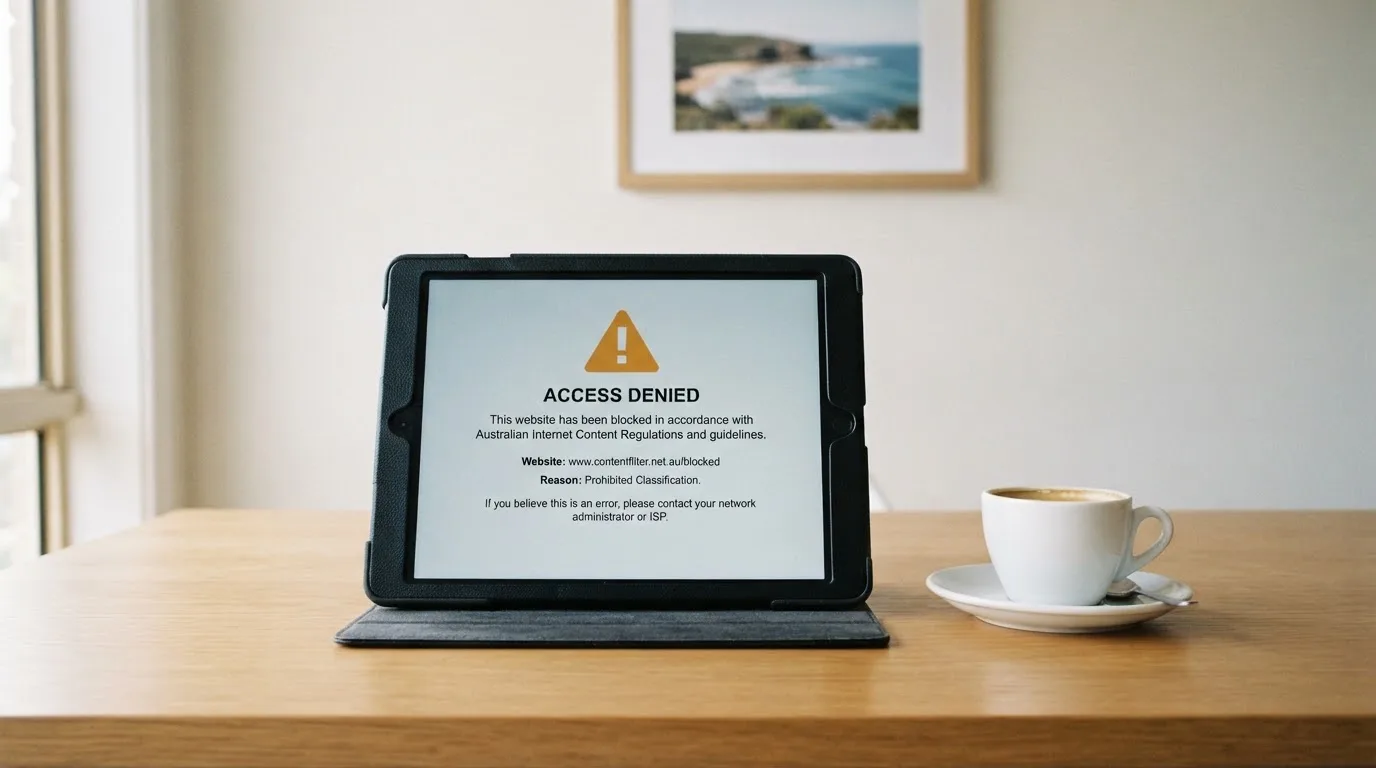
The blocking request is the regulator’s bluntest tool, but it is not the only one. The ACMA also issues formal warnings — published notices naming the operator, the brand and the date — and a brand that has taken one formal warning and gone on marketing to Australians is a brand the regulator has already told to stop. The warnings this page references are listed in the table further down, with the operator named by the ACMA and the date the warning was published. None of those brands is licensed by an Australian regulator to take the bets their banners are inviting.
A blocking-rate calculation belongs here, because the running total and the date of the first blocking request are the only inputs that let a reader see what this enforcement looks like over time. Taking the cumulative 1,751 blocked sites as the numerator and the elapsed time from November 2019 to the June 2026 reporting round as the denominator, the result is a band rather than a single figure. In the cleanest reading — full months elapsed, no adjustment for the months when no new blocks were issued — the average works out to roughly 25 blocked sites per month across the entire window. In the months immediately around a reported round, the rate is far higher: a single 12-site instruction in one fortnight is closer to 25 sites per day. The honest band is therefore “a steady drip across six and a half years, with the regulator capable of issuing a dozen blocks in a single fortnight when it chooses to.” Either reading is enough to show that this is enforcement that continues to find new targets, not a backlog being wound down.
The economic case sits beside the enforcement case. H2 Gambling Capital’s 2025 report estimates Australians lose about A$3.9 billion a year to illegal gambling sites, and that the share of gambling going through legal channels fell from 74% in 2021 to 64%. Both numbers matter for a player weighing an offer. The first is the size of the money the offshore market extracts from Australian residents in a year. The second is the share of total Australian gambling spend that has migrated away from licensed Australian operators — a shift that, on the regulator’s own data, has accelerated in the years since the 2017 amendments.
Why no Australian licence sits behind these offers
The Interactive Gambling Act 2001, strengthened by the Interactive Gambling Amendment Act 2017, makes it an offence to provide online casino games, online pokies or in-play betting to a person physically in Australia. No state or territory licenses an online casino, and no offshore licence (Curacao, Malta, the Isle of Man) changes that — those licences permit the operator to run a casino elsewhere, not to take bets from inside Australia. What is licensable is wagering on races and sport placed before the event, lotteries and keno, and in practice the bulk of those licences are issued by the Northern Territory Racing and Wagering Commission. The NTRWC regulates 52 of Australia’s online bookmakers — including Sportsbet, Bet365 and Ladbrokes — but it does so for tax reasons rather than as a full casino regulator: it has no full-time staff and meets once a month in Darwin. The contrast matters because a reader who sees a “licensed” badge on a casino page may assume the same level of supervision applies. It does not.
The minimum age to gamble in Australia is 18. The marketing in this market targets that age group and below it, which is why the regulator’s enforcement work targets both the operator and the affiliate pages that drive traffic to it.
For the player, the practical consequence is fourfold. First, the operator is not bound by Australian responsible-gambling requirements. Second, there is no Australian complaints body to approach if a withdrawal is refused. Third, the operator can be blocked with the player’s balance still sitting on it, because the ACMA’s blocking instruction is given to the internet service provider rather than negotiated with the operator. Fourth, the player has no recourse through BetStop, the National Self-Exclusion Register, because BetStop binds only Australian-licensed online and phone wagering services — an offshore casino is not connected to it.
The 2026 reform package sits in this picture. The Interactive Gambling Amendment (Gambling Reform) Bill 2026 passed Parliament on 19 August 2026; its advertising and inducement measures commence on 1 January 2027. On a page being read in 2026, the reform is law with a start date rather than law in force — the inducement provisions it covers, including the kind of bonus marketing this page is about, are still being marketed in the window between the bill passing and the start date.
Where the spinning reels themselves are licensed — and where they are not
It is easy to lose the distinction between land-based pokies and online pokies because both are called “pokies” in Australian English. The two are governed entirely separately. Electronic gaming machines — pokies — operate in every Australian state and territory, and each jurisdiction separately regulates their design and operation. They are the most heavily regulated gambling product in the country. In 2020–21 Australians bet almost A$150 billion through gaming machines and lost A$12.18 billion on them; Australia has about 3% of the world’s pub and club poker machines with 0.3% of the global population, a density no other country comes close to.
New South Wales alone had 87,298 gaming machines outside casinos across 2,195 venues (June 2023), with player losses of A$8.18 billion in 2022–23. Queensland had 21,122 gaming machines operating in 351 venues in October 2023. Victoria had 26,380 machines outside Crown Casino in 488 venues (2021–22) under a 30,000-machine statewide limit. Western Australia banned poker machines in pubs and clubs when Crown Perth opened in 1985; Crown Perth’s own machine count has since grown from about 200 in 1985 to roughly 2,500, all approved by the state’s Gaming and Wagering Commission. Tasmania ended Federal Group’s monopoly over its machines in November 2021 and moved oversight to the Tasmanian Liquor and Gaming Commission, with planned mandatory pre-commitment cards whose implementation has been delayed until late 2025.
The legal minimum return-to-player for these machines varies by jurisdiction: 85% in New South Wales, the Northern Territory, Queensland and (generally) Victoria (87% at Crown Melbourne), 87% in the Australian Capital Territory and Tasmania, 87.5% in South Australia, and 90% in Western Australia. The numbers are public, the regulator inspections are public, the machines are physically present in venues, and the compliance regime has been litigated for decades.
Online pokies sit outside that regime entirely. The online version of these machines is prohibited for people in Australia; the land-based machines are licensed and regulated state by state. A player clicking through to an offshore offer is not entering a regulated version of the same product — they are entering a different product, in a different jurisdiction, with no Australian regulator inspecting the random number generator, no Australian minimum return-to-player, and no Australian complaints procedure. That asymmetry is the reason the ACMA’s enforcement work targets the offer at all.
What the marketing word “free” actually pays out
The standard no-deposit free-spins offer in this market runs along a fixed shape. A block of spins — most commonly in the 20 to 50 range, sometimes smaller at 10 and sometimes as large as 100 on the more generous end — is credited on registration. The spins are usable on a small list of named titles, usually one or two games the operator has chosen because they sit at the cheaper end of the stake ladder. The winnings from those spins are credited as bonus funds, not as cash, and the bonus funds are then subject to wagering requirements before they can be withdrawn. A maximum cashout cap almost always applies, and it is usually expressed as a multiple of the bonus value or as a flat ceiling such as A$100. The free spins themselves are usually fixed at the lowest stake the named title allows.
The shape has not changed in years, because the shape is what makes the offer economically workable for the operator. The registration captures a marketing lead. The named titles keep the player on a small set of games. The wagering requirement generates further play. The cashout cap limits the operator’s worst-case exposure on a player who lands a freak win from a handful of spins. From the player’s seat, every one of these mechanics is doing work against them.
There is no Australian-published RTP figure for the offshore titles these offers run on, because no Australian regulator has inspected them. The general background the player can rely on is the math of a slot machine: over a long enough series of spins, the house edge takes a known percentage of turnover, and that percentage compounds against any bankroll — including a “free” one — until either a withdrawal is made or the balance hits zero. The free spins are a starting credit at a known negative expectation. The wagering requirement extends the play long enough for that expectation to be felt.
The payment-method layer underneath
A reader looking into these offers will see a list of payment methods attached to most of them. Those lists exist because the affiliate pages that drive traffic to the operators describe the operators’ cashier sections in detail, not because Australian players should use them. The legal frame for payments on Australian-licensed wagering since 11 June 2024 is narrow: credit cards, credit-related products and digital currency are banned as payment for licensed online wagering, with penalties up to A$247,500 for operators who accept them. The legal deposit routes for licensed wagering are debit card, bank transfer, PayID/Osko and BPAY.
A site asking an Australian for a credit card or a crypto deposit is therefore operating outside the Australian rules. The offshore casinos marketing no-deposit offers generally accept cards and crypto because their own payment stack does not care which country the player sits in, and the affiliate pages describe those stacks faithfully. The two facts — that the payment method is offered, and that the payment method is illegal for an Australian-licensed operator to accept — meet on the same deposit button, and the player is the one sitting between them.
For a withdrawal, the offshore cashier section adds friction in three predictable places. The first is identity verification: the operator holds the withdrawal until the player submits documents that the operator chose, on its own schedule. The second is currency conversion: the player deposited in Australian dollars and is paid in a currency the operator chose, with the conversion rate set by the operator. The third is the wagering requirement itself: if the requirement has not been met, the operator does not pay out, and the requirement is met only by play that further reduces the expected balance. Each of these is a place a winning spin can be quietly converted back into house revenue.
Responsible gambling in a market that does not bind offshore
The Australian responsible-gambling infrastructure is built around licensed operators. BetStop, the National Self-Exclusion Register, has been live since August 2023 and binds every Australian-licensed online and phone wagering service, which means a player who has self-excluded through BetStop cannot open an account at any of them. The register is the country’s central tool for a player who wants to stop, and it works because every licensed operator checks it on signup. The offshore casino the player reaches through a “free spins” banner does not check it. Self-excluding through BetStop and then taking up an offshore no-deposit offer is a gap in the tool the tool cannot close.
The 24-hour support line is the National Gambling Helpline on 1800 858 858, free from any Australian phone, with a chat service at Gambling Help Online. Both are run by Australian counselling services and both work for any Australian resident regardless of where they gamble. The Terrence Higgins Trust analogue does not exist for offshore casinos: there is no Australian complaints body, no Australian ombudsman, and no Australian regulator the player can call about a refused withdrawal. The support line is the support line that does exist.
For a player comparing a no-deposit offer on an offshore casino with the legal alternative, the responsible-gambling comparison is not close. The legal alternative is bound by BetStop, by advertising restrictions, by minimum-RTP requirements, by identity-verification rules and by a complaints procedure. The offshore alternative is bound by none of those, and the player’s only protection is the fine print of the operator’s own terms page, which the operator can revise unilaterally.
Overview of operators named in formal warnings
The comparison this page makes is not between operators a reader should choose from. It is between operators the ACMA itself has named, in a published formal warning, for offering prohibited services to Australians. Every brand in the table below has been the subject of a formal warning under the Interactive Gambling Act 2001; every brand markets or has marketed to players inside Australia; no brand in the table is licensed by an Australian regulator to take the bets it is offering. A reader looking for a place to play should look elsewhere — this table exists to show the scale and the recency of the enforcement picture, not as a shortlist.
The columns below are the matters research carries. Where research did not carry a figure for a cell, that cell is marked with an em dash rather than filled with a guess. A reader can see at a glance which brands have been named once, which have been named twice (often because the underlying operator changed its corporate vehicle and the warning was reissued), and how recently the most recent warning was issued.
| Brand | ACMA action and date | Operator named by the ACMA | Subject support |
|---|---|---|---|
| RocketPlay | Formal warning, March 2026 (Pulsup Ltd); earlier formal warning, May 2022 (Dama N.V.) | Pulsup Ltd · Dama N.V. | — |
| Level Up Casino | Formal warning, May 2022 | Dama N.V. | Listed by Bgaming as a partner casino |
| Woo Casino | Formal warning, March 2025 | Dama N.V. | — |
| Spirit Casino | Formal warning, May 2025 | Dama N.V. | — |
| National Casino | Formal warning, July 2025 | Consolutetish S.R.L. | Referenced by Wikipedia’s gambling article |
| Bizzo Casino | Formal warning, July 2025 (Consolutetish S.R.L.); earlier 2022 (TechSolutions) | Consolutetish S.R.L. · TechSolutions | — |
| Ignition Casino | Formal warning, July 2025 | Bamboo Media | — |
| Instant Casino | Formal warning, February 2025 | EOD Code SRL | — |
| Jackbit | Formal warning, April 2026 | Ryker B.V. | — |
| Casino Intense | Formal warning, April 2025 | Sterplay Holding Ltd | Referenced in ABC and ACMA reporting on Crown Melbourne tables |
| Sky Crown | Formal warning, September 2022 | Hollycorn N.V. | — |
The pattern in the table is the pattern the ACMA’s enforcement record shows more broadly. Dama N.V. appears three times across the table — Level Up Casino, Woo Casino, Spirit Casino — because the same corporate vehicle ran three of the brands named in warnings. Consolutetish S.R.L. appears twice — National Casino and Bizzo Casino — for the same reason. The single warning a brand carries is not the end of the regulator’s interest; a brand that simply re-emerges under a new operator name on a new domain is a brand the regulator has warned before. A reader seeing any of these names on a banner today is looking at a brand whose history with the ACMA is documented and recent.
The two formal warnings this page calls out specifically are the ones tied to the most recent rounds. In April 2026 the ACMA issued a formal warning to Ryker B.V. over Jackbit and CasinOK — the two brands sharing the same operator and the same month of enforcement. In April 2025 the ACMA issued a formal warning to Sterplay Holding Ltd over Casino Intense. The regulator’s record carries these on its public register, and the warnings are published in full.
Overview — what the comparison actually shows
Eleven brands. Eleven formal warnings. Six different corporate operators across the eleven, with one operator — Dama N.V. — covering three of them. The most recent warning in the table is four months old at the time of writing; the oldest is from 2022. The warning from September 2022 over Sky Crown is the only one in the set that pre-dates the 2017 amendments being bedded in; the rest of the table sits inside the modern enforcement window.
There is no licensed Australian online casino to compare these against, because there is no licensed Australian online casino. The licensed alternative to any of the brands in the table is licensed wagering — sports and racing before the event — and the closest licensed product to a pokie is a poker machine in a club, a pub or a casino. The marketing comparison is therefore not between two casinos; it is between an offshore casino offering 50 free spins with a 50× wagering requirement and a maximum cashout of A$100, and a land-based poker machine with a regulator-inspected RTP of 85% to 90% sitting in a venue the player can walk into and out of.
The number that ends the comparison is the one already stated above: roughly A$3.9 billion a year lost by Australians to illegal gambling sites, on the H2 Gambling Capital 2025 estimate. That figure is the size of the offshore market this page is describing. The 1,751 blocked sites since November 2019 is the regulator’s running answer to it. The 11 brands in the table are the brands the regulator has named in published formal warnings inside that window. None of the numbers is small, and none of them is moving in the regulator’s favour.
Frequently asked questions
How many free spins does a typical online pokies no-deposit offer include?
Most offers in this market credit a single block of between 20 and 50 spins at registration, with the smaller end sitting around 10 and the larger end reaching 100. The block is almost always restricted to a named list of one or two titles chosen by the operator, and the stake is usually fixed at the lowest level the named game allows. A reader comparing offers should treat any number above 50 as the marketing-leading figure rather than the typical one.
Do free spins on pokies with no deposit required usually apply to every game, or only selected titles?
Only selected titles. The named titles are chosen because they sit at a stake level the operator is willing to fund and because their volatility profile keeps the average payout in a band the operator can absorb. The full lobby — table games, live dealer, jackpot titles, anything outside the named list — is excluded from the free-spin credit, and any winnings the player builds on those games during the wagering phase will usually be excluded from the conversion to a withdrawable balance.
Is accepting free spins from an offshore pokies site something Australians are legally permitted to do?
The Interactive Gambling Act 2001 targets the operator, not the player — an individual Australian is not prosecuted for accepting an offer from an unlicensed site. The exposure for the player sits elsewhere: there is no Australian consumer protection, no complaints body and no recourse if a withdrawal is refused, and the ACMA can block the site with the player’s balance still on it. The licensed alternative is licensed Australian wagering on sports and racing, which is a different product from a pokie.
What’s the difference between a sign-up free-spins offer and a later, separate no-deposit spins offer?
A sign-up offer is credited once, on the player’s first registration, and is tied to the email address and identity the player submitted. A later “no-deposit” offer is credited on a separate trigger — a new game launch, a weekend promotion, an email the operator sends to its existing database — and the player is no longer registering, they are an account the operator already holds. The terms can differ between the two: a later offer may have a smaller wagering multiple, or a tighter cashout cap, or a shorter expiry, because the operator’s cost in funding it has changed.
Why do so many of these offers cap the maximum win from the free spins themselves?
Because a no-deposit block of spins is a worst-case exposure for the operator: a single freak hit on a high-volatility game can pay thousands of times the stake, and the operator has taken no deposit against it. The cap moves that worst case back to a number the operator has budgeted for, and it converts any freak hit into a marketing cost rather than a payout one. For the player, the cap is the line at which the offer stops being a game and starts being a budget.
How does a no-deposit free-spins claim interact with an Australian pokies player’s actual odds?
A free-spin credit is a starting balance at the named title’s return-to-player, which is a number the player cannot verify because no Australian regulator has inspected the offshore game. The wagering requirement then asks the player to keep betting the winnings back through the operator’s games until the multiple is met, and every additional spin at the game’s house edge reduces the balance on average. The free spins are a credit; the wagering requirement is a cost; the maximum cashout cap is the ceiling on what survives both. A player who treats the offer as a paid session with a smaller starting bankroll is closer to the math than a player who treats it as a free try.