
fast payout online casinos in australia: why “fast payout” is the wrong question to start with
The phrase on the page — fast payout online casino australia — packs three promises into one search. Fast. Online. Casino. Two of those promises are not on offer to anyone in Australia, regardless of how slick the marketing page looks. The third is real, and is the part of this guide that does the work.
This page is current as of 29 October 2026 and checked against the Australian Communications and Media Authority’s public register of formal warnings and blocking actions.
Table of Contents
- the legal reality behind every “fast payout” advert
- what fast payout looks like for licensed australian wagering
- where credit cards and digital wallets stand
- crypto and the offshore pitch
- responsible gambling: what is on offer, and what is not
- the eleven brands the ACMA has named
- landscape
- what the blocking rate looks like
- a working shortlist, with the asterisk that matters
- the 2026 reform that is on the books but not yet in force
- what “trust” looks like in this market
- what an offshore brand can still be useful for, and what it cannot
- settle me
- the bottom line
- Frequently Asked Questions
the legal reality behind every “fast payout” advert
Online casino games cannot be licensed in Australia. The Interactive Gambling Act 2001, tightened by the Interactive Gambling Amendment Act 2017, makes it an offence to provide online casino games, online pokies or in-play betting to anyone physically in Australia. No state or territory issues a licence for any of it. What state and territory regulators do license is wagering on races and sport placed before the event, lotteries and keno — in practice licensed by the Northern Territory Racing and Wagering Commission, which supervises 52 of Australia’s online bookmakers including Sportsbet, Bet365 and Ladbrokes. The commission has no full-time staff and meets once a month in Darwin.

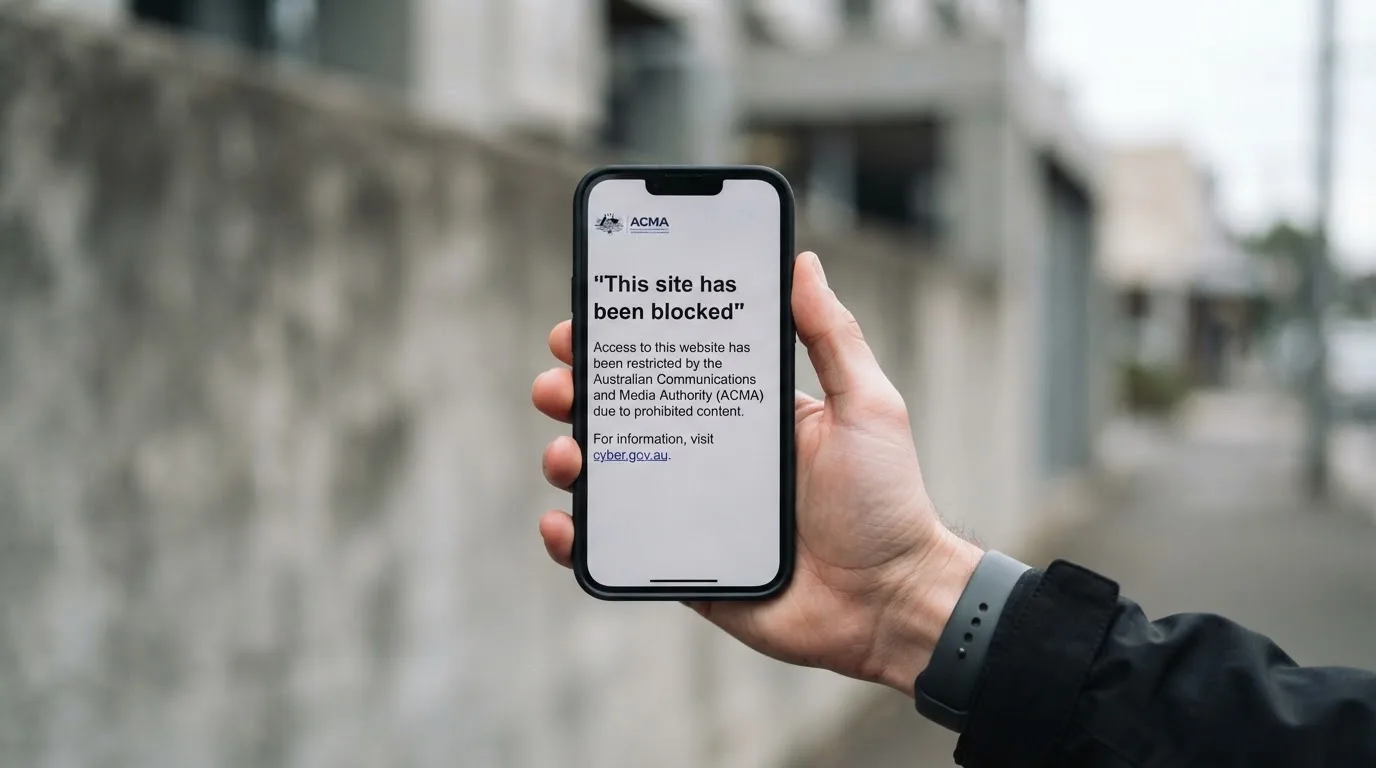
The Australian Communications and Media Authority investigates, issues formal warnings and directs Australian internet service providers to block offending sites. By June 2026 a total of 1,751 illegal gambling and affiliate marketing websites had been blocked since the first blocking request in November 2019. In a single round reported on 26 June 2026, twelve more sites went on the block list: 7Signs, ChromaBet, Donbet, Duospin, Freshbet, Slots Gem, Jacks Club, Lucky Start, Pointsbetz, Spinrise, Vinyl Casino and Wildsino. More than 230 unlicensed services have left the Australian market since 2017. H2 Gambling Capital’s 2025 estimate puts Australian losses to illegal sites at about A$3.9 billion a year, with the share of gambling going through legal channels falling from 74 per cent in 2021 to 64 per cent.
None of that action touches the player. The Interactive Gambling Act 2001 targets the provider, not the punter. The consequence for the player is that an offshore site offers no Australian consumer protection, no local complaints body and no recourse when a withdrawal stalls. The site can be blocked while a balance is still sitting on it.
what fast payout looks like for licensed australian wagering
Fast payout is a real thing, and it lives on the licensed side of the fence. Licensed Australian online and phone bookmakers take debit cards, bank transfers, PayID, Osko and BPAY. Sizing a “fast payout” claim against that list is what the word actually means.
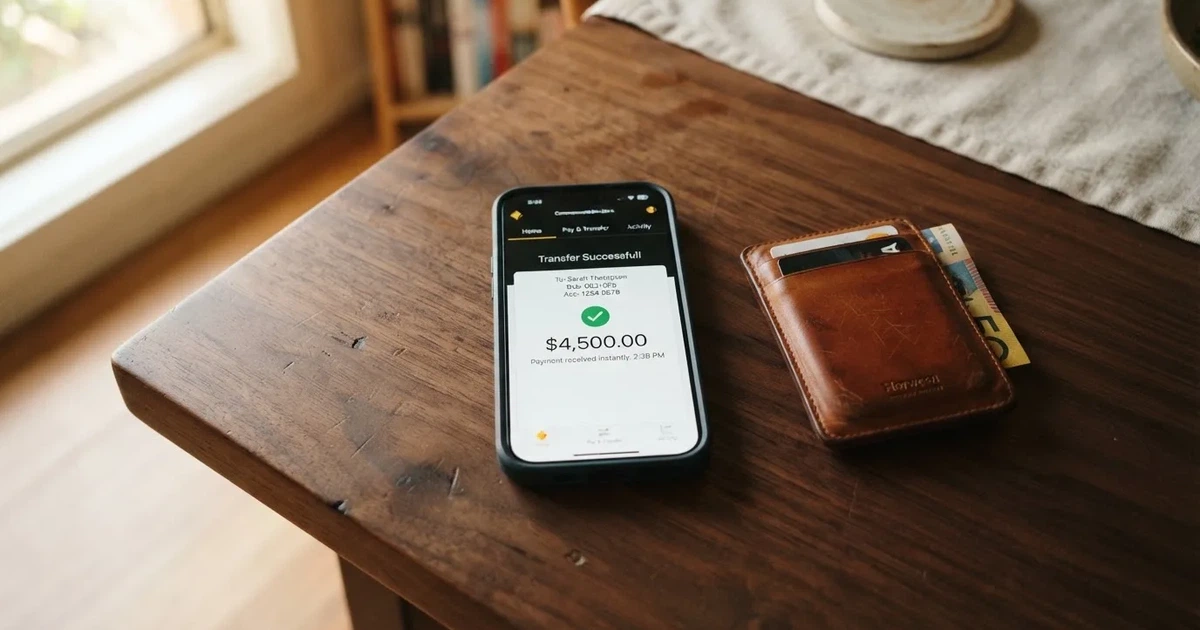
PayID and Osko do the heavy lifting. Paying to a PayID shows the recipient’s name before the transfer is sent, and Australia Payments Plus warns that being asked to send money to a PayID on an illegal gambling site is almost certainly a scam. PayID-based instant transfers work at more than 100 Australian financial institutions, and Osko settles between participating banks in under a minute, 24/7 including weekends, whether addressed to a BSB and account number or to a PayID. By April 2025 more than 25 million PayID identifiers were registered on the New Payments Platform, which went live to the public on 13 February 2018 and is owned by New Payments Platform Australia Ltd — a non-profit whose 13 shareholders include the Reserve Bank of Australia and the major banks.
BPAY sits beside those rails rather than competing with them. It is a bill-payment service inside online banking: the payer enters the Biller Code and the Customer Reference Number printed on the bill. BPAY launched on 18 November 1997, is available at the online banking of over 140 banks and financial institutions, is offered by over 95,000 businesses, and is run by Australian Payments Plus. The September 2021 ACCC decision merged BPAY Group, eftpos and NPP Australia into a single holding entity, Australian Payments Plus, which is also the operator of PayID and Osko.
AUSTRAC’s threshold-transaction-report rule, which kicks in at A$10,000 or more, applies only to physical cash. Ordinary electronic bank transfers are not subject to that per-transaction reporting requirement, regardless of amount.
where credit cards and digital wallets stand
Credit cards and credit-related products are banned as payment for licensed online wagering. The ban took effect on 11 June 2024, with penalties of up to A$247,500 for operators. Because digital wallets such as Apple Pay are tied to an underlying card, the ban reaches them as well.
Apple does not charge consumers for using Apple Pay in stores, online or in apps; any surcharge is the merchant’s own card-processing cost, not Apple’s. Apple states that transaction limits and PIN requirements are set by the card issuer or merchant, not by Apple itself. By the end of 2025 Apple Pay, Google Pay and Samsung Pay transactions together accounted for around 45 per cent of all card payments in Australia by number.
The big four banks have built gambling blocks that respect the card and the wallet on top of it.
| Payment Method | Status in Australia |
|---|---|
| Debit card | Allowed for licensed wagering |
| Bank transfer | Allowed for licensed wagering |
| PayID / Osko | Allowed for licensed wagering |
| BPAY | Allowed for licensed wagering |
| Credit card | Banned for licensed wagering |
| Crypto | Banned for licensed wagering |
ANZ’s gambling block, activated inside the ANZ app, blocks gambling transactions made through a digital wallet such as Apple Pay on an eligible card, not just the physical card. Once it is on, removing the ANZ block requires a 48-hour waiting period, and the bank warns that not all gambling transactions will be blocked and that some non-gambling transactions might be blocked in error. Westpac’s block sits at card level and refuses authorisation of transactions registered under the merchant category code “Betting/Casino Gambling” on eligible personal credit and debit cards. Commonwealth Bank’s gambling lock, applied through the CommBank app, blocks most gambling transactions on eligible cards, with the same honest caveat that the bank cannot guarantee all gambling-related purchases will be stopped.
American Express is its own network. Unlike Visa or Mastercard’s four-party model, Amex traditionally issues cards and processes transactions itself as a three-party scheme, and the Reserve Bank of Australia’s July 2025 review proposes removing surcharges only on eftpos, Mastercard and Visa transactions — explicitly leaving American Express outside the proposed surcharge ban.
crypto and the offshore pitch
A search for “fast payout crypto casino” lands on a different pitch: blockchain rails that supposedly settle in minutes without a bank in the loop. The legal position does not change because the rails do. Digital currency is banned alongside credit cards as a payment method for licensed online wagering in Australia. A site asking an Australian for a crypto deposit is operating outside the Australian rules, and an offshore site gives no local consumer protection, no local complaints body and no recourse if a withdrawal stalls. The crypto angle adds an extra layer of risk on top of the offshore one — price volatility between deposit and withdrawal, network fees, and an address that can be mistaken in one character.
responsible gambling: what is on offer, and what is not
Player-protection tools bind only to Australian-licensed services. BetStop, the National Self-Exclusion Register, has been live since August 2023 and covers Australian-licensed online and phone wagering services. It does not cover an offshore casino. Self-excluding through BetStop does not stop the offshore brand; it stops the licensed bookmaker.
The National Gambling Helpline is 1800 858 858 — free, 24 hours a day, with chat at Gambling Help Online. The legal minimum age is 18.
Bank-side gambling blocks are the other layer. Westpac’s card-level block refuses authorisation of transactions registered under the merchant category code “Betting/Casino Gambling” on eligible personal credit and debit cards. ANZ’s block, applied in the ANZ app, covers digital-wallet transactions on an eligible card and is reversible only after a 48-hour waiting period. Commonwealth Bank’s gambling lock, applied through the CommBank app, blocks most gambling transactions on eligible cards. None of the three banks promises a complete block. They are an extra layer of friction, not a guarantee.
the eleven brands the ACMA has named
What follows is not a ranking. It is not a recommendation. Each brand appears because the Australian Communications and Media Authority issued a formal warning over it for offering prohibited interactive gambling services to Australians. The law is the same for every entry below: online casino games cannot be licensed anywhere in Australia, whatever licence the site displays.
landscape
| brand | ACMA action and date | operator named by the ACMA | subject support |
|---|---|---|---|
| RocketPlay | formal warning, March 2026 (and earlier to a different operator in May 2022) | Pulsup Ltd (RocketPlay); previously Dama N.V. | listings report the brand (Gambling Insider) |
| Level Up Casino | formal warning, May 2022 | Dama N.V. | listings report the brand (Westpac) |
| Woo Casino | formal warning, March 2025 | Dama N.V. | — |
| Spirit Casino | formal warning, May 2025 | Dama N.V. | — |
| National Casino | formal warning, July 2025 | Consolutetish S.R.L. | listings report the brand (acma.gov.au; austrac.gov.au; betstop.gov.au) |
| Bizzo Casino | formal warning, July 2025 (and earlier in 2022 to a different operator) | Consolutetish S.R.L.; previously TechSolutions (CY) Group Limited and TechSolutions Group N.V. | listings report the brand (Gambling Insider) |
| Ignition Casino | formal warning, July 2025 | Bamboo Media | — |
| Instant Casino | formal warning, February 2025 | EOD Code SRL | listings report the brand (EcoPayz; PayID) |
| Jackbit | formal warning, April 2026 | Ryker B.V. | — |
| Casino Intense | formal warning, April 2025 | Sterplay Holding Ltd | listings report the brand (austrac.gov.au; betstop.gov.au; Gambling Insider) |
| Sky Crown | formal warning, September 2022 | Hollycorn N.V. | — |
The four “—” rows are brands the ACMA has acted against where the listings-only token carried no subject support for the relevant payment or account method; absence there is absence in the listings, not an opinion on the brand itself.
what the blocking rate looks like
The arithmetic here is one number the page can give a reader with confidence: how quickly the regulator’s block list has been growing since the first request in November 2019.
The running total of blocked sites is 1,751 as of June 2026, and the first blocking request was issued in November 2019. The blocking rate is therefore 1,751 sites spread across roughly 79 months, which lands at an average of around 22 sites blocked per month — a band rather than a precise figure, because blocking activity is lumpy in time and the figure flattens the gaps between the rounds. The shape of the list is what carries the weight: in a single round reported on 26 June 2026, twelve sites went on the list at once. The blocking rate is a useful shorthand for “how often the ACMA moves”, not a forecast of the next blocking round.
a working shortlist, with the asterisk that matters
A reader who wants a fast payout in Australia has a shortlist that does not include any online casino. It includes licensed wagering on races and sport placed before the event, licensed lotteries and keno, and licensed land-based venues. For deposits and withdrawals inside that licensed world:
- PayID and Osko settle in under a minute between participating banks, 24/7 including weekends, addressed to either a BSB and account number or a PayID. The recipient’s name is shown before the transfer is sent.
- BPAY settles through online banking using a Biller Code and a Customer Reference Number; it is not instant, and is suited to scheduled deposits rather than live in-play use.
- Debit cards and direct bank transfers complete the licensed set, with credit cards and crypto excluded.
The licensed bookmakers supervised by the Northern Territory Racing and Wagering Commission include Sportsbet, Bet365 and Ladbrokes. The BetStop register binds all Australian-licensed online and phone wagering services, so a self-exclusion registered there is honoured across that licensed set.
the 2026 reform that is on the books but not yet in force
The Interactive Gambling Amendment (Gambling Reform) Bill 2026 passed Parliament on 19 August 2026. Its advertising and inducement measures commence on 1 January 2027 — a law with a start date, not yet in force on a page dated to 2026. Treat the 2026 reform as a coming change rather than an active rule.
what “trust” looks like in this market
“Trusted” is a word that gets used a lot on affiliate pages and rarely defined. A useful working definition sits inside the regulator’s own record:
- The ACMA’s register of formal warnings and blocking actions is public. The names, dates and operators are there.
- AUSTRAC’s threshold-transaction-report rule applies only to physical cash over A$10,000, and ordinary electronic transfers are not subject to that per-transaction reporting requirement.
- BetStop is the National Self-Exclusion Register and binds Australian-licensed online and phone wagering services — it does not bind an offshore casino.
- Bank-side gambling blocks sit at card level (Westpac, Commonwealth Bank) or at the card-and-wallet level (ANZ), and none of them promises a complete block.
A reader who wants to check whether a payment provider is genuinely trustworthy has a small, honest set of sources: the Reserve Bank of Australia for card network rules, Australian Payments Plus for Osko, PayID and BPAY, AUSTRAC for AML/CTF reporting thresholds, and the ACMA for the regulator’s own action record. An offshore casino is, by definition, outside that set.
what an offshore brand can still be useful for, and what it cannot
An offshore brand can process a deposit and, sometimes, a withdrawal. It cannot offer an Australian consumer protection framework if the withdrawal stalls. It cannot connect to BetStop. It cannot accept a credit card or crypto under the Australian rules even if the offshore site is willing to take one. It cannot guarantee the next round of ACMA action will not block the site while a balance sits on it. The “fast payout” claim, where it is real, is real against the offshore site’s own processing — not against any Australian framework the reader can lean on.
settle me
Three numbers in the regulator’s record do most of the work on this page. 1,751 illegal gambling and affiliate marketing websites have been blocked since the first blocking request in November 2019. 12 went on the list in a single round reported on 26 June 2026. Around A$3.9 billion a year, by H2 Gambling Capital’s 2025 estimate, leaves Australia through illegal gambling sites. The marketing word “fast” is fine. The marketing word “trusted” needs the asterisk the law puts on it.
the bottom line
The fastest payout in this market is a PayID to a licensed bookmaker. The Australian Payments Plus operator settles it in under a minute, 24/7, with the recipient’s name visible before the transfer is sent. The “fast payout casino” the search asked about is, on the licensed side, a licensed bookmaker — and on the offshore side, a brand the ACMA has acted against, more than 230 times since 2017. The choice the law puts in front of an Australian reader is not “which fast payout casino”. It is “which fast payout, on rails that hold when something goes wrong”.
Frequently Asked Questions
What counts as a fast payout time for a casino transaction?
In Australian banking, “fast” usually means an Osko transfer between participating banks, which arrives in under a minute 24/7 including weekends, or a PayID transfer using the same rail. Anything measured in hours rather than minutes is not fast by that standard; anything measured in business days is not fast at all.
How quickly does an Osko bank transfer arrive between Australian banks?
Osko settles between participating banks in under a minute, 24/7 including weekends, addressed either to a BSB and account number or to a PayID, and the recipient’s name is shown before the transfer is sent.
Is it legal for an online casino to offer fast payouts to players in Australia?
No. The Interactive Gambling Act 2001 makes it an offence to provide online casino games to anyone in Australia, and no state or territory licenses it; the ACMA enforces the prohibition by issuing formal warnings and directing Australian ISPs to block offending sites.
Do faster payout claims make an offshore casino any safer to use?
No. The payout speed is only the offshore site’s own processing; there is no Australian consumer protection framework, no local complaints body, and no recourse if a withdrawal is refused, and the ACMA can block the site with a balance still on it.
What payment method typically settles quickest into an Australian bank account?
A PayID or Osko transfer between participating banks settles in under a minute 24/7; a BPAY payment goes through online banking with a Biller Code and Customer Reference Number and is not instant; a debit card or standard bank transfer is governed by the issuer’s own clearing time.
Where can someone check whether a payment provider is genuinely trustworthy?
The Reserve Bank of Australia publishes card network rules and a July 2025 review of surcharging; Australian Payments Plus is the operator of Osko, PayID and BPAY; AUSTRAC sets AML/CTF reporting thresholds; and the ACMA’s register of formal warnings and blocking actions is public.