online craps in australia: what is and is not on offer in 2026
 Available in US
The first thing an australian reader looking up online craps needs to hear is also the hardest: there is no such thing as a licensed online casino in australia. The Interactive Gambling Act 2001 prohibits offering online casino games, craps included, to anyone in australia. Every site that streams a craps table to an australian account is operating outside australian law, and the Australian Communications and Media Authority (ACMA) has spent the past several years issuing formal warnings, ordering blocks, and naming the operators behind those sites one by one.
This page is built around that gap. Instead of a fake ranking, it lays out the law, the enforcement record, the player-protection tools that do work for australians, and the safer alternatives — licensed pokies venues and land-based casinos — that the same reader can use. The arithmetic that runs through it is the rate at which the ACMA has been blocking sites, because that is the figure a reader can use to judge how durable any offshore craps site really is.
Current as of 23 September 2026, checked against the ACMA’s formal-warning register and the public blocking notices issued by the regulator.
Table of Contents
- The law, in plain terms
- What player protection actually reaches an australian
- What a craps bonus really costs the player
- What online craps actually is
- How the ACMA’s blocking record compares across operators
- How fast the blocking record is actually growing
- What is on offer at each operator
- The other side of the comparison
- Frequently asked questions
The law, in plain terms
The Interactive Gambling Act 2001, tightened by the Interactive Gambling Amendment Act 2017, makes it an offence to provide online casino-style games to a person who is physically in australia. Craps, pokies, roulette, baccarat and blackjack all fall on the wrong side of that line, no matter which offshore licence the operator displays at the bottom of its home page. The penalty reflects how seriously the statute treats the breach: up to A$220,000 a day for an individual and up to A$1.1 million a day for a corporation.
What the act does allow is wagering on racing and sport, lotteries and keno. Those are licensed, and in practice most online bookmakers — Sportsbet, Bet365 and Ladbrokes among them — hold their licence from the Northern Territory Racing and Wagering Commission, which regulates 52 of the country’s online bookmakers from a meeting room in darwin with no full-time staff. That arrangement is part of the story too: a regulator licensing sport and racing is not, and has never been, a regulator licensing craps.
What the ACMA has actually done
The ACMA’s enforcement file is the one part of this picture that is in the open. The regulator investigates, issues formal warnings, and directs australian internet service providers to block illegal sites. By june 2026 a total of 1,751 illegal gambling and affiliate marketing websites had been blocked since the first blocking request in november 2019, and more than 230 unlicensed gambling services had left the australian market since enforcement was strengthened in 2017. In the round reported on 26 june 2026 alone, twelve more sites went onto the block list: 7Signs, ChromaBet, Donbet, Duospin, Freshbet, Slots Gem, Jacks Club, Lucky Start, Pointsbetz.com, Spinrise, Vinyl Casino and Wildsino.
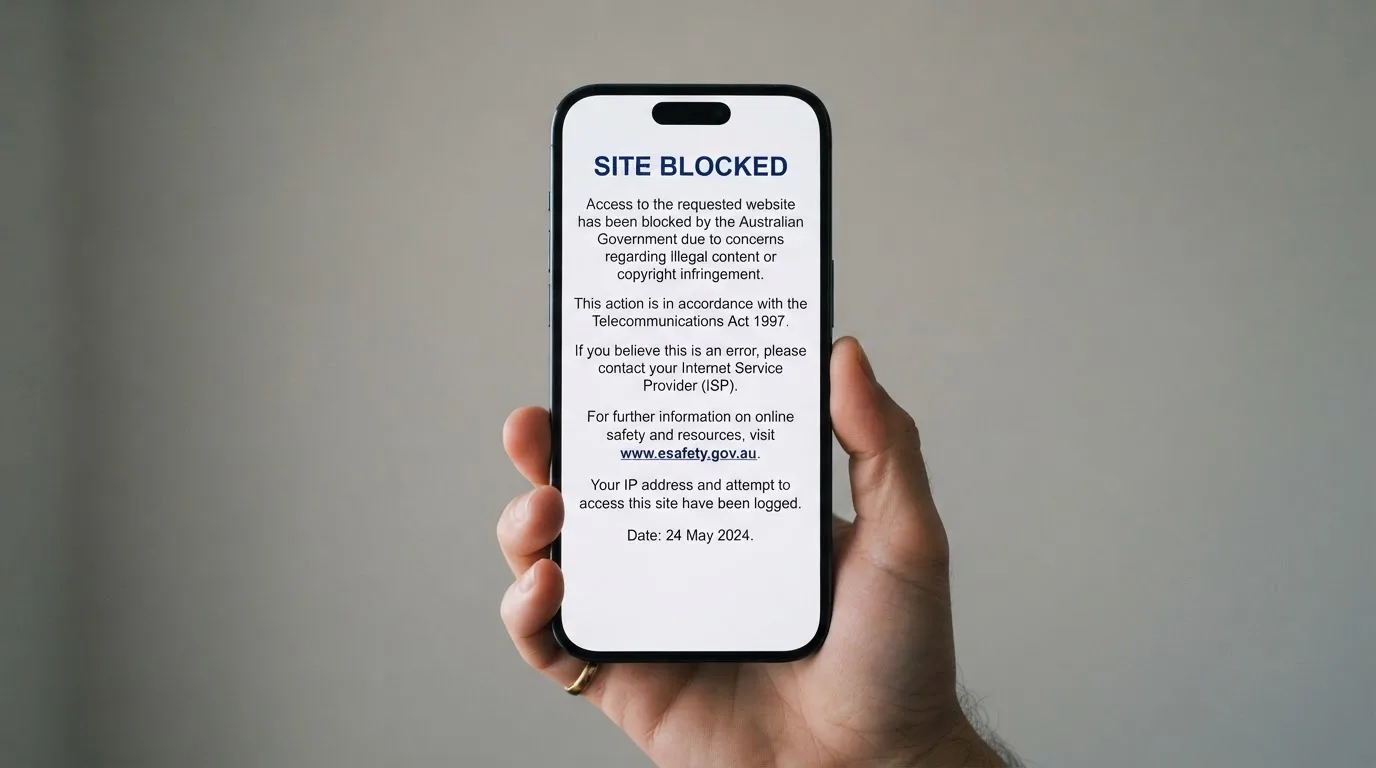
The pattern inside those numbers is what matters for a reader weighing an offshore craps site. The ACMA moves slowly in any single case and relentlessly across the whole market. A site that streamed craps to australians without interference last month can be on the block list next quarter, and the block list does not pay out balances.
The cost of the offshore route, in losses
H2 Gambling Capital’s 2025 report puts australian losses to illegal gambling sites at about A$3.9 billion a year, and the share of gambling going through legal channels has fallen from 74% in 2021 to 64%. Two things sit inside that figure. The first is the volume of money that ends up at sites the ACMA has been trying to put out of reach for years. The second is the cut a reader pays to be on those sites rather than the licensed ones: no complaint body, no recourse if a withdrawal is refused, and a regulator that can lock the front door with the balance still inside.
The ACMA issued further formal warnings in March 2025 over Woo Casino and in May 2025 over Spirit Casino, both operated by Dama N.V.
What player protection actually reaches an australian
The single tool that does work across the legal wagering market is BetStop, the National Self-Exclusion Register, live since august 2023. A person who registers with BetStop is excluded from every australian-licensed online and phone wagering service. That is a real exclusion, with real teeth, and it is the part of the system an australian reader can lean on.
It is also a system with an edge. BetStop binds australian-licensed services only. An offshore craps site is not connected to it, and a self-exclusion registered on Monday will not stop an account at an unlicensed operator from taking a deposit on Tuesday. For anyone whose concern is what an offer costs them rather than whether one is on the table, the practical answer is to register with BetStop and then to keep the unregistered offshore accounts closed — not because the law forces the second step, but because the first one stops being effective the moment an offshore site takes over.
For anyone already chasing losses, the National Gambling Helpline on 1800 858 858 is free and staffed around the clock, with a chat option through Gambling Help Online. The helpline is the right first call regardless of whether the account in question is licensed or not.
What australian rules do and do not cover
Three pieces of consumer protection sit inside the licensed wagering regime and not outside it. Credit cards, credit-related products and digital currency have been banned as payment for licensed online wagering since 11 june 2024, with penalties of up to A$247,500 for operators that breach the rule. The legal deposit routes for licensed wagering are debit card, bank transfer, PayID/Osko and BPAY. A craps site that asks an australian customer for a credit card or a crypto deposit is therefore signalling, in its own checkout form, that it is operating outside the rules the licensed bookmakers work under.
The other piece is tax. Gambling winnings of a recreational player are not assessable income under section 6-5 of the ITAA 1997, and losses are not deductible, unless the person carries on what the ATO recognises as a business of gambling. That is a clean answer for the casual reader and a question to put to a tax adviser for anyone who plays as a trade.
What a craps bonus really costs the player
An offer is the part of the craps picture where marketing language and arithmetic part company, and the gap is wider than most readers realise. A welcome package that looks like several hundred dollars in bonus cash usually carries a wagering requirement — a turnover multiple — that has to be met before any of the bonus money can be withdrawn. The rule is mechanical. Required turnover is the bonus amount multiplied by the wagering factor. A A$200 bonus at a 35x requirement means A$7,000 of bets must be placed before withdrawal opens. At a craps table that handles, on average, around one decision every five seconds and a stake small enough to survive the playthrough, that is in the order of several solid hours of play and a long way past the advertised headline.
Free odds bets on a Pass or Don’t Pass line are the one craps wager that carries a 0% house edge, because they pay at true odds. Everything else on the table pays the casino a cut, and the cut varies sharply. The Pass/Come bet sits at 1.41% and Don’t Pass/Don’t Come at 1.36%, which is roughly the territory a reader might expect from any fair-feeling table game. The Field bet sits at 5.56%, Any Craps at 11.11%, and Any 7 at 16.67% — making Any 7 the worst-value wager on the layout, and the one the marketing copy never mentions. The expected loss on a bonus playthrough is the required turnover multiplied by one minus the return to player on the bets being placed, which means a bonus tied to a craps playthrough at a true-odds line costs the player almost nothing in expected value, while the same bonus played across the proposition bets at the centre of the table can eat the bonus several times over.
The piece the marketing tends to leave out is that a maximum-cashout clause can cap the winnings from a bonus playthrough well below what the playthrough itself produces. A bonus that pays out a maximum of, say, five times the bonus amount is a different offer from the same bonus without the cap, and the difference is what the reader actually takes home.
What online craps actually is
Modern craps developed in the united states as a simplification of an older european dice game called hazard. Bernard Xavier Philippe de Marigny de Mandeville is credited with bringing hazard to new orleans around 1805, where the simplified game became known as “Pass” — from the french “pas”. Around 1907 a philadelphia dice maker named John H. Winn introduced the Don’t Pass betting layout still used on casino craps tables today, a change that gave casinos an incentive to use fair dice.
The shape of a round is the same at every craps table, online or otherwise. The come-out roll wins immediately on 7 or 11, loses immediately on 2, 3 or 12, and any other number becomes “the point”, which the shooter must roll again before rolling a 7 to win the Pass Line bet. Two basic bets structure the table: Pass Line and Don’t Pass. Pass Line wins on the come-out 7 or 11, loses on 2, 3 or 12, and rides the point if one is set. Don’t Pass is the mirror: it wins on 2 or 3 on the come-out, loses on 7 or 11, ties on 12, and wins if a 7 rolls before the point. The mirror structure is also where the edge shows. Pass/Come runs at 1.41%, Don’t Pass/Don’t Come at 1.36% — the latter the cheaper of the two and the one the marketing copy rarely puts at the front of the page.
Crapless Craps is a variant that removes 2, 3, 11 and 12 as come-out losing or winning numbers. Street craps is the informal version played without a marked table or casino employees, and not a product a licensed venue offers. The free odds bet taken behind a Pass or Don’t Pass bet remains the only wager on the table with no house edge.
How the ACMA’s blocking record compares across operators
The following table lines up every brand reviewed on this page against the formal-warning record published by the ACMA. Each row is an operator the regulator has acted against, the date of the action and the corporate name the ACMA itself attached to the warning. Where research does not cover a cell, the cell carries the no-data marker rather than an invented figure.
| brand | ACMA action and date | operator named by the ACMA | subject support |
|---|---|---|---|
| RocketPlay | formal warning, march 2026 (earlier warning to a related operator may 2022) | Pulsup Ltd (Rocketplay.com.au); earlier Dama N.V. (may 2022) | — |
| Level Up Casino | formal warning, may 2022 | Dama N.V. | listings-only (per Bgaming.com) |
| Woo Casino | formal warning, march 2025 | Dama N.V. | — |
| Spirit Casino | formal warning, may 2025 | Dama N.V. | — |
| National Casino | formal warning, july 2025 | Consolutetish S.R.L. | listings-only (per en.wikipedia.org) |
| Bizzo Casino | formal warning, july 2025 (earlier 2022) | Consolutetish S.R.L.; earlier TechSolutions (2022) | — |
| Ignition Casino | formal warning, july 2025 | Bamboo Media | — |
| Instant Casino | formal warning, february 2025 | EOD Code SRL | — |
| Jackbit | formal warning, april 2026 | Ryker B.V. | — |
| Casino Intense | formal warning, april 2025 | Sterplay Holding Ltd | listings-only (per Abc.net.au, acma.gov.au and Crownmelbourne.com.au) |
| Sky Crown | formal warning, september 2022 | Hollycorn N.V. | — |
The reader takeaway from this grid is that the ACMA’s actions are not spread evenly across the offshore market. Dama N.V. alone accounts for four of the eleven brands in the table — two warnings in 2022, two more in 2025 — which is a meaningful concentration of enforcement effort against a single corporate group. Consolutetish S.R.L. accounts for two. The pattern is one a reader should expect: a regulator with a finite enforcement budget hits the operators it can name repeatedly rather than spreading itself thin.
In July 2025 the ACMA warned Bamboo Media over Ignition Casino and Consolutetish S.R.L. over National Casino and Bizzo Casino, the latter first warned back in 2022.
How fast the blocking record is actually growing
The arithmetic on this page is the rate at which the ACMA has been adding sites to its blocking list. As of june 2026 the running total was 1,751 blocked sites, with the first blocking request issued in november 2019. Spread across the roughly 80 months between those two dates, that works out at an average of just under 22 sites blocked per month — with the rate running faster than that in recent rounds and slower in the early years, given that the 2017 enforcement strengthening only began to feed through into blocking requests from late 2019.
The right way to read that number is as a band, not a single figure. In the most recent quarterly rounds the ACMA has been adding blocking requests at well above the long-run average; in the early years, below it. Any specific site an australian reader is considering today sits inside that band, and the chance of the site appearing on a future blocking request is shaped less by what the operator claims on its home page and more by the ACMA’s own prioritisation.
The two practical consequences follow. The first is that any balance left on an offshore site when the block lands is, in practice, lost: the front door closes and the offshore operator has no obligation to pay out through an alternate route. The second is that the rate of blocking is itself the rate at which the offshore market is being thinned — a fact that cuts the other way for a reader trying to find any site that will still take their deposit.
In February 2025 the ACMA issued a formal warning to EOD Code SRL over Instant Casino.
What is on offer at each operator
Each of the eleven brands in the ACMA’s formal-warning register is described below in the order the regulator’s own record sets, with the warning, the operator name and the date as research carries them. The reviews are not a ranking — there is nothing to rank, because online casino games cannot be licensed in australia and a site offering craps to an australian reader is doing so in breach of the Interactive Gambling Act 2001. The reviews are a record of who has been warned, when, and by whom, so that a reader who has already found one of these brands elsewhere knows what the ACMA has on file.
RocketPlay
RocketPlay is the operator the ACMA warned most recently, in march 2026, with the action taken against Pulsup Ltd over Rocketplay.com.au. A related operator, Dama N.V., was the subject of an earlier may 2022 warning that covered six brands including RocketPlay. The site streams casino-style games to international customers; an australian account sits on the wrong side of the Interactive Gambling Act 2001, and the ACMA’s record on this operator is the most active on the page.
For a reader who has come across RocketPlay through affiliate marketing rather than through the regulator, the relevant cost is the one every offshore site carries: no Australian consumer protection, no complaints body, and a regulator who can block the front door while a balance is still on the account.
Level Up Casino
Level Up Casino was named in the ACMA’s may 2022 formal warning to Dama N.V. alongside five other brands — Bambet, Dazard, Rocketplay, Wild Tornado and Cobra Casinos. The site’s subject support is recorded in the listings maintained by Bgaming.com, which is a third-party index rather than a regulatory endorsement.
The arithmetic on a bonus tied to this brand runs the same way it does on any other in the table: a turnover requirement multiplied out against the bet size, with the expected loss sitting somewhere on the spread between the 0% edge on free odds and the 16.67% on Any 7 depending on which bets the playthrough actually demands.
Woo Casino
Woo Casino attracted a second Dama N.V. warning in march 2025, three years after the first round. The repetition is itself a fact worth weighing: an operator that has been warned once and has continued to take australian business has, in the ACMA’s view, not modified its practice enough to stay off the formal-warning register.
A reader weighing Woo Casino against any other brand in the Dama N.V. group should treat the two warnings as the cost it has already imposed on itself, and the realistic chance of a third as the next cost on the way.
Spirit Casino
Spirit Casino is the second of the two Dama N.V. brands warned in 2025, the warning landing in may 2025. The fact that the regulator has gone back to the same corporate group twice in three months is part of why the table reads as concentrated as it does.
The cost to the reader is the same cost every other brand in the table carries, and the verdict is the same: an account on Spirit Casino is an account on a site the ACMA has now warned twice, with the offshore operator’s own conduct being the only thing keeping the second warning from becoming a blocking request.
National Casino
National Casino was named in the july 2025 warning to Consolutetish S.R.L., with Bizzo Casino on the same warning. The site’s subject support is recorded on en.wikipedia.org, a third-party listing rather than a regulator’s clearance. For a reader who has been sent to National Casino by an affiliate page, the relevant fact is that the ACMA has named the corporate group behind it and that the warning is recent.
Bizzo Casino
Bizzo Casino carries the longest ACMA record on the page. The july 2025 warning to Consolutetish S.R.L. was the second, with an earlier 2022 warning issued to TechSolutions (CY) Group Limited and TechSolutions Group N.V. — meaning the same brand has been the subject of two separate warnings under two different corporate names, three years apart.
For a reader comparing Bizzo to the rest of the table, the doubled-up warning is the relevant fact. The site has been on the regulator’s radar across two enforcement cycles, and the cost of opening an account on it is the cost of being on a site that has been warned, fallen off the register, and come back.
Ignition Casino
Ignition Casino was the subject of a july 2025 warning to Bamboo Media. Bamboo Media is a smaller name in the ACMA’s file than Dama N.V. or Consolutetish S.R.L., and the warning is the only action the regulator has recorded against the brand. The site is offshore, the licence it displays at the foot of its home page is not an australian one, and the relevant question for any reader is the same one as for every other brand on the page.
Instant Casino
Instant Casino was warned in february 2025 over EOD Code SRL, one of the earlier warnings in the recent enforcement cycle. The site has no Australian licence; the EOD Code SRL corporate name sits in the ACMA’s record rather than in any australian register. The cost to a reader is the standard offshore cost, with the ACMA’s warning dated within the last two years as the most recent piece of paper on file.
Jackbit
Jackbit was named in the april 2026 warning to Ryker B.V., alongside CasinOK. The warning is recent and the corporate group is one the ACMA had not previously named on this page, which puts it in the same enforcement bracket as the rest of the 2025–2026 warnings. The site’s licence displayed at the bottom of its home page is not an australian one, and that is the end of the matter for any reader sitting in australia.
Casino Intense
Casino Intense was warned in april 2025 over Sterplay Holding Ltd. The site’s subject support is recorded across Abc.net.au, acma.gov.au and Crownmelbourne.com.au — three listings that reflect the kind of coverage the brand has attracted rather than any regulatory endorsement. The ACMA’s record is a single warning, dated within the last two years, and the brand is one of eleven on the ACMA’s formal-warning register rather than one that has come through australian licensing.
Sky Crown
Sky Crown is the oldest warning on the page, issued by the ACMA over Hollycorn N.V. in september 2022, with the same warning also covering Blue Leo. The brand has been on the register longer than any other in the table, which is a meaningful signal for a reader weighing duration of presence against depth of regulatory trouble. A site that has carried an ACMA formal warning for over three years and is still streaming to australian accounts is, in the regulator’s own view, a site that has not modified its practice in response to the warning.
For a reader comparing Sky Crown against the newer warnings on the page, the relevant trade-off is between age of warning and likelihood of follow-up. A 2022 warning is further from a fresh blocking round than a 2025 one, but the regulator’s own publication of the warning is itself a published record.
The other side of the comparison
A reader who came to this page looking for a ranked list of craps casinos is, in the strict sense, looking for something the australian market does not produce. The Interactive Gambling Act 2001 has been in force since 2001 and has been enforced in its current form since 2017. No state or territory has issued a licence for online craps in that time. Every site offering craps to an australian reader is doing so in breach of the statute, with the ACMA’s enforcement record above as the on-file evidence of what breach looks like in practice.
That is not the only thing the comparison can do. The licensed alternative is a real one and not a worse one. Australia’s land-based casinos offer craps under regulator-approved rules: crown melbourne operates table games under the victorian Gambling and Casino Control Commission, and the regulator publishes approved changes to rules on a public log — including the renaming of the “Perfect Pairs” blackjack side bet to “Crown Pairs” in december 2024 and the introduction of a “Free Bet” option with a “Pot of Gold” side bet in march 2024. The NSW Casino Control Act 1992, section 66, requires an operator to make a copy of the approved rules available to patrons on request. For a reader who wants craps under rules they can read and a regulator they can complain to, the licensed casino floor is the answer the law points to, and the offshore craps site is the answer the law prohibits.
For a reader who would rather play online, the licensed wagering market is the legal alternative. The same statutory framework that prohibits online casino games permits online wagering on racing and sport, with licensed bookmakers, with BetStop available, and with the credit-card and crypto payment ban in force since june 2024. None of those bookmakers streams craps, because the act does not let them. What they offer is a different product — one the law allows, one the ACMA does not block, and one whose cost the reader can calculate in advance.
The cost of staying on the offshore list
A reader who has already opened an account on one of the brands in the table and is weighing whether to keep it open is, in practice, weighing three costs against one another.
The first cost is the expected loss on the craps bets themselves. A reader playing Pass/Come at 1.41% over a session is paying the casino roughly A$1.41 for every A$100 wagered, in expectation, over a long enough run. The figure is small per spin and large over a session, and it sits in the same territory as blackjack with optimal strategy at about 0.28% on the liberal las vegas strip ruleset, and well below baccarat at 1.06% on the Banker bet, 1.24% on Player and 14.36% on the Tie.
The second cost is the expected loss on a bonus playthrough. A A$200 bonus at a 35x wagering factor means A$7,000 in required turnover; played across bets at the centre of the craps table, the expected loss on that turnover is several multiples of the bonus itself, not a fraction of it. The marketing copy writes the bonus amount; the arithmetic writes the loss.
The third cost is the chance of being on the site when the next blocking round lands. The ACMA’s recent quarterly rounds have added blocking requests at well above the long-run average; any specific site an australian reader is on today sits inside that band, and a balance left on the site at the moment the block lands is, in practice, gone. The rate at which the regulator adds sites to its blocking list is the rate at which that third cost is being set, and it is high enough that any specific balance is a poor bet to leave in place.
What a player who is chasing losses should do
A reader who has come to this page because they have been chasing craps losses online is, in the practical sense, a reader who needs to talk to the National Gambling Helpline on 1800 858 858 before they read the rest of the page. The line is free and 24/7, with chat through Gambling Help Online. A self-exclusion through BetStop binds every australian-licensed wagering service, and registering is the first step toward stopping the next deposit rather than chasing the last one. The offshore sites are outside BetStop’s reach, which means the practical protection is to close those accounts as well, not because the regulator forces the closure but because the next deposit is the next cost.
Frequently asked questions
What house edge does the Pass/Come bet carry in craps?
The Pass/Come bet in craps runs at a house edge of 1.41%, with the Don’t Pass and Don’t Come lines sitting slightly lower at 1.36%. Both are at the cheaper end of the table; the centre-of-table proposition bets run far higher, with Any Craps at 11.11% and Any 7 at 16.67%.
What is the difference between a Pass Line and a Don’t Pass bet in craps?
Pass Line wins on a come-out roll of 7 or 11, loses on 2, 3 or 12 and rides the point once one is set. Don’t Pass is the mirror: it wins on a come-out 2 or 3, loses on 7 or 11, ties on 12, and wins if a 7 rolls before the point. The two bets sit at 1.41% and 1.36% respectively.
Is it legal for an online casino to offer craps to players in australia?
No. The Interactive Gambling Act 2001 prohibits offering online casino-style games, including craps, to customers physically in australia, with penalties of up to A$220,000 a day for individuals and A$1.1 million a day for corporations. No state or territory issues a licence for it.
Why is the Any Craps bet considered a poor-value wager?
Any Craps carries a house edge of 11.11%, more than seven times the edge on the Pass Line at 1.41%. Any 7 sits higher still at 16.67%, making it the worst-value wager on the table. Both are proposition bets in the centre of the layout and both pay well below true odds.
Can craps be played at a licensed australian land-based casino?
Yes. Craps is among the table games offered under approved rules at australian land-based casinos, including crown melbourne under the victorian Gambling and Casino Control Commission. The same statute that prohibits online casino games does not prohibit play on a licensed casino floor.
What should someone do if they are chasing craps losses online?
The National Gambling Helpline on 1800 858 858 is free, 24/7, and offers chat through Gambling Help Online. A self-exclusion through BetStop binds every australian-licensed wagering service, and the practical next step for an offshore account is to close it directly, since BetStop does not reach offshore operators.
Published by the Low Deposit Casino Info team.