
Best Live Casino Online Australia: How the Market Looks in 2026
 Available in US
Live dealer games stream in real time from a studio or a land-based casino floor: cards, roulette wheels, dice, even game-show wheels, all dealt by a human and rendered to a screen through optical camera recognition. The format looks like a casino, the rhythm of play is a casino, and the question every Australian reader of this page is really asking is whether it can be played legally online, and where the line falls when it cannot.

The line falls hard. The Interactive Gambling Act 2001 makes it an offence to provide an interactive casino-style gambling service — including online blackjack, roulette and other live-casino-style games — to a person physically in Australia. No state or territory issues a licence for it. What is licensed is wagering on races and sport placed before the event, lotteries and keno. The bulk of this guide therefore reads not as a shortlist of where to play but as a map of where the prohibition bites, how the regulator enforces it, what that enforcement record looks like for live-casino brands in particular, and where an Australian reader who wants the closest lawful equivalent can turn.
Data current as of 23 September 2026 and verified against the Australian Communications and Media Authority’s published register of formal warnings and internet-service-provider blocking actions.
Table of Contents
- The Prohibition and the ACMA’s Enforcement Record
- The Players, the Studios and the Mechanism
- Responsible Play and the Limits of the Local Safeguards
- Bonuses, Free Spins and What They Cost the Player Who Claims Them
- Mobile and App: The Phone-Screen Reality
- The Games: What the Live Tables Actually Are
- The Brands the ACMA Has Acted Against
- The Operator Write-Ups
- The Closest Lawful Alternative
- The 2026 Reform That Has Not Yet Taken Effect
- Tax, Age and the Local Mechanics
- The Reader’s Working Picture
- Frequently Asked Questions
The Prohibition and the ACMA’s Enforcement Record
The Interactive Gambling Act 2001, sharpened by the Interactive Gambling Amendment Act 2017, defines a “prohibited interactive gambling service” as one that has an Australian customer connection and offers online casino games, online pokies or in-play betting. The offence sits with the provider, not the player: an Australian punter logging in from Sydney is not committing an offence, but the operator serving them is. The practical consequence is that offshore live-casino brands operate outside Australian consumer law, outside the local complaints bodies, and outside any Australian self-exclusion register, even when they hold a licence from Curaçao, Anjouan or Kahnawake.
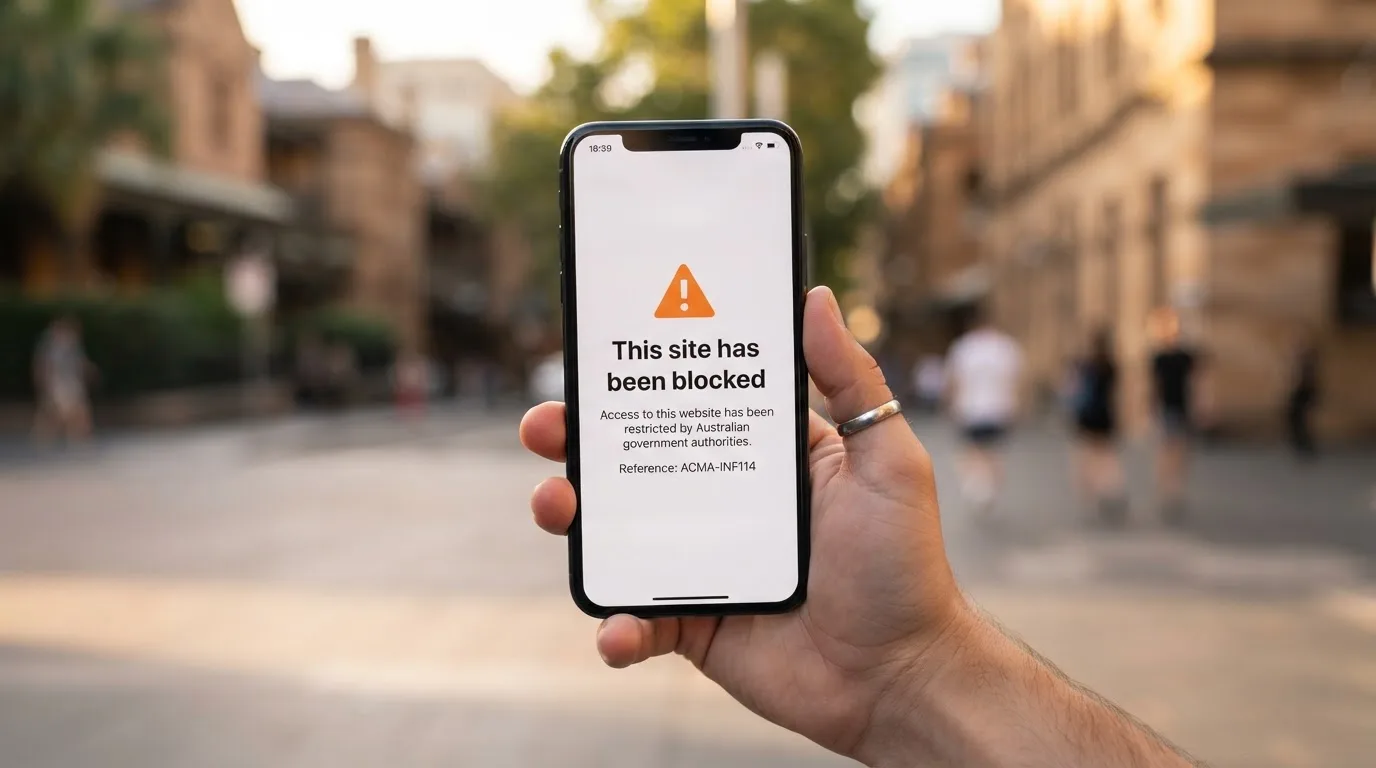
The ACMA’s two main tools are formal warnings and ISP-level blocking. A formal warning is a published step under the Act; a second breach within the warning period can lead to civil penalty proceedings in the Federal Court. Blocking involves the ACMA asking Australian internet service providers to make named domains unreachable for customers on Australian networks. The numbers on that record are the page’s hard currency.
What the blocking record adds up to
The running total sits at 1,751 illegal gambling and affiliate-marketing websites blocked since the first blocking request in November 2019, with more than 230 unlicensed gambling services having left the Australian market since enforcement was strengthened in 2017. The latest published round, reported on 26 June 2026, added twelve more domains in one batch: 7Signs, ChromaBet, Donbet, Duospin, Freshbet, Slots Gem, Jacks Club, Lucky Start, Pointsbetz, Spinrise, Vinyl Casino and Wildsino. Eleven of those are casino or live-casino operations; one is a sports betting brand.

That is the headline rate: about one blocking round every few weeks, each round naming a dozen or so domains. H2 Gambling Capital’s 2025 estimate puts Australian losses to illegal sites at around A$3.9 billion a year, and the share of gambling going through legal channels has fallen from 74% in 2021 to 64%. The legal channel is shrinking as a proportion even as the ACMA’s blocking list grows — a contradiction worth sitting with, since each blocked site is also one fewer venue for the reader who is already playing offshore.
The arithmetic of blocking
The blocking-rate calculation sits in plain arithmetic, no formula needed. Take the running total of 1,751 blocked websites from the first blocking request in November 2019 to June 2026. That is roughly 80 months of enforcement, which works out to about 22 blocked sites per month on average. Round it to a band: roughly 20 to 25 blocks per month over the lifetime of the regime, with peak months in the high twenties when several rounds cluster. The condition matters — this is the published blocking total for the ACMA’s formal ISP directions, and it excludes the affiliate-marketing sites that have been removed voluntarily. The reader who wants to know whether the regulator is gaining ground on the supply side reads this as a slow drip rather than a flood, and the offshore brand that lost its domain last month reads it very differently from the one whose name still resolves in Sydney.
The Players, the Studios and the Mechanism
Live casino play happens because a handful of specialist studios build the tables, train the dealers and stream the feed, then license the result to hundreds of gambling platforms. Evolution, founded in 2006 by Jens von Bahr and Fredrik Österberg, is the dominant supplier. The company reached 100 live tables at its Riga studios in 2013 — the largest single-site casino operation in Europe at the time — and opened a Malta studio in 2014. It completed its acquisition of NetEnt on 1 December 2020. Today the Evolution Group also owns the NetEnt, Red Tiger, Big Time Gaming, Nolimit City and Ezugi game-studio brands, and Evolution states that more than 700 gambling platforms worldwide offer its live casino games, streamed 24/7 from its studios. That vertical integration is why one supplier’s name comes up around almost every live-casino lobby a reader has ever seen.
The mechanism behind the feed is optical camera recognition. Each card dealt, each roulette result, each dice throw is captured by overhead cameras; the OCR software reads the symbols and converts them into data sent to the player’s screen, with the human dealer performing the same actions they would on a physical table. The result is a game whose outcome is set by a real shuffle and a real wheel, mediated by software that records rather than invents the result. Baccarat, blackjack and roulette are described as the most common live dealer games offered. The house edge on a banker bet in baccarat is 1.06%, on the player bet 1.24% and on the tie 14.36% — the tie bet is the marketing hook, because it pays eight or nine to one, and it is also the bet the math most penalises.
Responsible Play and the Limits of the Local Safeguards
The Australian responsible-gambling architecture was built for the products the country does license, and the gap between that architecture and the offshore live-casino market is where a reader’s safety net disappears.
BetStop and what it covers
BetStop, the National Self-Exclusion Register, has been live since August 2023. A person registered with BetStop is barred from opening new accounts with Australian-licensed online and phone wagering services, and existing accounts are closed. The register binds the licensed bookmakers — Sportsbet, Bet365, Ladbrokes and the other 49 brands regulated by the Northern Territory Racing and Wagering Commission. An offshore live-casino brand is not connected to BetStop, so registering with BetStop does not exclude a player from an offshore site, and an offshore site is under no obligation to honour a BetStop registration even if a player asks. The self-exclusion is real; its reach stops at the licensed perimeter.
Payments as a backstop
Since 11 June 2024, credit cards, credit-related products and digital currency have been banned as payment methods for licensed online wagering in Australia, with penalties of up to A$247,500 for operators who breach the rule. The legal deposit routes for a licensed wagering account are debit card, bank transfer, PayID/Osko and BPAY. The reason this matters for live casino is structural: a licensed Australian wagering site will not let a reader deposit with a credit card to play live dealer games, because it is not licensed to offer live dealer games at all. A site that accepts a credit card or a crypto deposit from an Australian is operating outside the Australian regime on at least two counts — the product and the payment rail — and the protections the payment ban was meant to provide do not apply.
Where to turn if gambling is becoming a problem
The National Gambling Helpline on 1800 858 858 is free and operates 24/7, with online chat at Gambling Help Online. Financial Counselling Australia and the state-based gambling-support services — Gambler’s Help in Victoria, GambleAware in New South Wales, Gambling Help QLD in Queensland — sit alongside the national line. For readers who have been playing on offshore sites, the practical advice is to register with BetStop first, then contact the financial counselling service, because the offshore balance is harder to recover than a future deposit is to block.
Bonuses, Free Spins and What They Cost the Player Who Claims Them
Live casino bonuses and live dealer welcome packages are built on the same chassis as any other online casino bonus: a deposit match, sometimes a free-spin bundle, sometimes a cashback line on losses at the live tables. The shape is familiar; the working parts — the wagering requirement, the maximum cashout, the game-weighting table — are where the cost lives.
A wagering requirement, sometimes called a playthrough or turnover multiplier, is the number of times the bonus amount (or the bonus plus the deposit) has to be staked before the bonus balance becomes withdrawable cash. A 35x requirement on a A$100 bonus means A$3,500 of qualifying wagers before withdrawal is unlocked. A 50x requirement on the same bonus is A$5,000. The two numbers look similar in marketing copy; they cost the player a different amount of time and a different amount of expected house edge.
Game weighting is the lever most players do not read. Slots typically count 100% toward wagering; live dealer games are commonly weighted at 10% to 20% because the house edge is lower and the player can grind the requirement for longer. A live-dealer-only bonus with a 35x requirement and 10% game weighting on live tables is, in practice, a 350x requirement when measured in live-table wagers. The headline figure is honest; the number that matters is ten times larger.
The cost of clearing such a bonus, in plain arithmetic: a A$100 live-casino bonus with a 35x wagering requirement on the bonus only, weighted at 10% on live tables, is A$3,500 of bonus turnover. If the player wagers at A$10 per hand at live blackjack with a house edge of around 0.4%, the expected loss over the clearing period sits at roughly A$14 — the price of converting bonus money to withdrawable cash. The same offer weighted at 20% halves the turnover and roughly halves the expected loss. None of this is in the marketing.
The free-spin bundle, when one is attached to a live-casino welcome package, almost always carries its own wagering requirement and an expiry window — commonly 24 to 72 hours — during which the wagering has to be completed. The marketing line is “50 free spins”; the working figure is “50 free spins at A$0.20 each, with a 40x wager on spin winnings, expiring in 48 hours”. That is A$10 of spin value to clear into A$400 of playthrough, with the clock running. Two out of three readers who claim such an offer do not clear it; the bonus term that looked generous is the bonus term that paid the operator.
The honest summary: a live-casino bonus is a marketing inducement priced for the player who does not read the terms. A player who reads them can clear it for a known expected cost; a player who does not read them is paying the marketing price.
Mobile and App: The Phone-Screen Reality
The phone is where most of the play now happens. A live casino app — when one is offered — is usually a wrapper around the mobile browser experience, with the same login, the same lobby, the same deposit flow. The technical difference between an app and a mobile browser is mostly about push notifications and the cost of staying logged in across sessions.
What a live casino app actually does
A live casino app download, on iOS or Android, gives the player a full-screen, portrait-or-landscape-adapted lobby with the live tables stacked at the top, slot and crash games below, and the cashier and the bonus wallet pinned to the bottom of the screen. The live feed is the same HTML5 video stream the browser delivers, often with a portrait-friendly crop and the betting grid scaled for thumb reach. The dealer is still a real dealer; the cards are still real cards; the betting controls are software.
Two practical limits apply on mobile. The first is data: a live-dealer table streams at roughly 1 to 3 Mbps, so an hour of play is in the order of 0.5 to 1.5 GB of mobile data. On a hotel Wi-Fi connection in Sydney this is irrelevant; on a roaming data plan in Bali it is a real cost. The second is the orientation: most live-dealer lobbies are designed for landscape, and a portrait phone with the betting grid filling half the screen is a worse experience than the desktop browser at the same table.
Where an app adds nothing
For the Australian reader, the app question is mostly moot. The licensed Australian wagering apps (the Bet365, Sportsbet, Ladbrokes, Betfair and TAB apps) carry sports and racing, not live casino tables — because live casino is not a licensable product under the Interactive Gambling Act. The offshore live-casino apps sit in the Apple App Store and Google Play stores, which means they pass through those platforms’ content review, but their legality for an Australian player is unchanged: the operator is offering a prohibited service to a person in Australia, and the app distribution layer does not change that.
A mobile browser is the route most Australian readers who do play offshore take: Chrome or Safari, the casino’s mobile-responsive site, no download required. The experience is close enough to the app that the app’s main benefit is the saved login and the home-screen icon. A reader who values simplicity uses the browser; a reader who values persistence installs the app.
The Games: What the Live Tables Actually Are
The live-casino catalogue breaks into a few families, with the same three games anchoring every lobby.
Baccarat and its variants
Baccarat is a comparing-card game played between two hands, the player and the banker, with cards 2-9 at face value, 10/J/Q/K at zero and aces at one, hand totals taken modulo 10. Punto banco — the variant played in nearly every online live casino — was developed in Havana during the 1940s; the casino banks the game at all times and plays both hands by fixed drawing rules. Chemin de fer, named for being quicker than its predecessor baccarat banque, is a two-player variant from the late 19th century. In the live lobby, the variants offered are usually punto banco with side bets (Player Pair, Banker Pair, Either Pair, Perfect Pair, Big and Small), plus the occasional Dragon Tiger and the rarer baccarat squeeze variant, where the cards are revealed slowly for theatre.
The house edge on banker is 1.06%, on player 1.24% and on the tie 14.36%. The reader who plays baccarat for any length of time plays the banker bet; the reader who plays the tie bet is paying a marketing premium on every round.
Blackjack and its rule variants
Blackjack is a comparing-card game against the dealer, with number cards at face value, face cards at 10 and aces at 1 or 11. A starting two-card total of 21 is a “blackjack” or “natural”, the strongest hand. The dealer must keep drawing until reaching 17 or higher, with some rule sets requiring a hit on a “soft 17” (an ace counted as 11). With optimal strategy under liberal Las Vegas Strip rules — dealer stands on soft 17, double on any two, double after split, resplit aces, late surrender — the house edge sits at about 0.28%; under Atlantic City rules it is about 0.43%.
The variant catalogue is long: Spanish 21 (no 10s, liberal player rules), Double Exposure (both dealer cards up), Blackjack Switch (swap cards between two hands) and Super Fun 21 (up to four splits) are the established live-lobby options. The Crown Melbourne log of approved changes to blackjack variants at the land-based casino includes renaming the “Perfect Pairs” side bet to “Crown Pairs” on 23 December 2024 and introducing a “Free Bet” option with a new “Pot of Gold” side bet on 25 March 2024. The same variants are appearing in the offshore live lobbies within months.
Roulette, craps and the rest
Roulette is the third leg of the live-lobby stool: a real wheel, a real ball, the OCR reading the winning pocket and rendering it to the betting grid. European roulette (single zero) carries a house edge of 2.70%; American roulette (double zero) is 5.26%. Live craps exists but is rarer because the dice-throwing mechanics are harder to OCR reliably; the Pass/Come bet has a house edge of 1.41%, Don’t Pass/Don’t Come 1.36% and Any Craps 11.11%. Game-show wheels — Dream Catcher, Crazy Time, Monopoly Live — are Evolution products built around a money-wheel or augmented-reality board, with house edges that vary by bet type but typically run higher than the table games they sit beside.
The Brands the ACMA Has Acted Against
What follows is not a ranking and not a shortlist. Each brand below is named because the Australian Communications and Media Authority has published a formal warning about it under the Interactive Gambling Act 2001, for offering prohibited interactive gambling services to people in Australia. The licence the brand displays on its footer — Curaçao, Anjouan, Kahnawake — does not authorise it to serve Australian customers for live casino games, because no such authorisation exists under Australian law. A brand named here is a brand the regulator has caught, not a brand the regulator has cleared.
| Brand | ACMA action and date | Operator named by the ACMA | Live-casino subject support |
|---|---|---|---|
| RocketPlay | Formal warning, March 2026 (earlier warning to Dama N.V., May 2022) | Pulsup Ltd (Rocketplay) | — |
| Level Up Casino | Formal warning, May 2022 | Dama N.V. | Listed by Bgaming as a partner |
| Woo Casino | Formal warning, March 2025 | Dama N.V. | — |
| Spirit Casino | Formal warning, May 2025 | Dama N.V. | — |
| National Casino | Formal warning, July 2025 | Consolutetish S.R.L. | Referenced on en.wikipedia.org |
| Bizzo Casino | Formal warning, July 2025 (earlier warning to TechSolutions, 2022) | Consolutetish S.R.L. | — |
| Ignition Casino | Formal warning, July 2025 | Bamboo Media | — |
| Instant Casino | Formal warning, February 2025 | EOD Code SRL | — |
| Jackbit | Formal warning, April 2026 | Ryker B.V. | — |
| Casino Intense | Formal warning, April 2025 | Sterplay Holding Ltd | — |
| Sky Crown | Formal warning (Hollycorn N.V. PDF, September 2022) | Hollycorn N.V. | — |
The pattern across these rows is the same: a Curaçao-incorporated operator, a handful of brand names attached to the same licence, and a formal warning that arrives two to four years after the brand has been serving Australian customers. The pattern repeats because the cost of a formal warning to the operator is small relative to the revenue the Australian market still produces, and because the operator can rebrand, re-incorporate and continue serving the same customers under a new name. The reader who reads this table as a list of bad actors misses the structure; the reader who reads it as a list of operators the regulator has named once already, and may name again, has the right picture.
What the same operator, multiple brands looks like
Dama N.V. is the operator behind five of the eleven brands above — Bambet, Dazard, Level Up, Rocketplay, Wild Tornado and Cobra Casinos were named in a May 2022 warning, and Woo Casino and Spirit Casino were added to the same operator’s tally in 2025. Consolutetish S.R.L. took warnings over National Casino and Bizzo Casino in July 2025; Bizzo had already been warned as a TechSolutions operation in 2022. Hollycorn N.V. took a warning in September 2022 covering Sky Crown and Blue Leo. The unit of enforcement is the operator, not the brand; a reader who switches brands within the same operator group is not switching regulator.
What an offshore licence is and is not
A Curaçao licence authorises the operator to offer gambling services from Curaçao to customers in jurisdictions that permit it. It does not authorise the operator to override the Interactive Gambling Act 2001. An Anjouan or Kahnawake licence says the same thing in different words. The footer of an offshore live-casino site will name one of these licences; the licence is real, the operator is real, and neither is a permit to serve Australian customers for prohibited products. The reader who sees “licensed and regulated” on the footer is reading a true statement about the operator’s right to operate in its home jurisdiction; the reader who reads it as a permit for the Australian session is reading past the line.
The Operator Write-Ups
Each brand below is one of the eleven the ACMA has named. Each is described for what the ACMA action tells the reader, what the offshore operating structure tells the reader about dispute recourse, and where the brand sits against its peers. The verdicts differ because the brands do.
RocketPlay
RocketPlay was warned by the ACMA in March 2026, with Pulsup Ltd named as the operator, and an earlier warning had already been issued over Rocketplay to Dama N.V. in May 2022 as part of a six-brand batch. Two formal warnings, four years apart, to two different operating companies, for the same product aimed at the same market. The brand has been on the regulator’s radar longer than most of its peers, which means the next round of blocking is likelier to find it first. For the Australian reader, this is a brand that has been told twice and has continued serving; the next interaction with the regulator is unlikely to be another letter.
Level Up Casino
Level Up was named in the May 2022 Dama N.V. warning alongside Bambet, Dazard, Rocketplay, Wild Tornado and Cobra Casino. The brand is listed by Bgaming as a partner casino for the studio’s slot content, which is the most concrete subject support the brand has on the live-casino side. Level Up is the brand the reader meets in the supplier’s own marketing catalogue, which is not a recommendation but is a data point — the studios that license their games to a brand keep some diligence on who they sell to, even if the diligence is not regulatory.
Woo Casino
Woo Casino was added to the Dama N.V. tally in March 2025. The brand is one of several Dama N.V. brands the ACMA has named in successive rounds, and the pattern across the Dama brands is consistent: a 2022 warning to the holding company, then specific brand warnings as the regulator works through the brand portfolio. Woo is mid-cycle in that process.
Spirit Casino
Spirit Casino was added to the Dama N.V. tally in May 2025. The two-month gap between the Woo warning and the Spirit warning suggests the ACMA was working through the Dama portfolio rather than acting on a single complaint. For a reader comparing Woo and Spirit, the relevant difference is the date of the warning — May 2025 is the more recent — and the order of the names in the regulator’s working file, which the reader cannot see.
National Casino
National Casino was warned in July 2025 under Consolutetish S.R.L. The brand is referenced on en.wikipedia.org, which is the closest thing to independent documentation the brand carries on the live-casino side. The 2025 warning to a relatively new operating company is the ACMA catching up with a brand that has been operating under a corporate restructuring; the older TechSolutions structure did not surface for the same brand because the brand did not yet exist under that name.
Bizzo Casino
Bizzo Casino was warned in July 2025 under Consolutetish S.R.L., and the brand was already the subject of a 2022 formal warning to TechSolutions (CY) Group Limited and TechSolutions Group N.V. Two warnings, three years apart, to two different operating companies, for the same brand — the regulator has now named this brand twice. The reader who assumes a rebranded brand is a different brand from the regulator’s perspective is wrong.
Ignition Casino
Ignition Casino was warned in July 2025 with Bamboo Media named as the operator. The brand has a longer history in some offshore markets than in Australia; the Australian warning is the first the reader can see in the ACMA’s published register. Bamboo Media is a less prominent operator name than Dama or Consolutetish, which is the regulator working through a longer list of smaller operators.
Instant Casino
Instant Casino was warned in February 2025 under EOD Code SRL, the earliest of the 2025 warnings in the table. The brand’s name — a marketing construction rather than a corporate identity — and the relatively small operating company both point to a brand that entered the Australian market later than the Dama portfolio. The early warning is either a regulator acting on a complaint quickly or a brand that did not have the same offshore maturity as its peers when the ACMA looked at it.
Jackbit
Jackbit was warned in April 2026 under Ryker B.V., the most recent warning in the table. The brand is a cryptocurrency-friendly sports and casino operation that registered with Australian-facing marketing in the second half of the 2020s; the warning is the ACMA catching up with a newer entrant rather than working through an old portfolio. The crypto payment rail is the additional risk layer for an Australian reader, since the June 2024 credit-and-crypto ban applies only to licensed Australian wagering and not to the offshore site accepting the deposit.
Casino Intense
Casino Intense was warned in April 2025 under Sterplay Holding Ltd. The brand is named across ABC’s reporting on Australian gambling regulation, on the ACMA’s own register, and on Crown Melbourne’s coverage of land-based baccarat variants — the last because the brand’s name has surfaced in industry coverage of the Australian market at large. Casino Intense is the brand that has accumulated the most coverage outside the regulator’s own communications, which gives the reader the most third-party material to weigh.
Sky Crown
Sky Crown was warned in the September 2022 Hollycorn N.V. PDF, alongside Blue Leo. The warning is the oldest in the table after Level Up, and the Hollycorn portfolio has been quieter in the ACMA’s 2025 and 2026 output than the Dama or Consolutetish portfolios. That is either a brand that has changed its Australian-facing marketing or a brand the regulator has not yet returned to; either way, the older warning is the more useful data point than the absence of a newer one.
The Closest Lawful Alternative
An Australian reader who wants the live-dealer experience the Interactive Gambling Act does not provide a licence for has three lawful routes, and each is more limited than the offshore product it replaces.
Land-based casinos
Crown Melbourne offers three baccarat variants — Traditional Baccarat, Crown Baccarat and 2 to 1 Baccarat — as approved table games regulated by the Victorian Gambling and Casino Control Commission, which replaced the VCGLR as Victoria’s casino regulator on 1 July 2022. Crown Sydney operates live dealer tables under the New South Wales Casino Control Act 1992, under which a casino operator must not permit a game to be played unless the game and its rules are approved by the regulator, and the operator must make a copy of the approved rules available to patrons on request. The Star Sydney and The Star Gold Coast operate under their respective state regulators. The Treasury Casino in Brisbane, Lasseters in Alice Springs and the Country Club Casino in Launceston complete the national footprint.
Licensed pokies venues
Every state and territory licenses pokies (slot machines) at clubs, hotels and casinos, with the ACT operating a single licensed club and the Northern Territory licensing venues under different rules. A pokies venue is not a live-dealer experience and is not what this page’s reader came looking for, but it is the lawful alternative that most closely approximates the “drop in and play” rhythm of an offshore session. The same responsible-gambling safeguards apply: BetStop registrations are honoured at the venue, self-exclusion orders are enforced, and the venue has an Australian complaints body to answer to.
Racing and sports wagering
The licensed Australian wagering market — 52 bookmakers regulated by the Northern Territory Racing and Wagering Commission, including Sportsbet, Bet365 and Ladbrokes — offers live in-race and in-play odds on races and on some sports, but not live dealer table games. The wagering product is what the licence covers, and the operator that adds a live-dealer table to its sportsbook loses its licence. The NTRWC has no full-time staff and meets once a month in Darwin; the regulator is small, but the products it licenses are the only ones an Australian customer can use with Australian consumer protection.
The 2026 Reform That Has Not Yet Taken Effect
The Interactive Gambling Amendment (Gambling Reform) Bill 2026 passed Parliament on 19 August 2026. Its advertising and inducement measures commence on 1 January 2027 — law with a start date, not yet in force on a 2026 page. The bill tightens the rules on inducements aimed at Australian customers, including bonus offers and sign-up credits at offshore operators that market into the country, but the substantive prohibitions on the product itself are unchanged from the 2001 Act as amended in 2017. A 2026 reader sees the law as it stands; a 2027 reader sees the inducement rules in force.
Tax, Age and the Local Mechanics
A recreational player’s gambling winnings are not assessable income under section 6-5 of the Income Tax Assessment Act 1997, and losses are not deductible, unless the person carries on a business of gambling — a status that the Australian Taxation Office assesses case by case. The model in most readers’ situations is “no tax, no deduction, check with the ATO if uncertain”. The minimum age for any Australian gambling product is 18, and the offshore sites that take Australian customers without age verification are operating below the Australian standard even if they meet the standard of their home jurisdiction.
The Reader’s Working Picture
The page’s working picture, drawn from the materials above, has four parts. The product is not licensed for Australian customers, whatever the offshore footer says. The regulator is enforcing, with a published warning list and a blocking regime that has removed more than 1,750 domains since November 2019. The closest lawful alternative is a land-based casino, a licensed pokies venue or a licensed wagering account — none of which carries a live-dealer table. The offshore product is reachable from Australia, but every layer of Australian protection — consumer law, complaints bodies, self-exclusion registers, payment-rail bans — does not apply once the reader is on the offshore site.
A reader who treats the offshore live-casino market as a free choice should read the ACMA’s published register and the H2 Gambling Capital loss estimate alongside the offer. A reader who treats it as the only available option should know what the option costs them and which Australian safeguards it sits outside.
Frequently Asked Questions
How is a live casino game different from a standard online slot?
A standard online slot runs entirely inside software: the result is decided by a random number generator, the spin animation is for presentation, and the player never sees a physical event. A live casino game streams a real dealer, a real wheel or a real deck from a studio or a casino floor; optical camera recognition converts the dealer’s physical actions — a card dealt, a roulette result — into data shown on the player’s screen. The outcome is set by a real shuffle or a real spin, mediated by software that records rather than invents the result.
Who is Evolution and why does its name come up around live casino games?
Evolution, founded in 2006 by Jens von Bahr and Fredrik Österberg, is the dominant live-casino supplier, with studios in Riga and Malta and more than 700 gambling platforms worldwide offering its live games. It acquired NetEnt on 1 December 2020 and now owns the NetEnt, Red Tiger, Big Time Gaming, Nolimit City and Ezugi brands. A live-casino lobby that does not carry Evolution content is the exception; one that does is the rule.
Is it legal for an online casino to stream live dealer games to players in Australia?
No. Under the Interactive Gambling Act 2001, providing an interactive casino-style gambling service — including online blackjack, roulette and other live-casino-style games — to a person in Australia is a prohibited interactive gambling service. The offence sits with the provider, not the player, but the offshore brand has no Australian consumer protection, no Australian complaints body and no connection to BetStop.
Can a live casino app be used on a mobile browser instead?
Yes. The technical difference between a live casino app and a mobile browser is mostly the saved login and the home-screen icon; the live feed itself is the same HTML5 video stream. For an Australian reader, the legal situation is unchanged either way: the operator is offering a prohibited service to a person in Australia, and the app distribution layer does not alter that.
What welcome offers are typically advertised for live casino play?
The common pattern is a deposit match — often 100% of the first deposit up to a cap — sometimes paired with a free-spin bundle for the slot side of the lobby, and sometimes a cashback line on live-table losses. The working parts of the offer are the wagering requirement, the maximum cashout, the game-weighting table and the expiry window. The marketing figure is the deposit match; the figure that determines whether the offer is worth claiming is the wagering requirement weighted by the live-table contribution, which is commonly 10% to 20%.
Are live table games available at Australian land-based casinos?
Yes, at Crown Melbourne, Crown Sydney, The Star Sydney and The Star Gold Coast, with the Victorian Gambling and Casino Control Commission and the New South Wales Casino Control Authority approving the game rules. The land-based baccarat, blackjack and roulette tables are the lawful live-dealer experience in Australia; the offshore live-casino product is not.
Written by the editors at Low Deposit Casino Info.