
Live blackjack at online casinos in Australia: what an Australian resident is actually buying
A real dealer, real cards, a video stream to a phone or laptop — that is what a “live blackjack” casino sells, and that is what an Australian resident cannot lawfully be sold. The Interactive Gambling Act 2001 makes the provision of online casino games to a person physically in Australia an offence, and the regulator that enforces it, the Australian Communications and Media Authority, has spent the last several years naming the operators who try anyway. The eleven brands reviewed further down are not a shortlist of safe places to play. Each one has been the subject of a formal ACMA warning, and the page exists because the comparison behind those warnings is more useful than any one of them individually.
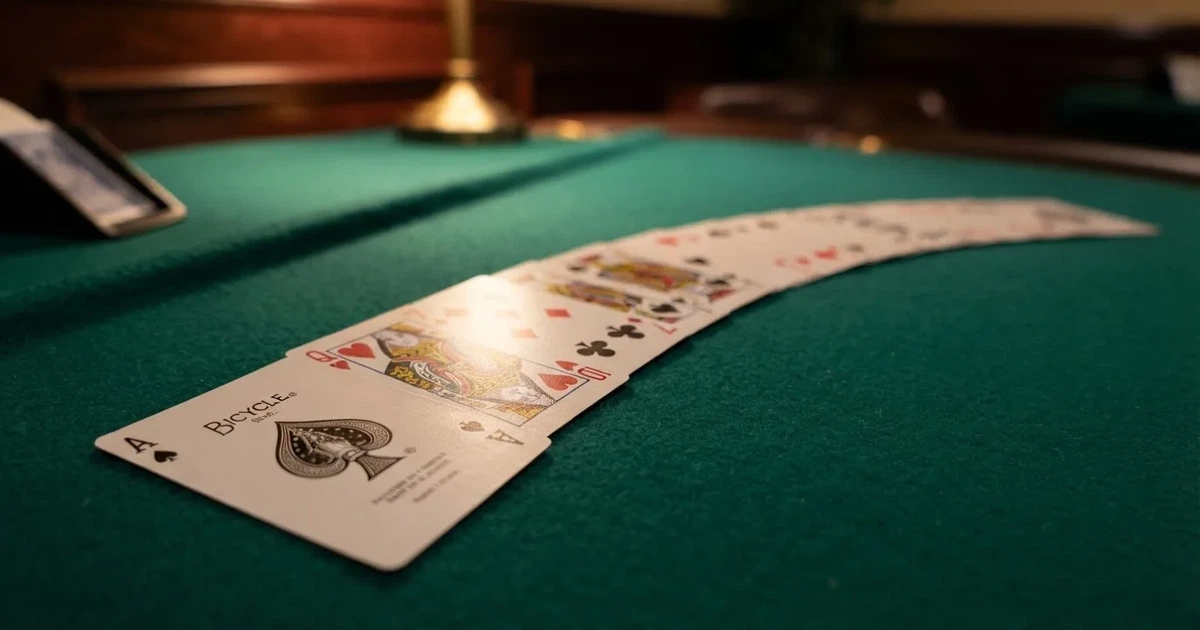
Verified against the ACMA’s published warning list as of 29 October 2026.
Table of Contents
- The frame: why a “live” blackjack table is still an unlawful offer to an Australian
- What “live dealer” actually changes about the game
- The blackjack basics a player needs before any table
- Where this sits in the Australian enforcement picture
- Responsible play on a continuous shoe
- Crypto and PayID: what changes when the payment route is offshore
- Bonuses: what a “table game bonus” actually requires
- The comparison: ACMA action against live blackjack brands
- How fast the regulator is closing the route
- The eleven brands in detail
- What an Australian resident’s live blackjack options actually look like
- What “real money, real dealer” costs the player
- Where the ACMA’s enforcement is heading
- The payment angle under Australian law
- What the responsible-gambling frame looks like for a player who, despite all of the above, is going to play
- What the comparison actually shows
- Frequently asked questions
- What a reader takes from the page
The frame: why a “live” blackjack table is still an unlawful offer to an Australian
Australia runs an unusual model. The country does not licence online casinos at all. What is licensed is wagering — betting on races and sporting events before they start, lotteries, keno — and that side of the industry is administered at territory level, mostly by the Northern Territory Racing and Wagering Commission, which regulates fifty-two online bookmakers from a meeting room in Darwin that convenes once a month. Online casino games, which means slots, table games and any live-dealer variant streamed to a customer, are not on that list. They have not been on it since 2001, and the Interactive Gambling Amendment Act 2017 sharpened the position by giving the ACMA the power to issue formal warnings and direct Australian internet service providers to block offending websites.

The penalties for providing a prohibited service are not token. An individual faces fines of up to A$220,000 per day, and a corporation up to A$1.1 million per day. The target is the operator, not the player, which is why a punter clicking a link at the kitchen table is not the one the regulator is chasing. But the player is the one left holding the consequences when the site is blocked mid-session, when a withdrawal is refused with no Australian complaints body behind them, or when a balance sits on an account that has just become unreachable.
The distinction matters for what follows. A live blackjack table is not a legal workaround for a computer-generated one. The IGA does not care whether the cards are dealt by software or by a croupier in front of a camera. The stream is incidental; the offer to an Australian resident is the offence.
What “live dealer” actually changes about the game
A computer-generated blackjack hand runs on a random number generator. The player clicks “deal”, the algorithm produces cards, and the round finishes in a few seconds. A live blackjack table replaces the algorithm with a human dealer, a physical shoe of cards, and a video feed. Multiple players sit at the same table over the stream, place bets between deals, and watch real cards come out of a real shoe.
The change is experiential, not structural. The paytable is the same. A natural pays 3:2 in a standard ruleset, insurance pays 2:1, doubling and splitting follow the same conventions. The house edge against a player using optimal strategy is about 0.28% under liberal Las Vegas Strip rules — dealer stands on soft 17, double on any two cards, double after split, resplit aces, late surrender — and about 0.43% under Atlantic City rules. Both figures assume the player knows the basic strategy chart by heart and applies it without error; the house edge for a player who guesses is several times worse. The live element does not move that needle in either direction.
What the live format does is compress time. A continuous shoe deal can run fifty or sixty hands an hour, faster than a casual punter can sustain, and the psychology of watching a real person flip cards over is built to keep a player seated. That is the part of the offer that matters more than the ruleset, and it is the part the responsible-gambling frame addresses below.
The blackjack basics a player needs before any table
Blackjack is a comparing-card game. Number cards count at face value, jacks, queens and kings count as ten, and the ace counts as either one or eleven at the player’s option. A starting two-card total of twenty-one — an ace plus a ten-valued card — is a “blackjack” or a “natural” and beats everything except another natural. The dealer must keep drawing until reaching seventeen or higher; some rulesets also require the dealer to hit on a “soft seventeen” (an ace counted as eleven), which costs the player about 0.2% of expected return.
The player acts first and on that order the house edge mostly depends. A player who stands on twelve against a dealer six is giving up a fraction of a percent. A player who hits on sixteen against a dealer ten is saving several times that. The basic strategy chart is small — perhaps fifteen decisions — and it is the single largest edge the player controls at the table.
History is colour rather than instruction, but worth one paragraph. The game descends from the English vingt-un and the Spanish veintiuno that Cervantes described around 1601-1602, with formal British rules published in 1800. The American name “blackjack” dates to roughly 1899 and the Klondike Gold Rush; prospectors are credited with the term. The game arrived in casinos early in the twentieth century and has been the highest-volume table game in most English-speaking jurisdictions ever since.
Variants exist because casinos want to differentiate without rewriting the math. Spanish 21 strips the tens out of the deck and pays a bonus on certain five-card hands. Double Exposure deals both dealer cards face-up but pays evens on naturals. Blackjack Switch lets a player swap the top cards between two hands, offset by dealer twenty-two pushing rather than losing. Super Fun 21 allows up to four splits. Each variant moves the house edge, sometimes in the player’s favour, more often against. A player who does not know which variant they are sitting at is paying for the surprise.
Where this sits in the Australian enforcement picture
The ACMA has issued formal warnings, requested blocking orders, and watched operators leave the market since 2017. The numbers as published in June 2026: 1,751 illegal gambling and affiliate marketing websites blocked since the first blocking request in November 2019, and more than 230 unlicensed services had left the Australian market since enforcement was strengthened. In the most recent round reported on 26 June 2026, the ACMA directed ISPs to block twelve more: 7Signs, ChromaBet, Donbet, Duospin, Freshbet, Slots Gem, Jacks Club, Lucky Start, Pointsbetz, Spinrise, Vinyl Casino and Wildsino. None of those is a live-dealer brand specifically, and that is the point — the regulator is not chasing one product, it is closing the route by which an Australian resident reaches any unlicensed casino-style game.
The market context behind those numbers comes from H2 Gambling Capital’s 2025 estimate: Australians lose about A$3.9 billion a year to illegal sites, and the share of gambling going through legal channels fell from 74% in 2021 to 64%. The legal channel shrank not because more Australians are gambling legally, but because more of them are gambling elsewhere. Live blackjack is part of that elsewhere.
A small clarification on what the ACMA’s blocking requests do. They direct Australian ISPs to make named domains unreachable. They do not require payment processors to step away, do not require app stores to remove anything, and do not reach mirror domains the operator can spin up overnight. They are a load-bearing wall, not a fence.
Responsible play on a continuous shoe
The first responsible-gambling principle in this context is one a player applies to themselves before joining a table, because the table itself will not pause to ask. A live blackjack shoe does not stop for breath. Fifty or sixty hands an hour, a real dealer on camera, side bets offered between rounds — the design runs the player down. Setting a bankroll limit, in dollars and in minutes, before the first card is dealt is the single most useful thing a player does all session.
BetStop, the National Self-Exclusion Register, has been live since August 2023. It binds Australian-licensed online and phone wagering services — bookmakers licensed in the Northern Territory or another jurisdiction. An offshore casino is not on BetStop. Registering does not exclude a player from a Dama N.V. or Hollycorn N.V. brand. It excludes them from Sportsbet, Bet365, Ladbrokes and their peers, which is a real protection but not the one the marketing pages describe.
The National Gambling Helpline is 1800 858 858, free, twenty-four hours a day, with chat available at Gambling Help Online. A player who finds the session running longer than they meant it to, or the stake climbing faster than their bankroll, has somewhere to call that is not the casino.
Crypto and PayID: what changes when the payment route is offshore
The way a player funds an account at one of these brands is irrelevant to whether the offer is lawful, but it matters to the kind of exposure a player takes on. The federal ban on credit cards, credit-related products and digital currency as payment for licensed online wagering came into force on 11 June 2024. Penalties for licensed operators accepting those methods run up to A$247,500. Legal deposit routes for a licensed Australian bookmaker are debit card, bank transfer, PayID, Osko and BPAY.
A site asking an Australian for a credit card or a crypto deposit is, by definition, not one of those licensed bookmakers. The bitcoin-funded live blackjack table deals the same cards as the PayID-funded one — both are unlawful under the IGA — but the funding route tells the player which set of consumer protections they have given up. A credit-card chargeback route exists through the card issuer. A crypto transfer, once settled on the blockchain, does not. PayID is fast and free inside Australian banking hours, but it pays into an account at an offshore operator, and the moment the money has cleared, the player is back to the question of whether the operator will release the balance when the player asks.
The right framing of the crypto angle is that it does not anonymise the player so much as it removes one of the few practical recourse paths. A player who can charge back has a backstop. A player who paid in ETH has none.
Bonuses: what a “table game bonus” actually requires
Blackjack bonuses at offshore casinos usually arrive with terms that treat table games as a separate category from slots. The same offer may credit a slot at one hundred percent toward wagering and a blackjack hand at ten or twenty percent. A bonus that reads as “100% up to A$500” can require, on a blackjack-only playthrough, ten times the apparent turnover. The marketing word for this is “eligible games”; the practical effect is to multiply the real cost of clearing the bonus several times over.
A separate term to read for is max cashout, the cap on winnings a player can withdraw from a bonus-funded session. A bonus that promises a large headline number with a small cashout ceiling is a marketing object, not a financial one. Game weighting and cashout caps are not features a player can negotiate after the fact. They are the offer.
In every case, the cost of a bonus is the turnover it imposes times the house edge of the game it is being cleared on. A player clearing a blackjack bonus at a 0.5% house edge is paying roughly half a cent per dollar turned over. That is far cheaper than clearing a slots bonus at a 5% house edge, which is why casinos weight blackjack bets down. The casino is not being generous in offering the bonus; it is pricing the cost of clearing it. The comparison has a real conclusion to draw.
The comparison: ACMA action against live blackjack brands
The table is the most useful object on this page, because it puts eleven operators side by side on the single dimension that matters for an Australian resident: the regulator’s view of them. Each row is a brand the ACMA has issued a formal warning over for offering prohibited online casino services to Australians. The dates are the dates the ACMA published.
| Brand | ACMA action and date | Operator named by the ACMA | Subject support |
|---|---|---|---|
| RocketPlay | Formal warning, March 2026; earlier warning to operator May 2022 | Pulsup Ltd (current); Dama N.V. (earlier) | — |
| Level Up Casino | Formal warning, May 2022 | Dama N.V. | Listings say the brand carries BGaming content |
| Woo Casino | Formal warning, March 2025 | Dama N.V. | — |
| Spirit Casino | Formal warning, May 2025 | Dama N.V. | — |
| National Casino | Formal warning, July 2025 | Consolutetish S.R.L. | Listings reference the brand on Wikipedia |
| Bizzo Casino | Formal warning, July 2025; earlier warning 2022 | Consolutetish S.R.L. (current); TechSolutions (earlier) | — |
| Ignition Casino | Formal warning, July 2025 | Bamboo Media | — |
| Instant Casino | Formal warning, February 2025 | EOD Code SRL | — |
| Jackbit | Formal warning, April 2026 | Ryker B.V. | — |
| Casino Intense | Formal warning, April 2025 | Sterplay Holding Ltd | Listings reference the brand on ABC and ACMA material |
| Sky Crown | Formal warning, published September 2022 | Hollycorn N.V. | — |
What the table does not contain is a row for any operator that has not been the subject of a formal ACMA warning. The ACMA register is the only authority named, and the table’s content is the authority’s, not the operators’. Several of these brands have offshore licences in Curaçao or Anjouan; those licences permit them to operate in jurisdictions that allow remote casino gambling. Australia is not one of those jurisdictions, and the warning follows from that.
A second thing the table omits is any reference to a bonus offer, deposit method, payout time, RTP, or volatility rating. Those specifications are not in the input for any of these brands, and an empty cell would have been a more honest column than an invented figure. The page describes the brands the regulator has acted against. It does not advertise them.
How fast the regulator is closing the route
The arithmetic on the ACMA’s blocking programme is straightforward and worth doing. As of June 2026, the ACMA had directed ISPs to block 1,751 illegal gambling and affiliate marketing websites since the first blocking request in November 2019. That is roughly 270 blocks per year averaged across the seven-and-a-bit-year period, or about five blocks per working week. The rate has not been constant: enforcement was strengthened in 2017, the first blocking request came in late 2019, and rounds have grown in size as the ACMA’s process has matured. The twelve-site round reported on 26 June 2026 is one of several this year, and the cumulative figure will keep rising.
Read alongside the 230-odd operators that have left the Australian market since 2017, the picture is of a regulator steadily shrinking the supply side of the offshore trade, not driving it out. The blocks stop Australian residents reaching specific domains; the exits happen when an operator decides the Australian market is more trouble than it is worth. Both reduce the number of brands a player can reach from Australia, and neither reduces the underlying demand that drives Australians toward those brands in the first place. The blocking-rate arithmetic is the rate at which one side of the equation moves. The other side — the A$3.9 billion a year H2 Gambling Capital estimates is lost to illegal sites — moves much more slowly.
The conclusion to draw from the arithmetic is that the route an Australian resident travels to a live blackjack table is being narrowed, not closed. A brand reachable today may be blocked next month. A payment route that works this quarter may be the subject of a fresh warning next quarter. The churn is the risk a player takes on in addition to the house edge.
The eleven brands in detail
The brands below are described as the regulator has described them. None is recommended as a place to play.
RocketPlay
RocketPlay is the brand that the ACMA warned in March 2026, with Pulsup Ltd named as the operator. The same brand was earlier the subject of a May 2022 warning to Dama N.V., which makes it one of two operators on this list with a multi-year record of warnings against successive corporate parents. The page makes no judgement about whether the change of operator reflects a change of conduct, because the regulator has not said so. What it does say is that an Australian resident who reaches RocketPlay today is reaching a brand the ACMA has acted against twice in four years.
Level Up Casino
Level Up Casino was the subject of the May 2022 warning to Dama N.V., which covered six Dama brands in a single round. The brand’s public-facing game library is reported by listing sites to include BGaming content, which is the extent of what can be said about it from the sources available. There is no bonus specification to report and no licence claim that would place the brand within the Australian regulatory perimeter.
Woo Casino
Woo Casino was the subject of a March 2025 formal warning to Dama N.V., one of two warnings issued to that operator in 2025. The pattern across Dama brands is the relevant comparison: Dama N.V. has been warned over at least four separate brands in different years, and the ACMA’s persistence with the same operator under different names is itself the data point. Woo Casino’s terms are not in the input.
Spirit Casino
Spirit Casino was the subject of a May 2025 formal warning to Dama N.V., the second of the two 2025 warnings. The brand is newer than Woo Casino on the regulator’s record. No specifications are available from the input, and the warning itself is the only concrete fact attached.
National Casino
National Casino was the subject of a July 2025 warning to Consolutetish S.R.L., alongside Bizzo Casino in the same round. The brand has a public Wikipedia listing, which is the limit of what the input carries about it. National Casino shares its operating company with Bizzo, which means the regulator’s view of the two brands is one warning, not two, and an Australian resident who reaches one of them has reached both.
Bizzo Casino
Bizzo Casino was the subject of the same July 2025 warning to Consolutetish S.R.L., and earlier of a 2022 warning to TechSolutions (CY) Group Limited and TechSolutions Group N.V. The two-operator history is similar to RocketPlay’s pattern. An Australian resident reaching Bizzo today is reaching a brand with a six-year regulator history.
Ignition Casino
Ignition Casino was the subject of a July 2025 warning to Bamboo Media. Bamboo Media is a less familiar name in the regulator’s published record than Dama N.V. or Consolutetish S.R.L., which means there is less background to draw on. The warning is the concrete fact.
Instant Casino
Instant Casino was the subject of a February 2025 warning to EOD Code SRL, the earliest action in the 2025 cluster. EOD Code SRL is the operator named; the brand is the surface. No specifications are available.
Jackbit
Jackbit was the subject of an April 2026 warning to Ryker B.V., alongside CasinOK in the same round. The brand has a crypto-casino reputation in public listings, which is consistent with the operator’s other brands. As elsewhere, the regulator’s view is the only concrete specification available.
Casino Intense
Casino Intense was the subject of an April 2025 warning to Sterplay Holding Ltd. The brand’s public profile draws on ABC reporting and ACMA material, with a Crown Melbourne connection in some listing references. The connection to a licensed Australian venue is not in the input, and the warning is to the offshore operating company, not to any Australian counterpart.
Sky Crown
Sky Crown was the subject of the September 2022 formal warning to Hollycorn N.V., which covered both Sky Crown and Blue Leo. Hollycorn is one of the more frequently warned operators on the regulator’s list, and the warning is one of the older entries on this comparison.
What an Australian resident’s live blackjack options actually look like
There are no lawful live blackjack options for an Australian resident. The Interactive Gambling Act 2001, as amended in 2017, makes the provision of online casino games — and that includes any live-dealer variant — an offence. No state or territory issues the kind of licence that would allow a brand to stream live blackjack to an Australian IP address lawfully.
What the Australian-resident punter has instead are three categories of offer, none of which is what the marketing pages describe as “live blackjack online”:
The first category is licensed Australian wagering — sports and race betting through Sportsbet, Bet365, Ladbrokes and similar bookmakers. These brands do not offer live blackjack tables. They offer pre-event wagering and, where the licence covers it, in-play betting on sport. They are not what the search was for.
The second category is the offshore casino. The brands on this list sit here. They offer live blackjack, they accept Australian residents, and they are the subject of the ACMA’s enforcement activity. They are what the search returns and what the regulator is blocking.
The third category is the physical Australian casino — Crown Melbourne, The Star Sydney, The Star Gold Coast, Crown Perth, SkyCity Adelaide, Country Club Tasmania, Lasseters Alice Springs, Casino Canberra. Each runs live blackjack tables on the floor, under a state or territory casino licence, with the VGCCC and its equivalents approving the rules and any change to them. A player who wants live blackjack in Australia and wants it lawful travels to one of those venues. The offer is real cards, a real dealer, and a real ruleset approved by an Australian regulator. It is not the same thing as an online stream.
The cost of an online stream versus a casino floor is part of the comparison. The casino floor has a fixed house edge per hand, a known payout cycle, and a regulator behind it. The online stream has the same house edge per hand, no fixed payout cycle, and no regulator behind it. The difference is not the math; the difference is what happens when something goes wrong.
What “real money, real dealer” costs the player
The house edge is the floor. Under optimal play and liberal Las Vegas Strip rules, it is about 0.28%. Under Atlantic City rules, it is about 0.43%. A player who guesses on every decision is paying several percent per hand. The basic strategy chart reduces the difference; not playing the chart widens it.
Time is the next cost. A live shoe deals fifty to sixty hands an hour. At A$10 a hand, optimal play, and a 0.4% house edge, an hour costs the player about A$2.40 in expectation. That is not the cost a player pays in practice; the cost a player pays is the variance. A losing session at A$10 a hand for an hour is far more likely than a winning one, and a player who treats the session as entertainment is paying A$120 in expected loss per hour only if they are betting A$500 a hand. The figure is illustrative, not a forecast for any specific session.
Bonuses inflate that cost in the way described above. A bonus that weights blackjack at 10% toward wagering is asking for ten times the apparent turnover, and a player who clears a A$100 bonus at 35x wagering with blackjack weighting is turning over A$35,000 in bets at a 0.4% house edge, an expected cost of A$140 on top of the original A$100 stake. The “free” money is not free, and the marketing word for the bonus is the place to be skeptical.
The offshore overlay adds a third cost: the risk of a withdrawal refused or a balance stranded on a site that the ACMA has just directed ISPs to block. A player who joined an offshore casino with A$500 in expectation of playing fifty hours of optimal blackjack has a positive expected value of about A$11,400 — meaning, in expectation, they lose A$500 over fifty hours and walk away with nothing — but the practical risk is that they win, request a withdrawal, and discover the operator has no obligation to pay them under Australian law because the operator is not under Australian law. The expected loss from a refusal-to-pay scenario depends on the operator and is not in the input; the existence of that risk is.
Where the ACMA’s enforcement is heading
The Interactive Gambling Amendment (Gambling Reform) Bill 2026 passed Parliament on 19 August 2026. Its advertising and inducement measures commence on 1 January 2027 — law with a start date, not yet in force. The page is being written in the year before those measures take effect. What the bill adds, when it activates, is a further layer of prohibition on advertising and inducements directed at Australian residents. The blocking regime under the existing IGA continues to operate as it has since 2017.
What that means for the brands on this list is that their Australian-resident channel is not just blocked at the network level — it is also restricted at the advertising level from 1 January 2027. The two restrictions overlap but are not redundant. A blocked site can still be advertised through affiliate channels the ACMA cannot reach. The bill closes that route. A player who reaches one of these brands after 1 January 2027 will have reached it through a channel the regulator has tried to seal twice.
The payment angle under Australian law
The 11 June 2024 ban on credit cards, credit-related products and digital currency as payment for licensed online wagering does not reach the offshore brands on this list, because those brands are not licensed. What it does do is signal the regulatory direction. The licensed wagering industry, which the IGA permits, is being progressively narrowed in how it can take payment from Australian customers. Debit card, bank transfer, PayID, Osko and BPAY remain the lawful deposit routes for a licensed bookmaker. Crypto and credit are out.
For an offshore casino, none of those restrictions applies directly. A site can accept whatever its payment processor will clear. The relevance to a player is that an offshore site asking for a credit card or a crypto deposit is operating in a way that a licensed Australian operator cannot, and is asking the player to fund an account through a route that no Australian-licensed operator would accept. The route tells the player the brand is not within the Australian perimeter.
What the responsible-gambling frame looks like for a player who, despite all of the above, is going to play
The responsible-gambling advice in this section is addressed to a player who has decided to play anyway. It is not an endorsement of the decision. The advice the page gives is the same advice the National Gambling Helpline gives, restated for a live blackjack context.
Set a bankroll limit before the first hand. Decide in dollars and in minutes. A live shoe at fifty hands an hour will burn through both faster than a player expects. Stop at the limit, not at the end of the shoe.
BetStop excludes a player from Australian-licensed wagering services. It does not exclude them from offshore casinos. It is still worth registering, because the licensed bookmakers are also a gambling surface, and an exclusion from them is a real protection. A player who has registered with BetStop and is still playing at an offshore casino is the player the helpline is for.
The helpline is 1800 858 858, free, twenty-four hours a day, with chat at Gambling Help Online. A player who finds themselves chasing losses, betting more than they meant to, or playing past the time they set is the player who should call.
The framing of responsible gambling in an offshore context is one the regulator does not pretend to control. The Australian Consumer Law does not apply to an offshore operator in the same way it applies to a domestic one. The state and territory gambling help services are Australian-government funded and free to use, regardless of whether the gambling is licensed. The help is real; the consumer protection on the gambling itself is not.
What the comparison actually shows
Eleven brands, eleven formal warnings, eleven operators whose names appear in the ACMA’s published record. The pattern is that a small number of operating companies — Dama N.V., Consolutetish S.R.L., Hollycorn N.V., Bamboo Media, EOD Code SRL, Sterplay Holding Ltd, Ryker B.V., Pulsup Ltd, TechSolutions — sit behind more brands than the brand list suggests. A warning to one brand often covers several; the operator is the unit the regulator acts on. An Australian resident who avoids one brand in this list and reaches a sister brand under the same operator has not avoided anything.
What the comparison does not show is a recommended brand. The page describes the brands the regulator has acted against. It is not a shortlist of where to play, because none of the eleven is a place to play lawfully from Australia. The comparison is a regulator record, and the value of the record is the picture it gives of the supply side: the brands rotate, the operators recur, the warnings accumulate.
Frequently asked questions
Is it legal to play live blackjack for real money at an online casino in Australia?
No. The Interactive Gambling Act 2001 makes it an offence to provide online casino games to a person in Australia, and a live-dealer stream is an online casino game in the regulator’s view. The provider is the target of enforcement, not the player, but the player is left without Australian consumer protection if something goes wrong. No state or territory licences online casinos.
How does a live-dealer blackjack table differ from a computer-generated version?
The cards are physical, the dealer is a person on a video stream, and multiple players share the same shoe. The paytable, the basic rules, and the house edge are the same as a computer-generated version. The difference is tempo and atmosphere: a live shoe runs fifty or sixty hands an hour and the format is built to keep players seated.
What dealer rule most affects the house edge in blackjack?
Whether the dealer hits or stands on a soft seventeen. A dealer who stands on soft 17 costs the player about 0.2% less than a dealer who hits. Resplitting aces, late surrender, and doubling after split each move the edge in the player’s favour by smaller amounts. The biggest single rule change is the soft-seventeen decision.
Does a blackjack bonus offer usually count table game bets the same as slot bets?
No. Most offshore casino bonuses weight table games at ten or twenty percent of slots toward wagering. A bonus that reads as “100% up to A$500” can require ten times the apparent turnover on blackjack. The headline number is the marketing object; the weighting is the cost.
Is a live blackjack app a separate product from a site’s browser-based table?
Usually no. Most live blackjack products from Evolution, Pragmatic Play Live and the other major providers run in a browser tab, and the “app” is a wrapper that loads the same table. The provider is the live studio; the casino brand is the front end. A player who switches from the app to the browser is at the same table.
Can a live blackjack hand be joined partway through a dealer’s shoe?
Yes, and most live tables allow a player to “bet behind” an occupied seat or to take an open seat at any point between hands. Joining mid-shoe does not change the house edge on the next hand. The edge applies hand by hand, not shoe by shoe, and a player who joins after a losing streak is not “due” any more than a slots player is. Each hand is independent.
What a reader takes from the page
A reader who came looking for a live blackjack casino to play at from Australia leaves with three concrete things. The first is that there is no lawful live blackjack casino to play at from Australia. The second is that the eleven brands most likely to appear in search results are the eleven the ACMA has acted against, and the regulator’s record on each is the most reliable specification the page can offer. The third is that the cost of an online stream — house edge, time, bonus terms, withdrawal risk — is the same as the cost at any blackjack table, with the consumer-protection overlay the regulator gives a domestic casino subtracted.
A live blackjack table on the floor of Crown Melbourne or The Star Sydney, under a VGCCC-approved ruleset, is the lawful version of what an offshore stream purports to offer. The math is the same. The recourse path is not.