
Casino sites that accept Osko in Australia: the cost of the “fast” deposit
29 October 2026 · Cross-checked against the ACMA’s register of formal warnings and the Interactive Gambling Act 2001.
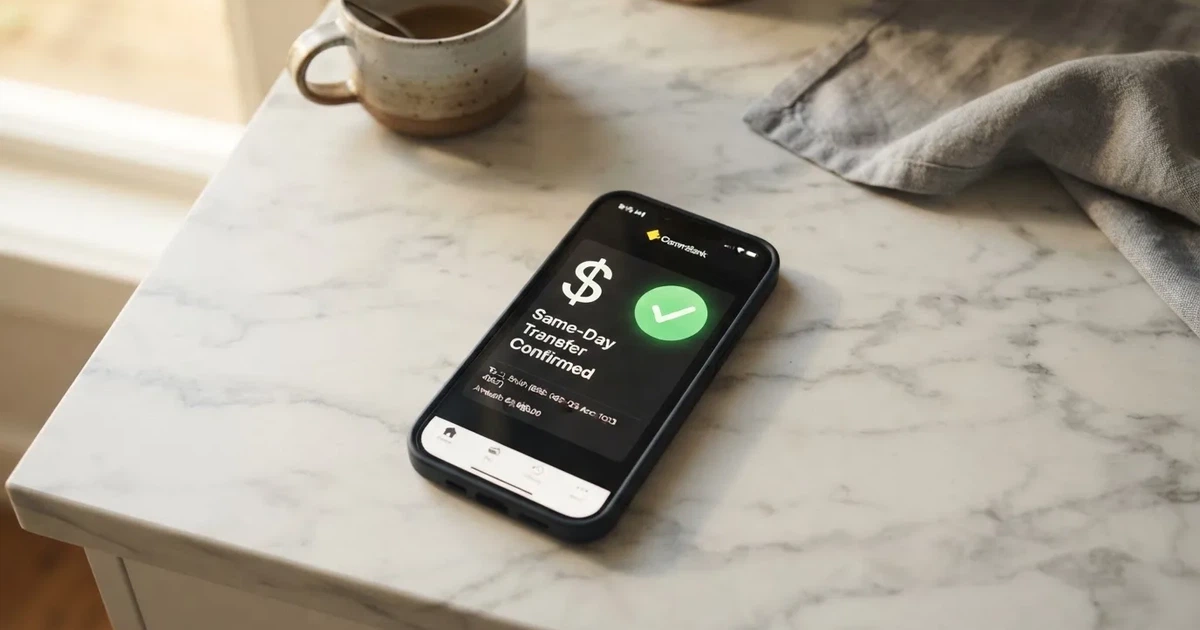
Every offshore casino brand in this comparison carries a formal warning from the Australian Communications and Media Authority. That is not a coincidence — it is the only reason an Australian player sees the brand on a list at all. What this page is actually about is the gap between the way these sites market Osko (instant, free, Australian) and the way the Interactive Gambling Act treats them. Osko itself is a real, useful payment rail, and it deserves to be described properly. The sites using it as a deposit button deserve to be described properly too.
Table of Contents
- Legality: what Osko at a casino site actually means in Australia
- Responsible gambling: what is and is not connected
- Payments and payout speed: how Osko actually moves money
- What separates one shortlist from another
- The eleven brands the ACMA has named
- Overview: the cost that does not appear on the deposit screen
- Comparison: ACMA formal warnings against offshore operators
- Frequently asked questions
Legality: what Osko at a casino site actually means in Australia
Online casino games and online pokies are a prohibited interactive gambling service in Australia. The Interactive Gambling Act 2001, strengthened by the Interactive Gambling Amendment Act 2017, makes it an offence to provide those products to a person physically in Australia. No state or territory issues a licence for them. What is licensable is wagering on races and sporting events placed before the event, lotteries and keno — in practice licensed in the Northern Territory through the NTRWC, which oversees 52 online bookmakers including Sportsbet, Bet365 and Ladbrokes. The commission itself has no full-time staff and meets once a month in Darwin.

That single sentence reshapes everything Osko can and cannot do at a casino site.
Enforcement runs through the ACMA, which investigates complaints, issues formal warnings to operators, and asks Australian internet service providers to block offending domains. As of June 2026 the ACMA reported that 1,751 illegal gambling and affiliate marketing websites had been blocked since the first blocking request in November 2019, and more than 230 unlicensed services had voluntarily left the Australian market since enforcement was tightened in 2017. A further round on 26 June 2026 added twelve domains: 7Signs, ChromaBet, Donbet, Duospin, Freshbet, Slots Gem, Jacks Club, Lucky Start, Pointsbetz, Spinrise, Vinyl Casino and Wildsino.
The individual player is not prosecuted. The IGA targets the provider. That distinction matters because the cost of playing at an unlicensed site falls entirely on the player in ways the operator’s marketing never mentions.
What the player gives up
An offshore casino gives an Australian no consumer protection, no complaints body, and no recourse if a withdrawal is refused. There is no local ombudsman to complain to, no Australian small-claims path, and no way to compel a payout from a Curacao-incorporated company that has already been told by the ACMA to stop. The same enforcement that names the brand also explains why a balance can be stuck on a blocked site: the ISP blocks the domain, the company is in another jurisdiction, and the player’s funds sit in an account nobody in Australia has authority over.
The minimum age is 18 — same as at any Australian-licensed venue.
The credit-card ban and what it means for Osko
Since 11 June 2024 the IGA has banned credit cards and other credit-related products as a payment method at licensed Australian wagering services, with operator penalties up to A$247,500. The ban reaches digital wallets linked to credit, so an Apple Pay transaction funded by a credit card is captured the same way. Legal deposit routes at Australian-licensed operators are debit card, bank transfer, PayID, Osko and BPAY — all of them push-money rails that pull from a transaction account, not a credit line.
Osko is one of the legal rails for licensed wagering. The interesting question is what it is doing at an unlicensed casino, and the answer is mostly marketing: Osko looks familiar to an Australian player, settles in under a minute, and arrives in a transaction account the way a BPAY payment does. The site that accepts it via PayID is using a domestic rail to take money that the law says it cannot lawfully take.
Responsible gambling: what is and is not connected
Gambling Help Online is the national counselling and information service, free and available 24/7. The National Gambling Helpline — 1800 858 858 — runs alongside it, with webchat on the Gambling Help Online site. Both are open to anyone in Australia, licensed site or not, and the helpline takes calls from people who have played offshore.
BetStop, the National Self-Exclusion Register, has been live since August 2023. It is the single most consequential player-protection tool introduced in Australia in the last decade, and it has a hard limit worth naming: it binds only Australian-licensed online and phone wagering services. Registering with BetStop tells the licensed bookmakers not to let you in; it tells the offshore casino nothing, because the offshore casino was not checking BetStop to begin with. A self-excluded player who then opens an account at one of the brands reviewed below is not protected by their BetStop registration — they have only the offshore site’s own voluntary block, which is exactly as enforceable as everything else on an offshore site.
State self-exclusion registers — the various “barred from venues” lists run by state regulators — apply to land-based venues and, in some states, to licensed online operators in that state. None of them bind an offshore casino either.
The blunt version: every protection listed here assumes an Australian licensee is on the other end of the transaction. An Osko deposit to an offshore site bypasses them all.
When a bank blocks the transaction before the casino does
Several Australian banks now offer a gambling transaction block. Westpac’s version refuses authorisation at card level for any transaction tagged with the merchant category code “Betting/Casino Gambling” on an eligible personal credit or debit card. ANZ’s version, activated in the ANZ app, blocks gambling transactions made through a digital wallet such as Apple Pay on an eligible card, not just the physical card. Once activated, removing ANZ’s block requires a 48-hour waiting period, and ANZ warns that not every gambling transaction will be blocked and some non-gambling transactions may be blocked in error.
Osko is a bank transfer, not a card. A bank’s card-level gambling block does not catch it. A bank’s account-level behaviour monitoring, where the bank looks at the BSB, account number or PayID the transfer is going to, is a different system entirely. Some Australian banks treat repeated Osko payments to unfamiliar PayIDs in much the same way they treat large or unusual BPAY payments: a hold, a confirmation request, occasionally a refusal. None of this is gambling-specific regulation. It is ordinary transaction monitoring, and the rule it follows is the bank’s own appetite for fraud and scam risk, not the IGA.
PayID-based instant transfers do give a small extra layer. Paying to a PayID shows the name of the account holder before the transfer is sent. AP+, the operator of the PayID scheme, warns that being asked to transfer money to a PayID on an illegal gambling site is almost certainly a scam site — which is also the regulator’s view, but the warning comes with the time it takes to read it, not with a refund.
Payments and payout speed: how Osko actually moves money
Osko is the consumer brand for instant payments on Australia’s New Payments Platform. The NPP itself went live on 13 February 2018 and is owned by NPP Australia Limited, a non-profit whose shareholders include the Reserve Bank of Australia and the country’s major banks. In 2021 the ACCC authorised the merger of NPP Australia, BPAY and eftpos into a single company, Australian Payments Plus (AP+). Osko, PayID and BPAY now sit under the one corporate roof.
The settlement promise is the part that matters for a deposit button. With Osko enabled on both the sending and receiving account, a payment between participating banks and financial institutions arrives in under a minute, 24 hours a day, 7 days a week, including weekends — whether it is addressed to a BSB and account number or to a PayID. The New Payments Platform connects more than 100 banks, financial institutions and fintechs, handles around A$7 billion of payments a day, and had reached 128 million accounts by 31 August 2025. More than 25 million PayID identifiers had been registered on the platform by April 2025.
The Reserve Bank of Australia built and operates the platform’s Fast Settlement Service, which settles Osko and other NPP payments individually and in close to real time around the clock. Participants in the platform are obliged to keep their monthly outages to no more than two minutes.
What Osko looks like inside a banking app
Osko works inside the “Pay Anyone” section of a participating bank’s online or mobile banking. There is no separate sign-up, no second app to install, and no fee at the consumer end. A payment carrying the Osko logo is sent fast whether it goes to a PayID or to a BSB and account number. A payment carrying only the BSB and account number falls back to the older direct-entry system and arrives on the next business day — which is what an “Osko” deposit button at an offshore casino is, when the receiving bank on the other end is not an Australian NPP participant.
When Osko is enabled on both sides, a payment can carry a description of up to 280 characters. The 280-character description is where PayID-based scams are caught: a casino deposit screen that asks for “casino” or “pokies” in the description field is asking the customer’s bank to flag the transaction under its own monitoring rules. Some Australian banks will hold or refuse the payment on that basis. AP+ itself does not screen for gambling-related descriptions; that is each bank’s own policy.
AUSTRAC’s threshold-transaction-report rule applies only to physical cash. Ordinary electronic bank transfers — Osko included — are not subject to that per-transaction reporting requirement, regardless of the amount sent.
The casino side: deposits versus withdrawals
On the deposit side, an Osko or PayID transfer to an offshore casino is an NPP payment from the customer’s bank to whatever Australian or Australian-connected receiving account the casino operates. The settlement speed is the platform’s, not the casino’s. Once the money clears the Australian rail it moves through whatever correspondent or intermediary arrangement the operator uses to credit the player’s casino balance. That second leg is the slow one. A player who sees “instant” on the deposit screen is timing the Australian leg, not the casino’s processing.
Withdrawal is a separate question. When an offshore site says it pays out by Osko or by bank transfer, it means a refund from its Australian receiving account back to the player’s bank. That is the same NPP rail in reverse, and a willing operator can move money back through it in under a minute. The catch is the word “willing”. An offshore operator has no incentive to process a withdrawal quickly, no Australian regulator to answer to, and no Australian complaint body the player can ring. A site that processes deposits in seconds and withdrawals in weeks is the rule, not the exception — and Osko’s speed does not change that, because Osko moves money only when an operator decides to send it.
PayID does show the name of the account holder on the receiving side, which is useful for one check: does the name match the casino operator? If it does not, that is a clear signal the receiving account belongs to a payment processor or shell company the player has never heard of.
What separates one shortlist from another
A shortlist of offshore casinos that accept Osko is built from the ACMA’s own enforcement record, because that is the only public source for which brands are actually targeting Australian customers. Every operator below appears here because the ACMA has issued a formal warning to the company behind it for offering a prohibited interactive gambling service to Australians. The ACMA’s register is also where the ACMA’s own current view lives, which is why a “top ten” comparison on this subject is, in practice, a record of which companies the regulator has caught.
The criteria that actually separate one entry from another on this list are few. The date of the most recent formal warning tells a player whether the regulator has revisited the brand recently or whether the file has been quiet for years. The number of distinct brands under one operator tells a player how widely the same company is testing the Australian market under different names. The product category tells a player whether the regulator’s complaint was about casino games specifically or about something adjacent. Everything else that affiliate comparison sites publish — bonus sizes, withdrawal times, “VIP” tiers — is marketing copy that the operator’s own terms page contradicts, and which an offshore operator can change without notice.
The blocking-rate calculation
By 26 June 2026 the ACMA had directed Australian ISPs to block 1,751 illegal gambling and affiliate marketing websites. The first blocking request was made in November 2019. That is roughly 79 months of enforcement. Across that period the ACMA asked for 1,751 blocks, an average of about 22 blocks per month over the seven years of the regime. That average is the only honest figure for “how fast is a site likely to be taken offline”. The visible spread — from 12 sites added in a single round to periods when the ACMA was pursuing different cases — does not flatten into one rate. Two dozen sites per month is the working figure: enough that an offshore operator can expect a domain to be blocked eventually, but not enough that a player should assume the block will arrive while their account still has a balance in it.
The eleven brands the ACMA has named
Every entry below is an offshore operator against which the ACMA has issued a formal warning under the Interactive Gambling Act 2001. The product they offer — online casino games and online pokies — cannot be licensed anywhere in Australia, whatever licence the operator displays in its footer. They are not ranked by quality. They are listed in the order the ACMA’s own register sets out.
RocketPlay
The ACMA issued a formal warning to Pulsup Ltd over Rocketplay in March 2026. Rocketplay was already on the regulator’s file: in May 2022 the ACMA warned Dama N.V., which then operated the brand, covering six casino names including Rocketplay alongside Bambet, Dazard, Level Up, Wild Tornado and Cobra Casinos. That is two separate operators, in two different jurisdictions, running the same brand in roughly four years. From a player’s point of view the more relevant fact is the pattern — the brand moves between operators faster than the regulator’s enforcement can track.
The site’s own materials claim a Curaçao licence. No Curaçao licence authorises the operator to take Australian customers for casino games; the IGA is the relevant Australian law, and it prohibits the service. The ACMA’s March 2026 warning puts the regulator’s current view on the record.
Level Up Casino
The ACMA’s May 2022 warning to Dama N.V. named Level Up alongside the five other Dama brands of that round. Level Up has not been the subject of a separate ACMA warning since, which is not the same as the ACMA having closed the file. The brand is still offered to Australian customers and still runs on the same offshore structure. Westpac’s gambling-block information page lists the kind of merchant category code the operator uses, which is the only public source for the payment-rail behaviour the brand relies on.
The brand’s market position is best read as a Dama N.V. property in 2022 terms. A player running into Level Up today is more likely to be on a successor operator’s platform, and that change is invisible from the brand name alone.
Woo Casino
The ACMA issued a formal warning to Dama N.V. over Woo Casino in March 2025. Woo had not appeared in the May 2022 batch, which means the operator’s Australian-facing activity grew enough that the regulator took a second look three years later. Woo sits in the same Dama cluster as Level Up and Spirit Casino — same offshore group, same licence, separate skin. The fact that the regulator names Dama for a third time in three years tells a player what the regulator’s working theory of the operator already is.
Spirit Casino
The ACMA issued a formal warning to Dama N.V. over Spirit Casino in May 2025, two months after the Woo Casino warning. Two ACMA warnings to the same operator in the same year, on related brands, is not a coincidence — it is the regulator signalling that the first warning did not change the operator’s behaviour. The structural fact, again, is that Dama N.V. now has three named Australian-facing brands on the regulator’s file (Level Up from 2022, Woo and Spirit from 2025) and remains in the market.
National Casino
The ACMA issued a formal warning to Consolutetish S.R.L. over National Casino in July 2025. National Casino’s payment-rail behaviour shows up in AUSTRAC’s public materials and in the Wikipedia entry on the New Payments Platform, both as a reference example for how an offshore brand plugs into domestic Australian instant-transfer rails. The AUSTRAC reference in particular is a tell: the regulator publishes reference examples of unusual or non-compliant transaction patterns, and National Casino is named in that material.
National Casino sits in the same operator cluster as Bizzo Casino, which the ACMA also named in the same July 2025 round.
Bizzo Casino
The ACMA’s July 2025 warning to Consolutetish S.R.L. named Bizzo Casino alongside National Casino. Bizzo had already been the subject of a 2022 formal warning to TechSolutions (CY) Group Limited and TechSolutions Group N.V., making it one of the few brands on this list with two formal warnings to two different operators in three years. From the regulator’s point of view that is a familiar pattern — the brand moves between operators faster than enforcement can follow it. From a player’s point of view it is the same pattern, viewed from the other side: the brand keeps being offered, and the operator keeps changing.
Ignition Casino
The ACMA issued a formal warning to Bamboo Media over Ignition Casino in July 2025. Ignition is the older name on this list — it has been marketed to Australian players for several years, primarily through poker and casino-game skins — and the ACMA’s 2025 action is the regulator’s first formal warning specific to the brand. Bamboo Media had not previously appeared on the register, which sets Ignition apart from the Dama and Consolutetish entries above.
Instant Casino
The ACMA issued a formal warning to EOD Code SRL over Instant Casino in February 2025. Instant Casino’s payment-rail behaviour is described in EcoPayz’s and PayID’s public reference materials — both as an example of how an offshore casino plugs into domestic Australian instant-transfer rails. EcoPayz and PayID are not regulators and do not endorse the brand; they publish integration documentation that names Instant Casino as a customer.
For a player comparing Instant Casino to the entries above, the relevant fact is the regulator’s view is already on the record (February 2025) and the brand’s payment integration is public enough to be cited by the rail operators themselves.
Jackbit
The ACMA issued a formal warning to Ryker B.V. over Jackbit in April 2026, alongside a parallel warning over CasinOK. Jackbit is a crypto-friendly operator; the ACMA’s warning names the casino service, not the payment method, which puts Jackbit in the same legal posture as every other entry on this list. The April 2026 timing matters: it is the most recent formal warning in the ACMA’s current register, and it is also the first action against Ryker B.V. specifically.
CasinOK, named in the same Ryker B.V. warning, is not separately reviewed here.
Casino Intense
The ACMA issued a formal warning to Sterplay Holding Ltd over Casino Intense in April 2025. Casino Intense appears in AUSTRAC’s public materials, in ITNews reporting on the New Payments Platform, and in NAB’s gambling-block documentation — three independent references to the brand’s Australian-facing activity, all of them pre-warning. The AUSTRAC reference in particular means the regulator had Casino Intense on its radar before the formal warning; the warning is the public outcome of a process that was already running.
Sky Crown
The ACMA issued a formal warning to Hollycorn N.V. over its Sky Crown and Blue Leo casino services. Sky Crown is the only entry on this list without a precise date attached in the ACMA’s published materials — the formal warning is on file, but the exact month is older than the other warnings in the cluster. The September 2022 PDF that the ACMA publishes names both Sky Crown and Blue Leo, and Hollycorn N.V. as the operator behind both.
Overview: the cost that does not appear on the deposit screen
The headline on the marketing side is the speed. An Osko deposit clears in under a minute. A PayID transfer shows the account holder’s name before the customer confirms. A bank transfer from an Australian transaction account does not look, to the customer, like a foreign-currency card payment to a Curaçao shell company. It looks like paying a bill.
The cost that does not appear on the deposit screen is the cost of having no recourse. An offshore casino is not bound by Australian consumer law. It is not connected to BetStop, and BetStop does not bind it. Its bank account, where the deposit lands, is in Australia; the company that operates it is not. A player who is refused a withdrawal has, in practice, the regulator’s formal warning letter and a stack of affiliate pages. None of those pay out a stuck balance.
The second cost is the legal one. The IGA prohibits the supply. The ACMA enforces. The ISP blocks. None of those facts change the speed at which an Osko deposit clears, which is the entire point of the operator’s marketing: fast on the way in, slow on the way out, and no Australian protection either way.
H2 Gambling Capital’s 2025 report estimated that Australians lose about A$3.9 billion a year to illegal gambling sites, and that the share of gambling going through legal channels fell from 74% in 2021 to 64%. The licensed wagering market is the channel the regulator can reach; the offshore channel is the one it cannot, and Osko’s speed is what makes that channel feel like a domestic one.
The bottom line
For a reader who has already decided to play, the practical version of this page is short. The Osko deposit works as advertised, and the rail is genuine. The casino on the other end of the rail is the part that does not work, and it is the part the ACMA has named in every case above. The protection a player expects from an Australian-licensed operator is not available at any of the brands reviewed here, and the operator’s own marketing is the only source for the bonus terms the comparison sites republish.
For a reader deciding whether to play, the practical version is shorter still. The licensed wagering market in Australia covers racing, sport, lotteries and keno, accepts Osko and PayID deposits, is connected to BetStop, and answers to the ACMA. Online casino games and online pokies are not part of that market. The brand list below exists because the regulator has acted against each one of them; the rest of this page is what that action actually means.
Comparison: ACMA formal warnings against offshore operators
| Brand | ACMA action and date | Operator named by the ACMA | Osko payment support |
|---|---|---|---|
| RocketPlay | Formal warning, March 2026 | Pulsup Ltd | — |
| Level Up Casino | Formal warning, May 2022 | Dama N.V. | Westpac listing only |
| Woo Casino | Formal warning, March 2025 | Dama N.V. | — |
| Spirit Casino | Formal warning, May 2025 | Dama N.V. | — |
| National Casino | Formal warning, July 2025 | Consolutetish S.R.L. | AUSTRAC and NPP listings only |
| Bizzo Casino | Formal warning, July 2025; earlier 2022 | Consolutetish S.R.L. (2025); TechSolutions (2022) | — |
| Ignition Casino | Formal warning, July 2025 | Bamboo Media | — |
| Instant Casino | Formal warning, February 2025 | EOD Code SRL | EcoPayz and PayID listings only |
| Jackbit | Formal warning, April 2026 | Ryker B.V. | — |
| Casino Intense | Formal warning, April 2025 | Sterplay Holding Ltd | AUSTRAC, ITNews and NAB listings only |
| Sky Crown | Formal warning, September 2022 | Hollycorn N.V. | — |
The pattern the table shows is not a ranking. It is the regulator’s own file, ordered by the date of the most recent action. The operator column tells a player which corporate entity the ACMA has named; the payment column tells a player whether the operator’s Australian-facing payment integration has been independently cited by a regulator or rail operator. Where the cell is an em dash, the only public source for the operator’s Australian payment behaviour is the operator’s own marketing, which is not a source at all.
Frequently asked questions
Is it legal for an offshore casino site to accept Osko from an Australian visitor?
No. The Interactive Gambling Act 2001 prohibits the supply of online casino games and online pokies to a person in Australia, and no Australian licence covers those products. The operator accepting the Osko deposit is the party the law targets. The individual player is not prosecuted, but the player’s only protection is what the offshore operator’s own terms allow.
How quickly does an Osko transaction typically settle?
An Osko payment between participating Australian banks and financial institutions arrives in under a minute, 24 hours a day, 7 days a week, including weekends. The settlement promise covers the domestic leg. Once the money reaches the receiving account, crediting the player’s casino balance depends on the operator’s own processing, which is not part of the Osko promise.
Does using Osko offer any buyer protection if an offshore site refuses to pay out?
No. Osko is a payment rail, not a chargeback mechanism. A bank transfer is final once the receiving bank accepts it, and an offshore casino is not bound by Australian consumer law. A player who is refused a withdrawal has no Australian complaints body to contact and no chargeback right to invoke.
Can Osko be used to fund a licensed, land-based venue in Australia the same way it is used online?
Not directly. Osko moves money between bank accounts, and most Australian venue gaming machines and table games take cash or a venue-issued card. The licensed channel where Osko genuinely works is online wagering — racing, sport, lotteries and keno — where the operator’s deposit screen accepts Osko or PayID as a push-money rail from a transaction account.
What deposit limits are commonly attached to Osko at offshore casino sites?
None that research has documented. The deposit ceiling at an offshore site is set by the operator’s own terms, and Osko does not impose a per-transaction limit at the rail level. The limit that does bite is the bank’s own transaction-monitoring rule: large or unusual Osko payments can be held or refused under the bank’s ordinary fraud-and-scam controls, which are not gambling-specific.
Why might a bank block an Osko transaction flagged as gambling-related?
Because the bank’s own monitoring has flagged the receiving PayID, BSB or account as high-risk. Westpac’s and ANZ’s card-level gambling blocks do not catch Osko, because Osko is a bank transfer, not a card. The bank’s account-level monitoring is a separate system, and what triggers it is the receiving account’s history, the description text, and the customer’s own transaction pattern. None of this is gambling-specific regulation under the IGA; it is ordinary transaction-monitoring policy.