
Casinos that accept Neteller in Australia: the cashier page, the ACMA warnings, and the law underneath
A Neteller deposit button on an offshore casino site does not change the legal position of the player behind it. The Interactive Gambling Act 2001 makes it an offence to provide online casino games, online pokies or in-play betting to a person physically in Australia, and no state or territory licences those products. What a Neteller-capable cashier does is move money from one wallet to another — faster than a card, sometimes cheaper than a wire, and with a few quiet costs that sit beneath the marketing. The interesting question for a reader in Australia is not whether the button works; it is who stands behind the site the button sits on, what the regulator has done about it, and what recourse exists if the balance does not come back out.
This page walks through the eleven Neteller-accepting brands the ACMA has acted against most recently, what the regulator’s record shows about each, and what a Neteller transaction actually costs the wallet that sends it. The argument underneath every section is the same: a deposit method is not a substitute for a licence, and an offshore site is not a substitute for an Australian-licensed wagering service. Where the two collide, the deposit button still works — until it does not.
Current as of 29 October 2026 against the ACMA’s formal warning register and the Australian Communications and Media Authority’s blocking-round publications.
Table of Contents
- The law underneath the cashier: what the Interactive Gambling Act 2001 actually covers
- What the ACMA has actually done about these brands
- Self-exclusion and help lines: where they reach and where they do not
- What a Neteller transaction actually costs the wallet
- Credit cards, digital wallets and what an Australian-licensed site will not accept
- PayID, Osko and the bank-transfer side of the picture
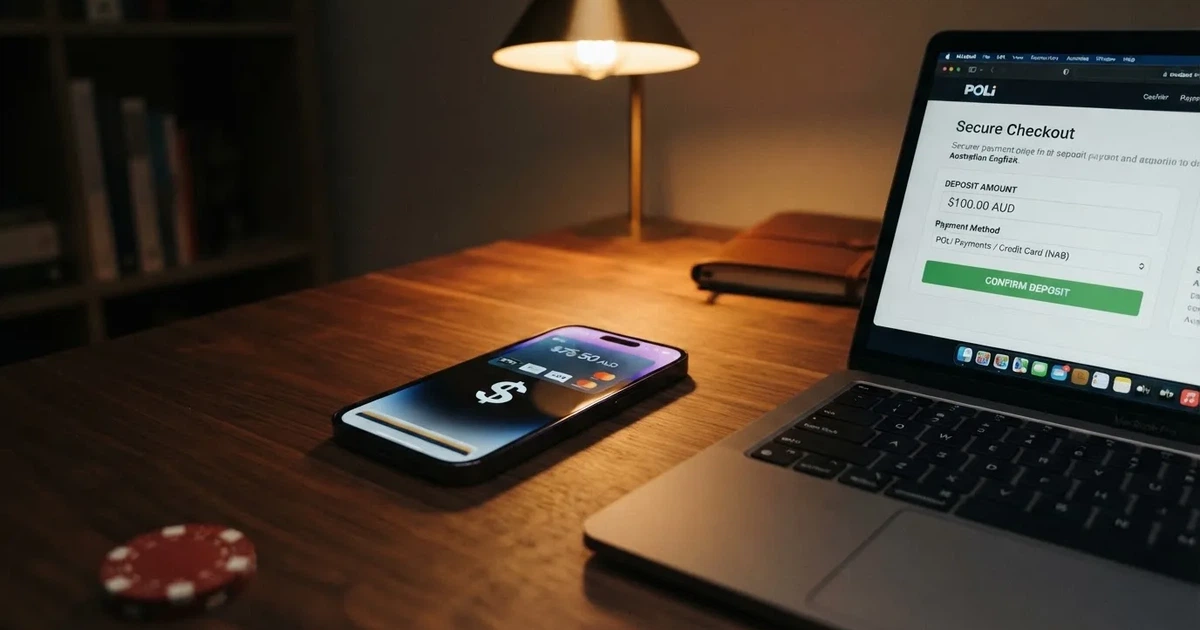
- How the offshore cashier takes a Neteller deposit in practice
- The brand-by-brand record: ACMA warnings and what they actually name
- The blocking rate: a band, not a single figure
- How the numbers settle against each other
- Frequently asked questions about Neteller casinos in Australia
The law underneath the cashier: what the Interactive Gambling Act 2001 actually covers
The Interactive Gambling Act 2001, tightened by the Interactive Gambling Amendment Act 2017, is the controlling statute. Section 15 makes it an offence to provide a prohibited interactive gambling service to a person in Australia; the 2017 amendments extended that to cover in-play betting on sport. The prohibitions are products, not payment methods. Online casino games, online pokies and in-play betting are the named products; racing and sports wagering placed before the event, lotteries and keno are the named exceptions.

What is licensable, in practice, is wagering. The Northern Territory Racing and Wagering Commission regulates fifty-two of Australia’s online bookmakers — Sportsbet, Bet365 and Ladbrokes among them — but does so for tax reasons rather than consumer protection. The commission has no full-time staff and meets once a month in Darwin. The Australian Capital Territory, through the ACT Gambling and Racing Commission, also issues wagering licences. Online casino and online pokies are not on either list.
The Interactive Gambling Amendment (Gambling Reform) Bill 2026 passed Parliament on 19 August 2026. Its advertising and inducement measures commence 1 January 2027 — law with a start date, not yet in force on a 2026 page.
The minimum age for any gambling product in Australia is eighteen. The individual player is not prosecuted under the Act; the offence sits with the provider. That distinction matters for the practical exposure of anyone reading this page: nobody is going to knock on a door over a small deposit, but an offshore site gives no Australian consumer protection, no complaints body, and no recourse if a withdrawal stalls. It can be blocked by an internet service provider on the ACMA’s instruction with a balance still sitting on the account, and the player cannot ring a local regulator to get it back.
What the ACMA has actually done about these brands
Enforcement runs through the Australian Communications and Media Authority. The ACMA investigates complaints, issues formal warnings, and asks Australian internet service providers to block services that breach the Act. The blocking route is the loudest, and the volume of it is striking: as reported in June 2026, a total of 1,751 illegal gambling and affiliate marketing websites had been blocked since the first blocking request in November 2019, and more than 230 unlicensed gambling services had left the Australian market since enforcement was strengthened in 2017.
In the round reported on 26 June 2026 the ACMA asked ISPs to block twelve more sites: 7Signs, ChromaBet, Donbet, Duospin, Freshbet, Slots Gem, Jacks Club, Lucky Start, Pointsbetz, Spinrise, Vinyl Casino and Wildsino. Blocking is the blunt instrument; the formal warning is the one that names the operator behind the brand. Both are listed in the ACMA’s public register.
The formal warnings sit underneath this page’s brand-by-brand review. Each entry below names the operator company the ACMA identified, the date of the warning, and the product at issue. The pattern that falls out of the register is a small number of operators running many brands — Dama N.V. alone has four entries in the table that follows — which is why the brand list looks long while the actual count of corporate entities is shorter.
H2 Gambling Capital’s 2025 report puts the Australian cost of illegal sites at roughly A$3.9 billion a year, and the share of gambling going through legal channels fell from seventy-four per cent in 2021 to sixty-four per cent. The block list is the regulator’s response to a market that has not shrunk.
Self-exclusion and help lines: where they reach and where they do not
BetStop, the National Self-Exclusion Register, has been live since August 2023. It binds Australian-licensed online and phone wagering services — bookmakers, racing and sports operators holding a Northern Territory or ACT licence. It does not bind offshore casino sites, because those operators are not connected to the Australian register and have no obligation to honour an Australian exclusion. The same applies to offshore pokies sites and offshore in-play products.
The National Gambling Helpline is 1800 858 858, free, twenty-four hours a day, with web chat at Gambling Help Online. State and territory lines sit beneath it. None of these services can stop a transaction at an offshore cashier, but they are the right place to start for anyone who has decided the cashier should not be used.
Westpac’s gambling block operates at card level and refuses authorisation on transactions registered under the merchant category code “Betting/Casino Gambling” on eligible personal credit and debit cards. ANZ’s gambling transaction block, activated through the ANZ app, also blocks gambling transactions made through a digital wallet such as Apple Pay on an eligible card, not just the physical card. Once ANZ’s block is on, removing it again requires a forty-eight-hour waiting period, and the bank warns that not all gambling transactions will be blocked and some non-gambling transactions might be blocked in error. The Commonwealth Bank and NAB run similar blocks. A Neteller deposit is invisible to those blocks, because Neteller funds the e-wallet from a bank transfer or card first and the casino then receives a Neteller-to-Neteller payment, not a card payment — the merchant code the bank’s block reads is Neteller’s, not the casino’s.
What a Neteller transaction actually costs the wallet
Neteller was founded in 1999, originally headquartered in Canada before relocating to the Isle of Man in 2004; it is now owned by Paysafe Group alongside Skrill and paysafecard. Neteller exited the US market around 2007 after US online-gambling legal restrictions, restricting American user accounts and only releasing their funds after 30 July 2007. The Paysafe Group is authorised by the UK Financial Conduct Authority as an Electronic Money Institution and must keep customer funds in trust accounts separate from its own operating cash, sufficient to repay all user balances at once. The trust-account rule is the reason a Neteller balance survives a Paysafe corporate event; it is also the reason a Neteller balance does not sit under the Australian Banking Guarantee.
The fee schedule, as published on Neteller’s own site, is what a reader who reaches the cashier actually pays. Most deposit methods carry a 2.5% fee, which means a A$200 deposit carries a A$5 Neteller charge before the casino ever sees the money. Bank-transfer withdrawals carry a 1.75% fee with a minimum of USD 3.50 — for a A$200 withdrawal that is a A$3.50 floor, not the percentage. A 4.49% currency-conversion fee applies whenever a transaction needs converting to another currency, which happens whenever a Neteller wallet in Australian dollars settles into a casino account denominated in euros or US dollars, and on the way back. A monthly inactivity service fee of USD 5.00 (or local-currency equivalent) is deducted from an account’s available funds if the account stays inactive. Moving funds into Skrill via Neteller, paysafecard or BitPay attracts the same 4.49% fee.
The arithmetic for a typical round trip — deposit, lose, withdraw — is what the schedule actually charges. A A$200 deposit at 2.5% costs A$5 to put in. A A$160 withdrawal to a bank account at 1.75% with a USD 3.50 floor — call it roughly A$5.50 at current rates — costs another A$5.50 to take out, plus a 4.49% currency-conversion fee if the casino settles in a non-AUD currency. The wallet costs A$10.50 to be the middleman on a round trip, before the casino’s own internal review, and before any fee the casino itself charges on a withdrawal.
Credit cards, digital wallets and what an Australian-licensed site will not accept
Under the Interactive Gambling Act 2001 as amended in 2023, Australian-licensed online wagering services cannot accept payment by credit card or other credit-related products. The restriction also constrains gambling use of linked digital wallets such as Apple Pay, where the underlying funding instrument is a credit card. Legal deposit routes for licensed wagering are debit card, bank transfer, PayID and Osko, and BPAY. A site asking an Australian for a credit card or a crypto deposit is operating outside the Australian rules.
The digital-wallet share of Australian card payments is large enough to matter. By the end of 2025, Apple Pay, Google Pay and Samsung Pay transactions collectively accounted for around 45% of all card payments in Australia by number. Apple does not charge fees to consumers for using Apple Pay in stores, online or in apps; any surcharge comes from the merchant’s own card-processing fees, not from Apple. Apple states that transaction limits and PIN requirements for Apple Pay purchases are set by the card issuer or merchant, not by Apple itself. That distinction matters for an Australian player whose debit card is hooked to Apple Pay and who is trying to fund a Neteller wallet: the wallet, not the wallet’s funding source, is what the casino’s cashier reads.
The Reserve Bank of Australia’s July 2025 review proposes removing surcharges only on eftpos, Mastercard and Visa card transactions, explicitly leaving American Express outside the scope of the proposed surcharge ban. American Express was established in 1850 as a freight-forwarding company and became a card issuer, launching its first charge card on 1 October 1958; unlike Visa or Mastercard’s four-party network, Amex traditionally issues cards and processes transactions itself as a three-party scheme. None of that changes the credit-card ban on Australian-licensed wagering services, which applies to Amex like any other credit instrument.
PayID, Osko and the bank-transfer side of the picture
PayID and Osko are the speed layer of Australia’s New Payments Platform. With Osko, a bank transfer between participating Australian banks arrives in under a minute, twenty-four hours a day including weekends, whether it is addressed to a BSB and account number or to a PayID. PayID-based instant transfers are available at over one hundred Australian financial institutions. More than twenty-five million PayID identifiers had been registered on Australia’s New Payments Platform as of April 2025. Australia’s New Payments Platform became accessible to the public on 13 February 2018 and is owned by New Payments Platform Australia Ltd, a non-profit company whose thirteen shareholders include the Reserve Bank of Australia and the country’s major banks. Participants must keep the platform’s monthly outages to no more than two minutes; in 2021 the ACCC authorised merging NPP Australia with BPAY and eftpos into a single company, Australian Payments Plus.
Paying to a PayID shows the name of the account holder before the transfer is sent; Australian Payments Plus warns that being asked to transfer money to a PayID on an illegal gambling site almost certainly means a scam site. AUSTRAC’s threshold-transaction-report rule, which requires reporting of transfers of A$10,000 or more, applies only to physical cash; ordinary electronic bank transfers are not subject to that per-transaction reporting requirement, regardless of the amount sent. Under Australia’s AML/CTF Act, a remittance or e-wallet service such as Neteller that provides services to Australian customers must register with AUSTRAC as a remittance service provider; providing such services unregistered is against the law.
For an Australian-funded Neteller wallet, the path that lands cheapest is bank transfer to Neteller at the 2.5% deposit fee, then Neteller to casino at no additional Neteller fee when the currencies match, then Neteller back to bank at the 1.75% withdrawal fee with a USD 3.50 floor, then bank to Australian account free of Neteller charges. The PayID-and-Osko tail is free of interchange on the Australian side. The slow link in that chain is the casino’s own internal review — a withdrawal request still needs the operator’s manual checks completed before the settlement lands back in an Australian account, and that is the part an offshore site controls.
How the offshore cashier takes a Neteller deposit in practice
The mechanics are the same across brands. A player registers at the casino, opens the cashier, picks Neteller from the deposit list, enters the amount, and is bounced to a Neteller login. The login confirms the transfer; the casino receives a Neteller-to-Neteller payment; the player’s casino balance updates within seconds to a few minutes, depending on the operator’s internal queue. Neteller’s own site lists Neteller among the deposit methods at the 2.5% fee.
The minimum deposit varies. Some sites accept ten dollars; some sit higher. The published minimum is a marketing decision, not a network limit. The same cashier page typically carries a withdrawal option to Neteller, and the same currency-conversion logic — if the casino settles in euros and the player’s Neteller wallet is in Australian dollars, the 4.49% fee is taken twice, on the way in and on the way out. The “no fees” claim that sits in some casino marketing pages refers to the casino’s own charges, not to Neteller’s.
A withdrawal that stalls usually stalls for one of three reasons. The casino’s manual review has flagged an unmet wagering requirement. The casino’s verification step has not been completed — offshore sites vary widely on how thoroughly they verify identity, and the difference between them is part of the case for choosing one over another. Or the casino’s payment team is simply behind queue, which happens at month-end and after big jackpot payouts across the industry.
The brand-by-brand record: ACMA warnings and what they actually name
The table below sets out each featured brand, the ACMA action and date, the operator the ACMA named in the warning, and whether Neteller is publicly mentioned as a payment option for that brand on the sources available. “Not publicly listed” means the brand’s own payment page or the third-party listings reviewed do not show Neteller as a deposit or withdrawal method. It does not mean Neteller is rejected — it means no source the research draws on confirms it. The pattern underneath the table is that Neteller availability is rarely the limiting factor; the limiting factor is the regulatory position of the brand itself.
| Brand | ACMA action and date | Operator named by the ACMA | Neteller support |
|---|---|---|---|
| RocketPlay | Formal warning, March 2026 | Pulsup Ltd | Not publicly listed |
| Level Up Casino | Formal warning, May 2022 | Dama N.V. | Listed by payment aggregators |
| Woo Casino | Formal warning, March 2025 | Dama N.V. | Not publicly listed |
| Spirit Casino | Formal warning, May 2025 | Dama N.V. | Not publicly listed |
| National Casino | Formal warning, July 2025 | Consolutetish S.R.L. | Listed by payment aggregators |
| Bizzo Casino | Formal warning, July 2025; earlier 2022 | Consolutetish S.R.L. / TechSolutions | Not publicly listed |
| Ignition Casino | Formal warning, July 2025 | Bamboo Media | Not publicly listed |
| Instant Casino | Formal warning, February 2025 | EOD Code SRL | Listed by payment aggregators |
| Jackbit | Formal warning, April 2026 | Ryker B.V. | Not publicly listed |
| Casino Intense | Formal warning, April 2025 | Sterplay Holding Ltd | Listed by payment aggregators |
| Sky Crown | Formal warning, September 2022 | Hollycorn N.V. | Not publicly listed |
Eleven brands, eight corporate operators, two operators — Dama N.V. and Consolutetish S.R.L. — running two brands each in the table. The warning register treats them as separate entries, which is why the brand list is longer than the corporate list. A reader comparing the brands on anything other than operator identity is comparing marketing material, because the underlying licence position is identical: none of them is licensed to offer online casino games to an Australian resident, and a Neteller deposit button does not move the operator outside that position.
The brands where Neteller support is “listed by payment aggregators” are the ones for which a third-party payment-method directory names Neteller as accepted. The brands where support is “not publicly listed” are the ones for which no such directory, in the sources reviewed, carries a Neteller entry. Several of those brands will, in practice, accept Neteller on request; the absence is in the listing, not in the cashier. None of the eleven has an Australian licence to offer online casino games. The brand reviews below spell that out for each.
RocketPlay
RocketPlay sits at the top of the ACMA register’s recent activity: in March 2026 the ACMA issued a formal warning to Pulsup Ltd over RocketPlay. The same brand’s earlier corporate parent, Dama N.V., received a formal warning in May 2022 covering six brands — Bambet, Dazard, Level Up, Rocketplay, Wild Tornado and Cobra Casinos. Neteller is not publicly listed as a deposit option for RocketPlay in the sources reviewed; the cashier pages the research drew on do not show it. The site’s “no-data” position on Neteller support does not mean the method is refused — it means the public listing does not confirm it.
For an Australian player, the warning is the most recent ACMA action in this set and the one most likely to be followed by a blocking request. The brand has been named twice, under two different operators, in the space of four years. A Neteller-capable cashier would still take the deposit; the question is what happens to a balance when the next blocking round lands.
Level Up Casino
Level Up Casino is one of the original Dama N.V. six, warned in May 2022 alongside Bambet, Dazard, Rocketplay, Wild Tornado and Cobra Casinos. The Neteller listing shows up on payment-aggregator pages rather than on the casino’s own payment page in the sources reviewed; the underlying payment method works, but the brand does not advertise it as prominently as Visa or the cryptocurrencies it does push. The same operator handles Woo Casino, Spirit Casino and RocketPlay — the concentration is the story.
Woo Casino
Woo Casino received a separate Dama N.V. warning in March 2025, two and a half years after the original six-brand action. Sources reviewed do not explicitly confirm Neteller availability for this brand. A Neteller deposit is the kind of request that, on a Dama N.V. site, is more likely to be handled through a sister brand’s cashier than through Woo Casino’s own. The relevant point is that the same operator stands behind four of the brands in this table.
Spirit Casino
Spirit Casino is the third Dama N.V. brand to pick up a separate warning, in May 2025 — two months after Woo Casino. Neteller support is not publicly listed. The pattern of Dama N.V. warnings, spaced roughly every two to three years, suggests the ACMA treats each new brand launch as a fresh breach rather than as a continuation of an existing action. A reader who finds Spirit Casino’s cashier through a Neteller-funded wallet is dealing with the same operator as Woo Casino, Level Up Casino and RocketPlay.
National Casino
National Casino sits under Consolutetish S.R.L., warned by the ACMA in July 2025. The brand’s Neteller support shows up on payment-aggregator pages; the underlying method works. The same operator also runs Bizzo Casino, which carries its own separate warning history — Consolutetish S.R.L. in July 2025, and TechSolutions Group N.V. as far back as 2022.
Bizzo Casino
Bizzo Casino carries the longest warning history in this set. The ACMA issued a formal warning to TechSolutions (CY) Group Limited and TechSolutions Group N.V. over Bizzo Casino in 2022, then a separate warning to Consolutetish S.R.L. over Bizzo Casino in July 2025. Neteller support is not publicly listed on the sources reviewed. The same brand has been warned under two different corporate owners in three years. A reader treating Bizzo Casino as a fresh entrant is treating a re-launched shell as a new venue, which the ACMA’s record does not support.
Ignition Casino
Ignition Casino sits under Bamboo Media, which the ACMA warned in July 2025. Neteller support is not publicly listed. Ignition is one of the brands more associated with the US-facing market and the bitcoin-poker segment; the brand’s Australian-facing offer is the same as any other offshore casino — online casino games and online pokies, neither of which is licensable here.
Instant Casino
Instant Casino sits under EOD Code SRL, warned by the ACMA in February 2025. Neteller support is listed on payment-aggregator pages alongside EcoPayz and PayID. The PayID listing is the one most worth flagging — PayID is an Australian real-time transfer method, and a PayID-accepting cashier at an offshore site is the kind of detail that gives a player the impression of dealing with an Australian operator. Australian Payments Plus’s own warning applies: a PayID on an illegal gambling site is almost certainly a scam site.
Jackbit
Jackbit sits under Ryker B.V., warned by the ACMA in April 2026. Neteller support is not publicly listed on the sources reviewed. Jackbit’s product mix is closer to a sports and crypto book than a casino; the casino product on offer is the unlicensed one the ACMA named in the warning.
Casino Intense
Casino Intense sits under Sterplay Holding Ltd, warned by the ACMA in April 2025. Neteller support is listed by payment aggregators; AUSTRAC’s remittance-provider registration requirement sits in the background, since Neteller funding an offshore casino from an Australian bank account is a remittance relationship that the wallet provider must be registered to handle.
Sky Crown
Sky Crown sits under Hollycorn N.V., which the ACMA warned over Sky Crown and Blue Leo in September 2022. The warning is older than most in this set, but it has not been superseded; the ACMA’s register is cumulative. Neteller support is not publicly listed on the sources reviewed. Hollycorn also runs Blue Leo, which is not in this table but shares the same operator.
The blocking rate: a band, not a single figure
The data behind these trends shows how the ACMA’s blocking register has been growing. The first blocking request went out in November 2019. By June 2026, a total of 1,751 illegal gambling and affiliate marketing websites had been blocked. That is roughly 263 blocked sites per year on a straight-line basis over the just-over-six-year window, or about twenty-two blocked sites per month. The straight-line figure flatters the trend — early rounds were small, later rounds have been larger, and the December 2023 round alone covered several hundred sites. A more honest band sits between twenty and forty blocked sites per month over the last two years, with occasional larger rounds.
The blocking rate is what determines how long an offshore casino’s URL stays reachable from Australia. A brand that gets blocked is not unreachable forever — operators rotate URLs and re-launch under new names — but a brand whose corporate parent the ACMA has warned is on the regulator’s list, and the next blocking round is more likely than not to include it. A Neteller deposit to a brand that is blocked next week is a deposit to a balance the player may not be able to withdraw from an Australian IP address.
How the numbers settle against each other
Two figures sit next to each other on this page, and the comparison is the point. Australians lose roughly A$3.9 billion a year to illegal sites; the legal share of gambling fell from 74% in 2021 to 64%. The ACMA’s register has grown from a single blocking request in November 2019 to 1,751 blocked sites by June 2026. None of these figures describe the same thing — losses are a flow, market share is a share, blocks are a count — and they do not add up to a single answer. What they do together is describe a regulator outpacing a market that is not shrinking.
The Neteller fee schedule sits underneath those figures. A 2.5% deposit fee, a 1.75% withdrawal fee with a USD 3.50 floor, a 4.49% currency-conversion fee twice on a round trip if the currencies differ, and a USD 5.00 monthly inactivity fee. The total cost of using Neteller as a Neteller casino deposit method is roughly A$10 to A$15 on a A$200 round trip, before the casino’s own internal review, before any fee the casino charges on a withdrawal, and before the possibility that the URL stops resolving. Compared with a PayID-to-bank transfer on an Australian-licensed wagering service — free on the PayID side, no currency conversion, recourse to the Australian regulator — Neteller at an offshore casino is more expensive at the wallet and weaker at the regulator. The marketing pitch for an offshore casino cashier is the variety of methods, the speed, and the absence of an Australian credit-card ban. The arithmetic underneath the pitch is what the schedule above actually charges.
Frequently asked questions about Neteller casinos in Australia
Is it legal for an online casino to accept Neteller from a player in Australia?
No. The Interactive Gambling Act 2001 prohibits providing online casino games, online pokies and in-play betting to a person in Australia, and no state or territory licences those products. Payment method is irrelevant to that prohibition. The offence sits with the provider, not the player, but an offshore site gives no Australian consumer protection, no complaints body, and no recourse if a withdrawal stalls or a balance is stranded by a blocking order.
What is the smallest deposit a Neteller casino site usually asks for?
The published minimum varies by brand, with some offshore casinos accepting deposits from ten dollars and others sitting higher. The minimum is a marketing decision, not a network limit; Neteller itself does not impose a casino-side floor. Where the minimum is in a non-Australian currency, the 4.49% currency-conversion fee applies on top of any casino minimum.
Does a Neteller withdrawal clear any faster than a card withdrawal at these sites?
Often, on paper. Neteller withdrawals are typically processed faster than card withdrawals at offshore casinos, because the casino pushes money into a wallet rather than waiting for a card scheme settlement. The bottleneck is the casino’s own manual review — identity checks, wagering-requirement checks, fraud-team sign-off — not the payment network. A Neteller withdrawal that the casino’s review team holds back takes just as long as a card withdrawal held back at the same stage.
Can Neteller be used at every offshore pokies-style site, or only some of them?
Most major offshore casinos accept Neteller in their cashier, but not every brand lists it as a deposit option on the public payment page. Several brands route Neteller deposits through a sister-brand cashier rather than advertising the method directly. None of this changes the legal position: every offshore casino is prohibited from serving Australian residents, regardless of which deposit methods the cashier lists.
Does depositing with Neteller add an extra fee at these casino sites?
Yes — Neteller charges 2.5% on most deposit methods, 1.75% on bank-transfer withdrawals with a USD 3.50 minimum, and 4.49% on currency conversion whenever the casino settles in a non-Australian-dollar currency. A A$200 round trip with currency conversion on both legs costs roughly A$10 to A$15 in Neteller fees alone, before any fee the casino charges. The casino’s “no fees” marketing refers to the casino’s own charges, not to Neteller’s.
What should a player do if a Neteller deposit does not appear in a casino account?
First, check the Neteller transaction history on the Neteller site or app — if the transaction shows as completed, the casino has received the funds and the delay is on the casino’s side. If the transaction shows as pending, the deposit has not left Neteller. Contact the casino’s support with the Neteller transaction ID; reputable operators resolve the issue within twenty-four to forty-eight hours. If the casino does not respond, the recourse is the e-wallet provider’s dispute process — not an Australian regulator, because the casino is not Australian-licensed.