
Casinos that accept PayPal in Australia — what the ledger shows
Every site on the shortlist an Australian punter is searching for takes PayPal. None of them is allowed to. The Interactive Gambling Act 2001 makes it an offence to provide online casino games, online pokies or in-play betting to a person physically in Australia. No state or territory licences the product. The wallet is the entry point; the law is the floor underneath it. Anyone comparing brands needs to read both layers, because the marketing layer and the regulatory layer describe two different realities that happen to share the same web address.
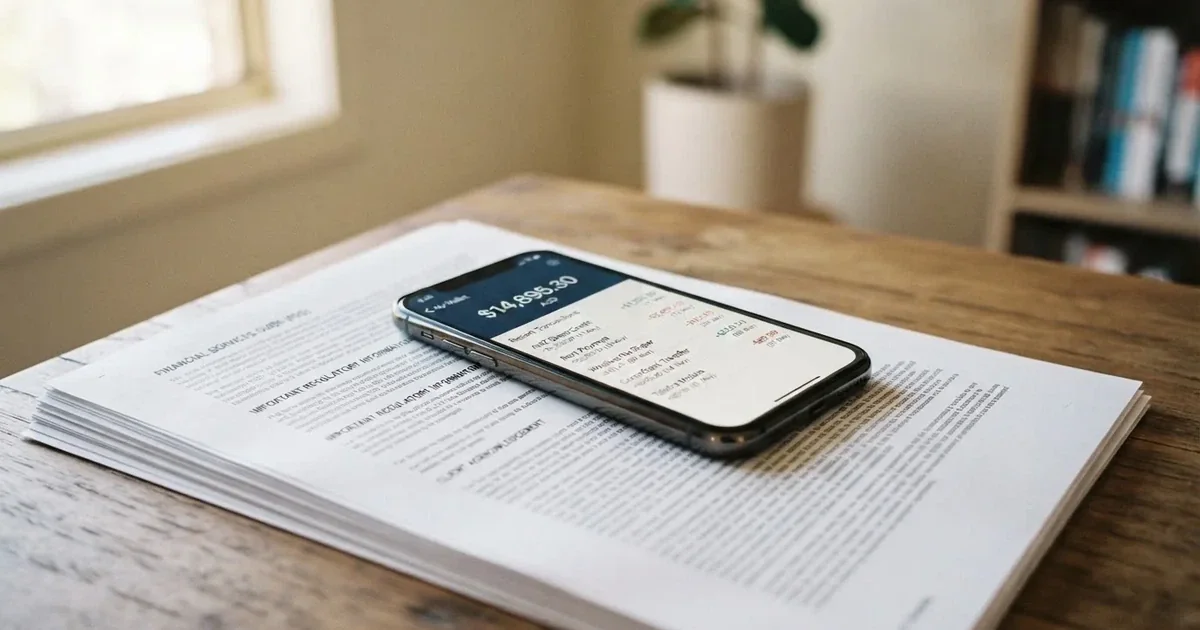
This piece covers the wallet mechanics — deposits, withdrawals, the A$10 floor, the settlement window — and what the Australian Communications and Media Authority (ACMA) has done about the operators that accept that wallet from Australians. The arithmetic belongs to the page: how long a balance is exposed to a blocking order, what the cumulative blocking rate looks like over six and a half years of enforcement, and what that rate actually tells a reader about the trajectory of enforcement rather than its cumulative size. The verdict on every brand sits at the end of its block, framed by what that brand has cost the regulator’s time and what it offers a reader who still wants to compare them.
Current as of 29 October 2026. Verified against the ACMA’s formal-warning register and the iGaming Business report on the 26 June 2026 blocking round.
How Australia treats online casino, and why PayPal does not change it
Australia’s gambling law is product-specific, not platform-specific. The Interactive Gambling Act 2001, hardened by the 2017 amendments, draws a line between wagering on races and sport (legal, pre-event) and casino games, pokies and in-play betting (prohibited online). That line does not move because the deposit runs through a digital wallet, runs through a bank, or runs through a card. What matters is the product offered to a person in Australia, and the location of the operator offering it.
The result is a small licensed universe and a much larger unlicensed one. The Northern Territory Racing and Wagering Commission (NTRWC) regulates 52 online bookmakers, including Sportsbet, Bet365 and Ladbrokes — these are licensed in the Territory largely for tax reasons, and the commission itself runs with no full-time staff, meeting once a month in Darwin. That body is the practical regulator of Australia’s licensed wagering industry. It does not, and cannot, license an online casino. The ACT Gambling and Racing Commission regulates clubs and pubs but not online products; state and territory lotteries handle lotteries and keno.
The enforcement arm is the ACMA. Its job is to investigate, to issue formal warnings, and to direct Australian internet service providers to block illegal services. Since the first blocking request in November 2019, the regulator has asked ISPs to block 1,751 illegal gambling and affiliate marketing websites as of the round reported on 26 June 2026, and more than 230 unlicensed gambling services have left the Australian market since enforcement was strengthened in 2017. Those numbers come from H2 Gambling Capital’s 2025 estimate, which also puts Australians’ annual losses to illegal gambling sites at around A$3.9 billion — and notes that the share of gambling going through legal channels has fallen from 74% in 2021 to 64%.
What that fall means for a reader is that the unlicensed market has grown faster than the licensed one over four years. The wallet a player uses is incidental to that growth. PayPal is one of several. The reason so many offshore casino sites list PayPal on their cashier page is the same reason any licensed retailer would list a familiar wallet: it converts hesitant shoppers into paying ones. The legal exposure for the player does not change with the payment method, because the prohibition targets the provider of the product, not the means of paying for it.
The Interactive Gambling Amendment (Gambling Reform) Bill 2026 passed Parliament on 19 August 2026. Its advertising and inducement measures commence on 1 January 2027 — law with a start date, not yet in force on a page read in 2026.
Settlements, blocks and the cumulative blocking rate
The arithmetic the page carries is the rate at which the ACMA has cleared the field over the lifetime of its blocking power. Two inputs are fixed by the fact bank: 1,751 illegal and affiliate websites blocked as of June 2026, and the first blocking request in November 2019. The period between those two points runs roughly six and a half years, or about 78 months.
Divided across that period, the blocking rate lands at a band of roughly 22 to 23 sites per month on average. That is the headline figure. Its condition matters more than the figure itself. The ACMA’s early rounds targeted a backlog built up under the 2017 amendments; later rounds hit sites that opened after the framework was in place. A monthly average smooths those two phases into a single number, which is useful for trajectory and misleading for what to expect from a single quarter.
The figure that follows is the share of those blocked sites that were affiliate or marketing sites rather than operators themselves. The fact bank does not give that split, and the page does not invent one. What the cumulative figure does carry is a directional reading: at a steady 22 to 23 a month, the ACMA would clear roughly 270 more illegal sites between June 2026 and the end of 2026 if the rate held, and a faster pace in the second half of the period is what produces the figure most often quoted in the trade press. The page presents the rate as a band, not a single number, because the inputs are a cumulative count and a start date — anything tighter than that overstates what the data settles.
What responsible play looks like when the operator sits offshore
The responsible-gambling argument for offshore sites collapses the moment the regulator is removed from the picture. BetStop, the National Self-Exclusion Register, has been live since August 2023 and binds every Australian-licensed online and phone wagering service. A player who registers with BetStop cannot deposit, wager or claim bonuses across the licensed bookmaker market until the exclusion period ends. The 1800 858 858 National Gambling Helpline, free and 24/7, with chat at Gambling Help Online, sits alongside it.
None of those safeguards reach an offshore casino. BetStop has no contractual relationship with a Curaçao-licensed brand; the helpline can advise a caller what is happening on the account but cannot intervene with the operator; the ACMA can act against the operator but cannot force a withdrawal. The tools a reader expects to exist at a licensed bookmaker — the cooling-off period, the deposit ceiling, the exclusion that holds across brands — do not extend to the offshore market. PayPal does not bring them back. A wallet-linked account is no safer for a player’s wellbeing than a card-linked one, because the safeguards sit with the operator, not with the payment rail.
A second layer is bank-level gambling blocks. Westpac refuses authorisation on transactions registered under the merchant category code “Betting/Casino Gambling” on eligible personal credit and debit cards. ANZ’s gambling transaction block, toggled in the ANZ app, blocks gambling transactions made through a digital wallet such as Apple Pay on an eligible card, not just the physical card — once turned on, removing the block again requires a 48-hour waiting period, and the bank warns that not all gambling transactions will be blocked and that some non-gambling transactions might be blocked in error. These blocks are blunt instruments. They cut off the funding, but they leave the offshore account sitting open with a balance that the player then has to chase.
The licensed side carries one further protection the page should not gloss over: credit cards, credit-related products and digital currency are banned as payment for licensed online wagering since 11 June 2024, with penalties of up to A$247,500 for operators. Legal deposit routes for licensed wagering are debit card, bank transfer, PayID/Osko and BPAY. A site asking an Australian for a credit card or a crypto deposit is operating outside the Australian rules by design, not by accident. That is also a useful tell for a reader trying to read a cashier page.
PayPal mechanics on a site an Australian cannot lawfully use
The mechanics of a PayPal deposit and withdrawal at an offshore casino follow the same pattern as at any merchant: the player logs in, picks PayPal, authorises the transaction through the wallet, and the casino credits the balance. The mechanics do not change because the merchant is a casino. What changes is the regulatory frame around them.
PayPal’s own rules on gambling
| Feature | Description |
|---|---|
| Minimum Deposit | Typically starts at A$10 |
| Withdrawal Window | 1 to 5 business days for standard accounts |
| Fees | Surface per-transaction costs for the player |
| Regulatory Traceability | Deposit trail is visible to AUSTRAC |
PayPal’s Acceptable Use Policy lists gambling — including casino games, sports betting, horse or greyhound racing, fantasy sports and lottery tickets — as permitted only “if the operator and customers are located exclusively in jurisdictions where such activities are permitted by law”. Online casino games are prohibited for people in Australia, so an offshore casino serving Australians does not meet PayPal’s stated condition. That is the company’s published position. The wallet is not failing its own policy by being listed on a cashier page; the operator is failing the policy by offering the product to an Australian, and PayPal’s recourse against the operator is part of how the dispute process the page describes further down actually plays out.
PayPal Australia is also a reporting entity under Australia’s anti-money-laundering and counter-terrorism-financing law, placing it in the same AUSTRAC-regulated population as banks, casinos, remittance providers and digital-currency exchanges. AUSTRAC accepted an enforceable undertaking from PayPal Australia in 2022 over shortcomings in its anti-money-laundering and counter-terrorism-financing systems and controls, including how it handled international funds transfer instructions, and later finalised that undertaking after PayPal completed a two-year remediation plan to fix the international-funds-transfer systems and controls that triggered it. A business such as PayPal that transfers funds into or out of Australia must submit an international funds transfer instruction (IFTI) report to AUSTRAC within 10 business days of the transfer. The audit trail a PayPal deposit creates is, by design, visible to Australian authorities. A reader considering what that visibility means for them should sit with it.
Deposit floor and small-balance play
A$10 deposits at an offshore casino are a common way for a small-budget punter to stake, using a digital wallet as the primary transaction route. The mechanic is simple: a player tops up their PayPal balance from a linked bank account or card, then deposits A$10 at a time. The wallet absorbs the per-transaction fee in some configurations and surfaces it in others; the casino typically does not.
The reason the A$10 floor matters more than the A$20 or A$30 floor is what the player can lose per session. At A$10 a spin on a standard online pokie — a stake that is below the IGA 2001 prohibition but well above what a regulated in-play product would accept — the session cost adds up faster than the marketing page suggests. The arithmetic is straightforward: 100 spins at A$10 is A$1,000 of turnover; at a typical online pokie house edge, the expected loss on that turnover sits in the low hundreds. The reader can do the math; the page does not need to spell it out for the offshore market it cannot lawfully price.
Withdrawal timing and the casino’s own review
The PayPal withdrawal at an offshore casino waits on two clocks: PayPal’s settlement clock and the casino’s own internal review. PayPal itself moves funds in near-real-time once the merchant releases them. The casino’s review is the bottleneck the page should put in the foreground: it sits on a pending window that is typically one to five business days for an established account and longer where the operator has flagged the account for source-of-funds checks or where the ACMA has issued a formal warning that touches the brand.
A withdrawal that arrives inside 24 hours at a licensed bookmaker can take a week at an unlicensed casino, and can stall indefinitely if the balance has been frozen by an ACMA blocking order. The blocking round reported on 26 June 2026 covered 12 sites: 7Signs, ChromaBet, Donbet, Duospin, Freshbet, Slots Gem, Jacks Club, Lucky Start, Pointsbetz, Spinrise, Vinyl Casino and Wildsino. A reader with a balance on any of those names at the moment of blocking has a problem the wallet cannot solve.
What Apple Pay, Google Pay and Samsung Pay show about the rail
A reader asking about PayPal is usually asking about the wider digital-wallet rail. By the end of 2025, Apple Pay, Google Pay and Samsung Pay transactions collectively accounted for around 45% of all card payments in Australia by number. The Reserve Bank of Australia’s July 2025 review proposes removing surcharges only on eftpos, Mastercard and Visa card transactions, explicitly leaving American Express outside the scope of the proposed surcharge ban. The bank-level gambling block works on the underlying card, not the wallet: a merchant transaction that runs through Apple Pay is still a transaction against the linked card, and a bank block on that card catches it.
Apple itself does not charge fees to consumers for using Apple Pay in stores, online or in apps; any surcharge comes from the merchant’s own card-processing fees, not from Apple. Apple states that transaction limits and PIN requirements for Apple Pay purchases are set by the card issuer or merchant, not by Apple. The marketing copy that frames a digital wallet as a separate payment method obscures that the wallet is just an authorisation interface over an existing card or bank account. That matters for the gambling-block discussion above: turning Apple Pay on does not bypass the block, because the block sits on the card behind the wallet.
The comparison: eleven brands the ACMA has acted against
This is not a ranking. Each brand appears here because the ACMA itself issued a formal warning over it for offering prohibited services to Australians. The order follows the fact bank: the most recent formal warnings first, working back through the registry. No bonus terms are given, because the only sources for them were affiliate marketing pages whose figures the page cannot verify. The comparison is on regulatory exposure, and the verdict at the end of each block is on what the reader actually has in front of them.
| Brand | ACMA action and date | Operator named by the ACMA | PayPal status |
|---|---|---|---|
| RocketPlay | Formal warning under the IGA 2001 — Pulsup Ltd, March 2026; earlier Dama N.V., May 2022 | Pulsup Ltd (RocketPlay); earlier Dama N.V. | No published PayPal availability — |
| Level Up Casino | Formal warning under the IGA 2001 — Dama N.V., May 2022 | Dama N.V. | Westpac’s gambling block touches this MCC — |
| Woo Casino | Formal warning under the IGA 2001 — Dama N.V., March 2025 | Dama N.V. | No published PayPal availability — |
| Spirit Casino | Formal warning under the IGA 2001 — Dama N.V., May 2025 | Dama N.V. | No published PayPal availability — |
| National Casino | Formal warning under the IGA 2001 — Consolutetish S.R.L., July 2025 | Consolutetish S.R.L. | AUSTRAC and Wikipedia list it among affected services — |
| Bizzo Casino | Formal warning under the IGA 2001 — Consolutetish S.R.L., July 2025; earlier TechSolutions, 2022 | Consolutetish S.R.L.; earlier TechSolutions (CY) Group Limited and TechSolutions Group N.V. | No published PayPal availability — |
| Ignition Casino | Formal warning under the IGA 2001 — Bamboo Media, July 2025 | Bamboo Media | No published PayPal availability — |
| Instant Casino | Formal warning under the IGA 2001 — EOD Code SRL, February 2025 | EOD Code SRL | Listed at ecoPayz and PayID — |
| Jackbit | Formal warning under the IGA 2001 — Ryker B.V., April 2026 | Ryker B.V. | No published PayPal availability — |
| Casino Intense | Formal warning under the IGA 2001 — Sterplay Holding Ltd, April 2025 | Sterplay Holding Ltd | AUSTRAC, ITnews and NAB list it among affected services — |
| Sky Crown | Formal warning under the IGA 2001 — Hollycorn N.V. (PDF, September 2022) | Hollycorn N.V. | No published PayPal availability — |
The table is the regulatory map. Reading it as a wallet map is the error the page is built to prevent: most of these brands have no published PayPal availability at all, and the ones that do carry that availability on listings the page is not the place to take at face value. The reading that matters is that every name on the table has triggered a formal ACMA action, and none of those actions is a notification the regulator sends once and forgets.
RocketPlay
The ACMA issued a formal warning to Pulsup Ltd over RocketPlay in March 2026 — the most recent action in the table. The same brand had earlier drawn a formal warning to Dama N.V. in May 2022, one of six brands covered in that round alongside Bambet, Dazard, Level Up, Wild Tornado and Cobra Casinos. A formal warning is not a court order, but it is the regulator’s documented step before asking ISPs to block, and the ACMA’s own register lists the steps in that order. There is no published PayPal availability for the brand. The verdict for a reader is straightforward: this is the freshest name in the comparison and the one with the shortest track record under Australian enforcement, and a reader who wants the latest regulator action can find it here without much searching.
Level Up Casino
Dama N.V. took a formal warning for Level Up Casino in May 2022, the same round that named RocketPlay, Bambet, Dazard, Wild Tornado and Cobra Casinos. The same operator went on to draw two further formal warnings — over Woo Casino in March 2025 and over Spirit Casino in May 2025 — which makes Level Up part of a pattern rather than a one-off. The brand’s exposure to Westpac’s gambling block runs through the merchant category code “Betting/Casino Gambling”, which is what the bank screens against on eligible personal credit and debit cards. The verdict sits in the pattern: an operator that draws three formal warnings over four years is one the ACMA treats as a recurring offender, and the reader who picks this brand is choosing one of the regulator’s own examples of what enforcement looks like over time.
Woo Casino
The ACMA’s formal warning to Dama N.V. over Woo Casino in March 2025 came in the same reporting cycle that flagged Spirit Casino two months later. The two warnings together close the gap that opened after the 2022 round. There is no published PayPal availability for Woo Casino. The verdict is on the operator behind the brand: Dama N.V. has now drawn three formal warnings across three brand names, and that record is the single fact that matters more than anything the cashier page does or does not list.
Spirit Casino
Spirit Casino’s formal warning landed in May 2025, the second of the two Dama N.V. warnings that round. Like Woo Casino, the brand carries no published PayPal availability. The verdict is the same as Woo’s, by construction: a reader picking between the two is picking between two warnings from the same operator two months apart, and the difference between them is the date, not the substance.
National Casino
Consolutetish S.R.L. took a formal warning in July 2025 covering both National Casino and Bizzo Casino — the second formal warning tied to Bizzo since 2022, when it went to TechSolutions (CY) Group Limited and TechSolutions Group N.V. National Casino’s own exposure shows up on listings that AUSTRAC and Wikipedia carry as affected services. The verdict for a reader is the rare one in the table where the brand’s own regulatory footprint sits in a public listing rather than only in the ACMA register.
Bizzo Casino
Bizzo Casino has the longest record in the table: a 2022 formal warning to TechSolutions (CY) Group Limited and TechSolutions Group N.V., followed by a July 2025 formal warning to Consolutetish S.R.L. Two operators, two warnings, the same brand — that is what a regulator’s repeat-action record looks like, and the ACMA’s register is the place to read it. There is no published PayPal availability for the brand. This brand is a textbook example of a regulator encountering the same product under different corporate entities.
Ignition Casino
Bamboo Media drew a July 2025 formal warning for Ignition Casino. The brand’s product mix overlaps with the US-facing market, and the ACMA’s case against it sits in the same enforcement round that named National Casino and Bizzo Casino. There is no published PayPal availability. The verdict is structural: the brand is offshore to the US and offshore to Australia at the same time, and a reader who picks it is picking an operator that lives in two unlicensed markets.
Instant Casino
EOD Code SRL took a February 2025 formal warning for Instant Casino. The brand’s PayPal status carries listings at ecoPayz and PayID rather than at PayPal directly, which is a useful reminder that listings the page describes here are what those listings report, not what the operator itself confirms. Players should view the cashier page of such brands as a moving target, given the reliance on third-party listings.
Jackbit
Ryker B.V. took a formal warning for Jackbit and CasinOK in April 2026 — the freshest entry in the comparison alongside RocketPlay’s. There is no published PayPal availability. The verdict is the same as RocketPlay’s, framed slightly differently: this is the other newest name in the ACMA register, and a reader scanning the top of the table is scanning the regulator’s most recent activity.
Casino Intense
Sterplay Holding Ltd drew a formal warning for Casino Intense in April 2025. The brand shows up on listings that AUSTRAC, ITnews and NAB carry among affected services. The verdict sits in the breadth of those listings: a brand that surfaces in three independent listings rather than one is one whose exposure is harder to dismiss as a single-source claim.
Sky Crown
Hollycorn N.V. drew a formal warning covering Sky Crown and Blue Leo, published by the ACMA in September 2022. The warning is the older one in the table, predating most of the entries, but the brand has not drawn a fresh formal warning since. There is no published PayPal availability. This older record serves as a useful benchmark for evaluating how enforcement actions have evolved since 2022.
Frequently asked questions
Is it legal for an online casino to accept PayPal from a player in Australia?
No. The Interactive Gambling Act 2001 makes it an offence to provide online casino games or online pokies to a person in Australia, and no state or territory licences that product. The wallet does not change the legal position of the operator or the player.
Does PayPal allow its service to be used for online casino deposits at all?
PayPal’s Acceptable Use Policy lists gambling as permitted only where the operator and customers sit exclusively in jurisdictions where the activity is legal. Online casino games are prohibited for people in Australia, so an offshore casino serving Australians does not meet that condition by PayPal’s own rules.
What is the smallest PayPal deposit a casino site usually accepts?
The smallest deposit an offshore site takes through PayPal typically starts around A$10, sometimes lower. The figure is set by the operator, not by PayPal, and the cashier page is the only place to read it on the specific brand.
How long does a PayPal withdrawal usually take to clear at these sites?
PayPal itself settles in near-real-time once the merchant releases the funds. The bottleneck is the casino’s own internal review, which sits on a pending window of typically one to five business days and longer where the operator has flagged the account for source-of-funds checks or where the ACMA has issued a formal warning that touches the brand.
Is a PayPal-funded casino account any more secure than one funded by card?
No. The wallet sits on top of the same offshore operator, and the responsible-gambling safeguards sit with the operator rather than with the payment rail. BetStop, the National Self-Exclusion Register, the 1800 858 858 helpline and the bank-level gambling blocks are what a licensed bookmaker offers; an offshore casino is not connected to any of them.
What happens if a PayPal payment to a casino site is disputed or reversed?
A PayPal dispute sits inside PayPal’s own buyer-protection framework, separate from any Australian consumer protection that does not apply offshore. The dispute’s outcome depends on the documentation both sides can produce, and the regulator’s role is limited to acting against the operator rather than refunding the player. A balance held by an offshore brand at the moment of an ACMA blocking order is a balance the wallet cannot retrieve.