
Online casinos accepting POLi in Australia – what is still true in 2026
Any operator page advertising POLi deposits to an Australian customer in 2026 is selling a payment method that closed here on 30 September 2023. POLi Payments, run by Australia Post, wound down its domestic operations that year after the Commonwealth Bank stopped accepting its transactions in mid-July 2023 over the way the system worked: customers handed over their online banking login credentials to a third party so a transfer could be initiated from their own bank on their behalf. The service survived in New Zealand, where Merco acquired local ownership and kept the development team. For Australian dollars and Australian banks, POLi is finished.
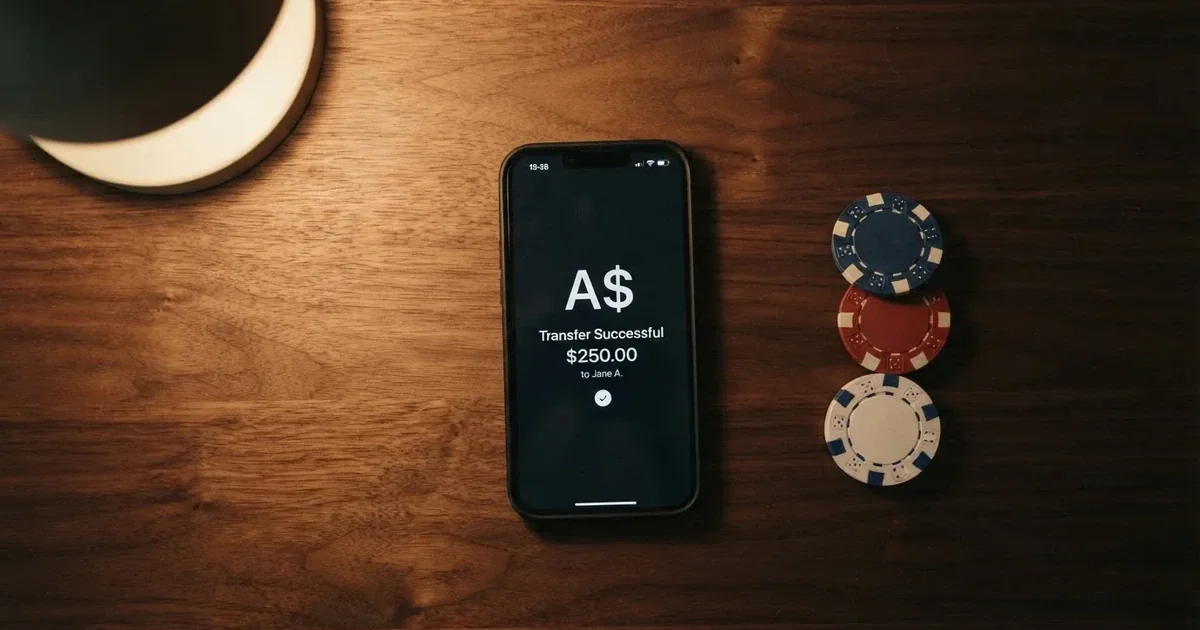
That sits at the heart of every comparison a reader could find. Offshore casino sites have a long refresh cycle on their payment pages, and several still list POLi in their cashier as a “supported” Australian deposit route. Some pair it with PayID or with BPAY as if the three were interchangeable bank-transfer options, which they are not. A handful of the brands that appear in any “POLi casino” list for Australia have had formal warnings issued against them by the Australian Communications and Media Authority under the Interactive Gambling Act 2001, sometimes more than once. The page below sets out what those warnings cover, who they named, and what the operator pages still advertise next to a payment method that no longer settles in Australian dollars.
Data current as of 29 October 2026; licence and warning claims verified against the Australian Communications and Media Authority’s published register.
Table of Contents
- The blanket rule every “POLi casino” sits under
- Responsible gaming starts with reading the warnings
- How a POLi deposit would have worked — and what the cashier offers now
- The brands the ACMA has warned
- The fundamentals that hold across every cashier page
- Where the 2026 reforms land
- What the payment-method choice actually costs the reader
- What the regulator has done, in plain words
- The closing position
- Frequently asked questions
The blanket rule every “POLi casino” sits under
The Interactive Gambling Act 2001, hardened by the Interactive Gambling Amendment Act 2017, makes it an offence to provide online casino games, online pokies or in-play betting to a person physically in Australia. No state or territory licences those products, whatever badge a footer carries. The only products the regime lets an Australian-licensed operator take bets on are pre-event racing and sports wagering, lotteries, and keno — in practice, the Northern Territory Racing and Wagering Commission handles most of that licensing because of how the Territory’s tax regime is set up. That Commission regulates 52 of Australia’s online bookmakers, including Sportsbet, Bet365 and Ladbrokes, but it has no full-time staff and meets once a month in Darwin, which is part of why reform of that arrangement keeps surfacing in parliamentary debate.

A reader looking at a casino site that lists POLi as a deposit option for Australian dollars is therefore looking at two layered problems at once. The payment method is no longer available in Australia. The product it is supposedly funding is itself prohibited from being offered to Australian residents. A casino game outcome at any of the offshore brands listed below is one the Australian regulator has already decided should not be available to the player sitting in front of the screen. That is the frame every comparison in the rest of this page sits inside.
The individual player is not the target of the Act — it is the provider that runs the offence. The more practical risk sits with the player: an offshore site is outside Australian consumer law, gives no local complaints body, and no recourse if a withdrawal is refused. The ACMA can also direct Australian internet service providers to block the site, leaving any balance still on the account outside the player’s reach. The blocking regime is not a paper exercise. According to the ACMA as reported in June 2026, 1,751 illegal gambling and affiliate-marketing websites had been blocked since the first blocking request in November 2019, and more than 230 unlicensed services had left the Australian market since enforcement was strengthened in 2017. The most recent blocking round, reported on 26 June 2026, added twelve names: 7Signs, ChromaBet, Donbet, Duospin, Freshbet, Slots Gem, Jacks Club, Lucky Start, Pointsbetz, Spinrise, Vinyl Casino and Wildsino.
H2 Gambling Capital’s 2025 estimate puts Australian losses to illegal gambling sites at about A$3.9 billion a year, with the share of gambling going through legal channels falling from 74 per cent in 2021 to 64 per cent. That is the backdrop against which any list of “Australian POLi casinos” is built: a prohibited product, an absent payment method, and a regulator that issues formal warnings and arranges ISP blocks without pausing to ask what the cashier says.
Responsible gaming starts with reading the warnings
Anyone drawn in by a POLi-friendly offshore casino should treat the ACMA’s published formal warnings as the first piece of responsible-gaming reading, before any of the site’s own safety claims. A formal warning is the regulator telling a named operator, on the public record, that it has offered a prohibited interactive gambling service to customers in Australia. The operator named, the brand named, and the date the warning was issued are all on the ACMA’s website. Reading those before depositing is the equivalent of reading the terms and conditions: the operator has had a chance to put its side, the regulator has published what it found, and the player can decide what to do with that.
BetStop, the National Self-Exclusion Register, has been live since August 2023 and binds every Australian-licensed online and phone wagering service. It does not bind an offshore casino: a self-excluded Australian punter can still open an account at any of the brands listed below, because those brands are not connected to the Australian register. Self-exclusion as a tool works only against operators the regulator can reach, and an offshore site is not one of them. Anyone who has registered with BetStop and is now considering an offshore site as a way around the exclusion is, in practical terms, simply moving the problem.
Practical help is available through the National Gambling Helpline on 1800 858 858, free and 24/7, with chat through Gambling Help Online. Those services do not depend on which operator a punter uses; they are reachable from any phone in Australia, and they are independent of any casino’s own responsible-gaming page, which by design presents the operator in the most favourable light.
The banks have also built in consumer-side friction. Westpac’s gambling block operates at card level: it refuses authorisation of transactions registered under the merchant category code for Betting and Casino Gambling on eligible personal credit and debit cards. ANZ’s gambling block, activated inside the ANZ app, blocks gambling transactions made through a digital wallet such as Apple Pay on an eligible card, not just the physical card — and once turned on, removing the block again requires a 48-hour waiting period. ANZ warns that not all gambling transactions will be blocked and that some non-gambling transactions might be blocked in error, which is the honest version of how merchant-category-code filtering actually works at scale. None of these bank-side tools reach an offshore casino’s own wallet system, but they do narrow the deposit paths that work for an Australian customer using a mainstream bank.
How a POLi deposit would have worked — and what the cashier offers now
Before its Australian closure, POLi operated as a screen-scraping intermediary. A customer logged into the casino cashier, chose POLi, picked their bank from POLi’s list, and handed POLi their online banking credentials. POLi then logged in as the customer, navigated to a transfer screen, and pushed a payment from the customer’s own account to the casino’s nominated account. The customer never typed a BSB and account number; the casino received a real-time confirmation that a transfer had been initiated from a verified Australian bank account.
That is also why several Australian banks told customers not to use it. Sharing online-banking credentials with a third party violates the terms of most Australian bank account agreements, and it removes the second factor of authentication that the banks had spent the previous decade adding. The Commonwealth Bank’s mid-July 2023 decision to stop accepting POLi payments was the moment the method lost its largest Australian supporter, and the closure of POLi’s domestic operations by 30 September 2023 followed.
What the cashier pages at offshore sites now show is a holdover. Some list POLi as a current deposit method. Some list PayID. Some list BPAY. A few list all three, as if they were the same kind of thing. They are not. PayID and Osko, the instant-transfer layer of Australia’s New Payments Platform, settle in under a minute between participating banks at any hour, addressed either to a BSB and account number or to a PayID identifier. PayID has been available since the New Payments Platform went live to the public on 13 February 2018, the platform itself is owned by New Payments Platform Australia Ltd, a non-profit whose thirteen shareholders include the Reserve Bank of Australia and the country’s major banks, and more than 25 million PayID identifiers had been registered by April 2025. Over 100 Australian financial institutions participate. Paying to a PayID also shows the name of the account holder before the transfer is sent, which is the small detail AP+ points to when it warns that being asked to transfer to a PayID on an illegal gambling site almost certainly means a scam site.
BPAY is older and slower: a bill-payment service in online banking, where the payer enters the Biller Code and Customer Reference Number printed on the bill. BPAY has operated in Australia since 1997 and is available through the online banking of over 140 banks and financial institutions, with more than 95,000 businesses offering it as a payment channel. It is not an instant transfer; settlement happens on the biller’s normal processing schedule, which for a casino pretending to be a biller is whatever it says in its own terms.
The relevant consumer law sits above any of this. Under the Interactive Gambling Act 2001 as amended in 2023, Australian-licensed online wagering services cannot accept payment by credit card or other credit-related products, a restriction that also constrains the gambling use of linked digital wallets such as Apple Pay. Apple does not charge fees to consumers for Apple Pay itself, and any limits or PIN requirements on Apple Pay purchases are set by the card issuer or the merchant, not by Apple. The Reserve Bank of Australia’s July 2025 review proposes removing surcharges only on eftpos, Mastercard and Visa transactions, explicitly leaving American Express outside the scope of the proposed surcharge ban — relevant because some sites still display a surcharge on Amex deposits that would, under the proposed regime, be unaffected. None of these payment-side rules reach an offshore casino in any meaningful way; the operator can list any deposit method it likes and refuse any deposit method it likes, because it is not licensed in Australia and is not bound by Australian payment rules.
A POLi withdrawal request at any of these sites is not even a question. POLi never supported withdrawals in Australia in any case — it was a deposit-only rail. Offshore casinos that paid out to Australian bank accounts typically used a bank transfer or, in some cases, BPAY in reverse; the cashier page is the place to read what the operator actually offers, not what its payment-method logos imply. A withdrawal still has to pass through the casino’s own manual checks before settlement, and at an offshore site those checks can take as long as the operator’s own terms allow, with no Australian complaints body to take a stalled withdrawal to.
The blocking-rate picture
The ACMA’s blocking regime has been running for a little under seven years as of 2026. The first blocking request went out in November 2019. The total at the most recent published count is 1,751 blocked illegal gambling and affiliate-marketing websites. The arithmetic is straightforward, and so is the conclusion. Spread over the period from November 2019 to June 2026, the running total works out to a long-run rate of roughly 220 blocked sites a year, or about 18 a month on average. The most recent round alone added twelve names in a single batch. The figure is best read as a band rather than a single number, because individual rounds vary widely in size and the regulator does not publish on a fixed schedule: a steady-state expectation sits somewhere in the high teens to low twenties of newly blocked sites per month, with lumpy monthly outcomes and a long tail of names that never become a single round at all.
The 230-odd services that have left the Australian market since 2017 are a separate count. Those are operators that withdrew voluntarily after contact with the regulator, often before a blocking request went out. They are not the same as the blocked total, and the two figures should not be added together.
The brands the ACMA has warned
The eleven brands below are not a ranking and not a recommendation. Each has had a formal warning issued against the operator behind it by the ACMA, on the public record, for offering prohibited interactive gambling services to customers in Australia. The payment-method line at each site has been left to one side — the page is about what the regulator has actually said, not about what the cashier advertises.
RocketPlay
The ACMA issued a formal warning to Pulsup Ltd over RocketPlay in March 2026. The same brand had already been covered by an earlier warning to Dama N.V. in May 2022, when the operator was named in a batch covering six casino properties. RocketPlay sits firmly inside the cluster of operators the regulator has chased more than once. For an Australian reader who finds the brand on a POLi-friendly list, the relevant fact is that the regulator has gone after it twice, in two different ownership structures.
Level Up Casino
The May 2022 warning to Dama N.V. covered six brands at once, and Level Up was among them. The published action tied the warning to the Interactive Gambling Act 2001 directly. Beyond the regulator’s action, the brand’s listing as a payment-method option is what the affiliate pages say it is; the casino’s own cashier is the place to verify what an Australian account can actually deposit with, because the affiliate list is not a guarantee.
Woo Casino
The ACMA warned Dama N.V. over Woo Casino in March 2025, the first of a pair of warnings to the same operator that month and the next. Two warnings within two months is the regulator tightening the same conversation with the same corporate group.
Spirit Casino
The ACMA warned Dama N.V. over Spirit Casino in May 2025, the second of the 2025 pair. Together with Woo Casino, the two warnings establish a pattern: Dama N.V. was told once in March, told again in May, and the public record now shows both.
National Casino
The ACMA warned Consolutetish S.R.L. over National Casino in July 2025. National Casino is one of two brands named in that round, the other being Bizzo Casino. The two are run by the same operator, which means the warning reached both brands through the same action.
Bizzo Casino
Bizzo Casino had already been the subject of a 2022 formal warning to TechSolutions (CY) Group Limited and TechSolutions Group N.V. The July 2025 warning to Consolutetish S.R.L. is the second formal warning tied to the brand since 2022 — not the same operator entity, but the same brand, on the regulator’s record. A brand that has been warned twice in three years is not an accident.
Ignition Casino
The ACMA warned Bamboo Media over Ignition Casino in July 2025. Ignition is the only brand named in that warning; the brand’s own cashier and the regulator’s record are the two sources worth checking.
Instant Casino
The ACMA warned EOD Code SRL over Instant Casino in February 2025. Instant Casino is the kind of brand that surfaces on payment-method aggregator pages under several different listings, and the relevant fact for an Australian reader is that the regulator has named the operator behind it on the public record.
Jackbit
The ACMA warned Ryker B.V. over Jackbit in April 2026, alongside CasinOK. The April 2026 warning puts the brand inside the most recent published batch.
Casino Intense
The ACMA warned Sterplay Holding Ltd over Casino Intense in April 2025. The brand sits inside the same batch as several others, but the published action is its own.
Sky Crown
The ACMA warned Hollycorn N.V. over its Sky Crown and Blue Leo casino services in September 2022, the earliest warning in this set. Blue Leo runs alongside Sky Crown on the same operator entity, so the warning covers both brands at once.
| Brand | ACMA action and date | Operator named by the ACMA |
|---|---|---|
| RocketPlay | Formal warning, March 2026; earlier formal warning, May 2022 | Pulsup Ltd (March 2026); Dama N.V. (May 2022) |
| Level Up Casino | Formal warning, May 2022 | Dama N.V. |
| Woo Casino | Formal warning, March 2025 | Dama N.V. |
| Spirit Casino | Formal warning, May 2025 | Dama N.V. |
| National Casino | Formal warning, July 2025 | Consolutetish S.R.L. |
| Bizzo Casino | Formal warning, July 2025; earlier formal warning, 2022 | Consolutetish S.R.L. (July 2025); TechSolutions (CY) Group Limited and TechSolutions Group N.V. (2022) |
| Ignition Casino | Formal warning, July 2025 | Bamboo Media |
| Instant Casino | Formal warning, February 2025 | EOD Code SRL |
| Jackbit | Formal warning, April 2026 | Ryker B.V. |
| Casino Intense | Formal warning, April 2025 | Sterplay Holding Ltd |
| Sky Crown | Formal warning, September 2022 | Hollycorn N.V. |
The table is a regulatory record, not a shortlist to play at. Every row is a brand the ACMA itself has named on the public record, and the dates are the dates the ACMA published. None of these brands, by definition, can be lawfully serving Australian residents with online casino games. The cashier pages at several still list POLi, which is the central mismatch this page is about.
The fundamentals that hold across every cashier page
A few things stay the same from site to site, regardless of which brand sits at the top of the list, and they are worth stating once.

A POLi deposit is no longer available in Australia. The payment method closed on 30 September 2023. Any casino page still advertising it as a live Australian deposit option is either out of date, deliberately misleading, or both. PayID and Osko are the closest current Australian substitutes for the kind of instant bank transfer POLi used to perform: real-time, between participating banks, addressed either to a BSB and account number or to a PayID. BPAY is older, bill-based, and slower. None of these is a “POLi replacement” inside the casino cashier, because the cashier pages of the brands above are not the regulator’s pages, and what an offshore site accepts is whatever the operator chooses to enable.
A minimum deposit of A$10 is what most aggregator pages claim for the POLi-friendly offshore casino cluster. The figure is the marketing-side default, not a regulated minimum, and a casino can raise it for any specific payment method or any specific account at any time. The honest read of “A$10 minimum deposit” on an aggregator page is “A$10 is what the affiliate chose to write down”.
The withdrawal side is where the practical cost sits. A POLi withdrawal never existed — POLi was deposit-only in Australia. Any withdrawal from an offshore casino to an Australian bank account has to come through the operator’s own payout rail, typically a bank transfer, and is gated by the operator’s own manual checks. There is no Australian complaints body to take a stalled withdrawal to. AUSTRAC’s threshold-transaction-report rule, which requires reporting of transfers of A$10,000 or more, applies only to physical cash; ordinary electronic bank transfers are not subject to that per-transaction reporting requirement, regardless of the amount sent.
A deposit fee is, on the evidence of the payment-method aggregators themselves, generally not added for POLi or its bank-transfer substitutes, because the casino does not pay a per-transaction fee on a bank transfer it is receiving. A merchant’s own card-processing fees are a different story: the Reserve Bank’s July 2025 review proposes removing surcharges only on eftpos, Mastercard and Visa card transactions, leaving American Express outside the proposed scope. American Express was established in 1850 as a freight-forwarding company and became a card issuer much later, launching its first charge card on 1 October 1958; unlike Visa or Mastercard’s four-party network, Amex traditionally issues cards and processes transactions itself as a three-party scheme, which is part of why its costs land differently.
A deposit that does not appear is a customer-service problem, not a regulatory one, and the casino’s own support inbox is the only place an offshore site gives a customer to take it. There is no Australian ombudsman for an offshore casino. The ACMA’s role is to act against the operator, not to mediate individual disputes. PayID’s account-name display before transfer is the small protection the Australian platform offers against being sent into the wrong account, and AP+ itself warns that being asked to transfer to a PayID on an illegal gambling site almost certainly means a scam site.
Where the 2026 reforms land
The Interactive Gambling Amendment (Gambling Reform) Bill 2026 passed Parliament on 19 August 2026. Its advertising and inducement measures commence on 1 January 2027. A page read in 2026 is therefore looking at law that has been passed but is not yet in force; the rules that bite now are the ones in the Interactive Gambling Act 2001 as it stood before the amendment.
The tax side, for completeness: gambling winnings of a recreational player are not assessable income under section 6-5 of the ITAA 1997, and losses are not deductible. The exception is a person who carries on a business of gambling, which is not the model most readers are operating under. The ATO is the right place to confirm a specific situation; the rule above is the general one.
What the payment-method choice actually costs the reader
A reader who lands on this page through a search for POLi-friendly casinos in Australia is, almost certainly, looking for one of three things: a deposit route that works with an Australian bank, a withdrawal route that clears quickly, or a casino where the cashier page matches what an aggregator has promised. Each of those three has a different answer in 2026.
The deposit route is broken before it starts: POLi closed in Australia in 2023, and the brand pages still listing it have not caught up. The closest functional substitute is PayID or Osko, an instant transfer between participating Australian banks, addressed either to a BSB and account number or to a PayID identifier. The settlement time is under a minute, around the clock. PayID also shows the name of the recipient before the transfer is sent, which is the one consumer-protection feature the Australian platform offers that no offshore cashier page can match.
The withdrawal route has never been POLi, because POLi was deposit-only. An offshore casino that pays out to Australian bank accounts does so through its own bank-transfer rail, and the speed is whatever the operator’s own terms say it is. There is no Australian regulator to chase a stalled withdrawal, and an offshore site can be blocked by an Australian ISP at any time, leaving a balance in the account.
The casino where the cashier page matches the aggregator is, on the evidence of this page, a casino that has already been warned by the ACMA at least once. The table above is the public record. A reader who treats a “POLi-friendly” badge as a sign of trustworthiness is reading the wrong signal.
What the regulator has done, in plain words
The ACMA’s enforcement toolkit against offshore casinos has three layers, each of which sits on the public record. The first is a formal warning: the regulator names the operator, names the brand, names the date, and publishes the action. The second is a request to Australian internet service providers to block the site, which is what produces the running total of 1,751 blocked sites since November 2019. The third is the quieter exit of more than 230 unlicensed services from the Australian market since 2017 — operators who withdrew after contact without becoming a blocking round. All three are upstream of any individual player’s experience; none of them mediates a withdrawal dispute.
The most recent batch of formal warnings covers an operator named in April 2026 over Jackbit and CasinOK, and an earlier 2025 round that tied two Dama N.V. brands (Woo Casino in March 2025, Spirit Casino in May 2025), one Consolutetish S.R.L. action covering National Casino and Bizzo Casino in July 2025, one Bamboo Media action over Ignition Casino the same month, one EOD Code SRL action over Instant Casino in February 2025, one Sterplay Holding Ltd action over Casino Intense in April 2025, and the Hollycorn N.V. action covering Sky Crown and Blue Leo in September 2022. The Dama N.V. action of May 2022 covered six brands at once. Bizzo Casino was warned twice, in 2022 and again in 2025, under two different operator entities.
The blocking regime and the warning regime are not the same thing. A blocked site is one Australian ISPs can no longer resolve; a warned site is one the regulator has named without yet blocking. Some sites have been warned more than once without being blocked, which is itself a fact about the regulator’s pacing.
The closing position
A page that lists “POLi casinos in Australia” in 2026 is, in honest terms, listing offshore sites that the regulator has decided should not be available to Australian residents at all, while those sites continue to advertise a payment method that no longer settles in Australian dollars. The casino game on offer is prohibited under the Interactive Gambling Act 2001; the deposit method advertised is closed in Australia; the operator behind several of the brands has been warned by the ACMA at least once, in some cases more than once. None of that is a reason to read the cashier page, and reading it does not make any of the above untrue.
A reader who arrived looking for a deposit route can use PayID or Osko against any Australian bank account, instantly, with the recipient’s name shown before transfer. A reader who arrived looking for a casino where the cashier matches the aggregator is, on the public record, looking at a casino whose operator the ACMA has named. A reader who arrived looking for a place where POLi works in Australian dollars is, simply, looking for something that has not existed since 30 September 2023. The blocking regime continues to add names at a rate of roughly 18 a month on a long-run average, with the most recent round reported on 26 June 2026 adding twelve. The pace has not slowed.
Frequently asked questions
Is it legal for an online casino to accept POLi from a player in Australia?
No online casino may lawfully offer casino games, online pokies or in-play betting to a person in Australia under the Interactive Gambling Act 2001. POLi is also closed in Australia as a payment method since 30 September 2023. A site accepting POLi from an Australian player is, on both counts, outside the Australian regime.
What is the smallest deposit a POLi casino site usually asks for?
The smallest deposit advertised on aggregator pages for the POLi-friendly offshore cluster is typically A$10. The figure is the marketing-side default, not a regulated floor, and the casino can set a higher minimum on any specific payment method or account. Read the cashier page rather than the affiliate list.
Does a POLi withdrawal clear any faster than a card withdrawal at these sites?
POLi was deposit-only in Australia and never supported withdrawals. An offshore casino paying out to an Australian bank account does so through its own bank-transfer rail, and the clearance speed is whatever the operator’s own terms state. Card withdrawals, where offered, go through the same operator-controlled process. Neither is faster in any way the regulator polices.
Can POLi be used at every offshore pokies-style site, or only some of them?
POLi cannot be used at any of them from an Australian bank account, because POLi’s Australian operations closed on 30 September 2023. Some offshore sites still list POLi in their cashier; the listing does not reflect what actually settles. PayID, Osko and BPAY are the live Australian bank-transfer rails.
Does depositing with POLi add an extra fee at these casino sites?
POLi did not charge a per-transaction fee to the consumer in Australia, and the casino did not add a fee on POLi deposits because the bank-transfer leg carried no scheme-level fee. The fee question is more relevant on card deposits: the Reserve Bank’s July 2025 review proposes removing surcharges on eftpos, Mastercard and Visa, leaving American Express outside the scope of the proposed ban, so Amex surcharges are the place a fee can still legitimately appear.
What should a player do if a POLi deposit does not appear in a casino account?
The casino’s own customer support is the only place an offshore site routes a deposit dispute. There is no Australian complaints body for an offshore casino, and the ACMA’s role is to act against the operator, not to mediate individual transactions. If the deposit was sent to a PayID, the account-name display before transfer is the one consumer protection the Australian platform offers; AP+ warns that being asked to transfer to a PayID on an illegal gambling site almost certainly means a scam site.