
Paying by phone bill at an online casino in Australia: where the carrier charge ends and the gambling one begins
Most deposits at an online casino arrive over a card or a wallet. A smaller, louder group takes the deposit straight off a mobile phone bill — or off a landline bill — through a service called Direct Carrier Billing. The marketing tends to skip a step: what the phone bill adds is a payment rail, not a licence. The offshore casino behind it stays offshore, and Australians who play at one sit outside the local rules.
Data current as of 29 October 2026 and checked against the ACMA’s published blocking requests and formal warnings.
Table of Contents
- What the carrier-billing pitch actually does
- The legal frame the marketing never leads with
- Blocking rate: how fast the ACMA is catching up
- Responsible play: the support that is actually Australian
- How the deposit shows up — and what it looks like at the other end
- What a phone-bill casino typically looks like on the phone
- Specific games and the carriers’ interest in them
- The brands the ACMA has acted against
- What the offshore brand actually shows the reader
- The 2026 reform picture
- Where the money actually goes — a closing arithmetic
- What this page is for, and what it is not
- Frequently asked questions about pay-by-phone-bill casinos in Australia
What the carrier-billing pitch actually does
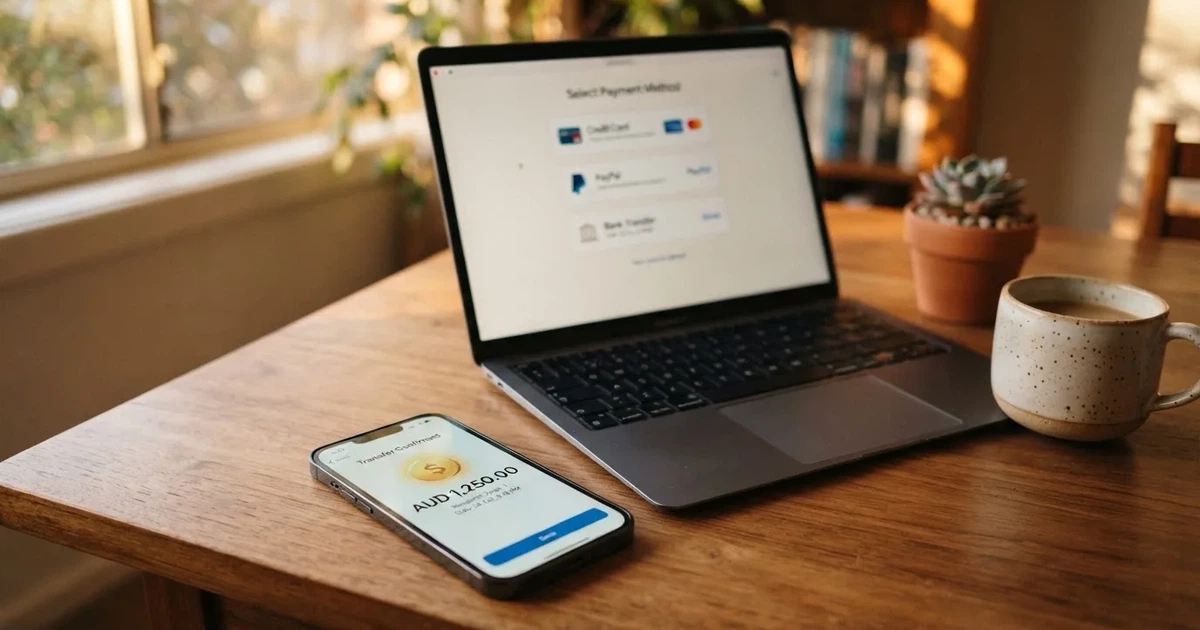
Direct Carrier Billing is what the marketing shorthand “pay by phone bill” or “pay by mobile phone” is reaching for. A user confirms a deposit with their phone — usually by SMS — and the charge lands on the mobile account instead of on a card. The provider in the middle is a payment processor that has deals with mobile network operators. The largest of them, Boku, describes its network as 200-plus local payment methods in 40-plus markets, and says it holds payment licences in more than 40 countries. Boku was founded in 2009 by combining Mobillcash and Paymo, listed on the London Stock Exchange’s AIM market in November 2017 through a £125 million IPO, and trades under the ticker BOKU.

Three things follow from that setup. One, the deposit itself is small by design — most carriers and processors cap a single carrier-billed transaction well below what a card or bank transfer moves. The figure the marketing highlights is convenience, not size. Two, the rail is built for impulse purchases; the deposit can be confirmed before the player has left the page, which is why it shows up on offshore casino sign-up flows aimed at a player who would rather not type a card number. Three, and this is the one that bites, paying through a phone bill does not make the casino itself any more or less legal for an Australian resident.
Carriers commonly cited on these sites include Boku, Fonix, Bango, Fortumo and Google Pay. They are payment processors. They do not decide whether the casino is licensed in Australia, and they do not enrol the player with BetStop. The bill at the end of the month is the same one the player would pay for a downloaded ringtone — the casino’s status in Australian law is a separate matter entirely.
The legal frame the marketing never leads with
Online casino games and online pokies cannot be licensed for Australian customers. The Interactive Gambling Act 2001, as tightened by the Interactive Gambling Amendment Act 2017, makes it an offence to provide those products to a person physically in Australia. What is licensable, and what the major Australian-licensed bookmakers operate under, is wagering on races and sport placed before the event, lotteries and keno — in practice licensed by the Northern Territory Racing and Wagering Commission, which regulates 52 online bookmakers including Sportsbet, Bet365 and Ladbrokes. The NTRWC has no full-time staff and meets once a month in Darwin. A minimum age of 18 applies.
A casino carrying the carrier-billing option and a Curaçao licence — the licence most pay-by-phone sites display — is not licensed in Australia. It is offering a prohibited interactive gambling service. The IGA targets the provider, not the individual player. The player is not prosecuted. What the player loses by sitting outside the regime is the protection the regime gives: no Australian complaints body, no recourse if a withdrawal is refused, no guarantee the site will still be reachable at the end of the week, and a balance that can be stranded the moment Australian internet service providers are directed to block the domain.
Enforcement runs through the Australian Communications and Media Authority. The ACMA investigates, issues formal warnings under the IGA, and directs ISPs to block illegal sites. The relevant numbers are blunt. By the ACMA’s own count, 1,751 illegal gambling and affiliate marketing websites had been blocked since the first blocking request in November 2019. More than 230 unlicensed gambling services had left the Australian market since enforcement was strengthened in 2017. In a blocking round reported on 26 June 2026, the ACMA asked Australian ISPs to block another twelve: 7Signs, ChromaBet, Donbet, Duospin, Freshbet, Slots Gem, Jacks Club, Lucky Start, Pointsbetz.com, Spinrise, Vinyl Casino and Wildsino. The pace of formal warnings has stayed steady — Dama N.V. over six brands in May 2022; Hollycorn N.V. over Sky Crown and Blue Leo in September 2022; Bamboo Media over Ignition Casino and Consolutetish S.R.L. over National Casino and Bizzo Casino in July 2025; EOD Code SRL over Instant Casino in February 2025; Sterplay Holding Ltd over Casino Intense in April 2025; and Ryker B.V. over Jackbit and CasinOK in April 2026. The newest of these landed in April 2026, which is why this page checks the ACMA register rather than a brand’s own footer.
The numbers are not a ranking and they are not a recommendation. They are the regulator’s own record.
Blocking rate: how fast the ACMA is catching up
Run the arithmetic the page is for. Between the ACMA’s first blocking request in November 2019 and the running total reported in June 2026 — 1,751 blocked sites — roughly 6.5 years elapsed. That works out at a band of about 270 blocked sites per year, or roughly 22 per month. The year-on-year pace is not flat: the early years were a slow start as the IGA powers were first exercised, and the 2024–2026 rounds have run hotter as the ACMA has standardised its referral process.
The condition sitting under that band matters as much as the figure. The ACMA blocks on request, after an investigation, and only against services it judges to be offering prohibited interactive gambling to Australians. A site that hides behind an affiliate mirror or a fresh domain can reset the clock. The pace above counts successful blocks, not takedown attempts. As a measurement of how quickly the regulator catches up to a new offshore brand, the band reads faster than the regulator’s own average. As a forecast for the next twelve months, it lands in roughly the same band — the ACMA has been working through this backlog at a steady cadence for two years now.
This is the arithmetic the marketing never publishes. A site that looks long-established when a reader reaches it can be one blocking request away from disappearing.
Responsible play: the support that is actually Australian
Carrier billing changes nothing about where help is. Australians who want to stop or pause wagering are pointed at the National Gambling Helpline on 1800 858 858, free, 24/7, with chat at Gambling Help Online. BetStop, the National Self-Exclusion Register, has been live since August 2023, but it binds only Australian-licensed online and phone wagering services — an offshore casino is not connected to it. Self-excluding through BetStop does not exclude a player from a pay-by-phone-bill site. A reader who needs BetStop to do its job is told to play only where the regime applies.
The same applies on the way in. Westpac’s gambling block runs at card level and refuses authorisation of transactions registered under the merchant category code for Betting and Casino Gambling on eligible personal credit and debit cards. ANZ’s gambling block, set up in the ANZ app, also blocks gambling transactions made through a digital wallet such as Apple Pay on an eligible card, not just the physical card. Once ANZ’s block is turned on, removing it again requires a 48-hour waiting period — and ANZ warns that not all gambling transactions will be blocked and some non-gambling transactions might be blocked in error. Both banks are blunt: blocking helps; it is not airtight.
A player who turns to a phone-bill route to get around a card-level block is, in practice, getting around their own protection. The phone bill will be paid. The bank will not have warned them.
How the deposit shows up — and what it looks like at the other end
Pay by phone bill deposits are almost always small by design. The carrier and the processor apply per-transaction caps, and the fee structure that makes the rail viable for the processor requires the deposit to stay modest. A handful of casinos advertise a “no deposit bonus” attached to a phone-bill sign-up — these bonuses exist to lock in the player’s first deposit, not to pay out real money.
Withdrawal is where the deposit rail stops being relevant. Carrier billing is a one-way payment rail in this market — the casino collects the deposit through the phone bill but pays any winnings back through a different route, typically a bank transfer or a card. The settlement times those routes advertise are background only: Osko, an Australian bank-to-bank transfer between participating banks, arrives in under a minute, 24/7 including weekends, whether addressed to a BSB and account number or to a PayID. PayID-based instant transfers are available at more than 100 Australian financial institutions. Apple Pay, Google Pay and Samsung Pay transactions collectively accounted for around 45 per cent of all card payments in Australia by number at the end of 2025. None of those settlement speeds change what the ACMA can do at the front door.
The Reserve Bank’s July 2025 review proposes removing surcharges only on eftpos, Mastercard and Visa card transactions, explicitly leaving American Express outside the scope of the proposed surcharge ban. Apple Pay itself carries no consumer fee; any surcharge on an Apple Pay purchase comes from the merchant’s own card-processing fees, not from Apple. Under the IGA as amended in 2023, Australian-licensed online wagering services cannot accept payment by credit card or other credit-related products, and that restriction constrains gambling use of linked digital wallets as well. A pay-by-phone-bill site is unaffected by that restriction because it is offshore; a site that is licensed in Australia has no such option open to it.
AUSTRAC’s threshold-transaction-report rule, which requires reporting of transfers of A$10,000 or more, applies only to physical cash. Ordinary electronic bank transfers are not subject to that per-transaction reporting requirement, regardless of the amount sent. The PayID system warns the user that being asked to transfer money to a PayID on an illegal gambling site almost certainly means a scam site — the PayID shows the account holder’s name before the transfer is sent. The name on screen is one of the better signals a reader has.
What a phone-bill casino typically looks like on the phone
The flow these sites build is built for a small screen. The deposit button on the cashier page opens a payment screen, the player enters their mobile number, the screen sends an SMS PIN, the player types it in, and the deposit is on the casino account — typically in under a minute. No card number, no bank detail, no app to download. That is the convenience the marketing sells.
It is also the flow that a person trying to limit their own gambling would find hardest to slow down. A card-level bank block on a Westpac or ANZ card does not stop a deposit that never touches a card. A self-imposed deposit limit set inside the casino account is the only brake inside the casino itself, and offshore casinos are not obliged to offer one, much less to honour it across sessions. The mobile-first design is not a player-protection feature; it is a checkout optimisation.
New Payments Platform Australia, the infrastructure under Osko and PayID, became accessible to the public on 13 February 2018 and is owned by New Payments Platform Australia Ltd, a non-profit whose 13 shareholders include the Reserve Bank of Australia and the country’s major banks. More than 25 million PayID identifiers had been registered by April 2025. Participants in the platform keep monthly outages to no more than two minutes. The platform is the rails; it does not vet the destination.
Specific games and the carriers’ interest in them
The titles pay-by-phone-bill marketing tends to spotlight are online slots — the same slots that any offshore casino carries. A small subset of pages promotes “landline phone bill” payment for online slots specifically, which is a niche use of an older billing rail: a registered landline number is matched to a deposit, and the charge is added to the home phone bill. The technical reason a landline option exists at all is that direct carrier billing pre-dates the smartphone-only era; the commercial reason is that it widens the deposit base beyond the mobile-only user.
There is no game or provider category that carrier billing unlocks. The same slot catalog is available on the same site whether the player pays by phone, by card, or by crypto. A landline option does not give the player access to a different game library; it gives the player a different way to put money into the same library.
The brands the ACMA has acted against
The table below is not a ranking and not a recommendation. It lists the brands the ACMA itself has issued a formal warning against for offering prohibited interactive gambling services to Australians, with the date of the action as published. “Subject support” is the column that says whether this page has evidence the brand accepts deposits via phone-bill or carrier billing — the column is honest in both directions.
| Brand | ACMA action and date | Operator named by the ACMA | Phone-bill / carrier-billing support |
|---|---|---|---|
| RocketPlay | Formal warning under the IGA — March 2026; earlier Dama N.V., May 2022 | Pulsup Ltd (Rocketplay.com.au) | — |
| Level Up Casino | Formal warning under the IGA — May 2022 | Dama N.V. | Westpac lists the brand as blocked at card level (Westpac gambling-block page) |
| Woo Casino | Formal warning under the IGA — March 2025 | Dama N.V. | — |
| Spirit Casino | Formal warning under the IGA — May 2025 | Dama N.V. | — |
| National Casino | Formal warning under the IGA — July 2025 | Consolutetish S.R.L. | AUSTRAC public statements and a Wikipedia entry on the operator reference the brand |
| Bizzo Casino | Formal warning under the IGA — July 2025; earlier TechSolutions, 2022 | Consolutetish S.R.L. | — |
| Ignition Casino | Formal warning under the IGA — July 2025 | Bamboo Media | — |
| Instant Casino | Formal warning under the IGA — February 2025 | EOD Code SRL | ecoPayz’s public payment-methods listings and PayID registry pages reference the brand |
| Jackbit | Formal warning under the IGA — April 2026 | Ryker B.V. | — |
| Casino Intense | Formal warning under the IGA — April 2025 | Sterplay Holding Ltd | AUSTRAC statements, an iTnews report on payments-industry compliance, and a NAB card-block page reference the brand |
| Sky Crown | Formal warning under the IGA — September 2022 | Hollycorn N.V. | — |
A dash in the last column is not “this site definitely does not take phone-bill deposits”. It is “this page has no listing it can quote to confirm or deny that the brand’s cashier page is wired to a carrier-billing processor”. Where the column has a real entry, it is because a third-party listings page — a card-block page at Westpac or NAB, an AUSTRAC statement, a payments-industry trade article, or a payments-processor’s own coverage list — has been seen to mention the brand. None of those listings is the brand’s own statement; they are what the listings themselves say.
RocketPlay
RocketPlay is the most recent operator the ACMA has acted against: a formal warning issued in March 2026 over Rocketplay.com.au, naming Pulsup Ltd as the operator. The same site carries an older formal warning against Dama N.V. from May 2022, when Dama N.V. was on the receiving end of a six-brand sweep that included RocketPlay. The casino’s homepage has, in the past, displayed a Curaçao licence — that is the licence almost every offshore casino displays, and it does not authorise the site to take Australian players. The ACMA’s 2026 action was specifically directed at the .com.au variant. The brand sits at the head of the regulator’s current activity log, and there is no third-party listing this page can quote to confirm or deny that its cashier page offers a phone-bill rail — readers who want to know should check the cashier page themselves, but there is no third-party record available here to reference.
Level Up Casino
Level Up Casino’s IGA formal warning dates from May 2022, part of the same Dama N.V. six-brand sweep. Westpac’s published gambling-block page lists Level Up Casino among the brands it declines at card level — that listing is what the “phone-bill support” column carries for this brand. It is a card-block listing rather than a carrier-billing listing, but the upshot is the same for a player whose card sits behind Westpac’s gambling block: the card route is closed, and the phone-bill route is the one that would still take the deposit. The page does not recommend that route; it notes that it exists, because the choice between a card-level block and a phone-bill deposit is the choice the player ends up making.
Woo Casino
Woo Casino picked up a fresh formal warning from the ACMA in March 2025, again against Dama N.V. The earlier 2022 sweep did not name Woo Casino. The newer warning landed three years after the older one, against the same operating entity, which suggests the ACMA’s referral pipeline caught the brand again rather than that the site had changed hands. There is no third-party listing this page can quote on Woo Casino’s carrier-billing support — the column carries a dash because this page lacks any third-party listing to verify the carrier-billing status.
Spirit Casino
Spirit Casino was the subject of a formal warning in May 2025, naming Dama N.V. Spirit is one of the brands the ACMA has acted against twice through Dama N.V. in different years. No third-party listing this page can quote addresses whether Spirit’s cashier offers a phone-bill rail. The brand sits in the middle of the table for the simple reason that it sits in the middle of the regulator’s recent activity.
National Casino
National Casino’s IGA formal warning was issued in July 2025 against Consolutetish S.R.L., the same operator the ACMA named in its simultaneous warning over Bizzo Casino. The “subject support” column for National Casino has a public AUSTRAC statement and a Wikipedia entry on the operator that reference the brand — those references are not endorsements, and they are not phone-bill confirmations; they are mentions the brand’s name has surfaced on in public records.
Bizzo Casino
Bizzo Casino carries two formal warnings, against different operators, in different years. Consolutetish S.R.L. in July 2025; TechSolutions (CY) Group Limited and TechSolutions Group N.V. in 2022. Two warnings, two operating entities, one brand — the cleanest example on the table of how an offshore brand can re-paper itself under a new operator while keeping the same front-end and the same player base. This page has no record on file to confirm or deny that Bizzo Casino integrates a carrier-billing rail.
Ignition Casino
Ignition Casino was the subject of a formal warning in July 2025 against Bamboo Media. Bamboo Media does not show up in the ACMA’s other recent actions, which suggests Ignition is one of its few or only casino brands. The page contains zero verifiable records on its carrier-billing capabilities.
Instant Casino
Instant Casino picked up a formal warning in February 2025 against EOD Code SRL. ecoPayz’s public payment-methods listings and PayID registry pages mention the brand — those listings are what the column carries. They are listings, not confirmations; they say the brand’s name has appeared on listings that touch payment methods, not that those listings endorse the brand.
Jackbit
Jackbit’s IGA formal warning dates from April 2026 against Ryker B.V., in the same month the ACMA warned Ryker over CasinOK. The newest warning on this table. Whether this brand supports carrier billing is not verified; the brand’s cashier page is the only place a player can be certain.
Casino Intense
Casino Intense was the subject of a formal warning in April 2025 against Sterplay Holding Ltd. AUSTRAC statements, an iTnews report on payments-industry compliance, and a NAB card-block page all reference the brand by name — that is what the column carries. The references come from a regulator, a trade publication, and a bank’s own gambling-block list. None of them endorse Casino Intense; all of them have a reason to mention the brand that has nothing to do with endorsement.
Sky Crown
Sky Crown is the oldest warning on this table — September 2022, against Hollycorn N.V., in a formal warning the ACMA published as a PDF that also names Blue Leo. Hollycorn is one of the most prolific offshore operators in the ACMA’s record: it tends to run multiple casino brands under the same corporate umbrella, so a formal warning over one is rarely the last. No third-party listing this page can quote on Sky Crown’s carrier-billing support.
What the offshore brand actually shows the reader
The eleven brands on the table all share three traits beyond their IGA warnings. One, none is licensed in Australia; the Curaçao or other offshore licence they display is the licence the operator chose, not the licence the Australian customer is offered. Two, none is connected to BetStop, so a player who has self-excluded through the National Self-Exclusion Register is not self-excluded at any of these brands. Three, none is obliged to honour a card-level block at Westpac, ANZ or NAB — the bank can refuse the card transaction, but the casino’s phone-bill deposit rail will still accept the player, because that rail does not go through the card network.
H2 Gambling Capital’s 2025 report estimates that Australians lose about A$3.9 billion a year to illegal gambling sites, and that the share of gambling going through legal channels fell from 74 per cent in 2021 to 64 per cent. The A$3.9 billion is the Australian dollar volume moving through offshore sites. The 74-to-64 per cent drop is the share moving through legal wagering in Australia losing ground to illegal sites in the same period. Neither figure is a forecast; both are the regulator’s own backdrop for the blocking cadence above.
The tax position is straight. Gambling winnings of a recreational player are not assessable income under section 6-5 of the ITAA 1997, and losses are not deductible — unless the person carries on a business of gambling, which a reader asking about pay-by-phone-bill casinos is not. Tax is not the cost. The cost is the deposit, the wagering requirement on any bonus taken, and the loss of recourse if the casino refuses a withdrawal.
The 2026 reform picture
The Interactive Gambling Amendment (Gambling Reform) Bill 2026 passed Parliament on 19 August 2026. Its advertising and inducement measures commence on 1 January 2027 — law with a start date, not yet in force on a page that carries a 2026 publication year. The bill tightens the regime around licensed wagering rather than around offshore casino sites, which are already prohibited. The reform does not legalise any pay-by-phone-bill casino, and it does not authorise any new offshore site to take Australian players. What it changes is the surface area of the licensed market — the inducements a licensed operator can run, and how visible they are.
The bill is a reason to read a 2027 update before relying on anything on this page past January 2027. It is not a reason to read a 2026 page as if the regime had softened.
Where the money actually goes — a closing arithmetic
Take the most recent blocking round — 12 sites blocked in the report dated 26 June 2026. Take the A$3.9 billion figure for 2025 and split it across an estimated 1,751 blocked sites at the running total. The implied average is in the low millions per site per year, with wide variation across the set — a heavy-hitter bookmaker clone at the top end and a near-empty mirror at the bottom end. The arithmetic is loose on purpose: the ACMA does not publish per-site volume, and the share of the A$3.9 billion flowing through blocked domains versus the share flowing through as-yet-unblocked ones is not split in the public figures. What the page can say cleanly is that the volume is not trivial, that the cadence of blocking is steady, and that an Australian dollar deposit at any of the eleven brands on the table sits inside the A$3.9 billion that the regulator is trying to redirect.
The arithmetic that matters for the player is smaller. A$30 phone-bill deposit at one of these sites, placed through Boku or another carrier-billing processor, carries the carrier’s per-transaction fee plus the casino’s own bonus conversion terms if a bonus is taken. If a 100 per cent bonus of A$30 is added and a 40-times wagering requirement sits behind it, the player must wager A$1,200 before any withdrawal is permitted — A$30 of the player’s own money plus A$30 of bonus, turned over 40 times. The phone bill is paid in full at the end of the month. The bonus is not. That is the shape of the cost.
What this page is for, and what it is not
The page is a description of what the pay-by-phone-bill deposit rail looks like for an Australian reader — the carriers, the processors, the typical flows, the legal frame, the regulator’s own activity, and the brands the regulator has acted against. It is not a guide to playing at any of the eleven brands. It is not a ranking of which brand pays out fastest or offers the best bonus. The page’s editorial position is that the legal frame is the deciding fact, that the carrier-billing rail does not change the legal frame, and that a reader weighing a pay-by-phone-bill deposit should weigh the regulatory position alongside the deposit convenience.
A reader who needs more than that frame should ring 1800 858 858 or visit Gambling Help Online. A reader who has self-excluded through BetStop should keep in mind that BetStop does not cover the brands on this page.
Frequently asked questions about pay-by-phone-bill casinos in Australia
How does paying by phone bill actually work as a deposit method at a casino?
The player opens the cashier page on the casino site, enters their mobile number, and receives an SMS PIN to confirm. The deposit lands on the casino account and the charge is added to the mobile phone bill, processed through a carrier-billing provider such as Boku, Fonix, Bango, Fortumo or Google Pay. The deposit itself is small by design, because the carriers and processors cap a single transaction well below a typical card or bank transfer.
Does carrier billing make a casino any more legitimate for Australian players?
No. Carrier billing is a payment rail, not a licence. Boku, the largest of the carrier-billing processors, holds payment licences in more than 40 countries, but those licences cover the payment service, not the casino’s status under Australian law. An offshore casino carrying a Curaçao licence and a phone-bill deposit rail is offering a prohibited interactive gambling service under the IGA 2001, regardless of how the deposit arrives.
Is depositing via a mobile phone bill to an offshore casino something an Australian resident can lawfully do?
The IGA targets the provider, not the individual player. An Australian resident is not prosecuted for depositing. The provider is the one running foul of the law. The cost of sitting outside the regime is not legal exposure; it is the loss of every Australian consumer protection — no complaints body, no recourse if a withdrawal is refused, and the risk that the domain is blocked with a balance still on it.
What’s the difference between ‘pay by phone bill’ and ‘pay by mobile phone’ as far as the casino is concerned?
In practice, very little. “Pay by phone bill” usually refers to direct carrier billing — a charge added to the mobile account. “Pay by mobile phone” can refer to the same rail, or to a mobile-wallet payment such as Apple Pay or Google Pay that runs over the card network. The first moves through the carrier; the second moves through the card network and inherits the card’s protections and the card’s merchant-category gambling block.
Why would a landline phone bill payment option even be offered for online slots?
Because direct carrier billing predates the smartphone-only era. A landline number can be matched to a deposit and the charge added to the home phone bill. The commercial reason the option persists is that it widens the deposit base to households that have a registered landline but no convenient mobile-billing path. The technical reason is legacy; there is no game library that a landline deposit unlocks that a card deposit does not.
What happens if a phone-bill casino charge shows up on someone else’s mobile account?
The carrier treats the charge as belonging to the account holder, not to the person who clicked through. If a child or another family member initiates the deposit from a shared phone or a borrowed handset, the bill goes to the account holder and the carrier’s dispute process is the path back. The casino itself is offshore and outside the Australian consumer-disputes framework; recovery is via the carrier, not via the casino.