
New Australian Online Pokies 2026: What the Marketing Leaves Out
Anyone searching for new Australian online pokies is usually looking for a working list — somewhere to play, a fresh title to try, a bonus worth claiming. The honest answer starts somewhere uncomfortable: that list, in the form most readers expect it, does not exist and cannot exist. Online casino games, including online pokies, are prohibited in Australia under the Interactive Gambling Act 2001. No state or territory issues a licence for them. The pages ranking them, the affiliate sites reviewing them, the offshore brands waving Curacao or Anjouan credentials at Australian sign-ups — all of it operates against the law as it stands, and the regulator has been acting on that fact for years.
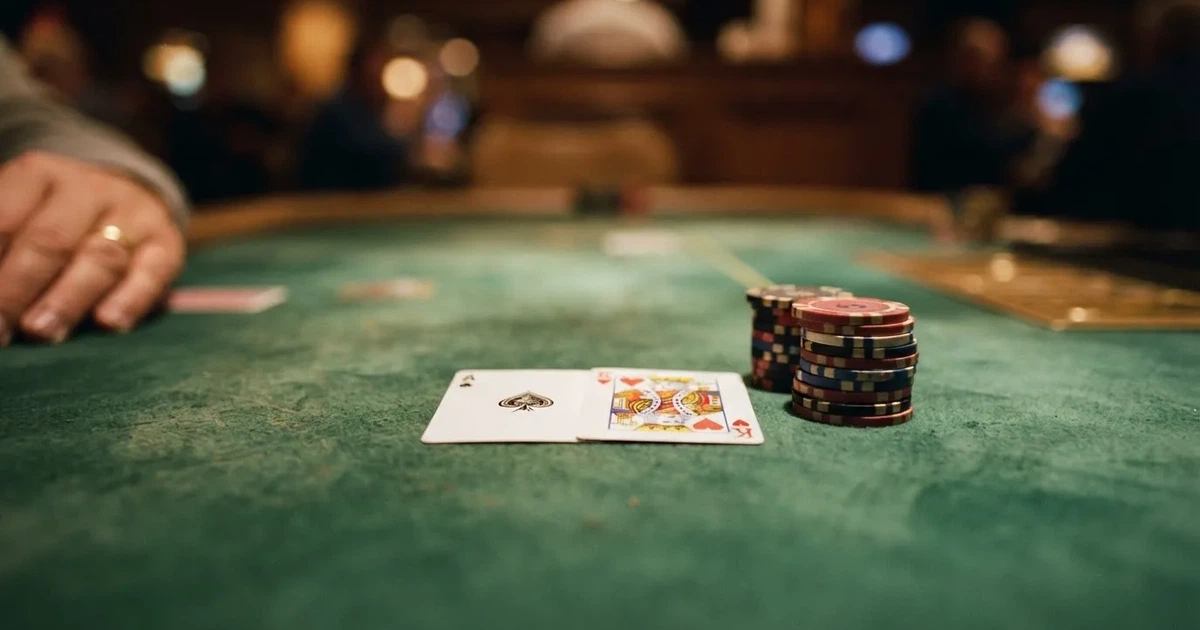
This page is not going to pretend otherwise. It walks through what the law actually says, what the Australian Communications and Media Authority (ACMA) has done about it, what real player protection looks like for someone in Australia, and where licensed alternatives — clubs, pubs, land-based casinos — sit in the picture. The offshore brands that dominate “best new pokies” lists elsewhere are named here only because the ACMA has named them in formal warnings, not because any of them is a place an Australian reader should be playing.
Data current as of 29 October 2026 and verified against the ACMA’s published formal-warning register and the Australian Communications and Media Authority’s own enforcement reporting.
Table of Contents
- The Law Behind New Online Pokies in Australia
- What the ACMA Has Done About Offshore Sites
- What Offshore Sites Cannot Offer an Australian Player
- The Eleven Brands Named in ACMA Warnings
- What Player Protection Actually Looks Like in Australia
- How Money Moves at Licensed Australian Wagering Sites
- Where Pokies Actually Run Legally in Australia
- The Games Themselves: Pokies, Baccarat, Blackjack
- What “New” Actually Means in the Pokies World
- The ACMA Enforcement Record, Side by Side
- The Blocking Rate: How Many Sites, How Fast
- Tax and Money: What a Win Actually Looks Like
- What an Australian Reader Should Actually Do With This
- Where This Leaves the “Best New” Question
- Frequently Asked Questions
The Law Behind New Online Pokies in Australia
The Interactive Gambling Act 2001, tightened by the Interactive Gambling Amendment Act 2017, makes it a criminal offence to provide online casino games — including online pokies — to a person physically in Australia. The prohibition covers the operator, not the player. Australians who sign up to an offshore site are not personally prosecuted; the site itself, and the people running it, are what the law targets.

What is licensed is narrower than most readers realise. Wagering on racing and sport (placed before the event), lotteries and keno — those are licensable activities, and in practice they are licensed through the Northern Territory Racing and Wagering Commission (NTRWC). That commission regulates 52 of Australia’s online bookmakers, including Sportsbet, Bet365 and Ladbrokes, and it does so with no full-time staff, meeting once a month in Darwin. Online casino games sit outside that frame entirely. No Australian jurisdiction grants a licence for them, and any site displaying an “Australian licence” for online pokies is either misrepresenting a wagering-only credential or licensing something else.
The Interactive Gambling Amendment (Gambling Reform) Bill 2026 passed Parliament on 19 August 2026. Its advertising and inducement measures commence on 1 January 2027, so the law exists with a start date rather than being in force on a page dated to 2026. Anyone planning a marketing push around “new pokies” should treat that date as the floor for what inducements will survive.
What the ACMA Has Done About Offshore Sites
The ACMA does not just publish the rules — it acts on them. Two tools carry most of the weight: formal warnings to operators, and blocking requests to Australian internet service providers.

By the ACMA’s own reporting, a cumulative total of 1,751 illegal gambling and affiliate marketing websites had been blocked since the first blocking request in November 2019, and more than 230 unlicensed gambling services had left the Australian market since enforcement was strengthened in 2017. The most recent blocking round reported on 26 June 2026 added 12 more names: 7Signs, ChromaBet, Donbet, Duospin, Freshbet, Slots Gem, Jacks Club, Lucky Start, Pointsbetz, Spinrise, Vinyl Casino and Wildsino.
Formal warnings work the other side of the same lever. The ACMA issued a formal warning to Pulsup Ltd over Rocketplay in March 2026, and to Ryker B.V. over Jackbit and CasinOK in April 2026. Going back further: Dama N.V. was warned in May 2022 across six casino brands (Bambet, Dazard, Level Up, Rocketplay, Wild Tornado and Cobra Casinos), then again in March 2025 over Woo Casino and in May 2025 over Spirit Casino. Bamboo Media was warned in July 2025 over Ignition Casino, while Consolutetish S.R.L. drew the same month over National Casino and Bizzo Casino — the latter having already been warned back in 2022 when it operated under TechSolutions. EOD Code SRL was warned over Instant Casino in February 2025, and Sterplay Holding Ltd over Casino Intense in April 2025. Hollycorn N.V. was warned over Sky Crown and Blue Leo in September 2022.
The pattern is not subtle. The same operator names reappear under different brand labels, the same corporate vehicles run multiple skins, and the ACMA tracks them across both.
What Offshore Sites Cannot Offer an Australian Player
An offshore site is, for an Australian reader, a counterpart without a counterpart. There is no Australian complaints body to take a withdrawal dispute to. There is no Australian regulator to complain to about a bonus term that was changed after deposit. There is no Australian requirement that the site’s games be independently tested, that the published return-to-player (RTP) be honoured, or that a self-exclusion request be respected across the operator’s other brands. The site can be blocked in Australia with a balance still sitting on it — and balances held by an offshore operator have no statutory protection once that happens.
A credit card cannot legally be used to fund a licensed Australian wagering account. Since 11 June 2024, credit cards, credit-related products and digital currency have been banned as payment for licensed online wagering, with penalties of up to A$247,500 for operators that breach the rule. The legal deposit routes for licensed wagering are debit card, bank transfer, PayID/Osko and BPAY. An offshore site that asks an Australian player for a credit card or a crypto deposit is operating outside the Australian rules by design — those are precisely the rails the law cut off.
The cost side runs deeper than the deposit side. H2 Gambling Capital’s 2025 report estimates that Australians lose about A$3.9 billion a year to illegal gambling sites, and the share of gambling going through legal channels fell from 74% in 2021 to 64%. That gap is what the ACMA’s enforcement work is closing, one blocking request at a time.
The Eleven Brands Named in ACMA Warnings
The brands below are not a ranking and not a recommendation. Each one is listed because the ACMA itself issued a formal warning for offering prohibited online casino services to Australians. The order is the order research gives them in.
RocketPlay
The ACMA issued a formal warning to Pulsup Ltd over Rocketplay in March 2026, with an earlier warning issued to Dama N.V. over the same brand in May 2022. Two warnings, two different operators running the same skin — a common shape for offshore casino groups that re-paper their corporate structure after a regulator acts. No independent confirmation of the site’s current game catalogue or bonus structure for Australian players.
Level Up Casino
A formal warning was issued to Dama N.V. over Level Up Casino in May 2022. Game-provider listings carried by third-party catalogues place BGaming among the studios whose titles appear on the Level Up lobby; the brand’s own claims about its catalogue are not independently verifiable for an Australian reader.
Woo Casino
The ACMA issued a further formal warning to Dama N.V. over Woo Casino in March 2025, after the 2022 wave of warnings to the same operator. Research contains no independent listing of Woo Casino’s current game library, making its contemporary Australian-facing offer impossible to verify.
Spirit Casino
Another Dama N.V. brand, with a formal warning issued by the ACMA in May 2025. Spirit Casino sits in the same operator cluster as Woo Casino, Level Up Casino and Rocketplay, and the warnings track that cluster closely. No independent catalogue data is available to verify what the site currently shows.
National Casino
The ACMA issued a formal warning to Consolutetish S.R.L. over National Casino in July 2025. Third-party listings record the brand but offer no verifiable detail of its current game library or its standing under Australian law.
Bizzo Casino
Consolutetish S.R.L. drew a formal warning over Bizzo Casino in July 2025, but the brand itself is older than that — the ACMA had already issued a formal warning over Bizzo in 2022, addressed to TechSolutions (CY) Group Limited and TechSolutions Group N.V. The 2022 operator and the 2025 operator are different corporate vehicles, and the brand has outlived the first one. Public records provide no verifiable detail on the brand’s current catalogue.
Ignition Casino
Bamboo Media drew a formal warning over Ignition Casino in July 2025. There is no verifiable data regarding the brand’s current library, meaning its offer to Australian players remains unconfirmed.
Instant Casino
The ACMA issued a formal warning to EOD Code SRL over Instant Casino in February 2025. Information on the site’s present game catalogue remains absent from public research sources.
Jackbit
The ACMA issued a formal warning to Ryker B.V. over Jackbit and CasinOK in April 2026 — both brands from the same operator in the same round. The brand’s catalogue data does not surface in any verifiable research source.
Casino Intense
Sterplay Holding Ltd drew a formal warning over Casino Intense in April 2025. Third-party listings reference Casino Intense as a brand but offer no independently verifiable detail of its current game catalogue.
Sky Crown
The ACMA issued a formal warning to Hollycorn N.V. over Sky Crown and Blue Leo in September 2022. The warning predates the more recent enforcement rounds, but the prohibition the warning addresses has not changed. No independently verifiable catalogue data is on the public record for this brand.
What Player Protection Actually Looks Like in Australia
Player protection in Australia runs through licensed wagering providers, not offshore casinos. The flagship tool is BetStop, the National Self-Exclusion Register, which has been live since August 2023. A person registered with BetStop is blocked from opening new accounts with Australian-licensed online and phone wagering providers, and from marketing materials sent by those providers. The register binds only Australian-licensed services; an offshore casino is not connected to it, and a self-exclusion request made to an offshore brand has no statutory force behind it.
For someone whose gambling has stopped being a choice, the National Gambling Helpline is 1800 858 858 — free, 24 hours a day, seven days a week, with web chat available through Gambling Help Online. State and territory services sit behind that national line, each running its own counselling and financial counselling pathways.
What protection does not look like: a “responsible gambling” page on an offshore casino’s footer. A pop-up asking how long the player has been at the site. A deposit-limit toggle the player can raise again two minutes later. None of those have an Australian regulator behind them.
How Money Moves at Licensed Australian Wagering Sites
For licensed Australian wagering — racing, sport, lotteries, keno — the deposit routes are constrained by the credit-card ban that came into force on 11 June 2024. Debit card, bank transfer, PayID/Osko and BPAY are the legal rails. PayID in particular is the rail most Australians recognise: it sits on the New Payments Platform, settles through Osko, and a deposit to a licensed wagering account typically lands in seconds because the transfer is between Australian banks.
The settlement direction matters. A withdrawal from a licensed wagering account back to an Australian bank account usually clears within one to three banking days through the same PayID or BPAY infrastructure, and the speed is the speed of the Australian banking system rather than something the operator controls.
What it looks like at an offshore site is different. Offshore sites typically offer a wider payment-method menu — e-wallets, crypto, prepaid vouchers — because they are not subject to the Australian credit-card ban. A withdrawal back to an Australian bank account from an offshore site passes through an intermediary, and the speed is whatever the intermediary agrees to. There is no Australian rule that requires it to be fast, and no Australian complaints body to approach if it is not.
Where Pokies Actually Run Legally in Australia
Legal pokies in Australia are land-based. Electronic gaming machines — “pokies” — operate in every Australian state and territory, and each jurisdiction separately regulates their design and operation.
The numbers tell the scale. In 2020–21 Australians bet almost A$150 billion through gaming machines and lost A$12.18 billion on them. Australia has about 3% of the world’s pub and club poker machines with 0.3% of the global population. New South Wales alone had 87,298 gaming machines outside casinos across 2,195 venues as of June 2023, with player losses of A$8.18 billion in 2022–23. Queensland had 21,122 gaming machines in 351 venues in October 2023; Victoria had 26,380 outside Crown Casino in 488 venues in 2021–22, under a 30,000-machine statewide cap.
Registered clubs operated Australia’s first legal poker machines from 1956, in New South Wales. Western Australia took the opposite path: it banned poker machines in pubs and clubs when Crown Perth opened in 1985, leaving the state’s machines concentrated in that single casino. Crown Perth’s machine count has since grown from about 200 in 1985 to roughly 2,500, all approved by the state’s Gaming and Wagering Commission. Tasmania ran poker machines under a single-operator monopoly held by the Federal Group from 1968, until legislation passed in November 2021 ended that monopoly and moved oversight to the Tasmanian Liquor and Gaming Commission. Tasmania also planned nation-leading mandatory pre-commitment cards for its poker machines, with implementation delayed until late 2025.
The legal minimum return-to-player (RTP) for poker machines varies by jurisdiction: 85% in New South Wales, the Northern Territory, Queensland and generally Victoria (87% at Crown Melbourne); 87% in the Australian Capital Territory and Tasmania; 87.5% in South Australia; and 90% in Western Australia. These are floors, and the actual RTP on any given machine sits above the floor — but the floor is the figure a regulator enforces.
A reader looking at those numbers from the angle of “where can I actually play a pokie in Australia” has a short, honest answer: at a licensed club, pub or casino in their state or territory, on a machine that carries the local regulator’s approval.
The Games Themselves: Pokies, Baccarat, Blackjack
Online pokies, as a category, are the digital version of these machines — reels, paylines, bonus features, free-spin rounds, the same RTP/variance structure as their land-based equivalents. The mechanics are the same; the prohibition is the only thing that has moved.
For readers who arrive at “new pokies” expecting a casino table alongside, two games dominate the comparison pages where licensed Australian casinos publish their table offerings: baccarat and blackjack. Both are approved table games under Australian casino regulation, and both are also offered — illegitimately — by offshore sites targeting Australian sign-ups.
Baccarat’s house edge is 1.06% on the Banker bet, 1.24% on the Player bet and 14.36% on the Tie. Punto banco, the variant most played today, was developed in Havana during the 1940s; the casino banks the game at all times and plays out both hands by fixed drawing rules. Cards 2–9 count at face value, 10/J/Q/K count as zero and aces count as one, with hand totals taken modulo 10. Crown Melbourne offers three approved baccarat variants — Traditional Baccarat, Crown Baccarat and 2 to 1 Baccarat — regulated by the Victorian Gambling and Casino Control Commission, which replaced the VCGLR as Victoria’s casino regulator on 1 July 2022.
Blackjack’s house edge is about 0.28% under liberal Las Vegas Strip rules with optimal strategy (dealer stands on soft 17, double on any two cards, double after split, resplit aces, late surrender), and about 0.43% under Atlantic City rules. Number cards count as their number, jack/queen/king count as 10, and an ace counts as 1 or 11; a starting two-card total of 21 is a “blackjack” or “natural” and is the strongest hand. The game’s predecessor was the English vingt-un, with formal rules published in Britain in 1800; the name “blackjack” dates from around 1899, during the Klondike Gold Rush. Established variants on casino floors include Spanish 21 (no 10s, liberal player rules), Double Exposure (both dealer cards up), Blackjack Switch (swap cards between two hands) and Super Fun 21 (up to four splits).
Both games are approved under section 66 of the NSW Casino Control Act 1992, which requires the regulator to approve a casino game and its rules before it can be offered, and the operator to make the approved rules available to patrons on request. The point is not the rule itself — it is that the rule exists, and an offshore site offering these games to Australians is not subject to it.
What “New” Actually Means in the Pokies World
A new pokies release is, in industry terms, a title that has shipped to a casino lobby within the last several weeks or months. Studios like Pragmatic Play, BGaming, Hacksaw Gaming and a dozen smaller developers publish new releases on roughly monthly cadences, and a “new pokies” page elsewhere on the web is usually a curated list of recent titles from those studios.
An established pokie is everything that has been on the lobby long enough to accumulate player data, jackpot history and reviews. The distinction matters because a new release carries no track record: the RTP is whatever the studio publishes, the volatility is whatever the studio states, and the long-run payout behaviour is a forecast rather than a measurement.
For an Australian reader, the question “what counts as new” runs into the same wall as everything else. The new releases are catalogued on offshore casino lobbies. They are not available on licensed Australian wagering sites, because licensed Australian wagering sites do not offer online pokies. A reader who wants to see a new pokie title has, as their only legal option, waiting for it to appear on a licensed club, pub or casino floor — and licensed land-based venues typically refresh their machine stock on a much slower cycle than an offshore lobby does.
The ACMA Enforcement Record, Side by Side
The table below lines up the brands covered above, the ACMA action against each, and the corporate operator the ACMA named in the warning. Dates are the dates the ACMA itself published.
| Brand | ACMA action and date | Operator named by the ACMA |
|---|---|---|
| RocketPlay | Formal warning, March 2026 | Pulsup Ltd |
| Level Up Casino | Formal warning, May 2022 | Dama N.V. |
| Woo Casino | Formal warning, March 2025 | Dama N.V. |
| Spirit Casino | Formal warning, May 2025 | Dama N.V. |
| National Casino | Formal warning, July 2025 | Consolutetish S.R.L. |
| Bizzo Casino | Formal warning, July 2025; earlier 2022 | Consolutetish S.R.L. (2025); TechSolutions (2022) |
| Ignition Casino | Formal warning, July 2025 | Bamboo Media |
| Instant Casino | Formal warning, February 2025 | EOD Code SRL |
| Jackbit | Formal warning, April 2026 | Ryker B.V. |
| Casino Intense | Formal warning, April 2025 | Sterplay Holding Ltd |
| Sky Crown | Formal warning, September 2022 | Hollycorn N.V. |
Three of the eleven brands — RocketPlay, Level Up Casino and Woo Casino — trace back to Dama N.V. and its associated vehicles. That is not an accident. Offshore casino groups commonly run multiple brand skins from a single operating company, and the ACMA’s enforcement record shows it.
The Blocking Rate: How Many Sites, How Fast
The arithmetic the ACMA’s reporting makes available is straightforward. By the ACMA’s own June 2026 figure, 1,751 illegal gambling and affiliate marketing websites had been blocked since the first blocking request in November 2019. That spans roughly 6.5 years of enforcement. The blocking rate works out to somewhere between 250 and 280 sites blocked per year on average across that period — not a flat pace, because the blocking rounds cluster, but a useful band for understanding the scale of what the regulator has done.
The June 2026 round alone added 12 names. Earlier rounds added comparable batches, and the cumulative total has climbed steadily across each reporting period. The band sits well above what a single regulator pursuing individual site-by-site prosecutions could realistically achieve, and that is the point of the blocking-request mechanism: it lets the ACMA move against an entire cohort of illegal services in one decision, with the actual blocking handled by the internet service providers themselves.
Tax and Money: What a Win Actually Looks Like
Gambling winnings of a recreational player in Australia are not assessable income. Under section 6-5 of the Income Tax Assessment Act 1997, a recreational punter’s winnings fall outside the assessable-income framework, and losses are not deductible. The exception is the person who carries on a business of gambling — professional poker players, advantage-play cases — and even there the line is drawn case by case.
For an offshore site, the Australian-side tax picture is muddier. The site itself does not remit Australian tax on Australian players’ bets, because the site is not within the Australian tax base. The player does not declare the winnings, because the winnings are not assessable for a recreational player. What the player does have, on the offshore side, is a withdrawal that may attract a fee from the offshore operator, an exchange-rate spread if the site holds balances in a currency other than AUD, and no Australian recourse if the operator refuses to pay out.
The 2026 reform package does not change the tax treatment of winnings, but it does change what inducements an Australian-licensed wagering provider can offer. From 1 January 2027, the advertising and inducement measures in the Interactive Gambling Amendment (Gambling Reform) Bill 2026 commence — sign-up bonuses, “free bet” offers and the like, restricted in ways the bill specifies.
What an Australian Reader Should Actually Do With This
The right reading of the material above is not “find a workaround.” The right reading is to recognise that the category the search query asks about — a licensed, Australian-licensed online pokie — does not exist, has not existed since the IGA was strengthened in 2017, and is not going to exist in the foreseeable future. The Interactive Gambling Amendment (Gambling Reform) Bill 2026 tightens the frame rather than loosening it.
For someone who wants to play pokies legally in Australia, the options are a licensed club, pub or casino in their state or territory. For someone who wants to bet on racing or sport online with Australian consumer protection, the licensed wagering providers regulated through the NTRWC are the route, with PayID/Osko or BPAY as the deposit rail. For someone whose gambling has stopped being fun, the National Gambling Helpline at 1800 858 858 is the number to call, and BetStop is the register to enrol in if the wagering side is the problem.
For someone who is reading this page because an offshore casino marketed to them as “new Australian online pokies 2026” — the marketing line is built on a legal gap the ACMA has spent the last several years closing, and the site is one blocking round away from being unreachable from an Australian IP address. The balance on it, if there is one, is not protected by Australian law.
Where This Leaves the “Best New” Question
There is no honest answer to “best new Australian online pokies 2026” in the form the question presupposes. The honest answer is what the question leaves out: that the product category the question names is prohibited, that the regulator enforces that prohibition actively, and that the licensed alternatives — clubs, pubs, land-based casinos — are where the actual machines run.
A reader looking for a casino comparison in the usual sense has not found one on this page, and that is the page working as intended. An offshore casino that promises Australian pokies, deposits in AUD, withdrawals in AUD and a “trusted” licence is offering a product the law does not let it offer to anyone in Australia, and the cost of taking it up is the gap between what the marketing promises and what Australian consumer protection actually delivers — which is nothing.
Frequently Asked Questions
How much do Australians lose on gaming machines in an average year?
The most recent comprehensive figure is from 2020–21, when Australians bet almost A$150 billion through gaming machines and lost A$12.18 billion on them. That figure covers licensed land-based machines, not the offshore online market, where H2 Gambling Capital estimates Australians lose an additional A$3.9 billion a year to illegal sites.
What counts as a new pokies release versus an established one?
A new pokies release is one a studio has shipped to a casino lobby within the last several weeks or months. An established pokie has been on the lobby long enough to carry a track record. The distinction matters because a new release has no measured payout history — the RTP is whatever the studio publishes, and the volatility is a stated classification rather than an observed one.
Is it legal for an online casino to offer new pokies titles to Australians?
No. The Interactive Gambling Act 2001, strengthened by the Interactive Gambling Amendment Act 2017, prohibits offering online casino games — including online pokies — to anyone in Australia. No Australian state or territory issues a licence for it, and the ACMA has issued formal warnings to offshore operators who do. The individual player is not prosecuted, but the site itself is what the law targets.
Can a new pokies bonus be claimed through a PayID deposit?
PayID is one of the legal deposit rails for Australian-licensed wagering — racing, sport, lotteries and keno. It is not a legal rail for online pokies, because online pokies are not licensable. An offshore casino accepting PayID is not subject to Australian credit-card and crypto rules, but it is also not protected by Australian consumer law, and any “bonus” attached to a PayID deposit on an offshore site sits outside any Australian recourse.
Are new pokies titles tested before they appear on licensed club or pub floors?
Yes, in the jurisdictions that require it. Each Australian state and territory separately regulates poker machine design and operation, with a legal minimum return-to-player that varies by jurisdiction. New titles on a licensed venue’s floor have been approved by the local regulator, and the venue must follow the local rules around machine approval, placement and player-facing information.
Why does Australia have such a large share of the world’s poker machines?
Australia has about 3% of the world’s pub and club poker machines with 0.3% of the global population. The scale traces back to the legalisation of poker machines in registered clubs in New South Wales from 1956, the subsequent legalisation in other states on broadly similar terms, and the absence of the kind of machine-count caps some other jurisdictions have imposed. Western Australia is the standout exception: poker machines are banned in pubs and clubs there, with the state’s machines concentrated in Crown Perth.