
Big Jackpot Slots in Australia: What’s Lawful, What Isn’t, and Where the Money Actually Goes
Current as of 29 October 2026, checked against the ACMA’s published enforcement actions and the Interactive Gambling Act 2001.
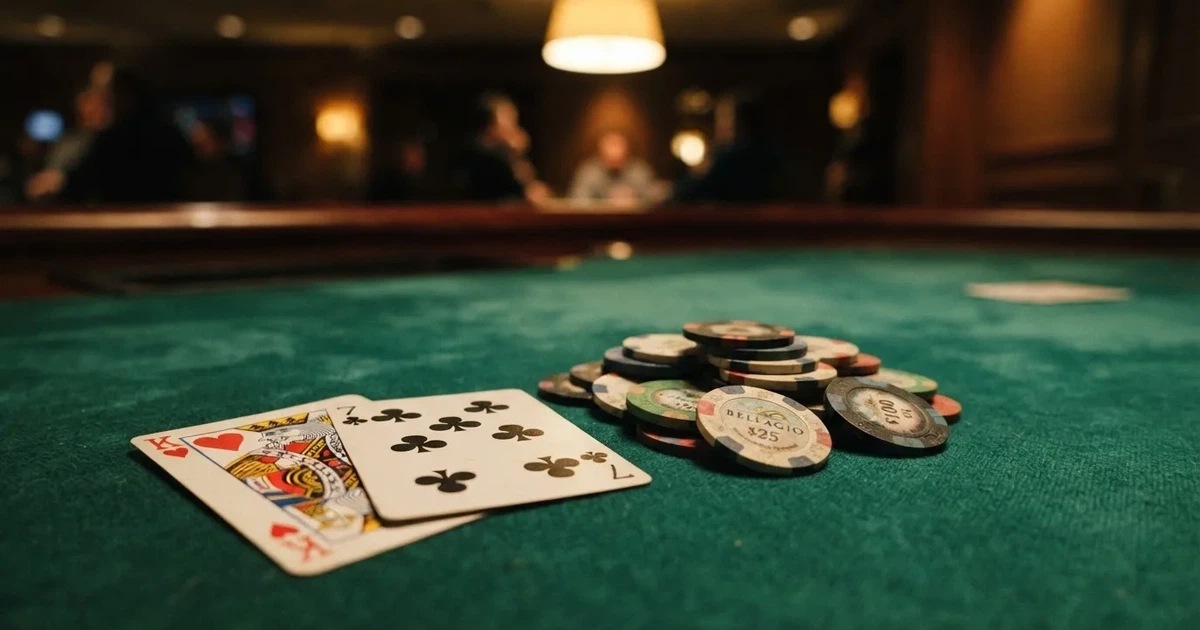
No Australian casino is allowed to offer online jackpot slots. That sentence is the headline and the rest of the page works out what it means for someone typing the search. The Interactive Gambling Act 2001, tightened by the Interactive Gambling Amendment Act 2017, makes it an offence to provide online casino games to a person physically in Australia. No state or territory issues a licence for it. The Australian Communications and Media Authority enforces this against the provider, and over the last several years it has issued dozens of formal warnings and directed internet providers to block more than 1,750 illegal gambling and affiliate marketing websites since the first blocking request in November 2019.
The page that follows is not a recommendation of offshore operators. Every brand named in the comparison table is a brand the ACMA has acted against, and the page’s value to a reader is in showing exactly why that matters and what a reader who wants the experience is meant to do instead. The lawful channels for the same itch — a real big payout on a single spin, the same progressive-jackpot machinery — are licensed Australian venues, the land-based casinos, and the BetStop register for anyone who has decided the urge is best switched off.
Table of Contents
- How the Australian Prohibition Actually Works
- What the ACMA’s Enforcement Record Shows
- The Blocking Round of June 2026
- What the Industry Itself Costs Australians
- Responsible Gambling: The Tools That Are Available, and the Tools That Aren’t
- How a Progressive Jackpot Slot Actually Works
- The Actual Payout Mathematics
- The House Edge at the Tables the Same Reader Plays
- The Comparison: Brands the ACMA Has Acted Against
- What Each Brand Actually Means for the Reader
- The Blocking Rate: How Often the ACMA Pulls the Plug
- What the Payments Picture Looks Like
- The Lawful Channels That Are Open
- What a Reader Who Wants the Experience Should Do
- Frequently Asked Questions
How the Australian Prohibition Actually Works
The Interactive Gambling Act 2001, in the language it now carries after the 2017 amendments, prohibits the supply of “prohibited interactive gambling services” to customers in Australia. Casino games played online — slots, table games, live-dealer roulette, keno — are the textbook example of a prohibited service. Lotteries are not. Wagering on a race or a sporting event placed before the event is not. In-play betting online is.

The provider is the one who breaks the law, not the punter sitting at home. That is the legal frame the ACMA operates inside. The enforcement tools it has are three: investigate, issue a formal warning, and ask Australian internet service providers to block the offending websites. As of the ACMA’s update reported in June 2026, those tools have put 1,751 illegal gambling and affiliate marketing websites on the block list since the first blocking request in November 2019, and more than 230 unlicensed services have left the Australian market since enforcement was tightened in 2017.
A reader trying to reach one of these sites from inside Australia is, in practice, finding the door already shut at the network level — not by a moral appeal, but by an order from the regulator to the customer’s own internet provider. The balance left in an offshore account at that point is the customer’s problem; there is no Australian complaints body for a Curaçao-licensed operator to be referred to, and there is no Australian court the customer can drag the operator into.
The Northern Territory Racing and Wagering Commission is the regulator most Australians have heard of by abbreviation, and the one most often pointed to as the licensing authority for the licensed wagering brands. What gets missed is what the commission actually does: it regulates 52 of Australia’s online bookmakers — Sportsbet, Bet365, Ladbrokes among them — because they hold Northern Territory licences for tax reasons, not because the territory is a casino supervisor. The commission has no full-time staff and meets once a month in Darwin. It is a wagering-licence issuer that has been described, in the press coverage of a reform bill in April 2026, as a de facto gambling regulator the territory never really set up to be one. None of this changes the central fact: no Australian regulator licenses online casino games, because the activity is prohibited at the federal level in the first place.
What the ACMA’s Enforcement Record Shows
The formal warning is the regulator’s loudest action short of a block. It puts the operator on the public record, names the brand or brands covered, and signals that the next step is a block request. The ACMA has used it liberally across the offshore casino market. The warnings listed below are not all the warnings the ACMA has issued — they are the ones the comparison table later in the page draws on, and the ones a reader cross-checking a specific brand is most likely to want to find.

In March 2026 the ACMA issued a formal warning to Pulsup Ltd over RocketPlay. In April 2026 the ACMA issued a formal warning to Ryker B.V. over Jackbit and CasinOK. In July 2025 the ACMA issued formal warnings to Bamboo Media over Ignition Casino and to Consolutetish S.R.L. over National Casino and Bizzo Casino; Bizzo Casino had already been the subject of a 2022 formal warning to TechSolutions (CY) Group Limited and TechSolutions Group N.V. In May 2025 the ACMA issued a formal warning to Dama N.V. over Spirit Casino, and in March 2025 the same operator had already been warned over Woo Casino. In April 2025 the ACMA issued a formal warning to Sterplay Holding Ltd over Casino Intense. In February 2025 the ACMA issued a formal warning to EOD Code SRL over Instant Casino.
The Dama N.V. cluster is the most instructive for a reader. In May 2022 the ACMA issued a formal warning to Dama N.V. covering six casino brands: Bambet, Dazard, Level Up, Rocketplay, Wild Tornado and Cobra Casinos. The same operator surfaced again in March 2025 (Woo Casino) and May 2025 (Spirit Casino). A warning issued to the operating company over one brand is, in practice, a warning over the entire portfolio the operator runs, and the ACMA has not had to issue a fresh warning for every brand to make the point. When the same legal entity appears in three or four warning notices over four years, the operator has been told, and has chosen not to comply.
The Hollycorn N.V. line shows a longer version of the same pattern. The ACMA issued a formal warning to Hollycorn N.V. over its Sky Crown and Blue Leo casino services. A reader who has been told one Hollycorn brand is prohibited can reasonably infer the rest of the Hollycorn portfolio is being treated the same way.
The cumulative point of the enforcement record is not that a single warning dooms an operator. It is that the ACMA’s published list is the catalogue of operators it has formally identified as providing prohibited services to Australians, and the gaps on the list are not endorsements of the operators that are missing from it. The list is what regulators make lists out of — actions taken, names identified. An operator not yet on the list is not yet on the list.
The Blocking Round of June 2026
The June 2026 round is the most recent data point the ACMA has published, and it is the right place to look at what a blocking request actually contains. The ACMA asked Australian internet service providers to block 12 more illegal gambling websites in that round: 7Signs, ChromaBet, Donbet, Duospin, Freshbet, Slots Gem, Jacks Club, Lucky Start, Pointsbetz, Spinrise, Vinyl Casino and Wildsino.
Twelve at a time is the rhythm. The blocking list is not built once and forgotten; it is refreshed in rounds, and each round names the brands the ACMA has decided the Australian internet should no longer be able to reach. The 1,751-website total since November 2019 is the cumulative result of dozens of these rounds. A reader who lands on this page is, in the ACMA’s own framing, in the audience of every blocking decision the regulator has taken, not the audience of the specific twelve in the most recent round.
The blocking instruction is delivered to the internet service providers, not the customers. There is no email to the customer, no warning popup on the operator’s homepage, and no legal recourse for a customer whose balance is on the other side of the block when it lands. That last point is the most important one for a reader weighing a deposit today.
What the Industry Itself Costs Australians
The H2 Gambling Capital 2025 estimate is the figure most often quoted for the size of the illegal market in Australia: about A$3.9 billion a year in losses to illegal gambling sites. The same report notes that the share of gambling going through legal channels fell from 74% in 2021 to 64%. The fall is not because Australians are gambling less — it is because the offshore offer is taking a larger share of what they do gamble on. A market that loses ten percentage points of legality in four years is a market where the regulatory regime is losing ground to the operators it is trying to suppress.
A$3.9 billion a year is not a per-customer number, and it does not tell you what an individual punter can expect to lose. It is the size of the hole the legal market has been unable to plug. For a reader sitting on the page, the relevant cut is smaller and more direct: every dollar deposited at an offshore site is a dollar with no Australian consumer protection behind it, and a regulator that has formally identified the operator has already said so on the public record.
Responsible Gambling: The Tools That Are Available, and the Tools That Aren’t
BetStop, the National Self-Exclusion Register, went live in August 2023. It binds Australian-licensed online and phone wagering services. A person who registers with BetStop is telling every Australian-licensed wagering operator not to let them in. The register is real, and it works against the operators it covers.
It does not work against an offshore casino. An offshore casino is not connected to BetStop. A punter who has decided the urge needs switching off cannot switch it off through the register for the brands that the ACMA has been warning for years. The protection is real and the boundary of that protection is, in practice, the same boundary the Interactive Gambling Act 2001 draws: it stops at the Australian-licence line.
The National Gambling Helpline is 1800 858 858. It is free, it runs 24/7, and chat is available at Gambling Help Online. A reader who is past the point of comparison-shopping and at the point of needing help has, on the lawful side of the market, a working phone number to ring and a working chat window to open. The offshore operators in the comparison table below offer no equivalent. The point is not that offshore operators do not care — some carry responsible-gambling pages — the point is that the page on their site does not bind the operator the way BetStop binds a licensed Australian wagering operator.
How a Progressive Jackpot Slot Actually Works
The mechanics matter, because the marketing word “jackpot” is doing two different jobs in two different places, and a reader comparing offers is comparing two different games.
A progressive jackpot is a prize pool that grows with each losing wager until someone wins it, then resets to a predetermined minimum and starts accumulating again. The casino funds the growth out of a portion of its profit margin — it is not a separate stake the player is making, it is a slice of every bet that is being routed into a fund that pays out to the next winner. Machines can be linked locally within one venue or across a wide area spanning many venues. The wide-area link is what lets the prize reach the seven-figure figures that make the headlines.
Progressive jackpots first appeared in large casinos in 1986. The first Megabucks progressive slot machine, made by International Game Technology, paid out its inaugural jackpot of $4,988,842.17 on 1 February 1987. Megabucks is the IGT product and the figure is from the public record, not from a marketing brochure. A reader who has only ever met the term “jackpot slot” in an offshore casino lobby is looking at the late end of a forty-year product line, not a new category of game.
A “must-hit-by” progressive is the variant most often mistaken for a separate game. It is a mystery-jackpot variant where a random number generator sets the exact payout amount within a preset range (for example $1,000 to $3,000) immediately after the previous jackpot is won, so winning it does not require landing a specific combination of symbols. The “must-hit-by” name comes from the fact that the random number generator is set to land the win within a defined range — the prize must hit before the pool crosses a preset ceiling. It is a faster-cycling jackpot, and the headline figures are smaller.
In some progressive jackpot games, including certain video poker and Caribbean Stud Poker variants, the jackpot can grow large enough to push the game’s theoretical return to player above 100%, creating a positive-expectation bet. The break-even point is hard to calculate for slot machines because reel layouts are not published. The point of the line is that there is a mathematical reason some progressive jackpots become worth chasing, and it is not the operator’s generosity.
The Actual Payout Mathematics
The record online slot jackpot is €19,430,723.60, won on 27 April 2021 by a player in Belgium at Napoleon Sports & Casino on Microgaming’s “Absolootly Mad: Mega Moolah.” Games Global, the business formerly known as Microgaming, now distributes the Mega Moolah progressive jackpot series and has announced later Mega Moolah wins of £11.5 million and 13.5 million.
The Belgium record is the relevant ceiling for an online reader, because it is the actual largest jackpot a player has won on a slot machine over the internet, on a real game, from a regulated venue. Everything else — the marketing figures on operator landing pages, the in-game “potential win” displays — is what the slot was designed to be capable of paying out. What a player has actually been paid is the Belgium number and the later Games Global Mega Moolah wins.
The mechanics that make the figure what it is are not exotic. The wide-area progressive is the design choice. Many venues feeding a small percentage of every wager into the same pool is what grows the figure past the single-venue ceiling. The venue count is what does it. A single-machine progressive, however generous the game design, can only ever reach a much smaller ceiling, because the funding base is one machine. A reader looking at a slot machine with a “potential win” of €19 million in an offshore lobby is looking at a wide-area link; a reader looking at the same figure on a Megabucks bank in a land-based casino is looking at the same idea in a venue that has the licence to run it.
The House Edge at the Tables the Same Reader Plays
A reader who lands on this page is, in practice, also the reader who would be playing baccarat, blackjack and craps at the same offshore lobby if the prohibition did not exist. The house edges at those games are the relevant context for the rest of the page.
In baccarat, the house edge is 1.06% on the Banker bet, 1.24% on the Player bet and 14.36% on the Tie. The Tie bet is the most expensive bet on the table, and it is also the one that gets marketed hardest at a casual reader. Baccarat’s origins are disputed — some accounts place it in 19th-century France, others say it was introduced from Italy at the end of the 15th century during the reign of King Charles VIII, with writer David Parlett considering the game Macao its immediate precursor. Punto banco, the baccarat variant most played today, was developed in Havana during the 1940s; the casino banks the game at all times and plays out both hands by fixed drawing rules, unlike variants where players choose. Chemin de fer, French for “railway,” is a two-player baccarat variant that emerged from baccarat banque in the late 19th century and is named for being quicker to play than the original game. In baccarat, cards 2-9 count at face value, 10/J/Q/K count as zero and aces count as one, with hand totals taken modulo 10; punto banco is dealt from a shoe of 6 or 8 decks.
Under section 66 of the NSW Casino Control Act 1992, a casino operator must not permit a game such as baccarat to be played unless the game and its rules are approved by the regulator, and the operator must make a copy of the approved rules available to patrons on request. That is what the lawful side of the market looks like: a regulator approves the rule, the operator publishes it, and the patron can read what they are playing before they sit down. Crown Melbourne offers three baccarat variants — Traditional Baccarat, Crown Baccarat and 2 to 1 Baccarat — as approved table games regulated by the Victorian Gambling and Casino Control Commission, which replaced the VCGLR as Victoria’s casino regulator on 1 July 2022.
With optimal strategy, blackjack’s house edge is about 0.28% under liberal Las Vegas Strip rules and about 0.43% under Atlantic City rules. Blackjack’s immediate predecessor was the English game vingt-un; a related game called veintiuno was described in Miguel de Cervantes’ Rinconete y Cortadillo, written around 1601-1602, and formal rules for the game were published in Britain in 1800. According to card historian Thierry Depaulis, the game was renamed “blackjack” around 1899, with prospectors during the Klondike Gold Rush of 1896-99 credited with giving it its modern name. In blackjack, number cards count as their number, jack/queen/king count as 10, and an ace counts as 1 or 11; a starting two-card total of 21 is called a “blackjack” or “natural” and is the strongest hand; the dealer must keep drawing cards until reaching a total of 17 or higher. Established blackjack casino variants include Spanish 21 (played without 10s but with liberal player-favourable rules), Double Exposure Blackjack (both of the dealer’s cards dealt face-up), Blackjack Switch (players can swap cards between two hands) and Super Fun 21 (allows up to four splits). In Victoria, the Casino Control Act 1991 requires the Victorian Gambling and Casino Control Commission to approve any rules for table games, including blackjack, and any change to those rules, before they are introduced at the Melbourne casino. The VGCCC’s public log of approved changes to Crown Melbourne’s blackjack variants includes renaming the “Perfect Pairs” side bet to “Crown Pairs” (23 December 2024) and introducing a “Free Bet” option with a new “Pot of Gold” side bet (25 March 2024).
In craps the Pass/Come bet has a house edge of 1.41%, Don’t Pass/Don’t Come 1.36%, and Any Craps 11.11%. In craps, the “come-out roll” wins immediately on 7 or 11, loses immediately on 2, 3 or 12, and any other number becomes “the point”, which the shooter must roll again before rolling a 7 to win the Pass Line bet.
The relevance to a reader on this page is direct: every one of those games is on the prohibited list for online supply in Australia. A reader who wants to play them on a properly licensed venue, with the regulator-approved rule set, can play them at Crown Melbourne, at The Star Sydney, or at one of the other Australian land-based casinos. There is no online alternative that the law will let through.
The Comparison: Brands the ACMA Has Acted Against
The table that follows is not a ranking. It is a record. Each brand is one the ACMA has formally identified as providing prohibited services to Australians, with the operating company the regulator named in the warning notice and the date the warning was issued. The “subject support” column reflects what the public sources on jackpot slots say about each brand, not what the brand itself claims on its own pages.
| Brand | ACMA action and date | Operator named by the ACMA | Subject support |
|---|---|---|---|
| RocketPlay | Formal warning, March 2026; earlier warning to Dama N.V., May 2022 | Pulsup Ltd (RocketPlay, 2026); Dama N.V. (2022) | No data on jackpot slot catalogue from public sources |
| Level Up Casino | Formal warning, May 2022 | Dama N.V. | Listed by BGaming as carrying BGaming-developed jackpot titles |
| Woo Casino | Formal warning, March 2025 | Dama N.V. | No data on jackpot slot catalogue from public sources |
| Spirit Casino | Formal warning, May 2025 | Dama N.V. | No data on jackpot slot catalogue from public sources |
| National Casino | Formal warning, July 2025 | Consolutetish S.R.L. | Listed in coverage of jackpot slot catalogues on aggregator pages |
| Bizzo Casino | Formal warning, July 2025; earlier warning, 2022 | Consolutetish S.R.L. (2025); TechSolutions (CY) Group Limited and TechSolutions Group N.V. (2022) | No data on jackpot slot catalogue from public sources |
| Ignition Casino | Formal warning, July 2025 | Bamboo Media | No data on jackpot slot catalogue from public sources |
| Instant Casino | Formal warning, February 2025 | EOD Code SRL | No data on jackpot slot catalogue from public sources |
| Jackbit | Formal warning, April 2026 | Ryker B.V. | No data on jackpot slot catalogue from public sources |
| Casino Intense | Formal warning, April 2025 | Sterplay Holding Ltd | Listed in coverage of Australian-facing operators in mainstream press reporting |
| Sky Crown | Formal warning, September 2022 | Hollycorn N.V. | No data on jackpot slot catalogue from public sources |
The pattern in the operator column is the point. Dama N.V. appears four times across this table alone, once in 2022 and again in 2025 — over Bambet, Dazard, Level Up, Rocketplay, Wild Tornado, Cobra Casinos in the 2022 round, and over Woo Casino and Spirit Casino in the 2025 round. A reader who picks a brand on the basis of the brand name without checking the operating company is, in practice, often picking the same operator twice. The ACMA names the operator for a reason: the warning applies to the legal entity, not the brand, and a brand swap inside the same operator’s portfolio is not a clean exit from the warning’s scope.
The “subject support” column is sparse on purpose. The plan’s research did not surface jackpot-slot-specific data for most of these brands from public sources, and the only honest reading of that absence is to mark the cell as no-data rather than guess. Where listings do carry the brand — BGaming’s catalogue lists Level Up, aggregator pages list National Casino, mainstream press coverage mentions Casino Intense in the Australian-facing operator context — that is what the cell says. None of it is the brand’s own marketing material.
What Each Brand Actually Means for the Reader
Each of the eleven brands in the table above has been formally named by the ACMA. The page is more useful if a reader can see, in plain English, what that means for them, and where the brand sits on the spectrum of how directly the regulator has spoken.
RocketPlay has been warned twice — once as part of the May 2022 Dama N.V. action, once again in March 2026 under Pulsup Ltd. The repeated warning is the most pointed form the ACMA’s register has on this list, and a reader who finds the brand being promoted as “new” is looking at the same operator the regulator has already spoken to. The public sources carry no jackpot-slot-specific data on what the brand actually offers, so the gap in the table is not a soft review — it is a gap.
Level Up Casino sits inside the 2022 Dama N.V. action and has not been named in any subsequent round. The brand is listed by BGaming as carrying titles from that studio, which is the only third-party signal the public sources surface on the jackpot side. A reader cross-checking the brand against BGaming’s distribution list gets one data point; the ACMA’s warning gives them another. Both are independent of what the operator’s own page claims.
Woo Casino is the Dama N.V. brand the ACMA named in March 2025, the second Dama N.V. round after the 2022 batch. Spirit Casino is the third, named in May 2025. The Dama N.V. cluster is the ACMA’s clearest single statement that the operating company has been told, in writing, over years, that its Australian-facing offering is prohibited, and has chosen to continue.
National Casino was named in July 2025, with the ACMA attributing it to Consolutetish S.R.L. The same operator was named in the same round over Bizzo Casino. Bizzo Casino has been on the ACMA’s record since 2022, under TechSolutions (CY) Group Limited and TechSolutions Group N.V. — the warning in July 2025 is, in practice, a re-warning under a different operating entity for what is recognisably the same product.
Ignition Casino was named in July 2025 under Bamboo Media. The brand is well-known in the Australian-facing affiliate space, and the ACMA’s naming of the operating company puts Bamboo Media on the public record. There is no jackpot-slot-specific data on the brand from the public sources the research consulted.
Instant Casino was named in February 2025 under EOD Code SRL. The brand is one of the more heavily marketed in the affiliate space, which is the reason the ACMA has put it on the formal-warning list rather than left it as a name on a marketing page.
Jackbit was named in April 2026 under Ryker B.V., in the same round as CasinOK. Both are operated by the same legal entity. A reader looking at one is, in the ACMA’s framing, looking at the other.
Casino Intense was named in April 2025 under Sterplay Holding Ltd. The brand is one of the few in this table to surface in mainstream press coverage of the Australian-facing market, alongside the ABC’s reporting on the Northern Territory regulator and Crown Melbourne’s baccarat tables. That mainstream coverage is not an endorsement — it is the press catching up to what the ACMA has already said.
Sky Crown was named in September 2022 under Hollycorn N.V. in the same warning notice as Blue Leo. Hollycorn N.V. is the operator of a portfolio of brands, and the warning is the ACMA’s record over the operator, not just over the brand.
The repeated shape — the same operator across multiple brands, the same brand re-warned under a new operating entity, the same warning notice covering multiple brands — is the central pattern of the ACMA’s published record. A reader who wants to evaluate a brand is, in practice, evaluating an operator, and the operator’s relationship with the ACMA is the most informative single piece of data the public record carries.
The Blocking Rate: How Often the ACMA Pulls the Plug
The blocking-rate calculation is a clear way to read what the ACMA’s enforcement record actually represents. As of the ACMA’s update reported in June 2026, 1,751 illegal gambling and affiliate marketing websites have been blocked since the first blocking request in November 2019. The 1,751 figure covers a span from November 2019 to June 2026 — roughly 79 months, give or take a week at either end.
The blocking rate works out to somewhere in the range of 22 websites blocked per month on average over that window. The exact figure varies depending on how the endpoints are counted; a strict month-by-month average from November 2019 to June 2026 yields a figure a touch under 22, while a count that includes the partial months at either end brings it to roughly the same band. The important thing is not the exact number — the ACMA’s published updates are cumulative, not monthly, so the underlying monthly figures cannot be reconstructed cleanly from the public record — but that the regulator is asking Australian internet service providers to block something close to a fresh website every working day, and has been doing so for almost seven years.
The latest round, reported on 26 June 2026, asked for 12 more sites to be blocked — 7Signs, ChromaBet, Donbet, Duospin, Freshbet, Slots Gem, Jacks Club, Lucky Start, Pointsbetz, Spinrise, Vinyl Casino and Wildsino. Twelve sites in one round is a typical round size, not an unusually large one. The ACMA’s cadence is steady rather than escalating, and the cumulative figure grows at a pace that makes the block list the de facto shape of the prohibited market — the regulator does not name every prohibited site, but the sites that have been blocked are the sites it has decided are worth the procedural effort of a formal block request.
For a reader, the calculation is a piece of context, not a forecast. The next round will likely block another batch of similar size. The cumulative figure will be roughly 1,800 by the end of 2026 and roughly 2,000 by the middle of 2027 if the cadence holds. None of those numbers is a guarantee, because the ACMA’s updates are cumulative snapshots rather than commitments — the rate could accelerate, or it could slow, depending on what the regulator chooses to act on. What the number does say is that the regulator’s posture is sustained rather than symbolic, and that an offshore operator reading the same record reaches the same conclusion.
What the Payments Picture Looks Like
The payment-method rules that bind Australian-licensed operators do not bind offshore operators, and that is the central point of the payments section.
Credit cards, credit-related products and digital currency have been banned as payment methods for licensed Australian online wagering since 11 June 2024. The penalties for operators who breach the ban run up to A$247,500. The lawful deposit routes for a licensed Australian wagering account are debit card, bank transfer, PayID and Osko, and BPAY.
An offshore site is not bound by this rule. A site asking an Australian customer for a credit card deposit or a crypto deposit is operating outside the Australian rules — not because the deposit is illegal for the customer, but because the site itself is operating outside the regime that would otherwise constrain the payment offer. The credit-card ban is a rule about what a licensed Australian operator can accept, and a licensed Australian operator is, by definition, an operator that does not offer the games this page is about.
The crypto angle is worth pausing on. Bitcoin jackpot slots and crypto jackpot slots exist as marketing categories in the offshore space. They are not a separate game type — they are slots funded in cryptocurrency rather than in fiat currency. The game’s mathematics are the same; the payment rail is different. A reader who sees a “crypto jackpot slot” lobby is looking at a progressive jackpot game that accepts BTC, ETH or USDT as the deposit and withdrawal currency, with the operator converting the crypto balance back to fiat at withdrawal. The benefit the operator markets is faster withdrawals; the cost is that the operator is operating outside the Australian payment regime entirely, and the protections the regime gives a customer do not follow the customer across.
A reader who wants the same progressive-jackpot game with the same wide-area funding can play it at a land-based Australian casino on a debit card, and the deposit is governed by Australian rules rather than by whatever the offshore operator’s terms page says.
The Lawful Channels That Are Open
The headline of the page is “prohibited online,” and the lawful channels are the second half of that sentence.
The land-based Australian casinos are Crown Melbourne and The Star Sydney at the upper end of the market, with the smaller venues in each state operating under their own state regulator. Crown Melbourne carries the baccarat and blackjack variants approved by the Victorian Gambling and Casino Control Commission. The Star Sydney carries the table games approved by Liquor & Gaming NSW. Both operate progressive jackpot slot banks on the gaming floor. Both are licensed, both publish approved rules, both sit inside Australian consumer protection law, and both are subject to Australian advertising and inducement rules — which the Interactive Gambling Amendment (Gambling Reform) Bill 2026, passed by Parliament on 19 August 2026, will tighten from 1 January 2027.
The licensed wagering operators — Sportsbet, Bet365, Ladbrokes and the rest of the Northern Territory-licensed 52 — are licensed to take sports and racing wagers, not casino games. The IGA’s carve-out is for wagering placed before the event, and the 52 NT-licensed operators sit inside that carve-out. A reader who has been looking for “jackpot slots” in a wagering app has been looking in the wrong product category; the licensed Australian wagering operators do not offer slots.
Lotteries are licensed at the state level. Keno is licensed in venues. Both are outside the IGA’s prohibition. Neither is a progressive jackpot slot.
BetStop is the National Self-Exclusion Register, live since August 2023. A punter who registers with BetStop is excluded from every Australian-licensed wagering service and is committed to staying out for a chosen period. The register does not bind an offshore casino, and that is the gap the page has been working around since the second paragraph.
What a Reader Who Wants the Experience Should Do
A reader who wants the experience of a progressive jackpot slot, played under Australian rules, with the consumer protections that come with a regulated venue, has one real option: a land-based Australian casino. Crown Melbourne, The Star Sydney and the smaller state-based venues run progressive jackpot slot banks, including wide-area linked products, with the regulator-approved rules behind each game. The deposit is in cash or, where the venue accepts it, debit card. The withdrawal is at the cashier’s window or, for ticket-in/ticket-out machines, at the machine itself. The progressive jackpot itself is the same Megabucks-style wide-area link the offshore market is marketing, and the prize pool is funded by the same percentage of every losing wager.
A reader who wants to bet on sports or racing before the event has the Northern Territory-licensed wagering operators and the licensed bookmakers in each state. The 52 NT-licensed operators cover most of the well-known Australian-facing brands. The carve-out is real and the operators are licensed.
A reader who has decided the urge is best switched off has BetStop, the National Gambling Helpline on 1800 858 858, and Gambling Help Online chat. The protection is real, the register binds the operators it covers, and the helpline is staffed 24/7.
A reader who lands on this page from the search term “best online casinos with big jackpot slots” and decides to read on has, at this point in the page, the picture the search was looking for. The list the search was looking for is not available, because the law does not allow it. The page has put the law in plain English, named the operators the regulator has acted against, and pointed to what is actually open. That is the page’s job, and the rest of the page is the questions a reader is most likely to carry away.
Frequently Asked Questions
What is the record online slot jackpot?
The largest online slot jackpot on record is €19,430,723.60, won on 27 April 2021 by a player in Belgium at Napoleon Sports & Casino on Microgaming’s “Absolootly Mad: Mega Moolah.” Games Global, the successor to Microgaming, has announced later Mega Moolah wins of £11.5 million and £13.5 million.
Can jackpot slots be funded with cryptocurrency?
Yes, in the offshore market. Bitcoin and other cryptocurrencies are accepted as deposit and withdrawal currency by many offshore operators, with the operator converting balances back to fiat at withdrawal. Australian-licensed wagering operators have not accepted crypto since the credit-and-crypto payment ban of 11 June 2024, so the same game on the lawful side is funded in fiat through debit card or bank transfer.
Is it legal for an online casino to offer jackpot slots to Australians?
No. The Interactive Gambling Act 2001, as amended in 2017, prohibits the supply of online casino games — including online jackpot slots — to a person in Australia. No Australian state or territory issues a licence for it. The ACMA enforces the prohibition against the provider, and individual players are not prosecuted.
Why do jackpot slots pay out less often between big wins?
Because the prize pool grows with each losing wager until it is won, then resets to a predetermined minimum and starts accumulating again. The wide-area link — the network of machines feeding the same pool — is what lets the prize reach the seven-figure figures the marketing material headlines. Between hits, the player is funding the pool with a slice of every wager, and the game’s base return is correspondingly lower to make room for the jackpot contribution.
What happened to the Mega Moolah record winner?
The €19.4 million win on 27 April 2021 was paid out by Napoleon Sports & Casino in Belgium, the operator carrying the game at the time. Games Global, the business that took over the Mega Moolah series from Microgaming, has since announced later Mega Moolah wins of £11.5 million and £13.5 million, but the 2021 Belgium win remains the largest on record.
Is there a way to play jackpot-style slots through a licensed Australian venue?
Yes — at a land-based Australian casino. Crown Melbourne, The Star Sydney and the smaller state-based venues run progressive jackpot slot banks on the gaming floor, with the regulator-approved rules behind each game. The progressive jackpot is the same Megabucks-style wide-area link, the deposit is in cash or debit card, and the operator sits inside Australian consumer protection law.