
Best video slots Australia 2026: what’s licensed, what’s prohibited, and what the ACMA’s crackdown leaves on the table
The phrase “video slots” sounds like one product. It isn’t. A modern five-reel game with fifty symbols per reel, scatter pays and a free-spin ladder is a very different machine from a three-reel “pokie” with one payline and a bell symbol, and the Australian market treats them differently too — one version is licensed and lives in pubs, clubs and the casino floors of Crown Melbourne and The Star Sydney; the other, when it is offered online by an offshore operator, is a prohibited interactive gambling service under the Interactive Gambling Act 2001, and the Australian Communications and Media Authority has spent the last few years making that prohibition bite.
Current as of 29 October 2026, verified against the ACMA register of formal warnings and the June 2026 blocking round as published by the regulator.
This page separates those two products and names the price the second one has been costing Australian players. It closes the loop on what a “best video slots” search really turns up in this market, and why the offshore shortlists that surface for the same phrase are made of brands the ACMA itself has moved against.
Table of Contents
- The legal landscape: why most “video slots” results point at prohibited services
- Responsible play: what the licensed side actually gives a player, and what the offshore side does not
- Bonuses and free spins: how the inducement actually works, and what it costs
- Mobile play: what changes between desktop and a phone browser
- What sits inside a modern video slot: paytable, mechanics, and how a spin actually pays
- The 2026 ACMA picture: a running count of what has been blocked and why
- The licensed alternative: EGMs in pubs, clubs and casino floors
- The offshore brands behind the search results: what the formal-warning record actually lists
- How an honest shortlist of “best video slots” actually sorts in this market
- Frequently asked questions
The legal landscape: why most “video slots” results point at prohibited services
Australia does not license online casino games. The Interactive Gambling Act 2001, tightened by the Interactive Gambling Amendment Act 2017, makes it an offence to provide online casino games, online pokies or in-play betting to a person physically in Australia. No state or territory regulator licenses the product. Wagering on races and sport placed before the event, lotteries and keno are licensable, and in practice those licences are issued by the Northern Territory Racing and Wagering Commission, which oversees 52 of Australia’s online bookmakers — Sportsbet, Bet365, Ladbrokes among them — and runs without full-time staff, meeting once a month in Darwin. That body is the regulator of legal Australian online wagering; it is not the regulator of an offshore casino.

A consequence falls out of that quietly. Any “best video slots Australia” list sourced from affiliate marketing pages describes offshore operators holding a Curaçao or Kahnawàke licence. Those licences are real; they simply do not authorise the operator to take bets from a person in Australia. The ACMA has issued formal warnings to a long sequence of these operators — Dama N.V., Hollycorn N.V., Sterplay Holding, Bamboo Media, Consolutetish S.R.L., EOD Code SRL, Ryker B.V., Pulsup Ltd — and each formal warning sits on the regulator’s website as a published record. The site’s licence badge in the footer is not a defence; it is a licence for somewhere else.
Enforcement in this market is asymmetric. The individual Australian player is not prosecuted — the Interactive Gambling Act targets the provider. What the player loses in choosing an offshore site is recourse, not liberty. There is no Australian complaints body that can order a withdrawal. If the operator refuses to pay, blocks the account, or simply disappears, the only path is the operator’s own licence authority in another jurisdiction. An offshore site can be added to an ACMA blocking request with money still sitting on it, and more than 1,751 illegal gambling and affiliate marketing websites have been blocked since the first such request went to Australian ISPs in November 2019.
A second consequence sits in the payments layer. Since 11 June 2024 credit cards, credit-related products and digital currency have been banned as payment for any licensed online wagering service in Australia, with penalties of up to $247,500 for an operator that takes one. The legal deposit routes are debit card, bank transfer, PayID/Osko and BPAY. An offshore casino that cheerfully accepts Visa or a USDT transfer is, on that transaction alone, telling the customer it is operating outside the Australian rules.
The tax position is straightforward and worth knowing. Gambling winnings of a recreational player are not assessable income under section 6-5 of the ITAA 1997, and losses are not deductible. That holds whether the bet was placed on a licensed pub EGM or on an offshore site. The only case where the picture changes is a person carrying on a business of gambling, which is a different matter for the ATO.
The reform agenda moved in 2026. The Interactive Gambling Amendment (Gambling Reform) Bill 2026 passed Parliament on 19 August 2026. Its advertising and inducement measures commence on 1 January 2027, which means the law exists but is not yet in force at the time a reader sees this page. Treat it as law with a start date, not as a rule currently being enforced.
Responsible play: what the licensed side actually gives a player, and what the offshore side does not
A modern video slot is engineered to be played for a long time. The math is built into the paytable. A player who treats that as a feature is the player the offshore market is built around; a player who treats it as the design brief is the player who ends up needing the tools below.
BetStop, the National Self-Exclusion Register, has been live since August 2023. It is the single piece of consumer protection the Australian system can enforce, and its reach is precise: it binds Australian-licensed online and phone wagering services — the Northern Territory bookmakers, the TABs, the lotteries — and nothing else. An offshore casino is not connected to BetStop, which means an Australian who has self-excluded can still open an account at one of the brands listed further down this page, deposit, and play. The exclusion register is a tool against the licensed bookmaker; it is not a tool against the prohibited service.
The 24/7 support line is the National Gambling Helpline on 1800 858 858, free from any Australian phone, with chat and online counselling at Gambling Help Online. Both are funded for any Australian resident, regardless of where they have been playing, and both are the right first call when a player feels the spending has slipped.
Spending limits and deposit ceilings are a different conversation. The Australian licensed wagering market carries them, in the form prescribed by the regulator and disclosed in the operator’s terms. The offshore market carries whatever the operator’s house rules say, and the house rules can be changed. There is no Australian consumer law binding an operator that holds a Curaçao sub-licence and accepts AUD through a payment processor in another country.
A useful framing for a reader: the responsible-gambling tools listed above are real, they work, and they work against licensed operators only. They are not a reason to choose an offshore site; they are a reason the offshore site is the wrong place to use them.
Bonuses and free spins: how the inducement actually works, and what it costs
A free-spins offer on a modern video slot is the cleanest example of an inducement in this market. The mechanics are not subtle: the casino gives the player a number of spins at a fixed stake, the winnings are credited as bonus money, and the bonus money is then subject to a wagering requirement before it can be withdrawn. Each step looks generous in isolation; the chain of steps is the product.
Three numbers run through every such offer. The first is the wagering multiple — how many times the bonus, or the bonus plus the deposit, must be turned over before withdrawal. The second is the game contribution — the share of each spin that counts toward clearing the requirement, with slots typically contributing 100% and table games contributing less or nothing. The third is the maximum cashout cap, the ceiling above which winnings from the bonus cannot be withdrawn even after the requirement is met.
A worked example with the standard formulas makes the picture concrete. Take a free-spin package that converts to A$20 of bonus money at a 40x wagering multiple on bonus only, played at A$0.20 per spin on a 96% return-to-player slot. Required turnover is A$20 × 40 = A$800. At A$0.20 per spin, that is 4,000 spins. At five seconds per spin, that is 20,000 seconds, or about 5.6 hours of continuous play. The expected loss across those 4,000 spins, on a 96% RTP slot, is A$800 × (1 − 0.96) = A$32. That is the offer’s statistical cost to the player, stated as an average over many such sessions: it is not what any individual session will return, and it is not a guaranteed outcome.
The advertised word is “free”. The arithmetic above is what “free” costs.
Two further wrinkles belong in any honest read. First, the wagering multiple on an offshore site is often applied to the deposit plus the bonus, not the bonus alone, which doubles the required turnover before any withdrawal. Second, the maximum cashout cap — typically a low multiple of the bonus — caps the upside regardless of how the play runs, so the player can clear a heavy wagering requirement and still walk away with a fraction of what the bonus produced on a lucky run. The combination of a heavy multiple and a tight cap is the structural shape of an inducement that has been engineered to look generous and to pay out modestly.
In Australia the inducement question is moving. The Interactive Gambling Amendment (Gambling Reform) Bill 2026, which received Royal Assent on 19 August 2026, will from 1 January 2027 restrict the advertising and promotion of prohibited interactive gambling services, which includes the bonus offers that have drawn Australian players to offshore sites. Until that commencement date the inducement market is unregulated at the Australian end, and the operator’s own terms are the only terms that apply.
Mobile play: what changes between desktop and a phone browser
Modern video slots are built mobile-first. A five-reel game with a free-spin ladder, an expanding wild and a bonus-buy button fits a 6.7-inch touchscreen more cleanly than it fits a desktop monitor, and the development effort at the major studios goes there first. The HTML5 codebase that replaced the old Flash build runs natively in a mobile browser without an app download, and the in-game load times on a current handset over 4G or 5G are measured in single seconds.
Three points carry practical weight for a reader. First, the game on a phone browser is the same game as on desktop — same RTP, same volatility, same paytable — and there is no separate “mobile version” with softer odds. The math is the math. Second, a dedicated app is sometimes offered by an offshore operator and sometimes not; the trade-off is rarely about the games, which are identical, and is usually about push notifications, biometric login and a slightly tighter interface. Third, the data cost of a session is low — a typical modern video slot streaming at moderate quality uses around 1-2 MB per minute, so a long session on mobile data is feasible without burning through a monthly allowance.
The licensed Australian side has a different mobile footprint. The licensed wagering apps — the Northern Territory bookmakers and the state TABs — are regulated products with deposit limits, BetStop integration and credit-card blocks built in. The pub and club EGMs are physical machines and have no mobile component. The Crown Melbourne and The Star Sydney apps are venue-specific, used for table reservations, loyalty tracking and information, not for remote play.
For the offshore sites this section is nominally about, the practical question is whether the mobile product is built well enough to play a long session without stuttering, draining the battery or losing the connection at the bonus round. The major studios’ HTML5 builds clear that bar comfortably; the smaller studios’ builds, which dominate the long tail of an offshore casino’s lobby, do not always.
What sits inside a modern video slot: paytable, mechanics, and how a spin actually pays
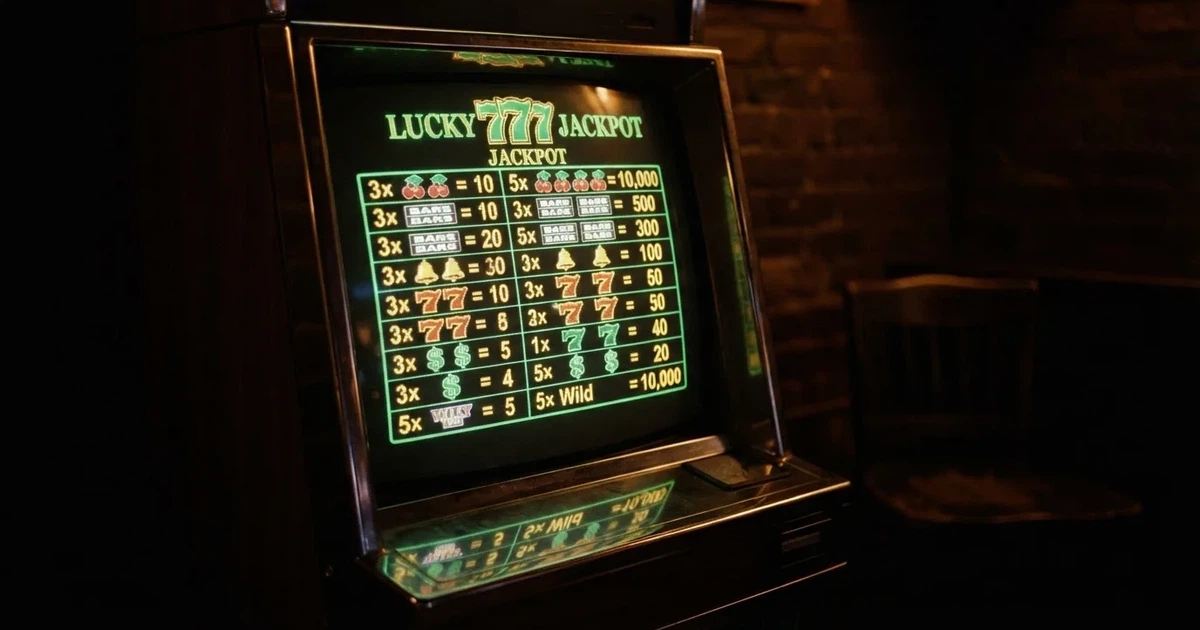
The mechanics of a modern video slot are denser than the three-reel machines that preceded them, and the difference is what the “video” in the name is buying. A 1976 Fortune Coin machine was a video adaptation of a three-reel mechanism, which is to say the same five-symbol layout with one payline, played on a screen instead of through a window. Today’s version runs five or more reels with fifty or more symbols per reel, producing combinations in the hundreds of millions, against the roughly 1,000 combinations a classic three-reel machine with ten symbols per reel could offer.
Three mechanics recur across the modern format. The first is the scatter symbol, which pays anywhere on the reels rather than on a fixed payline, and which usually triggers the free-spin round when three or more land in a single spin. The second is the wild symbol, which substitutes for other symbols to complete a winning combination, and which in many modern games expands to fill its reel or carries a multiplier on the win it completes. The third is the bonus round, a separate game mode triggered by a scatter combination — a pick-em screen, a wheel spin, a cascade mechanic — which typically returns the highest payout-per-spin in the game’s paytable.
The volatility of a modern video slot is the number that separates a game that pays small and often from a game that pays rarely and large. Two slots from the same provider, with the same theoretical return-to-player, can sit at opposite ends of the volatility scale, and the difference is whether the player experiences the session as a steady trickle of small wins punctuated by the occasional bonus round, or as long dry spells interrupted by occasional large payouts. Volatility is not a setting the player can change; it is a structural property of the game’s paytable.
A paytable, in plain terms, is the screen inside the game that lists every symbol, every combination that pays, and the credit value of each combination. It is the contract between the game and the player, and it is the only document in the casino that states what a spin is actually worth. Reading the paytable before a session is the single most useful five minutes a player can spend on a new game, and the difference between a 96% RTP game played at high volatility and a 94% RTP game played at low volatility is not visible in the lobby — it is visible only in the paytable.
The house edge of the surrounding casino games is a useful yardstick when the comparison shifts to table games, and it varies more than the slot math suggests. Baccarat’s house edge is 1.06% on the Banker bet, 1.24% on the Player bet and 14.36% on the Tie. Blackjack’s house edge under optimal play is about 0.28% on the liberal Las Vegas Strip rules and about 0.43% on Atlantic City rules. Craps offers 1.41% on Pass/Come and 1.36% on Don’t Pass/Don’t Come. None of these is the headline rate of a slot — but a modern video slot at 96% RTP sits at a 4% house edge, which is structural, not cyclical, and no play strategy changes it.
The 2026 ACMA picture: a running count of what has been blocked and why
The ACMA’s June 2026 blocking round asked Australian internet service providers to block 12 more illegal gambling websites in a single round: 7Signs, ChromaBet, Donbet, Duospin, Freshbet, Slots Gem, Jacks Club, Lucky Start, Pointsbetz, Spinrise, Vinyl Casino and Wildsino. That is one round of one regulator. The running total at the same date is the larger number: 1,751 illegal gambling and affiliate marketing websites blocked since the first blocking request in November 2019, with more than 230 unlicensed gambling services having left the Australian market since enforcement was strengthened in 2017.
The arithmetic the regulator’s own record supports is the prescribed calculation for this page. Taking the first blocking request at November 2019 and the 1,751 blocked sites reported at June 2026, the regulator has been blocking illegal gambling and affiliate sites for roughly 79 months at an average of around 22 sites per month, with a band that runs from a slow opening in 2019-2020 to a markedly faster pace from 2022 onward. The point of the figure is not the precise monthly rate — the pace has been uneven, and a single round in June 2026 alone accounted for 12 — but the order of magnitude. The Australian offshore market is not being slowly squeezed; it is being steadily cleared.
H2 Gambling Capital’s 2025 estimate places Australian losses to illegal gambling sites at about A$3.9 billion per year, with the share of gambling going through legal channels falling from 74% in 2021 to 64% in 2025. That 10-percentage-point shift is the gap the ACMA’s blocking programme is trying to close, and it is also the sum of money the offshore market continues to extract from Australian players while the legal market’s share erodes.
The formal-warning record on the ACMA’s website is the regulator’s most durable published output, and it is the public trail that names the operators the offshore shortlists are made of. The sequence runs: Dama N.V., May 2022, covering Bambet, Dazard, Level Up, Rocketplay, Wild Tornado and Cobra Casinos; Hollycorn N.V., September 2022, over Sky Crown and Blue Leo; EOD Code SRL, February 2025, over Instant Casino; Dama N.V., March 2025, over Woo Casino; Sterplay Holding Ltd, April 2025, over Casino Intense; Dama N.V., May 2025, over Spirit Casino; Bamboo Media, July 2025, over Ignition Casino, alongside Consolutetish S.R.L. over National Casino and Bizzo Casino in the same month; Pulsup Ltd, March 2026, over Rocketplay; Ryker B.V., April 2026, over Jackbit and CasinOK. Every one of those operator names recurs in the affiliate marketing pages that surface for a “best video slots Australia” search.
The Northern Territory regulator’s limited footprint is worth flagging in this context. The NTRWC oversees 52 online bookmakers — Sportsbet, Bet365, Ladbrokes among them — and runs without full-time staff, meeting once a month in Darwin. That is the regulator of legal Australian online wagering, and its reach is wagering only; it does not license, supervise or police any online casino product, because no such product is licensable in Australia.
The licensed alternative: EGMs in pubs, clubs and casino floors
The licensed Australian product closest to a “video slot” is the electronic gaming machine — the EGM, locally the “pokie” — and the machine count in each state and territory gives a sense of where the legal product is concentrated.
| State | Machine Count | Date Reported |
|---|---|---|
| New South Wales | 87,298 | June 2023 |
| Victoria | 26,380 | 2021–22 |
| Queensland | 21,122 | October 2023 |
| South Australia | 11,672 | September 2023 |
| ACT | 3,587 | November 2023 |
The historical arc is short. New South Wales legalised slot machines in 1956. By 2010 Australia operated an estimated 97,103 gaming machines outside casinos, a per-capita rate about five times that of the United States. The 1976 Fortune Coin machine — the first video slot — sat at the start of the format shift that produced the modern five-reel product, and Bally’s 1963 Money Honey, with its bottomless hopper and automatic payout of up to 500 coins without an attendant, was the engineering breakthrough that removed the attendant from the loop.
The on-floor experience is not identical to the offshore online version. The licensed EGM is a physical machine in a licensed venue, with a cash or ticket-in/ticket-out interface, a chair and a session length the venue controls. The return-to-player percentages are set by state and territory regulation and vary by jurisdiction and venue; New South Wales sets a minimum theoretical RTP of 85% on pub-style machines, with clubs required to return a minimum of 90%, and the casino floors in Sydney and Melbourne return higher percentages under their own regulatory frameworks. The Crown Melbourne and The Star Sydney floors carry table games alongside the EGMs, and the table-game side is its own regulated world: Crown Melbourne’s three baccarat variants — Traditional Baccarat, Crown Baccarat and 2 to 1 Baccarat — are approved table games under the Victorian Gambling and Casino Control Commission, which replaced the VCGLR as Victoria’s casino regulator on 1 July 2022.
For an Australian player who wants to play a modern video slot in a licensed setting, the EGM on a casino floor or in a club is the only legal option; online, however, there is no legal option, and the search results that suggest otherwise are made of brands the ACMA has acted against.
The offshore brands behind the search results: what the formal-warning record actually lists
| Brand | ACMA Action & Date | Operator | Subject Support |
|---|---|---|---|
| RocketPlay | Pulsup Ltd, March 2026; Dama N.V., May 2022 | Pulsup Ltd / Dama N.V. | no-data |
| Level Up Casino | Dama N.V., May 2022 | Dama N.V. | listings-only |
| Woo Casino | Dama N.V., March 2025 | Dama N.V. | no-data |
| Spirit Casino | Dama N.V., May 2025 | Dama N.V. | no-data |
| National Casino | Consolutetish S.R.L., July 2025 | Consolutetish S.R.L. | listings-only |
| Bizzo Casino | Consolutetish S.R.L., July 2025; TechSolutions, 2022 | Consolutetish S.R.L. / TechSolutions | no-data |
| Ignition Casino | Bamboo Media, July 2025 | Bamboo Media | no-data |
| Instant Casino | EOD Code SRL, February 2025 | EOD Code SRL | no-data |
| Jackbit | Ryker B.V., April 2026 | Ryker B.V. | no-data |
| Casino Intense | Sterplay Holding Ltd, April 2025 | Sterplay Holding Ltd | listings-only |
| Sky Crown | Hollycorn N.V., September 2022 | Hollycorn N.V. | no-data |
RocketPlay
The ACMA issued a formal warning to Pulsup Ltd over Rocketplay in March 2026. An earlier formal warning covered Rocketplay under Dama N.V. in May 2022. Rocketplay carries no licence to offer online casino games to a person in Australia; whatever licence badge the site displays is for a different jurisdiction. The site can be added to a blocking request to Australian ISPs without further notice, and a player balance on the site at that point has no Australian recourse. The brand sits in affiliate shortlists for “best video slots” because affiliate pages rank by commission structure, not by Australian legality. The mismatch between what affiliate pages call a top pick and what the ACMA’s record shows is the central feature of this market.
Level Up Casino
The ACMA issued a formal warning to Dama N.V. in May 2022, with Level Up among the six brands named in that action alongside Bambet, Dazard, Rocketplay, Wild Tornado and Cobra Casinos. The Dama N.V. operator has been a recurring subject of the ACMA’s enforcement — the same operator was warned again in March 2025 over Woo Casino and in May 2025 over Spirit Casino — which is the longest single trail in the regulator’s formal-warning record. Level Up’s listing on BGaming’s partner page is the kind of marketing listing that gives the brand an air of legitimacy it does not have under Australian law.
Woo Casino
The ACMA issued a formal warning to Dama N.V. over Woo Casino in March 2025. Woo Casino operates under the same operator that was warned in May 2022 over a six-brand cluster and in May 2025 over Spirit Casino; the recurrence of the same operator across multiple formal warnings is what an Australian reader should weigh, not the brand’s stated licence. The site’s bonus structure is not summarised here for the reason given above.
Spirit Casino
The ACMA issued a formal warning to Dama N.V. over Spirit Casino in May 2025. Same operator as the May 2022 cluster, the March 2025 Woo Casino warning and the earlier Rocketplay entry. The pattern across the Dama N.V. trail is the cleanest available evidence that operator-level enforcement in this market reaches the same company under different brand names, which is the structural feature of the offshore market the affiliate pages do not name.
National Casino
The ACMA issued a formal warning to Consolutetish S.R.L. over National Casino in July 2025. The same formal warning covered Bizzo Casino, and an earlier 2022 warning had covered Bizzo under TechSolutions (CY) Group Limited and TechSolutions Group N.V., so the brand has been through the regulator’s formal-warning process twice under different operators. The Wikipedia mention of National Casino is the kind of listing-only reference that gives an offshore brand a search presence it does not have regulatory standing for.
Bizzo Casino
The ACMA issued a formal warning to Consolutetish S.R.L. over Bizzo Casino in July 2025, and an earlier formal warning to TechSolutions (CY) Group Limited and TechSolutions Group N.V. covered Bizzo Casino in 2022. Two formal warnings under two different operators is a heavier record than the single-warning brands further down this page, and it is worth weighing for that reason.
Ignition Casino
The ACMA issued a formal warning to Bamboo Media over Ignition Casino in July 2025. Ignition is one of the longer-running offshore brands targeting Australian-facing traffic, and the ACMA’s action is the regulator’s first formal warning against Bamboo Media in the published record.
Instant Casino
The ACMA issued a formal warning to EOD Code SRL over Instant Casino in February 2025. Instant Casino is among the more heavily marketed offshore brands in the Australian-facing affiliate space, and the ACMA’s February 2025 warning predates several of the more recent blocking rounds.
Jackbit
The ACMA issued a formal warning to Ryker B.V. over Jackbit and CasinOK in April 2026. Jackbit is the most recent of the brands in this list to receive a formal warning, and the action covers two sites under the same operator in a single warning — the regulator’s two-for-one pattern that has appeared in earlier actions as well.
Casino Intense
The ACMA issued a formal warning to Sterplay Holding Ltd over Casino Intense in April 2025. Casino Intense carries listings on Australian-facing reference pages, which is the kind of search presence that places a brand in front of a reader without any Australian regulatory standing behind it.
Sky Crown
The ACMA issued a formal warning to Hollycorn N.V. over its Sky Crown and Blue Leo casino services, with the formal warning published by the ACMA in September 2022. Sky Crown is the longest-published formal warning in the ACMA’s current record on this list, and Hollycorn N.V. has been a recurring operator in the regulator’s enforcement output.
How an honest shortlist of “best video slots” actually sorts in this market
A shortlist that sorts by what the Australian market actually offers has three tiers, and the tiers are not equivalent.
The first tier is the licensed EGMs in pubs, clubs and casino floors. The machine count in each state and territory is published and current, the regulatory framework is in place, the consumer protections (BetStop, the National Gambling Helpline, venue-level responsible-gambling officers) apply, and the spend is in AUD through regulated payment routes. The product is a physical machine in a licensed venue, not an online experience.
The second tier is the licensed Australian online wagering market — the Northern Territory bookmakers and the state TABs — which offers sports and race wagering under Australian licence but does not offer online casino games or online pokies, because no such product is licensable. The “video slots” phrase does not describe this tier’s product, and an Australian reader looking for slots will not find them here.
The third tier is the offshore market, which is where the affiliate shortlists for “best video slots Australia” draw almost all of their names. Every brand on those shortlists is an operator the ACMA has investigated or warned, or an operator under the same corporate group as one that has been warned. The product is offered to Australians in breach of the Interactive Gambling Act 2001, the consumer protections are absent, and the site can be blocked with a player balance on it.
The honest sorting, then, is not “best offshore site”. It is “do you want the licensed physical product, the licensed wagering product, or the prohibited offshore product, and what does each one cost you in money and in protection”. The affiliate shortlists erase that distinction. This page is built to put it back.
A reader who has already deposited with an offshore site and wants to step back has a clear path: contact the National Gambling Helpline on 1800 858 858, register with BetStop if they intend to use Australian-licensed wagering services, and tell their bank to block further card transactions to the operator if their bank’s fraud team will accept the request. None of those steps undoes a loss. They make the next loss less likely.
Frequently asked questions
What makes a video slot different from a classic three-reel pokies machine?
A classic three-reel pokie has three spinning reels with around ten symbols per reel and one payline, producing roughly 1,000 possible combinations and a top prize that pays a fixed multiple of the stake. A modern video slot runs five or more reels with fifty or more symbols per reel, offers multiple paylines, scatter pays, wild substitutions, free-spin rounds and bonus games, and can produce odds as high as 300 million to one against the top combination. The “video” in the name refers to the screen-based presentation that replaced the mechanical reels starting with the 1976 Fortune Coin machine.
Do video slots typically include bonus rounds that classic machines don’t have?
Yes. A bonus round is a separate game mode triggered by a scatter-symbol combination — usually three or more scatters landing in a single spin — and it returns the highest payout-per-spin in the game’s paytable. The bonus round on a modern video slot can take the form of a free-spin ladder with increasing multipliers, a pick-em screen, a wheel spin, a cascade mechanic or a hold-and-spin feature with locked symbols. Classic three-reel machines do not carry a separate bonus round; the top payout is the payline combination itself.
Are video slots on a mobile browser the same game as the desktop version?
Yes. The HTML5 codebase that replaced the older Flash build runs natively in a mobile browser without an app download, and the game on a phone is the same game as on desktop — same RTP, same volatility, same paytable. The interface is reformatted for the touchscreen, but the underlying math and feature set are unchanged. A dedicated app is sometimes offered by an offshore operator and is usually a thinner wrapper around the same browser-based game with push notifications and biometric login on top.
How many paylines does a typical modern video slot use?
There is no single answer because the payline structure varies across games and providers, but a typical modern video slot runs between 20 and 50 paylines, with some games offering 243 ways-to-wins, 1,024 ways-to-wins, or the cluster-pays mechanic that pays on groups of adjacent symbols rather than fixed lines. The number of paylines is set by the game’s paytable and is fixed for the session; a player chooses only how many lines to activate and the stake per line. The total stake per spin is paylines active × stake per line.
Why do video slots vary in volatility even within the same provider’s catalogue?
Volatility is a structural property of the paytable, set by how the game’s prize money is distributed across its combinations. A low-volatility game returns most of its prize money through frequent small wins, so the session reads as a steady trickle of payouts with occasional bonus rounds. A high-volatility game returns most of its prize money through rare large wins, so the session reads as long dry spells punctuated by occasional large payouts or bonus rounds. Two games from the same provider with the same theoretical RTP can sit at opposite ends of the volatility scale, and the difference is visible only in the paytable, not in the lobby.
Which Australian state has the most licensed gaming machines outside casinos?
New South Wales, by a wide margin. NSW reported 87,298 pokies-style machines outside casinos in June 2023, more than the next three states combined. Victoria reported 26,380 in 2021-22, Queensland 21,122 in October 2023, South Australia 11,672 in September 2023 and the ACT 3,587 in November 2023. The size of the NSW fleet reflects the state’s earlier legalisation of slot machines in 1956 and the subsequent expansion of the pub and club network under the state’s gaming-machine framework.