
Big Red pokies online in Australia: what’s on offer, what’s prohibited, and what’s been warned
A punter searching for an online version of Big Red runs into a wall on the first page of results, and the wall is not technical, it is statutory. The Big Red pokies theme is an Aristocrat design found on licensed floors in Australian pubs, clubs and casinos. Its online equivalent is a prohibited interactive gambling service under the Interactive Gambling Act 2001, and no Australian licence authorises anyone to provide it. This page lays out what that prohibition covers, who has been warned for offering it, where the licensed machines still operate, and why the offshore sites keep showing up in Australian search results anyway.
Current as of 29 October 2026, verified against the Australian Communications and Media Authority (ACMA) register of formal warnings and the Interactive Gambling Act 2001.
Table of Contents
- The prohibition, in plain terms
- What the ACMA has actually done
- Where licensed machines still operate
- The mechanics of a Big Red-style pokies theme
- Offshore sites the ACMA has warned
- Where this leaves a player
- Payment routes and what they signal
- Reform on the horizon
- Tax and what a recreational player needs to know
- A reader’s framework for the next search
- Looking ahead
- Frequently asked questions
The prohibition, in plain terms
The Interactive Gambling Act 2001, tightened by the Interactive Gambling Amendment Act 2017, makes it an offence to provide online casino games, online pokies or in-play betting to a person physically in Australia. Wagering on races and sporting events placed before the event is licensed and lawful; lotteries and keno are licensed and lawful. Online casino games and online pokies are not, under any state or territory regime. The minimum age is 18.

The law targets the provider. An individual player is not prosecuted for using an offshore site. The site itself can be investigated by the ACMA, issued a formal warning, referred to the Australian Federal Police, or have its domain blocked at the internet-service-provider level. What an offshore operator offers, by contrast, is no Australian consumer protection: no local complaints body, no recourse when a withdrawal stalls, and no guarantee the site will still resolve when the next blocking round lands.
In short: licensed Australian wagering is one market. Licensed Australian casino gaming, on a screen at home, is not a market at all.
What the ACMA has actually done
The ACMA’s enforcement numbers, taken together, are the page’s clearest evidence that the prohibition is being policed rather than left on the books.

The blocking record
According to the ACMA as reported in June 2026, a total of 1,751 illegal gambling and affiliate marketing websites had been blocked since the first blocking request in November 2019. More than 230 unlicensed gambling services had left the Australian market since enforcement was strengthened in 2017. A round reported on 26 June 2026 asked Australian internet service providers to block 12 more sites in one go: 7Signs, ChromaBet, Donbet, Duospin, Freshbet, Slots Gem, Jacks Club, Lucky Start, Pointsbetz, Spinrise, Vinyl Casino and Wildsino.
A simple way to read that: between November 2019 and June 2026, roughly 1,751 blocking requests have been issued, which works out at a running average close to 263 requests a year across the period, or about 22 a month if the figure were spread evenly. The spread is not even — some months carry a dozen domains, others carry a single high-profile brand — but the order of magnitude is what matters. The ACMA is not issuing an occasional warning and calling it done; it is sustaining an enforcement pipeline that, at the count above, processes one Australian-facing offshore site every couple of working days on average, with the rate rising in the most recent reporting year.
The same picture shows up in the economic estimates: H2 Gambling Capital’s 2025 report puts Australian losses to illegal gambling sites at around A$3.9 billion a year, with the share of gambling going through legal channels falling from 74% in 2021 to 64%. The block list and the money flow point in the same direction.
The formal-warning register
The ACMA also issues formal warnings, which sit alongside blocking requests in its public register. Each warning names the operating company and the brand, the statute breached, and the date. The warnings below are the ones that touch this page’s subject — the offering of online casino products, including pokies themes, to people in Australia.
- In May 2022, the ACMA warned Dama N.V. covering six casino brands: Bambet, Dazard, Level Up, Rocketplay, Wild Tornado and Cobra Casinos.
- In March 2025, the ACMA issued a further warning to Dama N.V. over Woo Casino. In May 2025, the same operator was warned over Spirit Casino.
- In July 2025, the ACMA warned Bamboo Media over Ignition Casino, and Consolutetish S.R.L. over National Casino and Bizzo Casino. Bizzo had already been the subject of a 2022 warning to TechSolutions (CY) Group Limited and TechSolutions Group N.V.
- In February 2025, the ACMA warned EOD Code SRL over Instant Casino.
- In April 2025, the ACMA warned Sterplay Holding Ltd over Casino Intense.
- The ACMA issued a formal warning to Hollycorn N.V. over its Sky Crown and Blue Leo casino services, as published in September 2022.
- In March 2026, the ACMA warned Pulsup Ltd over Rocketplay.
- In April 2026, the ACMA warned Ryker B.V. over Jackbit and CasinOK.
Two of those names recur across warnings. Dama N.V. has been warned three times across three years and five brands, with each brand picking up its own row in the register. TechSolutions appears under Bizzo twice, once in 2022 and again in 2025 under a related operator name. The pattern is what an enforcement register looks like when the same corporate vehicle moves between brands faster than the regulator can clear the docket.
Where licensed machines still operate
The licensed side of the market has its own shape, and a separate regulator in each state and territory. The most useful starting points are the counts and the rules, because they are what determines whether a venue near you has any pokies at all.
Machine counts by jurisdiction
Electronic gaming machines — pokies — operate in every Australian state and territory. Each jurisdiction separately regulates their design and operation. The headline figures, drawn from public regulator and census data, are:
- New South Wales: 87,298 gaming machines outside casinos across 2,195 venues (June 2023), with player losses of A$8.18 billion in 2022–23.
- Victoria: 26,380 machines outside Crown Casino across 488 venues (2021–22), under a statewide cap of 30,000.
- Queensland: 21,122 gaming machines operating in 351 venues (October 2023).
- Western Australia: poker machines were banned in pubs and clubs when Crown Perth opened in 1985. Crown Perth’s own machine floor has grown from about 200 machines at opening to roughly 2,500, all approved by the state’s Gaming and Wagering Commission.
The aggregate gives a sense of scale. In 2020–21, Australians bet almost A$150 billion through gaming machines and lost A$12.18 billion on them. Australia has about 3% of the world’s pub and club poker machines with 0.3% of the global population, which is roughly ten times the per-capita machine density of the world average.
Return-to-player floors
The minimum return-to-player a poker machine must deliver is set jurisdiction by jurisdiction:
- New South Wales: 85%.
- Northern Territory: 85%.
- Queensland: 85%.
- Victoria: 85% generally, 87% at Crown Melbourne.
- Australian Capital Territory: 87%.
- Tasmania: 87%.
- South Australia: 87.5%.
- Western Australia: 90%.
The 85% floor in NSW is the lowest in the country, and it is the one that does the most work in the headline loss figures. The 90% floor in Western Australia sits at the other end of the spectrum, although it applies to a much smaller machine population concentrated at Crown Perth. A punter who treats those numbers as the same shape is missing the point: each jurisdiction sets its own floor and each venue sits within its own state-level rules, so the experience of “playing pokies” differs by postcode.
Tasmania’s pre-commitment reform
Tasmania held a monopoly licence over all of its poker machines through the Federal Group from 1968. Legislation passed in November 2021 ended that monopoly, with oversight of the machines moving to the Tasmanian Liquor and Gaming Commission. Tasmania also planned nation-leading mandatory pre-commitment cards for its machines, though implementation was delayed until late 2025. The pre-commitment system, when it lands, forces a punter to set a loss and time budget before play begins, and a venue that lets a customer play above their own pre-set budget is in breach. It is the most consequential state-level pokies reform of the decade and the one the rest of the country is watching.
How a venue’s floor is approved
Under section 66 of the NSW Casino Control Act 1992, a casino operator must not permit a game to be played unless the game and its rules are approved by the regulator, and the operator must make a copy of the approved rules available to patrons on request. The same shape applies across other casino licences: each table game and each machine theme is on a regulator’s approved list, not on the operator’s own say-so. That is why an Aristocrat design like Big Red appears on a venue floor only after the state regulator has signed off on the maths, the artwork and the rules — and why the same design cannot appear on an offshore site without an Australian licence that does not exist.
The mechanics of a Big Red-style pokies theme
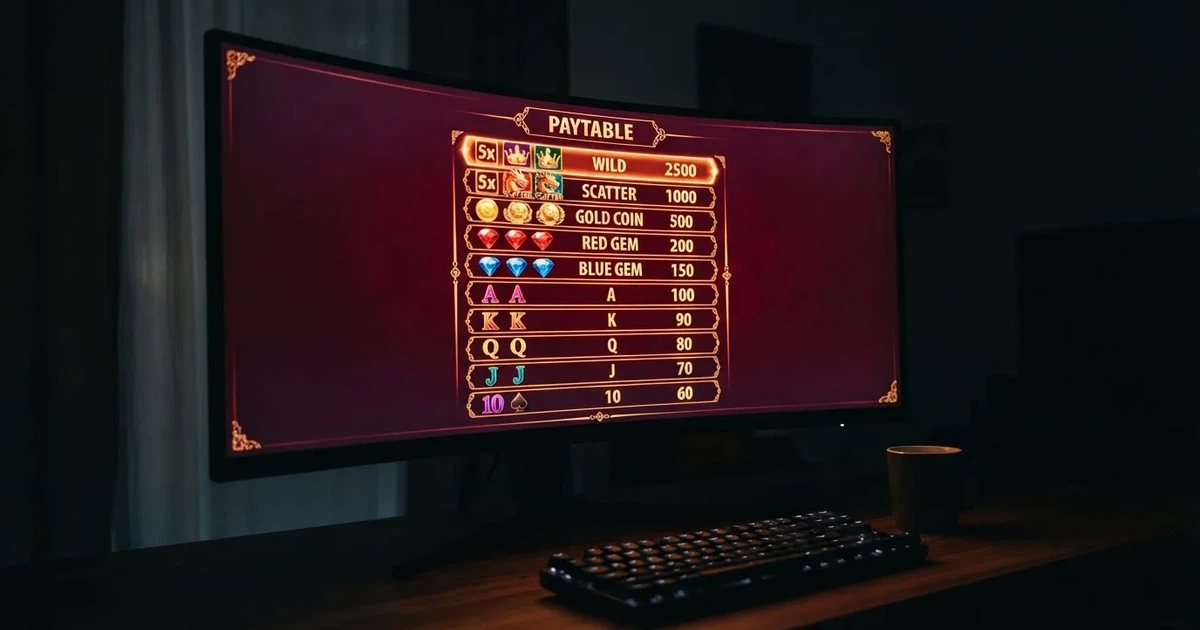
A reader who has played the licensed floor version recognises the shape even when they have never seen the paytable. Big Red is an Aristocrat theme built around Australian fauna — kangaroos, dingoes, waratahs, boars — with a wild symbol, a scatter and a free-spins feature. The licensed floor version sits in pubs and clubs across the eastern states, where it has been a fixture of the high-turnover local since the late 2000s.
What makes the theme distinctive
The mechanics are conventional Aristocrat five-reel video pokies: line wins across configurable paylines, a wild that substitutes for other symbols, a scatter that triggers free games, and a feature round that pays out at an enhanced rate during the bonus. The licensed paytable sits inside the regulator’s RTP floor for the relevant state — the New South Wales floor at 85%, the Queensland floor at 85%, and so on. There is no public RTP figure for Big Red on the licensed floor; the floor version is approved as compliant with the state minimum, not as a specific percentage a punter can read off the machine.
Why an offshore version is not a substitute
The sites that advertise Big Red-style games to Australian visitors host a clone of the theme, sometimes under the same name, sometimes under a near-name. The clone’s maths is not the Aristocrat maths; the clone’s RTP is whatever the offshore operator’s game provider publishes; and the clone’s licensing is whatever the offshore operator’s Curaçao or Anjouan paperwork says. None of that is Australian supervision. A punter who plays the offshore clone is not playing the licensed Big Red — they are playing a game that borrows the imagery and runs on a different rule book.
The volatility question is sharper on the offshore clone than on the licensed floor. Without a public paytable to compare, the player has no way to read the bonus frequency or the line-hit frequency before they wager. The licensed floor machine carries an approved paytable on the screen or available on request; the offshore clone’s paytable is whatever the operator has chosen to publish.
Offshore sites the ACMA has warned
The eleven brands below are the ones the ACMA has named in formal warnings over offering prohibited interactive gambling services to Australians. They are listed here because the ACMA has acted against them, not because they are places to play. Each entry states the operator and date as the ACMA published them.
RocketPlay
The ACMA warned Pulsup Ltd over Rocketplay in March 2026. The same brand was the subject of an earlier warning to Dama N.V. in May 2022. Two warnings across four years is a record, not a coincidence; the regulator’s view is that Rocketplay has kept advertising prohibited products to Australian visitors despite the first action. Whatever the site displays in its footer about its offshore licence, no Australian licence authorises online casino games, and the ACMA’s stated position is that the warning stands until the conduct stops.
Level Up Casino
The ACMA warned Dama N.V. over Level Up Casino in May 2022. The site advertises pokies themes to Australian visitors using a Curaçao-issued operator licence. The theme catalogue lists a number of BGaming titles, which is the only support that the public listings give for the brand’s game library; the ACMA register has no further action recorded against the Level Up name since 2022.
Woo Casino
The ACMA warned Dama N.V. over Woo Casino in March 2025. The site advertises itself as an international casino with a pokies library that targets several regulated markets. The 2025 warning is the ACMA’s first action against the Woo Casino name, and it sits alongside the same operator’s actions over Rocketplay and other Dama N.V. brands.
Spirit Casino
The ACMA warned Dama N.V. over Spirit Casino in May 2025, two months after the Woo Casino warning. The two warnings, three months apart, are how the regulator signals that it considers the parent company’s behaviour a continuing pattern rather than a one-off breach.
National Casino
The ACMA warned Consolutetish S.R.L. over National Casino in July 2025. National Casino appears in third-party listings as a multi-provider pokies and table-game site. No further action under the National Casino name appears in the register after July 2025.
Bizzo Casino
The ACMA warned Consolutetish S.R.L. over Bizzo Casino in July 2025. Bizzo was the subject of an earlier warning in 2022 to TechSolutions (CY) Group Limited and TechSolutions Group N.V., so the brand carries two ACMA actions under two different operating-company names — the shape a regulator’s register takes when the operator changes its corporate vehicle faster than the warnings can be cleared.
Ignition Casino
The ACMA warned Bamboo Media over Ignition Casino in July 2025. Ignition has historically marketed to Australian visitors through poker and casino verticals. The July 2025 warning is the first ACMA action under the Bamboo Media operating name.
Instant Casino
The ACMA warned EOD Code SRL over Instant Casino in February 2025. The site advertises a fast-payout casino product targeting several international markets. The warning is the ACMA’s stated basis for treating Instant Casino as a prohibited interactive gambling service for Australian customers.
Jackbit
The ACMA warned Ryker B.V. over Jackbit in April 2026. Jackbit is a crypto-first casino and sportsbook, and the warning is one of several recent actions against operators that combine wagering-style products with casino verticals under a single offshore licence.
CasinOK
The ACMA warned Ryker B.V. over CasinOK in April 2026, in the same action that covered Jackbit. The shared operator is the point of the warning — Ryker B.V. — and the ACMA treats the two brands as a single line of conduct.
Casino Intense
The ACMA warned Sterplay Holding Ltd over Casino Intense in April 2025. Casino Intense appears in third-party reporting alongside Australian venue coverage, which is the listings-side reference the public record carries for the brand.
Sky Crown
The ACMA warned Hollycorn N.V. over its Sky Crown and Blue Leo casino services, as published in September 2022. Sky Crown is one of two brands named in the same action; the warning treats them as a single line of conduct.
Where this leaves a player
A punter who searches for an online version of Big Red and arrives at one of the sites above is being shown a prohibited product. The page does not recommend any of those brands; the brands are listed because the ACMA itself has acted against them. The choice the prohibition forces is between the licensed Australian wagering market (which does not carry the Big Red theme as an online product) and the offshore market (which the regulator is actively shutting out). The middle ground — an Australian-licensed online casino with pokies — does not exist in the current statute.
The single biggest practical risk of the offshore route is not the marketing or the bonuses. It is the withdrawal. A site that takes a deposit, lets a punter play, and refuses to pay out has no Australian complaints body the punter can turn to, and the ACMA’s enforcement actions do not include recovering individual balances. A blocking round that names a brand the punter is sitting on can strand the balance mid-session.
Payment routes and what they signal
The licensed Australian wagering market takes a closed set of deposit routes: debit card, bank transfer, PayID/Osko and BPAY. Credit cards, credit-related products and digital currency have been banned as payment for licensed online wagering since 11 June 2024, with penalties of up to $247,500 for operators that breach the rule. A site that asks an Australian customer for a credit card or a crypto deposit is, by the deposit method alone, signalling that it is operating outside the Australian rules.
An offshore casino running on a Curaçao or Anjouan licence will typically accept crypto, e-wallet and sometimes credit-card deposits. The deposit method is a faster read than the footer disclaimer: if the site asks for a credit card or a Bitcoin transfer from an Australian IP, the rest of the licence text does not change the underlying point.
Reform on the horizon
The Interactive Gambling Amendment (Gambling Reform) Bill 2026 passed Parliament on 19 August 2026. Its advertising and inducement measures commence 1 January 2027. The bill is law with a start date, not law in force at the time of writing, so a page in 2026 carries it as enacted-but-not-yet-operative rather than as a binding rule. When the inducement measures commence, the prohibition on offering inducements to open or use an Australian-facing wagering account extends further into the advertising space, and offshore operators advertising to Australians will face a wider set of prohibitions to navigate. The 1 January 2027 start date is what to watch.
Tax and what a recreational player needs to know
Gambling winnings of a recreational player are not assessable income under section 6-5 of the Income Tax Assessment Act 1997, and losses are not deductible. The exception is a person who carries on a business of gambling, which is a much narrower category than “plays regularly” — the ATO’s published guidance treats professional gambling as a business with the same record-keeping obligations as any other. For a recreational punter on either side of the prohibition, the tax position is the same: winnings are not income, losses are not deductions, and any refund or credit from the operator is part of the gambling turnover rather than assessable receipts.
A reader’s framework for the next search
Three checks turn a Big Red search result from a marketing page into something a punter can act on:
- Is the site offering online casino games or online pokies to a person in Australia? If yes, it is offering a prohibited interactive gambling service regardless of what its footer says.
- Is the deposit method a debit card, bank transfer, PayID/Osko or BPAY? If the site is asking for a credit card or a crypto deposit, it is operating outside the Australian rules.
- Is the brand on the ACMA’s register of formal warnings or blocking requests? If yes, the regulator has already formed a view that the brand is offering prohibited services to Australians.
The first check covers the statute; the second covers the payments regulation; the third covers the regulator’s own record. Each one alone is informative, and the three together are how the prohibition is enforced in practice.
Looking ahead
The enforcement record is what makes the prohibition more than a line in the statute book. 1,751 blocked sites since November 2019, 230 services having left the Australian market since 2017, and a register of formal warnings that recurs across the same operating companies faster than the warnings can be cleared — those are the working numbers. The pre-commitment reform in Tasmania, when it lands in late 2025, will move the licensed floor further toward player-set loss budgets. The Interactive Gambling Amendment (Gambling Reform) Bill 2026 will, from 1 January 2027, narrow the inducement space around Australian-facing wagering accounts.
For a punter who wants to play a Big Red-style theme, the Australian-licensed option is the venue floor, with a regulator-approved paytable and a state-set RTP floor. For a punter who wants to play it online, the law does not authorise that market, and the ACMA’s record shows the regulator is not leaving the gap open.
Frequently asked questions
What style of pokies theme does “Big Red” typically refer to?
Big Red is an Aristocrat theme built around Australian fauna — kangaroos, dingoes, waratahs, boars — with a standard five-reel video pokies layout, a wild symbol, a scatter and a free-spins feature. It is one of the most recognised Aristocrat designs on the Australian pub and club floor, and most readers will have seen the imagery even if they have not seen the licensed paytable.
Can an online version of a Big Red-style pokies game be legally played by someone in Australia?
No. Under the Interactive Gambling Act 2001, as tightened by the 2017 amendments, online casino games and online pokies cannot be licensed for Australian customers. The licensed version of Big Red sits on venue floors in pubs, clubs and casinos; the offshore versions that advertise the theme to Australian visitors are offering a prohibited interactive gambling service.
Are classic Australian-themed pokies machines still found in licensed pubs and clubs?
Yes. Aristocrat themes, including Big Red, are still on the floor in NSW, Queensland, Victoria, Tasmania, the ACT and the Northern Territory. The licensed machine population sits at roughly 87,298 machines outside casinos across 2,195 venues in NSW alone (June 2023), with a separate state-set RTP floor applying in each jurisdiction.
Why do offshore sites keep advertising Big Red-style games to Australian visitors?
Because the offshore market is large enough to be worth the risk. H2 Gambling Capital’s 2025 report estimates Australian losses to illegal gambling sites at around A$3.9 billion a year, and the share of gambling going through legal channels fell from 74% in 2021 to 64%. The economic draw is what keeps the marketing coming, and the ACMA’s blocking record is what keeps the regulator’s response visible.
Does the volatility of a Big Red-style machine differ from newer video slot themes?
The licensed floor version’s volatility is whatever the regulator-approved paytable carries, and a venue must make the approved rules available on request. The offshore clone’s volatility is whatever the offshore game provider publishes — which is typically less than the licensed version’s documented behaviour. Without a public paytable to compare, a punter cannot read the bonus frequency or the line-hit frequency of the clone before wagering.
How can someone confirm whether a specific pokies theme is on a licensed Australian venue’s floor?
The state regulator’s approved games list is the first place to check, and a venue is required to make its approved rules available on request. Under section 66 of the NSW Casino Control Act 1992, a casino operator must not permit a game to be played unless the game and its rules are approved by the regulator, and a copy of the approved rules must be available to patrons on request. The same shape applies across the other casino-licence regimes.