
Why An Australian Reader Can’t Actually Sign Up To A Microgaming Casino
A punter typing “best microgaming online casinos australia 2026” expects a shortlist they can join tonight. The honest answer is that there is no such shortlist, and the reason sits in a single statute: the Interactive Gambling Act 2001, tightened by amendments in 2017, makes it an offence to provide online casino games — including Microgaming-powered slots and tables — to anyone physically in Australia. No state or territory issues a licence for it. The brands the search returns are offshore, the ACMA has warned most of them by name, and the page below explains what each warning means, what BetStop actually covers, and where the lawful alternative lies.
Current as of 29 October 2026, verified against the ACMA’s formal-warning register and the Interactive Gambling Act 2001.
Table of Contents
- The Law Behind The Empty Shortlist
- What The Blocking Tally Actually Adds Up To
- What The ACMA’s Warning Register Looks Like
- BetStop, The Helpline And The Offshore Gap
- How Money Moves When The Site Is Offshore
- What The Bonus Word Actually Costs
- Microgaming On A Phone Screen
- The Games Under The Microgaming Name
- The Brands The ACMA Has Acted Against
- What The Punter Can Actually Do In Australia
- Tax, Age And The Smaller Print
- Reading The Picture In 2026
- Frequently Asked Questions
The Law Behind The Empty Shortlist
The Interactive Gambling Act 2001 prohibits “prohibited interactive gambling services” — online casino games, online pokies and in-play betting — supplied to a person in Australia. The Interactive Gambling Amendment Act 2017 sharpened the definitions and gave the ACMA the power to issue formal warnings, refer matters to the Department of Infrastructure and direct Australian internet service providers to block offending sites. What is licensable is wagering on races and sporting events placed before the event, lotteries and keno. Online casino is not. Minimum age across every channel is 18.
The consequence for a reader who arrives at this search is straightforward: an Australian-facing page that promises a “best of” Microgaming list is, by definition, promising access to a prohibited product. A brand may display a Curaçao or Malta licence on its footer; that licence permits the operator to run the site where the licence was issued, not to take Australian customers. The IGA does not care what the footer says. The provider is the one on the wrong side of the law — the individual punter is not prosecuted — but the offshore site gives the reader no Australian consumer protection, no local complaints body and no enforceable right to a withdrawal that the operator decides to refuse.
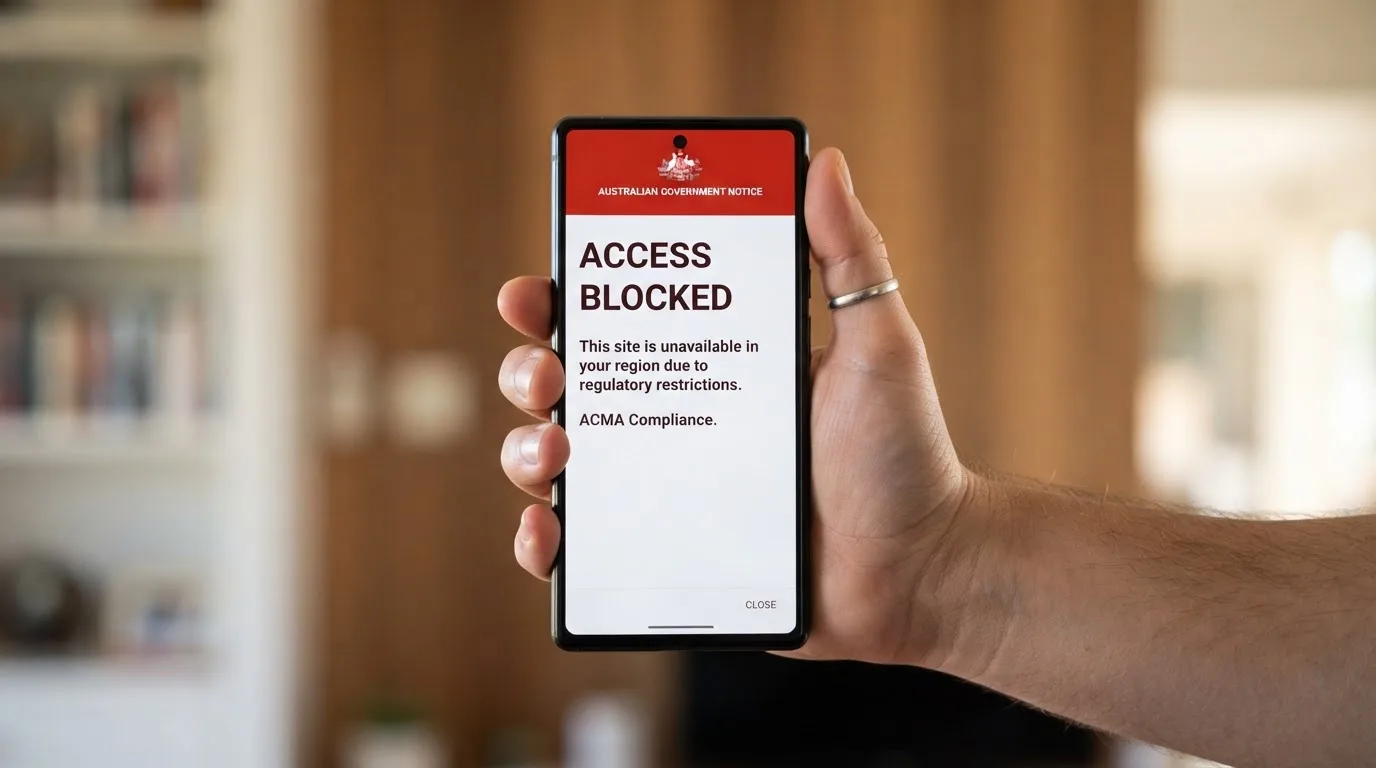
The regulator is the ACMA, the Australian Communications and Media Authority. It investigates complaints, issues formal warnings under section 254 of the Act, and since November 2019 has had the power to ask ISPs to block illegal services at the network level. The warnings are published on the ACMA’s own site with the operator name and the date — they are the public record a reader can check before trusting any brand the search engine surfaces.
What The Blocking Tally Actually Adds Up To
The arithmetic this page owes the reader is a single band, not a single number. As of June 2026, the ACMA’s running total sat at 1,751 illegal gambling and affiliate websites blocked since the first blocking request went out in November 2019. Over roughly six and a half years, that is an average of about 270 blocks a year — but the pace has not been steady. The 12-site round reported on 26 June 2026 alone (7Signs, ChromaBet, Donbet, Duospin, Freshbet, Slots Gem, Jacks Club, Lucky Start, Pointsbetz, Spinrise, Vinyl Casino and Wildsino) shows that a single quarterly enforcement action can take out a dozen at once, while other quarters add only two or three. State the band as it is: somewhere between a slow drip and a dozen-at-a-time sweep, with the ACMA choosing the cadence rather than the calendar.
The same June 2026 figure comes with a second number worth keeping beside it: more than 230 unlicensed gambling services have left the Australian market since enforcement was strengthened in 2017. The distinction matters. A blocked site is still resolvable through some VPNs and offshore mirrors; a site that has left the market has stopped accepting Australian sign-ups at the payment-processor level and is harder to reach. The blocking register is the visible half of the picture; the withdrawal from the market is the quieter half.
The cost of this drift, in dollars, lands on the punter rather than the regulator. H2 Gambling Capital’s 2025 report puts Australians’ annual losses to illegal gambling sites at roughly A$3.9 billion. In the same report, the share of gambling going through legal channels fell from 74% in 2021 to 64%. Two figures that should be read together: as enforcement tightens, more of the spend is being pushed onto sites that have no obligation to a complaints body, and the dollar volume of unresolved complaints rises with it.
What The ACMA’s Warning Register Looks Like
A formal warning is not a fine and it is not a prosecution. It is a published notice that says, in effect, “we have formed the view that you are providing a prohibited service to Australians; if you do not stop, we will refer the matter to the Department of Infrastructure or move to a blocking order.” The ACMA publishes every warning with the operator’s corporate name and the date. The list below is the register’s intersection with Microgaming-casino marketing in Australia, taken in publication order:
| Brand | ACMA action and date | Operator named by the ACMA | Subject support |
|---|---|---|---|
| The Slotfather, Good Girl Bad Girl 2 | Listed on the ACMA register via parent brands below; no standalone warning for these titles | — | — |
| RocketPlay | Formal warning, March 2026 | Pulsup Ltd | — |
| Level Up Casino | Formal warning, May 2022 | Dama N.V. | Wazdan listings page references Level Up |
| Woo Casino | Formal warning, March 2025 | Dama N.V. | — |
| Spirit Casino | Formal warning, May 2025 | Dama N.V. | — |
| National Casino | Formal warning, July 2025 | Consolutetish S.R.L. | Betsoft, Pragmatic Play and Wikipedia listings reference National Casino |
| Bizzo Casino | Formal warning, July 2025 (earlier 2022 over TechSolutions) | Consolutetish S.R.L. | — |
| Ignition Casino | Formal warning, July 2025 | Bamboo Media | — |
| Instant Casino | Formal warning, February 2025 | EOD Code SRL | — |
| Jackbit | Formal warning, April 2026 | Ryker B.V. | — |
| Casino Intense | Formal warning, April 2025 | Sterplay Holding Ltd | 1spin4win, Wikipedia and the UK Gambling Commission reference Casino Intense |
| Sky Crown | Formal warning, September 2022 | Hollycorn N.V. | — |
Two things to take from the register. The first is that the corporate name on the warning is often not the brand name on the site — Dama N.V. has been warned over six brands in a single May 2022 action, and Consolutetish S.R.L. carries two more. A punter who has only ever seen the brand name has no easy way to map back to the entity the ACMA wrote to. The second is that warnings accumulate. Bizzo Casino was first warned in 2022 over TechSolutions and warned again in July 2025; RocketPlay’s first warning under Dama N.V. came in May 2022 and a second under Pulsup Ltd came in March 2026. A second warning is a strong signal that the operator did not change its practice after the first.
The “Subject support” column is where the brand-side evidence lands. Where a provider or regulator publicly lists the brand on its own page, the listing is recorded here as a listings-only data point — that is, what those pages say, not an independent verification that Microgaming content is served. Where the column is empty, the research did not surface a third-party listing linking the brand to the subject of this page, and the brand is not presented here as either confirmed or denied on that point.
BetStop, The Helpline And The Offshore Gap
The player-protection layer a reader in Australia can actually use has two pieces, and a third piece it does not.
BetStop, the National Self-Exclusion Register, went live in August 2023. It binds Australian-licensed online and phone wagering services — sportsbooks and the like — to honour a self-exclusion request made by a punter. If a punter signs up to BetStop, every licensed Australian operator is required to close the account, refuse new account openings and stop marketing. The piece it does not cover is offshore casino. An offshore casino is not connected to BetStop, has not agreed to honour an Australian self-exclusion request, and a punter on BetStop can still open an account with one. The register’s protection stops at the country’s licensed border.
The second piece is the support line. Gambling Help Online is free, 24/7, with web chat, and the National Gambling Helpline is 1800 858 858. Both are funded to operate across Australia. They are not bound to the offshore brand a punter is playing with either, but they are the right place to start if a punter has decided the play has gone on too long — they will work through the mechanics of self-exclusion with the punter and refer them to financial counselling if that is what is needed.
The third piece — the one the offshore site does not give the reader — is recourse. If a licensed Australian operator refuses a withdrawal, the punter can complain to the regulator. If an offshore operator refuses one, the punter can write to a Curaçao or Anjouan licence holder and wait. There is no Australian complaints body with the power to make the offshore operator pay. The IGA targets the provider; it does not set up a refund desk for the punter.
How Money Moves When The Site Is Offshore
A licensed Australian wagering service, after 11 June 2024, cannot accept credit cards, credit-related products or digital currency as payment. Penalties for operators that do run to A$247,500. The deposit routes that are still open are debit card, bank transfer, PayID/Osko and BPAY. The point of that list is the inverse: a casino asking an Australian punter for a credit-card deposit or a crypto transfer is, by that single fact, operating outside the Australian rules. The punter can read the deposit page and reach the conclusion without needing to check the licence.
The withdrawal story runs in the other direction. A licensed Australian operator settles back to an Australian bank account through the same channels, on a published timeframe, and the punter has a regulator to complain to if it does not arrive. An offshore operator’s “fast payout” promise sits on its own terms page and the punter has no Australian backstop. Sites that advertise “instant” or “same-day” payouts typically mean instant from the operator’s side — the funds have left the casino — not instant from the bank’s side, which is whatever the bank decides. The page cannot compare payout times brand-by-brand here, because the research does not carry verified per-brand figures for offshore casinos, and inventing them would be the kind of figure a reader cannot use. State the principle and let the punter check the operator’s own terms page against their own bank’s cut-off times.
What The Bonus Word Actually Costs
The marketing language around Microgaming casino bonuses — “free spins”, “welcome package”, “no deposit bonus” — runs in front of two numbers that rarely appear in the same paragraph: a wagering multiple and a maximum cashout. A wagering multiple of, say, 40x on a bonus means the punter has to turn the bonus amount over 40 times in eligible games before any of it can be withdrawn. A maximum cashout cap means that even after the wagering is cleared, only a stated amount can be taken out — the rest is forfeited.
The cost of a “free” offer is the turnover the punter has to put through the games to reach a withdrawable balance, multiplied by the house edge that takes a slice on every spin. A punter who is not reading the wagering terms before claiming is paying for the bonus in expected losses they did not budget for. The arithmetic is mechanical: required turnover is bonus times the multiple, expected loss on that turnover is turnover times (1 − RTP), and the time cost is the turnover divided by stake-per-spin and the spin interval. The numbers go in once, the conclusion comes out once, and the conclusion is a cost, not a payout.
A second cost sits in the maximum-cashout clause. A bonus advertised as “A$500 plus 200 free spins” can settle into a withdrawable balance capped at, say, A$100, with the rest of the cleared balance removed at withdrawal. The punter who has turned the bonus over the required number of times and watched the cleared balance grow can find, at the moment of withdrawal, that most of what they thought they had won is gone. The page does not need to print a per-brand figure here, because the offshore brands in this market do not publish those terms consistently — but the principle is what the punter should be reading for.
The third cost is jurisdictional. An offshore casino that holds a balance the punter wants to withdraw can have its domain blocked by the ACMA mid-session. The balance is not retrievable through Australian consumer law, because there is no Australian consumer law binding the operator. The punter can be looking at a “completed” wagering requirement on a site whose URL no longer resolves from an Australian IP address. That outcome is rare per session and common across the market — over the 1,751-blocked-sites figure, a meaningful share of them carried player balances at the moment of blocking.
Microgaming On A Phone Screen
Microgaming’s catalogue has run on HTML5 for years; the same games that load on a desktop browser load on a phone browser, with no separate download required. The “Microgaming casino app” idea this search promotes is, for most of the brands in this market, a mobile browser experience wrapped in a thin native shell rather than a downloadable app in the iOS or Android sense. Native apps that handle real-money play are restricted by both stores, and offshore casinos have generally not pursued them.
What that means for the punter is that the phone experience is a function of the browser and the connection, not of a casino-controlled app. A slow connection shows the same symptoms on every Microgaming casino — long load times on feature-heavy slots, occasional frame drops on the bonus rounds — and there is no app update that fixes them. A punter who wants the cleanest mobile experience with these games is choosing between the licensed Australian wagering apps for sports and racing (which do not carry casino games) and the offshore mobile sites (which carry casino games and are prohibited for Australian customers).
The Games Under The Microgaming Name
Microgaming’s catalogue, taken on its own, is one of the largest in online gambling — hundreds of slots, a full table-game suite, a live-dealer operation and a network of progressive jackpots that pool across dozens of brands. The cash Splash progressive from 1998 is the catalogue’s historical anchor point; Mega Moolah, Immortal Romance and Thunderstruck II sit alongside it as the brand-recognition slots. Each title has a published RTP — the percentage of wagered money the game returns to players over a very large number of spins — and a volatility class that signals how the wins are distributed. The Slotfather from Betsoft, for comparison, runs at 95.69% RTP with medium volatility; Good Girl Bad Girl 2 from the same studio runs at 96.22% with very high volatility. Different studios, different numbers, and a punter who cares about the arithmetic on a specific title should read the paytable for that title rather than the studio average.
The point that matters on this page is not the catalogue. It is that none of those titles, however good the RTP looks, is being served to an Australian punter by an Australian-licensed operator, because no Australian licence covers them. The punter is choosing, in effect, between not playing them and playing them on a site the ACMA has named.
The Brands The ACMA Has Acted Against
What follows is each of the eleven brands the ACMA’s formal-warning register intersects with this market, in the order the research sets. Each entry states what the ACMA published and what that means in practice. None of it is a recommendation; each is a record the punter can read for themselves on acma.gov.au.
RocketPlay
The ACMA issued a formal warning over RocketPlay in March 2026, naming Pulsup Ltd as the operator. RocketPlay had already been the subject of an earlier warning in May 2022, when Dama N.V. was named as the operator of six brands including RocketPlay. Two warnings, four years apart, on the same brand under different corporate names — that is the ACMA’s signal that the operator has changed its corporate wrapper rather than its practice. For a punter, the practical question is the same one the IGA poses: RocketPlay is not licensed to take Australian customers, the ACMA has said so in writing, and any balance held with the operator sits outside Australian consumer protection.
Level Up Casino
Level Up Casino was named in the May 2022 warning to Dama N.V. over six brands. The Wazdan listings page references Level Up as a partner casino, which is the third-party side of the evidence: the studio that supplies games to Level Up says so on its own page. The warning itself is what the ACMA has published. The verdict is unchanged from the IGA: an Australian-licensed operator does not run Level Up, and the punter who wants a Microgaming-powered slot on a regulated site cannot get one from Level Up either.
Woo Casino
The ACMA issued a formal warning over Woo Casino in March 2025, again naming Dama N.V. as the operator. Woo Casino is one of a sequence of Dama N.V. brands the ACMA has warned over a three-year span — the 2022 batch, the March 2025 warning over Woo, and the May 2025 warning over Spirit Casino. The pattern, for the punter reading the register, is that one corporate entity has been named multiple times across multiple brand wrappers, and each warning adds to the public record that the entity has continued to supply prohibited services to Australians.
Spirit Casino
Spirit Casino was named in the ACMA’s May 2025 warning to Dama N.V. It is the third Dama N.V. brand on this page after RocketPlay and Woo Casino, and the same reading applies. The research did not surface a third-party listing tying Spirit Casino to Microgaming content specifically, and on this page the brand is presented on the strength of the ACMA record alone.
National Casino
The ACMA issued a formal warning over National Casino in July 2025, naming Consolutetish S.R.L. as the operator. Third-party listings on Betsoft’s site, on Pragmatic Play’s site and on Wikipedia reference National Casino as a partner casino. The two pieces of evidence together — the ACMA’s published warning and the studios’ own listings — describe a brand that has been active enough to appear on multiple provider pages and that the regulator has formally notified. The verdict follows the IGA: the brand is not licensed to take Australian customers, and any balance or dispute sits outside Australian recourse.
Bizzo Casino
Bizzo Casino carries two ACMA warnings. The first, in 2022, named TechSolutions (CY) Group Limited and TechSolutions Group N.V.; the second, in July 2025, named Consolutetish S.R.L. A brand with two warnings, under two different corporate names, is a brand the ACMA has had to write to twice. The punter reading the register will read that as a continuation pattern: the operator changed its corporate structure after the first warning and continued offering to Australians, which is what the second warning records.
Ignition Casino
The ACMA issued a formal warning over Ignition Casino in July 2025, naming Bamboo Media as the operator. Ignition is best known in the US market as a poker-and-casino brand, and the Australian-facing presence sits outside the Australian licensing regime. The research did not surface a third-party listing tying Ignition to Microgaming content, and on this page the brand is presented on the ACMA record alone.
Instant Casino
The ACMA issued a formal warning over Instant Casino in February 2025, naming EOD Code SRL as the operator. Instant Casino is one of the faster-turnover brands in this corner of the market — new domain, aggressive bonus marketing, minimal friction on sign-up — and the ACMA’s February 2025 warning was issued within months of the brand’s emergence. The reading for the punter is the same as for any other entry on this list, but the timeline matters: a brand the regulator writes to within its first year of operation is one the regulator has formed an early view on.
Jackbit
The ACMA issued a formal warning over Jackbit in April 2026, naming Ryker B.V. as the operator. Jackbit is one of the more recent names on the register, and its presence alongside CasinOK — Ryker B.V. was warned over both brands in the same April 2026 action — is the same corporate-wrapper pattern the ACMA has documented elsewhere. The ACMA’s inclusion of Jackbit on its formal warning list reflects the same regulatory stance, and for a punter, the register’s message is consistent: this is a brand that has not satisfied the Australian requirements for legal operation.
Casino Intense
The ACMA issued a formal warning over Casino Intense in April 2025, naming Sterplay Holding Ltd as the operator. Third-party listings on 1spin4win’s site, on Wikipedia and on the UK Gambling Commission’s public register reference Casino Intense as a brand that has operated in regulated or semi-regulated markets. The UK Gambling Commission reference is the most informative for a punter weighing jurisdictional legitimacy — a brand the UKGC has on file is a brand that has had to submit to at least one regulator’s standards, even if the standards are not the Australian ones.
Sky Crown
The ACMA issued a formal warning over Sky Crown in September 2022, naming Hollycorn N.V. as the operator. Hollycorn N.V. was warned in the same action over Blue Leo casino. Sky Crown’s warning predates the bulk of the entries on this list — September 2022 is the second-earliest date here — and the brand has continued to operate, which the ACMA’s continued register presence records. The verdict follows the IGA.
What The Punter Can Actually Do In Australia
The lawful channels for casino-style gambling in Australia are land-based. Crown Melbourne, Crown Perth, The Star Sydney, The Star Gold Coast, Adelaide Casino and the casino floor at SkyCity Adelaide are the licensed Australian venues. Each carries its own pokies floor and table-game offering, and the titles are supplied by Aristocrat Leisure — the Australian-listed gaming-machine manufacturer that runs the largest pokie estate in the country — rather than by Microgaming. Aristocrat’s online arms, Product Madness (social casino games) and Aristocrat Interactive (regulated real-money online gambling technology, formed in April 2024 from the Anaxi unit and the NeoGames acquisition), do not serve real-money casino games to Australian customers either.
The lawful channels for online gambling in Australia are wagering on sports and racing before the event, lotteries and keno. The Northern Territory Racing and Wagering Commission (NTRWC) regulates 52 of Australia’s online bookmakers — including Sportsbet, Bet365 and Ladbrokes — which are licensed in the Territory for tax reasons. The NTRWC has no full-time staff and meets once a month in Darwin, a fact an April 2026 ABC story recorded in the context of proposed reform. The reform itself — the Interactive Gambling Amendment (Gambling Reform) Bill 2026 — passed Parliament on 19 August 2026, with its advertising and inducement measures commencing 1 January 2027. A law with a start date is not yet in force, and on a 2026 page that distinction is the one a reader should hold.
The piece that does work, in the interim, is BetStop and the support line. A punter who has decided the play has gone too far can register with BetStop, close their licensed wagering accounts, and reach Gambling Help Online or 1800 858 858. The punter who is reading this page to decide whether to open an offshore account has, on the evidence of the ACMA register, eleven brand names they can rule out by name. The list above is not a shortlist to choose from; it is a shortlist to avoid.
Tax, Age And The Smaller Print
Gambling winnings of a recreational player are not assessable income under section 6-5 of the ITAA 1997. Losses are not deductible. A punter whose gambling is a business — a professional poker player, for example, who keeps books and makes a living from the game — is taxed on the net result, and the ATO’s guidance should be read in that case rather than this page. The “check with the ATO” footnote is the honest one for an article that is not the ATO.
The minimum age across every channel in Australia is 18. An offshore casino’s “18+ only” footer is a marketing line, not a regulator’s binding rule; the binding rule for an Australian punter is the IGA, which prohibits the provider from taking the punter as a customer in the first place.
Reading The Picture In 2026
The single sentence this page supports is that there is no licensed Microgaming casino for an Australian punter to join. The Interactive Gambling Act 2001, the ACMA’s blocking record of 1,751 sites since November 2019, the 230-plus unlicensed operators that have left the market since 2017, and the eleven formal warnings catalogued above are the evidence behind that sentence. The reader who arrived looking for a shortlist leaves with the register of brands the regulator has named, the cost the marketing language hides, and the lawful alternatives that do not require an offshore account at all.
For a punter who is deciding what to do next, the choice is between three things, and the page has now said what each costs. The first is not to play online casino at all — Crown, The Star, the Adelaide and Perth floors carry table games and pokies under Australian licences. The second is to play licensed online wagering only — sports and racing before the event, lotteries, keno — through an NTRWC-licensed bookmaker. The third is to keep playing offshore, on a site the ACMA has named, with the understanding that the site gives the punter no Australian recourse and can be blocked at the network level mid-session. The arithmetic on the third option does not favour the punter, and that is the cost the marketing language does not print.
Frequently Asked Questions
What kind of games does Microgaming make?
Microgaming’s catalogue spans online slots, table games, video poker and live-dealer tables, with a progressive-jackpot network built around titles such as Mega Moolah and the 1998-launched Cash Splash. The same catalogue has been at the centre of online casino software since 1994, when Microgaming’s Gaming Club launched from Durban with merchant banker Roger Raatgever as co-founder. None of those titles is licensed for Australian online play.
Is Microgaming used by any casino licensed to operate in Australia?
No. Online casino games — Microgaming-powered or otherwise — cannot be licensed for supply to Australians under the Interactive Gambling Act 2001. A casino that displays a Microgaming-powered lobby and an offshore licence in its footer is operating outside the Australian rules, and the ACMA has issued formal warnings over multiple brands carrying Microgaming content for that reason.
Can Australians legally play Microgaming slots at an online casino?
No. The Interactive Gambling Act 2001 prohibits the provision of online casino games, including slots, to anyone in Australia. The prohibition is on the provider; the individual player is not prosecuted. An Australian punter who plays anyway is on a site with no Australian consumer protection, no complaints body and no enforceable right to a withdrawal the operator refuses.
Are Microgaming games available at land-based Australian casinos?
No. Microgaming is an online software supplier; its catalogue is not installed on Australian casino floors. Australian land-based venues are supplied by Aristocrat Leisure, the largest gambling-machine manufacturer in Australia and the second-largest slot-maker worldwide behind International Game Technology. Aristocrat’s 2025 revenue was A$6.30 billion; its online arms (Product Madness for social casino, Aristocrat Interactive for real-money online technology) do not serve real-money casino games to Australian customers.
What should someone check before trusting a site that claims to offer Microgaming games?
Three things, in order. The first is whether the site is licensed to take Australian customers — under the IGA, no Australian-licensed site can offer online casino games, so the question is really whether the site is licensed anywhere at all, and whether that licence is current. The second is whether the ACMA’s formal-warning register names the brand or its operator — every warning on this page is searchable on acma.gov.au. The third is the payment page: a site asking for a credit card or a crypto deposit is, since 11 June 2024, operating outside the Australian rules for any payment the IGA covers.
Does Microgaming software run on mobile browsers?
Yes. Microgaming’s catalogue has run on HTML5 for years, and the same titles load on a phone browser as on a desktop. A native Microgaming casino app in the iOS or Android sense does not generally exist for offshore brands; the mobile experience is the browser experience, with the connection’s quality rather than the operator’s app determining how the games play.