
Quickspin-Branded Slot Titles and the Australian Online Casino Question in 2026
A search for Quickspin-branded online casino options in Australia runs into a wall very quickly. The wall is not a marketing claim about which brand pays out fastest; it is the Interactive Gambling Act 2001, under which no online casino game can lawfully be offered to a person physically in Australia. Every offshore site that flashes Quickspin slots onto its homepage and accepts Australian dollars is breaking that law. Some have been told so directly. The ACMA, the regulator tasked with enforcing the prohibition, has issued formal warnings, ordered internet service providers to block domains, and publicly named operators.
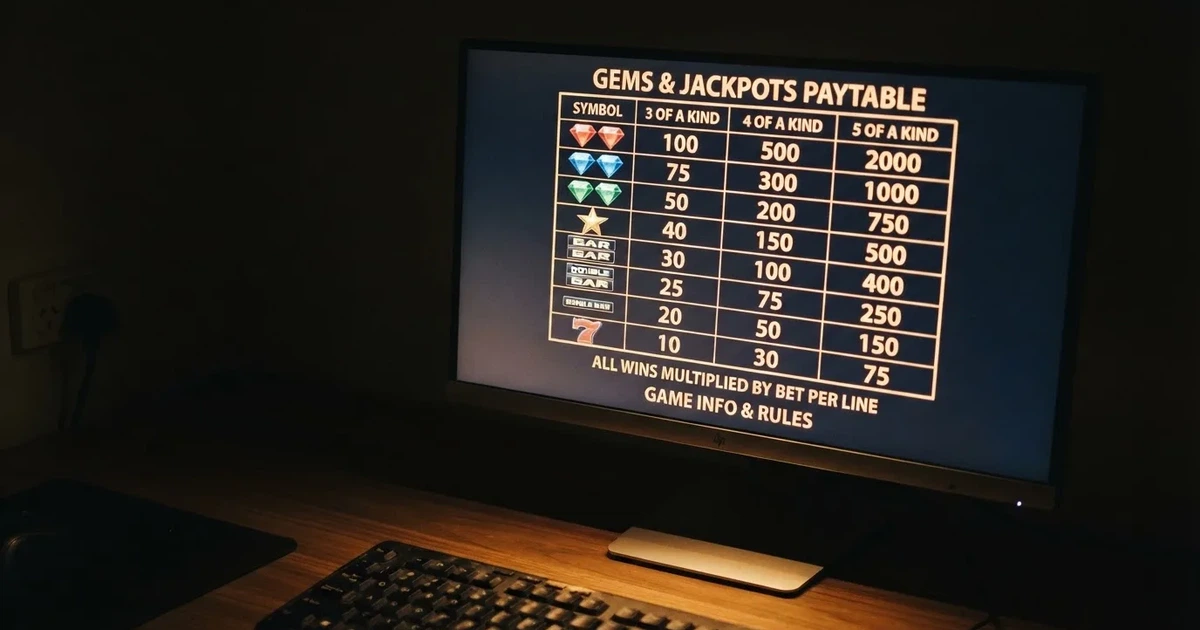
What follows is the substantive reality a reader weighing this market needs: what Quickspin the studio actually is, where its titles do and do not appear legally in Australia, what the regulator has done about the sites that ignore the prohibition, and what every “best Quickspin casino” list is actually doing when it ranks ten offshore brands against each other.
Current as of 29 October 2026. Verified against the ACMA’s published formal warning register.
Table of Contents
The Interactive Gambling Act 2001 and Why Every “Quickspin Casino” List Starts on the Wrong Foot
The starting point is the law, because no operator profile changes the law.

The Interactive Gambling Act 2001, tightened by the Interactive Gambling Amendment Act 2017, makes it a criminal offence to provide online casino games, online pokies or in-play wagering to a person who is in Australia. The 2017 amendments gave the ACMA the civil powers it now uses: it can investigate complaints, issue formal warnings, accept enforceable undertakings and direct Australian internet service providers to block offending websites. The IGA targets the provider, not the punter. The person who clicks through is not the one the regulator comes after. The problem is what happens to their money and what does not.
The Act carves out a narrow list of licensable online products: wagering on sporting events and races placed before the event starts, lotteries and keno. Everything else in the casino vertical — slots, table games, live dealer studios — is a prohibited interactive gambling service the moment it is offered to an Australian resident. That is why the rest of this page is what it is.
What is licensable is licensed, in practice, by the Northern Territory Racing and Wagering Commission. That body regulates 52 of Australia’s online bookmakers, the household names like Sportsbet, Bet365 and Ladbrokes among them, because the Territory’s tax regime draws operators to Darwin. It does so with no full-time staff; commissioners meet once a month. Wagering licences are real. Casino licences are not.
No state or territory has ever licensed an online casino. None is in the process of licensing one. A site carrying a Curaçao or Malta seal is licensed to offer its services in Curaçao or Malta, not in Australia. A page that treats those seals as if they authorise Australian play is misreading the legal geography.
The minimum age for any gambling product in Australia is 18.
What the ACMA Has Actually Done in 2026
The ACMA’s enforcement in 2026 has been busy, and the public record is granular enough to rank operators against each other.
In June 2026, the ACMA reported that a total of 1,751 illegal gambling and affiliate marketing websites had been blocked since the first blocking request was issued in November 2019. More than 230 unlicensed gambling services have left Australia since enforcement was strengthened in 2017. The blocking count does not settle the question on its own — it is a cumulative tally, and many of the 1,751 are defunct brands that went dark years ago. What it shows is that the regulator has been willing to use the blocking power repeatedly rather than as a one-off demonstration.
In the round reported on 26 June 2026 alone, the ACMA asked ISPs to block 12 more sites: 7Signs, ChromaBet, Donbet, Duospin, Freshbet, Slots Gem, Jacks Club, Lucky Start, Pointsbetz, Spinrise, Vinyl Casino and Wildsino. Some of those names will look unfamiliar; that is the point. The blocking list is not curated for Australian readers, and it does not only catch brands they have heard of.
Formal warnings have continued across the year. In March 2026 the ACMA warned Pulsup Ltd over Rocketplay. In April 2026 it warned Ryker B.V. over Jackbit and CasinOK. In July 2025 it warned Consolutetish S.R.L. over National Casino and Bizzo Casino, and Bamboo Media over Ignition Casino. In May 2025 it warned Dama N.V. over Spirit Casino. In April 2025 it warned Sterplay Holding Ltd over Casino Intense. In March 2025 it warned Dama N.V. over Woo Casino. In February 2025 it warned EOD Code SRL over Instant Casino. As far back as May 2022 it warned Dama N.V. over six brands at once: Bambet, Dazard, Level Up, Rocketplay, Wild Tornado and Cobra Casinos.
Dama N.V. is a useful illustration of how a single operator structure can accumulate warnings over time. May 2022 for the original six. March 2025 for Woo Casino. May 2025 for Spirit Casino. Three rounds, three different brand fronts, one corporate name on the warning notice.
A formal warning is not a conviction and it does not require an admission. It is a regulator’s statement, on the public record, that the named operator has been found offering prohibited services to Australians and has been told to stop. Continued non-compliance after a warning is what turns a warning into a referral to the Federal Court, and the Court can issue civil penalties running to the millions.
The Cost of Playing Anyway
The market data behind offshore sites is the part that explains why they keep advertising despite the warnings.
H2 Gambling Capital’s 2025 estimate puts annual Australian losses to illegal gambling sites at roughly A$3.9 billion. The same report found the share of gambling going through legal channels in Australia had fallen from 74% in 2021 to 64% in 2025. Each percentage point of share represents real money that has moved from licensed wagering — where consumer protections apply — to offshore casino and slots sites where they do not.
The 2026 reform context is worth noting here. The Interactive Gambling Amendment (Gambling Reform) Bill 2026 passed Parliament on 19 August 2026. Its advertising and inducement measures do not commence until 1 January 2027. For the rest of 2026 the law is the 2017 framework plus the 2026 bill’s earlier sections. The reform is real, it is enacted, and it is not yet fully in force.
The Inducement Question: Bonuses and Free Spins
“Best Quickspin casino bonus” and “Quickspin free spins” are not separate topics from the prohibition; they are the mechanism by which offshore sites pull Australian players in.
A deposit bonus is the standard inducement: the site matches a percentage of what the player pays in, on the condition the bonus amount plus the deposit are turned over a number of times before any of it can be withdrawn. A no-deposit bonus is the same idea with the deposit waived — the player gets a small credit or a handful of free spins simply for signing up. A free-spin offer is the cleanest inducement because the player can see the cost to the operator as a fixed number of spins on a fixed title, and the marketing is unambiguous about it.
The cost to the player sits in three places, and they are easy to underestimate separately.
| Bonus Feature | Impact on Player |
|---|---|
| Wagering Requirement | Multiplier on deposit and/or bonus amount |
| Game Weighting | Percentage of wager applied toward requirement |
| Maximum Cashout | Ceiling on withdrawable winnings |
The first is the wagering requirement, often expressed as a multiple of the bonus, the deposit, or both. The second is game weighting, the rule that says slots count 100% toward clearing the requirement but table games count less or nothing at all. The third is the maximum cashout clause, a ceiling on what a player can actually withdraw from winnings earned with bonus money, sometimes as low as a few times the bonus amount. A headline that names only the first of these is not lying; it is just leaving out the two that move the arithmetic.
The mathematical shape of a typical offshore bonus looks like this: a 100% match up to A$500 with a 40x wagering requirement on the bonus, slot games weighted at 100%, and a maximum cashout of 10x the bonus. The player deposits A$500, gets a A$500 bonus, and has to turn over A$20,000 in slot wagers before the A$500 bonus becomes withdrawable. If the slot in question has a published RTP around 96%, the expected loss across A$20,000 of wagering is roughly A$800. The bonus is worth A$500 if it clears. The expected cost of clearing it is higher than its face value.
None of these offers are illegal in the abstract. They are the contract of the site offering them. What makes them problematic for an Australian player is that the contract is being offered by a site that has no Australian licence, against the operator of which the ACMA has repeatedly acted, with recourse if the site refuses a withdrawal running through none of the Australian consumer protection bodies.
Responsible Gambling Where Quickspin-Branded Titles Are Concerned
The Australian consumer protection system is built around licensed wagering services and is therefore largely irrelevant to offshore casino play.
BetStop, the National Self-Exclusion Register, has been live since August 2023. It binds every Australian-licensed online and phone wagering service, and any player who registers with BetStop is required to be locked out of those services. An offshore casino is not connected to BetStop. The exclusion does not stop a BetStop registrant from opening an account on a Curacao-licensed site that carries Quickspin games. Self-exclusion as a tool only reaches as far as the system it sits inside.
The National Gambling Helpline, 1800 858 858, is free, available 24 hours a day and routes callers to Gambling Help Online, which offers web chat. These services are not licensed-wagering-specific and they do not refuse help on the grounds that the caller was playing offshore. They are the right first call for someone whose gambling has become a problem, whatever channel the gambling came through.
State and territory self-exclusion registers exist alongside BetStop for land-based venues. New South Wales, Victoria, Queensland, Western Australia and the others run their own schemes covering pubs, clubs and casinos. A player who has self-excluded from a venue is barred from entering it. The same exclusion does not bind an offshore site.
The cleaner a player is about why these registers are shaped this way, the better they can read what an offshore site is and is not offering. An offshore site that markets itself as a “responsible gambling” venue is offering internal deposit limits, internal cool-offs and internal self-exclusion — all of which it can revoke unilaterally. The Australian registers cannot be revoked by the operator.
Where Quickspin-Branded Titles Do Appear Legally in Australia
The prohibition does not mean Quickspin games are entirely absent from Australian gambling floors. It means they are not present as online casino products.
Quickspin is a Stockholm-founded slot studio, established in 2011 by three developers who wanted to make the slot games they themselves wanted to play. Playtech acquired the studio in 2016. Quickspin now operates from Stockholm, Sliema in Malta and Kyiv, with roughly 100 staff across five countries. Its Maltese operations sit under a Malta Gaming Authority Critical Gaming Supply Corporate licence, number MGA/CRP/137/2007, issued on 6 December 2018. The parent company, Playtech, holds an active UK Gambling Commission account under number 38516 covering remote casino and gambling software.
The licences are real and verifiable. The MGA number checks out against the public register. The UKGC account lists Quickspin under its parent. None of this authorises Quickspin to distribute online casino games to Australian residents. What it licences is the studio’s supply into Malta- and UK-regulated markets. In Australia, Quickspin’s path into regulated gambling is through licensed venues — hotels, clubs and casinos in states and territories that permit particular machine types — operating under state-level regulation. The studio itself is not the regulator; the venue operator is.
The closest comparable Australian story is Aristocrat Leisure Limited, founded in 1953, listed on the ASX under the ticker ALL since 1996, and now the largest gambling-machine manufacturer in Australia and the second-largest slot manufacturer in the world behind International Game Technology. Aristocrat’s 2025 revenue was A$6.30 billion, normalised net profit after tax and amortisation A$1.55 billion, with 7,400 employees. Aristocrat’s online arm, Aristocrat Interactive, was formed in April 2024 by combining the Anaxi unit with the NeoGames group it had just acquired for roughly US$1 billion (NeoGames includes Aspire Global, BtoBet and Pariplay). Aristocrat Interactive is not, despite its name, an Australian online casino offering. It supplies technology and content into regulated online markets elsewhere.
The shape of Aristocrat’s business — a regulated machine manufacturer whose online division sells B2B rather than B2C — is the shape the Australian market takes when it touches online gambling at all. It is supply into overseas licensed markets. It is not an Australian online casino.
How Money Actually Moves Through an Offshore Site Targeting Australians
The mechanics of depositing and withdrawing from an offshore site that advertises Quickspin slots to Australians is worth describing in full, because it is the part of the experience the marketing does not describe.
On the deposit side, the site will offer a familiar set of methods: Visa and Mastercard, e-wallets like Skrill and Neteller, bank transfers, and increasingly cryptocurrency. Each of those methods sits somewhere on the legal map. Credit cards, credit-related products and digital currency are banned as payment for licensed online wagering in Australia since 11 June 2024, with penalties for operators of up to A$247,500. Legal deposit routes for licensed wagering are debit card, bank transfer, PayID/Osko and BPAY. An Australian player who is asked to deposit by credit card or in crypto at an offshore casino is not being asked to do something an Australian-licensed operator would accept.
That the offshore site accepts those methods is not surprising — it is not licensed in Australia, so the Australian prohibition on credit cards and crypto for wagering does not bind it. What it means for the player is that the Australian chargeback regime and the Australian ePayments Code do not cover them. A disputed deposit at a licensed Australian bookmaker is a problem with a regulator, a complaints body and a chargeback path. A disputed deposit at an offshore site is a problem with a customer service agent in a jurisdiction the player does not live in.
On the withdrawal side, the typical offshore site advertises a payout time of “24 to 48 hours” or “instant” for crypto. The advertised time is the time between the player requesting the withdrawal and the site releasing the funds. It does not include the verification period, which can take days or weeks and which the site’s terms typically reserve the right to demand at any time and for any reason. A player who wins a meaningful amount and requests a withdrawal will, depending on the site, be asked for a fresh round of identity documents, source-of-funds documents and sometimes notarised copies of utility bills. The site is not doing this to be difficult; it is doing it because its anti-money-laundering obligations in its own jurisdiction require it, and because the longer it holds the funds, the more likely the player is to roll them back into play.
There is no Australian complaints body that can adjudicate a dispute with an offshore site. There is no Australian ombudsman. The site’s own terms govern, and the site’s terms were drafted under the law of Curaçao or Malta or whichever jurisdiction issued its licence.
Mobile and App Reality
Quickspin’s HTML5 build means the games run on a phone browser without a separate download, on both iOS and Android. That is true whether the player is at a licensed venue abroad or on an offshore site. The technical experience is comparable to what a player gets from any modern slot provider on mobile.
The “Quickspin casino app” the marketing describes is, almost always, the offshore site’s own branded app — not a Quickspin product. Quickspin makes games, not apps. The app is the wrapper the operator puts around the games, and what it adds to the player’s experience is the deposit and withdrawal interface plus the marketing layer. Whether to install a casino app from an unlicensed operator onto a phone that also handles banking is a privacy and security decision the player makes alone.
A licensed Australian wagering app — the apps licensed by the NTRWC — is a different product. It will not carry Quickspin online casino games, because Quickspin online casino games are not licensable in Australia. The apps that do carry Quickspin games are the offshore apps.
Specific Quickspin Titles, the Studios That Compete in the Same Space, and What the Player Is Actually Looking At
“Quickspin best slots” is a search term with a meaningful answer if the player accepts that the answer describes a studio’s catalogue rather than a route to playing.
Quickspin’s signature mechanics include the Achievements Engine, which rewards players for in-game milestones with free rounds and other bonus features, and a series of branded games tied to films and music. Big Bad Wolf, Sakura Fortune, Sticky Bandits, The Wild Chase and Northern Sky are among the better-known titles in the studio’s catalogue. The paytables, RTPs and volatility ratings vary by title and can be checked on Quickspin’s own site or in the help files of any licensed operator that carries the games.
The competition in the same slot space includes studios the Australian reader will encounter by name on offshore sites, and a few worth flagging for what they say about the broader market.
Betsoft, founded in 2006, carries a catalogue of more than 200 RNG games across slots, table games, video poker and specialty titles. Its compliance materials name Italian ADM (Agency of Customs and Monopolies) recognition, RNG certification from Quinel and Gaming Labs International (GLI), and more than 500 operator partnerships across regulated markets in Europe, Scandinavia, Latin America and Africa. Two of its slot RTPs, verified against Betsoft’s own game pages, give the reader a feel for the variance in the catalogue: Good Girl Bad Girl 2 has a published RTP of 96.22% with “Very High” volatility and a 15.59% hit rate on a 5-reel, 20-payline layout, while The Slotfather, live since 13 December 2012, has a published RTP of 95.69% with “Medium” volatility and an 8.17% hit rate on a 5-reel, 30-payline layout. None of these figures authorises the player to access them from Australia.
BGaming has worked on games since 2012 and launched the BGaming brand itself in 2018. The studio now offers more than 250 certified games across video slots, video poker, lottery, card, scratch, crash and casual games. Like Betsoft, BGaming’s licence footprint is outside Australia, and its presence on offshore sites targeting Australian players is part of the same inducement pattern Quickspin titles sit inside.
1spin4win is a younger name in the same space, founded in 2021 by a team with 15 years of iGaming experience. The studio builds its games in HTML5 for low-bandwidth connections, holds a Curaçao licence, and reports a portfolio of more than 190 online slots and more than 1,000 partnerships with online casinos and aggregators. 1spin4win’s published total bet sum grew 46% in the first half of 2025 compared with the first half of 2024, the kind of growth number that says something about the market it is feeding into.
None of these studios are legally available to Australian players in their online casino form. All of them appear on offshore sites that market to Australians. The reader searching for “best Quickspin slots” is, almost certainly, going to be shown a list of offshore brands and a list of Quickspin titles inside them. The list is real; the framing is the problem.
What Any Comparison of Quickspin Casinos Actually Does
A “best Quickspin casino” list is built the same way whether it covers 5, 10 or 20 brands. The writer assembles a pool of offshore operators that carry Quickspin titles, ranks them by a combination of perceived reputation, payout speed, bonus generosity and game count, and publishes the result as if the comparison were between legitimate options.
It is not. Every brand on such a list is operating in breach of the Interactive Gambling Act 2001 as it relates to Australian players. The differences between them are differences in how the breach is packaged, not in whether the breach exists. A site with a Curaçao licence is not more legal than a site with a Malta licence; both are licensed to operate in their home jurisdictions, neither is licensed to serve Australia. A site that has been blocked once is not more legal than a site that has been warned twice.
What a serious comparison can do is sort the brands on the ACMA’s own record, because the ACMA has been more thorough with some operators than others. The brands in the table below are the ones the ACMA has publicly warned for offering prohibited interactive gambling services to Australians. The table is not a ranking of where to play; it is a ranking of where the regulator has spent its time.
The Brands the ACMA Has Named
| Brand | ACMA action and date | Operator named by the ACMA | Subject support |
|---|---|---|---|
| RocketPlay | Formal warning, March 2026 (earlier May 2022 to the parent Dama N.V.) | Pulsup Ltd (2026); Dama N.V. (2022) | — |
| Level Up Casino | Formal warning, May 2022 | Dama N.V. | Listed in Wazdan’s published operator directory |
| Woo Casino | Formal warning, March 2025 | Dama N.V. | — |
| Spirit Casino | Formal warning, May 2025 | Dama N.V. | — |
| National Casino | Formal warning, July 2025 | Consolutetish S.R.L. | Listed in Betsoft’s and Pragmatic Play’s published operator directories |
| Bizzo Casino | Formal warning, July 2025 (earlier 2022 to TechSolutions) | Consolutetish S.R.L. (2025); TechSolutions (2022) | — |
| Ignition Casino | Formal warning, July 2025 | Bamboo Media | — |
| Instant Casino | Formal warning, February 2025 | EOD Code SRL | — |
| Jackbit | Formal warning, April 2026 | Ryker B.V. | — |
| Casino Intense | Formal warning, April 2025 | Sterplay Holding Ltd | Listed in 1spin4win’s, the Wikipedia slot-licence summary’s and the UK Gambling Commission’s published supplier registers |
| Sky Crown | Formal warning, date per ACMA publication (Hollycorn N.V. action) | Hollycorn N.V. | — |
The operator names matter more than the brand names. Brand fronts change; the corporate behind them accumulates the warnings. Dama N.V. alone has accumulated warnings across Bambet, Dazard, Level Up, Rocketplay, Wild Tornado and Cobra Casinos in May 2022, then Woo Casino in March 2025, then Spirit Casino in May 2025. Consolutetish S.R.L. took over National Casino and Bizzo Casino after TechSolutions had already been warned on Bizzo in 2022. The pattern is not random; it is what a regulator’s file looks like when operators believe the warnings are a cost of doing business.
A reader who takes the table seriously will notice that no brand on it has a Subject support column filled with a verified Quickspin integration. Level Up Casino appears in Wazdan’s published operator directory. National Casino appears in the published directories of both Betsoft and Pragmatic Play. Casino Intense appears in 1spin4win’s published directory, the Wikipedia slot-licence summary and the UK Gambling Commission’s supplier register. For the remaining brands, the research did not turn up a specific listing confirming the studio’s titles are integrated under that brand. That does not mean Quickspin is absent from those brands; affiliate marketing pages suggest otherwise. It means the studio’s own operator pages and the public registers did not confirm it within the research window.
What the Blocking Rate Tells Us
The arithmetic here is the blocking rate — how quickly the ACMA’s cumulative tally of blocked illegal gambling sites has grown since the first blocking request in November 2019.
The cumulative count as of June 2026 is 1,751 websites blocked. The first blocking request was in November 2019. That spans roughly 79 months.
Divided across those 79 months, the long-run rate is roughly 22 websites blocked per month. The recent pace is faster. The June 2026 round alone added 12 sites. One round, one month, more than half the long-run monthly average.
The band this produces is informative. The early years of enforcement cleared the long backlog of obviously illegal sites. The 2026 pace is closer to 30 websites per month when extrapolated from the recent rounds, with single rounds capable of clearing a dozen at once. The reader who sees “more than 230 unlicensed services have left the Australian market since 2017” should read it as the soft exit — operators who saw the warning signs and withdrew — sitting alongside the harder exit of ISPs physically blocking domains. Both are enforcement outcomes. Neither is a sign that the market has been cleared.
The relevant condition is that the blocking rate measures enforcement throughput, not the size of the illegal market. A higher rate can mean the regulator is working harder, or that more operators are entering the market than are being pushed out, or both.
How an Australian Reader Should Read an Offshore Site’s Bonus Page
Given everything above, the practical question is not “which Quickspin casino is best” but “what is the player actually being offered when they land on one of these sites.”
The bonus headline is the first thing to read past. A 100% match to A$1,000 with 200 free spins is the marketing line. What matters is the wagering requirement, the game weighting, the maximum cashout, the expiry window and the country restrictions. A typical offshore site’s bonus terms include a clause that excludes players from a long list of jurisdictions, and the player’s jurisdiction may or may not be on it. A player who registers from an Australian IP and is later told their winnings are voided because their jurisdiction was excluded from the bonus is reading the terms they should have read first.
The deposit method is the second thing to read past. If the site accepts credit cards or crypto from Australian players, the site is operating outside the Australian payment framework that has applied to licensed wagering since 11 June 2024. That is not, on its own, a reason to mistrust the deposit; it is a reason to mistrust the withdrawal.
The withdrawal policy is the third. The advertised “24 hours” or “instant” is the processing time, not the arrival time, and is not the verification time. A site that publishes a withdrawal policy with a multi-day verification window, a list of documents it can demand, and an internal escalation procedure is being more honest than a site that promises “instant payouts” and explains nothing.
The licensing statement is the fourth. “Licensed and regulated” with no licence number is not a statement. A licence number that resolves on the regulator’s public register to an active licence is a statement. A Curaçao number that resolves is a statement that the site is licensed to offer its services in Curaçao, not in Australia.
The responsible-gambling link is the fifth. If the link points to an internal “set your deposit limit” page and not to Gambling Help Online, to the National Gambling Helpline at 1800 858 858, or to BetStop, the site is not connecting the player to Australian support infrastructure. It is offering its own version of it, which it controls end to end.
Taxation Reality
Gambling winnings of a recreational Australian player are not assessable income. Section 6-5 of the Income Tax Assessment Act 1997 treats them as windfalls. Losses are not deductible. A punter who reports A$10,000 in slot winnings to the ATO will be told no declaration is required. A punter who tries to claim A$50,000 in losses against other income will be told losses are not deductible unless the gambling is being carried on as a business. The professional punter case is a different matter and is not the assumption any reader should bring to this page. The model position, the one to take to the ATO if asked, is “check with a registered tax agent.”
Reading the Landscape Without a Map
There is a temptation, especially in list-style casino content, to treat the offshore sites as a market and rank them. The temptation produces the “top 10” or “top 20” format that this site’s research brief explicitly assigns. The honest version of that format does not pretend to recommend one brand over another. It lays out the regulator’s record and lets the reader draw the conclusion that any brand on it is a brand the ACMA has decided is breaking the law.
Dama N.V. is the most repeatedly warned operator on the table. Across May 2022, March 2025 and May 2025 the ACMA has put Dama N.V. on notice for Bambet, Dazard, Level Up, Rocketplay, Wild Tornado, Cobra Casinos, Woo Casino and Spirit Casino — eight brand fronts, three enforcement rounds. A reader looking at Level Up Casino, Woo Casino and Spirit Casino is looking at three faces of one operator.
Consolutetish S.R.L. takes the second-place position by accumulation, having inherited the TechSolutions warnings on Bizzo Casino and picked up National Casino in the same July 2025 round.
The other operators — Pulsup Ltd, Bamboo Media, EOD Code SRL, Ryker B.V., Sterplay Holding Ltd, Hollycorn N.V. — appear once or twice in the public record. Single warnings do not mean single offences; they mean the ACMA’s published record names them once or twice. The reader who wants to know whether a site not on this table is safer should not assume so. The ACMA does not publish every action it takes.
For the studios themselves, the picture is different. Quickspin’s MGA licence is verifiable and the studio’s content ships into regulated markets across Europe. Betsoft’s compliance materials name ADM recognition, Quinel and GLI RNG certification, and 500-plus operator partnerships. BGaming’s catalogue is certified across 250-plus titles. 1spin4win’s growth rate says something about which end of the market it is feeding. None of this helps the Australian reader access the games legally. What it does is tell the reader that the games they would be playing at an offshore site are, in their home markets, regulated products on regulated sites. The Australian frame is the problem, not the games.
The honest close on a page like this is to make the asymmetry explicit. The reader can choose to play at any of the sites the ACMA has warned. The reader cannot choose to make the site legal. The site that has been warned and continues to operate is making a calculation that the cost of the warning is lower than the revenue from continued operation. The reader making the same calculation is making it on the other side of the same balance sheet.
Frequently Asked Questions About Quickspin, Australian Online Casinos and What the Law Actually Says
Is Quickspin legally available to players in Australia?
No. Quickspin’s online slot catalogue is licensed to supply into Malta and UK regulated markets under the studio’s MGA and Playtech’s UKGC accounts. No Australian state or territory licenses online casino games. Offshore sites that advertise Quickspin titles to Australians are offering prohibited interactive gambling services under the Interactive Gambling Act 2001.
What kinds of games does Quickspin make?
Quickspin makes online slot games built in HTML5, designed for both desktop and mobile browsers. The catalogue includes signature mechanics like the Achievements Engine, branded titles tied to films and music, and a back catalogue of more than 60 games including Big Bad Wolf, Sakura Fortune and Sticky Bandits. Quickspin does not make live dealer games, table games or sports betting products.
Are Quickspin games offered at land-based venues in Australia?
Some Quickspin content has been ported into land-based gaming machine formats distributed to pubs, clubs and casinos by partners, and the studio’s titles appear on gaming floors in various jurisdictions. Australian gaming floors are dominated by Aristocrat, the largest gambling-machine manufacturer in the country, with IGT the second-largest slot manufacturer worldwide. Whether a specific Quickspin-branded title appears at a specific Australian venue is a venue-by-venue question.
How can Australians check whether a Quickspin title is fair before ever considering play?
The studio’s published RTP and volatility figures are the starting place, and can be checked on Quickspin’s own site or on the help pages of any regulated operator that carries the titles. Independent testing laboratories like Quinel, Gaming Labs International and others audit the studio’s RNG. None of these checks authorises the player to access the games from Australia; they tell the player whether the games themselves are operated fairly in markets where access is legal.
Why do offshore sites keep advertising Quickspin games to Australian visitors?
Because the H2 Gambling Capital 2025 estimate puts annual Australian losses to illegal gambling sites at around A$3.9 billion, and offshore operators compete for that revenue. The ACMA has blocked more than 1,750 illegal gambling and affiliate marketing sites since November 2019, and more than 230 unlicensed services have left Australia since 2017. The market is contested, and the inducement to advertise has not gone away.
What should an Australian do if they see a Quickspin game promoted by an unlicensed site?
The site can be reported to the ACMA. The individual player is not prosecuted under the Interactive Gambling Act; the prohibition targets the provider. Players who feel their gambling has become a problem can contact the National Gambling Helpline on 1800 858 858, available 24 hours a day, or use the chat service at Gambling Help Online. BetStop, the National Self-Exclusion Register, applies to Australian-licensed wagering services and does not extend to offshore sites.